
TuneDig is an in-depth and informed conversation between two lifelong friends about the power of music — one album at a time.
In each episode, we go down the rabbit hole to spend a while in the strange world we discover. We take an honest look at creativity in all its complexity—from writing and production to history and cultural impact.
We promise you’ll learn something new every time, no matter how much you already love the album we explore.
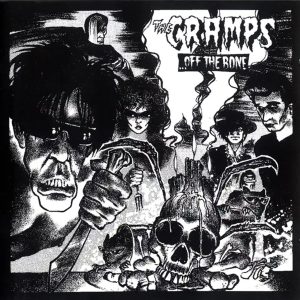
Episode 64
...Off the Bone
The Cramps
God is a woman and she plays the guitar loud … y’all come catch some Holy Ghost in your hips.
Hear our hallelujah for the love story of the queen of rock ‘n roll and the mad daddy holy rollin’ on a river—upstream all the way—and boot scootin’ through a fun and freaky heaven and earth of their own design.
The Cramps were Dionysian, devilish, dangerous, and damn good, and they remind us that life can be, too. If you can’t dig this, you can’t dig nothin’.
Transcript
Cliff: Today we’re talking about off the bone from the cramps.
Kyle: Hey, Cliff,
Cliff: Hey, Ka.
Kyle: you want to talk about the real junk?
Cliff: This feels like a setup we didn’t prepare for ahead of podcast time, so I’m trying to go with it as best that I can. Yes.
Kyle: You got a joint man
Cliff: Oh, so yeah, we’re just doing regular questions? Yes. Yeah. Ha
Kyle: being like, Oh, okay. Nevermind. That’s cool.
Cliff: ha ha ha
Kyle: so
this music sounds like music played by my own human skeleton. And it sounds like music that would make you want to pull your skeleton out of your body. But I don’t know that that’s as true as it would have been a few years ago. So, I just, right off the rip, think it’s very important that you play the role of the uninitiated as a proxy for the audience in this one.
And I just want to cold open, this fine proverbial Saturday night into Sunday morning and do the exercise that we love to do after a little bit of wind up of taking it in fresh, maybe tuning in for some key moments. So Cliff, I’m going to say a thing to you that I’ve never said to you in our two and a half decades of friendship.
Let’s do some role play. Let’s just get all the way weird, Bubba. Uh,
Cliff: ha ha ha ha ha ha
Kyle: Do you want the real thing? Or are we just talking? I am the garbage man of this podcast for real. So Cliff, we’re hanging out at a party, you know, scene interior party, uh, heavy smoke in the air. And I’m like, we’re vibing. You seem cool, dude. Check this out and I hand you a cassette or.
You know, a metaphorical cassette and you, you leave the party and you give it to your Uber driver or whatever and say, put this cassette in,
Cliff: ha. Okay,
yeah.
Kyle: he, and he’s like,
Cliff: with alternate reality. Keep
Kyle: and he’s like, fine, as long as you don’t throw up, uh, cause that’s a hundred dollars. what do you do next when the sounds start coming out of the speakers?
Cliff: Oh.
Kyle: now it’s going right into a therapy session. You’re laying on the couch with your eyes closed. You’re doing EMDR or some shit with the cramps. Uh, describe the sensations you’re feeling right now.
Cliff: What an alternate reality, which makes absorbing the cramps for quote unquote the first time, uh, an actual likely scenario only in which you’d be handing a cassette tape to your uber driver. Could Cliff possibly have not heard the cramps by now, but yeah, let’s do it. also, we’ll come back to how the cramps slip past the goalie for me 100%, but, okay.
If we’re
Kyle: This is definitely going to be the episode where it’s like, how many things sound like a sex thing because we’re doing the cramps and slipping past the goalie is the first one.
Cliff: especially if you didn’t know quite what you were getting into immediately, um, your and mine and whoever’s, uh, virgin eared brain would ask about zombie Elvis because something feels like that, but somehow it’s cooler than that, which You know, we’ve even touched on before, there’s actually many paths to being cooler than Elvis, but, Elvis himself represented an archetype of cool that, uh, has a much longer lineage with Possibly even cooler people than Elvis, but nevertheless, you sort of get immediately absorbed in something about this used to be, at least, very badass, and I would like to join up with it. At the same time, I think I would say, uh, this is still a really fun hypothetical scenario I’m imagining myself in, but Let’s say I maybe haven’t been exposed to the Kramps, but have had all the concert experience I’ve ever had in my life. The Kramps represent every surprise good band. That I’ve ever seen at like, a venue that holds less than 300 people.
Every single time you get blown away by some random assortment of people who simultaneously seem to not give a shit, and are way better than their priority order in the lineup seems to indicate, it has really sealed in for me, having listened to the cramp so much in the last few weeks, like this, it, it all converges back into what they were doing here.
And I’m sure we’ll talk about it a lot, but to kind of start to delineate what actually causes that. And I think what stands out, uh, as fresh as you can approach this is like, hold on, there’s no bass, this sort of punk. It’s sort of rockabilly. Hold on, what are they talking about? Oh, that’s way grosser, uh, than anything else that I had previously heard that I associated with this style of music.
It’s kind of punk, but never actually pushes all the way into what became punk and what sort of represented this stuff, even in the 80s. And so, it’s sort of It feels like you got snuck in the back door of a speakeasy that’s sort of about the fifties that were cool, uh, but somehow, but somehow also is not like however racist it probably was to be in a speakeasy in the fifties, and so it like, it takes the best of so many different worlds and puts them right up front in, What has to be like the simplest package possible for music.
This is in a sense baser than Ramones. Like it’s so straightforward and obvious. And we will talk about why that literally proves that Poison Ivy was maybe one of the greatest guitarists to ever exist in rock and roll. But like everything is so clear, even though they push into Fuzz and speed and mania and all that stuff, uh, at different moments, like you can hear so much, so much of it is planned out and yet it has a sense of laissez faire sort of, I don’t actually give a shit about this in like, you know, now, and so do the people who have listened to this poor podcast for so long, like if you can get that little combination of things right, it’s It makes a lot of sense to me, immediately. Like, how do you not give a shit and give a lot of shits at the same time?
That’s the perfect balance. That’s the vibration I am on at all points. And so, cramps slide right into that for me.
Kyle: I like that you
Cliff: Kyle’s gonna need to take a cold shower before we move on.
Kyle: if you’re, if you’re listening to the cramps, right, you kind of need a cold shower after regardless, such a reminder that we like, we did our teens in our twenties. We were like, we were out there touching the raw the like exposed live wire of being alive. You know, this is like they held the pineal gland, just pure pineal gland in their hands, just like pure American fucking primitive and It’s sensuous. It’s fun. I, I think like we, we got to talk about the importance of fun and how that is like a differentiator on Occam’s razor between other punkers and rockabillies and whatever. There’s always a smile with everything that they’re doing. And it’s, it’s so It just gets right to the heart of everything ugly and fucked up and weird and beautiful and sublime about the great American myth.
Like this is, they are to me, the great American band because they just hold up a third eye in the palm of their hand and it’s a surprise. There’s a middle finger tattooed on the palm and it’s a love story. I know we’ll get into that. It’s a freedom story. Um, so this is for.
The outlaws, the freaks, the junkies, the real American patriots. I feel like I’m winding up for a Grand Theft Auto right winger, Jason Sudeikis, radio station, like, Oh, this is the real shit out here in the W. We make our own math made in America. In an American bathtub. This is the voodoo shit, man. This is, I haven’t felt this feeling winding up to talk about an artist since the Funkadelic episode. Like they, they’re drinking from that same pool of American black magic. and we, we welcome anyone to to pour a cup from that cauldron.
Cliff: And we will gladly Not compare, because we don’t need to, but like, you mentioned Funkadelic, like, we are going to talk about Poison Ivy in a way that should put her above Eddie Hazel.
Kyle: Yeah,
Cliff: It continued to evade my logic that the Krants existed at the moment in time that they did because they seemed to slip like 10 years in one direction or the other in a way that we’ll mention this some, but like, they were contemporaries with a lot of the bands that created how we think of the blues at all right now, along with punk, but not by being explicitly A punk band as it would end up or necessarily a blues band as it would end up.
And at the same time, not being a rockabilly band, even though they were bringing a hundred percent of that directly forward and on purpose and like their ability to sort of stretch over that, that sensation is influence.
Kyle: yeah.
Cliff: We don’t get to like call that out quite as much. A lot of times we’re like really picking up threads and trying to show them to people.
This one is like, you, Cramps join a small list of other artists that we’ve talked about, and that should be relatively obvious which are just unimpeachable influences on anyone who’s ever been important in music. And some of the, just collecting a few quotes and riffs, so to speak, from people who were getting interviewed, and the cramps would get mentioned, and they would just go, you know, like, full stop.
Probably the best band of all time. Maybe the most important thing to ever happen to me. Level stuff.
Kyle: and I welcome the idea that somebody can hear us say that and turn this on and be like, no fucking way. Absolutely not true. Both of those things are absolutely true in my mind and I don’t think anybody’s hurt by holding those two truths in their hands. It’s absolutely true for me. It has influenced the way I walk, like who I am as a person. And I think you, it seems like you have immediately recognized you’ve walked a much different path, but you see all the ways it’s like the other rail of a track that you know and love as well. There’s a bit of that Jeff Buckley thing, to your point, and I think that the similar vein is source material, like honoring the energy of source material and a philosophy and way of being as an artist, rather than doing a posture or you know, learning the karate moves like, you know, don’t, don’t try to surf, just surf.
This is another artist that just surfed. so let’s let’s reach out and touch the weird,
Cliff: Yeah, and also, speaking of touching the weed,
Kyle: was that, were you doing walking? That was, you got a, you got a little touch of walking on that. That was nice.
Cliff: A touch of Walken, my new podcast. Thank you. Just walking each other home. Uh, sorry, I’m gonna riff on
Kyle: It’s amazing. It’s it’s sensational. That was a terrible one. Jesus. See, when you try to do the, another lesson from the cramps, when you try to do it, you don’t do it. Just do it. It’s all wrong.
Cliff: Yeah, lesson learned. I’ll also say, in case this connects with anybody else, I had the cramps in the wrong place. When I was in high school. If I had had them in a more
Kyle: See a doctor.
Cliff: It’s just gonna be this the whole time, isn’t
it? Great. This is like what hanging out with me is like when you get me a little too late at night. Anyway,
Kyle: Next month is Missy Elliott. We’ll go back to being reverent next
Cliff: oh Yes, what I mean by this is I filed the cramps sort of in, in the category of, Oh, people who like the cramps like misfits and dead Kennedys. And that’s fine, but I don’t fucking care that much.
Cool, like, I sorta get it w we like Misfits Records too there’s some Dead Kennedys stuff we’ve talked about before. I’m not saying any of that doesn’t matter, it definitely does, but like, I didn’t, just didn’t connect with me at a time where
Kyle: I mean, I love all those bands a lot, but I don’t love The Crimps for at all the same reasons that I love the other two.
Cliff: yeah. But I think They stand out to me specifically after listening specifically to Off the Bone as a band that I would’ve and should’ve and could’ve liked if I had let myself because, uh, I, you know, I think we’ll talk a ton about, like, personal connections, but, like, I have very treasured memories of car time.
With my dad, and with my family, when I was a kid, and, first of all, just, let’s say the, the dumber thing first, this is fantastic work on your car music, this will make you feel like you are supposed to smell like grease, and it like, It just, it works. It’s outdoor, to me, it’s outdoor music that you can put on really loud.
It is, it’s inoffensive in the sense that everyone thinks that they like it until they learn that it’s the Krantz and hear more. Uh, and so in that sense it’s like very accessible. But also just like, You know, go into car shows and all that, like, there’s a at times concerning connection back to the sock hop level culture of the fifties and all that stuff, and what you get out of that then,
Kyle: To capital G Great America,
Cliff: uh, yeah, we are all looking each other in the eye when we say this stuff these days.
Kyle: for the audio only participants, WINK!
Cliff: Yep. But that means that, you know, at a ton of those car shows, you would get rockabilly and. You know, sometimes that would stretch out into, yeah, some of the more frenetic, Elvis or something else, but like, a lot of times you sort of collected a lot of the really early guitar type work that would directly influence Poison Ivy and that she would bring forward on purpose in, you know, we’re not the first people to say this, in what could basically be called her band more so than anyone else’s so to feel that level of connection and appreciation to a type of music that I already liked because like the way that they were playing guitar when electric guitars were new is, has always been fascinating to me. because we didn’t start with arena rock level distortion, power chord stuff. We started with extraordinarily clean guitar tones where people were learning how to use a stringed instrument. And then I think something else that this era of music and approach of music drew out to me is like, there were moments in music where guitar music became more complex, uh, and this is sort of made me start to wonder whether a lot of that was influenced by like emerging jazz and how, you know, the saxophone or something like that and piano can be played at such technical speed that guitarists started trying to imitate the like it.
Extraordinarily fast and technical approaches to music, which then, I think the easiest way to talk about it from a guitar perspective that is not like the cramps is like Jimmy Page and Jimi Hendrix were channeling a lot of the same early guitar influences that Poison Ivy was directly pointing to, you know, around the same time, or, you know, 10 years earlier were using guitar effects and things like that to create more sound out of what they were playing.
And they became, I don’t know how guitar dorky this sounds, but like, I got really annoyed lately seeing some dumb posts on the internet about how all guitar music has been written. There are infinite notes on a guitar cause it’s a fucking stringed instrument. Have you never heard a string bent before at any rate like this is the type of music that uses playing, playing on purpose and really specific technique of the hands to make the guitar make sounds.
And yeah, she does some pretty crazy stuff, which is a fun part of electric guitar work. But like, at no point does she take off on a seven and a half minute blues solo that gets built back up by the drummer and become some sort of like epic refrain. Like this is basically punk music with rockabilly guitar channeled into it, except what you’re listening to is one of the best people to have ever done this before.
And like, the more I just kept that context in mind and just played cramp songs over and over again, the more that just settled into like, that’s true. That’s the way that it is.
Kyle: You know, what occurred to me is a bit of a, like a wider culture, concentric circle around the idea that you’re talking about with guitar. Like they’re fascinated with the, philosophy of rock and roll as danger. And I think luck said it a number of times, like teenagers love it, adults hate it.
Just whatever is that raw nerve that is, is pushing. On culture and is freaking out all the wrong people. You know, it’s the frequency that makes the dogs lose their mind. They were seeking that out and they were obsessives in collecting albums and films and comics and books and aesthetics and visual art.
And it starts like right from the moment you see the cover of this thing and they didn’t commission the cover. It’s a whole story about how, like, it’s a, it’s a little icky to maybe cover this compilation. One of the only compilations we’ll probably ever cover on this podcast. but an exploitation artist, quote unquote, named Graham Humphries, who did artwork for.
horror films and that sort of thing, like hand drawn did, uh, an artwork that was then made into a 3d image that came with 3d glasses with the vinyl and it’s, it’s spooky, it’s freaky, and it evokes all of the weird fringe counterculture that was meant to To scare the shit out of parents and excite and titillate young people who knew like with this explosion of new tools and ways to connect like post World War II, essentially the radio and guitars going electric, things that all seem really tame to us now, because, you know, we saw the final, what we thought was the final Slayer concert, you know, so we’ve just had so much.
Like sex and violence and the oj bronco chase and whatever and it’s easy to not appreciate how Small, subtle moments like Link Wray’s chords with Rumble starting an actual fight because they were so profound in that raw pineal gland. Like they just, they, they tapped into the human heart of darkness directly.
And I think that’s what the cramps were after the whole time. And I think if you’re a lover of music. Certainly at the, at the level of voracity that we have been for a long time, you’re going to see two things happen. Like, I think you start to go. Higher and lower in your vibe and or lower in your vibrations.
We’re on the one end, like you’ve pulled me up cliff on this podcast toward John and Alice Coltrane and Erykah Badu and reaching for the infinite and the sublime and tapping into that sense that there’s something more within ourselves. That’s connected to everything else out there. And at the same time, music is the only thing that gets us all the way down to the all too often unacknowledged seventh circle of hell in ourselves that’s real, and it’s a beast that needs to be fed, and anyone who doesn’t feed it and denies it does the worst shit imaginable on earth.
And I’m a big believer that you gotta keep your beast fed. And. I’m sorry that I keep pointing on myself like a Panama City Spring Break t shirt when I say that. but in a way that’s not, you know, not entirely wrong. this is all, I guess, Dionysian is the word, right. Relating to the, the sensual spontaneous, emotional aspects of human nature.
It’s real. We are animals. And, We have sought out, as friends, as punks, as people that, like, have that spice of life and are going out and, like, kind of know that that’s what it’s about, and feed it and Healthy ways. The people that do in less healthy ways, we’re as close to as we used to be.
Maybe, but like I would encourage everybody to get back in touch with or get in touch with for the first time this part of yourself. If you are a person who grew up scared of this sort of stuff. I just want this to be like a little congressional record from your friends, Kyle and cliff to, to go a little bit fucking crazy.
to just get a little bit wild with your friends Ivy and Lux as your guides.
Cliff: Especially If this scared you at any point, it’s time to listen to the cramps.
Kyle: Yeah.
Cliff: It is a welcoming doormat into a house that you need to go inside of and spend some time with. Because if you’re irrationally afraid of things that happen on the outside of you, you dead, homie. Wake
Kyle: Yeah. And maybe that is, you know, we talked about the Jeff Buckley touch grass thing, but maybe this is like a double down of that, where if 2025 is freaking you out, like you need to freak it the fuck out right back. And. This is a good way, you know, like, joy is an act of resistance is maybe a little gone the way of live, laugh, love.
this is a way to get back in the world’s face, and just, if, uh, if a whole contingency of the world is going to be all Tipper Gore PMRC again for no reason, then it’s your responsibility as a person who can to just shake the demons back out in their face. you want the devil?
I’ll give you the devil, baby.
Cliff: Not that your joke is offensive, but I would say, You should find joy in listening to The Cramps now. I mean, if we need a meta theme for any of this shit that we’re doing on this podcast, like, dude, music is a vehicle for joy. If you’re not getting it easily, it’s a couple of steps of hard work away from you, and then you’ll be able to have it permanently.
Like, we’re not kidding. Music is a discipline. It will give you shit that other things cannot give you, and it’s persistent in a way that other things cannot be. Think about how much. Everything has changed in this moment that you are listening to this for whatever reason. And like you can see and imagine a million things that have gone sideways upside down terrible Off the bone sounds exactly like it sounded when it was made off the bone a compilation album by the cramps It has the energy.
It is a historical record that we All the people who want to suppress our history are not smart enough to discern the parts about this that are dangerous and therefore music will always be able to exist under that threshold and communicate things to you that you really need to hear. So like, this is a moment for joy, for sure.
And, Even if our abstract, or aspirational way of telling you that this is true doesn’t connect, you are once again gonna hear the story that we keep telling over and over on this podcast of someone very important went to a show, and then their life changed, and then everyone else’s life changed. And so, not only can you capture that joy in this music itself but I’m sure we’ll hit on this point of time again, uh, or two but get your ass.
to a show until it hits you in a way that makes you go, why haven’t I been going to shows anymore? You need to get that feeling again. And it’s still there. And maybe you’ll become the next Poison Ivy
Kyle: If you’re looking for the Holy Spirit, you need to get yourself in church.
Cliff: We will come back to
Kyle: Can I get an amen?
Cliff: That’s definitely one of my favorite cross sections of the cramps in rockabilly in general. We need to talk about church music
Kyle: the Reverend Little Richard, can I get a hallelujah?
Cliff: It’s so fun for us to be able to joke about that now. Like, it didn’t feel insane for people to be introducing the new concept of rock and roll with things that they aped from church services. I, like, love it. So much like it is so aligned with what we were just talking about with things that scare you you should push into them if you can find safe ways to do it not back away because there’s probably magic in there
Kyle: That thing you shared with me a number of years ago that, that then also became a trope on the internet of people who grew up in mega churches, realizing that feeling the Holy Spirit during the music portion meant they just really liked live music, like the, the lights and the, the swells Oh, let me tell you about sister Rosetta Tharp, brother.
Cliff: we’ll have the joy of mentioning several women guitarists just by telling the basic story of this band which is rad
Kyle: fun. And they’re all so good. One of them’s called the Duchess. Come on, man. What’s not to love? It’s also like, I love this specific sort of flavor of thing. And I know we like, I really want to get into it all the way into it after this, but, it’s a bit of that, um, that Gustav Flaubert quote, the, the regular and orderly in your life.
So you can be violent and original in your work, like Ivy and Lux. personify that They’re like safe trip sitters for getting freaky, you know, cause they’re outsiders and they’re, they have an edge, but they have the like most beautiful little American love story, and at the core, there’s like such a, a sweetness and almost without the weird codependency of Leonardo DiCaprio’s character in Inception that like building a literal world for you and your person to live in.
Because your cosmic connection is the only thing that makes 100 percent sense to you and has total fidelity. there’s something really, really beautiful about that story. So I would say like, Tier A, this is the Poison Ivy Rorschach story. Tier B, this is the Ivy and Lux story. Tier C, this is a Rosetta Stone into any conversation you could ever want to have about America, period.
Cliff: Actually, yeah.
Kyle: so, so like that’s sort of it.
Cliff: So let’s do a well intentioned disservice, probably, to their story by giving a quick ramp up, I think, of how they got connected because we do need a little bit of context, I think, going into when this compilation was released because The fact that it was a compilation at all. It’s like a bit of the fallout of the things that happened right before that and all that.
But they also just Had an incredible story to begin with starting with the fact that, you know, we’ve already mentioned, yeah, we can kind of call this Poison Ivy’s band, but yeah, Poison Ivy and Lux Interior’s band, 100%, they are the original founding members and the only persistent members throughout the entire life of this band.
Uh, they first met in the early seventies I think at Uh,
Kyle: Sacramento State University.
Cliff: but this next sentence will get a lot of people they connected by collecting weird records. At least in part like, yep, I made some friends that way to sort of even one that I may be doing a podcast with right now basically made friends and blossomed a relationship through doing exactly that in digital form.
but they, they were weirdos in the middle of nowhere. And then in 1975, they moved to New York city which I think. We should at least spend a second connecting that to the emerging punk scene that was there, but which probably has a few angles that people might either forget or not totally realize if they just think of all of that as like,
Kyle: Mm hmm. Say more.
Cliff: Well, let’s start here. The Cramps first performance was in 1976 at CBGB’s opening for Dead Boys. Okay? So, fun podcast trivia from us to you guys. You probably know about CBGB’s, but do you know that those Initials stand for Country Bluegrass and Blues. it’s, it wasn’t some funny acronym being like, We are the punk place where all the fast bands come and play.
that is an important speaking of Rosetta stones, like in the mid seventies, understanding that a punk scene evolved out of the momentum of rock and roll rolling downhill from country, bluegrass and blues and forming faster and faster and heavier and weirder music meant that it sort of.
Exploded into a lot of different types of bands that we just use the shorthand punk for and New York punk scene and all that stuff. But like, Ramones were just one of the bands that were a part of that and stylistically didn’t necessarily have a ton in common with a lot of other bands that also blossomed on the scene.
Kyle: It was punk as a sort of hand wave in the way that like everything really guitar in the nineties was like alternative, you know, like, nah, it’s not, it’s not this it’s the, it’s, it’s new Pepsi.
Cliff: yep. And then it was more or less stated, again, we’re going to do a tremendous disservice to extremely early years here, I think, but it’s described as. After, while being a part of the CBGB scene they were also cutting their teeth at other venues that attracted, at that time, the quote unquote intellectual crowd.
So, like, I heard, like, Warhol and Ginsburg mentioned and all that. so now hopefully we’re already starting to draw out a little bit of a constellation, right? Like, there’s punk, yes. And then there’s The type of music you probably thought before this moment that Andy Warhol and Allen Ginsberg were listening to, which probably had more to do with, like, weird, like, Velvet Underground type stuff,
Kyle: Art rock.
Cliff: Yeah, and then, but then this was something entirely different, and when we talk about not being able to overstate the influence of literally the Kramps, this is kind of why we’re talking about it.
I mean, they almost single handedly reached back into history, brought forward Rockabilly, and said we’re gonna do a totally new thing with this, with the same energy that you’re seeing from all the other bands. But we care a lot about the guitar work that we’re doing and we’re thinking more about Link Wray than we are about Joey Ramone.
And that did something really important to music in general. But also I think. You know, the, the easiest touchstone from there would be, you know, by the time 1978 rolls around, that’s when they did their concert at the California State Mental Hospital, which was recorded and it was a free concert and it just like, it is, I, We try not to overstate these moments, but like, if you can’t feel something watching that video of that concert and understand that you’re seeing something happen that’s much more powerful than can happen without music, You’re losing out on a world it’s time to figure out how to reconnect with your heart because like I almost watched that sort of on repeat and it became a light drone level thing for me because I had seen it and understood it referenced before but once I got inside of it again.
it is both ridiculous and sincere in exactly the combination of shit that I really appreciate, and it blew me away.
Kyle: There really should be a short list of. Concert videos or long form music things that are the equivalent of a thousand one albums. You need to hear before you die. You know, one would be Woodstock and like can heat and Hendrix and all sorts of things from Woodstock. One would be like the last waltz.
One would be something with Ravi Shankar. One would be fear on SNL with the mosh pit. But this is like such an iconic piece of culture. In the late seventies in New York. Well, it was shot in Napa, but like kind of got channeled back into New York punk culture because of the attitude of it. And it was shot by a San Francisco collective called target video who I wasn’t aware of, but they were like the OG hate five, six, where they were documenting the scene in a way at that time.
Um, so I’m really thankful. You know, thinking about, like, there are people that are really important to a scene who aren’t necessarily making the music itself, I’m really glad for that. I’m really glad we have that as crusty old punks, the way that the Deadheads had all the tapers, A couple of other things that were interesting about that, like late seventies, New York time to me, uh, one was that Ivy was a cocktail waitress at the Victorian, which was a fetish club. And she was working as a dominatrix. And the longer you go into the cramps his career, the more they Lux and Ivy and specifically Ivy doubled down on feminism through sexuality.
Like the ultimate measure of my feminism is that I’m in total control of my body and I want to exhibit it. Like I got it. I want to flaunt it. And like she stood in her own power on and off stage. In and out of the studio all the time like you’ll see her the pin up girl on a lot of their covers from smell of female onward It like is ivy.
It’s not some rando like they used to put on records in the 60s and 70s also they were hated In those first gigs, like people thought they were hillbillies. They didn’t know what, where they were coming from. And cause they were pulling from like ostensibly mostly Southern material.
Cliff: It’s, it’s fair to be concerned about hillbillies from Ohio, as we’re learning now.
Kyle: uh, these are real hillbillies. Um, not, not cosplay hillbillies. once again, while we’re drawing bright lines in the sand all through this episode, I want to draw the line between culture and costume throughout. I think a very important thing as a lover of music and of culture, you listener and instinct that you should hone is a gut instinct for the real thing.
When you’re seeing a new thing trying to determine if the feeling in your gut means Oh, i’m on to some new stuff and cliff you’ve mentioned to me a number of times. I only feel like i’ve gotten to be A little bit of an authority on this because I’ve been like way on the front end of a handful of things, you know, like being at the first knock loose show in Atlanta and now they’re selling out the O2 in London and being early on power trip and all sorts of stuff like that.
Like that’s happened enough times, Chelsea Wolf, Krugman, that’s happened enough times now that it’s like, Oh, I’ve been honing that feeling in my gut and learning to listen to it better as I’ve gotten older and you’ll be rewar I guess the point is, like, you’ll be rewarded as a lover of music and culture in the world, and ultimately people.
That’s what it gets down to, like, you’re gonna have a better time. Hunting out people and having experiences with them. If you can like learn to use music and culture and moments to hone that, hone that thing. So people hated them at first. And then they were the, they became a bit of a house band at Max’s Kansas city.
They played every Saturday for a while. So they’re like built up a thing really quickly, just playing and gigging and gigging and gigging. And then in 77, they went down to Memphis because Alex Chilton, who, I knew from Big Star, but was a New York guy at the time, Alex Chilton was working at Ardent Studios in Memphis and look up Ardent, if you don’t know the history of Ardent.
And he, he brought him down there to cut their first two singles. And then after not being signed for the first couple of years of demoing and doing their own thing, Miles Copeland, brother of Stuart Copeland, drummer of the police. Sign them to IRS records and it’s equivalent illegal in the UK. And then their first time going across the pond, they supported the police. on the police’s first UK tour as well as for outlandish some more. and then the sort of like cult thing just started building from there. And by the next year they were doing the, the mental hospital. In Napa and then 79 Gravest Hits comes out and it’s a collection of all their sort of recorded output to date, seven, eight songs or so.
And then they go back to Memphis to record their first full length in 80. songs, the Lord taught us, which there’s the gospel connection again at Phillips recording Phillips, like Sam Phillips. So it was the sun 2. 0, a bigger room, but it was so that they could do the live room rockabilly thing, like all the greats.
So I do love, coming off of project Pat and talking about the like soul. sort of like fertile crescent of American music connection a couple of months ago. Like we’re right back there. Like they’re, they’re tapping into the thing, whatever is the there, there of Memphis. so that’s 8081.
And by the mid eighties, they’re selling out multiple nights at the Troubadour, the Hammersmith. they had an insane following in Paris. their live records, smell a female that came out at the end of 83 charted in the UK. So like they have a phenomenon built around them. like with project Pat getting caught in a bit of a morass in life outside.
The recordings between the recordings, they got kind of stuck in the mud legally with miles Copeland and Copeland turns around and puts out this compilation off the bone on a legal in the UK and a similar equivalent in the U S bad music for bad people with the iconic yellow cover that you’ve hopefully seen.
but it was sort of all that to say it was sort of necessary. For us to cover a compilation, because that’s how you get all the essentials of this early potent cult movement cramps all in one package, because it was all in a bunch of seven inches. so like, not fair to call it a greatest hits that makes it weird and kitschy.
but it’s just like, remains, I think the best entry point to get into this band.
Cliff: Yeah, and just to reinforce why Off the Bone and why not, bad music for bad people. First of all, if you’re going to put the compilations in cred order, Off the Bone wins. Bad Music for Bad People was like, at the time, panned as Money Grab by Miles Copeland to begin with. So, even though the reviews of that compilation were, this is still pretty good though because it’s The Cramps, but we hate that this exists.
Uh, Off the Bone managed to evade at least a little bit of that because it wasn’t as immediately apparent what was happening. Yeah.
Kyle: songs four or five more songs, yeah
Cliff: And it covers, so again, just, just sort of summarizing even what you just laid out, like what off the bone does is covers the years 1979 through 83 in, in some form or another which the span between 81 and 83 is where the legal issues prevented them from basically making new studio albums and things like that.
So one, that’s a really cool. Period of time to cover for the cramps to begin with. But what it does do is it covers basically the entirety of their first release. So the gravest hits EP and then selections from, like you said, song, songs, the Lord has taught us psychedelic jungle, smell a female, and then it’s got a live version, what is called good taste here, but as a live version of you’ve got good taste.
And so, yeah, we, I would not necessarily choose compilations on purpose in many scenarios, but in this particular context, it’s a pretty cool one to go ahead and dive headfirst into, but it’s also just like really good even if you already like them, which compilations especially don’t normally hit kind of both of those sweet spots.
But this one does.
Kyle: Yeah, and the First thing that I think you’ll notice if you go look at the credits is of the 15 songs I think on the original the uranium rock And good tastes were added later, but the original run ended with new kind of kick. like Grace Jones. It’s highly curatorial. It’s samples or versioning or whatever.
Like we talked about the cultural anthropology of pulling forward the music that you love in your own way. So how many four of the songs are originals? Human Fly, Garbage Man, Drug Train, and New Kind of Kick. the rest I don’t even want to call them covers. I don’t think it’s fair to call them covers.
They’re re imaginations or the D’Angelo thing. They’re, um, they’re sort of voodoo, voodoo rituals, you know, like incantations or whatever. the way I walk, Jack Scott, Domino. A great Roy Orbison single written by Sam Phillips of Sun Records. Surf and Bird by the Trashmen, which I know we’ll have a thing or two to say about.
Lonesome Town, most famously performed by Ricky Nelson, who’s a great foil for the cramps. I’d love to touch on. Fever. Best known to me is a Little Willie John song, most famously known as a Peggy Lee song, written by Otis Blackwell and Eddie Cooley. Love Me, written by a cat named Jerry Lott, who went by The Phantom and had a whole shtick with a lone ranger mask.
The Great Charlie Feathers with Can’t Hardly Stand It, if you’ve Seeing kill bill or played Grand Theft Auto. You should know that song. Well, Google mock a novelty song by a cat named Ronnie Cook and his band, the gay lads, the great. Legendary, near mythical, Hassell Adkins, who I’m so excited to get to talk Like, if one person learns about the existence of Hassell Adkins because of listening to this, I can for sure die happy.
a song about a wrestler, by a group called The Novas, and then a Mel Robbins cut called Save It. And then the bonus track, Uranium Rock. By a cat named Warren Smith, who was a lesser known sun artist, who like Johnny Cash got into the pills and booze. but a bit unlike Johnny Cash did 18 months in prison for robbing a pharmacy.
So, quite a collection of. As Brooks and Dunn would say, outlaws, in laws, crooks, and straights in there.
Cliff: I’m like spinning off out of control now because you mentioned Brooks and Dunn and that was like a secret thing that Surf and Bird kept bringing me back to you, in a really odd way, like, in a totally unhelpful way, it started sounding exactly, like a Brooks and Don song, and so, I will continue.
Um,
Kyle: Honestly, uh, Surf n Bird does have big, uh, button up with flames on it energy.
Cliff: well, it’ll be totally unhelpful to try to describe what’s happening in my brain, but so we will just chunk this idea into, uh, the mounting lore that is going to require us to talk about Brooks and Dunn in the future anyway, uh, which is going to be our favorite. Oh, y’all like that? Yeah, oh yeah, oh yeah, we do.
Uh, and that’ll be fun. I’d love to then maybe use the songs, uh, to branch in a couple of different directions. One, one is. You went through, all the tracks are very helpfully there, uh, like a lot of stuff that we talk about, including the Grace Jones reference that you made, there’s a lot of like, oh, I can go learn a lot more really quickly, simply by looking up past versions of these songs, the original artists of them, the original, original artists of whatever cover they were actually aping at that time, all that.
But two stupid cultural touchstones in case you need your brain, jarred open a little bit to reconnect. One is Gugu Muck took off in recent years because it was the soundtrack of Wednesday, uh, the Netflix series that’s kind of like a I guess a branch off of the Addams family or whatever, but introduced goo goo muck to an entirely new generation of people.
And in fact, the, you know, there’s always the, viral scene results in more streaming phenomenon for sure. That’s obviously why people are doing it, but like the numbers of the cramps. Overnight, once that scene started taking off and getting shared, and the amount of people who were just streaming the Kramps, who would have never heard of them before, like, kids who were not born when the Kramps even existed, uh, as a functioning unit, are starting to hear that music for the first time, and so, we can just be grateful for the moments where Stupid cultural touchstones actually do bring forward some very important piece of music, likely due to, probably an unappreciated handful of people who were like, No, I know what song goes here, and you will not stop me.
Kyle: So, so two things, one for a sense of magnitude, Wednesday is one of only three shows in Netflix’s history that’s been streamed over a billion times. So like Taylor Swift level cultural penetration, right? This is not like a fringe thing. It may have been on your FYP, may not have like the kids were into this shit
Cliff: Yeah, not a meme old school viral.
Kyle: the numbers are undeniable.
Yeah. Order of magnitude, bigger than most stuff. Second, Jenna Ortega, and I’m glad, every generation deserves its goth and I’m glad that, that the kids have theirs and Jenna Ortega, she’s phenomenal. She actually went on Fallon and Fallon was like, Oh, tell me about the dance. Can you tell me about the dance?
It’s so great, man. All the kids are doing it. And when she got a safe distance away from whatever the fuck his deal is, she was very excited to recount the story of, we actually didn’t know what the song was going to be until the couple of days before, and it was Tim Burton’s and her. Idea for it to be the cramps and specifically Google muck.
So they’re the weirdos. And she said the sentence on the tonight show with Jimmy Fallon in the Johnny Carson studio, the cramps is one of my favorite bands ever. And like, that’s a sick. cred moment and as a pit retired age dude I was like, you know what kid you’re all right me very very excited She also talked about how she like had no idea what dance she was going to do until A night or two before, but she did the thing that we do.
Like, I encourage you to go seek out the clip because she did the poison Ivy thing and she pulled in a bunch of classic old Hollywood horror touch points and like Hanna Barbera, you know, like Scooby Doo physics and stuff. and went back to the classics, to the source material in the same way that the cramps did to sort of summon the energy of the thing.
And that’s why I think you have such a potent, weird, classic Americana, horror, kitsch type of moment that resulted there. It’s such a great lightning in the bottle thing that like pulls the energy of the cramps into the present. I’m really happy that it exists, and I’m glad that you Thought to mention it
Cliff: Yeah, 100 percent it’s I mean it’s unironically a great introduction to the cramps We don’t get many things like that, uh, especially for older, weirder music like this. We’re gonna put a pin,
Kyle: the new Chevy Tahoe brought to you by got good taste. I actually actually I think Budweiser or somebody did use good taste for a commercial and I remember being like I’m going to kill myself, but then general or take I completely redeemed the whole deal. So the ad industry can go to hell And Jenna Ortega can live forever.
Cliff: That is where the ad industry resides. So Let’s
Kyle: can’t send me there. Cause I, I lived there. I was born there.
Cliff: Guess where I’m calling from right now. So let’s put a pin in the idea of returning to source material because I am about to alongside you make a very important case for Poison Ivy for anyone who is unconvinced and it comes specifically from her commitment to quote unquote source material which just pumps me up.
But let’s just give the also the free cultural reference, okay? I am ashamed that Surfin Bird’s primary reference for me Is the Family Guy episode because I watched Family Guy like it was a normal show that dropped episodes at a normal time and routine, just like I did South Park at the time where this came out.
And then, if this is definitely one of those moments where like, if you had, if you did, in fact. see that episode, your brain is now locked into it. If you didn’t, this all sounds insane. But Surf and Bird got used as a, it’s own repetition got used as a bit inside of a family guy bit, which all of their bits are about repetition to begin with.
So it was absurd on purpose, which is pretty fun cause like Surf and Bird in general was, A dumb song. because, there are a lot of cultural reasons why it was dumb to begin with but if I, if I recall correctly, even like, those were like, basically Cedric lyrics on top of the song when it was originally recorded.
Like, they were just ad libbing a thing to put on top of a song to record it in the moment, and then that became the actual refrain that was the song itself.
Kyle: a stupid original and a stupid interpolation,
Cliff: Yep!
Kyle: because, like, If you hear, the bird is the word bit for what it is as the, like, I forgot to memorize something for the poetry recitation thing. And I got to get up and do it in front of the class now. And it’s a bit of like starting your essay by repeating the essay question type, don’t you know what the word, the bird is the word, but, uh, but then they kick into a song by the Rivingtons.
The papa ooh, maow, maow, like was its own thing. So we’ve winked at the blues bit here, but I think one, thing to really like really hit in on that we talked a little bit about with Sunhouse is the sort of free transmission of culture. What would now be defined as IP because there’s no blood that lawyers and private equity can’t suck out of anything. You’ll notice the permeable nature of ideas and references and winks, you know, cause anytime you’re going to the proverbial sock op or the speakeasy or whatever, it’s like, Hey, remember last Saturday night when we had that inside joke going with this funny purple people eater thing, like, I’m going to, I’m going to bring that back one more to like that.
It’s a comedian working a bit, you know, like you’re just, you’re creating and building on bits of culture. in real time and that, that used to be all fine and good and normal until the suits were like, how can we make money off of every atom of this where there’s somebody trying to have fun?
There’s a bastard waiting right around the corner to collect
Cliff: Well, they had to do something after we stopped doing the worse So that’s
Kyle: surprise. Now they’re doing both. They figured out how to do both everything all the time,
Cliff: Blackrock indeed So let’s let’s give what again will be a disservice to the magnitude of like Lineage care Interpretation, everything that Poison Ivy and Lux Interior brought forward, along with their bandmates for sure, but the two of them, and then very specifically, Poison Ivy we need to make it extraordinarily clear how much she cared about where her musical influence came from and what she was doing by influencing other people.
You know, you mentioned Jeff Buckley earlier, and I think we talked about that some in that episode, but like, there are. Incredible moments in music as an art form where someone is at the middle of piping forward influences that they need to see in the future and at the same time is able to like be present enough to know, Oh, I’m doing this right now.
I am the person who is doing this for other people, and I will take it seriously, and I will talk about it, and all of that, and like, we had that moment with Poison Ivy. even just starting from, I the mixture of sincerity and seriousness, along with, Weird jokes is just a through line at every point.
Starting with, you know, her moniker, Poison Ivy, came from a 1959 Coasters hit called Poison Ivy.
Kyle: which,
is a great song. My God.
Cliff: that song is about the clap.
Kyle: To be clear, it was one of those for a while before they could say it. They were like, it’s about a, it’s about the danger of a woman. And then it turns out venereal disease.
Cliff: already the prime member in this band is named after a disease inside of a band named after period pain.
Kyle: Angie said she took mushrooms and the name came to her in a dream. what else could you want?
Cliff: At the time, great influences for your kids, as you can tell, but we’re going to keep hitting these moments of like, again, like seriousness and then are you kidding me all at the same time, but even just direct quotes and sort of mentions of her important moments in life, I think. Illuminate what we are talking about when I mentioned earlier that this is going to be yet another one of those moments of like, get your ass to a show so that you can have whatever serendipity the universe might be holding for you that you’re not getting because you’re not going to fucking shows in 1970, speaking of Valentine’s Day she went to Sacramento Memorial Auditorium to see Quicksilver Messenger Service, which was supported by war.
And Bo Diddley, which
Kyle: Sick. What a bill. Jesus Christ.
Cliff: but, okay, the reason, or I guess part of the reason we can extrapolate at least that this was like this huge lightbulb moment and life changing moment, not only does she identify it as such, but like, if you don’t know about Bo Diddley, this isn’t going to
Kyle: Disclaimer, Uncle Cliff’s about to tell you this is why you should get there for the openers. Get there in time for the openers.
Cliff: Yeah, especially if you don’t know for sure that they’re bad. If you do, then, you know,
Kyle: Well, if it’s Bo Diddley in 1970, you have plenty of evidence to know. Oh shit, why is he first? Probably so he can get off stage and go party.
Cliff: fair point. But, so, this is one of those moments where we’re trying to help people be cooler. You don’t have to maintain all of this information in your head, but like, if you want to keep some of it This is an example of when it like comes in handy. Like yeah, you probably know who Bo Diddley is or at least have like a passing reference.
But what you probably don’t remember is that like Bo Diddley famously had female guitarists And not just one of them too. Like in fact, uh, it’s a little bit Possibly disputed, I guess. He may have even carved out a role called the Duchess, in which multiple women pretended to be this particular person in his band.
but there were two different ones, and so we’re not entirely sure which one may have been there that night. Because we either have Lady Bo, aka Peggy Jones, the quote unquote queen mother of guitar who played on some really important singles. There was a time where she didn’t play with Bo Diddley and instead we got Norma Jean Wofford, uh, who was known as the Duchess as well, uh, who played until like 1966 or so.
So there was a little bit of back and forth. We probably can guess that she saw Lady Bo that night, but the point is, like, Poison Ivy went to a Bo Diddley show, saw a female guitarist, which, if even that story is surprising to you, you don’t know enough about your blues history yet. Um, but like, goes to this show, sees a female guitarist, and like, is like, That’s what I will be doing now. always piling on to the moments of letting yourself be surprised and encouraged and blown away by musicians. But specifically like we are gonna keep building up this very important through line of like the world’s most famous guitarists are a lot of the time men and that is objectively Historically wrong and short sighted and like, the further you can go back into the women who are playing guitars in the 50s and 60s and 70s, the more you’ll actually understand about rock and roll lineage, blues, and everything else that came after.
Kyle: And we are not telling you to listen to this band or like her because she’s a woman. In fact,
Cliff: Correct.
Kyle: the opposite. Like she kicks ass. And it’s also an interesting fact on top of that, that she was a woman fighting upstream in this boy’s world. I love the there. So like, one of my favorite things about Ivy is just her clear headedness when she’s talking about The craft like she’s got some great quotes, the best of which is nobody ever talks to me about music or guitar.
I’m the queen of rock and roll. And for this to not be recognized as pure sexism and like, there’s video of it. She says it on camera and just like looking at the steeliness and the absolute clarity on her face. When she says it, it was like. No, you are absolutely fucking right. Bow down. there are a couple of pieces of source material that if you want to go farther with like exploring the headspace of all that.
One is, there are a lot of not great interviews because of the interviewer, but There’s a long lost guitar world interview that I think was finally published in like 2003 or something that conveys her essence in the band’s essence like really poetically felt like one of the few people to get it in the way that they wrote about and ask great questions and I’ll come back to a quote in just a sec.
The other is journey to the center of the cramps written by Dick Porter, which was the source material and source of a lot of quotes for. about an hour long YouTube video called rock doc with Dennis ball. that sums up a lot of this really good stuff. If you want the sort of cliff notes or audio book version of that book.
but think we always try to send you off and in the light here, some material to go study headspace more and those are it. So. I love the quote around the Duchess or Lady Bow or whomever she saw. She literally said in the guitar world interview that did it. They did all this synchronized box step dancing and she was in gold.
The may that just burned through my brain permanently. And I love, like, you and I love talking about those moments of Scion Rockfest or McCoy Tyner coming out on stage at the Rialto or there’s probably 10 that we could name with each other just off there, like seeing Coalesce at their first gig
Cliff: John Paul Jones playing the organ with his fucking feet.
Kyle: Jesus. Yeah. Yeah, exactly. Exactly. Front and center for, for them crooked vultures and John Paul Jones playing for at least four instruments on that thing. And just the rest of the band taking a break to watch him play, by the way, three of the other best rock musicians in the world at the time. yeah, so you need.
Those moments like Ivy, where you’re like, I think this is my thing now. And you expand the container of your consciousness to include a dangerous new edge that you can fill with trinkets and knives and shit.
Cliff: every goth beginning comes from that thought, doesn’t it?
Kyle: Every goth beginning comes from some hot
Cliff: hot topics and yeah
Kyle: topic, closing time. Oh man. There are so many things that she talked really eloquently about though. she just has such a sharpness and it’s like almost a shame. She’s out of the public eye now. But Good for her
in every
conceivable way. talking about the college course that she and, Lux got to know each other in, which was art and shamanism at Sacramento state.
And talking about the weird textbook that they had that was like mushrooms or a metaphor for Christ. That’s she tells that story really beautifully and funnily, but when she talks about music, I love the way she talks about music talking about how like, do op vocals were a huge influence, specifically the vocals talking about how the flamingos were a psychedelic experience and, if you’ve never listened to I Only Have Eyes For You with headphones, that’s a thing that you should do. It’s not just for horror movie trailers. Talking about the, the three, her big three of guitar. Link Wray and The Chord. You know, it’s like the Father, Son, Holy Spirit. Uh, Link Wray and The Chord. Who had The Note?
Was it Chet Atkins or was it Dwayne Eddy with the note and Ike Turner with the aggression or the attitude or the
feel? Yeah and, and just having that sort of a, I’ve triangulated a philosophy of who I am as a player. By these things is, there’s a sharpness of that self awareness, loving a recording.
The way that I talk about Spodey Odie by outcast, she talks about lonely surfer by Jack Nietzsche is the most perfect recording ever made. She called it light cathedral architecture, which like, it’s not an image that comes to mind with surf guitar for me. But then when she said it, it was like, no, you’re absolutely right.
Um, so between all of that and. What she said about the Duchess and like how it informed her idea of performance and presence you have a person who is like so incredibly self possessed in the sort of beast of art and creativity that they want to be and, to be an all time great, especially as a rock and roller demands.
That level of love and care and evolution and, and mutation and study. and it, it almost belies like how primitive this music is. You know, it’s like, it’s hard to make it look this easy. She’s the queen of that too. That’s like the essence of IB is that thing about you pay me for the 30 minutes of getting it perfect, not the 30 years where I learned to.
She’s quintessential. That whatever that is, she put in her fucking 10, 000 hours,
Cliff: Yep. And I’m about to give more examples because it like, especially as a guitar player, you can feel how good she is without ever hearing her play a note simply by the way that she talks about it and the intentionality with which she merges those influences. And like you’ve said, you know, repeats them back in interviews and everything else.
I think. Though, the, pre apologizing for this touch point, but I actually think it’s a really good kind of modern one. A few months, probably, before you’re hearing this podcast, Timothee Chalamet said a thing after accepting an
Kyle: Timothee Chalamet.
Cliff: But made a little bit of a ruckus because Dude is just a good actor and wants to be a good actor and talks about being a good actor.
And he, like, really recently said, quote, I’m in pursuit of greatness. I know that people don’t usually talk like that, but I want to be one of the greats. okay, that would be hard to process from, I don’t know. Dwayne The Rock Johnson from Timothee Chalamet were like, Okay, little homie, let’s see you do it.
You know? I already see your dedication to it. I see that you care. I see that you’re suffering through being in a, uh, uh, filming context with Gwyneth Paltrow. You must be very committed to this whole thing. but like, that whole
Kyle: The Nardwuar interview is what did it for me. I turned a corner with Chalamet with the Nardwuar interview
Cliff: Fair enough. But his whole steeze at the moment with just like, I’m good, I want to be good, but I respect what being good means and I want to pursue that greatness to me is a nice little snapshot of probably what Poison Ivy was living out and then eventually became through all of this because of how clearly she can point to exactly the places and influences and Things that she’s doing as a result of it.
And so you mentioned, the sort of holy trinity of guitar that she laid out. First of all, just being clear, no one fucking came up with this. She did.
Like, she is just talking about guitar players and summarizing their style in a way that is shockingly apt. Especially once you sort of get the playing of these various players kind of under your fingers and understand what she’s describing.
so out of the three you mentioned, so Link Wray representing the chord of playing guitar. She said, quote, Link Wray had the most apocalyptic, monumental sound I had ever heard, real emotion, and so simple, and so violent. That stands for rock and roll, which is supposed to be violent and dangerous.
And we have talked about Link Wray’s rumble on this podcast ish thing before, but like, for real, if you’re looking for a musical litmus test, if you can’t listen to Rumble and understand how it actually threatened to cause violence, even though it’s an instrumental song you don’t have enough music in your blood yet.
it contains a thing that shouldn’t be there, and it scared people for real, and it’s just a bunch of really simple blues chords. Played really slowly and methodically.
Kyle: And the thing that I always think about when I think about Rumble other than the impact that it had is the demon in whatever he had in his fingers, and he needed to unleash it. He needed to bloodlet it a little, so he cut the cone on the speaker for the first Big instance of distortion before pedals were really a thing.
And just knowing that like, Nope, there’s, there’s more power in this, but I haven’t unlocked it all yet. And doing a simple primal thing to get more meat off the bone. No pun intended that’s rock and roll. Rock and roll is not a style of clothing you wear. It’s not a posture. It’s not the way you play chords.
It’s fucking cutting the cone to make it sound nastier. it’s deliberately damaging your thing before people were smashing guitars and whatever. Like when that was an insane thing to do, because that was an expensive piece of equipment, cutting the cone. Because of your commitment to letting the thing out of your body and spirit.
real rock and roll. And that’s the kind of thing Ivy personifies.
Cliff: You know, let me take a second now that you brought that up. I’m glad that you did. When the Kramps talk about what real rock and roll is supposed to be, and when we and a lot of other people have talked about what actual punk ethos is, what all that stuff is actually about, this is a good moment, once again, where if you’re a person who is afraid of being infected with wokeness, this is, this is a very, very
good
Kyle: people are definitely listening to
Cliff: Yeah, well, you know, I like to think we’re dragging some people along by their necks and they’ll join up eventually, but like, let me cut some daylight
Kyle: Okay. Okay. I just had the image of listening to podcasts is suffering in general. You know, like two, two white guys talking at length is a form of sonic torture, but specifically making an anti woke white dude sit down and clockwork, oranging them their eyes and ears open to listen to all the most woke parts of our podcast.
as loud as possible and all my clippiest in the red moments just really hurting them in their jejunum Anyway, carry on
Cliff: And we’d, share the video, which no one else has seen, of us smiling as we talk about this. Really, you can get the vibe from us. But, there
Kyle: i’ve been told I have a menacing aura
Cliff: There is daylight between the kitschy, stupid version of worrying about everything that some people are worried about becoming, and what is being represented Here, like actual dangerous energy that brings people together and says what needs to be said. Without it becoming a political thing. Very specifically, the Kramps defined themselves as not ever being a political band.
They were not political. They were not, they could have easily, actually, kind of, as you look through their music history, if you get more interested in it, you’ll actually see There are moments where they could have gotten investment from recording companies and gone in the direction of being a political band, and it probably would have worked for them.
They didn’t want to be. And yet, they are the same people who, with a very straight face, will say directly, Yeah, the fact that you guys don’t talk to me about how I play guitar enough is sexism. Do you have a problem with that? okay, where we’re asking you to live and telling you that you can live in your life is in between those two places.
Rock and roll energy, punk ethos, whatever it is you want to call it. You can be fucking direct and look people in the eyeball and say the shit that needs to be said and understand the things that need to be understood and be in community with other people and all of this without being quote unquote capital p political about things all the time like everything is about politics but you don’t have to be and neither do we like what we are talking about is exactly in between these two places and like poison ivy is For lack of a better term, a very good role model, if you want to figure out how to do this and be a good person, uh, without, I don’t know, worrying about losing yourself by I don’t know what the concern is, I guess, becoming too empathetic, or something like that, I don’t know, but like, This band represents a thing in the middle that I think energetically maybe some people can latch on to that haven’t found a place to latch on to yet.
Kyle: tell the people about your favorite quote. You talked about the sexism quote tell them the racism quote
Cliff: Quote, The failure of outsiders to acknowledge the influence of blues and R& B on the cramps is an omission bordering on racism. Rockabilly is rooted in the blues and we consider ourselves a blues band. So, not that more needs to be said to support what has been said, but let me give you some examples of how seriously they took this, so that once again you know that people who know about music are talking about history. They’re not inventing a layer on top of that to whine or complain about it, okay? There are a lot of touch points here for sure, and we were just covering, right, Link Wray already and, you know, she mentioned, again Dwayne Eddy as, there’s another white guy who’s sort of like the father of twang guitar, uh, who represents the note, so to speak, in Wray and then the attitude from Ike Turner.
Now, this is a quote, co equal, third part of it was Ike Turner, who, you know, was sort of learning guitar more or less at the time that she’s citing Ike Turner as a key guitar influence. but on top of that she has tremendous and direct connection to the full lineage of Black rock and roll and bluesmen that came before them.
First of all, let’s do the funniest one that they mentioned. She said, quote, you would never hear Link Wray influences or Dwayne Eddy coming up in certain conversations. And we couldn’t figure this out, the cramps, because It was, that’s pure rock and roll, and Link Wray and Dwayne Eddy, they’re as monumental as Chuck Berry, and for them to be ignored seemed really strange.
And so, to this day, quote, it’s a rule, we will not throw in a Chuck Berry riff. And even said, specifically, like, we love Chuck Berry, but we had a rule that we wouldn’t do Chuck Berry licks. All rock and roll from the 60s and going into the 70s was based on Chuck Berry, at the exclusion of any other influence.
So, stop one, she’s a fucking historian. Not just about Chuck Berry. And not just about the genre of music they’re curious about, but like rock and roll history and specifically being able to identify that the sound of a guitar was imitating Chuck Berry at the exclusion of other guitarists that may have come before Chuck Berry.
So there’s already like almost a concerning level of specificity that she’s able to speak to you already. But then when we, when we speak to the idea of the Cramps being a blues band, as they say, you start to be able to fill in a lot of gaps pretty quickly. She mentioned later on, the first Led Zeppelin album came out when I was a kid, and I played it to death, but, I was more interested in the things that influenced Zeppelin, like Howlin Wolf and the Yardbirds. and then in another quote, you know, we, we’ve pulled out several so far, where she’s basically said, she’s the queen of a lot of this stuff. It’s inappropriate that people wouldn’t be talking to her about her influence on music and all that. In sort of a meta sense, she makes a quote later, she says this all goes back to the rock and roll tradition of boasting, like Bo Diddley and Howlin Wolf did.
It’s a blues tradition to boast about yourself, that you’re the king, the biggest dick, the biggest queen, whatever. Again, unless you have cared enough to go through a band like Led Zeppelin or Rolling Stones and listen to them go, No, you’re looking for Sunhouse. Unless you have gone on a journey like that, it’s hard to understand how deeply, Thoughtful and how much it represents a full and robust understanding of the music that came before her for her to even be making comments like that to begin with to be able to separate and separately identify the musical sounds of blues and R& B and then the cultural meanings of of things within those.
And to be able to say, I see both of these things, I can tell you exactly where they came from, who did them, in what order, what influences were actually used, and I’m specifically borrowing all these things right now, is a gift that few musicians have been able to display to us in the past in general.
But like, when you hear her playing, On any of these songs, you need to understand that that is the person who’s doing it. every moment of guitar playing is intentional and has a reverence to wherever it came from to begin with. And like, that level of like, self awareness, musically speaking, is unheard of.
Kyle: It brings to mind, you mentioned Sunhouse, and it brings to mind the cats that drove down to Mississippi to try to find him in 1964 Freedom Summer amidst the murders of that young integrated crew of folks. And, I don’t think it’s being overly dramatic to be like, if you’re not willing to die for it, you don’t really get rock and roll.
If you’re not willing to shed blood for what it means, you’re not real rock and roll and you need to give it back. you’re a fucking poser. And I think the idea of what a poser is and all that has been warped and distorted around itself a number of times. But if you get back to the essence of it, we’re touching the pineal gland, the eye of God. We have stumbled upon the holiest thing there is that gets us to our top and bottom chakra all at once.
And it’s a discipline. I guess it is a little like Alice Coltrane in a way there’s a continuum of spiritual guides with poison Ivy at one end and Alice Coltrane at the other of a discipline, a Montreux way. To remain and study and live the essence of your truest self. And I would feel a little weird talking in like crunchy meditation language about Poison Ivy.
If I didn’t know that she had been a hippie at Sac State in the early seventies, taking a shamanism and art class. but I, they’re tapped into, different dots on the same tool, visual continuum,
Cliff: And let’s even push that a little bit further for fun and entertainment purposes, because I seeded this earlier anyway. And this particular angle then really hit me once again, because we’re just dorks here and we care about this stuff. And then like when an insight rolls in, it feels like a magic that transcends everything else that’s going on in life. I think. What, exactly what you were talking about and the willingness to acknowledge that rock and roll is dangerous and is worth defending because it’s dangerous and the blood that we’re shedding isn’t holy because it’s holy to shed blood, it’s holy to defend something that ought to be defended and the danger of rock and roll, not only in and of itself, but also sort of like it.
How that danger manifests itself in other parts of our life is worth paying really close attention to. And I think similar to how, you know, we’ve had moments where it’s easy to laugh about in American and musical history where it’s like, satanic panic and, the drums being a thing of the devil.
And like, there are all these, kind of moments that we look back on and it’s like, Oh yeah we used to think that if people would dance with each other, our culture would fall into ruin immediately.
Kyle: the beat, the beat, the beat.
Cliff: But I think what’s more important to realize in I’ll, I’ll say what hit me so hard in a second, but like, when those things begin to exist, those dangerous things that need to be protected because the danger is important, they never feel right to you at the time. They’re not popular. People aren’t excited to welcome you in if you can explain to them the nuance of what’s being done. And so similarly, we hear a lot of talk from Poison Ivy and Lux Interior in general about the danger of rock and roll and how it should stay that way and what it means and the lineage that it comes from, but specifically, Rockabilly is gospel music, it’s church energy music that was brought forward at a time where, especially when it was in its original emerging form, the whole reason that People thought Elvis, for instance, was quote unquote dangerous is because we started blurring the lines there between the like pace and the energy of a long running church service of the energy going higher and higher of voices becoming more and more erratic.
It becomes louder, it vamps, it goes on, on and on and on. You start to feel that sensation and, early artists like Elvis and then even to a different extent artists like Johnny Cash. They were unapologetically bringing gospel and dangerous sexual energy and violence together. Those two things existed together and were a lot of the reason why not only the rockabilly genre began to exist as it did, but again, why people were so freaked the hell out by some of the artists, including Elvis, that existed earlier on.
And the Krantz. You know, they even mentioned that the term psychobilly, they didn’t even give a shit about that. They were just sort of playing around with words and trying to market themselves
Kyle: They called it a carny term to sell tickets. I love that.
And people went and made it their whole culture. Like we’re, we’re talking about hot rods with glow in the dark, banging on them. People really Larry the cable guide it with that carny term.
Cliff: but what I’m
Kyle: They did. They Jean Belcher. This is me now. It.
Cliff: My hair does slick back, yes. Uh, which ends, you know, some of that stuff is cool, but like The Krantz knew that they were bringing forward, they were a blues band, and they knew that they were bringing forward rockabilly, and they knew that they were bringing forward the energy that I’m talking about, and on top of it the emerging punk scene that they were sort of A part of and or adjacent to through, you know, being a part of CBGBs and all that like is another representation of like people get really nervous and start to call it dangerous when sex and violence get too close to anything that smells like religious fervor. And, like, yeah, there are a bunch of ways that can go bad. Uh, in fact, there’s a book, I think, called The Bible, that has a bunch of stories in it about, you know, the meeting of those two things not necessarily going super well. the underlying story, though, of so much of those moments are the dangerous thing.
wasn’t the meeting of violence or sexuality with a sense of spirituality. Actually, that wasn’t the danger at all. It was the shitty person underneath who did a shitty thing where those places met. And similarly to me, like, All of a sudden it was like, Oh shit, the cramps are in the lineage of the people who took gospel music and were willing to combine it with dangerous and edgy elements so that we could capture going all the way back to your joke at the beginning of this podcast about like, sometimes the people who go to church just learn, Oh shit, that thing that I was connecting to was actually just the energy of corporate live music done really well.
And it’s like, Oh, this band actually moved not only what Led Zeppelin was doing further, but also what Johnny Cash was doing and what Link Wray was doing. And like, this willingness to engage with the dangerous edges of a thing and being willing to let it overlap with sex and violence and dominatrix and punk and live shows and not wanting to record for people who want to steal their music and also not being apologetic about wanting to have smash hits because in fact even Lux Interior mentioned, they didn’t want to be a cult band.
They would have happily been the biggest band in the world. this quote will bring it home, okay? Lux Interior was talking about how they didn’t intend to be a cult band. They would have happily taken number one hits and become the biggest band in the world. And he said, we want to have that power because we’ll know what to do with it if we get it. once all those little pieces came together for me, it was like I, you know, kind of did the like, really fast galaxy zoom back out, and I was like, oh shit, I think I just got the cramps. Like, the band, for the first time, like really meaningfully, something clicked in differently, and now this band resides in me, and will, going forward, in a way that they didn’t before.
Kyle: Maybe that is the important part about Ivy being a woman and a woman being at the center of all this is because like, I think truly only a woman is capable of that level of pure, raw human being power, what’s a king to a god like that. This is I love everything you just said about the sacred and the profane and how all this came from gospel, but I think trying to touch the full power of God that resides in all of us, is something that like only a woman in a woman’s body and consciousness, in my view, is capable of doing, and I’ll fist fight anybody in a parking lot over that argument, all all all too happily as you’ll come to find if you meet me in person, I dare you, you know, we’ve been waxing about the tau of the cramps for a hot minute and I want to like hit on actual musical moments and then maybe close on legacy.
But one thing on the gospel bit that I loved and want to acknowledge, Jane County, who’s an another rabbit hole worth looking up amazing gender nonconforming back when it was just as damn back to full circle, just as dangerous then as it is today to To live beyond the binary, but from very near us, from, from Dallas, Georgia moved from her hometown of Dallas in 1968 to New York city, where she became a regular at the Stonewall Inn and took place in the Stonewall riots in 69 was asked by Jackie Curtis to appear in her play, Femme Fatale.
Uh, the play had a successful run at La Mama experimental theater club and starred Patty Smith. So this is a person of Some rapport or whatever in the non square world, right? In the, in the culture shaping 20th century culture shaping world. Jane County described Ivy’s guitar sound literally as Pentecostal, which is that’s sick for describing a guitar sound and.
Like I really urge you to make the connection in your mind between Pentecostal and pentatonic and blues and gospel and you know, the box and the five and the whatever sacred geometry and all that shit like Math in front of your brain. She said, and this was a lightning bolt moment for me, like I’ve loved the cramp since I was in high school and it didn’t occur to me that like the root of why I really like them is because they’re Southern they’re real outlaws in the sense that makes me proud to be a Southerner that we’ve talked about in previous episodes. Jane said, when I heard the cramps, I smiled and then laughed out loud and pleasure. There’s that word pleasure again. It was like being back in Georgia in the fifties. And, for any of you fuckers in wherever ville USA that continue to love to talk down on the south, Georgia is home to hardcore for the freaks to use the gel term RIP. so, there’s the sacred and the profane all in one. So, so thank you Jane County for that. And thank you Ivy for keeping it Pentecostal helping us get religion. So I want to hear from you and I, IM, I can share a few if you’d like, like moments. Purely musically that stood out to you or things that you encourage people to focus on or isolate.
How do you First listen, I think is like raw primitive energy and just let it capture you. But as you, as you get into it, don’t think I would have ever expected for instance, for you to glom onto this as a guitar aficionado the way that you did, because it’s so different than the language of guitar that you normally speak or that normally resonates with you.
So like that just makes me. Profoundly delighted to like, have seen you become an advocate for an aspect of this band that I, it wouldn’t have never occurred to me. So like, tell me other things about the music that are moments you want to point people in the direction of
Cliff: Many of the songs here specifically communicate a sense of personality through their music in a way that distinguishes them from other tracks, which is cool. That would actually be kind of my first angle of what both stand out and how you can sort of try to start cracking the code on this a little bit.
The way I walk is, uh, viscerally The Krampz song. it introduces a sense of swagger. That you didn’t, you didn’t know you needed to use the word swagger until you hear the song.
Kyle: so much attitude. Yeah, dude, that’s a strutting
song.
Cliff: And it’s, it’s got
Kyle: So much so they just said that’s what the song is about. It’s about strutting
Cliff: And it’s got like such a physicality to it, which matters. Because if you see 30 seconds of the cramps in any live video, you’ll understand that physicality is a really important part of how this music gets played and written and communicated.
So there’s that kind of play that comes out of it. in songs like Good Taste, Which is that final track which they have a live version of you can then also start hearing What I would consider to be like very intentionally forward guitar music. And that might be at the end of the album, but it sort of writes a concluding paragraph to the theory of how the guitar is being played in a lot of other songs up until then.
Uh, it reminds me of, I don’t even mean a ton of shade here, but like, not that Josh Homme belongs in this particular conversation, but he has been a, an ambassador for small ant make good noise, uh, way of thinking, right? Like, no, I don’t need a giant stack.
Kyle: also somewhat famously I thought you were going to say when you said ambassador like famously one of the biggest flag wavers for this band kind of from the beginning he said off the bone was one of the first four records that he ever got himself So I mean I try to not bring up Queens and Caius and Josh Homme on every episode because that Queens and Outcasts were my formative musical mix as a youngin, but, he definitely pointed me down the road to the cramps who then pointed me back to all the music of our homeland.
Cliff: Well, since you’re I guess prone to try to not mention it directly, I will say there’s a pretty good Queens of the Stone Age cover of a Krampz song, The Most Exalted Potente of Love, uh, which is good, and especially good in contrast of,
Kyle: Can teach you how to read the book of life, but you can just look at the pictures if you like. They didn’t do originals a lot, but Lux and Ivy could write a, turn of phrase.
Cliff: yup,
Kyle: as a person who’s always looking for a good turn of phrase, man, they, they had it by the pound.
Cliff: and a lot of Krampz lyrics you can put on a good trucker hat
Kyle: That’s right. That’s right. Or,
Cliff: yeah,
Kyle: tattoo.
Cliff: I think. Especially once I did some really good entire listens through and it got a little closer in my bones. Every other song started unveiling a little bit more. So, you know, we joked about Surf and Bird and the trauma imposed by Family Guy and the scene there.
But like, at the same time, uh, a third to halfway through that song, I’m like, Oh, that’s where Jack White got his whole thing. Like all of it. No, like, I hear it now. I understand what happened. It’s like I can tell myself a story that I wasn’t allowed to know. And so, like, it sort of unfolds in that direction.
And then, Goo Goo Muck, even though it has, uh, all the familiarity that we sort of already talked about, the end of it Reminds me that they were learning from Led Zeppelin, because there is some peak Robert Plant energy that comes out in the just like yells and shrieks, and the I’m just gonna make a bunch of fucking noise at this point, because I’m so stoked about the song, and I need to do something with it, and so like, it starts to connect those dots, and I mentioned earlier like, the connection to gospel music, and especially like, frenetic, you know, Pentecostal, Assembly of God level of music,
Kyle: Man, there’s a, there’s a lot of speaking in tongues on this
Cliff: Yeah, so She Said is a really good example of that type of like, oh, they’re gonna, basically take the band Can and drop them as a house band inside of a Pentecostal church and then, Add some weird black clothes on top of it, and now we’ve got something that shouldn’t have existed before, but it has so much energy, and it channels some of what punk was starting to do at that time, too.
and then, Lonesome Town especially stands out because Cramps don’t do slow songs, even though they are directly and specifically aping blues and R& B a lot of the time, uh, and so the cover of Lonesome Town, you know, a song made famous in the 50s by Ricky Wilson, which is a bit slower, is, a unique moment from the Cramps as well, which once again, will show you they weren’t not doing more musically because they didn’t know how to.
They knew exactly what they were doing. They chose the exact amount of musical density that they wanted at all points. And it works even when they slow it down. And of course it works when it speeds up. Like, that’s part of the premise of punk in general. Just like, dude, if you played this 50 percent faster, it’d be way more fun.
But like, not a lot of bands can
Kyle: You’re making us play like some kind of punks, Dewey.
Cliff: But to that end and, you know, and we’ve already apologized for overusing Rosetta Stones, but like one of the reasons I personally love Led Zeppelin specifically is because they could go in either direction and they were constantly playing covers. They would go faster on purpose. They would even speed up in the middle of the song famously for.
No good reason in a really scary way. But on the other hand, especially if you watch their live stuff, like they had zero problem dropping the BPM another 20 or 30 on a song. And just like, Oh, I think I’ll just put vibes on top of this now and just have a Mars Volta esque interlude that goes on for five or 10 minutes.
and so, the cramps doesn’t really do any of that, but like to see them as the center using songs like lonesome town Again, kind of reinforce the way it clicked in for me, but also in a larger sense is like kind of what I’m recommending for, especially if you’re a real fucking dork about music, like this is one that you need to get into your head a few times through brute force and then things start unveiling themselves to you, even when you’re not necessarily looking for them in some sort of like active listening fashion, like they will start to jump out, And I think that was the biggest thing that stood out.
uh, I’m not saying any brilliant thing by saying this compilation album has a few different songs on it. Okay. Yes. But going back to what we said earlier, in defense of us choosing this album off the bone itself is like a really good collection of the different moves that they could make really early in their career.
Before it sort of refined in the music of the eighties became what it was and all of that. And so I could kind of like do this all day, so to speak, with every song on the track, but like those are some of the ways that I started engaging with it in a way that really pumped me up. Haha! Hahaha!
Kyle: Thing. and that was a cover. It’s Jack Scott. And this is another instance where, like with Grace Jones, it is instructive to listen to both side by side to do the playlist of them together.
in fact, there was, There was a cat that put together 17 or 18 volumes, a massive compilation, and it was called like Lux and Ivy’s records. And they like press on the CD or onto wax, all these previously obscure tracks that. Had inspired or been covered by them in some way. So like truly a near endless repository, that folks have been working to reconstruct, cause a lot of that stuff is hard to find and sort of harder to find now that they’ve popularized a lot of it, the way I walk is quintessential because you get the link Ray chord in the Denon and at the end of every bar and you get the walking note, like sort of after the big strum of the verse, she walks it up and down the first time and then does kind of a different thing the second time around, you get Lux.
Screaming some, those great primal screams in it. And you get some of those campy stutters as well. Uh, where he gets really affected in his performance and it’s so good. And by the way, if you’ve never tried to sing like that, we talked about Marvin Gaye, like it’s, it’s hard to make it look so easy.
it’s a real specific. Like he’s not just freaking out, it’s, it’s a sort of specific. Technique that he’s hitting and then you have the really strutty Like it’s very tom heavy From a drum perspective throughout and that’s that’s sort of the secret of the backbeat. It’s a little a little big bandy But there’s so much attitude you get a great thesis statement.
Like you said out of that Domino is I think the best match it up against The original to see how it’s different. Roy Orbison, what like one of the greats as a singer and songwriter, but with domino, you get a four on the floor thing, but it gives it a voodoo, hypnotic vibe, like all the like sexual and violent wedding crashers, shit we’ve been talking about domino really captures it well And it’s kind of slinky almost in the verse. And then it revs up, for the instrumental passages. The first one is like just after the minute mark. And it sounds like trying to turn a hot rod over. So like you get more of the implication of the like rockabilly culture than being like, Oh, here’s my car. It’s occurring to me that like all the also ran rockabilly and psychabilly stuff is, the cramps are Waylon and Willie and Johnny and all that, like true. dyed in the wool outlaw shit and the fake rockabilly people, um, with the slick back hair are like the Luke Bryan’s, you know, beer truck, tailgate girl painted on jeans, paint by numbers country stuff, Broadway stuff where it’s a culture versus costume.
On Surfin Bird, I like that you’ve brought up Surfin Bird, because it’s like, it’s cheeky, a bunch of people have covered it, whatever, you know, it’s kind of a silly thing, the thing that I think is great and uniquely cramps About their version is literally more than half of the runtime of the track.
It’s like a free jazz freak out. The thing just falls apart from, for most of the thing. It’s so aggressive. It’s like Stooges fun house, like borderline or net Colemany. So there’s a little bit of a jazz confrontational sensibility. Like that’s a, that’s a trip. The punks weren’t taken. So that’s a real bright line.
and that level of. aggressive freak out is matched only by the solo and new kind of kick which kicks up right around the two minute mark and then to a lesser extent they do it in garbage man but new kind of kick is like that’s freaky noise you know like your kids are going to love it that type of thing which reminds me of the top youtube comment that i saw on the original version of love me by the phantom It said, I first heard this done by the cramps.
Usually their covers are more intense than the original, but this version is just as deranged as the cramps version. I’m kind of blown away. Imagine hearing this back then. I bet people’s heads exploded. They literally sent teenagers away to mental hospitals for liking shit like this. So then on the flip side of that, you have lonesome town, like you mentioned, which is a, sort of a departure, in the context of most of this record, but it gets funnier when, you know, it’s made popular by Ricky Nelson, who one recorded this song on the campus of Harvard university, which is, um, Hilarious, couldn’t be more blue eyed, harmless, whatever.
But Ricky Nelson was like. America’s sweetheart. he was a child star. He went on to have a real nice safe bring home to mom billboard top 100 music career. He had 54 songs on the billboard top 100 from 57 to 73. So he’s just like a fixture of nice safe white picket fence American culture. He was in Rio Bravo with John Wayne and Dean Martin.
and he’s just so Perpendicular to the sensibilities of the cramps. So it’s like a little bit blasphemous to take that sweet little duot ballad from beautiful blue eyed Ricky Nelson and tramp it up the way that they did. So I liked that. It’s like a little disrespectful and you have to know your history to know that.
And maybe they didn’t mean it that way. Like they probably just really liked Ricky Nelson the same way that you and I like Olivia Rodrigo or whatever, but I don’t think I would go off and cover Brutal. Or, or certainly not driver’s license. You know what I mean? It’s like, that’s a move. It’s a move. It’s a choice.
Cliff: You’ve said forever. Hahaha!
Kyle: Bro, I got my driver’s license in the year 2003 of our Lord. The first thing I listened to in my nineties Ford truck was Baby Baby by Kilo Ali. It was a fundamentally different time. It was on a CD. It was a fundamentally different time. I love what you said about, she said. and that it’s kind of Pentecostal, but, it’s a great inroad to say, well, actually that’s just the joy of Hassel Adkins. and I want to tell two quick stories about Hassel Adkins of Boone County, West Virginia, where he was born and died. he’s an American patriot that everyone should know about.
you can’t see it, but I salute to the Patriot, Asla Atkins. Fact one, he performed as a one man band using foot pedals to play the drums or simply stomping his feet on the floor to an often detuned guitar. He once vowed that he would play quote 12 to 20 instruments simultaneously, including playing the piano and organ with his elbows.
He noted in interviews that his primary heroes and influences were Hank Williams, Jimmy Rogers, Little Richard and Colonel Harlan Sanders. That’s right. The inventor of Kentucky fried chicken. Adkins attributed his desire. I mean, that’s some shit that we would do like. Brought to you by Led Zeppelin, John Coltrane, and the lemon pepper wings at the
Cliff: And Towelie. What
Kyle: Adkins attributed his desire to perform as a one man band to these artists, stating that when he was a child, he assumed that the only credited musician in the band must’ve played all the instruments in the recordings. The first time he saw a guitarist in action, he built a guitar of his own. Pause to reflect on that story as I wind up the second one.
It was a tradition of Atkins to mail a copy of each single he released to the sitting President of the United States. In 1970, Richard Nixon wrote back saying, I am very pleased by your thoughtfulness in bringing these particular selections to my attention. In 1955, Hassell Atkins recorded a song called No More Hot Dogs, which he released as a single, and it’s about decapitating a woman so that she can no longer enjoy hot dogs. I’m gonna mount your head on my wall, and you can’t eat. No more hot dogs. I am envisioning the scenario in which in 1955 where Dwight D. Eisenhower was the president, he receives a seven inch copy of No More Hot Dogs in the mail and sits in the West Wing with the old school corded headphones on and some White House aid in the manner of Bill Hader and pineapple express trying, uh, reefer in a testing facility for the first time.
It’s like, Mr. President, please try this out. Dwight D. Eisenhower responds to Bill Hader’s character and pineapple express similarly going illegal. And that’s why we later invaded Vietnam. No more hot dogs.
Cliff: a journey.
Kyle: Hassle Adkins, everyone. Ha ha ha ha ha ha. The last thing that I’ll say musically to your point about Lonesome Town is the rare moments where they would get a little more tender and I don’t like arguably feminine are kind of my favorite Kramp’s moments.
Dialed Back Halfway is the Charlie Feathers cover. I can’t hardly stand it. Just so good. Like it’s got all the raunchiness of country heartache, and desire. And it, it’s so good. It’s my favorite, my number one, literal favorite song to play on a jukebox at a dive bar. And if they’ve got it, if I can play it on the touch tunes at that bar, I will patronize that bar at any opportunity that I get, which is not as much as it used to be, which is good for.
My liver bad for the economy. The other is fever, which a million people have a version of, but if you need a version of the song, you know, like if you need to rip the cone to get to the version that you know, is in there, that’s properly feral, like a fever is a disease that is, it’s your body fighting off a sickness, their version of fever.
Lux sounds like the Tex Avery wolf singing it and around this crazy cartoon wolf with the hard eyes Bulging out going. Oh wuga are really great musical touches Like ivy’s feedback in it is really rude and good where he’s trying to be slinky and cool but the feedback is kind of like like oh he’s got his goons with him at the bar while he’s trying to hit on me the weird chords that she does and then the tom hits give it all kind of like a boozy a rhythmic edge.
So it, it has the danger of flirting with somebody, you know, catching eyes with somebody at the bar and there’s organ in it played by Alex Chilton, you know, their producer who they credited with always being drunk and, or too stoned to record, but they credit him as Booker C on the single, which is another.
Another little Memphis wink. so there’s a lot of good stuff in there.
Cliff: All right, clearly we’re doing the thing where, oh, oh no, we could talk about the cramps for 14 hours in this audio book. so let’s
Kyle: I’d feel worse about it if the No Dogs in Space people hadn’t made three separate episodes that are like each two to three hours a piece.
Cliff: I is a condensed version of whatever that is. Like, obviously it taps into something feral and primal in people. It gets the people going. It’s provocative. So I feel you, but I’m going to choose in Lux and Ivy style to live guilt free.
Kyle: I would also like to shut the fuck up at some point soon, but I’m going to live guilt free about the talking that we’ve done.
Cliff: oh, I have no self critique for myself or for you. It is simply a verbal mechanism
Kyle: First sentence of my obituary. He had no self critique.
Cliff: a waste of energy.
Kyle: so I don’t think we’ve ever said on the podcast that, we’re positive that I’m going to die before you. And we talk about death all the time as friends. And it is a source of great joy and comfort and our friendship and cliff. You have been tasked with getting up in front of whatever group of people choose to try to remember me after I’m gone and taking a long drag of your first cigarette since your twenties and saying he loved himself and he hated all of you get the fuck out.
Cliff: We’re gonna go row by row and list your shortcomings in Kyle’s honor. Yeah, I have no problem with how much we’d love to talk about this. It’s more of a verbal cue to say, and now we will attempt to wrap this up for the purposes of our sanity and everyone else’s. Not because there’s not more to be said, that we are both staring at documents full of many more things we’d like to say and that are interesting to bring up.
But I think as much as any other artists that we’ve talked about, if this connects with you in a surprising or unsurprising way, Yes, you can go crate digging digitally, yes, but there is something more important and a thread that is more historical here that you can ride into what you do next as a result of figuring out, like me, oh shit, I like the cramps, oh shit, I did not realize that this was the case and now that I do, what else do I need to seek out?
And what I want to say. Is that I want to encourage you not to go trying to find bands that sound like The Cramps as a next step.
Kyle: You’re going to have a bad
Cliff: Yeah, well, Yeah,
you can throw a rock and hit a band that sounds like The Cramps, so don’t. And instead, go through one of the channels that, you know, we’ve even brought up that Poison Ivy verbalized before.
One of them that I’ll just say again really directly because maybe it is the most unlikely to have been a trodden path by people listening to this episode. Time to go back through women blues guitarists and fucking freak yourself out because it’s wild. Sister Rosetta Tharpe, someone we’ve talked about before and we’ll talk about again.
blended gospel with early rock and roll. Influenced what would become Rockabilly to begin with. Effectively invented how, guitar playing merged with performance and live performance of what is being played. And, she was like one of the earliest women who were like, I fucking am awesome, and it’s your fault for not recognizing it. And she would just say it over and over, So, not only is her music interesting, but like, culturally, she’s very important and a touchstone that’s worth going back to. We also mentioned a couple of other women guitarists that are really important that we know about by way of their support of Bo Diddley.
So, Peggy Jones, known as Lady Bo, and Norma Jean Wofford, properly, the woman known as the Duchess in Bo Diddley’s band, but like we talked about, that may not be literally true throughout. But both of them deserve your curiosity and attention. They were finding ways of playing guitar that no one had ever done before.
And we’re supporting what would become one of the biggest artists of that entire decade. So. a very important like knowledge gap to start filling in. I’ll also just touch again on an angle that I’m betting Kyle will care about a little bit less, but I think it’s interesting to see through this lens is going back into gospel origins of some of this stuff.
Because I think,
Kyle: I’m with you on
Cliff: Okay, I guess what I want to say is, I’m not saying, oh, go back and check out Elvis for the first time. You can, but the most important thing you should do, if that’s going to be your touchpoint, is to go find live versions of what Elvis was doing. So that you could feel what it was like when he would do a song.
For 20 minutes and you could feel the anticipation of like this song has been going on for a really long time and I also don’t know when it’s going to end if you’ve never been in a type of a church service and I’m not at this point talking about white mega churches from the 90s but if you’ve never been in a church situation where like you felt safe With the people you were around and they were on a different level, maybe than you were expecting, or even that you might’ve been comfortable with.
there is a very specific type of energy there that is captured in the music of Elvis Presley coming from assembly of God churches in Tupelo, Mississippi. Yes. But also people like Jerry Lee Lewis playing, you know, like we hear great balls of fire and whole lot of shaking going on and all that stuff.
But like the. Energy of those songs came straight from Pentecostal churches in Louisiana and like where Jerry Lee Lewis learned to play piano. And so like just going back through, and I think finding this energy that this is one of the weirder things I’m saying, but I bet Kyle’s going to agree that energy is like a spiritual sibling to like what can was doing.
Kyle: hundred percent demo Suzuki, 100 percent a man of God in the same sense.
Cliff: yep, so, so to me, those are both the historical and sort of the energetic areas that are worth chasing as a result of all of this because you can very lazily find a bunch of bands that sound and or were influenced by the Kramps. In fact, you probably already are and you don’t realize it but to be able to go back a little bit and find some of the like. White hot moments, so to speak, that the cramps drew from to create a new thing once again, opens me up to new angles of music and artists that I didn’t appreciate or even care about before.
Kyle: I think there’s a great deal of Mavis Staples and Staples singer music that gets into that sort of trancy ecstatic place before they started moving into the March on Washington and then the sort of like soft rock stuff later. Some great staples singers that Reverend TL Barrett stuff. I’d be willing to bet there’s some like fat possum comps or stuff that have like hill country gospel.
So digging around a bit for some of the more ecstatic and sometimes primitive, sometimes really sophisticated. It can be a real mixed bag, it’s almost like in the folk world where you find the private press of a thing for 50 people. And it’s like some of the most beautiful acoustic guitar songs you’ve ever heard.
There’s a cassette somewhere that somebody recorded for their church. congregation and their church congregation only and you can only find it in the bottom of a box under shelves at a record store in Tupelo, Mississippi and it’s going to blow your mind That’s the level of commitment to the lifestyle that Lux and Ivy were doing.
And you’ll find a lot of rewards all over the South and kind of all over everywhere. If you’re willing to do that level of digging and be like, you know what, I’ll pay a dollar for this shit. I don’t even know what it is. most of the time you’ll be like, man, but once every little bit in a while, you’ll be like, Oh my God, everyone. Everyone I know needs to know about
this and that that’s the juice man That’s the juice that’s worth the squeeze I would say so there’s the pure Musical bit of it that I think really comes from ivy And then if there’s the like culture and attitude bit of it that you like or the little bit more aesthetic I don’t want to reduce looks to this But there’s a lot of stuff about the culture and posture and the way they walked that came from wider concentric circles, like what Lux called deviant threads of popular culture, Goularty or Ernie Anderson, where they got the phrase stay sick and Pete mad daddy Myers from Cleveland’s WKKA.
So like the phenomenon of horror hosts as one leg of the sort of performance of shock theater, uh, horror hosts. I also learned in the research for this podcast, another thing started really by women. Vampira, Mila Nermy, was the first horror host in Los Angeles. So every Goularty, like, Welcome to Night Vale now, everything in that world, all O’s.
to a woman, the cramps logo, the look of the logo came from tales from the crypt, they were into weird science comics, luck cited that as the first deviant counterculture, like that’s where it began. And then if you want to go back further. Then the rockabilly folks are doing the only going back as far as Aerosmith.
But if you want to get back to the blues roots of the community of the aesthetic of the attitude of counterculture, uh, they cited Brando and the wild ones, the playing poker, the motorcycles, the black clothes, the smoking. so going back a little further to classic. Touch points. and really like bringing that into the present, if you’re looking for the attitude of the cramps, you got to look into the places that your mom would not be happy to, for you to tell her that you are going on your Saturday, uh, horror convention, tattoos.
Motorcycle hangouts, especially dive bars in your town’s cool neighborhood. I’m not going to tell you what ours is in Atlanta. Cause, uh, you gotta earn that. Um, but every, everywhere you go, there are strange of the cramps, even if the. I think a lot of the people in those places know that, but some may not even, but at our favorite dive bar for certain, the cramps live there brightly in spirit.
there are other places you can go that like, they’ve been influenced by the ideology of the cramps. and it’s a wide swath, but again, none of it musically is anywhere in that world. Ian McKay and Fugazi. Like he, he has said the cramps are one of the most important bands to me.
And like they, a cramp show basically kickstarted the DC punk scene, which is crazy to think about, the butthole surfers and Gibby and them and Austin, another sort of essential touch point of like really freaking the past and present, white zombie. Sean, their basis played in the cramps.
For a bit in the two thousands and, said that after gigs, they would stay up late talking about art, literature, criminals, ghosts, tiki restaurants, and all things of the underground that they turned her onto the best books, literature, and all, all the things that we’ve said, they, she called them a walking, talking psychotronic encyclopedia.
Uh, so white zombie, we talked about Queens. You talked about Jack white and the stripes. My Bloody Valentine, Kevin Shields has talked about them, Faith No More, but like, you’re not going to get the same sensation from any of those bands that they just followed the muse of constructing your own reality.
And I think the truest inverse, the dark side of the yin and yang, the bummer inverse of the Kramps is Electric Wizard. Kramps are fun, Electric Wizard with all their aesthetic and ideology is Is the bummer. but there really is no substitute for who they are and what they were doing, truly.
Cliff: To that end, one quote that I think maybe sums it up pretty well. Poison Ivy, once again, was being interviewed back when they were still active. And she said, Rock and roll has become respectable. And that is where the death of rock and roll is in respectability. It should be music for misfits. It should be dangerous.
The purpose of rock and roll is instant gratification.
Kyle: Now, do you understand?
DAILY ALBUM CALENDAR
We’ve curated an entire year’s worth of albums to spin, one for every single day.
If you’ve listened to TuneDig, you already know these 366 picks span history, genres, and cultures. Each day presents an album that’s fundamentally different than the one that came before it, and the one that comes after.
LATEST EPISODES
Episode 80: Between the Buried and Me’s “Colors”
Music can be this?! Five North Carolina dudes took the full range of the human spirit and musical styles into the woodshed, and from the loom came a technicolor dreamcoat of power, precision, and progress that we’ve worn with pride through nearly 20 years of long, strange trip. Join us in looking back with gratitude for getting to be there during a special band’s watershed moment and looking ahead with renewed enthusiasm for the boundless possibilities still beyond the dark side of the moon.

Episode 79: FKA Twigs’s “LP1”
As the 2010s cleaved culture into fractals and alienated humans from their being, Tahliah Barnett beamed down from the cosmos, a biblically accurate angel contorting into shapes embodying pure emotion. Her singular, decade-defining debut offers prescient wisdom for our AI age: the path to the world begins back in our bodies. When (FKA) Twigs moves, you move.
Episode 78: The Chemical Brothers’s “Exit Planet Dust”
Time's funny, innit? As today's youth excavate the nineteen hundred and nineties for the ecstasy of seemingly simpler times, here lies a fossil record containing so much of the DNA of how it was done — layers upon limestone layers of cultural source code. Keep digging and you might just find a place to get off your biscuits. The Big Beat goes on.
Episode 77: Otoboke Beaver’s “Super Champon”
For our money, this is what running through the halls of your high school and screaming at the top of your lungs actually feels like. And why *shouldn’t* the unreal world be a 250-BPM confetti cannon of primal-screaming sweetness? Take 21 mere minutes to blast-beat your brain and body into a fireworks show and then let’s shopping after.
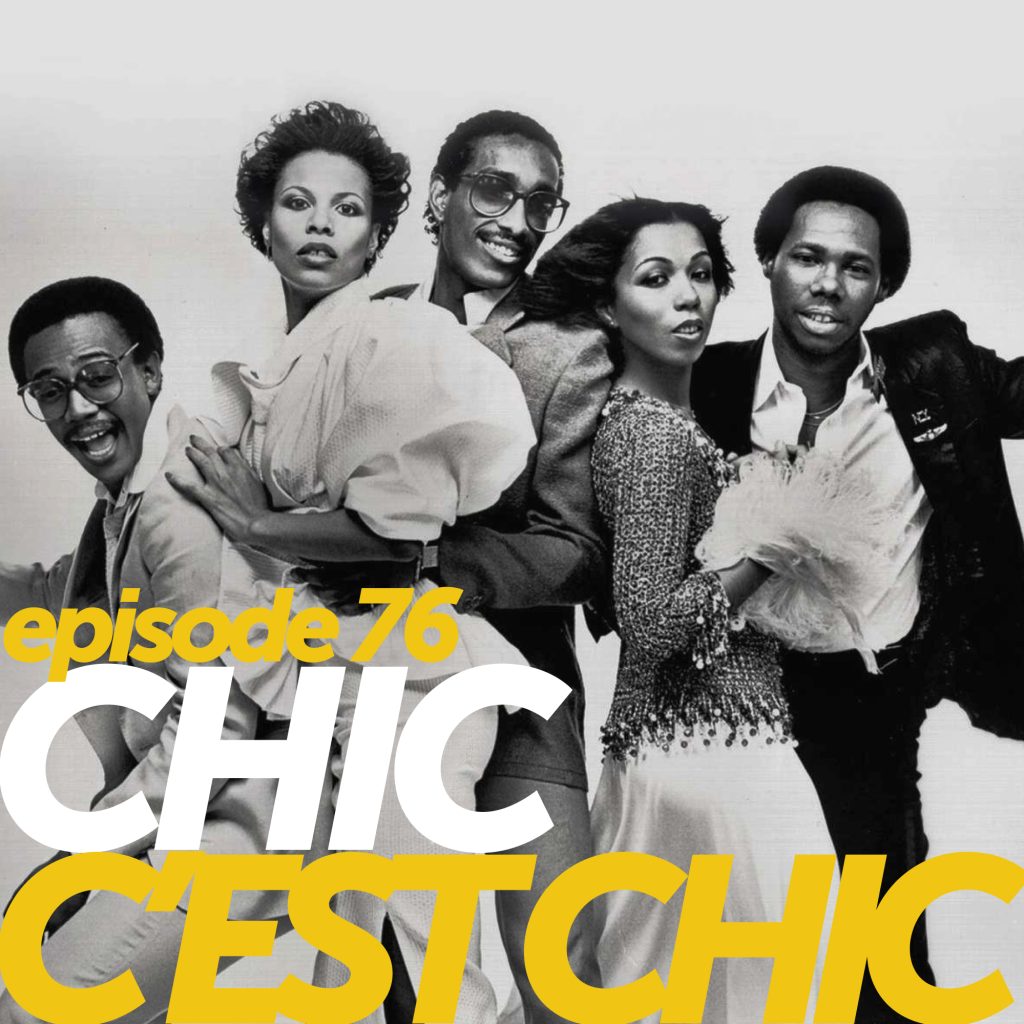
Episode 76: Chic’s “C’est Chic”
This episode’s meaning is neither deep nor hidden: the Nile is a river. To good times, that is. If the savoir faire, stellar musicianship, and seismic influence of Nile Rodgers and Bernard Edwards’ organization don't suit you, then to cite a very wise t-shirt: “disco doesn't suck; you just can't dance.”
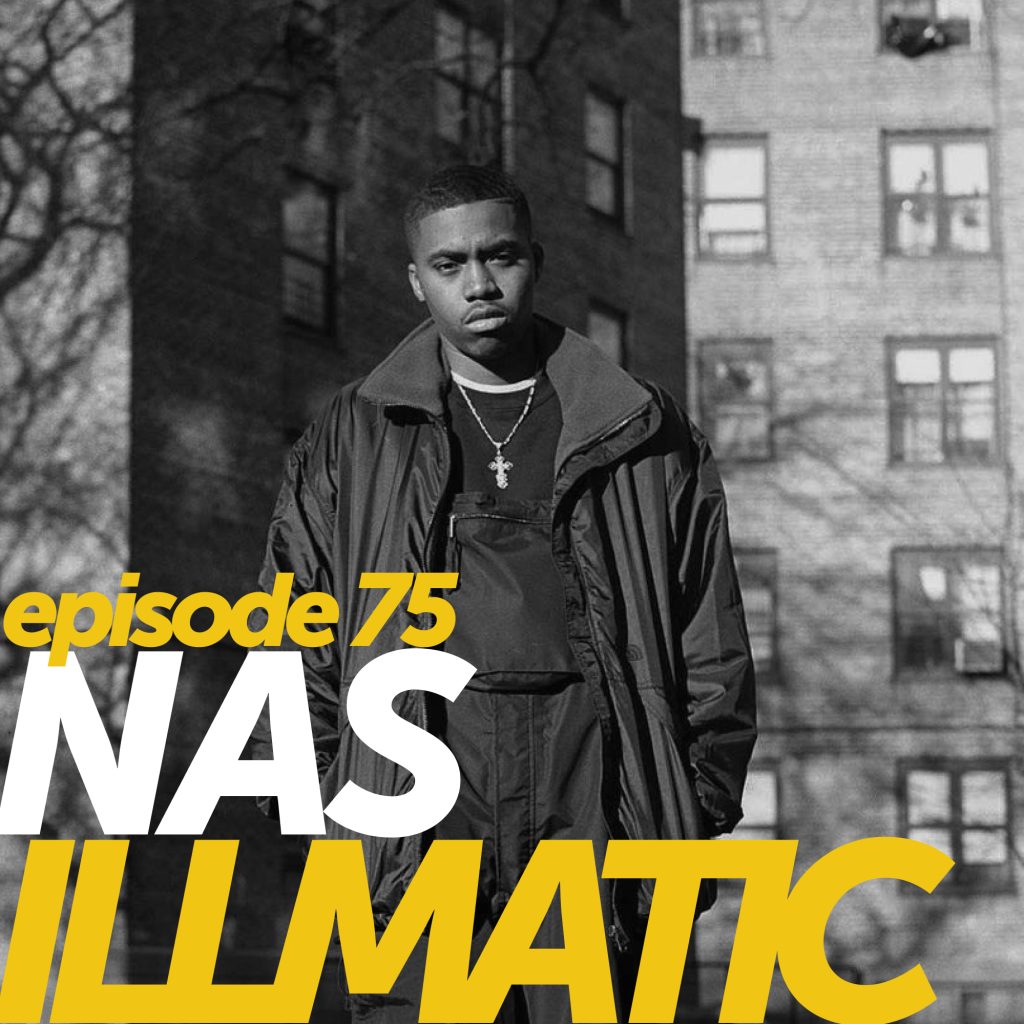
Episode 75: Nas’s “Illmatic”
Illmatic’s impact on hip-hop is a foregone conclusion — one listen and it ain’t hard to tell why. But as we unpacked the lyrical density, the layered samples, and the hyperlocal lens of Nas taking us to the Bridge, we found they represent, represent something deeper in the American mythos and our cultural consciousness. In the land of the free and home of the brave, life may be a bitch, but the world is yours.
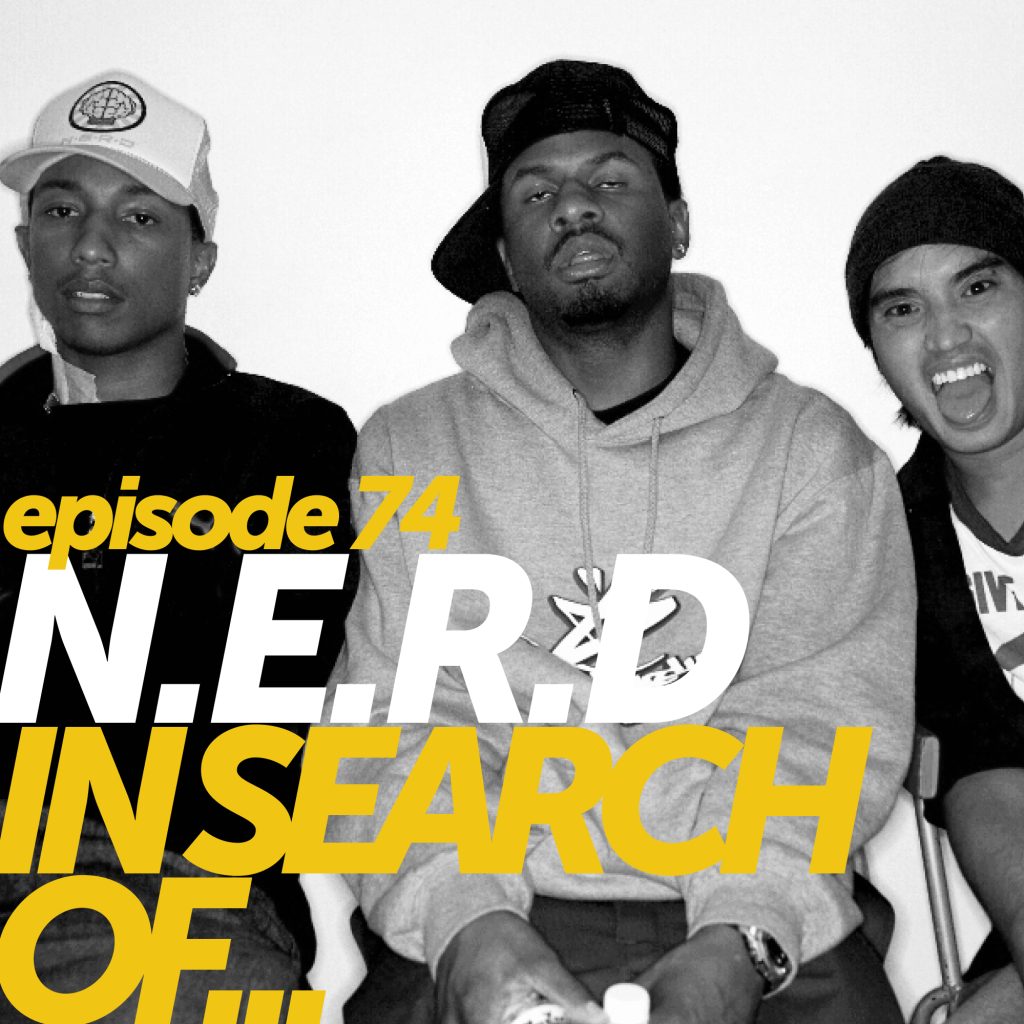
Episode 74: N.E.R.D’s “In Search Of…”
It may be true that No One Ever Really Dies, but at the turn of the millennium, a young, wild, and free new wave in culture most certainly came alive. Whether or not you were around and aware in the moment of the Neptunes’ cultural dominance—and the decidedly counter-cultural bomb N*E*R*D planted underground—it's worth the star trek to the 21st century sound and style’s Big Bang.
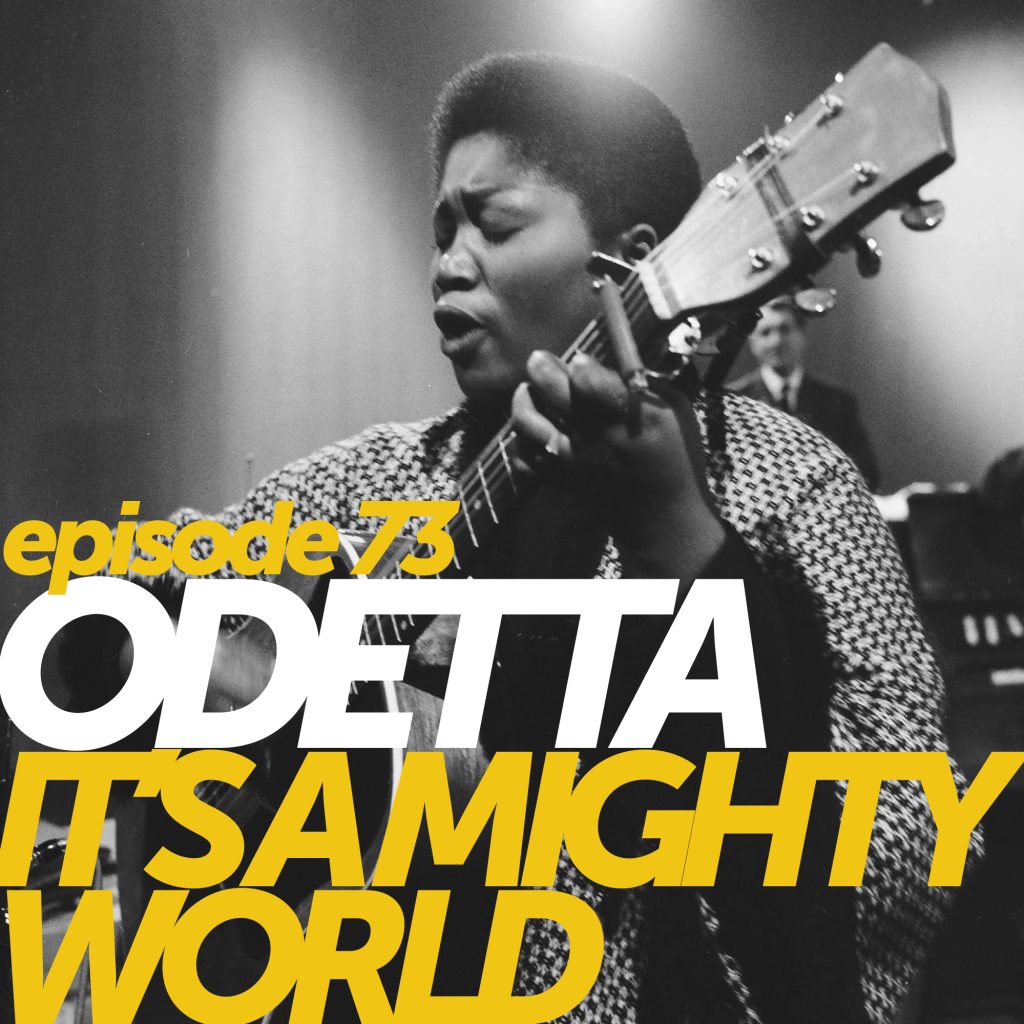
Episode 73: Odetta’s “It’s a Mighty World”
Odetta — a must-know titan of American music and culture — once noted that young people “learn about American history through battles.” But her dream of liberation was shaped much differently: “I learned about the United States through this music, through the songs that I sing.” As we live through the kind of historical moment that makes most folks want to lie down and die, we can — like many heroes before us, from MLK to Maya Angelou — look to the legacy of 1964 and Odetta for strength to insist upon our lives.
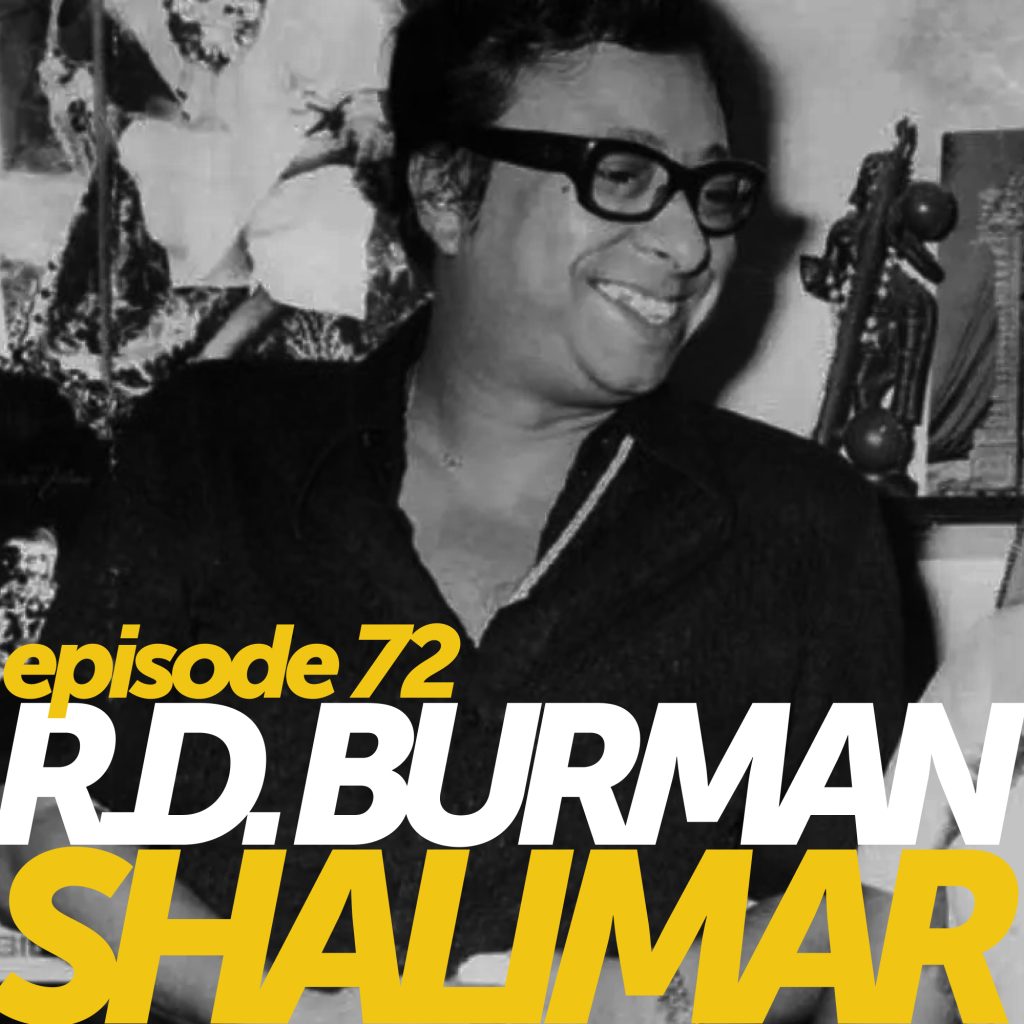
Episode 72: R.D. Burman’s “Shalimar”
Once upon a time in Bollywood, one magical man made enough music to fill a million moments—and made space for hundreds of other artists along the way. Of the 331 scores “Pancham” composed in his lifetime, 1978's “Shalimar” is a uniquely compelling introduction to his technical prowess, transcendent alchemy of cultures, and tremendously joyful love of a life full of song.
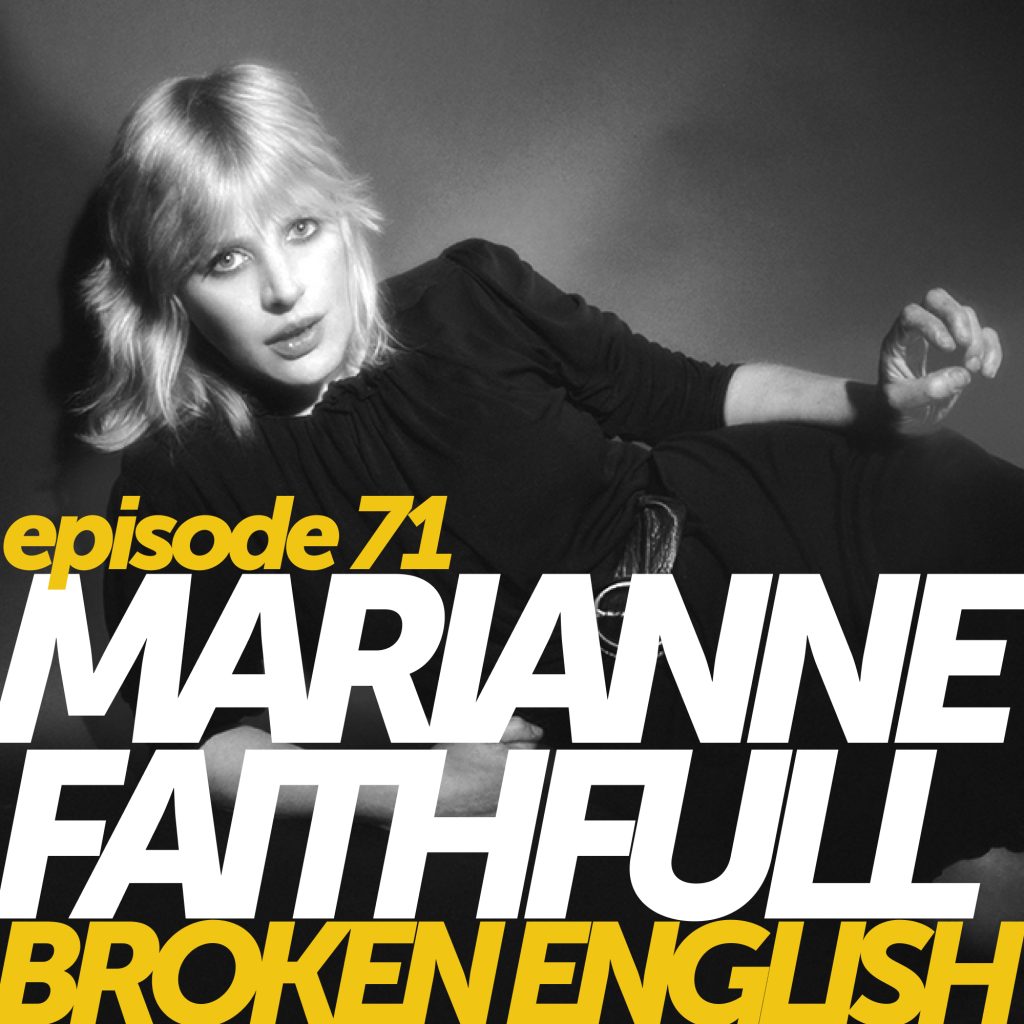
Episode 71: Marianne Faithfull’s “Broken English”
“That’s the thing about pretty faces… We don’t expect them to belong to the fighters— the junkies and monks and cockroaches who’ll survive every atomic bomb and suicide attempt and outlive us all.” - Lindsay Zoladz Broken English is searing, singular snapshot of surviving to spite the devils (who’ve gotten far too much sympathy in the story so far). You’ll love it forever with its good and bad weather. We may have lost Marianne Faithfull this year, but not before she outran the darkness. As we close out a dark year and look ahead for light, there’s a lesson to...

Episode 70: Sade’s “Love Deluxe”
Any denier that all art is political need look no further than the smoothed-out soul slipstream of Sade, a group defined by its economics. Rare output, minimal arrangements, reserved volume, and, of course, the premium implied by “Love Deluxe”—a title derived from the idea that true love is among a precious few luxuries that can’t be bought. Our world’s clearly longing for more longing, and we discovered a truly transcendent delicacy as we unboxed Sade’s brand of desire.
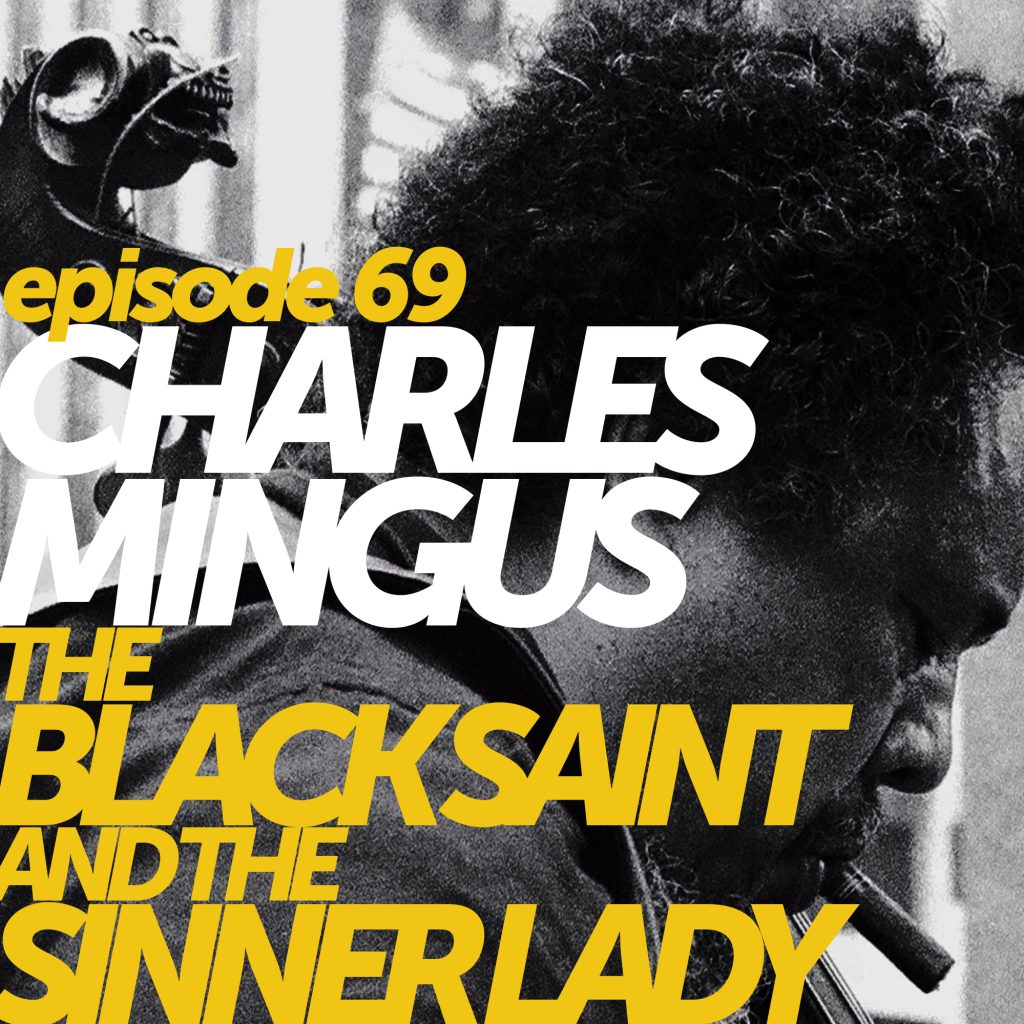
Episode 69: Charles Mingus’s “The Black Saint and the Sinner Lady”
When you think of true "artists" in music, who comes to mind? Charles Mingus embodied its romantic ideal, for better and for worse. His magnum opus "Black Saint" is more than even jazz's cosmic form can hold—it's the full-bodied essence of a master composer, peerlessly inventive bassist, and clairvoyant critic of the real America. In it, you’ll find what his collaborator Gunther Schuller called "the widest ranging musics you can find composed by one single human being."
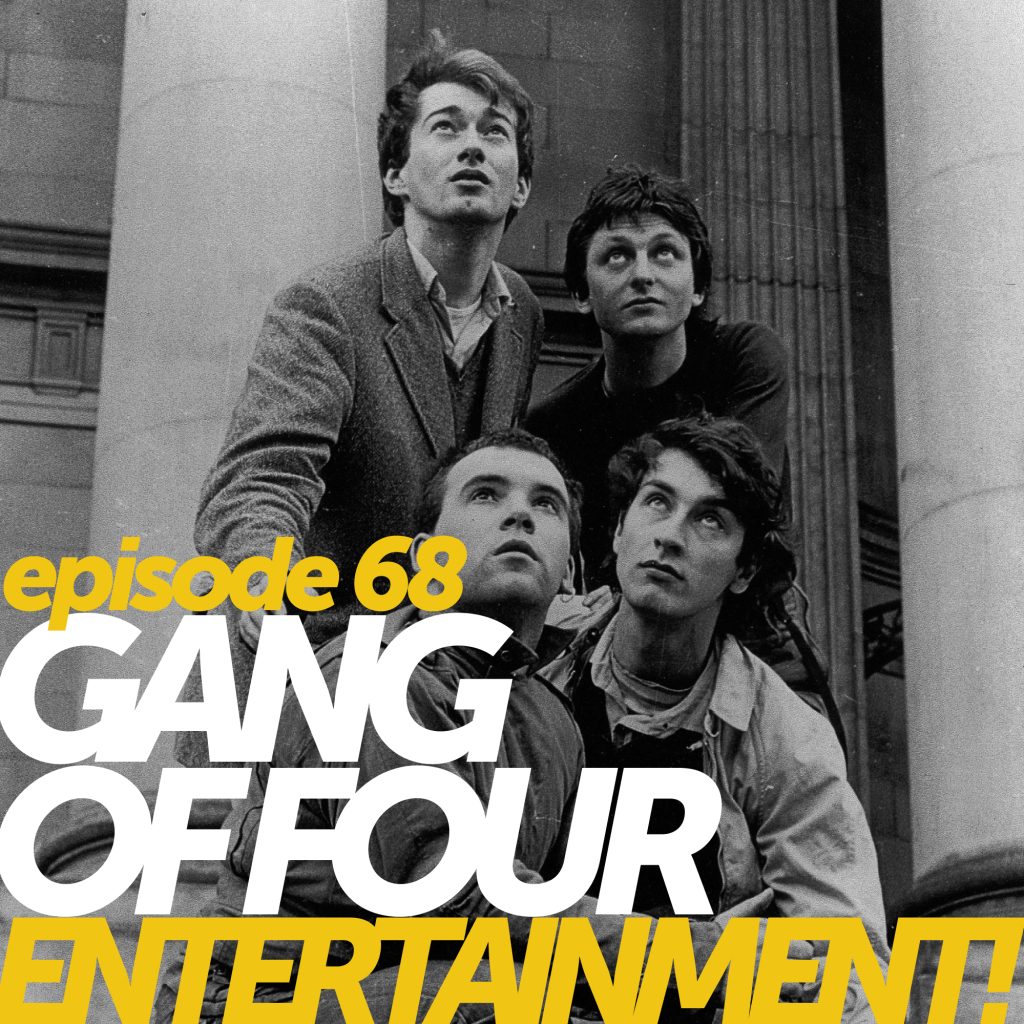
Episode 68: Gang of Four’s “Entertainment!”
“Entertainment!” is described by Gang of Four’s Jon King as “a record about young people smiling and dancing in the face of disaster.” Uh oh, sound familiar? This Leeds-born slab of Brechtian boogie reminds us that to navigate a world where everything is (small-p) political, dancing and dialectics belong together. Free your ass and your mind will follow.

Episode 67: Brooks & Dunn’s “Brand New Man”
This is the tale of two lonesome cowboys who got down, turned around, and went to town catching lightning in a bottle on their first try together. Whether or not their decade-defining country anthems lit a flame in your eye in the 90s like they did ours, Ronnie and Kix offer a lens through which outlaws, in-laws, crooks, and straights alike can look for ways to learn to love again.
Episode 66: Oumou Sangaré’s “Moussolou”
The name "Oumou" derives from an Arabic word meaning "mother of." It is associated with dignity, wisdom, and maternal strength. Southern Mali’s Oumou Sangare has come to embody her namesake for millions around the world, and it all began when she was just 19 years old, channeling the magical music of hunters through her powerful and purposeful voice and creating a moment that captivated an entire country. Hers is a story everyone should know.
Episode 65: Missy Elliott’s “Supa Dupa Fly”
In the words of one of her groundbreaking forebears, “You feel free? You want to try some wild s**t? Thank Missy.” Since the very first frame of “The Rain” entered our eyeballs, Missy has made the avant-garde accessible, pointing us to a future full of more funk and more fun simply by standing fully in the splendor of her space-age self. Come (supa dupa) fly with us back to the moment where Missy’s magic began.
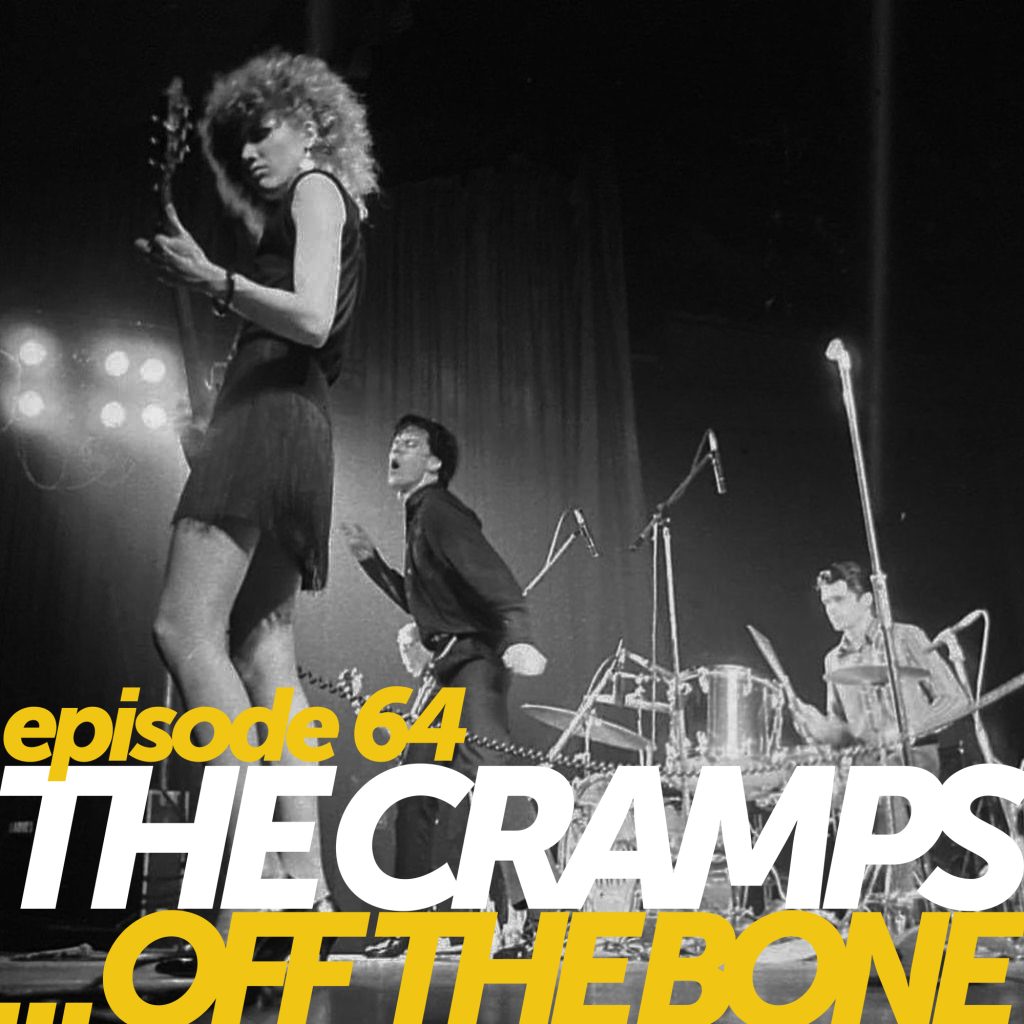
Episode 64: The Cramps’s “…Off the Bone”
God is a woman and she plays the guitar loud … y’all come catch some Holy Ghost in your hips. Hear our hallelujah for the love story of the queen of rock ‘n roll and the mad daddy holy rollin’ on a river—upstream all the way—and boot scootin’ through a fun and freaky heaven and earth of their own design. The Cramps were Dionysian, devilish, dangerous, and damn good, and they remind us that life can be, too. If you can’t dig this, you can’t dig nothin’.
Episode 63: Black Moth Super Rainbow’s “Dandelion Gum”
Life’s a bit heavy to chew on these days, so we reached into the pocket of our mid-2000s jeans and found an old piece of Dandelion Gum to chew on instead. As soon as its neon syrup hits your tongue, you’ll wonder why you hadn't let this "future pop for now people, today" melt you, melt you, melt you yet.
Episode 62: Project Pat’s “Mista Don’t Play: Everythangs Workin”
This life we're livin' is oh so beautiful. Take it from Patrick Houston, who has spread the gospel of the real for three decades, followed by a discipleship that has shaped 21st century culture in his image. For those still alive in 2025 by the grace of God, let us give flowers to the man from the North North.

Episode 61: Grace Jones’s “Nightclubbing”
Not a woman. Not a man. A revolution. Music’s long history is littered with larger-than-life characters whose mythology shapes reality for the masses — and few loom larger than the mighty Grace Jones. “Nightclubbing” without context is a tremendous body of songs worth anyone’s time, but after a deep dive into Grace’s time at Compass Point, you’ll agree that it’s a vital work.

Episode 60: Paramore’s “This Is Why”
The menace and melancholy of modern life have sentenced scores of young people to the gilded prison of nostalgia — but much to our surprise, a band of recovering Southern pop-punks have an antidote. For anyone willing to “sit still long enough to listen to yourself,” their new music’s sharp rhythmic angles and sharper lyrical reflections frame a doorway through which to free our big feelings and forge ahead.

Episode 59: Ennio Morricone’s “The Good, The Bad and The Ugly”
You know that five-note coyote howl. You may even know the classic film it helps power. But what do you know about the man behind those iconic moments? For our final exploration from our 2024 calendar, reflect with us on the genius of a maestro who could make magic with a mere fistful of notes, who poured forth from his soul a foundation upon which much of 20th century popular culture was built.

Episode 58: TLC’s “CrazySexyCool”
Vision. Bravery. Originality. The 30th anniversary of the ATL-exported opus — by the highest-selling girl group of all time — offered us a chance to reflect on all the ways our hometown heroes ran so some of the 21st century’s most iconic artists could fly.

Episode 57: Kendrick Lamar’s “good kid, m.A.A.d city”
Before the Super Bowl, the super beef, the Pulitzer, or PGLang, one good kid and king-to-be sojourned from South Central to the height of the American promise and rained down lightning that united one nation under a groove. You’ll feel the energy of this episode from two planets away — hop in the van real quick and let’s roll out.

TuneDig Episode 56: Cocteau Twins’s “Heaven or Las Vegas”
Dream of ethereal waves of sound swirling around you—and words you can’t make out saying more than you could imagine—as you float back upstream with us toward the warmth of Cocteau Twins’ decade-defining masterpiece, which still ripples across a vast pool of influences 25 years on.

TuneDig Episode 55: Jeff Buckley’s “Grace”
Once upon a time, “your favorite artist’s favorite artist” wasn’t a Midwest princess, but a “mystery white boy” beloved by Bob Dylan and Adele alike. Jeff Buckley’s signature Grace is on the shortlist of transcendent albums every living being should experience, because, as one industry vet put it: “it’s all in there, isn’t it? It’s just all in there.”

TuneDig Episode 54: Botch’s “We Are the Romans”
"We Are the Romans" is a visceral, vital document guaranteed to make you feel something from its first notes — and there’s never been a better time to stop and smell the roses from a group just now getting its long-overdue flowers.

TuneDig Episode 53: Ravi Shankar’s “Three Ragas”
Ravi Shankar lived one of the twentieth century’s most extraordinary lives, bearing witness to—and making—history all around the world. To many (especially in the West), he personified an extraordinarily complex style of music and the cultures from which it was borne, and he worked hard to make it look easy.

TuneDig Episode 52: Alain Goraguer’s “La Planète Sauvage”
Gather ’round, sommeliers of the strange and crate-digging boogie children, for something “Strange! Frightening! Fascinating!” awaits. The soundtrack to Cannes 1973’s Jury Prize-winning film is a dazzling, surreal, avant-garde hymn to cosmic knowledge and compassion and a secret handshake among real heads. If you’re after a trip to a new dimension, here’s your one small step for man.

TuneDig Episode 51: Marvin Gaye’s “I Want You”
Marvin Gaye’s well of soul power ran mighty deep, and deep into his career, he pulled up a bucket of ice-cold, silky smooth champagne called “I Want You.” Come for the lush instrumentation, vocal harmonies, and Leon Ware clinic; stay for the stories. For our return from hiatus, we observe a titan in his element, reflect on the pain that built him into one, and consider how to reconcile our feelings when complicated messengers deliver beauty to our door.
SEASON 6

TuneDig Episode 50: Funkadelic’s “Maggot Brain”
Before uniting one nation under a groove, the lysergic lords of chaos in Funkadelic harnessed wild lightning into an amulet called Maggot Brain, bestowing the bearer with raw, dark power stronger than any force known to man. Between reaching our 50th episode and coping with the “maggots in the mind” of today’s universe, it felt like the right time to free our minds. We hope y’all’s asses will follow.

TuneDig Episode 49: Alice Coltrane’s “Journey in Satchidananda”
The story of Alice Coltrane — an accomplished bebop pianist from Detroit who transcended into something far greater before walking away from public life altogether — is a glimpse into what it means to be truly free. Alice’s masterpiece "Journey in Satchidananda" is a cosmic dance that sparked creation from destruction. And in a time when we’re all desperately searching for a spark of meaning and hope, Journey abides abundantly.

TuneDig Episode 48: Heart’s “Little Queen”
Take a moment to appreciate Ann and Nancy Wilson, who kicked down the doors of rock ‘n’ roll’s boys’ club with their peerless guitar work, soaring soul vocals, and tight songcraft. 1977’s Little Queen — an oft-overlooked gem in the classic rock canon — offers a snapshot of those elements at their most urgent and pure, powered by the Wilsons’ simple motivation (as described by their producer): “It was a war.”

TuneDig Episode 47: Tangerine Dream’s “Phaedra”
When you think of “electronic music,” what comes to mind may not be a genre you deeply love — hip-hop, house, new wave, or even dub reggae — but all of it owes some debt, scientifically or otherwise, to Tangerine Dream. Dig in with us as we study a prime example of the band’s brand of effortful innovation, where they patiently and persistently labored at the cutting edge of electronic technology to open a portal to new worlds in our minds.

TuneDig Episode 46: Olivia Rodrigo’s “SOUR”
Did you catch one of 2021’s biggest albums, or like us, did you almost overlook it? If you have any expectations of pop music, "SOUR" will likely subvert them. Teenage dream this is not; it’s an exquisitely universal portrait of a weird time to be alive.

TuneDig Episode 45: Fela Kuti’s “Expensive Shit”
The story of Fela Kuti — one of the most famous people on an *entire continent* passionately struggling to liberate power to more people — is absolutely one worth deeply knowing, regardless of whether you find yourself drawn to Afrobeat or (cringe) “world music.” But once you know it, it’s almost impossible not to fall in love with Fela and Afrika 70 as their revolutionary grooves rewire your brain in magical and meaningful ways.

TuneDig Episode 44: Meshuggah’s “ObZen”
Meshuggah’s ObZen—an artifact of human creativity pushing the limits of what’s possible—will quite literally make you hear music differently. If you’re looking for a new musical adventure, and especially if you don’t think you like “heavy” or “weird” music, consider this your sign to push past your comfort zone.

TuneDig Episode 43: mewithoutYou’s “Catch For Us the Foxes”
A misunderstood wise man once said “Let him who seeks continue seeking until he finds.” In our most personal and vulnerable episode yet, we do some seeking through the lens of songs that fill us with the bravery and sincerity to love ourselves and others fully. Dig deep with us as we fish for words about our tiny place in the universe and dance with gratitude for our ability to do so.

TuneDig Episode 42: Erykah Badu’s “Mama’s Gun”
Y’all tryna raise your vibrations? Erykah Badu is here to help. Season 6 kicks off with a meditation on realness and what being on “your own wavelength” really means. (Spoiler: it ain’t a single frequency — it’s a whole spectrum.)
FRIDAY HEAVY
For lifelong headbangers and the musically curious alike, a new podcast from TuneDig is here to push your palette with aggressive, abrasive art. Each short, fast-paced episode offers (1) a new metal, punk, noise, or experimental release we recommend, (2) a related playlist we’ve curated, and (3) a heavy issue to consider and an organization doing something about it. Join us in the void.

Friday Heavy: End of Year Review 2022
It was a great year in heavy music. In this episode, we look back at all the new releases we featured and the curated playlists they spawned.
It was a NOT great year in many other ways. We leave you with a parting message of encouragement to connect your energy and angst to on-the-ground organizations doing the work in your community.


Friday Heavy: November 11, 2022
This week, we discuss:
- He Is Legend – Endless Hallway
- Curated playlist sussing out the depths of He Is Legend’s roots, weirdness, and attitude
- Protect Our Winters (POW)

Friday Heavy: October 28, 2022
This week, we discuss:
- Witch Fever – “Congregation”
- Curated playlist of eclectic, high energy that might get your inner goth stoked on (briefly) going out
- Housing Justice League

Friday Heavy: October 14, 2022
This week, we discuss:
- The Lord † Petra Haden – “Devotional”
- Friday Heavy playlist densely packed with thick, meditative vibrations across the spectrum of drone
- Multidisciplinary Association for Psychedelic Studies (MAPS)

Friday Heavy: September 30, 2022
This week, we discuss:
- Escuela Grind – “Memory Theater”
- Friday Heavy playlist dedicated to the absolutely fucking hostile energy that powerviolence can bring to radical inclusion
- Zealous

Friday Heavy: September 16, 2022
This week, we discuss:
- Holy Fawn – Dimensional Bleed
- Friday Heavy playlist showcasing the incalculably extensive and wildly diverse Shoegaze Cinematic Universe (aka post-rock)
- MTB Atlanta

Friday Heavy: September 2, 2022
This week, we discuss:
- The Callous Daoboys – “Celebrity Therapist”
- Friday Heavy playlist confronting the under-appreciation of Atlanta’s heavy and weird music scene
- Mississippi Rapid Response Coalition – Water Fund

Friday Heavy: August 19, 2022
This week, we discuss:
- Osees – “A Foul Form”
- Friday Heavy playlist fuzzed out on oddball punk that smells like cigarettes just thinking about it
- Women on the Rise GA

Friday Heavy: August 5, 2022
This week, we discuss:
- Chat Pile – “God’s Country”
- Friday Heavy playlist with, uh, a bunch of very pissed off songs directed at christofascist terrorism
- The Grocery Spot

Friday Heavy: July 22, 2022
This week, we discuss:
- WAKE – “Thought Form Descent”
- Friday Heavy playlist that anchors its sound in modern production of sludge, blackened death, and post-metal
- The Planetary Society

Friday Heavy: July 8, 2022
This week, we discuss:
1. Vomit Forth – “Seething Malevolence”
2. Friday Heavy playlist that’s unsettling in the best way, leaving you feeling a little off your axis
3. Trees Atlanta

Friday Heavy: June 24, 2022
This week, we discuss:
1. CANDY – “Heaven is Here”
2. Friday Heavy playlist packed with off-the-beaten-path punk and hardcore from bands that deserve space on your battle jacket
3. Round Rock Black Parents Association

Friday Heavy: June 10, 2022
This week, we discuss:
1. Sasquatch – “Fever Fantasy”
2. Friday Heavy playlist of heavy grooves for late desert nights and hazy generator parties
3. Feed Buffalo

Friday Heavy: May 27, 2022
This week, we discuss:
1. Decapitated – “Cancer Culture”
2. Friday Heavy playlist stacked with bands putting their unique and modern spin on (occasionally tech) death metal
3. PropelATL

Friday Heavy: May 13, 2022
This week, we discuss:
1. Primitive Man – “Insurmountable”
2. Friday Heavy playlist full of SLOW, enveloping, massive and crunchy tone and big feedback
3. National Network of Abortion Funds

Friday Heavy: April 29, 2022
This week, we discuss:
1. Heriot – “Profound Morality”
2. Friday Heavy playlist packed with mid-tempo, huge guitar tone, big atmosphere and lots of industrial grit and grind
3. Invisible People

Friday Heavy: April 15, 2022
This week, we discuss:
1. Greyhaven – “The Bright And Beautiful World”
2. Friday Heavy playlist for fans of more choatic + melodic combinations
3. Campaign for Working Families

Friday Heavy: April 1, 2022
This week, we discuss:
1. Meshuggah – “Immutable”
2. Friday Heavy playlist full of high quality Meshuggah aping that AIN’T “djent”
3. The Bail Project

Friday Heavy: March 18, 2022
This week, we discuss:
1. Soul Glo – “Diaspora Problems”
2. Friday Heavy playlist with 20+ songs in under 40 minutes, (almost) all under 2 minutes each
3. Equality Texas

Friday Heavy: March 4, 2022
This week, we discuss:
1. Vein.fm – “This World Is Going To Ruin You”
2. Friday Heavy playlist exploring more of Will Putney’s work
3. Books to Prisoners
SEASON 5

TuneDig Episode 41: Miles Davis’s “Bitches Brew”
Let’s be clear: "Bitches Brew" is a challenging record, even to some of the best musicians in the world — but all of them say it’s worth the investment. It’s the kind of trip that, even if we *could* draw a map, it wouldn’t take you there. Let go of the need for meaning and enjoy the ride with us. We can promise you’ll be pleasantly surprised where you end up.

TuneDig Episode 40: Fiona Apple’s “Tidal”
On the heels of one of 2020's most acclaimed albums — Fiona Apple’s Fetch the Bolt Cutters — we revisited Apple’s debut Tidal and wound up working to extract ourselves from the mostly male gazes that made its reception … much different. We arrive at a question much like writer Jenn Pelly had: “People would constantly prod Fiona on how an 18-year-old could write songs as mature as these ... Why did they not ask instead how she became a genius?”

TuneDig Episode 39: Death Grips’s “The Money Store”
The modern world is accelerating beyond our control, shaping our reality in ways we can’t yet perceive or understand. Enter Death Grips, an art project capturing the chaotic energy and illustrating the absurdity of our hubris in trying to harmonize the surreal and extremely real — never more perfectly than on 2012’s prescient "The Money Store".

TuneDig Episode 38: Augustus Pablo’s “King Tubbys Meets Rockers Uptown”
Reggae music is easy to take for granted, but its impact is underappreciated and massive — in the case of dub in particular, everyone from Radiohead to Johnny Rotten to Run-DMC owes it a debt. Augustus Pablo and King Tubby together created what’s regarded as “one of the finest examples of dub ever recorded.” Join us as we dive into the culture, history, and unique engineering experiments that made it possible.

TuneDig Episode 37: Rihanna’s “ANTI”
By every measure — sales, awards, chart-toppers, global name recognition — Rihanna is objectively as big as the Beatles ever were. In fact, ANTI is so big it’s still on the charts, a record five full years later. Take a closer look with us at “the record you make when you don’t need to sell records”, and get a taste of the true freedom that comes from focusing on your inner voice when faced with insurmountable expectations.

TuneDig Episode 36: Son House’s “Father of Folk Blues”
All American music traces back to the blues, and deep at the root sits Son House. That the recordings on "Father of Folk Blues" even exist is something of a gray area that cuts to the heart of the great American myth, but wherever you land after hearing these stories, you’ll find that what matters most is what the great Muddy Waters once said of House: “That man was the king.”

TuneDig Episode 35: Melvins’s “Stoner Witch”
The futility of describing the Melvins has stretched critics in the direction of absurd words like “Dadaist” for nearly 40 years now. They’ve belligerently flogged any attempt to pinpoint their essence simply by being themselves, but "Stoner Witch" remains a reliable mall directory for the Melvins’ vast and wild discography. Grab yourself some pretzel bites.

TuneDig Episode 34: Dolly Parton’s “Jolene”
We should talk about Dolly the way we talk about Prince. Her extraordinary kindness and unique kitsch both make her universally loved, but what gets left out of the conversation is the very thing that made her famous: the music. Join in as we focus attention on the sonics and songwriting of the low-key masterpiece "Jolene".

TuneDig Episode 33: The Allman Brothers Band’s “The Allman Brothers Band”
Six enlightened rogues out of Macon, Georgia birthed an entire genre simply by being their soul-powered selves. We have not come to testify, but we’re still hung up on the dream The Allman Brothers Band helped us see. By the end of this episode, you will be, too.
TUNEDIG RADIO


SEASON 4


SEASON 3


SEASON 2




SEASON 1


BONUS TRACK EPISODES

BONUS TRACK: How We Got Here
We got a bunch of interesting listener feedback in our off-season, and it encouraged us to shed some light on why we do things the way we do ‘em. Also, we reflect on our first writeup, which was ... interesting.
WHO WE ARE
We're Cliff (right) and Kyle (left). We’re two dudes born and raised in ATL with day jobs in tech and sustainability, respectively.
We met in middle school, and in one way or another, music’s been the thing that’s kept us close for the two decades since — whether it’s sharing and talking about new music (like this podcast, except in our texts or over beers), going to shows, or working with our favorite record stores to help them survive and thrive.
We started TuneDig as a little art project that connects us more deeply ourselves and to the world through the infinite gift of music. We hope you’ll join us for the conversations, let us know what you think, and share discoveries of your own.
More About TuneDig
TuneDig began as a little something called MusicGrid.me, which we created after realizing there was no place online to directly exchange music recommendations with your friends. Our aim was simple: to make rating albums simple, useful, and social. We got some love from places like Mashable, Wired, Evolver.fm, and Hypebot. We managed to foster conversation between music lovers, get thousands of reviews, and meet great people.
Along the way, we realized that record stores were an essential part of the music lovers’ community. After many a conversation about how we could helpfully connect them to the people who loved them, we began helping them leverage technology to create new revenue streams and embrace streaming services without giving up what’s unique to them: expertise and curation. (Long live the counter clerk who knows exactly which record will be the right introduction to jazz fusion!)
TuneDig is our vision to connect music lovers with the music they love, because no matter how much has changed in the way we discover and enjoy music, recommendations from people you trust and respect will always be the best way to find new music you’ll dig. With this podcast, we’re channeling the spirit of trusted curation pioneered by record stores, and bringing you something to take you deeper into music you can love.