
TuneDig is an in-depth and informed conversation between two lifelong friends about the power of music — one album at a time.
In each episode, we go down the rabbit hole to spend a while in the strange world we discover. We take an honest look at creativity in all its complexity—from writing and production to history and cultural impact.
We promise you’ll learn something new every time, no matter how much you already love the album we explore.
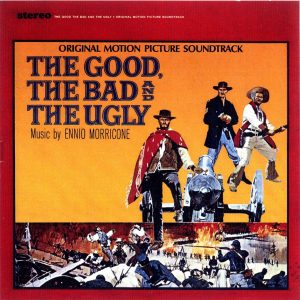
Episode 59
The Good, The Bad and The Ugly
Ennio Morricone
You know that five-note coyote howl. You may even know the classic film it helps power. But what do you know about the man behind those iconic moments?
For our final exploration from our 2024 calendar, reflect with us on the genius of a maestro who could make magic with a mere fistful of notes, who poured forth from his soul a foundation upon which much of 20th century popular culture was built.
Transcript
Cliff: Today we’re talking about the soundtrack to The Good, The Bad, and The Ugly by Ennio Morricone.
This will be easy and also a little scary at the same time. Making extraordinarily called shots about how important this piece of music is and how important it is for people to be able to listen to it and dissect it. And enjoy it and in the middle is going to be a bunch of stuff that I got once again really excited about While thinking about this record or album or soundtrack or however it is We want to frame it and I didn’t expect to I thought it was going to feel like a chore And once again, it didn’t and now i’m stoked about all kinds of stuff.
I didn’t expect to be especially because I made the Quote mistake, I guess of watching a documentary about Ineo recently and now I now I love him
Kyle: I feel that I knew he was and is, capital I, important and was sort of vaguely aware of what we’d be getting ourselves into I also, because of that Like you was a little bit like this one will kind of be a chore a bit of a labor of love But it’s the end of the year. It’s the end of the calendar and Felt right to go out on a big call it cinematic note pun intended I guess This might be the most objectively important overall artist that we’ve talked about.
Cliff: I figured we were gonna say it exactly.
Kyle: I feel like we’ve done some really heavy hitting ones this year. Thinking about like the Ravi Shankars of the world. But I just don’t think it gets any bigger than this. And After watching a bunch of video of him, I think he would be embarrassed by that and rebuke that vigorously.
But I think he would also be excited. I think we would align on the point of excitement for everything that this unlocks, not only about music, but about film, but about popular culture, but about American and world history. This one’s exciting because it’s just about as deep a well as you could possibly arrive at with a map in the shape of one little album.
Cliff: Yep and the more I learned about him and his process and approach and thought and planning and path to composition it I became more enamored with him as an artist in ways that I, once again, didn’t really expect. I mean, we always naturally grow some sense of, at a base level, appreciation and then eventually some sort of admiration for some aspect of, pretty much any artist that we talk about.
It’s hard not to when you spend that much time with their art but this was at a fundamentally different level. To see someone Work on music so intently and intentionally and then have everyone in his orbit who could describe him would just talk about how he was an exception to every rule that he, he truly bore down and went to work and the way that he approached things. the descriptions from people who are closest to him seemed. So different from the usual attempt to describe a sort of Pseudomanic episode of people getting really really intensely into the music that they’re trying to do and crank it out Like he he was methodical And you can not only see his brilliance early in his career But then he seemed to build on literally every step from the moment He was a child into becoming better and better and better at Effectively finding the empty space that existed in the progression of where music could go and especially how music could be associated with cinematography.
And it was like he was constantly finding like, Oh, well, your problem is you didn’t just have someone hit a soup can with a spoon on the three beat. And if you had just done that, you would transform it into this piece of music that’s now immediately recognizable by people who don’t even care about this stuff.
And so, to see that level of intentionality and depth in creativity, and then think to like, 100 percent of boneheaded people know exactly the title track of this, whether they could ever spot it or name it or not,
Kyle: Any human alive can name that tune in one note, two notes. I definitely want to hear more from you, you know, as, as we go on, on the process stuff and some of the technical aspects, because I think the rabbit hole took me other places. but you know, just to kind of ground us, we are talking about arguably the most famous film composer of the 20th century.
and by extension, ever, and A number of people, to your point, stress this among the most prolific and inventive composers period of music as many as 500 film works a hundred classical pieces, other pieces of songwriting for pop music or direct music or what other people called it.
in like truly almost every genre and musical style imaginable,
Unbelievably prolific. Also you’ll notice at the top of his wiki, the Omri designation, the order of merit of the Italian Republic Italy’s highest ranking honor. It seems to be at least if not a step above being knighted in the United Kingdom. Um, and then just in terms of raw global association between an artist and a country.
We’re talking for sure at the level for Italy, uh, Fela for Nigeria of Ravi Shankar for India. And you know, I don’t know that we’ve covered many other artists who like really represent iconically a country. That, I mean, that, that just like barely scratches the surface. What else? I know we don’t, we don’t want to list all the easily Google able accolades, but I feel like what else stood out to you that made you go right away?
Like, Oh, holy shit. This guy’s Top tier?
Cliff: It’s hard to look past listening to how people described his eventual relationship with cinematography because I think his specific relationship with Sergio Leone which we’ll obviously talk about a lot here, but watching that become sort of an apex of a direction in his career was really impactful to me because, who knows, I mean, this is, This is a podcast.
Our job is to basically project onto things, uh, using the things that are going on for us personally in our lives anyway that no one will ever know about. And so I’m sure I’m probably thinking a lot about the effectiveness of someone’s intentional career arc and to see it here where. You know, we’ll, I’m sure we’ll talk a ton more about this, but the level of collaboration that took place specifically on this soundtrack and for this movie was a direct result of every other bit of work that he had done up until this point to effectively prove to expert cinematographers, the music matters more than you could ever have imagined and every moment that you don’t spend making your film with and around it.
The music, the more time you waste making movies less good than they could be. Like, there’s a, there’s an entire multiple form of art. It’s not one plus one, it’s something squared. If you are able to think about all these pieces working together now, and To see and think about a musician, and especially one that, it’ll be hard to describe his persona in audio form.
You should definitely check an interview, a video, something so that you can see his demeanor in response to people. Especially as he became incredibly well known. They would tell him like, you know, you, you’ve done something amazing, you know, you, you just did something no one else has done.
You basically made a pop hit out of a soundtrack and he like, he can barely kind of hold his neck straight up. He’s sort of like looking down at ankles his literal response to one of those in, in one of the, the clips was like, I got lucky.
Kyle: mm-Hmm.
Cliff: so to. To hear someone who has simultaneously that much intention but is also humble and unable to just exclusively give himself the credit, uh, for, you know, the amount of respect that he had earned in that moment I don’t know, it, it really inspired me to think differently about, So there’s certainly a lot more to discuss for sure, but I think seeing that impact and knowing that he began convincing people of how important music was even beyond himself really gives the feeling of him being like a steward or an ambassador of music and of the possibilities of music in a way that has, I don’t know, messed with my heart a little bit in a good way, honestly.
Kyle: Mm. I I love the idea of calling him a steward, you know, of all the nearly innumerable awards that he was honored with. The one that stood out to me was the Per Artem a Aada Metal, which translates to through Arts to God. So literally stewarding, channeling art and beauty to the world. that award, as you might’ve guessed from the Latin is presented by the Pontifical Council for Culture, like AKA literally the Vatican.
Um, and that committee was merged with the Pontifical Council for Dialogue with Non Believers. So the idea of being honored for reaching people who might not otherwise believe in God. Or something sacred in the universe and then being so moved by the beauty that you express That the pope is literally saying like you bring people closer to god with your work uh is is frankly staggering to me like that that award and name took my breath away a little and they describe it as in recognition of the achievements which contribute to the promotion of dialogue between the diversity of cultures in the contemporary world and thus promote man as an individual i read that as hey dude your shit helps people remember the beauty in being alive which is like I can see him on stage accepting the honorary Oscar in 2007 or whatever and the tears that he had in his eyes and I couldn’t imagine that type of designation taking his breath away as well.
So he was truly a steward and I do think he felt a deep sense of like responsibility and pride to be able to do this. When people talked about how prolific he was, he was always like, Bach did four times more than me. Like, I did nothing compared to, compared to a real master. So, the curiosity and the blank slate and the like, never allowing himself to have an ego at any point is I think another reason that we’re both probably really endeared to him.
He just wanted to keep doing it. He just loved it so much. And he, he did it all the way to the end, from the beginning to the end of his life. The fact that he wrote his first composition at age six, started at conservatory at age 12, completed a four year harmony program in trumpet in six months, and just like, kept blowing down the road from there is really just delightful.
I am, I’m delighted to think and talk about this cat. But what of the film? what of what brings us here today?
Cliff: Well, Kyle, this is a good movie. Ha, I gotta tell ya.
I don’t know if anyone’s discovered it yet, but it’s a good one.
Kyle: Yes. Two, two things occurred to me watching it. One is I had never watched it all the way through. So the first thing was like, Oh my god, so much of this has permeated the public consciousness. So much of this is pop culture, and has been for decades, and continues to be. and two, this movie is GORGEOUS.
Frame after frame, sequence after sequence, I’m like, How the fuck was this made in 1966, and with what alien technology? This thing Is unbelievable. I think I had a John Wayne picture in my mind. Sort of a like, Hallmark movie quality for bros type aesthetic. But like, Jesus man, the wide shots in this thing are Victorian.
they’re unbelievable.
Cliff: you know,
for clarity, original soundtrack length as a piece of music when released alongside of this movie in 1966, original soundtrack amounted to about 33 minutes, re releases You know, add up and become an hour or longer with a ton of, you know, extras and remasters and all that.
But the movie is three godforsaken hours long. 100 percent unavoidable. It is three hours. And you and I talked about when we first realized, oh, oh, cool, cool, cool, cool. It’s about to be John Wayne centered, you know, in a really boring shot saying like. Vaguely fascist stuff at insulting types of people, uh, and we’re gonna have to watch this for, for literally, a whole new Avengers movie length of thing.
Like, this is gonna be bad, and not only was it not bad, it’s I don’t, I can’t remember the last time I actively watched a three hour movie that was this, like, abstract feeling the entire time and it was a masterclass in holding your attention. from
Kyle: Mm hmm.
Cliff: The fact that it’s not just a novelty, but is in fact still engaging to our A.
D. whatever D. adult brains at this point really set me back. I had to really think about it and what that meant and try to learn more about it cause I am admittedly not a cinephile, or whatever it is that you’re supposed to say when you really, really, really like movies. I sorta don’t care that much, generally.
I respect it, but, I’ll take the music, thank you. But, this made
Kyle: You don’t, so you don’t like the banter, you don’t care for the banter between Chat Pile songs then?
Cliff: What?
Kyle: I kept thinking about that guy. I kept thinking about that guy so much watching this movie, like, what does he think of this? I have to know.
Cliff: That’s more fun to listen to because I can watch him walk around on stage like the imposing animal esque person that he is. Seems like a very
Kyle: In swim
trunks!
Cliff: Terrifying looking. Yeah, it kind of similarly listening to him say things that I would really hate to otherwise hear out of someone else’s mouth is a good analog for what this movie felt like, because on paper, Oh, neat, three people are searching for hidden gold, and they represent three slightly different aspects of humanity.
And cool. Clint Eastwood is like doing that thing where he makes This the same face for a whole movie. And okay, like none of these pieces are going to add up and instead it I am going to on purpose watch it again. At least another time. It was awesome. I I needed to go back and watch several scenes again because of how you would go from nothing feels like it’s happening to, like, clips are being edited at millisecond levels, timed with specific cinematic music that seems to have a geometric shape similar to what I’m looking at, and it I don’t want to like movies this much, and that’s what this music did to this movie.
Kyle: I feel that, and I love that. As a guy with a Letterboxd account, I stand on the other side of that divide from you. And I appreciate that we pulled you a little closer to the void. It’s the guy sitting in a room surrounded by film posters.
Cliff: Uh huh. See, I have
many friends such as yourself, so I’m able to occupy the empty space and just ask you things.
Kyle: Hey man, what happened in the movie?
Cliff: Mm hmm. Even having to think about why things were called spaghetti westerns. Was one example of the, I mean, this whole podcast is just about the infinite branches of things you can start to go down when you pay attention to art for like a second in just the like, okay, so spaghetti Western was like a really stupid term for, things that were otherwise filmed in.
You know, through Italian locations and production as opposed to American Westerns. And because we’re all Neanderthals here, we called it spaghetti Westerns or whatever. And like, just going down to like, what does that mean and what happened and what was different about movies that got recorded over there, uh, or, or created over there.
And why were they distinct? Uh, and is it just like a. TMU version of Amazon Westerns or are they like fundamentally different?
Kyle: if it’s not shot in that one region of Italy, it’s just sparkling cowboy.
Cliff: But even the classic the further away that you go from America, the closer you get to, oh no, no, instead of in American Westerns where there was like a really clear hero versus bad people, uh, well The more that you switched over to spaghetti westerns, the more they were like, yeah, actually, there’s really no such thing as a good person, including in this movie at all, including the person that’s labeled the good person and everything is like anti hero and actually everybody’s pretty bad and nothing’s very good.
And everyone’s kind of self interested. And then really all there is is like normal bad people and then extra bad people. And then what the normal bad people do with the extra bad people when they come into contact with one another and might need to interact.
Kyle: I did really particularly appreciate that. It’s like an outsider’s. piece of 360 feedback on America and how actually uncomplicated the American myth is, these were the kind of people that came over here. You can argue about how universal or not it is about human nature, but it is particularly salient about America.
Like we sent a bunch of outlaws over there and then once more outlaws heard about it, they decamped. For that landmass and as they kept pushing further and further west they took their Uncomplicated reptile brain desires all the way to the west coast it made me realize that and it made me think about wait The Civil War was fought that far west which made me feel like an idiot But was not a thing that had really occurred to me how much of a frontier that was and 1860s because grown up in the American South, you just kind of envision it all in all the battles you learn about are like sort of up the east coast and maybe three to five hundred miles inland from that.
So thinking about being that far out And there being serious frontier action happening was like, really fascinating to me. Like I, I pulled up papers to read about western frontier civil war action, which is not a thing that I would have done otherwise, but I’m fully settling into my almost 40 year old white guy with a couple of gray hairs and his beard thing by doing that.
Cliff: So, I think, honestly, we’ll probably end up continuing to talk about, there are so many layers of interesting things that happened, how things get recorded, why they ended up interesting, how composition and arrangement was approached to begin with, I mean, Ennio Morricone was basically cited as being the first arranger of music to begin with.
Because up until that point, uh, and this was a, a huge part of the the documentary that I watch was like, most composers up to that point working in movies effectively were kind of producers in the way that we think of producers now. Uh, or, Excuse me, not not musical producers, but production people.
Here’s the request. Here’s what the person making the movie wants you to do. Well, we’re going to ask you to put this piece of music inside a movie, and then the orchestra is going to accompany the main chords of whatever this idea is. And it’s pretty straightforward and simplistic. And What Enyo was constantly doing, what he built his career on, which I tried to hint at earlier, and I’ll keep trying to vaguely explain, is like, he kept saying, like, basically no, fuck that, that’s a really boring way of doing it, what if I did this one extra cool thing, and then, On top of that, what if we started with that new cool thing as like the atomic center of this piece of music and then everybody else who’s going to make music about this, they will like respond to this thing that’s happening and the instruments will take on roles in relation to the idea that’s being expressed here, whether that’s a Weird sound or a sound effect that he’s making or I mean, he, he described things like he heard a ladder rattle in a room one day and was like, yeah, that’s a thing.
And then made pieces of music around it. And so. being able to, to intentionally try to understand why someone at that level of brilliance is making a given choice at all does the magical thing that we always talk about that happens with music when you let it. Just like it, just like Infinitely sort of unfolds into a million interesting ways of seeing a thing that’s otherwise pretty direct and simple.
But I think one of the biggest things that hit me right up top and I think would be helpful for folks from here on out, This dude has more in common With a prolific hip hop producer than any other sort of archetype of musician that I can think of. He really directly and constantly talks about him being the accumulation of all the music that he’s heard before.
And all the music that he studied, he thinks about music as this sort of like creative thing that is spawning out of those moments that happen in time that are a direct result of being inspired by something you’ve thought about or heard or experienced before. And then everything is just this sort of like starts at one layer and then adds up and adds up and adds up and then it becomes this incredible thing that stands on its own.
And Yet is itself. He would go on to use his own pieces of music over and over and over again and interpolate them into new context. And he would take introductions from, from Bach and Beethoven and he would just like put them in songs and then write new songs as a direct result of like bringing in the equivalent of a riff. You’d be like, go grab the equivalent of, go grab me the guitar part from Led Zeppelin’s The Ocean, and then I’m just gonna like, write a song that sounds better than the other stuff that they wrote to go along with that, and that’ll be the new song, and then you should make a movie around what I’m doing there, and all that will be really good.
But don’t tell me I’m smart, cause that’s kind of offensive, and I’m not really doing anything other than mashing buttons.
Kyle: Yeah, sort of like, why isn’t everybody doing this? Two things came to mind while you were sharing that. One is the, you know, I know we’ve referenced it before, the Mark Ronson sampling his archaeology bit, but just layers on layers on layers of sedimentary sound and expression of ideas.
he’s definitely an expression of it in that way. And then I also thought about, in Iggy Pop and Josh Homme’s Post Pop Depression, documentary. They were like, okay, we both have done a certain sort of thing in our careers. Let’s, neither of us do that thing for sure. That’s the only thing that’s off limits, but we should try everything else.
And I remember him reading a diary entry, Josh Hammi, and saying, you know, note to self, go get a Tempe at Glock And spiel what any listed off like 10 weird instruments and. I thought about that while I was listening to a lot of this and just at the, you know, minute and a half mark in a piece, it’ll just be like, Oh, here’s a, here’s just a dollop of organ or here’s a noise that I can’t.
Discern what it is. And is that what somebody is describing as an electric violin? Is this a synth thing is that like and what’s the the rattlesnake whatever thing called? There’s a lot of weird instrumentation that would It would be very easy for that to be silly in another person’s hands, probably.
And I think it all goes back to what you were saying about composers traditionally just like laying a thing on top of visuals, but in trying to weave it in and making it part of the fabric and thinking of it truly as an element of the atmosphere of the world that it’s in, which is a very interesting Way to think about writing songs, bringing it back to like a, you know, a rock and roll context or something. I like that spirit of adventure in that. I just envision a room full of all these different toys and you’re like, it’s cowboys and desert and death and gold and I don’t know seven other things.
Um, what if it’s this and just walking around a room all day Just sort of playing with sounds until they fit and just knowing the profound amount of technical competency you have to have underneath that to have the courage to, next venture out after you first sort of mastered the traditional form.
Cliff: And for what it’s worth I think we can, with care, apply the word courage here. Because one of the things I learned from the documentary, once again, it’s called Inio, it’s, it’s awesome. It’s Italian, but you know, you can grab the subtitles and all that stuff. it’s got interviews with him in it, and so you kind of hear the stories directly from him, but one of the things that he shared about the, you progression of his career, and specifically being under Petrosi the Italian composer who was his main teacher He was not okay with some, with a composer working on movies.
It was not culturally an okay thing for NEO to do. It, it’s something that people looked down on. And kind of circling back a little bit to, you know, what you were trying to prompt me with at the beginning of the episode, Kyle. Like, It was this realization of these constant kind of concentric circles of trajectory that Enyo had in his life that accumulated into all these moments.
He was a brilliant composer in his own right, but had this sort of itch to introduce non traditional elements into his compositions. While he was appreciated, In some senses, for his non traditional composition, he wasn’t appreciated for applying those compositions to cinematography. And so, he basically ghostwrote soundtracks early in his career so that he could work on movies without the constant badgering, pressuring, cynicism, whatever that might come from his larger musical community or background.
And he sort of, in a sense, like hid away. But then the reason people were going to him, who was going by a different name in most cases to begin with, the reason people would find this person is because he was clearly a brilliant composer who was using non traditional elements to set things apart. And like, just, Watching these little commitments to ideas in avenues of creativity and watching someone be so dedicated to just like, no, I am on the right track.
I will simply keep doing this over and over and over again until it adds up and adds up. And not only does You know, does the music itself get better, but I will begin to earn the trust of other artists around me who are able to collaborate and think more creatively about what art can be. Who don’t need to think about composition being only within the confines of musical exclusive composition and can think about tying it to other mediums.
And then once I gain the trust of that person, can I do something better than what, you know, the sum of two parts would have been to begin with. And that’s. That is what this movie represents at least as one, one apex type of moment in his career. Certainly far too early in his life to call it the best thing he has ever done.
But to see the culmination of that many things all at once and to know that it came from a place of relative courage. For this individual, I think makes all of it even more compelling, uh, and to me makes active listening like a fundamentally different exercise when you can, like, in a sense, trust the heart and intention of the artist.
I think we knock on this door on occasion on different episodes when we talk about records. But like when you find someone who seems to truly put themselves into what they are making and you can feel that it. transforms your ability to receive it and it’s nothing quite like it.
Kyle: So let’s, talk about the listening bit. this has been the part I’ve been the most excited to talk to you about because For the first time with this exercise we do, thinking about how to take it in fresh and find key moments This is the first time I’ve been like is that Possible on a couple of different levels one because of the cultural ubiquity we talked about there’s almost no way you haven’t heard the two note coyote whistle in a Western and a parody of a Western on the Simpsons in a commercial on a tick tock signifying a cowboy thing, right?
So like, there’s no way to be truly cold on this. I would go out on a limb and say, but two, can you divorce it, especially because in the, oh, was so committed to being so enmeshed with the film itself. Can you divorce it? From the visuals. Can you just put this shit on your headphones at the airport?
Having never seen the film, having never seen a frame of it or know what it’s about and just put it on as a piece of music and appreciate it. Does it work? And does that matter? I don’t know. I think I arrived at like sort of a gray area on it rather than one position or the other is as a person who frankly has like.
not known how to think or feel about film scores as a music fan. They’ve always felt like this other thing in the separate category. So like, I don’t know what the answer to that question is. And I’d be interested for your thoughts. And then we can get into like, okay, but actually there are a lot of great musical moments in this.
And what were some of those for you?
Cliff: I loved it as a purely active listen with no other Anything going on, I loved it. I am a little concerned that that’s more about my odd cross section category of brain funny. But I mean, I can say without reservation, like, I will continue to do this again. It, to me, slots into the, we’ve talked about the band Sun. That is sort of one direction you can point your eyeballs in and look at and kind of see the road that we’re talking about here. It is specifically non eventful. Effectively but if you are able to put yourself in a situation where you are ready for that level of like, I’m cool with it being quiet, whenever it might need to be quiet, it is a perfect, interesting bit of art to let come back at you because one thing we might discuss further as well there was a lot of inspiration from John Cage and, you know, for someone who was Pretty famous about the use of silence.
You can feel the intentional usage, perhaps even more, in my opinion, when you’re listening to it only as a piece of music and not with a visual accompaniment. Because even though they totally match up, for sure, the connection between movie and music is so cool. every other movie feels irrelevant to its music after watching this, or most of them at least.
But the silence and the contrast, or I, I would say like the dynamics in volume are, incredibly up front. And that’s distinctly enjoyable in a way that you can If you want to add like a little more contrast to draw out what I’m trying to talk about. So there was a Hugo Montenegro album that came out in 1968, which re interpolates the whole soundtrack and uses slightly different instrumentation, uses an orchestra and synthesizers, and it takes a slightly different approach. If you listen to that, you’ll hear The difference in what I’m pointing out here, because they don’t effectively use silence.
It is, in a sense, a popification in 1968 of the soundtrack, which is why it ended up being a super popular song in its own right. Actually, this interpolation of the title track ended up being one of the most successful instrumental tracks of all time. but you will notice that the silence doesn’t exist the same way anymore.
There’s a low, there’s either a hum or a drone ish type of cord or something that always carries you from. Weird moment to weird moment without the tension that comes in the original bit of music. That’s like, no, no, we’re being quiet now and you don’t know when the coyote will approach you. And so to say one more bit about this, if you’re in the position and I mean this seriously, if you’re listening to this podcast and you have not recently experienced either the music or the movie and you’re a huge nerd, like I’m about to be in this moment, you can and should Exclusively listen to the soundtrack first, and then go watch the movie, because especially for me, again, a cinematographic idiot, I may not know to notice all of the specific ways, that Sergio Leone, shot that movie, and it being familiar with some of the music like draws out the facts that you mentioned like the, you know, the super wide empty shots.
Well, he’s either doing in most cases, super wide shots with little bits of movement in the background, or extreme awkwardly close up shots of faces, which is often how he’ll like kick off a scene or something in like the contrast between like. You can’t hear anything and you’re in the middle of the desert to you are three inches away from the nose of someone who is probably about to shoot you is A really cool experience to map back to an active listening of a record like this.
So I mean, it’s dork shit and I don’t want to like pretend like this is a hundred percent worth everyone’s like four cumulative hours to do that. But it was a really cool experience and changed the way that I watched and appreciated the movie like from the jump Because I got familiar with the, the bouts of silence and got interested in what was about to come up and on top of it, you know, was able to start getting curious about.
The theme that reoccurs throughout the record and didn’t necessarily immediately understand that, you know, there was three different versions of that being done for each of the three main characters which I would only then figure out later watching the characters be introduced. And like, that’s just a cool experience, man.
Everything is spoiled before it even exists in the world anymore. And so to be able to create a little bit of treasured moment for yourself is lovely. So I’d encourage people there. And I’m hoping this was the type of thing you were wanting to talk about. Cause that was my big takeaway from, from an active listen.
Kyle: Absolutely. So, walk through some of the tracks and talk about some of the moments that stood out for you when listening fresh.
Cliff: Let me go ahead and say something really funny that I laughed out loud. We are already admitting to being dorks. So here we are. I realized that. Here is this dude’s weird coyote imitation flute thing that kicks off the immediate thing that everyone recognizes in the main theme and all that stuff.
He’s dragging the beat!
Kyle: Hmm.
Cliff: All right. When we did the D’Angelo episode, we gave, we, as best we could, you know, gave Dilla whatever flowers we can from our moment, in each podcast episode where we can try to point towards really important people. But just to go and hear it in this moment and go, okay.
he’s going to do a bunch of things that no one knew to call a thing back then because of how many things like that he was just doing all at once. So. Even just listening to the super familiar bit from the title track really kind of got me going on interesting influences. But then, well, this will be a fun connection. One band I like a lot, we’ve mentioned a lot Between the Buried and Me, is a band that takes motifs, textures, riffs, whatever, and will repeat them, flip them, reverse them, re sequence them throughout either the same song or the entire thing. Inside of the same album will reuse certain bits again and other songs, bring them back and recall.
And it, you know, it has, it has a, a feeling of classical composition where, you know those are the, the things that delight you when you were otherwise sitting and listening to an orchestra perform for a really long time. And so, And I, I’m going to butcher some of these names, but that’s okay.
We’re doing our best here. But in, uh, Fuga
Kyle: I thought it was very brave that you used all the Italian names in the notes and none of the English translations. You did the same shit with Fantastic Planet, which
Cliff: Oh, that’s right. I’m sorry. Yes.
Kyle: No, no, no shade. Genuinely very funny. I was like, there’s a design to this. I know he hates pronouncing things, but he’s going to do it anyway.
So ladies and gentlemen, the weekend,
Cliff: But inside of Fuga Akevalo, like the he basically like halftimes the main theme after it’s been happening for a bit. And like. All of a sudden in that moment, I’m like, well, okay. So, so every groovy, doomy metal riff that we’ve ever liked that played with the timing of itself, here it is.
So we’ve got like, before I’m even, you know, very far into a soundtrack, I’ve got, I understand where J Dilla. Is using rhythm differently, and that’s reminding me of a thing, I’ve got main motifs being weirdly played with in terms of their own time, so that they sound scarier, or faster, or more eccentric, or more accelerated And then you get to El Ponte del Corde the first 45 seconds of this, we talked about the, the sort of use of silence.
It’s not silence, necessarily, but it’s, it’s a truly unnerving experience in the first 45 seconds or so there before you, you know, go back into something that feels a little bit more appropriate and normal. I mean, I’ve probably got, you know, several of those types of moments. Uh, and, and definitely one I’m sure we’ll touch on as well, I mean, the trio is If you have to pick another song that’s not the main theme to make sure that you listen to, that one for sure.
possibly, possibly the greatest scene that’s maybe ever been made in a movie. Um, or at least it’s reasonable to put it up there with a lot of other ones. All of that’s incredible, but it’s almost it’s almost one of the easiest ones to appreciate because of how clearly great it is, whereas on so many of these other tracks in between, like letting yourself get invested in how quiet it gets versus where things come out of and where they’re panned to and what they remind you of that you’ve already heard.
It recurs over and over again, you know, throughout these tracks. And so I had a I had a bunch of them and we can talk about more of them, I’m sure, but I’d like to hear yours, too, because I’m sure there was no shortage.
Kyle: I love all the ones that you brought up and I had other ones. so I, I appreciate that. you know, the number of people talking about the film, Talk about the title track and say something to the effect of the moment it begins, you know, you’re in for something different. And I went and I looked up the films of 1966 the biggest ones were Thunderball, The Sound of Music, Dr.
Zhivago, Who’s Afraid of Virginia =Woolf, and That Darn Cat. And then the year before that was Mary Poppins, also Sound of Music, Goldfinger, My Fair Lady, and What’s New Pussycat. So like, that’s the big. pop movie experience at that point and thinking about the tones of those films. The closest thing is going to be a Bond movie for a major U.
S. audience but this feel like an entirely different thing. And it was critically panned at the time, but it was commercially successful pretty much right away. Launched the career of Clint Eastwood, was the most successful, I believe, of the three movies. So, um, yeah. Films in the Dollars Trilogy, Sergio Leons, the others being Fistful of Dollars and for a few dollars more.
And I, I think 64 and 65 respectively. But this was like the, this was the one, this was the Oh, wow. One in the trilogy. so the title track in the experience of seeing that on a big screen with the sort of bond desk, but sort of crazy title card animation. Is a bit of the Jimi Hendrix are you experience thing like, I, I cannot fathom sitting down in a dark room in 19 66, 2 days before Christmas and seeing that shit like, it was a real back to the future.
Like, but your kids are gonna love it moment. I, I just, it feels alien to even think about. So the, the bigness of that took me out of the how trite. The title track and the first three seconds of the title track have become at this point, a couple others that I really liked. I didn’t realize how much I liked flamenco guitar as a similar, you know, yellow filter to signify Mexico motif type of thing and how much that originated with this sort of sort of world as well.
and I think my fascination with the southwestern American desert Palm desert is pretty well documented at this point. So naturally I loved the song called the desert. And interestingly, to your point about all of Morricone’s myriad inputs at around three and a half minutes in the desert, there was a thing that sounded like a James Brown and the JBs.
almost like it’s a man’s world soul heavy r& b piano stab and it happens for like 15 seconds and then they use that to push up into an ascent of another swell of arpeggios and I liked because the ecstasy of gold is the thing that I really knew on this I liked the sort of teases of that arpeggio throughout I was also really fascinated with the one diegetic song, the one song where they’re like actually singing words, and that’s Death of a Soldier.
It’s the Confederate soldier singing it in the film. The rest of this is meant to be just for the audience, but that is the only one that exists in the world of the film. And I don’t know what was on the original 33 minute, uh, 1966 release. I have been listening to the 53 minute one available on Spotify.
That feels like a good, happy medium. so I’m not like crazy about the song necessarily. I love the story point, but I was really curious about the choice of one track, like one piece of music actually having lyrics and I went and looked them up and they’re beautiful. think they are worth a read.
I’ll read the last stanza. There in the distance a flag I can see, scorched and in ribbons, but whose can it be? How ends the story? Whose is the glory? Ask if we dare, our comrades out there who sleep.
so that’s incredible, and that gave me writer envy.
I went and looked up, holy shit, did Eneo write those lyrics as well? Um, it was a cat named Tommy Connor. Well, who’s Tommy Connor? This is a guy that had been writing songs since the 1930s. So in Neo, a heavyweight pulling in a heavyweight, uh, one of his credits included, I saw mommy kissing Santa Claus. And that paints the wrong picture.
If you’re like, that’s the only kind of thing this guy wrote. He had scores and scores and scores of hits, but he had the range of. I saw Mommy Kissing Santa Claus and the Confederate Soldier Song in a Spaghetti Western 30 years deep into his career, and I found that really fascinating. And then the reason that I’m aware of any of this at all, and have been for 20 years, is unfortunately or otherwise, Metallica.
Cliff: Boo.
Kyle: You know what, as the kids are saying on TikTok right now, we listen and we don’t judge Cliff. And that’s probably, if Toondig has a mantra for the most part, I think it’s that. But that, probably the bounds of that stop at Metallica, maybe. I’m a big unabashed fan of Some Kind of Monster.
Speaking of weird music documentaries because that was cringe content before we had catatonic youths on, on Instagram. but the notion that they have come out to this song in full since 1983 with only very minor exceptions and vividly remembering seeing that clip of James Hetfield backstage.
warming up his hands on the guitar and singing the song in the top of his lungs and then cutting out to the audience and they’re all big Metallica heads and they’re all singing the woodwind melody line from this. I also have recently rewatched Walk Hard and the like, Dewey Cox needs a minute, needs to think about his whole life before he performs.
As silly as that is. if I was like facing the judgment and they were like, tell me one song to defend your thesis that music is the most important thing that humans have ever done, I would show them the ecstasy of gold. I think you can convey everything about the human experience literally without a word just by listening to that song.
So that was the. right there at the end of the score. That was the one where it was like, no, you should listen to this cold without watching the film. And then when you do, and it’s the wide, Tuco from behind sprint dead, sprinting down into the huge civil war graveyard, the circular That shot is so iconic and it’s so breathtaking when you see it or you rewatch it for the first time in a long time that like, if nobody ever hears anything else that I’ve ever said on this podcast, I would say that’s like, that’s the number one piece of music that I would encourage every human animal and extraterrestrial to, to experience to really like try to feel.
the core of the human condition.
That’s it. Just real casual light shit like that.
Cliff: I appreciate you booing my boo. I deserved it.
Kyle: I
Cliff: I
boo Metallica generically, but I should not boo Discovery through Metallica into non Metallica things.
Kyle: they, they just are what they are, man. I, I get it. There’s, there’s way more important shit. But Kim, there’s people that are dying, you know, like, And at some point, if you’re talking bad about Metallica for long enough, you’re in the company of Dave Mustaine and that’s like its own really bad thing.
So I’m forever getting back to the like Beatles or Radiohead thing that you said a few episodes ago where you’re like any airtime that you’re given this is airtime that you could be giving something else you like a lot better.
Cliff: I’ll accept this miniature implicit challenge and also use Metallica as a catalyst but one thing that extra stood out to me and is also worth pointing out here in terms of cold listens and deep appreciations actually at the moment I don’t remember whether guitar is a part of the ecstasy of gold or not either way, one of the positive things I could definitely say easily about Metallica is they got a couple of really good guitar players, for sure.
I’m down with that. in this documentary, I mentioned Pat Metheny was one of the interviewers, which is like, if you don’t know who Pat Metheny is and you give a shit about guitar, like just stop the episode now, pretty much. And he said, Ennio Morricone understood guitars. And it’s just like, he just said it that way.
It’s just like, he understands guitars. And the As someone who pays a lot of attention to guitars, naturally, I tend to like, attempt to EQ my own active listening brain away from them from time to time, to appreciate the other things that are supporting it and around it. But, a lot of times that’s Or in this case, that’s sort of over indexing on my part because this isn’t guitar centric music.
It is instead a place where guitar is deployed. Flamenco guitar specifically is deployed with incredible precision. And that not only stood out to me on listen because it’s great and I appreciate it, but it was another thing that I kept gaining appreciation for as I understood more about it. Uh, and then also as I came to learn more about.
The guitarist on that record, Bruno Battisti DeMario, who not only did incredible work himself, but I just figured I’ll go ahead and mention every now and then you stumble across people that you have seeming spiritual alignment to, even though you’ve never met them and you never will. They don’t know who you are or anything, but I read about this guy and he wasn’t.
necessarily super famous or prolific beyond being known for this record and in a few other instances of great performance. But he would go on to not only become a teacher, but he wrote a book called Tarot cards, meditation, and music. And what he does in this book is he takes out 22 figures of the major arcana of, of tarot cards, and he wrote unique pieces of music to try to articulate the relationships between tarot cards.
Kyle: Oh, man.
Cliff: oh, okay. So we’re okay. So we’re cool. If we ever meet we’re cool immediately I don’t know where you’re coming from on this But like I would gladly study under you your tutelage for whatever it is you would like to teach me if I ever had the chance like even just the people’s names that you get as a result of diving into a record like especially like this one is Pun intended I guess worth its weight in gold
Kyle: But I totally agree with you. Like, this is a killer guitar record. If you just think about guitar, this is a record worth studying. Um, and I think we both think about guitar a lot.
Cliff: Mm
Kyle: You get both Led Zeppelins on this record though. You get the classical flamenco guitar and the sort of folk aspect, the frontier aspect, and then you get an anachronistic great electric guitar.
Like it’s a choice to put electric in this. It’s the 60s. It’s obviously modeled after Dwayne Eddy, The Ventures, that, you know, Dick Dale, that sort of thing. But it works because It’s clear that it’s expressing the essence of a character or a spirit or an idea. It’s not trying to do a thing, or it’s not like some schlocky, like this movie’s in the sixties, so let’s go electric.
and that comes from, Pino Rocher is the electric guitarist on that. And what’s interesting about him is he’s Italian and his entire career more or less was. He was in Italy and he was also prolific. He’s got a gazillion credits of songs and things that he played on, the province that he came up in in Italy had American troops stationed there and that led to him joining Allied Army orchestras in the mid forties.
Um, so he came into contact with. What his wiki describes is American musical atmosphere and jazz. So like, uh, yeah, I mean, I can, I can see right away where a Pat Metheny would be interested in what’s happening with a guitarist who’s trained in Napoli style playing and then comes into contact with like American jazz and creates this whole other sort of third thing, but can also play adventures type lick.
In a really ghostly ambient way, I think about that, that like that you were talking about early on in the score where they hit the bow, bow, bow, like super not quite in a rhythm, but more like human steps really slow and do me a bit of a radical choice. and so sure, and you know, maybe had it in his brain, but I can see that being, you know, I don’t want to impose.
A thing on what I’m not positive happened, but I can see that being a creative spark moment where he was like, why don’t you try this? And then a really good inventive player, was able to. See the vision and to do a thing. And maybe he had the idea. Who knows? it makes me think of when we talked about rain dogs, the Tom weights, Mark Rabeau partnership, and how it was like, you know, what if it sounded like a trimmer and Mark was like, Oh, you mean this?
And then it turned into the clap hands solo. Um, so a lot of it felt like that sort of a partnership in this context.
Cliff: You teed me up for one quick extra tidbit I’d love to add, and then I’d really like to talk with you briefly, at least, about the Interplay between this music and the movie and some of the specifics
of of how well they work together But a quick tidbit because you mentioned jazz We mentioned Ennio basically being a child prodigy as you would probably imagine at this point And you know, we talked about maybe we haven’t said directly, you know He he grew up under a very musical family and his father was a jazz trumpeter and One, again, one great thing from this documentary that I felt gave an outsized bit of insight on Ineo’s approach to not only music, but life. You know, we have talked a lot about the use of constraints. I am a fucking professional designer, man. I’m obsessed with the concept of constraints. I get it. The way Inio puts constraints to work as this sort of understood basis from which he must move and truly binds himself in with things and then forgets about them for a while is admirable and incredible and one example of that is His dad, like I mentioned, jazz trumpeter, extremely good. There was this tension that he had while his father was alive, where he, Enio himself was an incredible trumpeter, trumpetist. trumpeter. He played the trumpet. Anyway, he was an incredible user of the trumpet. And so there’s really no reason that he can’t go get the best trumpeter he knows of to play this trumpet piece that he may have written for a given piece of music.
He knows it well. It’s going to be a pretty normal thing to include. But there was this tension that he seemed to have with the idea that in doing so he would, by its very nature, have to invite his own father to come be that person, because it was sort of unbearable to imagine saying, thinking, or implying that there was someone else who should do this part other than his own father.
And so he simply did not include them. At all. Just didn’t include trumpet parts until his father passed away. At which point he began including it in his music. And just, I don’t know how that hits other people. But I feel like I understand a little bit of what it means to, like, Creatively use the tension that exists in your world.
And turn it back into a constraint that you allow yourself to be bound in by. Because Well, that’s better. And I can’t speak for him, right, and I can’t say anything more about it than he said for himself in that documentary. I don’t know for sure that he felt that he couldn’t say that, or simply didn’t want to, or that it would feel disrespectful, or anything, but he simply chose not to do that.
And then, clearly clearly that was the reason, because he immediately starts reintroducing it into his music and feels freed up to use whoever it is that he’d want to use to play that trumpet part. Applying those little moments of insight to trying to understand how someone could come up with some of the types of things that we’re listening to connects some really fun dots and really gives you that sensation.
That we get really often listening to great music, which is like, oh, so there is a level that I am not privy to. And this homie is on it and he’s blessing me with whatever wavelengths come out of it, but like, just the intentional and creative use of the circumstances he found himself in, even like we talked about before with You know, not having a ton of support in writing soundtracks for movies to begin with.
So instead of simply choosing, I do or don’t do things this way, he found a middle way.
Out of so many situations and calmly and directly just pursued a path that other people didn’t know how to see or didn’t know how to tell him about, and he would just keep going down that path until it was clear that he was done with that road. And Again, to me, connects him not only with great artists and classical composers and all that stuff, but again, connects him just as well to me with prolific and deeply creative hip hop producers who are able to, Like King Tubby comes to mind in these moments of just like everything is this little bitty idea that I’m going to do with excellence and then build around it or put it through things and let it grow and grow and grow.
And man, this one, this one strikes me as another masterful version of that.
Kyle: in that spirit, I want to share one of my favorite process stories that I found that, you know, may may open up to talk about a couple of the particular scenes and the interplay of audio and visual. that a bit lengthy, but it is directly from Sergio Leone. He said. From Emeo, I ask for themes that clothe my characters easily.
He’s never read a script of mine to compose the music. It’s interesting. Because many times he’s composed the music before the script is ever written. What I do is give him suggestions and describe to him my characters. There’s that essence bit. And then, quite often, he’ll possibly write five themes for one character and five themes for another.
And then I’ll take one piece of one of them and put it with another piece of another one for that character, or take another theme from another character and move it into this character, etc. etc. And when I have my characters finally dressed, then he composes. And he records it with a small orchestra, only 12 pieces, and then we listen to it, and then we go on to the script.
I don’t enter into the particulars with him, I give him the feeling and the suggestions of the characters. There are so many creative relationships, supposed creative relationships, that I can’t imagine two creatives of different disciplines giving each other access to, You mentioned you’re a designer.
It’s like, why am I only invited to the fourth meeting and not the first brainstorm? You know, like the creatives are never in the kickoff type of thing. But he’s such a powerful creative partner that he, he was. Included in the kickoff, Leon went on to say this almost cost a scandal at one point with some of the actors when they first found themselves in front of a playback recorder for the rehearsals of the scene that was to be shot.
But I have to say in the end that some actors even prefer to dub themselves later in the film in order not to lose the music underneath them while they are acting. You’ll notice a lot of dubbing partly because of different languages by the actors, but even Clint Eastwood is dubbed into English on this.
they would rather have the soundtrack ruined by the music and dub themselves after. During shooting, it’s very important and helpful for an actor to fall into an atmosphere created and sustained by the music. I’ve always felt that music is more expressive than dialogue. I’ve always said that my best dialogue and screenwriter Is a neo Morricone because many times it’s more important a note or an orchestration than a line said when you manage to express something with a look and the music instead of saying it with words or having the character speak.
I think it’s a more complete work. So that to me is the thesis of if you love and respect music. you have companions in the O and in Sergio Leon.
Cliff: I want
to push.
Kyle: where does, that manifest, I guess, for you specifically?
Cliff: Yeah, I want to like hit the gas on this. This is awesome. So, to add a quote of quote, we’re like in hat on hat territory here, but okay, a biographer of Sergio Leone was talking about this movie and talking about the relationship that that quote was just speaking to. The interplay and the, the trust between art forms to create something even better.
And so, in a biography about Sergio Leone. It was said that this movie, like when you’re, when you’re seeing the, the graveyard scene, for instance, the 5, 000 grades or graves that were set up, which apparently he actually wanted 10, 000, but he got, he got 5, 000 and it does the trick in that scene, quote, what we’re watching there is the birth of the rock video.
Which is, you know, said by a biographer in the squarest fucking terms that could possibly exist. But, effectively, right, like, what he’s saying is like, you’re watching somebody do a music video before anyone understood what that concept was supposed to be like? To this depth? You’re watching someone actually make visuals to draw out the thing that they knew about the music.
But, this is no longer part of the quote, but just adding like the fact that it’s iterative, though, in the way that you were just expressing Kyle through that quote is. Fundamentally, even beyond that, that’s like, you know, in the, in the multiverse where Kanye kept his cool a little bit longer and the versioning of songs proliferated and became intertwined with making videos at the same time.
And then those would allow themselves to create iterations out of one another and have new versions. That’s the sort of. Nut that’s being cracked here, uh, using the technology and context of the mid sixties you know, which is
a substantially long time ago.
Kyle: 15 years before MTV.
Cliff: And one of the places I think, you know, speaking of that scene, like we, we’ve spoken to it several times you know, in, in addition to the final kind of, Shootout scene with the trio, the song laid on top of it, yes, but coming back to this, the graveyard searching scene, that’s just one of many examples here where we get to, to draw out intention directly from composition and filmmaker and all this, where In the scene itself, again, you definitely need to go back and watch it if you can’t like visually call to mind what we’re talking about in this moment, but you know, he’s, he’s running in, in a circle, in a circular graveyard with increasing intensity.
In the, the cameras are starting to follow in a more, in a more frantic way. And there were all these like cool tricks apparently about shooting this. scene, which included like tying the cameras together so that they were all turning at the same rate at the same time. So that when it was cutting between shots of the actual actor versus just B roll ish looking shots, they’re moving at the same speed.
All this detail is incredible, but like, okay. Two things about this one, this scene, it’s like objectively long. Like it goes on for way too long. On paper, so to speak, even when you’re watching it it’s sort of mind blowing how long it’s just sticking around and making its own point more and more and more without really changing anything about the motif, but simply intensifying the same thing that’s been shown and you start to get this feeling of When will this end?
It feels like it’s being stretched into infinity. Meanwhile, the literal shape of the thing that we’re talking about is a circle. The film is a circle. The scene is a circle. He’s running in a circle. And Morricone would go on to say, The music I wrote had a circular flavor. And things don’t ever work together this well anymore.
The way that you can just, like, extract an occasional scene or two out of this, and you get to add up all the little things we’ve tried to talk about so far, even just the wide shots versus close ups the speed and the contrast of different shots, and the way that the music works with it. Incredible examples that you can just pull out in five and ten minute chunks from this otherwise really long movie, too, that give you concentrated moments of, this is what happens when people are working hand in hand and trying to make you feel a thing, because the music does something to you while you’re watching it, and gives you that feeling of ecstasy that stretches into anxiety because it goes on for too long and feels wrong.
Kyle: Mm.
Cliff: ugh again, as a movie idiot, I have no idea how anyone could do any of that stuff to begin with, but here it’s incredibly impactful and has no business being that good in a movie from this long ago.
Kyle: Two, two things on that. One, the length, I have the same realization, like, God, he’s running for a long time. But then you think, it’s 5, 000 graves in this graveyard and of course it would take longer than that. And of course you could also make the artistic choice to truncate that some, but then you don’t get the feel of, okay, Blondie is shooting cannon fodder at him and he’s trying to outrun him and find the gold.
so there is the ecstasy and anxiety of being so close and yet still being in such mortal danger. and it’s huge, you know, and you’re so close and so far away. So it’s like not the choice that I probably would have made as an auteur, but it is the right choice, I think, objectively. And the music helps reinforce that because of any portion of that we’re silent, it would lose the momentum, uh, that gives it its emotional essence.
The circles thing is interesting and I hadn’t thought about it until you put it in the notes, but thinking about some of these like reductive minimalist movie poster accounts online where artists are like You know, in five shapes, can I, with the restriction, with the limitation, uh, that I’ve imposed on myself, can I give you the feel of this thing to let you know it’s a poster for Good, Bad, and Ugly with just circle shapes?
And I think circle shapes are the right choice because you think about tumbleweeds, wagon wheels, the high noon sun The, the barrels that he was washing his feet in, in the middle of the desert the first shape that you start with to draw a coyote’s head, you know, a bigger circle in a smaller circle, maybe, so if somebody was like, what shape is the desert, I wouldn’t think about a circle, but a circle makes a lot of sense and just the human ability to communicate signals that strongly with minimal noise and also minimal information.
is a really powerful thing that humans are able to do, and you see it on full display here.
Cliff: I’ll only add because it’s dark in exactly the way that makes me love things. It was eventually pointed out you’ve got a circular graveyard full of Civil War soldiers, ostensibly, who fought for something important. And they’re in a circle surrounding an empty circle.
Of nothing,
Kyle: Mm.
Cliff: they’re kind of giving you like, I mean the whole movie has this layer of, it is satirical, but attempts to do doesn’t just attempt it manages to do so in a way that constantly dips below the sniff test in America because everything has to be fucking slapstick for us or whatever.
So there, there’s satire throughout, like, it is making fun of things at every possible point, including many of the characters themselves, but to, to have come back to this the circular motif of it being, like, Everyone’s reasoning is circular, everyone’s motivations are circular, we’re all running and running and running around, and generally speaking, in the middle is sort of this like empty thing where something feels like it is supposed to be and then when we look at it, nothing really is going on there.
Except for the moments where good and bad actually have to face off and ugly becomes irrelevant, which is a fun little moment to draw out of the final scene anyway. every little thing, every little insight that we can draw back out like that is multiplied by the musical accompaniment to the idea that goes along with it.
It just, everything gets Cubed and quadrupled in effect, uh, instead of just being supported or dragged along or otherwise, you know, a point made to obviously
Kyle: I mean, it just occurred to me that the circle at the center of all this is death. And the stone at the center of that center is meant to be a name that gives meaning and wealth, and has nothing on it. Man, that’s some Rick Sanchez shit.
Cliff: Oh, I mean, when, when my stupid brain clicked into the final scene, I guess I’ll spoil an unspoilable movie or whatever, but like when my brain clicked into like, okay, we had the good, the bad and the ugly, we’ve already discussed that Spaghetti Westerns as a whole are sort of taking a Anti hero and otherwise modernistically nihilistic approach to things by basically saying no one is good and there’s no such thing as John Wayne, you’ve imagined it.
Uh, the best thing that we have in terms of good is this dude, you know, he’s basically self interested, but is distinctly not the bad dude. Who’s clearly just evil at all times. And then the ugly is supposedly, maybe even not supposedly, the ugly is representative of most actual people. And like, the ugliness of how, just like, clearly stupid we are in our own self interest, and our own inability to think about how our self interest actually excludes us from the moments that we need to participate in to give ourselves the things that we need in life.
And like, that feels plain enough as the movie goes along, but then to have the final scene where, okay, the three, the good, the bad, and the ugly are facing off, and all that actually kind of ever happens is good and bad actually fight, and ugly is just standing in the middle of the circle, irrelevant, because good’s already taken the bullets out of his gun, and just like, oh, it’s Oh, everything’s always this way, isn’t it?
Kyle: Oh man. Or as a great video essay on the editing of that scene, I watched, described it as a cat named Max Tolan. if you really boil it down, if you take away the music, it’s three guys literally staring at each other for five full cinema minutes. And you’re like, what? I would never want to watch anything like that.
That’s crazy. And yet you do. And to your point, it’s one of the most impactful scenes in the history of 20th century cinema.
Cliff: You did not expect to be surprisable at that moment, and then it hits you anyway. It’s good. That’s your takeaway from the podcast today. Cliff and Kyle say, this movie? A good one!
Kyle: Two thumbs up!
Cliff: so maybe that’s a good right turn into When you want to then go into this piece of music or this piece of art and you want to focus on things or isolate things like we try to talk about doing with every piece of music that we end up talking about. What, so let me sort of invert the questions that you were giving me earlier on about taking it in fresh.
What do you think are some great aspects of music, movie or combination to actively focus on and draw things out the next time you go back to it on purpose?
Kyle: It boils down to two things for me. One, that I probably wouldn’t have thought about as actively if you had not pointed it out early on, is the silence. This is the long stretches of silence in the film and how it’s used to the limits of physiological comfort and then is interrupted by musical interiority mostly.
a lot of the music when I noticed it the most watching the film was, On a close up of a person and accompanied some bit of their like trying to figure out what the face acting was meant to signify and they all did a lot with a little in it throughout the movie culminating in the in the standoff scene the other thing is you know if you have read that rick rubin book or you’re in the brian nino school of creativity we’ve talked about again and again The idea as a practicing creative of doing the exercise of how many variations on a single theme you can achieve is really provocative to me.
Not only what they did with what he did with three characters and the three instruments, but variations beyond that of the two note character motifs, but then of the arpeggio, the like, action arpeggio, I guess I would call it, that leads into the ecstasy of gold. Like the, so it’s the three peoples variation.
And then the other motif that appears again and again is the idea that they’re all collectively pursuing, with a, I guess, four note arpeggio. I would say those two things, silence and really masterful breadth in repetition and constraints. Anything else for you
Cliff: I would just add on to the theme part and fill in a couple of possible gaps for folks at this moment. So, okay, so the, the main theme, like we’ve already mentioned, Frequent Motif used in different ways for the three main characters with a different instrument used for each of these characters. So just quickly, so that you can hear it immediately if you want to Blondie, the Clint Eastwood good character is the flute Angel Eyes the bad and Ocarina is representing him.
So Skeeter from fucking Doug is stoked, I guess. Uh, and then for Tuko, uh, ugly, uh, you got human voices. Mostly doing the same motif. So you can go in and try to pick those apart and pay attention to them. But yeah, that’s, that’s a great way to do it. We we’ve mentioned a bunch of instruments, but because of the sparseness of the music itself, it’s to me a difficult moment to do the.
instrument specific focus that we like doing on some records to really draw things out. Um, you may, you may be waiting a long time for the next, next time for something to come around. Um, so I definitely think that theme based stuff makes a ton of sense. I would maybe even say as an extension of what to focus on or isolate, we could actually connect this pretty and immediately to the thing we usually kind of end with, which is What to start doing next if this touched any part of your brain or spirit or heart. And I think one of the reasons we can do that is because a lot of times we want to make sure that we take a pit stop around the impact of a particular piece of music and do the whole like, I don’t think you quite understand how this showed up and how important I think we’re probably good on that front here.
Um, we already talked about that. This is. Almost certainly a piece of music you already know, even if you don’t know that you know it, which is a level beyond, you know, that the 99. 99999 percent of all recorded everything, which is pretty incredible but As an extension of focusing on things like motifs or themes or even paying closer attention to the way that the music interacts with the movie, this does the immediate kaleidoscope into a thousand other directions that you can go in.
not, least because it introduces an actual visual element, which gives you a sort of whole other plane of things to pursue. But I think. I think at this point, like, there’s so much to start talking about that we can sort of spin the globe and put our finger on things, uh, that’ll send people in directions that it feels like maybe the best use of extending that original question on focus.
What you think?
Kyle: I agree with that. Totally. And to your point, there are a whole grip of rabbit holes that we could jump down.
Cliff: I’ll tee you up for an easy one. If I say this was neat, I would like to hear other soundtracks by Ennio Morricone or someone else. Where should I start heading?
Kyle: You know, the Rolling Stone, I think has a bit said no two people are going to give you the same and the, you know, playlist and that’s the joy. If you are a film fan, film adjacent, enthusiast, or just general culture enjoyer what I find exciting is starting with the director’s names, that I know I have liked something of theirs and going from there.
So like, I think he did Days of Heaven. He definitely did a Malick film and was nominated for an Oscar for it. but Bernardo Bertolucci, Roland Jaffe Roman Polanski, Don Siegel, Mike Nichols, Terrence Malick, Brian De Palma, Barry Levinson, Oliver Stone, Warren Beatty. He did the score for Bulworth for the hip hop culture movie to like put a finer point on the hip hop thing.
Quentin Tarantino, like he did the Hateful Eight score. After Tarantino reused a bunch of his score work on other films and he has mixed feelings on Tarantino to be sure And he he won an oscar at like 86 years old or something He was 86. He was the oldest person to ever win an oscar and that was after five other nominations over Four or five decades or so and an honorary It was like almost a full decade after he got the honorary award that Clint Eastwood presented him in 2007 the one thing I learned is when he didn’t do what was asked to do, Stanley Kubrick approached him to do the score for A Clockwork Orange and, the way that, you know, described it was he made the mistake of doing a courtesy call, to Sergio Leone who said, Oh, no, we’re still working on this score that it actually already completely wrapped.
So you miss out on A Clockwork Orange. of, uh, miscommunication, we’ll say generously. Um, but just like imagine that world. So, not only are all of those, you know, Days of Heaven, The Mission, that crazy funk when he did sometime in the late 60s or early 70s, Once Upon a Time in America, Bullworth.
Um, certainly the hateful eight for kind of a return to the spaghetti western vibe. Any of those are ones that you can google but like If you think you might like the film or the director or the vibe, there’s vastly different directions that you can go in just by pursuing, director’s names. And I would encourage you to do the same thing.
Like don’t, you can listen to the score certainly, but then also watch those films and just that’s like 20 new directors to get introduced to, like if we traffic one other idea other than appreciating Ineo, Maybe you’ll become a letterboxed person in 2025 because I think the language of film is the next best thing for my money to music.
It’s complicated because it introduces narrative and words and that’s where we get away from the purity of music’s magic. it is really a beautiful medium and one that I’ve worked for years and years to appreciate more. Thanks to my wife who’s always been a, like, hardcore fan. Uh, so yeah, other directors.
Cliff: So let me maybe pick up from another side of the coin. So if you are attracted to the specific musical approaches and especially the motif usage that we were just mentioning and the themes, one very cool pit stop that hopefully you are already. on track about would be like John Coltrane and other jazz artists who very intentionally used motifs.
you know, it, if we mentioned A Love Supreme on every single episode, I have no regrets.
Kyle: Oh no!
Cliff: Oops. That is an extension of what we were mentioning in terms of reusing themes and playing them with different instruments or different contexts at different speeds, different rhythms, uh, and just really playing with something simple over and over.
Love Supreme is a fantastic musical only example of using four fucking notes to make the greatest jazz album of all time. Simply by playing with those four notes in different ways on different instruments in different time in relation to, you know, other people who are experimenting with it at the same time.
Anything that takes you in that. general jazz direction. It’s not only a cool offshoot of the idea, but just again, as a reminder, so much of what we are listening to that Ineo composed was conceptualized through like an education in jazz, an early, deep education in jazz. As, I mean, as that genre of music was developing so much of what we’re hearing is effectively the vibe that became jazz is a vibe that gets carried over into these forms of composition, where so much of the creativity is about finding the little moment that hasn’t existed yet, and the, you know, the stupid quote about the note you don’t play, all that shit it’s all This, it’s spiritually aligned with one another, that people care about their moments of silence, the note that comes after the silence, the lead up to the silence, and then how all those things work together, and then when you find something good, repeat it in different ways over and over again until it becomes a hook, that becomes an earworm the, the spiritual manifestation of jazz, like cut me coming from this angle and feeling like the approaches of jazz were manifested in visual form through this movie really took me somewhere.
Kyle: I have primarily been thinking about, edited music and like weird weird ways the two forms can meet each other. Like strong, strong recommendation to go. Seek out John Cage both as a musician and as a teacher and there are lots of other like intersection y moments like visual albums other people who have done poppy type music getting into score.
So there’s like other, other rabbit holes that I think jump out, me jump out at me more primarily, but the jazz thing that really stood out to me, and this is maybe just recency bias, but it is important. It’s a now thing that’s happening and it’s currently nominated for an album of the year, Grammy, and that’s new blue sun.
I jumped on that bandwagon pretty hard as an outcast fan and I’ve seen it four or five times this year. And, Watching ideas sort of ripple out extemporaneously in real time and watching them evolve over a series of performances. not growing up in the playing tradition like you, Cliff, it’s been, I came the most armed to New Blue Sun of any jazz experience I’ve ever had of like really becoming a student of what was happening and understanding and appreciating it in real time and then how it was evolving over time.
Um, and a couple of things about New Blue Sun came to mind as I was watching the film and listening, especially to just the album. One is, um, the fearlessness of the interplay of layers of how things come and go in ways that are hard to signal and are almost like, extraverbal communication. I was like, whoa, that was a straight, like, I wouldn’t have gone straight from this to into this swell of this thing or this weird hit, but I like it and I wouldn’t have thought of it before, but I want more of it now.
So if you listen to like the back half of the rope bridge, it’s kind of new blue sunny to me. And the other thing about new blue sun is it reinforces the more Morriconian instinct to seek out weird instrument choices. Like The visual of Andre with a blanket covered in different analog and digital flutes, sure, but also the guitarist playing through a million laptop inputs and Carlos Nino playing the three only like no normal pieces of percussion, three strange pieces of percussion and a rainstick and the spiral cut french fry symbol thing behind him.
None of it made sense at all the first time I saw it. What are they going to do with any of this shit? And now it just feels like a room of delights. so I would encourage everybody to go like, check out some, some amount of new Blue Sun content because it’s very much in the spirit of this thing. It’s also, well, we’re talking about instruments. It’s also worth mentioning guitar, right? Like strictly on the guitar tip surf rock for sure. You’re Dick Dales, you’re Dwayne Eddie’s your ventures, your shadows, but also we’ve talked, we’ve name checked yawning man a number of times. Gary Arce definitely inspired hugely by spaghetti Westerns.
And I think has always been clear about that. But also Dylan Carlson and earth specifically the like mid aughts earth. the bees made honey in the lion skull, that’s an incredible spaghetti western type record. And then Dylan Carlson’s solo record conquistador extremely in this vein. Um, so definite like surf rock guitar stuff.
And then American primitive, if you’re into the flamingo, like flamingo and Latino, like forms of acoustic guitar playing are their own tradition with. Tons of great players throughout literally hundreds of years of history. And I’m, I wish I were more of a student of it, but American primitive, evokes the Southwest for me in a lot of ways, your John Fahey’s your bill or cuts your Marissa Anderson’s, or a record that you’re going to see on a lot of best of 2024 year end list Hayden pedigo’s live from Amarillo, Texas.
You’ll get some of that same. Acoustic and pseudo electric flavor, with that. So new blue sun and Hayden Pettigo, some real 2024 moments to connect to 1966.
Cliff: Also, all signs point inward to new blue sun. I think it’s probably worth just saying directly and then you can certainly add flavor to this. So I. I don’t mind this, but I teed you up for, I like soundtracks. What should I listen to earlier? And you said, here are the directors you should watch. That was a better answer, but now I will re ask a similar question.
And just sort of like mention a couple that come to mind for me, but. I may not spin a soundtrack as a genre. Uh, I don’t know to go to it a ton, but there have been several moments in my life where I’ve encountered a soundtrack that blew me away and became, you know, a standalone enjoyable piece of music. So I think there’s niches to uncover. There’s also just like the obvious, okay, John Williams knows how to write a soundtrack. I literally went to Red Rocks last year, the year before, just to listen to an orchestra perform John Williams music. And it was, it had no business being that good. And it was great. There’s a whole bunch of people just sitting there listening to it because it’s so memorable.
And John Williams certainly went further in the direction of less weird and silence induced atmosphere and more like I’m going to take this main theme and you’re going to remember it for sure. Whether it’s Star Wars or the Olympics or something in your brain is going to go da da da da about something for a very long time.
And it’ll be right from John Williams and it’ll be helpful for you and it’ll Introduce really specific parts of movies and all that. And so I think there’s a sort of like intentionality there. But you know, John Williams, Hans Zimmer and I think you’ve mentioned a few other folks. You’ve even mentioned, I think, Danny Elfman.
So that’s, the person who’s worked with like Sam Raimi. And Tim Burton, I think.
Kyle: I primarily think of Tim Burton, but he has done a lot. He was also, I could be totally making this up, but I think he was in Oingo Boingo. Yeah.
Cliff: Yeah. Um, so yeah, what, what further should I chase there, uh, as a bonehead who would like to learn more?
Kyle: holy trinity of getting into scores. You definitely touched on is Morricone, John Williams, Hans Zimmer. Hans Zimmer has a great op ed that he wrote about how Morricone is his hero and biggest inspiration. So direct through line there. and you know, God Zimmer, Zimmer and Chris Nolan is another like, Leoni, Morikone, Match Made in Heaven,
Cliff: Oh, yeah, that’s great. Yeah.
Kyle: Bigness is what they do better than anything that I’ve ever seen, you know, Inception, Interstellar, the last two of the Dark Knight trilogy movies, especially, my favorite in this world, um, like I actually got into scores kind of as a Kind of the backdoor way because rockers started getting into it.
Like you can say what you will about like mastodon doing the Jonah Hex, Josh Brolin, Jonah Hex movie score. And that was a thing that happened. And you’re just like, all right. but it seems like, uh, an artist of any serious import is maybe going to try some degree of soundtracking or scoring or accompanying visuals out at some point.
So for my money, the gold standard of the 21st century of this is Trent Reznor and Atticus Ross. all the Fincher stuff that he’s done. The social network score is incredible. The girl with the dragon tattoo is incredible. they’ve done a ton of stuff since then, but those were the two that really made me like sit up in my chair and start taking it seriously.
Cliff: did Challengers. They came out this year too.
Kyle: there you go. There you go. I think one of them has done something even more recently than that. Maybe the challengers was a big one. But then there’s like Queen doing the Flash Gordon soundtrack, which then got me into, there’s this UK group, Teeth of the Sea that did, that covered the love theme from Flash Gordon on this short little EP called that is like one of my favorite things ever.
Like, if my records were going up in a fire, I’d probably get my Spodeodydopalicious single and my Hypnoticon EP, 12 Inch. Queen, uh, you have Nick Cave, The Assassination of Jesse James, score is incredible and also westerny and different. Um, they also did that guy Pierce film, The Proposition, it’s probably their, their best Loved one, I would say, but they’ve done a bunch of other stuff too.
Mark Mothersbaugh from Devo has done a bunch of stuff, like all the way down to the Rugrats film. Um, so he’s got his own flavor that he brings to stuff. Certainly the soul guys Isaac Hayes and Marvin Gaye, like so, Shaft, Blexploitation, Marvin Gaye did Troubleman, and that’s a, fuck, that’s an incredible just Marvin Gaye record, but it’s also got great instrumental stuff.
Jimmy Page did two of the Bronson Death Wish films, uh, Mark Knopfler from Dire Straits did some stuff, Johnny Greenwood, who has cited his Morricone influence, they have talked about, Tom York and Johnny Greenwood have talked about how influential Good, Bad, and Ugly was on OK Computer, so that’s a rabbit hole that’s there if you want it, uh, Daft Punk and Tron Legacy, and then, I’d totally forgotten this, but Toto did it.
the original dune
in the 80s or, or some part of it. So that’s there if you want it, but I, I think for people who are like music fans, but they are like me. And for a long time, didn’t think the world of music scores was for them. Then people who have made, rock metal, whatever that you have liked could be an end road to getting into this world.
If the John Williams and Hans Zimmer’s of the world. Aren’t your flavor.
Cliff: I loved 100 percent of that, but you admittedly floored me unexpectedly with Toto having Composed most of the soundtrack to the original Dune which also then had tracks, a track contributed by Brian Eno, Roger Eno, and Daniel Nguyen, who is another incredible musician that we only have mentioned maybe once or twice.
Kyle: Yeah, Yeah, Daniel Lanwa and I always associate Daniel, even though I don’t know that they’re connected in any way with Chuck Johnson, because they both both made pedal steely records in the mid. 2010s. Daniel Lanois is the U2 production guy originally, right? That was kind of his like first
Cliff: He worked with Brian Eno to do some of those. Yeah.
Kyle: Made a record in 2016 I want to say called Goodbye to
Language that was like one of my favorite records of the decade. And I associate it With Chuck Johnson because he made a record called balsam, I think that same year and they were like, they were sort of a long repeat all for me.
Those two together.
Cliff: In something that feels like a relevant connection point, Daniel Lemois provided vocal tracks for Red Dead Redemption 2, which just feels like a
a hat on a hat of a hat of a hat about good and bad and ugly.
Kyle: I mean, video game music is a whole other thing that you could do. Like you start with a biggie like tangerine dream doing GTA five. That’s a whole, whole other thing. And I know that’s one that I don’t appreciate enough, but I, I at least know that like, I’m glad that companies like Rockstar invested big money in atmospheric music and world building without question had roots in this film.
And some of the things that Morricone did. one other rabbit hole I would, I would point out as the visual album phenomenon. It’s like where, you know, where’s the link or like, where’s the line where you delineate between an album with music videos or the Michael Jackson thriller. Things got a short film or whatever. but thinking strictly about albums where like they essentially made a movie to go with it or every song has visuals for it. Some recent examples, like the Biggie is lemonade,
obviously surfboard. Prince was an early adopter of whatever this line is purple rain being the seminal example, but also graffiti prison, cherry moon.
Our, beloved hometown hero, Janelle Monáe with dirty computer. But then also I love the sound and fury example from Sturgill. Who’s had a great year. He made a weird record and then he did like an anime with it. And I think it’s still on Netflix. So that’s worth checking out. And then Queens with like clockwork did visuals with bone face for every song I think off of that album.
So that’s like, all of that is sort of a phenomenon thinking about that quote that you shared from Sergio Leone’s biographer, like we’re watching the first rock video being made somewhere along that continuum of like visuals and sounds belong together, but it’s an emphasis on the music instead of dialogue and linearity exists, the visual album thing.
Cliff: Hard to overstate the implications of this singular fucking piece of music. I find myself at my own crossroads because I think I want to talk about this for like two more hours and that will become unbearable and lack the, character. Yeah,
Kyle: He, Past not terribly long ago. He’s only been gone a couple of years. He had 91 good densely packed years So why don’t we give somebody else the last word who had some things to say about him when he died? How do you feel about that?
Cliff: Depends on who it is, but I trust you. Yeah,
Kyle: John Zorn? Is John
Cliff: alright, we’re good to
Kyle: bar?
Cliff: yeah.
Kyle: some highlights in the Uh, and the reflection. John Zorn wrote this thing and the New York Times published it. I really love that. One two punch of it being credibly Google able. A few of the things that he said about him, he called him an innovator. He said he overcame each new challenge with a fresh approach, retaining a curiosity and childlike sense of wonder.
He was always open to trying new sounds, new instruments, new combinations, rarely drawing from the same well twice. So, curiosity and childlike sense of wonder, rarely drew from the same well twice. He’s a man of tunic spirit because he was also a man of integrity who did not suffer fools gladly.
Cliff: Heh heh heh heh.
Kyle: He lived a relatively simple life in a beautiful apartment in Rome, waking up as early as 4.
30 in the morning, taking walks and composing at his desk for hours on end. He traveled little, so he’s a man with deep roots. This is what I really love. What needs to be understood is that Morricone was a magician of sound. He had an uncanny ability to combine instruments in original ways. Anything was welcome if it had dramatic effect.
His mastery of a wide range of genres and instruments made him a musician his time. This kind of openness remains the way of the future. What he accomplished in the challenging and restrictive world of film is nothing short of miraculous. There, his immense imagination, sharp ear for drama, Profound lyricism, puckish sense of humor, and huge heart find voice through a magnificent and masterly musicianship.
Artistic freedom was his credo, and his impeccable taste and innate sense of energy, space, and time was palpable. His work, therefore, elevated every film he scored. May we all be as free as Ennio Morricone.
DAILY ALBUM CALENDAR
We’ve curated an entire year’s worth of albums to spin, one for every single day.
If you’ve listened to TuneDig, you already know these 366 picks span history, genres, and cultures. Each day presents an album that’s fundamentally different than the one that came before it, and the one that comes after.
LATEST EPISODES
Episode 80: Between the Buried and Me’s “Colors”
Music can be this?! Five North Carolina dudes took the full range of the human spirit and musical styles into the woodshed, and from the loom came a technicolor dreamcoat of power, precision, and progress that we’ve worn with pride through nearly 20 years of long, strange trip. Join us in looking back with gratitude for getting to be there during a special band’s watershed moment and looking ahead with renewed enthusiasm for the boundless possibilities still beyond the dark side of the moon.

Episode 79: FKA Twigs’s “LP1”
As the 2010s cleaved culture into fractals and alienated humans from their being, Tahliah Barnett beamed down from the cosmos, a biblically accurate angel contorting into shapes embodying pure emotion. Her singular, decade-defining debut offers prescient wisdom for our AI age: the path to the world begins back in our bodies. When (FKA) Twigs moves, you move.
Episode 78: The Chemical Brothers’s “Exit Planet Dust”
Time's funny, innit? As today's youth excavate the nineteen hundred and nineties for the ecstasy of seemingly simpler times, here lies a fossil record containing so much of the DNA of how it was done — layers upon limestone layers of cultural source code. Keep digging and you might just find a place to get off your biscuits. The Big Beat goes on.
Episode 77: Otoboke Beaver’s “Super Champon”
For our money, this is what running through the halls of your high school and screaming at the top of your lungs actually feels like. And why *shouldn’t* the unreal world be a 250-BPM confetti cannon of primal-screaming sweetness? Take 21 mere minutes to blast-beat your brain and body into a fireworks show and then let’s shopping after.
Episode 76: Chic’s “C’est Chic”
This episode’s meaning is neither deep nor hidden: the Nile is a river. To good times, that is. If the savoir faire, stellar musicianship, and seismic influence of Nile Rodgers and Bernard Edwards’ organization don't suit you, then to cite a very wise t-shirt: “disco doesn't suck; you just can't dance.”
Episode 75: Nas’s “Illmatic”
Illmatic’s impact on hip-hop is a foregone conclusion — one listen and it ain’t hard to tell why. But as we unpacked the lyrical density, the layered samples, and the hyperlocal lens of Nas taking us to the Bridge, we found they represent, represent something deeper in the American mythos and our cultural consciousness. In the land of the free and home of the brave, life may be a bitch, but the world is yours.
Episode 74: N.E.R.D’s “In Search Of…”
It may be true that No One Ever Really Dies, but at the turn of the millennium, a young, wild, and free new wave in culture most certainly came alive. Whether or not you were around and aware in the moment of the Neptunes’ cultural dominance—and the decidedly counter-cultural bomb N*E*R*D planted underground—it's worth the star trek to the 21st century sound and style’s Big Bang.
Episode 73: Odetta’s “It’s a Mighty World”
Odetta — a must-know titan of American music and culture — once noted that young people “learn about American history through battles.” But her dream of liberation was shaped much differently: “I learned about the United States through this music, through the songs that I sing.” As we live through the kind of historical moment that makes most folks want to lie down and die, we can — like many heroes before us, from MLK to Maya Angelou — look to the legacy of 1964 and Odetta for strength to insist upon our lives.
Episode 72: R.D. Burman’s “Shalimar”
Once upon a time in Bollywood, one magical man made enough music to fill a million moments—and made space for hundreds of other artists along the way. Of the 331 scores “Pancham” composed in his lifetime, 1978's “Shalimar” is a uniquely compelling introduction to his technical prowess, transcendent alchemy of cultures, and tremendously joyful love of a life full of song.
Episode 71: Marianne Faithfull’s “Broken English”
“That’s the thing about pretty faces… We don’t expect them to belong to the fighters— the junkies and monks and cockroaches who’ll survive every atomic bomb and suicide attempt and outlive us all.” - Lindsay Zoladz Broken English is searing, singular snapshot of surviving to spite the devils (who’ve gotten far too much sympathy in the story so far). You’ll love it forever with its good and bad weather. We may have lost Marianne Faithfull this year, but not before she outran the darkness. As we close out a dark year and look ahead for light, there’s a lesson to...
Episode 70: Sade’s “Love Deluxe”
Any denier that all art is political need look no further than the smoothed-out soul slipstream of Sade, a group defined by its economics. Rare output, minimal arrangements, reserved volume, and, of course, the premium implied by “Love Deluxe”—a title derived from the idea that true love is among a precious few luxuries that can’t be bought. Our world’s clearly longing for more longing, and we discovered a truly transcendent delicacy as we unboxed Sade’s brand of desire.
Episode 69: Charles Mingus’s “The Black Saint and the Sinner Lady”
When you think of true "artists" in music, who comes to mind? Charles Mingus embodied its romantic ideal, for better and for worse. His magnum opus "Black Saint" is more than even jazz's cosmic form can hold—it's the full-bodied essence of a master composer, peerlessly inventive bassist, and clairvoyant critic of the real America. In it, you’ll find what his collaborator Gunther Schuller called "the widest ranging musics you can find composed by one single human being."
Episode 68: Gang of Four’s “Entertainment!”
“Entertainment!” is described by Gang of Four’s Jon King as “a record about young people smiling and dancing in the face of disaster.” Uh oh, sound familiar? This Leeds-born slab of Brechtian boogie reminds us that to navigate a world where everything is (small-p) political, dancing and dialectics belong together. Free your ass and your mind will follow.

Episode 67: Brooks & Dunn’s “Brand New Man”
This is the tale of two lonesome cowboys who got down, turned around, and went to town catching lightning in a bottle on their first try together. Whether or not their decade-defining country anthems lit a flame in your eye in the 90s like they did ours, Ronnie and Kix offer a lens through which outlaws, in-laws, crooks, and straights alike can look for ways to learn to love again.
Episode 66: Oumou Sangaré’s “Moussolou”
The name "Oumou" derives from an Arabic word meaning "mother of." It is associated with dignity, wisdom, and maternal strength. Southern Mali’s Oumou Sangare has come to embody her namesake for millions around the world, and it all began when she was just 19 years old, channeling the magical music of hunters through her powerful and purposeful voice and creating a moment that captivated an entire country. Hers is a story everyone should know.
Episode 65: Missy Elliott’s “Supa Dupa Fly”
In the words of one of her groundbreaking forebears, “You feel free? You want to try some wild s**t? Thank Missy.” Since the very first frame of “The Rain” entered our eyeballs, Missy has made the avant-garde accessible, pointing us to a future full of more funk and more fun simply by standing fully in the splendor of her space-age self. Come (supa dupa) fly with us back to the moment where Missy’s magic began.
Episode 64: The Cramps’s “…Off the Bone”
God is a woman and she plays the guitar loud … y’all come catch some Holy Ghost in your hips. Hear our hallelujah for the love story of the queen of rock ‘n roll and the mad daddy holy rollin’ on a river—upstream all the way—and boot scootin’ through a fun and freaky heaven and earth of their own design. The Cramps were Dionysian, devilish, dangerous, and damn good, and they remind us that life can be, too. If you can’t dig this, you can’t dig nothin’.
Episode 63: Black Moth Super Rainbow’s “Dandelion Gum”
Life’s a bit heavy to chew on these days, so we reached into the pocket of our mid-2000s jeans and found an old piece of Dandelion Gum to chew on instead. As soon as its neon syrup hits your tongue, you’ll wonder why you hadn't let this "future pop for now people, today" melt you, melt you, melt you yet.
Episode 62: Project Pat’s “Mista Don’t Play: Everythangs Workin”
This life we're livin' is oh so beautiful. Take it from Patrick Houston, who has spread the gospel of the real for three decades, followed by a discipleship that has shaped 21st century culture in his image. For those still alive in 2025 by the grace of God, let us give flowers to the man from the North North.

Episode 61: Grace Jones’s “Nightclubbing”
Not a woman. Not a man. A revolution. Music’s long history is littered with larger-than-life characters whose mythology shapes reality for the masses — and few loom larger than the mighty Grace Jones. “Nightclubbing” without context is a tremendous body of songs worth anyone’s time, but after a deep dive into Grace’s time at Compass Point, you’ll agree that it’s a vital work.

Episode 60: Paramore’s “This Is Why”
The menace and melancholy of modern life have sentenced scores of young people to the gilded prison of nostalgia — but much to our surprise, a band of recovering Southern pop-punks have an antidote. For anyone willing to “sit still long enough to listen to yourself,” their new music’s sharp rhythmic angles and sharper lyrical reflections frame a doorway through which to free our big feelings and forge ahead.

Episode 59: Ennio Morricone’s “The Good, The Bad and The Ugly”
You know that five-note coyote howl. You may even know the classic film it helps power. But what do you know about the man behind those iconic moments? For our final exploration from our 2024 calendar, reflect with us on the genius of a maestro who could make magic with a mere fistful of notes, who poured forth from his soul a foundation upon which much of 20th century popular culture was built.

Episode 58: TLC’s “CrazySexyCool”
Vision. Bravery. Originality. The 30th anniversary of the ATL-exported opus — by the highest-selling girl group of all time — offered us a chance to reflect on all the ways our hometown heroes ran so some of the 21st century’s most iconic artists could fly.

Episode 57: Kendrick Lamar’s “good kid, m.A.A.d city”
Before the Super Bowl, the super beef, the Pulitzer, or PGLang, one good kid and king-to-be sojourned from South Central to the height of the American promise and rained down lightning that united one nation under a groove. You’ll feel the energy of this episode from two planets away — hop in the van real quick and let’s roll out.

TuneDig Episode 56: Cocteau Twins’s “Heaven or Las Vegas”
Dream of ethereal waves of sound swirling around you—and words you can’t make out saying more than you could imagine—as you float back upstream with us toward the warmth of Cocteau Twins’ decade-defining masterpiece, which still ripples across a vast pool of influences 25 years on.

TuneDig Episode 55: Jeff Buckley’s “Grace”
Once upon a time, “your favorite artist’s favorite artist” wasn’t a Midwest princess, but a “mystery white boy” beloved by Bob Dylan and Adele alike. Jeff Buckley’s signature Grace is on the shortlist of transcendent albums every living being should experience, because, as one industry vet put it: “it’s all in there, isn’t it? It’s just all in there.”

TuneDig Episode 54: Botch’s “We Are the Romans”
"We Are the Romans" is a visceral, vital document guaranteed to make you feel something from its first notes — and there’s never been a better time to stop and smell the roses from a group just now getting its long-overdue flowers.

TuneDig Episode 53: Ravi Shankar’s “Three Ragas”
Ravi Shankar lived one of the twentieth century’s most extraordinary lives, bearing witness to—and making—history all around the world. To many (especially in the West), he personified an extraordinarily complex style of music and the cultures from which it was borne, and he worked hard to make it look easy.

TuneDig Episode 52: Alain Goraguer’s “La Planète Sauvage”
Gather ’round, sommeliers of the strange and crate-digging boogie children, for something “Strange! Frightening! Fascinating!” awaits. The soundtrack to Cannes 1973’s Jury Prize-winning film is a dazzling, surreal, avant-garde hymn to cosmic knowledge and compassion and a secret handshake among real heads. If you’re after a trip to a new dimension, here’s your one small step for man.

TuneDig Episode 51: Marvin Gaye’s “I Want You”
Marvin Gaye’s well of soul power ran mighty deep, and deep into his career, he pulled up a bucket of ice-cold, silky smooth champagne called “I Want You.” Come for the lush instrumentation, vocal harmonies, and Leon Ware clinic; stay for the stories. For our return from hiatus, we observe a titan in his element, reflect on the pain that built him into one, and consider how to reconcile our feelings when complicated messengers deliver beauty to our door.
SEASON 6

TuneDig Episode 50: Funkadelic’s “Maggot Brain”
Before uniting one nation under a groove, the lysergic lords of chaos in Funkadelic harnessed wild lightning into an amulet called Maggot Brain, bestowing the bearer with raw, dark power stronger than any force known to man. Between reaching our 50th episode and coping with the “maggots in the mind” of today’s universe, it felt like the right time to free our minds. We hope y’all’s asses will follow.

TuneDig Episode 49: Alice Coltrane’s “Journey in Satchidananda”
The story of Alice Coltrane — an accomplished bebop pianist from Detroit who transcended into something far greater before walking away from public life altogether — is a glimpse into what it means to be truly free. Alice’s masterpiece "Journey in Satchidananda" is a cosmic dance that sparked creation from destruction. And in a time when we’re all desperately searching for a spark of meaning and hope, Journey abides abundantly.

TuneDig Episode 48: Heart’s “Little Queen”
Take a moment to appreciate Ann and Nancy Wilson, who kicked down the doors of rock ‘n’ roll’s boys’ club with their peerless guitar work, soaring soul vocals, and tight songcraft. 1977’s Little Queen — an oft-overlooked gem in the classic rock canon — offers a snapshot of those elements at their most urgent and pure, powered by the Wilsons’ simple motivation (as described by their producer): “It was a war.”

TuneDig Episode 47: Tangerine Dream’s “Phaedra”
When you think of “electronic music,” what comes to mind may not be a genre you deeply love — hip-hop, house, new wave, or even dub reggae — but all of it owes some debt, scientifically or otherwise, to Tangerine Dream. Dig in with us as we study a prime example of the band’s brand of effortful innovation, where they patiently and persistently labored at the cutting edge of electronic technology to open a portal to new worlds in our minds.

TuneDig Episode 46: Olivia Rodrigo’s “SOUR”
Did you catch one of 2021’s biggest albums, or like us, did you almost overlook it? If you have any expectations of pop music, "SOUR" will likely subvert them. Teenage dream this is not; it’s an exquisitely universal portrait of a weird time to be alive.

TuneDig Episode 45: Fela Kuti’s “Expensive Shit”
The story of Fela Kuti — one of the most famous people on an *entire continent* passionately struggling to liberate power to more people — is absolutely one worth deeply knowing, regardless of whether you find yourself drawn to Afrobeat or (cringe) “world music.” But once you know it, it’s almost impossible not to fall in love with Fela and Afrika 70 as their revolutionary grooves rewire your brain in magical and meaningful ways.

TuneDig Episode 44: Meshuggah’s “ObZen”
Meshuggah’s ObZen—an artifact of human creativity pushing the limits of what’s possible—will quite literally make you hear music differently. If you’re looking for a new musical adventure, and especially if you don’t think you like “heavy” or “weird” music, consider this your sign to push past your comfort zone.

TuneDig Episode 43: mewithoutYou’s “Catch For Us the Foxes”
A misunderstood wise man once said “Let him who seeks continue seeking until he finds.” In our most personal and vulnerable episode yet, we do some seeking through the lens of songs that fill us with the bravery and sincerity to love ourselves and others fully. Dig deep with us as we fish for words about our tiny place in the universe and dance with gratitude for our ability to do so.

TuneDig Episode 42: Erykah Badu’s “Mama’s Gun”
Y’all tryna raise your vibrations? Erykah Badu is here to help. Season 6 kicks off with a meditation on realness and what being on “your own wavelength” really means. (Spoiler: it ain’t a single frequency — it’s a whole spectrum.)
FRIDAY HEAVY
For lifelong headbangers and the musically curious alike, a new podcast from TuneDig is here to push your palette with aggressive, abrasive art. Each short, fast-paced episode offers (1) a new metal, punk, noise, or experimental release we recommend, (2) a related playlist we’ve curated, and (3) a heavy issue to consider and an organization doing something about it. Join us in the void.

Friday Heavy: End of Year Review 2022
It was a great year in heavy music. In this episode, we look back at all the new releases we featured and the curated playlists they spawned.
It was a NOT great year in many other ways. We leave you with a parting message of encouragement to connect your energy and angst to on-the-ground organizations doing the work in your community.


Friday Heavy: November 11, 2022
This week, we discuss:
- He Is Legend – Endless Hallway
- Curated playlist sussing out the depths of He Is Legend’s roots, weirdness, and attitude
- Protect Our Winters (POW)

Friday Heavy: October 28, 2022
This week, we discuss:
- Witch Fever – “Congregation”
- Curated playlist of eclectic, high energy that might get your inner goth stoked on (briefly) going out
- Housing Justice League

Friday Heavy: October 14, 2022
This week, we discuss:
- The Lord † Petra Haden – “Devotional”
- Friday Heavy playlist densely packed with thick, meditative vibrations across the spectrum of drone
- Multidisciplinary Association for Psychedelic Studies (MAPS)

Friday Heavy: September 30, 2022
This week, we discuss:
- Escuela Grind – “Memory Theater”
- Friday Heavy playlist dedicated to the absolutely fucking hostile energy that powerviolence can bring to radical inclusion
- Zealous

Friday Heavy: September 16, 2022
This week, we discuss:
- Holy Fawn – Dimensional Bleed
- Friday Heavy playlist showcasing the incalculably extensive and wildly diverse Shoegaze Cinematic Universe (aka post-rock)
- MTB Atlanta

Friday Heavy: September 2, 2022
This week, we discuss:
- The Callous Daoboys – “Celebrity Therapist”
- Friday Heavy playlist confronting the under-appreciation of Atlanta’s heavy and weird music scene
- Mississippi Rapid Response Coalition – Water Fund

Friday Heavy: August 19, 2022
This week, we discuss:
- Osees – “A Foul Form”
- Friday Heavy playlist fuzzed out on oddball punk that smells like cigarettes just thinking about it
- Women on the Rise GA

Friday Heavy: August 5, 2022
This week, we discuss:
- Chat Pile – “God’s Country”
- Friday Heavy playlist with, uh, a bunch of very pissed off songs directed at christofascist terrorism
- The Grocery Spot

Friday Heavy: July 22, 2022
This week, we discuss:
- WAKE – “Thought Form Descent”
- Friday Heavy playlist that anchors its sound in modern production of sludge, blackened death, and post-metal
- The Planetary Society

Friday Heavy: July 8, 2022
This week, we discuss:
1. Vomit Forth – “Seething Malevolence”
2. Friday Heavy playlist that’s unsettling in the best way, leaving you feeling a little off your axis
3. Trees Atlanta

Friday Heavy: June 24, 2022
This week, we discuss:
1. CANDY – “Heaven is Here”
2. Friday Heavy playlist packed with off-the-beaten-path punk and hardcore from bands that deserve space on your battle jacket
3. Round Rock Black Parents Association

Friday Heavy: June 10, 2022
This week, we discuss:
1. Sasquatch – “Fever Fantasy”
2. Friday Heavy playlist of heavy grooves for late desert nights and hazy generator parties
3. Feed Buffalo

Friday Heavy: May 27, 2022
This week, we discuss:
1. Decapitated – “Cancer Culture”
2. Friday Heavy playlist stacked with bands putting their unique and modern spin on (occasionally tech) death metal
3. PropelATL

Friday Heavy: May 13, 2022
This week, we discuss:
1. Primitive Man – “Insurmountable”
2. Friday Heavy playlist full of SLOW, enveloping, massive and crunchy tone and big feedback
3. National Network of Abortion Funds

Friday Heavy: April 29, 2022
This week, we discuss:
1. Heriot – “Profound Morality”
2. Friday Heavy playlist packed with mid-tempo, huge guitar tone, big atmosphere and lots of industrial grit and grind
3. Invisible People

Friday Heavy: April 15, 2022
This week, we discuss:
1. Greyhaven – “The Bright And Beautiful World”
2. Friday Heavy playlist for fans of more choatic + melodic combinations
3. Campaign for Working Families

Friday Heavy: April 1, 2022
This week, we discuss:
1. Meshuggah – “Immutable”
2. Friday Heavy playlist full of high quality Meshuggah aping that AIN’T “djent”
3. The Bail Project

Friday Heavy: March 18, 2022
This week, we discuss:
1. Soul Glo – “Diaspora Problems”
2. Friday Heavy playlist with 20+ songs in under 40 minutes, (almost) all under 2 minutes each
3. Equality Texas

Friday Heavy: March 4, 2022
This week, we discuss:
1. Vein.fm – “This World Is Going To Ruin You”
2. Friday Heavy playlist exploring more of Will Putney’s work
3. Books to Prisoners
SEASON 5

TuneDig Episode 41: Miles Davis’s “Bitches Brew”
Let’s be clear: "Bitches Brew" is a challenging record, even to some of the best musicians in the world — but all of them say it’s worth the investment. It’s the kind of trip that, even if we *could* draw a map, it wouldn’t take you there. Let go of the need for meaning and enjoy the ride with us. We can promise you’ll be pleasantly surprised where you end up.

TuneDig Episode 40: Fiona Apple’s “Tidal”
On the heels of one of 2020's most acclaimed albums — Fiona Apple’s Fetch the Bolt Cutters — we revisited Apple’s debut Tidal and wound up working to extract ourselves from the mostly male gazes that made its reception … much different. We arrive at a question much like writer Jenn Pelly had: “People would constantly prod Fiona on how an 18-year-old could write songs as mature as these ... Why did they not ask instead how she became a genius?”

TuneDig Episode 39: Death Grips’s “The Money Store”
The modern world is accelerating beyond our control, shaping our reality in ways we can’t yet perceive or understand. Enter Death Grips, an art project capturing the chaotic energy and illustrating the absurdity of our hubris in trying to harmonize the surreal and extremely real — never more perfectly than on 2012’s prescient "The Money Store".

TuneDig Episode 38: Augustus Pablo’s “King Tubbys Meets Rockers Uptown”
Reggae music is easy to take for granted, but its impact is underappreciated and massive — in the case of dub in particular, everyone from Radiohead to Johnny Rotten to Run-DMC owes it a debt. Augustus Pablo and King Tubby together created what’s regarded as “one of the finest examples of dub ever recorded.” Join us as we dive into the culture, history, and unique engineering experiments that made it possible.

TuneDig Episode 37: Rihanna’s “ANTI”
By every measure — sales, awards, chart-toppers, global name recognition — Rihanna is objectively as big as the Beatles ever were. In fact, ANTI is so big it’s still on the charts, a record five full years later. Take a closer look with us at “the record you make when you don’t need to sell records”, and get a taste of the true freedom that comes from focusing on your inner voice when faced with insurmountable expectations.

TuneDig Episode 36: Son House’s “Father of Folk Blues”
All American music traces back to the blues, and deep at the root sits Son House. That the recordings on "Father of Folk Blues" even exist is something of a gray area that cuts to the heart of the great American myth, but wherever you land after hearing these stories, you’ll find that what matters most is what the great Muddy Waters once said of House: “That man was the king.”

TuneDig Episode 35: Melvins’s “Stoner Witch”
The futility of describing the Melvins has stretched critics in the direction of absurd words like “Dadaist” for nearly 40 years now. They’ve belligerently flogged any attempt to pinpoint their essence simply by being themselves, but "Stoner Witch" remains a reliable mall directory for the Melvins’ vast and wild discography. Grab yourself some pretzel bites.

TuneDig Episode 34: Dolly Parton’s “Jolene”
We should talk about Dolly the way we talk about Prince. Her extraordinary kindness and unique kitsch both make her universally loved, but what gets left out of the conversation is the very thing that made her famous: the music. Join in as we focus attention on the sonics and songwriting of the low-key masterpiece "Jolene".

TuneDig Episode 33: The Allman Brothers Band’s “The Allman Brothers Band”
Six enlightened rogues out of Macon, Georgia birthed an entire genre simply by being their soul-powered selves. We have not come to testify, but we’re still hung up on the dream The Allman Brothers Band helped us see. By the end of this episode, you will be, too.
TUNEDIG RADIO


SEASON 4


SEASON 3


SEASON 2




SEASON 1


BONUS TRACK EPISODES

BONUS TRACK: How We Got Here
We got a bunch of interesting listener feedback in our off-season, and it encouraged us to shed some light on why we do things the way we do ‘em. Also, we reflect on our first writeup, which was ... interesting.
WHO WE ARE
We're Cliff (right) and Kyle (left). We’re two dudes born and raised in ATL with day jobs in tech and sustainability, respectively.
We met in middle school, and in one way or another, music’s been the thing that’s kept us close for the two decades since — whether it’s sharing and talking about new music (like this podcast, except in our texts or over beers), going to shows, or working with our favorite record stores to help them survive and thrive.
We started TuneDig as a little art project that connects us more deeply ourselves and to the world through the infinite gift of music. We hope you’ll join us for the conversations, let us know what you think, and share discoveries of your own.
More About TuneDig
TuneDig began as a little something called MusicGrid.me, which we created after realizing there was no place online to directly exchange music recommendations with your friends. Our aim was simple: to make rating albums simple, useful, and social. We got some love from places like Mashable, Wired, Evolver.fm, and Hypebot. We managed to foster conversation between music lovers, get thousands of reviews, and meet great people.
Along the way, we realized that record stores were an essential part of the music lovers’ community. After many a conversation about how we could helpfully connect them to the people who loved them, we began helping them leverage technology to create new revenue streams and embrace streaming services without giving up what’s unique to them: expertise and curation. (Long live the counter clerk who knows exactly which record will be the right introduction to jazz fusion!)
TuneDig is our vision to connect music lovers with the music they love, because no matter how much has changed in the way we discover and enjoy music, recommendations from people you trust and respect will always be the best way to find new music you’ll dig. With this podcast, we’re channeling the spirit of trusted curation pioneered by record stores, and bringing you something to take you deeper into music you can love.