
TuneDig is an in-depth and informed conversation between two lifelong friends about the power of music — one album at a time.
In each episode, we go down the rabbit hole to spend a while in the strange world we discover. We take an honest look at creativity in all its complexity—from writing and production to history and cultural impact.
We promise you’ll learn something new every time, no matter how much you already love the album we explore.
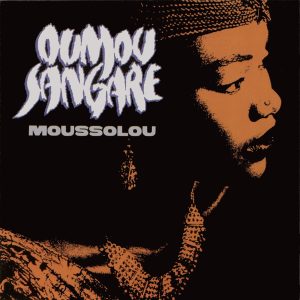
Episode 66
Moussolou
Oumou Sangaré
The name “Oumou” derives from an Arabic word meaning “mother of.” It is associated with dignity, wisdom, and maternal strength. Southern Mali’s Oumou Sangare has come to embody her namesake for millions around the world, and it all began when she was just 19 years old, channeling the magical music of hunters through her powerful and purposeful voice and creating a moment that captivated an entire country. Hers is a story everyone should know.
Transcript
Kyle: Today we’re talking about Moussolou by Oumou Sangare.
I’ll say right off the rip. Hopefully the music is self evidently good on this one. When you drop the proverbial needle. So hopefully within a couple of minutes of buying the ticket and taking the ride, you don’t need much convincing. We will talk about the music. One thing that I think is really interesting here, and this is probably Western White Dude 1 0 1, like, oh, I’m into world music now.
Obviously not the first non-Western artist that we’ve ever covered. Also, not the first person who has gotten scooped up in the, big western bucket of capital W, capital M world music. You know, I’m, I’m an ambassador for whatever flag at the UN representative of my country type stuff,
Cliff: This playlist starts with cashmere by Led Zeppelin.
Kyle: right? But, you know, we’ve done Ravi, we’ve done Fela. point to a country, throw a dart at the map, and it’s the biggest person from that landmass to ever make music. Arguably also the case here, but I, I think what’s really interesting about this is even more than either of the other artists that we covered in the same vein where I think they have this really interesting biography.
It’s just neat to learn about somebody who’s so famous that you don’t really know anything about, and then they have this crazy story the risk of being like she’s a representative of the whole country. She’s from, she is in fact quite proud and quite on the record as being like the number one ambassador o people from her country who are also famous as a very fertile crescent. Of music exported to the world.
Everybody else is proud of her as well. she’s like in the DNA of this place and has sort of made a point of that as she’s evolved as an artist. yes, great to talk the music. Great to talk about her as a vocalist ’cause Wow. But also this is just a straight up feed your curiosity, feed your head type.
Okay. I found something. And it’s teaching me not only things that I don’t know about music, but it’s teaching me things I don’t know about the world. So you can just like, kind of become a better human ostensibly by getting into Oumou.
Cliff: Hopefully this will be a moment in both of those ways, so musically and music adjacent. Hopefully this will be another one of those moments, maybe like Robbie or some other records that we’ve done that are maybe a little bit more off the traditionally western beaten path, and you listen to something you thought was kind of kitschy or had some barrier to entry that had to be like educational or something for you to appreciate it and instead you’re able to like. I love when you can like lock into a record that’s like capital I important when you maybe haven’t thought of it that way or tried to position it that way. Like we get to do that a lot because of the way that we end up choosing albums and episodes for this podcast. But like, it’s the greatest gift to keep giving people.
It’s like one of the undercurrents for the rest of this episode will be like, it’s about though actually, everything is super serious for a really good reason. And on top of it, here we are given the gift of, knocks on wood, uh, uh, a a minimally problematic artists to talk about which we don’t always have with some of the people that you mentioned previously, including fellow coie.
this one was like every single time I listened to it on top of the last time, I loved it more. I saw something I didn’t see before. I heard something new. I cared about something different. I wrote something down. I paid attention in a different way. Like something about this music is gripping in a way that is shocking.
and, one of those rare gifts I think we get from being in a sense we get to sort of roll into this stuff half blind sometimes, even if we know a fair amount about the genre or the history of it. But it’s even like, you know, somebody who likes the blues but had never heard Sun House before, and you drop that in front of ’em for the first time and they’re like, this is that thing.
But it’s also fundamentally different. I’m like locked into this in a way I didn’t expect to be.
Kyle: That’s right. I, the journey with an artist that I don’t know anything about is always one of guilt at this point where we know so many artists. In the tens of thousands. and we know a lot about a lot of them. And so to run across one where I’m like totally cold, I feel guilty and always feel like to do them justice, I gotta play a lot of catch up.
So we scoured through like 50 plus sources for this one. and what surprised me was the ease, you know, something that started off so unfamiliar on its face. I don’t know what she’s saying. the rhythm feels fourish, like shuga, but it is not right. It’s a rhythm that feels very natural to them, but not necessarily to me.
the instruments sound a bit like things that I know and love, but not quite. so barriers to entry, ostensibly immediately. But then what really surprised me was how quickly all that melted away. And it felt like a thing that I’d known for a long time. And I think that is, you know, m North African music being such a Rosetta Stone for so much global music, certainly all of Western you know, there, there’s something in the code of it that makes it familiar. But even with that, like they’re not all created equal. it’s not trying really hard to show its Western This, like some of the electric tore blues is now respectfully, and it’s not Alan Lo Maxey. That it is a, a document to be othered and odd at a little, you know, rustic in its quality and like Nat Geo observe it in its natural habitat.
Like it’s just good. it’s recorded really, really well. it’s somewhat in the past, somewhat very in the present. it’s just a record that like, makes all the right choices. It’s really more like, I’m, I’m sorry to make this comparison, but it’s really like Rumors or Hotel California. It’s a pristine recording where like, if I don’t personally love everything about it, and in this case I do I wouldn’t change a thing because it’s a perfect document of what it is and is trying to be.
Cliff: Whatever year it sounds like, it doesn’t sound like 1990.
Kyle: Yeah. Take five guesses. I I should have been like, re rewind this 10 seconds before you know what year it came out. Take five guesses when it was recorded. And you’ll be wrong about all of them.
Cliff: I will go ahead and pres spoiler something that helped me figure out why it sounded so weird. In an interesting way and why it didn’t sound like it belonged in the nineties. The, and I’m sure we’ll touch on this some, the insistence on using acoustic instruments almost entirely combined with the modernization of production as it had accumulated up until 1990, which started making things sound good.
Like even when recording acoustic instruments. So you’ve got like a real sense of isolation and quality sound recording of those acoustic instruments that you’re used to hearing in, in older recordings. But like fundamentally, like the bass guitar sounds like I’m in church. And like that is the thing to me that like, once I sort of heard it, it felt like things fell back into place and I understood a little bit more of what I was hearing and why it sounded so specifically different In different contexts and in different headphones and all that stuff. Like this is very much a follow the bass record. And I’ll make some of these references in some of the songs specifically as we’ll talk about them. But like, there’s a realness to the bass that we hear from people like John Paul Jones a lot where there’s just, there’s like a real bounciness to it and like all, like all of that production is so perfectly compressed down onto the bass guitar and how good it can sound in 1990.
And then just laid on top of like a spectrum of sounds that you’re used to hearing across a 50 year range. And just for whatever reason, to me, continues to make it sound sonically just like outside of time. it has such an interesting combination that I haven’t heard very much since then and gives this like.
Especially the sensation of layering on top of, maybe someone we’re listening to understands all of the words as spoken immediately, but most of us are gonna have the experience of not knowing the language. And like that combination of hearing that sound that way with actually not understanding very much about the words at all, especially until you look into them further and you start to really get it.
it is a, an actually unique sensation. And that’s itself a unique thing to say. As many records as we listen to actively and on purpose,
Kyle: Tell me more about what you mean. What comes to mind when you say the base sounds like church to you.
Cliff: Specifically by church, I mean like the churches that would honor the drums and the bass guitar. So black churches and specifically the way that they like EQ music, like drums and bass are loud as hell on purpose clear, really opened up across like a whole dynamic range. Like those are the two main things you can hear.
And everything else is sort of like detail that goes along with it because all it’s doing is really a rhythm section and then a platform for everyone to sing on top of. And then for a whole lot of people to sing along with the people who are singing. And that’s like, that’s how it sounds. So I’m glad you asked me, like that’s really specifically what I mean by it.
Like the base is so clear at every moment that you could pick it up and lift it out from everything else. And, and it’s almost like when you do separate it out, you notice how. The remaining sounds and instruments are sort of mixed in together differently. Doing a little bit more wall of sound type stuff, like there are even moments on this record I would call psychedelic, which is a really wild fucking thing to say relative to the instruments used.
But like even in those moments, like all of the non bass instruments are sort of wall of sounding or interacting with each other, and the bass continues to be this sort of pristine thing that feels almost spatial, like, almost like it’s sitting in the middle of the room the whole time and everything else is sort of like a walking tour around it.
Kyle: I love that. and I’ll also say, as a person who has a harder time dialing into or sustaining my attention on what one instrument is doing for a long period of time, or how multiple instruments are interacting and thinking about the sort of counterpoint between the two for a long period of time, this record also works purely on the level of vocals.
So like you can not notice, like me, what’s happening instrumentally for 20 plus listens and um, U’S voice, I. Is compelling enough and the performance, the delivery of the way she interacts with the two background singers is captivating enough that there’s enough to sustain you just on that level. And by the way, this is a very lean record.
Six tracks just half an hour. it’s very economical. So you, find yourself back at the top of track one way before you would think that you would. because it is sort of easy to get into I’m thinking about the other times where there have been long songs and sort of sustained beat.
Certainly we talked about that with Ravi and the idea of a raga that could stretch. For literally hours in a direction. But also thinking about can, I know we talk about can so much on this podcast, but just as a counterpoint for why is a thing holding my attention over a long period of time. And here it’s not ’cause of the length of the material, which I find interesting.
It is pretty rock and roll in that it cycles back to the top of the thing really quickly. so I think that contributes to the feeling of poppiness that you, you know, you, like you said, it’s bops. It’s, let’s see, the longest track on this record is the opening track is 6 46 and everything clocks in at four and a half or five minutes, which is not, three minute rockabilly song.
But like that’s, that’s lean for something that like, sort of gets in a groove and for the most part on a track stays on a musical idea the whole time.
Cliff: They’re not structured like Western songs anyway, so they’re not gonna like click with the three minute format that we’re used to, to begin with.
Kyle: Right.
Cliff: And yeah, that’s it’s pretty impressive that they’ll never go too far out into their own ideas, but they do go pretty far out into their own ideas, including I’m sure we will mention several of these songs.
And again, with, uh, all the intention, uh, positive intention and sincerity in our hearts, we’ll pronounce things as best that we can but also need to be able to refer to specific songs because holy hell, these things are like burners and then they like hide cool shit in the middle of a very relatively long song, uh, which is awesome.
But, uh, “Woula Bara Diagna”, so like three minutes and 40 seconds into this song. They like shift out of a drone into this like wild kind of rhythmic
Kyle: I called it a beat switch,
Cliff: Yeah, well, and they, they’ll do transitions that remind me of I, I’ll give some good reasons for the Led Zeppelin references, specifically John Paul Jones in the future.
But like, they’re not the only ones. Like even, um, like the Allman Brothers, we talked about the turn on Jessica at the end, like, That idea of like, I’m going to have a one time like flourished transition from one thing into another thing is itself really cool. But then here to like, I love that we got in a, a sugar reference in the first five minutes of this podcast.
Thank you. But to that point, like they signal their own backbeats differently in us in a way that MGA signals its own backbeats differently. And so to that point, like not only does it take a few minutes for you to sort of get the Jay-Z head bop going on every song when it starts, but when they shift around, it takes you a minute to actually catch what it is that they’re doing and the actual rhythmic shift that’s happening.
’cause sometimes it feels like they’re slowing down or speeding up and they’re not. And like those, several of those are hidden two, three, and four minutes deep into songs, it made me I love things that reward the like, it, it’s like I’m the musical equivalent of someone who like, loves the lore of a thing.
I’m just like, yeah. But if I go through every loot box that exists in this world, can I actually find the one box that has the secret thing that has the note in it that makes me really happy that I did this? And maybe I’ll tell somebody else about it. But mostly it’ll just be rewarding to me ’cause I give a shit and like this music is full of that in a way that I didn’t even know to anticipate when we started listening to it this heavily.
Kyle: “Woula Bara Diagna” is my favorite song on the record. translates to cruel nostalgia. I also read that it’s about, in a comment by the way, there’s a lot of really helpful comments from non-native English speakers on the videos across the constellation of content out there. it translates to my native land as far from me, and it talks about adventurers and adventures. She puts herself in the place of those who are far from their lands, villages, cities, families, and she salutes all of those people.
The adventure is not easy. the world is so low, but full of laughter and joy, and she thinks and pays tribute to people who are on the adventure for all the good that they have done. there’s a lot of. Text and subtext, and you can find the text, but there’s a whole nother layer of subtext that I’m not really clued into, but it makes me wanna keep studying this record and talking to people from the region to get a little more clued in to the, the power of language and the nuance there.
It makes the word nerd in me go crazy, but also it’s my favorite, uh, for lack of a better word, I guess hook the no, the little descending note that she sings over and over. I found getting stuck in my head, to the level of a TikTok audio. Um, and There’s a really good balance of sort of storytelling, narrative type lyricism.
And then coming back to the hook at interesting intervals, um, and playing the two on each other.
Cliff: So I think probably one thing we ought to talk about that’s like culturally interesting that I helped set, I think helps set the stage for why this record is important if you don’t know about it. But also if you generically know about it, like it’s time to know the details. Like the story of everything here is rewarding.
not just umu the artist, which that is true of. Um, but Mus Lu the album specifically, we both. Kyle and I individually came to the conclusion that oo is punk as fuck. like
Kyle: Absolutely.
Cliff: everything here is incredibly aligned with even, like, I I would say there’s a lot of parallels with the cramps that we talked about recently.
Like there are many very obvious dots along this timeline that are gonna help illuminate why we feel that way. But one of them to kick off with is, you know, you mentioned this sort of localness or region ness of this record and in the country of Mali specifically, this record. So Mus Lu, the album sold a quarter, a a million cassettes.
There in just there locally before it ever escaped, so to speak, that region and became the larger like sensation that it would become. So like, this isn’t just like, oh, this music is interesting because it is odd or singular or came from this very particular and unique set of circumstances.
Like, no, like this is a straight up banger on every possible level of human existence. And everyone who’s gotten their hands on it has gone. Yep. This rules to the point to where it is sort of like every detail, like fleshes this out, a quarter of a million cassettes is itself super wild to begin with.
And there were a bunch of quotes from folks who were just like, this record was everywhere where I lived. But even on top of that, like I said, like every little detail, every finder detail kind of gets you excited about the premise, the last song on the record. So the final thing on a cassette, which again, for, for the people who maybe aren’t familiar with cassettes, there aren’t convenient ways to skip through the tracks.
So
Kyle: The least convenient of all the formats,
Cliff: yes, it’s, it’s almost a terrible way to listen to music really. so for the last track to be the most popular on a format that is itself hard to skip to the last track on to begin with, sort of helps you fill in details like. People were just playing this thing start to finish over and over again in public settings when they were together.
Like this was the song of the Summer Times 10 or times a hundred to a level that we would probably have a hard time conceptualizing now. ’cause we don’t even listen to music the way that we used to in the nineties. And this was a concentrated version of an album taking off in a community at a time where we listened to records out loud and in public.
Kyle: The closest analog that I could think of from our lifetimes was Selena, and I don’t think that’s anywhere. Same order of magnitude. There’s so many cultural differences and, and whatever that just make that a whole different deal. But I, you know, maybe in North America that starts to give you sort of a sense, but it’s deeply imperfect.
I would love other, analogs from people who are listening. there’s a great, I guess it’s kind of a paper, kind of a research paper that an ethnomusicologist named Lucy Duran wrote and then shared part of it is an in full broadcast on BBC three from 2007 on their world music show.
and I just like, I basically read through this whole PDF with tons of citations and stuff. She quotes another ethnomusicologist, Heather Maxwell, who was in Mali in the early nineties as a Peace Corps volunteer. And this really brought home some of the nuances of, I guess, the penetration of this album.
I recall the impact of Mus Lu. I was living in a rural village called INS in Southeastern Mali. which we can talk a little bit more about places in Mali. ’cause I think that’s interesting too. Since there was no electricity in this village, battery operated radio and cassette players were our only connection to the capital city Bamako in the outside world, people of all ages, especially men, gender’s going be another thing and know we will talk about carry their radios wherever they went.
In the beginning of 1990, a new singer called Umo S Ray suddenly sees the national airwaves and flooded the music cassette market that came into the village every Friday. So new release kinda just got like drop shipped into a place. From that point on until 1991 when my term of service was over in this village, mus Lu had become a household item and her songs were played so often that I’d memorized the songs and melodies along with my friends and neighbors.
There was another story you said, there were lots of quotes about that phenomenon specifically. There was another one that it was basically like it was coming out of boom boxes and vehicles so frequently in so many places that you could like hear a snippet of it in the ether and be able to sing it. and like try to think about a single time in your life where it’s been like a Coca-Cola commercial where you hear a thing out in public and you recognize it and start singing it, but like everybody around you, in spite of how little you may have in common with them, can also do that thing.
we have gotten a little bit of that in Atlanta. Like anywhere an outcast song comes on in Atlanta, you get that feeling. they’ve gone diamond inside the perimeter in a TL, but 250,000, quarter of a million in a pretty small country. I think the capital city has 4 million people, maybe so, like more than one in 10 people in the city, let’s say.
And lots of people in the rural areas had this tape. that’s just sort of an unfathomable level of cultural reach and connection.
Cliff: And. The tape itself, which again, just such a cool little cultural moment of things that we no longer have for good and bad reasons. But the physicality of the cassette meant stick with me here, that you had a literal physical thing to carry around with you. You cannot carry infinity cassettes with you.
And so therefore, just like we did when we had our CD sleeves, and even though we had hundreds of them, it was stupid and cumbersome. And then we would have a smaller version that was like, well, I can’t bring my big one, but I got the smaller one. that’s for the real shit. where I’m not just showing off how many I’ve got, but I’ve got like a specific thing to do.
So cassettes are gonna take up even more space. So carrying it, caring about it at all is its own decision. But then on top of it someone who was, in their own right. An extraordinary musician out of Mali. Ali Farka was carrying the cassette with him when he was around, uh, Mick Gold, the label head from World Circuit, which then led to a conversation about like, who is this and what’s going on?
Like, well, this is the biggest thing going on right now, you should hear about this, which snowballs into downstream this album becoming a thing that we could all hear and Umu herself becoming, you know, more of an artist who would go on to record things. Like even the story of how she gets convinced to record more things in the future are all just like.
When we talk about it being punk, there’s so much like sincerity in every moment of the story of like, I’m making kick ass music because I was good at it and my parents taught me how, basically. And I learned how to use music to give myself enough self-sustaining momentum to where I could decouple myself from the forces that oppressed me enough to be able to say it back to other people who are still under the thumb of those oppressive forces and like turn that into a cycle and momentum that becomes a cultural phenomenon.
And just like every sort of detail, of her story and specifically of this album, turning into something that we would be able to hear in 2025 at all. It’s just like a deeply rewarding thing to look into at every step. We don’t always have. The opportunity, I think, to say that about every story.
Um, some albums are very, very interesting, but you also are like, yeah, I’ve had enough of this story actually. This is very sad or scary or upsetting or whatever. And it’s good to acknowledge it, but you know. Okay. Good context for the music. I’ll carry that with me. This one is just like, I wanna learn everything and I’m gonna keep learning everything because everything that I learned keeps sending me back into the depth of this music and what it meant, like culturally, I.
Kyle: I hadn’t really thought about it in terms of the story is joyful, like every aspect of the story is joyful. And that’s not to say there wasn’t pain and grief and trial and tribulation in her life, but one of the first words that came to mind, like when I was doing the sort of cold listening exercise was charismatic.
Somebody mentioned she’s six feet tall and there’s something so self evidently before you see a picture of her or watch an interview with her, there’s something about her voice that is very magnetic. It’s not too, like, it’s not Aretha Franklin e necessarily. It perhaps could be, but it’s not gonna like knock you on your ass directly while you’re listening.
But it’s also not coy. she finds a perfect pocket. And can go up and down a pretty good distance dynamically. And I don’t mean like note scale, although she can do that too. there’s something about her command of her notes and of her lyrical delivery that indicates a command. I have my thing, and this is a debut album, like she’d been performing her whole life at this point, but there’s so much command that I think is really interesting.
I do love that Ali Farka chare carried around physical cassettes. It reminds me of one of my favorite apocryphal rock and roll stories that like when Nirvana was really big, Dave Grohl bought copies of Kyuss’ Blues for the Red Sun. every time he found it in a story and would just give it to people.
And it’s just like evangelizing, like this is my favorite record. I love an artist. Do that. Like I. Ali said to Nick from World Circuit, she’s the big hit in Bamako right now and she’s my favorite singer. Watching artists be fans of other artists is a force multiplier, and I really, really love that.
I do want to click in also on the how she was convinced thing, because the joy part reminds me of Missy Elliot. There’s so much about the two of them that seems alike, just like a, a natural, almost alien level, a fully formed talent that didn’t need to be recognized, but it was inevitable that it would be because it’s so good and it’s so joyful and therefore is so abundant in its nature.
So I think this is from the liner notes of the reissue. I. From like 2016 or something, I think, when Umu opened the doors to the fundamental JBZ studios in Abijah, which is in co devo and on the Ivory Coast to the neighboring country to record the six tracks of Mu Salu, the young woman was far from naive at 21.
She had already toured Europe with the Jo Liva percussions ensemble along to Monte ate and had already secured full financial autonomy, which Let’s not gloss over that in a country that’s dealing with crazy patriarchal conservatism. Earning her living by singing at weddings and baptisms, mb Bamako.
she said the producer Samsa had already invited me several times to record an album, so evoking Missy and Tim right away, but I always refused because I thought if it didn’t work out, I would feel ashamed. But he kept coming after me and he even ended up offering his own car to me as a gift. And at that point I said to myself, umu, you’re riding a Yamaha motorcycle now.
Look, a car is a much better option. So I accepted the offer. you’ll gimme a car. All right, I’ll do what I do for a car. That’s tight.
Cliff: could be a detail coming from a game of telephone maybe, but the way it’s phrased makes it sound like he offered his car, which makes it even better. Please, please,
Kyle: she did say for, in this interview, she did say his own
Cliff: Yeah,
Kyle: You know how much you gotta love an artist to be like, shirt off my back, I’ll give you my car note. pink slip for your voice.
Cliff: I mean that,
Kyle: that’s dope.
Cliff: approaching literal shirt off your back in that country and in that context. Yeah.
Kyle: there’s a lot, again, like it, it just begets more things to wanna learn. I thought it was really interesting that she went to Abba John to record this record because, so she’s, she was a city girl. She grew up in Bamako in the, the sort of cosmopolitan capital of Mali. but she’s from the southwestern portion of Mali, or her family is, her mom is from Wasu.
She’s the youngest daughter of a family belonging to was Ani. She was raised by her mother Aate, who was also a renowned singer. She knew very little about her father because he left home to do the polygamy thing and take a second wife when she was two years old. So her mother had become a trader to support her four children.
And Umu left school at an early age to sing at the streets. Like, starting at five years old, she was singing in the streets and doing competitions and sang at Bamako’s big stadium in front of 5,000 people when she was a little, little kid. Um, and that was like a defining experience for her, but she was earning money from doing this sort of entertaining bit and like before she was a teenager at all, was providing for her family, her family with a single mother, which I think speaks to the enormity of her talent and also of her spirit kind of defines.
The artists she became. But the location of studio is interesting because Abidjan is where her dad ran off to, to start the second family. So we talk about, um, being punk as fuck. I don’t, you know, I’m impressing upon the situation that those two things are correlated, but part of me believes with what I know about artists, that is like, oh, I heard the guy that ran out on us is there, I’m gonna go there and do a thing that, I don’t know whether it’s gonna shake the world up.
But it, it was so undeniable that it did. so I’m myth making perhaps a little on, um, MU’s behalf, but she more than made up for it by making her own myth real over years and years of consistency of art and advocacy. So. I’m gonna put that in the cannon as well.
Cliff: You know what I build on that because even if you are maybe opportunistically projecting, which I don’t know that you are, but even if so, the literal subject matter of horror music lets you know what actually mattered to her in those moments and like, it’s such a man. for this human being Cliff who has a lot of trouble with vocals and lyrics, to have an album like this that’s in a language that I don’t understand and then to go, huh, I wonder what this is about, and then find out what they’re all about
was, oh, I mean, satisfaction to the hundredth percentile for me all the way around.
This is how words in Music ought to work to me. but it’s a little bit of a excited intro to just like the two different ways that I hope people can start to hear and understand this music. And I want to kind of give a preview of one and then maybe we can go back to the one we started with, those two things being one, just the musicality of a thing that you don’t have a literal understanding of, because it’s literally in a language and from a place that you know, most of us listening to this podcast don’t have a ton of familiarity with. So there is a literal sense of foreignness to it that allows you to embrace the music in a really interesting way.
But I’d say let’s put a pin in that. There’s still more to talk about there, but like, put a pin in that and hop over as well though to the literal side of things. Okay. The translation of this album title is Women Like, you know, Kyle, you were just mentioning the stories of like being given a car in exchange for making an album The subject matter of some of these songs, the things that we can in fact get translations of, or that we, can discern from interviews with Umu or interviews with people about her and her impact, all of that. One thing that we know for absolute certain is that these songs are at least in part, about financial independence through finding a way to make enough money to create enough independence for yourself to see the oppression of the systems that you’re in.
Like. This is what these songs are about. Like they are pushing back on a range to marriage and polygamy. They’re pushing back on misogynistic placements of genders and sex in society. And those things are all 100% true and accurate. And still, everything we just said about joy and abstractness of the instruments and songs and everything, all those things are still true and are still all wrapped up in this one album.
That’s it. It like when we don’t know a better way of describing a thing as punk, this is what we mean. Like the two rails are aligned of artistry and like intention and meeting. Like this. Music was designed to do a thing from day one and to a degree. Not to a degree we can, we know this from what she said.
The meaning and the purpose of the music was always more important than creating a self-sustaining, capitalistic esque mechanism out of it. Those two things can be related to one another, but one is always more important and is guiding the other one. And like to see those things come home to roost on a West African album from 1990 it was just another moment of just like, no matter cliff, how much you feel like you ever know about music, your humility is gonna come back into play every time you let it.
’cause there’s just infinity that you don’t see and realize about the people who make the music you listen to.
Kyle: Totally agree. I wanna double down on two things. First. I think the confrontational ness of the subject matter works in part because it starts with affirmation, just like the cramps. It starts with love and beauty. This is what and who we are. The album title says who this is for. And that doesn’t mean it’s not for anyone else, but it’s directed at women.
And she reiterated that in interview after interview. But the first two lines of the first track, Jean smu, which translates to Let’s Talk, it says, friends, let’s have a talk. Sisters, don’t dwell on sad thoughts. So to my audience, let’s dial in on a feeling together and lift each other’s vibrations right before we get into all the other
Cliff: I’m just laughing about the idea of a song these days, starting out with friends. Let’s not kill ourselves. There is much to live for.
Kyle: I can totally see punk songs now though, being like, stay alive despite the fuckers. You know what I mean?
Cliff: sorry to, sorry to interrupt. With such lightheartedness, but like, it, every serious moment gives me a, a lighthearted counterpoint in this and it’s part of what’s made it delightful.
I, will limit myself.
Kyle: I really think the love and beauty and her sureness in it, standing with both feet in the love and beauty of the way she tells these stories is what makes it work. Like it stays not heavy handed because of the way that she’s delivering it. And it took me a while to click into that as sort of some of what’s happening.
the other thing I mentioned how much fun it is to go learn. I like, I feel like a kid in grade school, in history class, just like there’s so much world out there I haven’t seen yet, and people with fundamentally different experiences than me. I just get to keep learning about it, you know, like I have in Carta on my 1995 PC and I can click to all these different parts of the world and learn things about the foods they eat and the music they listen to and all that.
So just the straight history, geography, sociology, like encyclopedia facts type thing. This scratches the same itch for me on a lot of levels. So I love when she talks about cultural context because it’s so important for her to relay some of that. The same way that Ravi would introduce Raagas to Western audiences and talk about like, this is a raaga for the morning.
This is, you know, like recommended if you like, type contextualizing. Some people may find that pedantic and I, I totally get that. Too much handholding for an unfamiliar audience, but I really genuinely appreciate it and I think if you take it in the spirit of childlike curiosity and appreciation and a genuine bid to connect.
Somebody from a different place than you who’s more similar than different. it’s just fun and it’s joyful. And I think remembering that feeling of pure curiosity, there’s such an abundance of that here. So Banning ear interviewed her for a 2001 issue of Miss Magazine, like Ms. Period. and there’s some great excerpts from that.
Banning asked her, you know, Molly has an unusually strong tradition of women singers and that really stands out to me. Why do you think that is? Umu said, in my opinion, it’s ’cause women have always been a very powerful force in Molly in society. But the tradition has never wanted them to speak in the men’s milieu, never wanted them to express their ideas.
I’ve preferred to sing because that’s where I can get away with it. Singing takes place at ceremonies when everyone is present. Women, old people, and youth. Everyone is there. If there’s something very important to discuss, women are not invited. They have no word. But in ceremonies, we can sing. That’s the moment when women can release all they have inside.
If the woman had things to say about some important discussion, she was not called to because she’s a woman at the ceremony. With everyone present, she can sing and get it all out. That’s her chance. Certainly in Wasu it has happened like that. it’s a way to release her cares, her problems, her ideas, even about society.
Everything she wants to say in her singing, she says all that. So that’s extremely subversive. Like I have found an avenue where I can say things and speak truth to power and it’s going to be frowned upon, but allowed. like one of those interesting wrinkles. About human nature of like people finding ways for their power to fill the container of together power, societal power, community power.
I just really like it speaks to the strength of the human spirit and the beauty of creativity as an avenue. Like, well, I can’t say it directly, but I can put it in a song. and that’s a really interesting way of going about it. I, I also remember another interview where she said, basically, like a lot of African artists, you’re expected to kind of walk it, like you talk it, you know, your, your work has to have a message.
Um, what was it? Fela said like, music must be for revolution. It’s maybe not quite that level of black and white, but the expectation is that like, you’re kind of a role model. You, you need to teach people things. They’re there to learn from you as a teacher. It’s a. An artist, a singer, a storyteller, A grio is a position of some import in a lot of these cultures.
So you can’t like, You can’t be Katy Perry in a world like this.
Cliff: Certainly not. I think your, your point’s well made though, too about the finding mechanisms and levers of power, especially for people who are traditionally oppressed. And then the idea of you sort of labeled it in a facetious sense as like handholding. But that actually helped me connect it to like, I feel a lot of spiritual lineage between this music and again, it doesn’t feel like I’m doesn, it feels like I’m saying an odd thing about time, but I feel a lot of both coltran in this music specifically with, like I said, you, your.
We’re labeling it as handholding to explain the idea, but the concept of book ending intense records with, um, an a literal introduction, something that like draws you in slowly to not freak you out too bad at the beginning. And then by the end also, alice, especially out of the coal trains, did this, uh, frequently.
But like you end on an uplifting note as well. Like you sort of circle back around to the moment that hopefully you found yourself at the beginning of the record, so that you could either continue for another cycle or just sort of find yourself again in the future in that little moment, uh, of being okay, here we go.
Now we’re into it. And once I’m in it, this is the only thing I’m paying attention to. And I think this music does a very good job of bringing that same concept forward because you know, you, you mentioned the slow rolled intro, but then, you know, and Dia the last song is like hugely uplifting, positive way to end.
And then like we’ve said, like in the middle of that. Sandwich is some real meaty stuff actually, uh, in the middle, like topically heavy stuff, societally and culturally heavy. And then like we’re trying to point out, even though it has such a lighthearted. Feeling to it. Like the music itself has a complexity that is dense in the middle that it sort of winds itself into, especially at the beginning of the record.
And just to say one more thing on that little thought that helped me think through what I was hearing on this record, another reason to me that it feels like a spiritual descendant of late sixties and early seventies, like spiritually influenced jazz is because of the really weird stereo production that’s happening on this record too.
which again reminds me of like the seventies when like stereo pans and like speaking of can you mentioned earlier, you know, they loved it. We’re just gonna shove the drums into the far right hand corner of the room in this very, very particular spatial place. They don’t do the same thing with the
Kyle: And here I’m damo, right in the middle. Sorry
Cliff: exactly. It freaks me out just like that every time. Yeah. So it, like, it brings some of that forward, especially at the very beginning of the record where it’s, it’s building up pretty slow. Um, slow and, and gives you maybe an overly jovial feel at the very beginning that ropes you in. And then before you know it, you were, you were in the middle of some important things.
Kyle: I think we can put a finer point on that by, reading the words of your favorite critic, who sounds the most like you? That I think I’ve ever heard. Uh,
Cliff: It’s time for a podcast. Within a podcast. What did Christ Gal say about this one?
Kyle: that’s right. When I first heard Mus Lu, the debut that made Umo Sangre a star at 21, I was so drawn to the sound that I pegged it for my own top 10 before I comprehended a single word.
Remember, this is the guy that hates most things that he hears. I knew nothing of the singer’s politics, her popular andia was running through my head. While I still thought the refrain was a woman’s name or a woman ish sounding place in Andorra or Georgia, but in Babar, her language, it means, oh my love.
I certainly didn’t know that she represented a different strand of Ian Music from the dominant style Jolly Wasu named for the southern region from which it comes has origins not in the ancient Malian courts, but in hunting parties and agricultural festivals. It features a banjo like instrument that’s supposedly Ritalin of Youthful Rebellion, has a topical and personal focus and no musical cast system, and is 90% female.
Jolly, though it includes more women than you might expect, an Islamic culture is fundamentally conservative, performed by hereditary grios who literally sang the praises of the powerful. So there’s that power bit again, he said, had I known all that, it might’ve informed my interest, but I think what I loved most about the music so spare so strangely circular, was that I didn’t understand it.
I heard exquisitely sustained irresolution as structural convention pluck strings that back home may well signify adolescent attitudes sounded rural to me. Acid the childish timber of the chorus. Vocal techniques that simply reflect an Arabic influence sounded like pure yearning. What I thought I heard was music bearing and extraordinarily beautiful tradition that had not been hybridized so much as underlined or spelled in large print, and I wasn’t so far off the mark.
Once you find the translations, you realize that tradition is basically Ari’s subject. Anad is about the tension between new and old concepts of love. To your point about light with heavy in the middle, what gets lost in translation though is the tone. Even when the liner notes tell me in so many words that angara is being ironic, I just hear compassion.
Cliff: an unusually apt description of what I hope. Many people are going to experience after even just seeing this podcast title from this episode, go hit this record and then have that experience to that end maybe. So then flipping back to the other side of the brain momentarily, talking through the like purely sort of joyful experience of the music itself especially before or sort of independent from layering in the importance of what’s being discussed and what the meaning of a lot of that music is.
I think there are some cool moments to point out for people to listen in for and some interesting ways to listen to this music on purpose. Cool tee out to myself. Do you mind if I just go ahead and start mentioning a few of
Kyle: I would love for you to go first.
Cliff: hopefully I’ll bring home a couple of examples I’ve pointed out so far into specific moments. so dire Nene, one of the tracks on here, there is, and I want you, if you are someone who even has a passing sort of reference to what a Led Zeppelin sounding thing sounds like, just spin that, that track at about 10 seconds in there is, I swear, a Jimmy Page guitar riff being played on a very different instrument.
The Led Zeppelin moves that I love so much are happening exactly right here. There is a guitar riff that’s being played independent from the rhythm being introduced that will help make sense of it. And so they start by playing this one kind of weird noodly sounding thing. And then there’s a base accompaniment again, Jimmy Page, John Paul Jones would do this a lot.
Jimmy Page would say like, play something that was a really hard thing to track along to. And then instead, again, instead of the rhythm coming in to give you exactly the beat, instead the bass comes in and does this little like, a goofy sounding sound. Now that I’m gonna move beside the guitar, don’t.
Where am I gonna go? Now, what, is this gonna be a cool sounding song, or is this gonna be one of the ones that sound like out on the tiles? Who knows? Because like, I’m just gonna kind of go in this fun direction until the rhythm drops in and then the rhythm drops in and the base proceeds to immediately do like a weird, almost like atonal verse type thing.
It, it moves on completely from the riff, doesn’t extend it, doesn’t keep it going, but also doesn’t play anything like simple or straightforward. They move that along and then about a minute and 49 seconds into that same track, they slam all the way back into that rift that they first played the first time.
After giving you a minute and a half’s worth of like instrumental context about what any of that stuff means, and like Infinitely rewarding, dorky shit on this album, just like music nerd stuff hidden in a record that, the quote from Christ Cow that you just mentioned about like basically the tone almost being imperceptible if you don’t know what you’re listening for is like, that is so much of what’s happening here.
I would never have expected the level of depth and interesting moments that I get to experience listening really, really closely to what’s happening on a number of tracks here. And that’s just one example that I can bring you already.
Kyle: Yeah, my less sophisticated analysis would be. I’ll say three things. Clarity, charisma, and language clarity. I, you and I have both already mentioned it’s recorded and mixed pristinely. so not only is the production very clear, the playing is very clear. You just talked about the dexterity, but like that is remarkably consistent throughout.
It is sophisticated playing. I know I’ve mentioned the Tom Waits quote, like a gentleman is someone who can play the accordion but doesn’t, there’s a really tasteful level of playing like Nashville session player type thing. And I, think that’s partly because, the bass player, Amadou bug window.
Was kind of an old head. I don’t know how old he was specifically when this was recorded, but he had been a member of the prestigious national bada orchestra that was like a state sanctioned traveling and recording orchestra to show off and be the pride of Mulian culture. and he played bass and did the arrangements.
so there’s, sophisticated players overseeing the proceedings or being involved with the proceedings. the second one, charisma, like I was trying to compare it to, what is this, like the other albums we’ve talked about in terms of level of attention required or energy that it has in it or that it gives me or requires of me.
So it’s like not incredibly percussive. In a way like Shuga would be where it’s really loud and distorted and in your face, but it is propulsive. So it’s also not like Jackie and Kane where it’s like, you know, it’s like, it’s more mellow than that. It’s, it’s also not too noisy, not too ambient, but it’s also not too academic or singer songwriter to, to English years.
So it draws in my reptile brain just the right amount. It keeps me there for long periods. It like sits in a cut really nicely and to the point you’ve made a couple of different ways. the changes are just subtle enough, but then they wind up being just different enough that they sort of keep you in the cut.
The third thing with language, again, being a word nerd, like Babar is not a language that I was familiar with. I. it’s a lingua franca. It has 4.2 million native speakers and potentially double or even triple that secondary or tertiary speakers. It is part of a greater tongue of related languages called manding spoken across the countries in West Africa.
and then the writing of it is a mix of Latin characters in the African Alphabet plus N’Ko, which is like, sort of like in apostrophe KO sort of an Arabic esque writing style. And it’s even blended in kind of a Creole way. So just learning about that is a whole nother rabbit hole. And just thinking about the potential that that offers her to break through, like it’s extremely local, but the mix of origins of a lot of this language in speaking and writing.
Offers up a lot of possibility for it to be recognized, even on sub, sub, some subconscious level, by other folks. And one example that I wasn’t aware of, having heard this language before that I ran across in the research is from Stevie Wonder’s Secret Life of Plants, which we talked about on a fairly recent episode.
I don’t remember which one. he used Babar to link Seed and Star we’ll say, And I don’t remember where I found this. So all credit to the writer who pointed it out. So, secret Life of Plants came out in October, 1979. It’s a pretty far out project in Stevie’s oeuvre, a pair of songs focused on a complex central concept.
A seeds a star among the musicians on the track is called Kiss A yalo. De is a Senegalese Cora player named, Lamine or Lemonade Conte. The lyrics which translates to a sea of star, a star a seed, are sung in fantasized Babar con’s Native language Wonder draws inspiration from the doggone tribe of Ali, known for their astronomically based cosmology.
The film ties the Dogon Celestial insights and beliefs to an esoteric experiment run by a scientist who hoped to prove that mustard seeds might share observable communication with a distant star. So that’s like the type of shit that, Two white boys who love sleep, dope smoker might’ve been into, if that’s your particular flavor of bong water, that’s a whole rabbit hole for you to explore as well.
There’s a, there’s a cosmic poetry to the language that, that allows for a lot of that sort of metaphorical room.
Cliff: we like sun raw enough to know that we would like this too.
Kyle: Yeah. Yes, yes, man. The orchestra, somebody needs to be paying me for big year’s mentions at this point, but the orchestra at the Tennessee Theater was so, I guess pun fully intended out of this world, just fully blew my mind.
Cliff: I’m laughing because of the number of, sort of esoteric threads that we have going throughout different episodes. and sun raw in our relationship to all of that stuff is one of them. But also now, uh, we’ve got the Secret Life of Plants, which we’ve managed to mention through its, you know, legitimate connection to what we’re talking about.
But we also recently got to mention Plantasia it had a, like a thread of connection to something else. So play the TuneDig ARG of plant-based albums that we have, I guess, started ever since a dope smoker began,
Kyle: The TIG cosmic cannon, that should be a thing. We should give that away. We should assemble those records and give them away on vinyl in the spirit of how this podcast got started.
Cliff: Being weird the right way. Kit from Tune Dig.
Kyle: Will, will barter plants for a sweepstake entry. What context did you listen to this in? Because this is a really interesting one. That is again, the, the foreignness of it is like, how do you naturalize it to your own listening? I’m very curious. I know you said you listened to it with a bunch of different speakers and headphones and stuff, but like what, what felt right where to click?
Cliff: not that there would be anything wrong with this, but not a, uh, 90 degree summer windows down cranked all the way from your car stereo type record the same way that many others are. Although I, I guess they could work
Kyle: can I say that that is actually what, that’s what worked for me.
Cliff: Hell yeah.
Kyle: In my 1998 pickup truck, I burned a CD of it. Uh, and by the way, I, I found it on cassette and have ordered it, so I’m very excited about
Cliff: Hell yeah.
Kyle: but it was like, well, the only way to contextualize it in my life is to go about my life listening to it.
You know, it felt too NPR listener to like, sit in a room and be like, now I’m going to enjoy the sounds of Umu sga. You know, it felt like being at the Rialto and somebody telling me that I needed to be into it. So I just got in the truck and put that shit on, and it helped bridge reptile brain connections for me, like we’re talking about Brooks and Dunn next month.
There were a lot of points where I was driving down back roads and it felt like listening to a country album to me, like really, really good pickers. So really, probably more like a bluegrass or something like that. But I. The storytelling and just the consistency of the playing in a style felt like a country record to me, and I loved it.
But you didn’t do that. You did the opposite. So tell me
Cliff: Man. I love that. That makes me so happy. Yeah. No, I didn’t do it that way. That’s awesome. I, um, I mostly identified in exactly the way that you made fun of the NPR self important. I am going to sit here and listen to umo now, and I found myself doing that
Kyle: Were you wearing a tote bag the whole time
Cliff: of course.
Kyle: your listener drive tote bag,
Cliff: Yes, it’s made from recycled towed bags. Yes,
Kyle: of all hemp and it’s got a bunch of weed in it.
Cliff: I would never waste it that way. this became so imminently listenable to me in a way that three Raagas started to be for me. But that one, and what Ravi is doing in general, and hon honestly, like, maybe this is like a weird, a cultural projection or whatever, but like I could listen to and can listen to Ravi Shankar and related music pretty easily in almost every situation.
’cause it doesn’t distract my brain, uh, the way that a lot of like lyrics or really hooky songs do that I’m used to. but this one, like we’ve talked about for so many reasons, feels less. Serious isn’t the right word. And, and heavy isn’t the right word either, but I’m still gonna kind of use them because like for, for me personally as a person who loves, you know, music like Converge, like I love a serious song, A good serious bop can get Cliff.
I get real into that, but it also will,
Kyle: music, that’s a task. It requires computing power.
Cliff: But it engage, it engages me. Like I 100% believe and maybe I’ll do this one day, like you could figure out what sort of music I was listening to based on my heart rate changes alone. and so I have to be kind of careful about what I listen to, even if it clicks into place really well.
Because if it starts to feel too serious, I will get too like emotional and it becomes like. A whole thing that I’m doing over here, and I’m no longer doing whatever it was I was doing when I was trying to listen to this music. For whatever reason, this one just like sits right in the cut for me. it is, a fantastic active listening.
I’m not doing anything or I’m not doing much of anything other than listening to this. So I would extend that to say even if you’re not sitting in fucking lotus position or whatever, this is a very good, your stupid mental health walk album, like this one, a hundred percent as loud as you can possibly, and reasonably listen to it.
I think it’s awesome to kinda lock in there. so I, I sort of had those experiences a lot, but then also it just became a really easy one to, I don’t do a lot of full album repeats, but the last one I remember starting to do that with, was Alice Coltrane, uh, and Journey in sat nda. Oh, I still can’t say that off the cuff, uh, like we did with all the practice in that episode.
Kyle: Nda.
Cliff: you. Nda. Um,
yeah, so it sort of surprised me in that way and clicked in there. I think part of the reason as well musically, that it’s interesting. I really need better, probably language to describe the sort of Led Zeppelin, threeness of the whole thing. But like that is so much of what it felt like to me.
And that record was a very, it is just like a very specific one, like Led Zeppelin’s just very central to me and how I think about music. But that one, that record in their canon is itself one of the more lighthearted, maybe the most lighthearted record that they did. And it has this sort of outside feeling to it.
Like literally, like I’m outside at a farm, I’m outside walking, it’s got this. Uh, space and vibe to it. Um, that’s sort of fundamentally different from a lot of the other records they did. And this one clicks in the same way to me in the sense that I can listen passively or go directly in and check into what I’m listening to, pull something interesting back out of it, note it, and then kind of go back and let it recede again.
And to me, anytime music matches up with the format of meditation, of like, I can notice a thing and I can choose to bring that to my attention, or I can choose to let that go, knowing that if I ever want to come back to it, I can. And I believe that it’s there. anytime I start to experience that in music.
Like that album or that artist enters a spreadsheet column that very few other works of art do for me. And so, you know, not trying to overly serious my answer to your question here, but it was like finding the exact right wavelength for it to sit into, clicked it pretty permanently into place.
Kyle: I love that. Two things that you said that I really loved are, you know, contrasting this with what we talked about with Erika Badu. I, like, I love what you said about music makes me too emotional. Like it raises me too, too high an altitude, too high frequency. And I was like, well, doesn’t that do it with me too, or like with everybody?
But it was like, no, I am, I run too emotionally hot all the time anyway. And music is, is the Adderall that brings me back down to level. So I love that this is a record where we kind of meet in the middle, and that’s what you mean by the meditation thing. But like with er Badu, it was like no matter what, it’s going to raise your vibration was the term that we kept using.
Like This brings you down your flight simulator, mental health wise to the, to the right level. I also think that outside point is a really good one. You don’t have to be outside to appreciate it, but like it’s summer and where we both are, it’s starting to get beautiful, if not hot. You live in a place that is all about outside, not to infer a correlation where a correlation’s not there, but I think it’s pretty fair to do here.
knowing the roots of this traditional form of music that she is honoring and trying to bring into the present. specifically, there was this one thing I read that I loved, uh, WASU music, drawing its roots from the vocal and instrumental traditions of the Don. So societies in southern Mali, the Don, so being the hunters, these hunters were highly respected figures, not just for providing food, but also as healers, philosophers, and musicians. So again, like almost a, a class, a way of regarding an esteem, their music is considered one of Molly’s oldest forms, which would make it quite an old form globally of musical transmission.
believed to possess magical power to charm wild animals and protect villagers, just like, okay. They believed there was magic in the music that they were making for themselves, not necessarily for anyone else. So that comes through the most clearly, when you’re among the elements that they were connecting to and observing on.
So, love the idea that this is an outside record. I was thinking about how, you know, I so often am barefoot and have been barefoot for so much of my life. I love driving my truck barefoot. and so I was like, I spent an unusual amount of time barefoot listening to this record, whereas with some others I’d be like in shoes in the office, sneaking it in, in the context of my life.
But I was, to use the, the sort of Buckley episode mantra, I was touching grass a lot, quite literally. And it works on that level. So, you know, not to be like the African record is one you should listen to in nature. That’s not what we’re saying at all. Like is it’s connected to the energy of the origins of this particular type of music from hunters and it works really damn well.
outside in the sunshine. You’re just better po like when you’re getting sun on your face, you’re just better positioned, like your chakras are more open or whatever. So it’s good. you’re silly little mental health walk
Cliff: You know,
Kyle: capitalism.
Cliff: what you just said with a, with a little bit of a twinkle in your eye about us, us not making a, a very stupid correlation, uh, about African music, feeling more outside it. That though does give us, I think another good talking point for everyone as a way of engaging with this record really specifically.
And even in a more sort of intellectual way, I think this, I. The v, I mean the very first notes of the very first track should do a pretty good job of reminding you that whatever you think of as Appalachian music, for example, the story that you have as a placeholder in your brain about where all that came from and why it sounds the way it does.
It’s probably wrong. ’cause all of a sudden in that first track, not only can you hear instruments and specifically like moves, like the ways that the instruments and the rhythm will move together, you are drawing out Appalachian music, bluegrass country, um, at the same moment that you’re hopefully already starting to hear.
Oh, well that stuff I heard from like the Ravi episode. Oh, there’s a lot of Indian music here. yeah, dude, it’s not just a funny or weird saying of like, Africa is sort of like the central point of everything that we’ve come to love and appreciate about music and culture. Like this is another one of those times where it’s like, if you’re going to engage with history in any meaningful way, this album will stand right in front of you and go see This comes from a time and a place that you would’ve never expected. not only is it from, like, to me that is what adds so much sensation to the sensation of like, how is this from 1990, very specifically like that out of time and out of Placeness I think reminded me yet again, like I know the whole. the whole conceit of our podcast, right, is like finding ways to continually be put back in your place by music in a way that makes you enjoy it and appreciate it, and then go back and do that exercise again. But like even expecting that every single album we listen to this one like sat me down in a chair in a classroom and said like.
Even you with all of your weird obsession about music history, don’t know enough because this caught you off guard. And like, it’s a really good moment to go back and really, once again, even if it’s just kind of going down the rabbit hole one time to learn a few things, just learning about what are the literal instruments being used here, how are they being played?
Who is playing them? How were they recorded? Is a, prism backwards and forwards into music history and everything that’s otherwise called world music. it’s hard to think of a better, literal introductory, piece of music to that sort of an idea than this one provides right off the bat.
Kyle: I think, you know, getting to the what to focus on or isolate exercise if, if the other prisms of like standout moments don’t work, just the voice, just the production, maybe none of that’s it. The exercise of instrument geeking. Also works really, really well. you can watch Bela Fleck’s documentary, throw Down Your Heart, which is him trying to trace the origins of the banjo, the instrument that he’s made his living on that he loves, and eventually getting back to the ngoni.
specifically the Kamali Anni here. there’s also the percussion instrument. Uh, the nan a scraper. There’s bongos on this record. There’s violin. So when you come in on track one pan in the right channel, you have the anni. And it does sound like banjo
Cliff: Yep. Or do bro. Yeah.
Kyle: Dobro, it’s less metallic though.
It’s more, it’s more pl drummy or nyy almost. and then you get the violin and its, I mean, it sounds like Appalachian. Porch music. but it, while it shares similarities with, you know, passing down oral tradition and connecting community and that sort of stuff, there’s like more of an esteem to the way that they do it.
I guess because it connects rural and, and urban in the way that they’ve designed and delivered it a bit. So I wouldn’t think of it as folk music or try to other it, ’cause it’s like backwards and rural. there’s a deliberate choice made in the instruments that they selected and the way that it’s performed and the way that it’s captured.
Cliff: So instrument chasing is one really good active listening technique on this one for sure. Um, and I’ll just mention as a freebie, ’cause I’ve already said enough about it. Um, if you want to go full dork, just chase the bass. One time through. He is, he is, he’s doing some seriously fun stuff including all the way on on Dia, the, that very last song, which definitely get all the way there so that you can get the earworm that everyone else in Molly got when a quarter of a million of these Cass were making their way around.
And this was the biggest song. but even the baseline in that song is like a little John Paul Jones e seventies, kind of folky poppy type of walking bass thing. Like every moment that you sort of invest in hearing a little bit of what’s happening there, uh, is heavily rewarded. So, so chase the bass instrument dive learning about what you’re listening to, even just like literally Googling like, what am I hearing on this song?
Will render some pretty interesting results. What are some other. Ways to engage with this record.
Kyle: I mean, you say Chase the bass, I say Chase the ngoni. Like I, I might have a soft spot for it because when I was working at the Rialto in college, I got to see and interact with Basa ate Amal and sort of blues artists and his group in Goni ba. so I just find that instrument. Really interesting on its face ’cause it’s so close and yet so far away.
And I learned again because Umu was such a great ambassador for the music that she makes. she talked about how in the past young people are kale we’re not allowed to dance to this instrument. It was like a provocative Elvis moment thing. She said in the fifties or sixties, they created a similar instrument, which they played differently so they could dance to funk, jazz, rock, everything.
And it was a huge scandal, especially because they spent their nights dancing. They couldn’t get up in the morning to work in the fields. Young people fought with the elders until they were finally allowed to play it. Uh, like, y’all aren’t ready for this, but your kids will love it, you know? And today the Kamala Anni, the young people’s harp is played everywhere in Mali and all over the world.
Maba do. City Bay fabricates them in the US now and has a lot of students and when Americans play the GNI correctly, it sounds like the way it’s played in WashU. So like, I just love the idea that this is a rock and roll record and I, for so many listens did not make a cramps connection. But there’s so much that’s similar about honoring the music that really activated them, but making it their own and doing it in a way that like nobody else could imitate.
And while the cramps were subversive in a really counter-cultural way, like they, they wanted to freak people out and drew a line over their popularity, even though they aspired to be the most famous band in the world, like they mentioned. A bit of a different poise in the delivery. Allowed Umo saying to do pretty much the exact same thing as the cramps to do a subversive thing in an artful way, but also most of all honor who she is and where she came from.
and like quite literally make her mama proud. And so I think like the choice of the young people’s harp on this is a great one. you know, it was also really interesting to me that at that time, like we’ve mentioned how 89 90, it sounded really outta time. I think listening for what’s not there in the historical context is also really interesting.
And specifically, I mean, there’s not drum machines and shit like that that one reviewer referred to as tacky, like that sort of thing was being. Forced on artists all over the continent. And they were asked to do some of that sort of stuff and she said, no, we’re gonna keep it traditional.
So the thought of being 20 or 21 playing it the way the ancestors did and sort of moving in reverse in her evolution, getting more experimental and current as she got older now she’s like, she’s got a whole remix album of one of her later albums. And it, it’s like Fract lies and it gets into dub and stuff.
So know it’s weird to say listen for what’s not there, but it also helps me appreciate the record more. it’s not really experimental necessarily. It doesn’t have a bunch of of the time bullshit. Jamaica’s another culture where that’s really interesting. This would’ve been around the same time where there was a lot of like computer programming going into the beat making and that that specific subset of reggae and dancehall music was really interesting to me because it was so influential to Brad Noel and Sublime and like I’m showing my white bro-ness on that.
But it was an inroad back to that world and, and Bradley really loved all that stuff and was paying homage to it and reinterpreting it constantly. And there’s a lot of that in Grace Jones too. Like that record has a really classic sound, but it also sounds a lot more of the time it was made. So thinking about how it isn’t all the things of that moment is really, really profound to me and deepens my enjoyment of it, that it doesn’t.
Sound like the time it was made, but it also doesn’t sound like it’s trying to be an artifact of another time by doing neither. It does its own third thing, and that makes it sound timeless.
Cliff: Yep. The absence of weird reverb and drum machines makes it feel like it could not have possibly existed at that particular moment in time.
Kyle: And by the way, that’s not,
it’s not the Johnny Cash. Like we’d play faster if we could think it’s the inverse. She has always been extremely diverse in her music taste. she talked about how her mother raised her in a household full of music like Cumba City Bay was like. One of her idols and then somebody else on the calendar.
Miriam Maba, who just passed away not terribly long ago, was sort of her role model. So she had African artists that she was really into, but she loved Bob Marley and she loved Michael Jackson and said that she like went into a period of intense mourning when Bob Marley died. So it could have been any of those things.
So again, it was a very deliberate choice to not do one thing or the other that existed in the musical context she was in, but also to not be an African artist Cribbing, Western popular forms either.
She said it was the rhythm above all before we understood what the songs meant. So she had an astute way of pulling a. The sort of DNA elements to, you know, follow the base to your point I think a lot of the rhythm stuff not only comes from the ancestral forms she was honoring, but Bob Marley as well.
Cliff: So maybe that gives us an ex an interesting, uh, speaking of, uh, we talked about sort of book ending albums and handholding. We naturally do some handholding at the beginning of our episodes ’cause we want you to listen to whatever. Crazy ass thing we’ve picked this month, uh, and we think it’ll be worthwhile.
So we have a little bit of that. but I think another good bookend that we like to do and is really helpful here is like, alright, hopefully you engage with the exercise in some form or another. Uh, and this opens you up in a cool new way you didn’t expect. Where could you possibly begin to go next?
And so we can make a fun segue because we’re probably not gonna say to the points you just made, um, go listen to Bob Marley to better deeply understand, uh, music culture and history. Uh, although there’s plenty of real non facetious things to say about Bob Marley there, like, there are some really interesting directions I think to go from here based on sort of what you identify with or what interests you.
So I wanted to spend a little bit of time here because. Well, for several reasons, but, but one of them is this touches on the types of genres of music that you can, invite people into unexpectedly. And what made me think of this was specifically Tinariwen is a band who actually has some roots in Molly, uh, but is effectively doing a thing that at once feels very odd and very normal, You’re sort of not familiar with whatever Tenara wind is doing and the whole like desert rock thing that they’re going for. that’s sort of the feeling you end up settling into is like, this is unique and not like anything I’ve heard, but it’s not antagonistically experimental. Um, which Kyle, you, you sort of mentioned a second ago, like, you know, a lot of what we hear from Umu here, like it’s not, confrontational maybe in the way that can was or something like that.
It’s not abstract and experimental for the point of being abstract and experimental. It’s something that just maybe doesn’t click directly into the cultural frameworks you walk up with. So to narrow in and I’m always terrified to say this out loud, but, um, do Motar and other bands like that or just like, no, actually there’s this weird little escape hatch in the vat of weird bands.
And if you go to that little point, you can sort of sneak people in who otherwise wouldn’t be interested in weird music. And so I just kind of wanted to start out like with that being one of the ways to engage with this, like take advantage of the moments when. An artist or an album comes out of like total left field for you, generally speaking.
But it’s one where if you just put it on for other people, they don’t tune out or like they don’t do the same thing you might do if you turned on. Speaking of sga, that will make some people vomit immediately. Right? Like you, that’s a whole other deal. This one is like, people may not have heard it before, but you’re not gonna have anybody go this I don’t like this or I hate it, or I don’t, I don’t like the way it sounds or it makes me uncomfortable.
Like that lightheartedness that we’ve tried to describe so much is a really cool little red carpet that you can roll out for the more squareish people in your life to make them a little cooler.
Kyle: All of the artists that you just mentioned would work well at a party and also wouldn’t come across like, you’re a try hard, like, look at this cool international thing that I found just like, oh, this is, this is just good. Like, I think a lot of shazaming happens when you put on any of those artists.
I would say similarly, another easy place to reach is Krung bin, even though it’s really more. Tie and some Middle Eastern, but it’s, I’ve heard people call it passport rock ’cause it transports you to a lot of different places there. So, like krung bin’s a really easy one that I don’t think anybody needs a reason to be into right now.
But honing back in a little more specifically on North Africa, there’s two interesting threads, I think with North Africa. There’s, there’s like piers or antecedents from other countries in North Africa. specifically I would say Ethiopia is just like a personal favorite. So you can dive into like the Ethiopias series of compilations, but the two artists that I really love from that country are Hailu Mergia, who again, really distinctive instrumentalists, and who you can still see, uh, live, you know, maybe for a little bit longer.
Actually, I would say three. So I’ll, I’ll come back to a Ghanaian person next. The second would be Mulatu at Stak. who has a song slash is a player of the style Tezeta. and then, you know, with Ghana, which is starting to get down more into Fela Nigeria territory there’s Ghanaian High Life, which is like a, a specific style, that has some of the best elements of this grio culture and Jamaican and, toasting, uh, dance hall type culture, like that sort of thing.
and a cat that I just got to see not too long ago, Ebo Taylor is, uh, one of the great artists that has sort of been exported to the world from that scene. but I’d also be remiss because I was like, okay, where does this lead to from here? And I think there’s Western and modern African stuff that sort of tickles the same place in my brain for this.
So modern African music is really popular globally now, which is very cool and exciting. So some of the artists that I really love, one of whom we saw at One Music Fest, or at least April and I did as Tims TEMS, amazing singer. There’s also Wizkid and Burna Boy and other folks like that. So I would think about how, in many ways, like the sister Rosetta tht, but more famous and Umo sga, like made all of this other stuff from the continent possible.
But then thinking about Western, other artists that like, do some of the same stuff for me, it’s like I kept thinking about Nina Simone and just the bravery of both of them. And I think they’d like roll their eyes at some white boy being like, wow, they’re so brave. but just the truth to power and the like, I wouldn’t do it any other way, but this, Nina and maybe a bit Billie Holiday, but I just like the power of the voice and the presence of both of them remind me of each other.
I think when I’m thinking about the instruments and bringing the instruments in the 21st century, I don’t, I can’t think of a better ambassador for that. Hardly in the world than Rhiannon Giddens, everything she’s doing around connecting instruments to their roots and making that a way. To help people love the instruments more than they thought possible.
and then just thinking about like innovators, disruptor type people, like you gotta give it up for Rosetta Art. There’s something very rock and roll about Umu that connects to the Rosetta Art lover in me. But then, trying to think about the last one, I swear. some parallel, you know, we talked about the Selena analogy earlier of just the hugeness in doing something interesting and important with it. It’s interesting that Beyonce has sampled oo for the song Mood Forever. That was on the Lion King soundtrack, I think, but is also on Black is King. It’s like, you know, her most pro-black project to date and. It’s a whole other episode. I think that we definitely shouldn’t record two white guys talking about critiquing pro blackness in the framework of extractive capitalism and whatever. And like, I have my uneasiness with some of the ways that she and Jay-Z present that. And that’s like, that’s a bar conversation that I would love to have with anyone and be told that my feelings are wrong about it or whatever.
But she does uplift and empower a lot of people. And the imagery, it’s easy to see. Like you’d have to be an asshole to watch one of her videos and not be like, I get why it’s important for these images to exist. And I’m glad that she puts them in the world. Somebody has to do this and I’m glad she’s doing it.
She does it in a, beautiful high art way that connects with millions and millions and millions of people. and so I love that there’s a direct lineage. Between them. I think it was Di Robbie Nene was the song that was sampled on there. it’s a good one. And I think that’s the only song we’ve been on such a samples kick lately.
I think that’s the only song that’s been like notably sampled from this record, which is interesting.
Cliff: That is interesting. Sorry. In the middle of recording this podcast, I started thinking about why that is. I’ll have to do that on my own time. Yeah, I think, um, man, all of that makes sense. And I I understand your, I. Trepidation around trying to describe music as bravery, when neither of us will ever even have the opportunity to encounter the level of bravery that some of the artists you’re talking about have needed to experience.
So I acknowledge that and agree with it. At the same time, the like, I, I do wanna reinforce it in the sense that like the artists throughout time in history who have been able to do the equivalent of looking directly in the camera and saying the thing, doing the sort of. I guess one cultural equivalent would be like Sinead O’Connor ripping up the picture directly in front of the camera and being like, there is no confusion about what this is now about.
I am talking to you about the thing. There are no more veils. there are no layers. I’m not abstracting right? Like the lyrics of this album will say to you, reject prearranged marriage. it’s saying it to you directly. and like we don’t have a better maybe way of describing that than like artistic bravery of even being able to shed the layer of artistry that you often have to wrap yourself in to get yourself into a place where you can make a point or make a statement Similarly to people like I.
Nina, Simone, and Billie Holiday and the people you’ve mentioned, like this is another one of those moments where, no, you’re just in the presence of someone great. this is just an artist who is better than we are and will ever be as individual people. They did, and are doing something fundamentally deeper and different than we have done, at least in terms of our own culture.
Like, you know, maybe we can talk about the small things that we do in our own life and how, everyone’s minutia infinitely equal and all of that. Yes, those things are true, but like in these moments you’re actually listening to a person who, who like. Looked directly at the things that they wanted to change in their culture and said, actually, I found a back door and now I’m here and now you can’t really do anything about this.
’cause I found a way to get here and this is what it’s about. And everyone is listening to the music that I made. Like everyone has this cassette, they’re all singing the things that I said that we needed to say and sing and talk about together. And that’s like just a deeply important thing that we get the privilege of looking upon as if we’re just walking through a museum and we get to see these moments from a distance and try to appreciate them.
Like all that’s wrapped up in this 30 minutes of, again, ostensibly jubilant music. And that’s pretty wild.
Kyle: I find that so reassuring too in this political moment when, you know, thinking about newer pop star or two of our time sort of being wrung out for being like, I’m not gonna comment on every political thing or whatever. I think Umu is proof that you can wrap a whole life around, you know, not what is necessarily politics in the policy sense, but just saying, I care about this and I’m going to continue to crusade for it consistently and beautifully for my whole life.
And like she really is about it. Uh, I think we would be remiss if we didn’t mention like she’s a Goodwill ambassador for the UN’s food and agricultural organization, has been for quite some time of getting people fed on the continent and beyond. She’s a commander of the National Order of Mali.
She’s a valier of culture in France. She has three businesses in Mali, which I think is interesting, you know, using the system that you’re in to your advantage. she has a, a cars business, a range of SUVs called Ong, which is like such a trip. She has a hotel that primarily employs and develops women as leaders and has, a rice brand.
She has her own agricultural company, that grows in fields that she owns. and again, employees, people helps get women out of dangerous situations and like quite literally puts her money where her mouth is getting them. Empowered and on their way to live the lives that, she’s talked about in her music.
And once again, punk as fuck. I would love to see more people take more direct action like that with the resources and the influence that they have versus like, here’s my tax evasion scheme, donate GoFundMe thing, or here’s my IgE posting about guys, we should all really care about the riots happening in la.
Like, no, they’re, she’s been putting her body and her money on the line consistently for 40 years. and as a result, as a listener, I’m that much more drawn to the joy and the jubilance that she brings to her love of her home and her people. and it all brings me back to like, okay, well I could do a little more of that.
I could be better at that in my own infant isal ways, but also just remaining open to the world in this closed off global moment, you know, opening yourself to the world one thing at a time. Like the world’s big, but Bamako, Mali is small relative to it. And studying one person from that place who loves it enough to want to spend her whole life telling you about it.
Literally starting a music festival to try to get people to come from all over the world to appreciate her culture in the musical forms. you can do that. I think we’re trying to do that with this podcast. And you can also help one person along, like, give them this cassette literally, or figuratively speaking and let it, let get into their bloodstream.
I think sort of the last thought for me is, that it comes back to music for her. I think comparing her to the Coltranes, or invoking the Coltranes, is really good. It’s just they’re pure music in the way that they live. Their whole life is a creative act like it creates, it generates energy in the world.
she has said a thing that is the ultimate reminder of this podcast, and I, I hope, is the refrain that you take away thinking about her life and all the things that she’s done. She said, without music, I’m nothing and nothing can take it from me.
DAILY ALBUM CALENDAR
We’ve curated an entire year’s worth of albums to spin, one for every single day.
If you’ve listened to TuneDig, you already know these 366 picks span history, genres, and cultures. Each day presents an album that’s fundamentally different than the one that came before it, and the one that comes after.
LATEST EPISODES
Episode 80: Between the Buried and Me’s “Colors”
Music can be this?! Five North Carolina dudes took the full range of the human spirit and musical styles into the woodshed, and from the loom came a technicolor dreamcoat of power, precision, and progress that we’ve worn with pride through nearly 20 years of long, strange trip. Join us in looking back with gratitude for getting to be there during a special band’s watershed moment and looking ahead with renewed enthusiasm for the boundless possibilities still beyond the dark side of the moon.
Episode 79: FKA Twigs’s “LP1”
As the 2010s cleaved culture into fractals and alienated humans from their being, Tahliah Barnett beamed down from the cosmos, a biblically accurate angel contorting into shapes embodying pure emotion. Her singular, decade-defining debut offers prescient wisdom for our AI age: the path to the world begins back in our bodies. When (FKA) Twigs moves, you move.

Episode 78: The Chemical Brothers’s “Exit Planet Dust”
Time's funny, innit? As today's youth excavate the nineteen hundred and nineties for the ecstasy of seemingly simpler times, here lies a fossil record containing so much of the DNA of how it was done — layers upon limestone layers of cultural source code. Keep digging and you might just find a place to get off your biscuits. The Big Beat goes on.
Episode 77: Otoboke Beaver’s “Super Champon”
For our money, this is what running through the halls of your high school and screaming at the top of your lungs actually feels like. And why *shouldn’t* the unreal world be a 250-BPM confetti cannon of primal-screaming sweetness? Take 21 mere minutes to blast-beat your brain and body into a fireworks show and then let’s shopping after.
Episode 76: Chic’s “C’est Chic”
This episode’s meaning is neither deep nor hidden: the Nile is a river. To good times, that is. If the savoir faire, stellar musicianship, and seismic influence of Nile Rodgers and Bernard Edwards’ organization don't suit you, then to cite a very wise t-shirt: “disco doesn't suck; you just can't dance.”
Episode 75: Nas’s “Illmatic”
Illmatic’s impact on hip-hop is a foregone conclusion — one listen and it ain’t hard to tell why. But as we unpacked the lyrical density, the layered samples, and the hyperlocal lens of Nas taking us to the Bridge, we found they represent, represent something deeper in the American mythos and our cultural consciousness. In the land of the free and home of the brave, life may be a bitch, but the world is yours.
Episode 74: N.E.R.D’s “In Search Of…”
It may be true that No One Ever Really Dies, but at the turn of the millennium, a young, wild, and free new wave in culture most certainly came alive. Whether or not you were around and aware in the moment of the Neptunes’ cultural dominance—and the decidedly counter-cultural bomb N*E*R*D planted underground—it's worth the star trek to the 21st century sound and style’s Big Bang.
Episode 73: Odetta’s “It’s a Mighty World”
Odetta — a must-know titan of American music and culture — once noted that young people “learn about American history through battles.” But her dream of liberation was shaped much differently: “I learned about the United States through this music, through the songs that I sing.” As we live through the kind of historical moment that makes most folks want to lie down and die, we can — like many heroes before us, from MLK to Maya Angelou — look to the legacy of 1964 and Odetta for strength to insist upon our lives.
Episode 72: R.D. Burman’s “Shalimar”
Once upon a time in Bollywood, one magical man made enough music to fill a million moments—and made space for hundreds of other artists along the way. Of the 331 scores “Pancham” composed in his lifetime, 1978's “Shalimar” is a uniquely compelling introduction to his technical prowess, transcendent alchemy of cultures, and tremendously joyful love of a life full of song.
Episode 71: Marianne Faithfull’s “Broken English”
“That’s the thing about pretty faces… We don’t expect them to belong to the fighters— the junkies and monks and cockroaches who’ll survive every atomic bomb and suicide attempt and outlive us all.” - Lindsay Zoladz Broken English is searing, singular snapshot of surviving to spite the devils (who’ve gotten far too much sympathy in the story so far). You’ll love it forever with its good and bad weather. We may have lost Marianne Faithfull this year, but not before she outran the darkness. As we close out a dark year and look ahead for light, there’s a lesson to...
Episode 70: Sade’s “Love Deluxe”
Any denier that all art is political need look no further than the smoothed-out soul slipstream of Sade, a group defined by its economics. Rare output, minimal arrangements, reserved volume, and, of course, the premium implied by “Love Deluxe”—a title derived from the idea that true love is among a precious few luxuries that can’t be bought. Our world’s clearly longing for more longing, and we discovered a truly transcendent delicacy as we unboxed Sade’s brand of desire.
Episode 69: Charles Mingus’s “The Black Saint and the Sinner Lady”
When you think of true "artists" in music, who comes to mind? Charles Mingus embodied its romantic ideal, for better and for worse. His magnum opus "Black Saint" is more than even jazz's cosmic form can hold—it's the full-bodied essence of a master composer, peerlessly inventive bassist, and clairvoyant critic of the real America. In it, you’ll find what his collaborator Gunther Schuller called "the widest ranging musics you can find composed by one single human being."
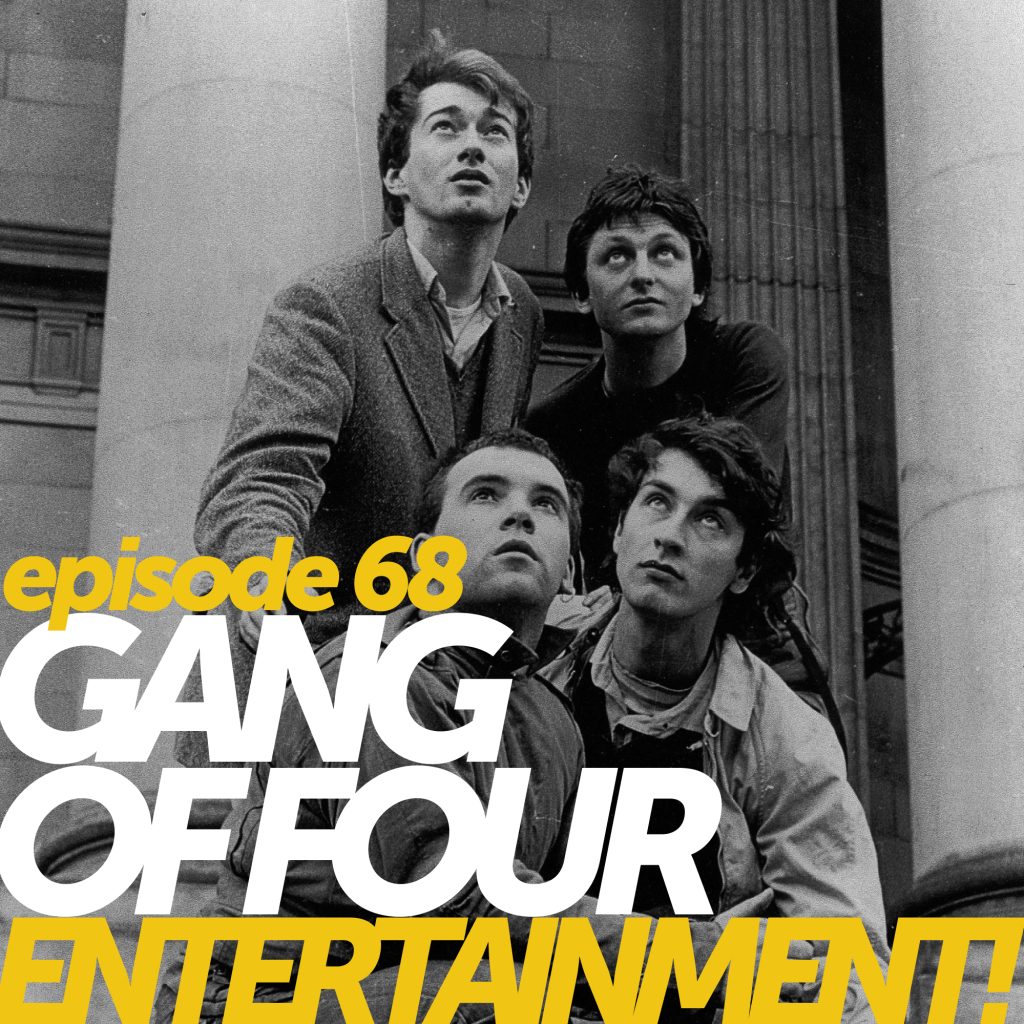
Episode 68: Gang of Four’s “Entertainment!”
“Entertainment!” is described by Gang of Four’s Jon King as “a record about young people smiling and dancing in the face of disaster.” Uh oh, sound familiar? This Leeds-born slab of Brechtian boogie reminds us that to navigate a world where everything is (small-p) political, dancing and dialectics belong together. Free your ass and your mind will follow.

Episode 67: Brooks & Dunn’s “Brand New Man”
This is the tale of two lonesome cowboys who got down, turned around, and went to town catching lightning in a bottle on their first try together. Whether or not their decade-defining country anthems lit a flame in your eye in the 90s like they did ours, Ronnie and Kix offer a lens through which outlaws, in-laws, crooks, and straights alike can look for ways to learn to love again.
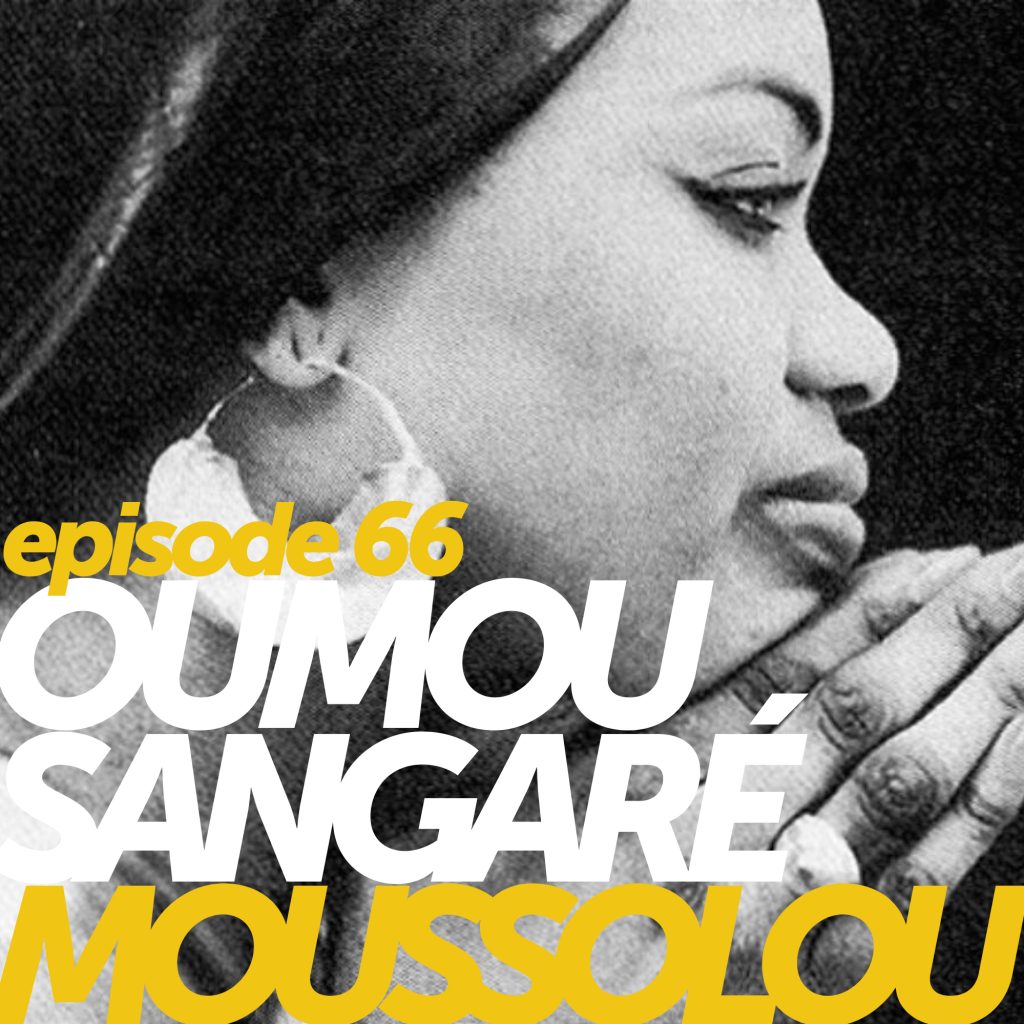
Episode 66: Oumou Sangaré’s “Moussolou”
The name "Oumou" derives from an Arabic word meaning "mother of." It is associated with dignity, wisdom, and maternal strength. Southern Mali’s Oumou Sangare has come to embody her namesake for millions around the world, and it all began when she was just 19 years old, channeling the magical music of hunters through her powerful and purposeful voice and creating a moment that captivated an entire country. Hers is a story everyone should know.
Episode 65: Missy Elliott’s “Supa Dupa Fly”
In the words of one of her groundbreaking forebears, “You feel free? You want to try some wild s**t? Thank Missy.” Since the very first frame of “The Rain” entered our eyeballs, Missy has made the avant-garde accessible, pointing us to a future full of more funk and more fun simply by standing fully in the splendor of her space-age self. Come (supa dupa) fly with us back to the moment where Missy’s magic began.
Episode 64: The Cramps’s “…Off the Bone”
God is a woman and she plays the guitar loud … y’all come catch some Holy Ghost in your hips. Hear our hallelujah for the love story of the queen of rock ‘n roll and the mad daddy holy rollin’ on a river—upstream all the way—and boot scootin’ through a fun and freaky heaven and earth of their own design. The Cramps were Dionysian, devilish, dangerous, and damn good, and they remind us that life can be, too. If you can’t dig this, you can’t dig nothin’.
Episode 63: Black Moth Super Rainbow’s “Dandelion Gum”
Life’s a bit heavy to chew on these days, so we reached into the pocket of our mid-2000s jeans and found an old piece of Dandelion Gum to chew on instead. As soon as its neon syrup hits your tongue, you’ll wonder why you hadn't let this "future pop for now people, today" melt you, melt you, melt you yet.
Episode 62: Project Pat’s “Mista Don’t Play: Everythangs Workin”
This life we're livin' is oh so beautiful. Take it from Patrick Houston, who has spread the gospel of the real for three decades, followed by a discipleship that has shaped 21st century culture in his image. For those still alive in 2025 by the grace of God, let us give flowers to the man from the North North.

Episode 61: Grace Jones’s “Nightclubbing”
Not a woman. Not a man. A revolution. Music’s long history is littered with larger-than-life characters whose mythology shapes reality for the masses — and few loom larger than the mighty Grace Jones. “Nightclubbing” without context is a tremendous body of songs worth anyone’s time, but after a deep dive into Grace’s time at Compass Point, you’ll agree that it’s a vital work.

Episode 60: Paramore’s “This Is Why”
The menace and melancholy of modern life have sentenced scores of young people to the gilded prison of nostalgia — but much to our surprise, a band of recovering Southern pop-punks have an antidote. For anyone willing to “sit still long enough to listen to yourself,” their new music’s sharp rhythmic angles and sharper lyrical reflections frame a doorway through which to free our big feelings and forge ahead.

Episode 59: Ennio Morricone’s “The Good, The Bad and The Ugly”
You know that five-note coyote howl. You may even know the classic film it helps power. But what do you know about the man behind those iconic moments? For our final exploration from our 2024 calendar, reflect with us on the genius of a maestro who could make magic with a mere fistful of notes, who poured forth from his soul a foundation upon which much of 20th century popular culture was built.

Episode 58: TLC’s “CrazySexyCool”
Vision. Bravery. Originality. The 30th anniversary of the ATL-exported opus — by the highest-selling girl group of all time — offered us a chance to reflect on all the ways our hometown heroes ran so some of the 21st century’s most iconic artists could fly.

Episode 57: Kendrick Lamar’s “good kid, m.A.A.d city”
Before the Super Bowl, the super beef, the Pulitzer, or PGLang, one good kid and king-to-be sojourned from South Central to the height of the American promise and rained down lightning that united one nation under a groove. You’ll feel the energy of this episode from two planets away — hop in the van real quick and let’s roll out.

TuneDig Episode 56: Cocteau Twins’s “Heaven or Las Vegas”
Dream of ethereal waves of sound swirling around you—and words you can’t make out saying more than you could imagine—as you float back upstream with us toward the warmth of Cocteau Twins’ decade-defining masterpiece, which still ripples across a vast pool of influences 25 years on.

TuneDig Episode 55: Jeff Buckley’s “Grace”
Once upon a time, “your favorite artist’s favorite artist” wasn’t a Midwest princess, but a “mystery white boy” beloved by Bob Dylan and Adele alike. Jeff Buckley’s signature Grace is on the shortlist of transcendent albums every living being should experience, because, as one industry vet put it: “it’s all in there, isn’t it? It’s just all in there.”

TuneDig Episode 54: Botch’s “We Are the Romans”
"We Are the Romans" is a visceral, vital document guaranteed to make you feel something from its first notes — and there’s never been a better time to stop and smell the roses from a group just now getting its long-overdue flowers.

TuneDig Episode 53: Ravi Shankar’s “Three Ragas”
Ravi Shankar lived one of the twentieth century’s most extraordinary lives, bearing witness to—and making—history all around the world. To many (especially in the West), he personified an extraordinarily complex style of music and the cultures from which it was borne, and he worked hard to make it look easy.

TuneDig Episode 52: Alain Goraguer’s “La Planète Sauvage”
Gather ’round, sommeliers of the strange and crate-digging boogie children, for something “Strange! Frightening! Fascinating!” awaits. The soundtrack to Cannes 1973’s Jury Prize-winning film is a dazzling, surreal, avant-garde hymn to cosmic knowledge and compassion and a secret handshake among real heads. If you’re after a trip to a new dimension, here’s your one small step for man.

TuneDig Episode 51: Marvin Gaye’s “I Want You”
Marvin Gaye’s well of soul power ran mighty deep, and deep into his career, he pulled up a bucket of ice-cold, silky smooth champagne called “I Want You.” Come for the lush instrumentation, vocal harmonies, and Leon Ware clinic; stay for the stories. For our return from hiatus, we observe a titan in his element, reflect on the pain that built him into one, and consider how to reconcile our feelings when complicated messengers deliver beauty to our door.
SEASON 6

TuneDig Episode 50: Funkadelic’s “Maggot Brain”
Before uniting one nation under a groove, the lysergic lords of chaos in Funkadelic harnessed wild lightning into an amulet called Maggot Brain, bestowing the bearer with raw, dark power stronger than any force known to man. Between reaching our 50th episode and coping with the “maggots in the mind” of today’s universe, it felt like the right time to free our minds. We hope y’all’s asses will follow.

TuneDig Episode 49: Alice Coltrane’s “Journey in Satchidananda”
The story of Alice Coltrane — an accomplished bebop pianist from Detroit who transcended into something far greater before walking away from public life altogether — is a glimpse into what it means to be truly free. Alice’s masterpiece "Journey in Satchidananda" is a cosmic dance that sparked creation from destruction. And in a time when we’re all desperately searching for a spark of meaning and hope, Journey abides abundantly.

TuneDig Episode 48: Heart’s “Little Queen”
Take a moment to appreciate Ann and Nancy Wilson, who kicked down the doors of rock ‘n’ roll’s boys’ club with their peerless guitar work, soaring soul vocals, and tight songcraft. 1977’s Little Queen — an oft-overlooked gem in the classic rock canon — offers a snapshot of those elements at their most urgent and pure, powered by the Wilsons’ simple motivation (as described by their producer): “It was a war.”

TuneDig Episode 47: Tangerine Dream’s “Phaedra”
When you think of “electronic music,” what comes to mind may not be a genre you deeply love — hip-hop, house, new wave, or even dub reggae — but all of it owes some debt, scientifically or otherwise, to Tangerine Dream. Dig in with us as we study a prime example of the band’s brand of effortful innovation, where they patiently and persistently labored at the cutting edge of electronic technology to open a portal to new worlds in our minds.

TuneDig Episode 46: Olivia Rodrigo’s “SOUR”
Did you catch one of 2021’s biggest albums, or like us, did you almost overlook it? If you have any expectations of pop music, "SOUR" will likely subvert them. Teenage dream this is not; it’s an exquisitely universal portrait of a weird time to be alive.

TuneDig Episode 45: Fela Kuti’s “Expensive Shit”
The story of Fela Kuti — one of the most famous people on an *entire continent* passionately struggling to liberate power to more people — is absolutely one worth deeply knowing, regardless of whether you find yourself drawn to Afrobeat or (cringe) “world music.” But once you know it, it’s almost impossible not to fall in love with Fela and Afrika 70 as their revolutionary grooves rewire your brain in magical and meaningful ways.

TuneDig Episode 44: Meshuggah’s “ObZen”
Meshuggah’s ObZen—an artifact of human creativity pushing the limits of what’s possible—will quite literally make you hear music differently. If you’re looking for a new musical adventure, and especially if you don’t think you like “heavy” or “weird” music, consider this your sign to push past your comfort zone.

TuneDig Episode 43: mewithoutYou’s “Catch For Us the Foxes”
A misunderstood wise man once said “Let him who seeks continue seeking until he finds.” In our most personal and vulnerable episode yet, we do some seeking through the lens of songs that fill us with the bravery and sincerity to love ourselves and others fully. Dig deep with us as we fish for words about our tiny place in the universe and dance with gratitude for our ability to do so.

TuneDig Episode 42: Erykah Badu’s “Mama’s Gun”
Y’all tryna raise your vibrations? Erykah Badu is here to help. Season 6 kicks off with a meditation on realness and what being on “your own wavelength” really means. (Spoiler: it ain’t a single frequency — it’s a whole spectrum.)
FRIDAY HEAVY
For lifelong headbangers and the musically curious alike, a new podcast from TuneDig is here to push your palette with aggressive, abrasive art. Each short, fast-paced episode offers (1) a new metal, punk, noise, or experimental release we recommend, (2) a related playlist we’ve curated, and (3) a heavy issue to consider and an organization doing something about it. Join us in the void.

Friday Heavy: End of Year Review 2022
It was a great year in heavy music. In this episode, we look back at all the new releases we featured and the curated playlists they spawned.
It was a NOT great year in many other ways. We leave you with a parting message of encouragement to connect your energy and angst to on-the-ground organizations doing the work in your community.


Friday Heavy: November 11, 2022
This week, we discuss:
- He Is Legend – Endless Hallway
- Curated playlist sussing out the depths of He Is Legend’s roots, weirdness, and attitude
- Protect Our Winters (POW)

Friday Heavy: October 28, 2022
This week, we discuss:
- Witch Fever – “Congregation”
- Curated playlist of eclectic, high energy that might get your inner goth stoked on (briefly) going out
- Housing Justice League

Friday Heavy: October 14, 2022
This week, we discuss:
- The Lord † Petra Haden – “Devotional”
- Friday Heavy playlist densely packed with thick, meditative vibrations across the spectrum of drone
- Multidisciplinary Association for Psychedelic Studies (MAPS)

Friday Heavy: September 30, 2022
This week, we discuss:
- Escuela Grind – “Memory Theater”
- Friday Heavy playlist dedicated to the absolutely fucking hostile energy that powerviolence can bring to radical inclusion
- Zealous

Friday Heavy: September 16, 2022
This week, we discuss:
- Holy Fawn – Dimensional Bleed
- Friday Heavy playlist showcasing the incalculably extensive and wildly diverse Shoegaze Cinematic Universe (aka post-rock)
- MTB Atlanta

Friday Heavy: September 2, 2022
This week, we discuss:
- The Callous Daoboys – “Celebrity Therapist”
- Friday Heavy playlist confronting the under-appreciation of Atlanta’s heavy and weird music scene
- Mississippi Rapid Response Coalition – Water Fund

Friday Heavy: August 19, 2022
This week, we discuss:
- Osees – “A Foul Form”
- Friday Heavy playlist fuzzed out on oddball punk that smells like cigarettes just thinking about it
- Women on the Rise GA

Friday Heavy: August 5, 2022
This week, we discuss:
- Chat Pile – “God’s Country”
- Friday Heavy playlist with, uh, a bunch of very pissed off songs directed at christofascist terrorism
- The Grocery Spot

Friday Heavy: July 22, 2022
This week, we discuss:
- WAKE – “Thought Form Descent”
- Friday Heavy playlist that anchors its sound in modern production of sludge, blackened death, and post-metal
- The Planetary Society

Friday Heavy: July 8, 2022
This week, we discuss:
1. Vomit Forth – “Seething Malevolence”
2. Friday Heavy playlist that’s unsettling in the best way, leaving you feeling a little off your axis
3. Trees Atlanta

Friday Heavy: June 24, 2022
This week, we discuss:
1. CANDY – “Heaven is Here”
2. Friday Heavy playlist packed with off-the-beaten-path punk and hardcore from bands that deserve space on your battle jacket
3. Round Rock Black Parents Association

Friday Heavy: June 10, 2022
This week, we discuss:
1. Sasquatch – “Fever Fantasy”
2. Friday Heavy playlist of heavy grooves for late desert nights and hazy generator parties
3. Feed Buffalo

Friday Heavy: May 27, 2022
This week, we discuss:
1. Decapitated – “Cancer Culture”
2. Friday Heavy playlist stacked with bands putting their unique and modern spin on (occasionally tech) death metal
3. PropelATL

Friday Heavy: May 13, 2022
This week, we discuss:
1. Primitive Man – “Insurmountable”
2. Friday Heavy playlist full of SLOW, enveloping, massive and crunchy tone and big feedback
3. National Network of Abortion Funds

Friday Heavy: April 29, 2022
This week, we discuss:
1. Heriot – “Profound Morality”
2. Friday Heavy playlist packed with mid-tempo, huge guitar tone, big atmosphere and lots of industrial grit and grind
3. Invisible People

Friday Heavy: April 15, 2022
This week, we discuss:
1. Greyhaven – “The Bright And Beautiful World”
2. Friday Heavy playlist for fans of more choatic + melodic combinations
3. Campaign for Working Families

Friday Heavy: April 1, 2022
This week, we discuss:
1. Meshuggah – “Immutable”
2. Friday Heavy playlist full of high quality Meshuggah aping that AIN’T “djent”
3. The Bail Project

Friday Heavy: March 18, 2022
This week, we discuss:
1. Soul Glo – “Diaspora Problems”
2. Friday Heavy playlist with 20+ songs in under 40 minutes, (almost) all under 2 minutes each
3. Equality Texas

Friday Heavy: March 4, 2022
This week, we discuss:
1. Vein.fm – “This World Is Going To Ruin You”
2. Friday Heavy playlist exploring more of Will Putney’s work
3. Books to Prisoners
SEASON 5

TuneDig Episode 41: Miles Davis’s “Bitches Brew”
Let’s be clear: "Bitches Brew" is a challenging record, even to some of the best musicians in the world — but all of them say it’s worth the investment. It’s the kind of trip that, even if we *could* draw a map, it wouldn’t take you there. Let go of the need for meaning and enjoy the ride with us. We can promise you’ll be pleasantly surprised where you end up.

TuneDig Episode 40: Fiona Apple’s “Tidal”
On the heels of one of 2020's most acclaimed albums — Fiona Apple’s Fetch the Bolt Cutters — we revisited Apple’s debut Tidal and wound up working to extract ourselves from the mostly male gazes that made its reception … much different. We arrive at a question much like writer Jenn Pelly had: “People would constantly prod Fiona on how an 18-year-old could write songs as mature as these ... Why did they not ask instead how she became a genius?”

TuneDig Episode 39: Death Grips’s “The Money Store”
The modern world is accelerating beyond our control, shaping our reality in ways we can’t yet perceive or understand. Enter Death Grips, an art project capturing the chaotic energy and illustrating the absurdity of our hubris in trying to harmonize the surreal and extremely real — never more perfectly than on 2012’s prescient "The Money Store".

TuneDig Episode 38: Augustus Pablo’s “King Tubbys Meets Rockers Uptown”
Reggae music is easy to take for granted, but its impact is underappreciated and massive — in the case of dub in particular, everyone from Radiohead to Johnny Rotten to Run-DMC owes it a debt. Augustus Pablo and King Tubby together created what’s regarded as “one of the finest examples of dub ever recorded.” Join us as we dive into the culture, history, and unique engineering experiments that made it possible.

TuneDig Episode 37: Rihanna’s “ANTI”
By every measure — sales, awards, chart-toppers, global name recognition — Rihanna is objectively as big as the Beatles ever were. In fact, ANTI is so big it’s still on the charts, a record five full years later. Take a closer look with us at “the record you make when you don’t need to sell records”, and get a taste of the true freedom that comes from focusing on your inner voice when faced with insurmountable expectations.

TuneDig Episode 36: Son House’s “Father of Folk Blues”
All American music traces back to the blues, and deep at the root sits Son House. That the recordings on "Father of Folk Blues" even exist is something of a gray area that cuts to the heart of the great American myth, but wherever you land after hearing these stories, you’ll find that what matters most is what the great Muddy Waters once said of House: “That man was the king.”

TuneDig Episode 35: Melvins’s “Stoner Witch”
The futility of describing the Melvins has stretched critics in the direction of absurd words like “Dadaist” for nearly 40 years now. They’ve belligerently flogged any attempt to pinpoint their essence simply by being themselves, but "Stoner Witch" remains a reliable mall directory for the Melvins’ vast and wild discography. Grab yourself some pretzel bites.

TuneDig Episode 34: Dolly Parton’s “Jolene”
We should talk about Dolly the way we talk about Prince. Her extraordinary kindness and unique kitsch both make her universally loved, but what gets left out of the conversation is the very thing that made her famous: the music. Join in as we focus attention on the sonics and songwriting of the low-key masterpiece "Jolene".

TuneDig Episode 33: The Allman Brothers Band’s “The Allman Brothers Band”
Six enlightened rogues out of Macon, Georgia birthed an entire genre simply by being their soul-powered selves. We have not come to testify, but we’re still hung up on the dream The Allman Brothers Band helped us see. By the end of this episode, you will be, too.
TUNEDIG RADIO


SEASON 4


SEASON 3


SEASON 2




SEASON 1


BONUS TRACK EPISODES

BONUS TRACK: How We Got Here
We got a bunch of interesting listener feedback in our off-season, and it encouraged us to shed some light on why we do things the way we do ‘em. Also, we reflect on our first writeup, which was ... interesting.
WHO WE ARE
We're Cliff (right) and Kyle (left). We’re two dudes born and raised in ATL with day jobs in tech and sustainability, respectively.
We met in middle school, and in one way or another, music’s been the thing that’s kept us close for the two decades since — whether it’s sharing and talking about new music (like this podcast, except in our texts or over beers), going to shows, or working with our favorite record stores to help them survive and thrive.
We started TuneDig as a little art project that connects us more deeply ourselves and to the world through the infinite gift of music. We hope you’ll join us for the conversations, let us know what you think, and share discoveries of your own.
More About TuneDig
TuneDig began as a little something called MusicGrid.me, which we created after realizing there was no place online to directly exchange music recommendations with your friends. Our aim was simple: to make rating albums simple, useful, and social. We got some love from places like Mashable, Wired, Evolver.fm, and Hypebot. We managed to foster conversation between music lovers, get thousands of reviews, and meet great people.
Along the way, we realized that record stores were an essential part of the music lovers’ community. After many a conversation about how we could helpfully connect them to the people who loved them, we began helping them leverage technology to create new revenue streams and embrace streaming services without giving up what’s unique to them: expertise and curation. (Long live the counter clerk who knows exactly which record will be the right introduction to jazz fusion!)
TuneDig is our vision to connect music lovers with the music they love, because no matter how much has changed in the way we discover and enjoy music, recommendations from people you trust and respect will always be the best way to find new music you’ll dig. With this podcast, we’re channeling the spirit of trusted curation pioneered by record stores, and bringing you something to take you deeper into music you can love.