
TuneDig is an in-depth and informed conversation between two lifelong friends about the power of music — one album at a time.
In each episode, we go down the rabbit hole to spend a while in the strange world we discover. We take an honest look at creativity in all its complexity—from writing and production to history and cultural impact.
We promise you’ll learn something new every time, no matter how much you already love the album we explore.
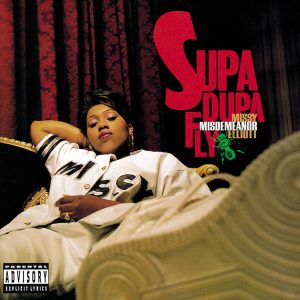
Episode 65
Supa Dupa Fly
Missy Elliott
In the words of one of her groundbreaking forebears, “You feel free? You want to try some wild s**t? Thank Missy.” Since the very first frame of “The Rain” entered our eyeballs, Missy has made the avant-garde accessible, pointing us to a future full of more funk and more fun simply by standing fully in the splendor of her space-age self. Come (supa dupa) fly with us back to the moment where Missy’s magic began.
Transcript
Kyle: Today we’re talking about Super Dupa Fly by Missy Elliot.
Cliff: Here’s a way to begin a sentence that I don’t usually go with. I think Queen Latifah said it best. That’s the part, but she did. She said, quote: “You feel free? You wanna try some wild shit Thank Missy, because you can trust me: nothing sounded the same after Missy came on the scene. Nothing. Everything changed. The bassline changed, the pockets changed. The cadence, the writing… and that’s because Missy has always been a futurist. Somebody who’s looking ahead.”
And considering that quote came from the introductory speech for Missy Elliott being the first female rapper in the Rock and Roll Hall of Fame. I think we are already drawing a pretty clear picture of why, talking about Missy Elliott is well overdue and why we’re going to make damn sure that you’ve listened to this record.
If you haven’t very recently, I’m pretty stoked to talk about it.
Kyle: I am too. I have always slotted away Missy as. capital-I important. I’ve always been a Missy fan since the rain, which you know, I know we’re going to talk about at length. I had the feeling that I saw from so many articles and interviews and stuff that people clearly experienced of a sea change moment when that video came out named by Rolling Stone, the number-one hip-hop video of all time.
But there are things that I didn’t really consider about how to situate Missy in the conversation in particular, you used the word futurist from the Queen Latifah quote. I saw the word avant garde in somebody who cited her as a major influence. And thinking about Missy in terms of avant garde, it’s like, of course she is by definition.
But I reserve that for people like Björk and I just don’t think about hip hop in terms of avant-garde generally, which is on me. shamefully as a huge hip-hop fan, but like of course it is. not since jazz, has there been a form that is avant garde, by definition, like hip hop, she altered the d, she mutated the DNA of hip-hop and American popular culture immutably forever. I think it goes beyond like, I think we have to expand our definition beyond. She is highly influential in popular culture to there is something so encoded and cosmic in her DNA that we have to take a step back and just be like, whoa.
I feel a little X-Files-y when I think and talk about Missy now after, after study. Like she is a wholly singular, came to us, fully baked alien phenomenon. Living in the year 3000 and not even really trying that hard to bring it to us just sort of invites us in. I’ll be up here on the spaceship.
come hang out and have a beer.
Cliff: I think for fellow. Elder ish millennials. One reason it’s important to revisit this conversation and dissect the capital I important thing you were mentioning is ’cause this record, for instance, this came out July 15th, 1997. Speaking just for myself here, I was 11 entire years old at that point. And so while for real, miss e Elliot was probably my earliest and most liked female hip hop artist period, I could not possibly have any of the context of what was leading into the moment of this record happening.
again, as an 11-year-old, I was not yet deeply seeped into the, hip hop lore. and coastal wars, believe it or not, 11-year-old me was slightly more concerned with baseball and the bike that I had just convinced my parents to buy from Walmart, which I broke promptly. And it is all a very visceral memory and none of it includes me being like, Hey mom, I’m pretty stoked about this record.
Biggie left a pretty huge gap on the scene and I’m prepared to help coordinate. Potentially the new era of hip hop. So I’m trying to give myself a break ’cause I just like, without irony or intention, really liked Missy Elliot have the entire time. I’ve never felt some reason to go back and figure out why, because I was just right. rules for all the reasons you mentioned. Like, and we’ll talk about a ton more of ’em, but like, you get it right. I haven’t really gone back, I haven’t really thought about it. I love a bunch of these songs. You know, I was even more familiar with the records that came out a little bit after this.
But being able to go back has, again, like you’re sort of expressing, already given me a much broader appreciation for a, an artist that I, I kind of literally took for granted. And I would encourage everyone to do the same if they feel like they haven’t.
Kyle: You know, we talk about fresh listen and how to think about an artist fresh, which, you know, for an artist of Missy stature can be kind of hard to do. But I think a lot of people are probably going to be in the boat that we are where we’ve taken Missy for granted. And the real gift, I think the real first thought to start with is think about how different this music is still, there’s still nothing that sounds like it, even though people have been chasing and approximating it for a long time. So avant garde and so immediately accessible at the same time, almost no one can do that. Push the form forward and sell millions of records. At the same time, you and I shared that Reddit post that was like a retrospective of the album, and somebody said,
“My wife’s dad now in his late fifties loves this record to death. He said, it’s this quote, number one record of all time. It’s been that way since I’ve known him for 18 years. He’s a redneck hillbilly from Kentucky who farms for a living, but can rap slash thing Every word of this record. I’ve talked with him about it so much, and he’s always said, I’ve just never heard anything like it before.
It sounds like it’s from another planet or dimension. It’s absolutely mind blowing to understand how this was created. He purely listens to old cowboy country like way old, but loves this record in Missy in general. Pretty damn cool to see how music can touch so many different backgrounds and upbringings.
I think this record transcends so many labels in communities. To know my father-in-law’s planting his crops, bumping this religiously just makes me smile. That’s what music should be about.”
think Missy Elliot is what music is about. So let’s talk about the ways how on this strange, singular little document.
Cliff: I think one thing I’ll preview now that I think we will go into a little bit further as we talk is in retrospect now, one of the things that has occurred to me is in every way that Ms. Elliot sort of defied the expectations of her moment, which makes sense both contextually and today, like you’re point out, still kind of weird in exactly the right way, in every way that she defies those expectations or bends a gender norm or sexualizes something that’s not supposed to be sexualized or like promotes a thing about herself that people would otherwise think to hide because it’s, you know, not gonna help her career or something like, I mean, all of those moments combined into and I still haven’t developed a good way to say this, even though I can kind of see the thought, but like it makes for a safe and accessible artist for someone to approach, and I don’t mean safe safe in terms of musical choices, safe in terms of lyrics, none of that stuff. There’s even a song title we’re gonna laugh about. ’cause I don’t even know that I can say the entirety of it as we talk about this fucking podcast, uh, about an album with a bunch of songs on it. So like, it’s not safe in that sense, but safe in the sense that probably part of the reason I was drawn to her when I was younger was because I was kind of uncomfortable with some of her contemporaries who did highly sexualize a lot of the music.
And there’s nothing wrong with that, but I wasn’t comfortable with it in the same way that I can be with a song. Even like computers down the road, like, get your freak on. It was like, I love that song. I know what it’s about. I hear the lyrics and still
Kyle: your relationship with your ability to, your relationship with your ability to talk about this stuff. Well documented at this point on the podcast, sort of an emerging theme
Cliff: Yeah,
Kyle: Elliot, perfect, perfect flag in the ground along the journey.
Cliff: but I, I just, I think it, in trying to be vulnerable and make fun of myself, I’m like channeling some of the vibe of what’s here. Like she does that a lot. Like even all the way down to the video that we’ll talk about. That’s. You know, that a lot of people can bring to mind immediately when we talk about it.
And we haven’t even said the name of it yet. So many of those things defied the expectations of what a music video should be. And especially with a female artist. And like, regardless of what that statement was intended to be, it still created a space for people like me to engage with it. ’cause it looks cool and it looks in that sense, like friendly, you know?
So I think that is a surprising thing I’ve started to see in reverse as I try to, further understand this artist and specifically this debut album that we’re talking about to make this part easy. every now and then we cover an artist that has, uh, I guess pun intended here a hilarious rap sheet in terms of accolades. So let’s just run down this one real fast, okay. And we’re not even gonna cover everything majorly, but for those who might be uninitiated or under appreciating, Elliot is the first female rapper in the Rock and Roll Hall of Fame.
She’s in the songwriters Hall of Fame, four Grammys sold 40 million records, bestselling female rapper of all time, a National Medal of Arts recipient, which we might quote from later. Michelle Obama. I’ll present that like, okay, so like there’s some form of accessibility here like I was talking about. but this record Platinum Grammy nominated and almost universally, critically acclaimed.
Um, it’s on nearly every, all time best albums list that you can find. And I think one undercurrent that we’ll discuss here is all those things are true about her and all those things are true about this record. And still it’s probably all underappreciated in terms of impact. We’ll talk about a couple of specific reasons why.
but it’s very likely we are actually under counting, not over counting all the influences taking place here. It’s really impressive.
Kyle: I think another nuance that, shows how incredible she is in, just sort of her prowess is that this album was co released on Goldmine, which is her imprint. So I think part of the reason you see some of those accolades and outcomes is because even though she recorded and released this somewhat reluctantly and a bit effortlessly, she still had total control of whatever I’m gonna do, I’m gonna do it my way.
so I, call that out right up front to say like, I think those two things are directly connected.
Cliff: So you mentioned the somewhat casual recording, so I think that’s probably as good a place as I need to start ’cause it gives us a little lens into the collaboration. That’s a really important part of this record. But also the, the way that this album came to be at all I think is pretty indicative of what was happening in that moment and why we are.
Heaping praise on Missy Elliot in the very first, 10 minutes of this episode to begin with. ‘Cause no one’s coming to check in on us, this is us really going. No, no, for real. W we think about a lot of artists really deeply through the process of all of this. And every now and then we come up on somebody and go, oh shit, even I didn’t understand this until now.
And now we do. So this album was recorded basically in under two weeks at Master Sound Studio in Virginia Beach. So in October of 1996, the same year that Atlanta hosted the Olympics and had its glow up. Congratulations. Um, but the cool, or like one of the cool aspects of like, those details Missy, Elliot, and Timberland were already an extraordinarily high demand as songwriters and a, and a production duo.
And so the fact that they recorded it there in that period of time, in that short of a period of time, all like, gives us a little glimpse into what was happening because they could have gone anywhere and could have been doing anything. Uh, I mean, they are, not long after that, right? Like their work with Aaliyah would blow up like, so it was a big deal.
Not only that, they. again, casually seems to be the right word, casually recorded this one in sort of a nearby bedroom feeling studio. But on top of that, you know, something that I would’ve never known at the time, but now I can see really clearly in all the stories. Like she was basically like the public demanded this record from her in a
Kyle: Mm-hmm.
Cliff: Like this got recorded because of the mounting pressure from all the people around her to release an album because of how desired she was, not only through her existing work, but then as whatever that would be, uh, in the form of a solo artist or, or making a record under her own name A lot of people go from sort of undiscovered to discovered and then you get the investment and then things take off and oh, they were really that great all along.
Yes, in this case, this is somebody who’s so good at their craft that they were known for it in one context and people believed in her so much. They already believed in whatever she would do if she made a record that they had never heard her try to make before. Like, this is like outrageous amounts of public accolade, praise, and pressure all at once.
and I think really re illuminated for me some of the context of this record, because when I put it, I. That slot. And I think about it that way. They’re sort of doing it offhand as conveniently as they possibly can, but it, gives a little color to like some things that are happening on the record.
One, which we’ll talk about some more, I’m sure, which is like how often Timberland is referenced at all in this otherwise debut record by
Kyle: A lot of four, a lot of fourth wall breaks.
Cliff: Yes. but also just like even the intro and outro from Busta Rhymes, which I’m gonna go ahead and give everyone permission. After you listen to each of these twice, you may skip them.
Okay. You can save yourself the sanity. Just go on to track number two. And then the last two tracks on the album are also just like promo commercials. You may skip them as well, but go through them at least once. But point being. Busta from the very beginning of that track is basically like kind of shitting on her.
And it’s like, dude, I basically drove to the middle of nowhere to come here and tell you about this record because of how important it is. And yet they made me drive here to do this for you real fast. And like it’s all so like right there and obvious. and like it’s just stuff I never would’ve caught otherwise or wouldn’t have cared about, you know, when it was a new record or even just a relatively new record.
But now looking back on it, all this stuff is hilarious and adds so much interesting detail to everything. And that’s even before the record starts in earnest.
Kyle: There’s so much confidence in Missy is the third person you hear on Missy Elliot’s debut record. And this could easily be an episode where we talk about, the woman thing of it all. And I don’t want it to become that, like her greatness is gender agnostic.
But Busa was like one of her heroes. And when I think a lot of people think about Busta, they think about the Busta that is like Missy, that, you know, they call each other twins. So you think about his videos, his Hype William stuff, the woo ha got you all in check type thing. They don’t remember as much leaders of the new school.
And like he was on midnight marauders and he’d been a fixture for a really, really long time. So there’s a bit of like, I got my hero to come coronate, ha ha, in that really tight. And then I got one of my friends in Loche to kick things off and then I come in. So it’s like I’m comfortable just whoever wants to hop in the double Dutch and vibe great.
And then I’ll show up when I feel like it. there’s an ease and a confidence to that move immediately. The other thing that I thought was really interesting, you mentioned making them come to Virginia Beach, Virginia doesn’t get talked about nearly enough in the regionalism conversation in hip hop.
And I saw a great article about how it was basically the bridge spiritually between New York and Atlanta. Atlanta having the organized noise, heavy base thing from 94, 95 on, and New York obviously having its whole moment, not only with Biggie, but like with bad Boy in general with Wu-Tang, with, all manner of things.
And Virginia was sort of situated weirdly between, but in this era, you not only have Timbaland and Missy, you also have the Neptunes. and Pharrell and Tim were in a production collective together called Surrounded by Idiots, or SBI recorded some stuff as far back as 91. And then in sports you have Alan Iversson coming out of Virginia, you have Michael Vick coming out of Virginia.
So there’s a weird what’s in the water thing about Virginia specifically from like 94, 95 to 2000 2, 3, 4. that’s a micro moment in American culture that gets strangely overlooked but dominant, really, really dominant punches way above its weight class in terms of influence. But I think it was because it was so removed and so of its own thing.
Totally different thing from Memphis by the way, a little more of a gumbo thing happening. but at the center of it truly. Timbaland and Missy who describe each other as soulmates in music, which I really, really love.
Cliff: Let’s talk some more about that as a bridge to that conversation. Let’s just finish with a quote directly from Missy Elliot about this album quote. I did this album for my fans and not to make money because I’m already making money with my songs. I Hell yeah. So again, hopefully we’ve set enough of the stage.
no one had to do this, but they sort of felt like they should, and it like catalyzed. The further careers of at least two people, if not more, after just like effortlessly moving forward with whatever felt like was supposed to happen next. And to that end, you can never go wrong with, like, if you do feel like you found your soulmate in your art form just go ahead and keep going.
Just keep doing the thing. You’ll eventually either strike gold or feel really good about how you spent all of your time on this planet. but this combination of Missy and Timbaland for sure was and is the star of the show on this album. It would become an interesting phenomenon from here.
But sort of in the lead up to this they had. Like I mentioned earlier, like worked and would go on to work with, uh, Aaliyah before her death. But for Aaliyah’s second album, one in a million from 1996 like that went double platinum. And at that point, like if you’re doing like tracking their trajectory on a graph or whatever, this is where we start to do like the hockey stick type of like logarithmic growth, right?
Like they were already extraordinarily well known. Both of them then they were well known as this team, then they were building and building, and then one in a million for real took off in a way that, put them squarely in demand like globally from from kind of across hip hop. And again, like when we say sort of like universal critical acclaim at this point, um, this is really the moment that they were inside of.
And so that is the context that these two find themselves in going into this particular record.
Kyle: what can you even say about Aaliyah? Um, before you even get into the rain. I think it is a good moment to back up and talk about one in a million or, cue it up and play it. You know, stop, stop the tape. Go switch over to that. I remember being like, is that crickets? are those crickets outside my window?
Or is it in the song? ’cause I listened to it late at night and just be like, oh my God, everything about this sounds so different.
and even as hip hop and r and b were like starting to converge in interesting ways around this time, the sensibilities of the two never quite matched as seamlessly as they did with Aaliyah.
and she was such a superstar. and I guess she’d been at it, that was her second album, one in a million. She’d been at it for a minute by then. it’s one of those, you gotta be old enough to remember it things, but. I would encourage anybody like below a certain age to go watch interviews with Aaliyah and sort of contemplate the magnitude of who she was, because with her dying so young, it’s easy to miss what a sort of revelation she was in pop music.
Beyonce is probably the closest analog of like, every time they do a thing, it’s a cultural moment. I think Aaliyah would have sort of hit that cruising altitude if she’d stayed alive and become a figure like that alongside Beyonce. but we’ll never know. she and Selena go into that category of wondering about what ifs if they’d had 40, 50 year careers.
but a huge aliya shaped void in culture to me, still to this day. And you, you can, like with Missy, you can see Aaliyah’s influence kind of everywhere,
Cliff: So put on your roller blades. Put on one in a million and really feel what it felt like to be one of us in elementary school.
Kyle: all skate, everyone skate.
Cliff: And then the feeling of falling down. ’cause I don’t know how to fucking roller skate. Are you kidding me? You know, are you just like, and then it has a terrible noise and then your knee feels really weird. And then you give up and play. Mortal Kombat the nineties were an incredible time.
Kyle: the glow in the dark black light carpet playing Mortal Kombat with what you’re sure is a broken tailbone while Aaliyah and Kp and Envy play. And you’re like, I hope girls think I’m cool. And the answer is, you are not. You are not cool enough to look cool while Aaliyah is playing my friend.
Cliff: You just word painted the exact thing. Yes, exactly. There’s no way to look cool in that context when you look like me. So I’m doing my best swinging into then Timberland specifically and his part of the duo. I’m curious for your thoughts on this, because when you think about well-known hip hop production, I.
Duos teams, individuals, whatever. You can sort of hear what it is about their approach that’s gonna make a song different. You could sort of almost get out in front of it and describe a few things that you could look for. Yeah. If they’re producing it, it’s probably gonna have three of these five things or whatever.
I found myself at more of a loss describing them together, especially at this particular time, other than being able to sort of whittle it down from what it isn’t, which, so at that time, you know, so we, we sort of talked about the, the deaths of ACH and biggie happening not very long before this record comes out.
So in this same moment that hip hop is finding its new footing, the sort of cultural counterpart to the Missy and Timberland phenomenon is like bad boy records and all that stuff. And they are continuing on in the more traditional lineage of sampling songs, taking Diana Ross and whatever else, and just like chopping and flipping and changing and all that stuff and sort of doing something on top of it.
Point being, when I think about Missy and Timberland, for the most part, there’s an absence of reliance on sampling. not all the way to the side of like, soulquarians and literally playing the music. but even like, a favorite of mine, right? Like, get your freak on w hopefully we’ll talk about that even in a place or two more before we get outta here.
But like, you know, that’s a song that has Punjabi and, Indian instruments constructing a beat that sort of sounds like it should be sampled from something else, but specifically isn’t, and then also has like a Japanese spoken word inside of it, all of which is like, as an aside, that combination of things would probably offend our cultural sensibilities.
Now, 25 years later, like, bro, you can’t just throw three different cultures into a bowl and then make sure that the beat sounds good, but point being like none of that was sampled or like chopped and screwed stuff in the same way that so much of the hip hop has been in the, 20 and 30 years since then.
so there’s like an absence of that approach, but like, what else is there? You, you pulled something out about the Aaliyah record, like how could you describe what to listen for when this production duo was at the helm?
Kyle: somebody made the interesting point that you can’t appreciate how fully weird it is until you listen to the quote, normal people that they produce for, and then you listen to the two of them together. You know, like it brought out a more interesting palette for somebody like an Aaliyah or a 7 0 2 or a Genine, who’s a little more like fastball down the middle, radio sensibility.
You know, they’re, those kinds of artists aren’t taking the same kind of freaky risk, that Missy does. And, and with Missy it’s not even a risk, it’s just, we’d play faster if we could the Johnny Cash, just like, here’s what it is. I, I don’t know, I’m not gonna put too much thought into it.
I think you gotta start with Sonic Palette and Cadence. So like, the main thing that you’ll notice if you focus on the high hats, where he puts the hats and kicks is it’s in weird places. Listening to Tim is the first time I heard a hip hop producer and was like, this is Zigoo from the meters.
This is Bonzo. This is like, he’s never doing the high hat pattern the same way twice in a 16 loop. And it’s kind of nutty. It’s like not aggressive like jazz drums, but it’s just different enough where he’s like bored with a four bar or something like that. So it’s, it always stays interesting. It loops on big intervals or it doesn’t really loop at all.
and they have a texture, like when you talk about a Tim and Beat, you hear it with Pharrell and the Neptunes and I, I think like they were the first two true super producers at the pop culture level where it sort of went beyond their own insularity, like Cash money did for themselves or like Paul and Juicy did for themselves, or like, DJ Premier did for New York artists Timberland and the Neptunes did Justin Timberlake, they did Madonna.
They did, you know, they, they crossed it over. Into middle of the mall culture in a big way. But like there’s a certain texture that I would wanna look at, almost the sound waves of, snares and kicks. I mean, the kicks have a flatness and a tightness to them, and then there’s like a, a bounce or a roll off or a softness or a, there’s a textural, tactile quality to a lot of the snares that he picks.
And they’re, so, you listen to 10 Tim songs, and I’m probably not saying it the right way, but you start to get what I’m, they, they like have a taste to them almost. And you don’t get that when they’re pulling a drum loop, a 16 bar break from a record. He’s like, he’s finding pad tech, like you can almost feel the pad texture on the machine that he’s putting in.
And he calls it the bounce, they call it the bounce a lot of places. And I think that’s what they’re going for. And so there’s a DMV bit that you gotta get into the, Devonte swing from Jodeci ostensibly discovered Timbaland. So there’s the like nineties r and b bit and everything that that pulls from.
You gotta talk about Teddy Riley and New Jack Swing and what New Jack Swing and Gogo brought in as far as like a, a mix of dance hall in the OG Jamaica Sense and like street sensibility, like those two energies coming together. there’s certainly some influence of Dr. Dre with G Funk and like 70 Soul hardened a bit and like weird sense sounds.
and then I, me, I mentioned DJ Premier, there’s some cutting in interesting ways, cutting and chopping. The DJ Premier did, that’s like street but sophisticated and interesting and inverting and, and that sort of thing. but there’s a definite DC Virginia thing that lends itself to the bounce and creates a, a texture.
I think you gotta think about it in terms of like real texture. So it’s not, you’re right, it’s not voodoo where it’s coming from the instruments, but I think they’re trying to emulate a really organic feel. Does that track?
Cliff: Yeah. think?
that’s helpful because I can feel the energy and texture coming from a funk lineage. But as you’ve pointed out, I wouldn’t have really thought about it with these words, but like, it, it’s the nineties, so r and b is pop. So in many ways they are bringing over funk and hip hop and smoothing it and polishing it enough to be interesting r and b and pop music that could pervade, I mean the, the deepest parts of popular music culture, uh, right at that moment in time.
But. Has sort of rewarding details that are in their, so which, all great pop does, I mean, we’ve talked about that on a number of records, whether it was Rihanna, Olivia, Rodrigo, whatever, like great pop is not just good pop on the surface that most people are enjoying it, but usually rewards you for trying to be a dork about it.
And like, similarly, that kind of helps me think about, you know, this, this same production approach. ‘Cause there’s, you’re right, everything sounds a little bit unique. Every time I isolated a kick or a weird sound I could hear like I could, it felt so intentional as a little spatial bit of the whole deal.
I think it’s just been a curious adventure for me specifically as, as less of a hip hop head in general. But like thinking both of a lack of samples and then also the way that he’ll play with a beat pattern is still to me, pretty subtractive. Uh, like he’ll sort of delete things and stretch ’em out and play with the rhythm a little bit differently than. It sort of betrays the polish that we’re talking about. There’s this interplay between the little bit of surprise that it’s giving you and the predictability that you can count on to make it a real hit. And maybe we’re just describing good pop production, but I’ll take it. ’cause like, I don’t like most stuff that’s designed to be right at this target level.
But I, I love this and every part of it is interesting. So yeah, just trying to, I think, stretch out in front of people some ways that they can engage with this in ways that won’t have them going. Yeah, yeah. Yeah. I listened to a Tribe called Quest and stuff like that. I know what this sounds like.
generally. Sure. But like, I think this record in particular, again, because it was kicking off this weird bent that hip hop could go on is a, a really cool moment of time to, to check out especially like particular songs off of this. But if nothing
Kyle: I think you hit
Cliff: to the rain Yeah.
Kyle: I think you hit on something with space though there He, Timbaland had a conversation with Metro Boomin about production, I want to say for Rolling Stone that I read. And I. They talked about this concept of production porn where you just keep adding stuff and adding stuff, because you have all these sounds in your head as you get a good bass going.
And Tim mentioned that Missy was a big influence on him early on because she would reject a lot of his beats ’cause they were too complicated. And he’d say, yeah, I’d go back and listen to ’em and be like, all right, I can see her point. They’re not simple enough. There’s incredible restraint on these. And I thought about Augustus Pablo and, and reggae and toasting in general, just like getting a vibe and a loop going and maybe a little with can, but it really reminded me more of the essence of reggae.
And maybe that’s, maybe that’s past the blunt, the past the dutchy thing that’s just sort of seeping into my brain on this. but there’s a real steadiness to the whole thing, you know? It, it sort of stays in a vibe throughout and part of that’s the tempo. And part of that’s one of the first things that I noticed is there’s like not a lot to a lot of these songs structurally or sonically.
And listening back to it reminded me that Timbaland was the first producer who ever made me think, oh my God, I wanna listen to hip hop instrumentals now. Just as their own thing specifically. It was. Gigawatt on Jay-Z’s volume two, and it had this wind noise that was accentuated by this video that looked like the windows screensaver, where you’re flying through space in warp speed.
And it was so visual and so minimal because there were only three or four elements in the whole thing. and then you listen to the rain, listening to the rain with fresh adult ears and knowing it was as big a song as it was and then being like, oh my God. It’s just the one thing over and over. It’s just the little bit of bass, the do do instrument from the sample track and like a couple of other things.
And it’s the hook, a Missy thing, the hook, a Missy thing. But it’s not even like verse chorus. It, I, I don’t know. There’s, I guess contrast it to like a Nirvana song where it’s obvious they use big swings and dynamics to signal what the part of the song is and move with tension and release. There’s not a lot of tension and release, I guess between the elements of a song like The Rain.
I guess I remember the anecdote, Tim said, like, that was one I just had on my keyboard and it was on a loop. like no shortage of ideas with these two, right? Missy was like, what’s that? That’s dope. And I just kept doing it. Then I put the baseline in it and she started going off and she went, this is about to be crazy.
Next thing you know, she said, all right, all right, y’all gotta get out. But we kind of created that one together. Missy knew it was gonna be hit the moment she heard the beat. We were both hype. She was hype about that record. That was one of her first ones. And after that, she tapped into a zone. So I think that anecdote tees up the whole rest of the record for me, where it’s just like, that’s self-evidently dope enough that we’re just gonna do that for a while.
And you get an even stronger thesis statement on, it’s very funny to say, the thesis statement of this album is a song called They Don’t Wanna Fuck With Me. I think it’s the best thesis for the album, and it’s the best preview of what’s to come because it’s where she wraps the fastest and most confident.
So it’s where you see the sneak preview of Get Your Freak on Missy. that doesn’t really appear. She’s very low key, very low in the mix, very singing in a lot of these places. You know, she doesn’t like go as hard. On 90% of the record, but in the middle of, they don’t wanna fuck with me. She goes, yo, Timbaland, I’m gonna just dance a little bit.
You don’t mind if I get my boogie on? Do you? We don’t gotta rhyme through the whole track. The track is banging by itself. So it’s just the meta reacting to the thing that they’re getting going. That I think that’s where the like reggae dance hall, oh, we’ve locked into a vibe. let’s keep it looping and I’m gonna go get a beer or whatever, and let’s just boogie for a bit.
I, there’s such a realness to that, but I think that’s what makes it listenable. It’s, it’s all in that sort of like, let’s not overthink it and let’s not over-engineer it structurally as a song. It’s just a vibe, you know? It’s a vibe thing. and spiritually that lives on in like a frank Ocean. You listen to like a blonde and there’s this sort of, I don’t even need to put drums on this, but whereas Frank’s is like to evoke an emotional thing.
Missy’s is just like, that’s fun. Let’s let this ride for a minute. Fun. Fun. That’s it. Fun. Period.
Cliff: It also reminded me the same thing that you are describing also, the way that they lock in, on the rain and to just kind of sit in it such that you also can’t tell how long has the song been going on, when will it end? it reminded me first of how James Brown used to do that, and then very specifically and viscerally.
Reminded me of Led Zeppelin doing the Crunch and aping James Brown and doing the thing in the song where they’re like, take it to the bridge and like just do, just doing the whole meta on top of Meta for music dorks only level thing. like not only having that level of care and detail and almost like lore in the music, but also having the, again, the 1973 Led Zeppelin confidence of, I think I’ll just do whatever the fuck I feel like doing actually, and you’ll be grateful for it ’cause it’s real good.
Um,
Kyle: Uh.
Cliff: like remembering kind of all those things at once and remembering the vibe of people who were spiritually in this line, of which I would definitely include both Robert Plant and James Brown of just like you were born to do this. And then once you realized that you were born to do this, you did not experience a lack of confidence that the best majority of us experience on a regular basis as we try to fumble our way through life.
Uh, and instead you, you all find yourselves in these moments and just exude excellence. Just sweat it out just by sitting in front of a microphone or letting Timberland do a loop on his keyboard, These moments remind me of what’s possible and the space between truly magnificent artists and myself.
Kyle: Right. I think you can see evidence in what they’re both respectively doing now, you know, not to fast forward to the legacy and influence part of things, but it’s, it almost less excellence is sort of the guiding light. Just like, we know we’re good, so let’s just do it. And it’s more curiosity.
I know I talked about fun, but I, I, when I think about the two of them, when I think about Tim. I think about the way he’s like always programming loops and he’s got a thousand, you know, DATs or whatever saved. I think about that Jay-Z clip with the dirt off your shoulder thing where he’s, he’s flipping through 20 or 30 things and he hits dirt off your shoulder and Jay goes, wait, what’s that to know Tim?
And to think about that is like they’re, these two people are just kind of always making stuff. I think the gap that you express is really just like, they have a curiosity and a love and the fun, the energy comes from the process. thinking about the, the world in terms of AI and creation now in 2025, the thing that a lot of the end product people miss with ai, like AI will assist in creation or whatever, like, but it takes the part out of the process that makes people like Missy and Tim unique and differentiated is joy for the process.
There’s joy for the process that’s evident here throughout. And it comes from a, a curiosity and just like a continual, always doing something with your hands thing.
Cliff: Actually, thank you for that. That lights a fire under my ass about this. I think a big part of creativity that we’ll notice from many of the artists that we’ve talked about, but is also true here, is like, they’re not going to tell you in words yet what they’re going to do. They just tell you that what’s happening today isn’t good enough and we’re gonna do something different than that.
And like in that sense, so much of artistic creativity comes from just like, I don’t know what it is yet, but I know what it isn’t. And in that sense, like that is, to me you made me think of it when you mentioned the AI stuff. cause I am hesitant to go one way or another and try to make it Boolean on any of this stuff.
But to your point, We can’t just plug in technology in the places where we are trying to whittle something down. Like you can tell the computer, okay, go whittle a little triangle off the top in this particular area. But like you, the person have to be visualizing what the thing is that you’re making on the other side of saying what’s not there.
Whittle it down. It’s not that change this, keep it going. No, not quite. And like iterating and iterating and shaping it until it’s something that you couldn’t conceptualize before. But now that you see it, you’re like, yeah, that’s, that’s the thing. You know? And I think not, not only is that a good reminder for these times because no matter what magical tools appear before you, like the ability to visualize and conceptualize a thing that isn’t there and then create it out of nothing is still the fundamental human experience that we all need to be pretty good at doing over and over again.
But zipping all the way back in time then, like what she said to MTV news back in 97 about her work and this album in general, she just said the radio is stuck right now. Everything sounds the same as far as video wise. Everything looks the same. So we feel like we’re coming in and we’re gonna change the whole thing.
she’s not coming out and giving you a 10 point. Here’s exactly what the thing is that I’m doing now or that I’m gonna do, or the things that I’m gonna change. But like many revolutionary type artists, no matter sort of what surface area they touch, they can go, okay, but we’re on the same page that this isn’t it.
Right? This thing that we’re looking at together, that’s not it. We need it to be different. It’s stuck, it’s wrong, it’s broken, it’s something. And until we figure out what the right idea is, I’m gonna go over here and do something else in response. so I think, there are probably five different windows into this same idea that we can share in this moment.
But like, swinging out of the context of what hip hop was before Missy Elliot sort of took off with this particular record. it’s just one lens to look at what happened. Yeah, it happened in the aftermath of a lot of like really public and high visibility deaths in the hip hop industry. But that doesn’t itself mean that what this record did or what it created wouldn’t have happened, shouldn’t have happened, any of that stuff.
And just like. Maybe that feels obvious at this point, but like every time we go back and look at a record and re-contextualize it, I feel like I do a fresh exercise of sort of what I’m trying to convey there. And it helps me to be better at like history, to be able to go back in time and go, here are six different ways I can look at this and probably better understand how everyone came to these little moments and what changed and what got, you know, what happened longer term because of it.
Like all of that just sort of makes you better at understanding things in reverse, uh, and therefore makes you better at appreciating all the details that went into it. So thanks for attending our How to Be a Decent Person, soapbox, uh, slash ted talk that we usually get into in the middle. And, uh, I made sure uncovered it for us here.
Kyle: I don’t even mean it in the be a better person thing, I just mean it in, uh, like, don’t kill yourself. You know, like, here, here’s the
Cliff: Yeah.
Kyle: want to continue to be alive in this world. The joy is in the doing, and Missy is such a good teacher. in that way, like we’ve talked so much about the Prince principle and the only way to exist in the world is to try to be the one you Missy’s an incredible guru.
’cause it’s like the one you was there all along. And it’s just your job to find whatever that means in this moment, in the context of this thing, and change the atmosphere with your learnings. Invite people in on the journey.
Cliff: So maybe before we get too far away from it, let’s hit the exercise. That’s always really helpful here. The, I just went back and tried to listen to this with fresh ears for the first time and what stands out and what feels cool. Exercise, which almost always is a fascinating. Thing for us to do for records that we may have known about and or liked around the time that they actually came out.
Because when it hits that particular little moment in time, sometimes it becomes like a little soft blind spot for us. You know, it’s like, well, I haven’t ever had to go back and investigate this. I think it once again, made for an interesting thinking here, uh, and sent me in a bunch of different directions. Where did you, as someone who always knows it would be deceptive to say a little bit more about hip hop as someone who’s always more well versed than this, I’m curious what stood out to you? And I kind of want to contextualize mine based on that.
Kyle: I’ve touched on a bit of it. the steadiness of it throughout that reminded me of King Tubby meets Rutgers Uptown was a big surprise for me. It stays in a groove kind of the whole time. So I, I think a lot of the tempo, bit of it so surprised me. there were a handful of tracks where every time they came back around, there was like a distinctive thing about it that I liked on me Without you.
We talked about, each song being a feature moment for a different player on it. There’s a, a little bit of that flavor here. So like, beat Me 9 1 1 is probably one of my favorite Tim moments. ’cause you get all the Timberland bells and whistles. You get the scratches, the breaths really hardcore backbeat, he quote unquote plays way behind the beat.
That’s one of the best examples of the Meter Z, high hat idiosyncrasies, I think you’ll find. There’s really funny stuff on this record, that’s like as funny as her being fish islands in a garbage bag suit. on, I’m talking, singing for the chorus, singing the words. I’m such a good rapper.
But singing it is like such an insane choice and flex. there’s a lot about friendly skies that tripped me out in particular in a different way than we talked about with Project Pat. recycling elements from sonic elements from their own world almost as a signature thing or a wink is so different than the choice I felt like I would make as a producer.
So like that brown sound from Genuine’s Pony, he uses on Friendly Skies, and it’s the song with GI on it. Which is like, remember his other thing? It’s like that’s a fearless choice. ‘ cause it could be so corny deployed in the wrong way, here’s the wrestler entrance tag for Ginuwine almost, or something.
So I’d be a bad producer, I think, ’cause I’d burn sounds rather than thinking of them as signatures or just like, that’s a cool sound pleasing sound to the ear, so I wanna reuse it. So it’s, it, shows really confident instincts and moments like that. And then there’s like a straight up black moth, super Rainbow Vogue quarter thing that happens on that.
Cliff: Yeah.
Kyle: and it’s like, that’s a whole diversion where he’s just like, I’m gonna do a Peter Frampton thing for the last little bit of this song. crazy Choice, but it works. and then in addition to referencing themselves and their world of friends who are like all featured on the record, but then they reference some of their other stuff, Missy Interpolate, one in a Million on Getaway and s Wvs.
Can We, uh, the guitar from that has interpolated a number of different times on the record, so. They flex their own vocabulary and let it evolve in version. So there’s some more of that sort of like reggae cultural inflection to that approach to me. But then when they do deploy samples, they’re killer beyond belief.
So the, and Peoples One on The Reign is an obvious one, but Socket to Me has the Del Phonics horns. and I went down the rabbit hole trying to figure out who actually played that horn part because it gave us ready or not for the Fujis, it gave us Socket to me, which is I might like that song More Than The Rain, honestly.
And it gave us who run it by Three six Mafia. Could that guy who obviously was like a hired gun player, have ever known that he would ripple into eternity in that way. then again, on Friendly Skies, they rework the intro part of like one of the most killer Earth, wind and fire songs, new World Symphony underappreciated song from gratitude that is like a halfway point between Funkadelic and Moish Orchestra.
like a lot of people have sampled a lot of Earth, wind and Fire, but it’s such an aggressively weird choice to sample that one and then to use it on an airplane. Metaphor sex song. So there’s just like a lot, a lot going on, and it’s all deployed with really tasteful restraint. And the other sample bit, like when you go to who sampled almost everything referenced in there is not like beat or musical part.
It’s vocal slash lyrics because Missy deploys so much classic hip hop cadence. you know, and Izzy, Izzy, ah, that’s like obviously an ODB flip, and then she turns it into lyrical gibberish. But there’s so much like she’s a clear student of hip hop. She’s clearly a great songwriter of r and b songs, given her pedigree and the melodies that she writes for the choruses and stuff.
And it all adds up to an effortlessness. So, just to quickly recap, weird beats, strange, dad level tempo referencing themselves constantly, mutating influences and samples into fractals of themselves all adds up to Missy Elliot as a genre. after three or four listens, I was like, this is its own genre of music.
Still to this day. What of that resonates with you? What else stood out? What’s your take?
Cliff: Thinking of it as its own genre works pretty well. ’cause that’s sort of what I was trying to like mentally process because it feels a little bit out of time. It’s like the more I try to chase the shape of whatever is inside of this particular sound, the more I have trouble like placing it. Because a few things you mentioned though helps me think through it and, and maps to some of my experiences because, so like, let’s use friendly skies.
So you mentioned the, like the vocoder and some of the weird choices. After five listens through something. Right? Some of you mentioned, some of them start to really settle in and sort of take on a life of their own. And that one connected directly to Childish Gambinos, me and Your mama for whatever reason, like sonically the pieces all of a sudden felt like a reorganization of the same thing.
And but then as we tried our best to talk about, even on that early episode, covering that record, like that Child of Gambino record is pointing directly down a path back towards Funkadelic. And so I kept, like, these were, the experiences I kept kind of having on this record is like, I would hear a thing and go, I know where that comes from.
How did they get that here? Like, how did they add that in? I understand. I see it, I get it, but how did they go from this song doesn’t exist to, I think I will do it this way now. It just, kind of blew me away on in a bunch of different ways. But then again, that feeling would have a feedback loop similar to what I mentioned at the beginning of this episode, which is like, I think somehow we’ve managed to underappreciate all of this somehow still.
so the same, how did they get here feeling was also reflected in like, You mentioned I’m talking, or she talks about like, I’m such a great rapper. Like all of a sudden I could see that song everywhere. Vibe wise, it’s cloud rap. It could get dropped today as is a hundred percent and blow right up on Spotify at just no changes whatsoever.
Well, okay, maybe if you remove like bomb diggy from it as like a phrase that would help. cause you know, the kids, they sniff that stuff out now. But like besides that, everything about it feels completely modern, feels laid back, new and fresh at the same time. the audacity of saying I’m such a good rapper in the middle of my song took me back to what feels like now Baby Cliff trying to absorb Rihanna’s sex with me, where she’s just like, Hey, sex with me.
So amazing. Like, oh shit. Okay. Well, okay. Shit.
Kyle: Ma’am, this is a Wendy’s
Cliff: and then, uh, speaking of the song title that I still can’t even say fully, uh, all the way through in this episode, so we’ll just shorten it to Don’t Be Coming. the
Kyle: in my face,
Cliff: which is notably
Kyle: a borderline of country song title. You know what I mean?
Cliff: exactly.
Kyle: coming. Yeah.
Cliff: Yes. Uh, yes. A a eyes wide open while winking, double entendre level thing. Yes. And still it makes me a little uncomfortable to see. Um, but like after I listened to that one a bunch then I couldn’t get getting some by Shauna outta my head. Like the bounce of them were, they started to overlap and then I could, once again, I could see it everywhere and then I could hear all the getting some remixes and everything that was like, literally 10 years after this record.
But just again, gets reflected in a song that’s not even in the, the same range or decade.
Kyle: do you know who Shauna’s dad is?
Cliff: This sounds like a fun, we paused the podcast and you’re asking me an aside about the neighborhood, but no, I don’t.
Kyle: I learned just this week because of the movie Sinners, Okay. on the tip of everyone’s tongue. Uhhuh, is the daughter of perhaps our favorite, bluesman, one of our favorites, someone we’ve seen live together, buddy Guy,
Cliff: what?
Kyle: I don’t know how, with our love of DTP and our love of Buddy Guy that we missed that connection.
Cliff: No idea.
Kyle: just this week somebody told me, yeah, Shauna’s daddy is in that new Michael B. Jordan Ryan Coogler movie. And I was like, who’s Shauna’s daddy? And they were like some blues guy. And I Googled it and it was buddy guy. And I was like, no, no, no, no, no. Not some blues guy. The blues guy. Still to this day.
Cliff: Wow, that’s a totally unexpected, but helpful aside, uh, free free Snapple fact. Yeah.
well, okay. Centers is a pretty good example of what we unironically are trying to do, at least in part through this podcast. Okay. That movie is in one sense, not for us. It’s not for us. That’s okay. There’s no problem with that.
It’s good be able to recognize those things to support other people when something is for them that’s all good at the same time, one thing I noticed and appreciated about myself and about our complete, uh, relentless Dorkiness about music is the discourse started popping off with like, so have you heard this story about the Crossroads and the devil?
Uh, yes. Why haven’t you wait a minute? And then it was just like, oh, hold on. People don’t fucking know about Robert Johnson. it was another one of those, like everything is the same and all is one type of historical convergence moments. And so if you focus in on some of the important stories in your lineage, you will like have a little cultural key that unlocks things ahead of other people.
And it just, it blew me away in a truly shocking and surprising way. How many people were now rediscovering this like, extremely, deeply important story that has played itself out through our culture over the last hundred years. In remembering once again that a lot of people are running around having no idea what under.
Kyle: Yeah, it reminds me, I had a mentor early in my career who was always full of Hallmark wisdom. and one of the things he always said was, it’s easier to become a success than remain a success. And, you know, the, the Jim Collins business Folkiness of that aside, that’s a mindfulness thing. and the equivalent here is it’s easier to learn than remember.
And a large part of this podcast, I think is the practice of us remembering and reminding ourselves folding it into the cheese, so to speak of today. So right now we’re remembering the moment of Missy and the weirdness of Virginia and whatever, and we hardly have to remember the blues lore and Robert Johnson like we talked about in the Sun House episode, because that is, the Rosetta Stone for us, for everything as southern boys.
but when I read that stuff about people not knowing about that lore, which I thought like, I thought that was like on the American citizenship test that you had to know about that type of
stuff. Shows me, I felt guilty. ’cause I feel a sense of responsibility to help people collectively remember the importance of the blues and stuff like that.
And we’ve been so far away from that journey for a minute. But that, and the sinners moment ties directly to this in every way because this has only been and some change years since this moment. And she was at Coachella this year. And there’s a lack of appreciation, and I’m not blaming it on the kids.
It’s, it’s like culture is so fast, fast and eat now it’s hard to know what a seismic thing it is to have Missy Elliot who largely stepped away from this stuff sometime in the late aughts. And we talked about with Aaliyah earlier in the episode, it’s easy to learn, it’s hard to remember. So to keep the richness of the human experience and what all these expressions, and the influence of like, artists in the now, and I know, I know we’ll get to that with Missy.
You always have to be relearning and remembering and visiting the library and go into the museum. And that’s what I’m glad we’re doing here with Missy. I mean, it’s, we talked about it with black ma Super rainbow, right? Like. 2007 being sort of a year of lost media gets lost in the crack between analog and digital.
and in some ways this did too in the early years of the transition between analog and digital. So it’s up to us to just like our way through it a little bit, I guess.
Cliff: Well said
Kyle: Do you wanna tell that story? You wanna tell that story about the analog digital conversion and the impact that it had? The, the transition moment on this record? ’cause I think you
Cliff: Yes, absolutely. That’s where I was going next. Right after I equipped that. Somewhere in the middle of nowhere. Right now, someone is listening to this podcast going, hold on. So the devil went down to Georgia is based on a thing and they’re gonna go on this really fun little southern boy journey soon and discover everything comes back to the blues, as we have always held as our main contention.
Kyle: I hope that person in the middle of nowhere. Whether it’s in America or otherwise, gets to enjoy the third person detached perspective that we didn’t get being in Georgia and told about the devil. Constantly there is a tweet, it’s like an all time favorite tweet for me up there with drill tweets.
Somebody said, devil went down to Georgia. It’s fascinating to me because it’s so American. In any other culture, it would be a cautionary tale of hubris and fooling with a demonic. But in America, Johnny actually is just better than the devil. It’s so American.
Cliff: Yep.
Kyle: not scared him.
Cliff: show about it and shot it on the side of a mountain. That’s a monument to Confederate generals. So yeah, we had to dig our way out of that just a little bit.
Kyle: I wonder if there’s something about Missy’s proximity to the nation’s capital that is accidentally drawing all of this American history out.
Cliff: Maybe Okay. You’ve, you’ve teased us. We’ll swing back into the story ’cause this is really cool. Uh, one of the things we get to do is we look back on things and remember them historically, is we get to also see these weird moments that we never know that we’re in at the time. Uh, and then can look back on them in understand what a strange transition technology has presented us with a lot of the times.
So, super Dupa Fly’s Lead single, which we’ve talked about a billion times already on this episode. The rain, uh, which does have the video, that was a very important, all those things massive hit on radio and MTV and yet did not chart in the hot 100, which would otherwise be your way of tracking exactly that.
And that was because in the nineties, labels started phasing out. The kids will never believe this. Not only did CDs used to exist, but they, the record labels used to make individual CDs of the singles, which were then also commercially available. And that was how like, major hits were issued as promotional singles out to the radio stations themselves.
and so Billboard had a longstanding rule that a song had to be commercially available as a physical single to chart. And then. At this literal period of time that was beginning to disqualify otherwise very popular songs because the record labels were starting to go, why the hell are we making these and for whom?
And so they stopped doing it. And so even though this song was huge when it came out, in retrospect much like the way we have to look at Barry Bonds and Mark McGuire and say, well, they did set records, but I actually don’t know if they really did it the real way or not because they were Lance Armstrong in the shit out of everything.
Similarly, if we look back on this period of time in music, we’re not gonna necessarily see the impact of Super Dupa fly in the way that it actually exists because of the way that we were tracking all of that shifted over and created a gap and a lag in the, the way that we track things.
Kyle: I, I forgot that sugar rays fly was in the same period as this and had a, a laugh out loud at like two levels, you know, like doom difficulty levels. There’s, you can do fly or you can soup A dupa fly.
Cliff: Yeah. The, the two examples that one article that was mentioning this phenomenon drew out were, yes, sugar rays fly and Will Smith’s men in black. So just like, I don’t know what to tell you about 1996 and 1997, but that is what it felt like was the exact triangulation of sugar rays fly and Will Smith’s men in black.
That’s, we were all there and this record came from out, from under it and helped propel us into something that was more creative than both of those things put together, which we thank them greatly for.
Kyle: You know, the first CD single that I ever bought from it was maybe not Turtles at that point. It was maybe Warehouse Music was a song where Missy plays an uncredited role. Daddies. All About The Benjamins because I liked the Rock remix. So shout out to the band, buzz Bubble.
Cliff: Okay. The
Kyle: haven’t touched John.
Cliff: cool. Yeah, we’re on the same page about that. Yep.
Kyle: I think I remember correctly that Dave Grohl was on it, played drums maybe, but also reminded me that. He tried to sign Missy to Bad Boy and instead she went and did her own thing so she could have like blown up and been part of the machine, but certainly been taken advantage of by the machine.
and she’s on all about the, she’s not on all about the Benjamin’s, but she helped inspire the shape of it. and the locks told a story about that many years later. But thinking about the absurdity of owning a CD with just one song on it, I think I paid 4 99 for it, is just like so hilarious Now.
Cliff: Man, you got me thinking about that. All about the Benjamin’s remix. And then around ish the same time interneted, my way to the Bombs over Baghdad remix was Zach Deca on it. And those two things, those two tracks comprised a lot of my early existence
Kyle: Uhhuh,
I’ve,
Cliff: being. Just
Kyle: I feel some type of way that, that the Zach Day laroche remix is on streaming now and not strictly available as an arbitrarily caught off at the beginning and end. 96 kilobytes per second. Worst audio file you’ve ever heard, where you’re like, this is definitely a deep fake. Before we even knew what that was. I almost don’t like that it’s not lost media. Like I, I kind of wish we could Mandela affect it a little as an artifact of its time.
Cliff: Kids don’t know what it was like to try to download a thing that had a name on the file. And then only once you get the file and listen to it do you actually know whether it’s the thing or not. Uh, and a lot of times
Kyle: Real big fish underscore at take on me real cover. Do not delete mp3.
Cliff: Oh man. So swing in all of this, I think back towards, uh, especially some of the longer term impact that this record and then Ms. Lee Elliot would have we kicked off this episode with quotes ’cause they’re good. There are a few more places where people talk about Missy Elliot directly that I think are even more helpful than us continuing to wax on the topic one way or the other.
One set of quotes I’ll pull excerpts from, I won’t do the whole thing because there’s this awesome article, uh, where a bunch of former hip hop and r and b artists are basically asked Can you just tell me how important Missy Elliot was? And they were all like, yeah, no problem. Of
Kyle: I get to be part of this. Yes.
Cliff: Right. So of those people, uh, one of the interviewees was, uh, Monica r and b artist popular in the nineties and from College Park, Georgia. Thank you very much. Monica said several very kind things about Missy Elliot, but I, I think specifically brings out how this record hit for people when it first dropped.
Uh, and she said, when I first heard the single, uh, the first thing that I knew was that I was about to be a smash, hit record. Unbelievable. When I think of it now, more than 20 years later, you don’t forget how different she sounded. She is the epitome of what an innovator means. She’s so creative, and she was so fearless with her approach to things, and she made sure that her visuals matched the sound and took ’em to the next level.
And when you think about a Missy record, you can also think about what you saw. That scene in the Black plastic Bag suit, nobody could ever forget. Like, yeah, we’ve been able to reference it in a podcast where we didn’t have to even establish what it was about. And it’s gonna work for 90% of the people listening to this as it is.
But she would go on to say Missy Elliot knows exactly what she’s doing. And I think it’s because she does everything based off of feeling. If something doesn’t feel right, she doesn’t do it. And what’s so endearing about her is, even though she’s an iconic creator of music and videos, is she’s so humble and like, I mean, we’ll never get the chance to meet or talk to Missy Elliott, so this doesn’t matter one way or another other than to constantly remind people that artists are some wild fucking people.
And we talk about all different sorts of ’em. Some of ’em are good and bad and whatever, they’re sort of all over the place. But a lot of what we find and the people who make the most impact, and Kyle tends to bring it out the most out of the two of us, is like, these people have a connection with how they are feeling and they can go, I wanna feel a way about a thing that doesn’t exist.
And they can go from where they are to that thing existing and them feeling a way about it faster than me. Or you could even conceptualize what that means. And like, I encourage people with this in my line of work, which is not nearly as creative as any of this stuff, but like. I like reminding people the same thing is like when someone starts learning guitar, like the main difference between someone who doesn’t know how to play guitar and someone who’s very, very good at guitar is that the person who’s very good at it has done it a lot more.
That’s pretty much it. Like everything else is sort of a detail along the way. And so similarly, like when we encounter an artist and other artists when interviewed about them, say, here’s what’s special about this person. I can put my finger directly on it. They do a thing based on feeling and on top of it when they can also come back and say, and those people are humble and like specifically point out basically like, this is not just a good artist, but a good person who exists in the world, who is utilizing what they’re creating creatively and actually make a further impact beyond just doing interesting things with art.
Like when we encounter people like that, it’s worth paying attention to. It’s almost always a sick payoff. To just go super far into an artist that you can hear is not only creative and doing something new, but also known for being humble, kind, interesting and curious. that’s so rare that when we stumble across it, uh, we should not, like we said at the beginning, take it for granted.
That’s usually the sign. You’ve got a a lot ahead of you if you dive in.
Kyle: I totally agree. It’s that old aphorism, you know, the best way to be interesting is to be interested, and you and I talk about it a lot in the context of punk rock and we’re pit retired, we’re, we’re borderline two generations out of the sort of zeitgeist. Generation of new bands shaping the scene.
but punk keeps you connected to youth culture and the importance of youth voices and not getting locked into the way that things are. You know, it’s always been this way. Whatever keeps you from getting jaded in a similar vein to everything that you just said and added onto the Monica quote, Timbaland was doing a bit of a track by track in one interview and talked about, he said this one thing that I thought was really interesting, that she was never a hater emphasis on the word never.
He said Debra’s one of her good friends, they’re still best friends to this day. She wanted it to be like an all girls thing. Like these are the top girls and they’re all on my record. It was about hooking up with the women that were creative like her, and she always looked at it that way. She always made friends with other women who were doing it like her.
It was a girl power thing. Even when Eve came out later, Missy was like, that girl Eve is hot. She was never a hater. Every girl that came out, she championed and she championed hard. So like, she was interested and she remained interested, and we talked about the curiosity earlier, and that extended to like, think about 21 Jump Street when Dave Franco is like, don’t be like that man.
A, a stranger’s, just a friend you haven’t met yet. There’s a joy and a playfulness to everything about Missy Elliott’s world that invites you in because it’s like, don’t you want to come in and like. Touch the weird, be a little weird together. Like, wouldn’t it just be better if we were ourselves and had fun and said, fuck all that bullshit that got people killed.
what if we just lived, man? Like, just, just lighten up. Just get in this trash bag suit and walked down the street. Which by the way is a thing that actually literally happened. she quote tweeted a couple of years ago when they announced that it was the number one hip hop video of all time by Rolling Stones.
She said, fun fact. I had to go to a gas station in Brooklyn, New York to get air in this blow up suit. And the suit blew up so big I couldn’t fit in the car, so I had to walk back to set down the street in this outfit in Brooklyn. All caps dim people was riding past like, she must be high.
Cliff: Well fun fact, if you are and you have to pass a drug test, uh, wearing garbage bag outfit and then walking around outside is a pretty good way to pass that drug test.
Kyle: That’s how I used to cut weight and wrestling in the school in an uninflated, Missy Elliot,
Cliff: You know, I’m glad you brought it up they said it’s not a trash bag suit. It’s a quote, couture Michelin suit.
Oh, no doubt. No doubt. The, the, the main thing that separates me from being a stylish individual is not in fact the clothing, but the fact that I would have no idea if I looked stylish when I was or not. So similarly, I don’t really know the difference between a trash bag suit, uh, and something fancy other than whether I could get it at Value Village or not.
But I’m glad that you mentioned the joy of it, because like that is, again, in retrospect, something that has become a brand new lens on all of this for me, and specifically, I like the idea of challenging people to return to the video, the rain. The more that you think, you know, that video, the more I want you to go back and do this.
Because the thing that stood out to me to all of the things you just mentioned, Kyle, and especially about sort of the context of that moment, like that video expresses community and joy. like almost that’s it. Like it’s just a bunch of people who are all cool with each other, smiling on camera at exactly a time where a lot of people might have otherwise thought of hip hop as like the, an increasingly serious endeavor It has escalated to the point of literal death now. this is an art form that deserves, somberness and instead this entire video is like we’ve already talked about musically. It basically just bounces its way through three minutes. we get a whole bunch of people together, some of whom don’t really do much of anything on the track, uh, but are all there anyway, standing there in front of a fish island.
And then again, like look closely smiling and specifically Missy Elliot smiling, expressing joy, and doing so many things at once. Like we, at this point, you know, even in, in recent episodes we’ve talked about the cramps, we’ve talked about all sorts of different artists that like invert and subvert gender-based expectations, sexualize one thing that shouldn’t be, and un sexualized things that should be like all that stuff.
Right? And here again, sort of returning to a thing I was trying to describe earlier, like there is an unmitigated joy that’s just on display and on top of it, like we would be able to learn a little bit more now in interviews from the time. But, even Missy said about that we wanted to make fun of the way that record companies try to make black women look white, fake hair and fake music.
the whole thing is like a joke and it is serious ’cause you shouldn’t have done that. It’s also funny and not that serious. Don’t be so serious about it. This is a very important record. Everybody wants it. But also I don’t care that much. I sort of just did it in a bedroom in a couple of weeks and then we just made this video, which is just, effectively like a budget jeriah video we do and don’t care all at the same time.
And somehow it works. ’cause again, going right back to what we were just talking about, like there is a sense of community support and just like positive vibes. We’re gonna be weird, but everyone’s welcome to be weird with us. And like, this is the whole thing that we’re doing now. even returning to it now, it blows me away how much that was trying to make a vibe shift in 1997.
You know?
Kyle: a couple of things occurred to me as you were talking. One was in an NPR retrospective of the song of the video. it opened with talking about how in the nineties rap video girls were scantily clad. And this was such a silly inversion of that. But I love the way they put it. It was like Missy was saying, you want curves?
Here’s your curves. I know I have a different figure than the sort of two archetypes in hip hop where it’s a woman trying to be very masculine or a woman trying to objectify her femininity. And it’s like, it’s showing how absurd all of that is on its face. It’s both of those things and neither at the same time.
Which leads me to my second thought that I had as you were talking about the joy and the community and the video, and that’s, that it is very lynchian and that’s not a word that I ever would’ve thought. It’s a word that gets way overused and now that David is gone, the commodity of what is lynchian is even more watered down.
But I have to imagine that David Lynch loved everything about Missy Elliot. And the thing that so many people miss about his work is his glee. In the absurdity. And that’s why people like Kyle McLaughlin can do so well in a David Lynch project and then do so well as the mayor in Portlandia. ’cause it’s the same thing with two slightly different knob turns on the same dial.
There’s a very lynching quality to the weird colors and the vignettes and the moving in and out of things. And it, not really telling a story, but bringing you in and out of world moments and oh my God, why is there this insane choreographed dance where they’re pouring down rain on them indoors, is absurd and surreal.
And then all these friends are showing up that you may or may not recognize and they’re just sort of like flossing in the mirror a little bit, getting ready to go out to the party and you’re just like hanging out with them like you’re their friend. It’s all got the same silliness as like a blue velvet or a wild at heart, or the lighter moments and Twin Peaks.
To me, it’s very funny. It’s a very funny video and it’s a gorgeous video. And when I think about Hype Williams, I think about shit like Big Pimpin and like when he became Hype Williams with the like Pin and pixel, diamond zoom name logo at the beginning, like Lucasfilm type stuff when he was larger than life, $20 million man.
But like. They’re just having fun. Hype Williams, by the way. Another person that’s a, like, if you don’t know now, you know that you need to go look up. Everything about the visuals of the nineties was like really informed by Hype Williams. And Hype was very inspired by the singularity of Missy Elliot.
She gave him a platform to like cut loose and be his best self. And it’s the, this is the number one hip hop video of all time for a reason. it truly maybe belongs in the Criterion Collection just as its own little thing.
Cliff: Just to give a quick on-ramp in case someone did go, oh, okay. Now I need to know about Hype Williams too. Okay, well that’s the person responsible for getting jiggy with it and No Scrubs and Gold Digger, the Kanye West song before everything went totally downhill. Uh, there like, I mean, even just those three off the top, they’re just like, I remembered every single one of them visually, immediately.
And those are just like, you know, some of the highlights.
Kyle: And by the way, it’s not even the craziest Missy video to support this album. She’s got a whole thing where she’s mega man. on, that’s for socket to me, right. there’s a video for Hit Him with a he, which I’d never seen. And there’s a video I think for, what’s the fourth one? Beat Me 9 1 1. Is there a video for that one?
I feel like, and like two of those I’d never seen, but I knew the weird Mega Man one. ’cause I, it looked like now it looks like the Gmail logo, but it’s Megaman and the M is for Missy. and in another world the rain video could have never happened. And I think the Socket Tomi video would’ve been just as iconic if it had had the space because it has the same holy shit factor as the rain.
And it’s like a distant second in cultural memory, a very distant second. But I don’t want that to get lost in the conversation. People like we’ve mentioned a number of times, people talked about the, the importance of the visuals accompanying these videos are bonkers and they’re all worth a watch on a big tv.
Cliff: Video for, so to me, feels like they reused that same computer generated, sound stage and turned it around. And that’s where Lincoln Park filmed in the end. It is just all like 1990s tron went wrong, level things on some distant sandy planet. but yeah, it’s good
Kyle: It it, but it almost ha it’s like a low-fi version of that though. It’s got a bit of the Space Ghost thing
where like they, they re, they reuse like Liam Lynch level 3D animation and they know how absurd it is and you can see it in their faces when she and Brad are running away from it. I mean, it’s just like, it’s so funny, but it’s so good.
’cause it’s like, it’s not trying to be serious and it’s not trying to be funny. They’re just having fun and you want to have fun with ’em. It’s an absurd premise. And one of the things that artists can teach us to be better in our own lives about is like, if you’re gonna do a bit, do a bit all the way with both feet.
And if Missy does one thing, it’s like whatever the bit is, I’m sticking with it beginning to end, and then I’m gonna do a totally different bit later.
Cliff: In a case that’s not incredibly clear that that was always going to lead to a trajectory of her always being this incredible, First of all, two have lived a life where Michelle Obama would say about you. Thank you for not just sharing your gift with the world, but for being an advocate for so many people out there, especially young girls who are still figuring out how to make their voices heard. Like you don’t do that.
Just releasing a few good songs. You live an entire fully fleshed out life where people can see you inside of it, doing something like that. Michelle Obama’s not out there just, uh, throwing out compliments to hip hop artists as far as I know, but like to have seen that be said about someone’s life.
And then at the same time, just in a super surface level, cheap and hilarious Missy Elliot moment, like of course she is still to this day as capable as she ever was with this because, so in 2008 she was diagnosed with Graves’ Disease, and put her career on hold to deal with that from a health perspective.
Uh, and then sort of like the resurfacing from that at least as thought of popularly, uh, was 2015 where she did the funniest thing you could do in 20 25, 10 years early, which is upstage Katy Perry at her own Super Bowl halftime show, uh, to the degree that we all remember it exactly like that in just like.
Incredible performers still at that point, but like reminding everybody of just how iconic and memorable so many of her songs were and how inimitable her style and like production combination continues to be to this day. A whole lot of people have learned from her. We’ve got a whole lot of interesting people these days, Dolce among them, like we’ve got our own version of really cool stuff going on in 2025.
But not a single one of those people are in fact, Missy Elliot. Uh, and neither do they occupy the space she would occupy where she’s still going strong now. And that’s, I mean, I know people can do math, but this record came out 30 years ago.
Kyle: Yeah,
Cliff: not only does the freshness of it still hit, which is incredible, but like knowing that the person who made that is still on that trajectory and could very well be producing whatever it is you’d like to produce, uh, is inspiring to say the least.
Kyle: I. It was so struck by the revelation that this big tour, she just went on with her old friend, Busta Rhimes opening was her first ever headlining tour and she was playing and selling out arenas. And my first instinct is to be like, well, that’s the world. Just catching up with the brilliance of Missy Elliot.
You don’t understand this, but your kids are gonna love it. Like no people have loved Missy Elliot the whole time. That was the first thing we said on this episode was we get it, but we’ve maybe taken it for granted. So if anything, I guess I love that she’s giving the world space to like reabsorb and appreciate on a deeper level the joy that she’s given us.
There’s nothing about her reemergence that has felt like I need you to remember how great I am. It’s once again, like, I would like to be with you in celebration of the joy of music, which I think partly comes from the person she is partly comes from like the pure hip hop spirit, eighties origin of hip hop in Brooklyn, New York type spirit.
Seeing her play Coachella and people be like, this crowd doesn’t deserve Missy. The world doesn’t deserve Missy. It doesn’t matter to her one way or another. Just like getting to be back out doing the thing. Sharing the joy, not hating on anybody is so evident and it’s, it’s an energy that I think we could all learn from.
We could stand to remember and renew ourselves again and again and again.
Cliff: I mean, you don’t even have the abstract this too much. She, in the Coachella event that you are talking about, she came out dressed as a fucking Transformer’s car. Like it, nothing has changed. The vibe is still the same. Oh, shit, we’re gonna have fun. This is gonna be funny. It’s gonna be good at the same time, but like, nothing’s for real.
Nothing serious In arguably the most serious times we’ve ever been in at the same musical event. Um, where kneecap is now at risk of never being allowed back into America, after using music as a form of protest, which is, anyway, see all of our previous episodes for that discussion. but just like to have that same energy in this moment where it’s like, I’m sure that she could be.
A really serious artist in this moment if she chose to be. ’cause she knows how to express herself. And yet that’s not everybody’s role all the time. Some people need to use their art in a particular way. And then for Missy Elliot, what it’s been the whole time is like, I don’t know man, but everybody’s welcome.
We’re gonna do some funny shit. Whatever you’re wearing is good. We are chill. We’re good to go. Join up. Let’s have fun. Let’s balance whatever we’re outta here. And like, distinct from what we discussed in the Black Mall Super Rainbow episode, you know, the ability to use music to maybe dissociate a little bit wisely.
This one, I feel like is a good example of like, music will bring you back in. Uh, there are times where it’s serious and we don’t need to take any of that away. But there’s also moments where music just invites you back in and reminds you that there’s a whole lot of people who are wrapped up in all this moment.
And we can experience that stuff together. And, uh, you know, maybe, maybe save the serious statement for somebody else or for another day.
Kyle: I’m with that. So where do we take that energy from here?
Cliff: My first stop for myself and other people prone to taking things too seriously is to not think. Things too seriously from here on out. especially in regards to like, oh, okay, this album latched into me in a new way. I’m pretty pumped about it. Where should I go from here? Again, personally don’t overthink it.
You know, where I started going was like, Lil Kim’s not tonight, and the Ladies Night remix, up jumps to Boogie, all the other stuff that felt fun from the similar period of time. That reminds me of I, I’m not sure how like localized the dazzle skate experience was for me as someone who grew up, grew up in Clayton County at that particular time, but just like the feeling of like, I’m 10 years old.
I’m not an adult. I’m also not necessarily a little kid anymore. I’m like, Experiencing culture for the first time, and I’m watching adults have fun and like to me as opposed to a lot of other artists where you can truly go on a serious music endeavor kind of through history. This one has felt better, the looser I’ve gotten with everything.
Whatever I wanna listen to next goes. Whatever feels right in this vibe works. And if nothing else, it’s reminded me of the types of mix CDs and playlists I was trying to put together when Missy Elliott was one of my favorite artists. And remembering what little baby Cliff was trying to put around, work it on my splatter.
CDR.
Kyle: Oh man, it was gossip folks for me. ’cause anything that had a Luda guess verse was where he really shone. man, that’s so real. It also occurs to me from what you said about dazzles and experiencing culture in real time, that like when people talk about old Atlanta and people who aren’t from here aren’t concerned with that whole bullshit conversation.
when people talk about old Atlanta, they’re talking about the feeling of what you just described, of nobody’s paying attention to us globally and we’re just gonna have a good time. There was an effervescence and a lightness to the sort of small town feel, and I feel really spiritually connected to the purity of the moment in Virginia at this time because they were doing it for the love.
And like even if no one cared, we had a moment for ourselves at the skating rinks and the barbecues and all that stuff. And like, sure, there was other stuff that we weren’t thinking about culturally sociopolitically what, like all that’s outside the door. Some of that stuff is good, some of that stuff’s really bad, but there was an environment where we could like be free or we were just going to choose to be free no matter what.
And it’s hard to do that because of the nonstop sort of oppressions that find their way into our consciousness now in ways that didn’t have mechanisms to do then. But there is a real lesson to that. no, we gotta, we gotta hold onto our freedom no matter what. Maybe I should get roller skate. Maybe that’s a lesson in this.
Cliff: Not the worst idea. And personally, I’d love to see that happen. That would delight me and it would probably finally convince me to change the wallpaper on my phone to whatever picture I could get of exactly that happening. And my request would
Kyle: Am I the wallpaper on your phone?
Cliff: certainly would be, if I could get you wearing shorts and roller skating.
Kyle: Yeah. Six foot four guy in roller skates. Big tree. Fall hard.
Cliff: I do have a saved though phone configuration that is you in an air and tipping shirt flipping me off, which I occasionally put on when I miss you. So that is true. That is absolutely a hundred percent real and true.
Kyle: love you, man.
Cliff: it’s just like a secret that’s hiding on my phone that only maybe one, one, maybe two people know about.
I.
Kyle: If you get detained at the airport, change your phone. Scream
Cliff: I was literally
just thinking this, like one day I’m gonna get detained and they’re gonna hold their finger down on it and go, hold on, what’s this? Incredible. Well, that’s a person who hates you very much. I can tell you for sure, officer.
Kyle: that’s, that’s the equivalent of Ron Swanson at the park when they ask him for his permit and he hands him the thing in crayon that says, I can do whatever I want.
Cliff: Yeah.
Kyle: I’m the birth certificate that says I am 12 in green crayon.
Cliff: yep. That is my plan for, uh, when I travel internationally here in about a month, uh, I’m just gonna write in my notes app, let me in, and then that’s what I’m gonna show them when, when they pull me up to one of the booths. Uh, hopefully
Kyle: It is gotta be the Eric Andre meme. It’s gotta be that. Let me in. I do love your point about where do you go from here and it’s just like, find more moments like, oh, we really have, when we die, or the moments or the stories You picked out some good songs. I’m probably gonna go back down a rabbit Hole of being the Kid in 2000 that made a mega mix of Timbaland produced songs because I like the way the drums sounds, make me feel, the texture that I can feel in my mouth.
There’s is that Yo Chick is one of my favorite ones. I think it’s the remix that’s actually Memphis Bleak, anchored and not a Missy Showpiece, but she’s on the remix. and there’s just a whole bunch of Tim songs where he like out cropped and went on a generational run right after this from like 98 to oh one.
so I’ll, I’ll go down a Tim Rabbit hole for sure. And, and RIP to Magoo who has a great appearance on this record, but also There’s a joy in just looking for Missy’s fingerprints everywhere in the joy of being yourself. You mentioned Doche and she’s probably the best spiritual successor we have to Missy right now, just kind of in every way.
And it’s wonderful that she’s having her moment and I’m like getting a little emotional thinking about her getting emotional at the Grammys. Very much of the same spirit, hard one fight for freedom. You know, it’s, it’s hard to make it look easy. I think Billie Eilish is another one where there’s a ton of Missy influence, especially the non-gender performance bit of it.
And turning hip hop steelo into another thing entirely. there’s a lot of Missy and Rihanna thought back to the anti episode and the freedom of a, an album like Anti has Missy’s fingerprints all over it, and that’s a decade on the formlessness of Frank Ocean is like somewhere between Missy Elliot and David Byrne.
CSA, who’s currently selling out stadiums, is 1000% in the same vein as Missy. And you watch one of them days with Kiki Palmer and the humor that SSA brings to the like, street and dance hall and sultry thing, not aggressively sexual, not aggressively non-sexual or masculine. SZA feels like a spiritual successor to Missy in every way.
And it’s just joyful to find all of those people, I think about them and when I see their face in my mind’s eye, I see them all smiling and they are carrying on the lineage of Missy in that way. And, all those people are just like a reminder with the music they put in the world to just smile more, smile through the pain or something.
to do it around, people you love and more importantly than anything, to just keep doing it no matter what.
Cliff: And joke ish things aside, yeah, smile through the pain, but like also, it’s always so hard to like acknowledge everything is difficult and hard. All those things are real. All those things are serious. But also in the course of your life, like when you are doing on a regular basis, the things that actually match up with whatever it is your heart wants to do on the inside.
And then you’re around other people who support you doing exactly what’s happening for you on the inside. Like you will smile, you will experience joy in unpredictable places and moments because it’s never one or the other. It’s like it’s never that. It’s never, ever that. It’s always both together operating in some different combination under the surface.
But like seeing the joy that you are talking about and imagining them smiling, like not everything will make you smile, but you should find yourself smiling. Especially around the types of people who support you the most. I am not saying this to be sweet. I cannot, Kyle and I cannot be around each other without laughing.
It’s just gonna happen the like our pure existence as humans who know each other and are friends together, it’s fucking hilarious. It’ll never stop being funny. It’ll never make sense. It’ll never be normal or serious. It’ll always be funny and there will always be something for us to laugh about. And like, if you find yourself going a really long period of time without finding yourself smiling, try to do something new or try to change your context.
One or the other is maybe gonna bring this out, but like something about thinking about super duly. The record from 1997 has reminded me that like acts of joy aren’t just intentional things that we do knowingly, despite the awfulness that we look at right in front of us, but is also just like a natural and organic consequence of doing the things that connect us to reality.
And the people who want to take us to places where we’re experiencing more connectivity like that will draw out joy. You’ll find yourself smiling and you’ll find yourself probably goofing around with trash bags in front of a fish islands at some point, and then probably posting it to your stories.
Kyle: the right now image in my head is when I’m on TikTok, sometimes I’ll come across a live of Timbaland sitting in his studio still at however many years old he is now, however many platinum plaque he has still going, send me your music and let me listen to it live. And it’s like him and T-Pain in a category of their own.
Still being as big a fan of music as they ever were, the day they were born, the day they decided to sing a song for the first time. And like Missy’s still co-signing artists, two people sampled, she’s a bitch, Cardi B and Bia. And people were like, that shouldn’t have been a thing. And she hopped in the middle of it and said, it’s all love.
They can both rap. It’s great. I love it. I’m here for it. No, Hayden made a big thing of it.
Cliff: Missy was on that flying a ball song ev, everything that’s just, yeah, everything that’s just new and upfront and joyful about the new generations. She’s immediately connected into.
Kyle: Yeah. And that’s the thought that I think I’m left with on all this. In a world where it’s so easy to get stuck on what it shouldn’t be, how it shouldn’t go, how I wish things were different is like not to be the like, well just, it takes fewer muscles to smile than to frown. Or like what if you just weren’t unhappy anymore?
But there is something in like if you’re really stuck right now and you just can’t get out of it the same way, if your body really hurts, somebody would tell you to just get up, get sunshine on your face before 9:00 AM. Walk your neighborhood. Just do that for 15 minutes and then try again tomorrow. every difference in your life starts with one choice. Missy and Tim present you with a great guide for a choice. Just find, find a way to make a choice today that’s going to give you joy and so much will radiate outward from that. So much possibility, so much creativity, so much connection and community and like maybe the world will suck less with every little choice you make to not be affected by the world, but to affect it and God bless them for their consistency in helping us to remember that over the years.
DAILY ALBUM CALENDAR
We’ve curated an entire year’s worth of albums to spin, one for every single day.
If you’ve listened to TuneDig, you already know these 366 picks span history, genres, and cultures. Each day presents an album that’s fundamentally different than the one that came before it, and the one that comes after.
LATEST EPISODES
Episode 80: Between the Buried and Me’s “Colors”
Music can be this?! Five North Carolina dudes took the full range of the human spirit and musical styles into the woodshed, and from the loom came a technicolor dreamcoat of power, precision, and progress that we’ve worn with pride through nearly 20 years of long, strange trip. Join us in looking back with gratitude for getting to be there during a special band’s watershed moment and looking ahead with renewed enthusiasm for the boundless possibilities still beyond the dark side of the moon.
Episode 79: FKA Twigs’s “LP1”
As the 2010s cleaved culture into fractals and alienated humans from their being, Tahliah Barnett beamed down from the cosmos, a biblically accurate angel contorting into shapes embodying pure emotion. Her singular, decade-defining debut offers prescient wisdom for our AI age: the path to the world begins back in our bodies. When (FKA) Twigs moves, you move.
Episode 78: The Chemical Brothers’s “Exit Planet Dust”
Time's funny, innit? As today's youth excavate the nineteen hundred and nineties for the ecstasy of seemingly simpler times, here lies a fossil record containing so much of the DNA of how it was done — layers upon limestone layers of cultural source code. Keep digging and you might just find a place to get off your biscuits. The Big Beat goes on.
Episode 77: Otoboke Beaver’s “Super Champon”
For our money, this is what running through the halls of your high school and screaming at the top of your lungs actually feels like. And why *shouldn’t* the unreal world be a 250-BPM confetti cannon of primal-screaming sweetness? Take 21 mere minutes to blast-beat your brain and body into a fireworks show and then let’s shopping after.
Episode 76: Chic’s “C’est Chic”
This episode’s meaning is neither deep nor hidden: the Nile is a river. To good times, that is. If the savoir faire, stellar musicianship, and seismic influence of Nile Rodgers and Bernard Edwards’ organization don't suit you, then to cite a very wise t-shirt: “disco doesn't suck; you just can't dance.”
Episode 75: Nas’s “Illmatic”
Illmatic’s impact on hip-hop is a foregone conclusion — one listen and it ain’t hard to tell why. But as we unpacked the lyrical density, the layered samples, and the hyperlocal lens of Nas taking us to the Bridge, we found they represent, represent something deeper in the American mythos and our cultural consciousness. In the land of the free and home of the brave, life may be a bitch, but the world is yours.
Episode 74: N.E.R.D’s “In Search Of…”
It may be true that No One Ever Really Dies, but at the turn of the millennium, a young, wild, and free new wave in culture most certainly came alive. Whether or not you were around and aware in the moment of the Neptunes’ cultural dominance—and the decidedly counter-cultural bomb N*E*R*D planted underground—it's worth the star trek to the 21st century sound and style’s Big Bang.
Episode 73: Odetta’s “It’s a Mighty World”
Odetta — a must-know titan of American music and culture — once noted that young people “learn about American history through battles.” But her dream of liberation was shaped much differently: “I learned about the United States through this music, through the songs that I sing.” As we live through the kind of historical moment that makes most folks want to lie down and die, we can — like many heroes before us, from MLK to Maya Angelou — look to the legacy of 1964 and Odetta for strength to insist upon our lives.
Episode 72: R.D. Burman’s “Shalimar”
Once upon a time in Bollywood, one magical man made enough music to fill a million moments—and made space for hundreds of other artists along the way. Of the 331 scores “Pancham” composed in his lifetime, 1978's “Shalimar” is a uniquely compelling introduction to his technical prowess, transcendent alchemy of cultures, and tremendously joyful love of a life full of song.
Episode 71: Marianne Faithfull’s “Broken English”
“That’s the thing about pretty faces… We don’t expect them to belong to the fighters— the junkies and monks and cockroaches who’ll survive every atomic bomb and suicide attempt and outlive us all.” - Lindsay Zoladz Broken English is searing, singular snapshot of surviving to spite the devils (who’ve gotten far too much sympathy in the story so far). You’ll love it forever with its good and bad weather. We may have lost Marianne Faithfull this year, but not before she outran the darkness. As we close out a dark year and look ahead for light, there’s a lesson to...
Episode 70: Sade’s “Love Deluxe”
Any denier that all art is political need look no further than the smoothed-out soul slipstream of Sade, a group defined by its economics. Rare output, minimal arrangements, reserved volume, and, of course, the premium implied by “Love Deluxe”—a title derived from the idea that true love is among a precious few luxuries that can’t be bought. Our world’s clearly longing for more longing, and we discovered a truly transcendent delicacy as we unboxed Sade’s brand of desire.
Episode 69: Charles Mingus’s “The Black Saint and the Sinner Lady”
When you think of true "artists" in music, who comes to mind? Charles Mingus embodied its romantic ideal, for better and for worse. His magnum opus "Black Saint" is more than even jazz's cosmic form can hold—it's the full-bodied essence of a master composer, peerlessly inventive bassist, and clairvoyant critic of the real America. In it, you’ll find what his collaborator Gunther Schuller called "the widest ranging musics you can find composed by one single human being."
Episode 68: Gang of Four’s “Entertainment!”
“Entertainment!” is described by Gang of Four’s Jon King as “a record about young people smiling and dancing in the face of disaster.” Uh oh, sound familiar? This Leeds-born slab of Brechtian boogie reminds us that to navigate a world where everything is (small-p) political, dancing and dialectics belong together. Free your ass and your mind will follow.

Episode 67: Brooks & Dunn’s “Brand New Man”
This is the tale of two lonesome cowboys who got down, turned around, and went to town catching lightning in a bottle on their first try together. Whether or not their decade-defining country anthems lit a flame in your eye in the 90s like they did ours, Ronnie and Kix offer a lens through which outlaws, in-laws, crooks, and straights alike can look for ways to learn to love again.
Episode 66: Oumou Sangaré’s “Moussolou”
The name "Oumou" derives from an Arabic word meaning "mother of." It is associated with dignity, wisdom, and maternal strength. Southern Mali’s Oumou Sangare has come to embody her namesake for millions around the world, and it all began when she was just 19 years old, channeling the magical music of hunters through her powerful and purposeful voice and creating a moment that captivated an entire country. Hers is a story everyone should know.
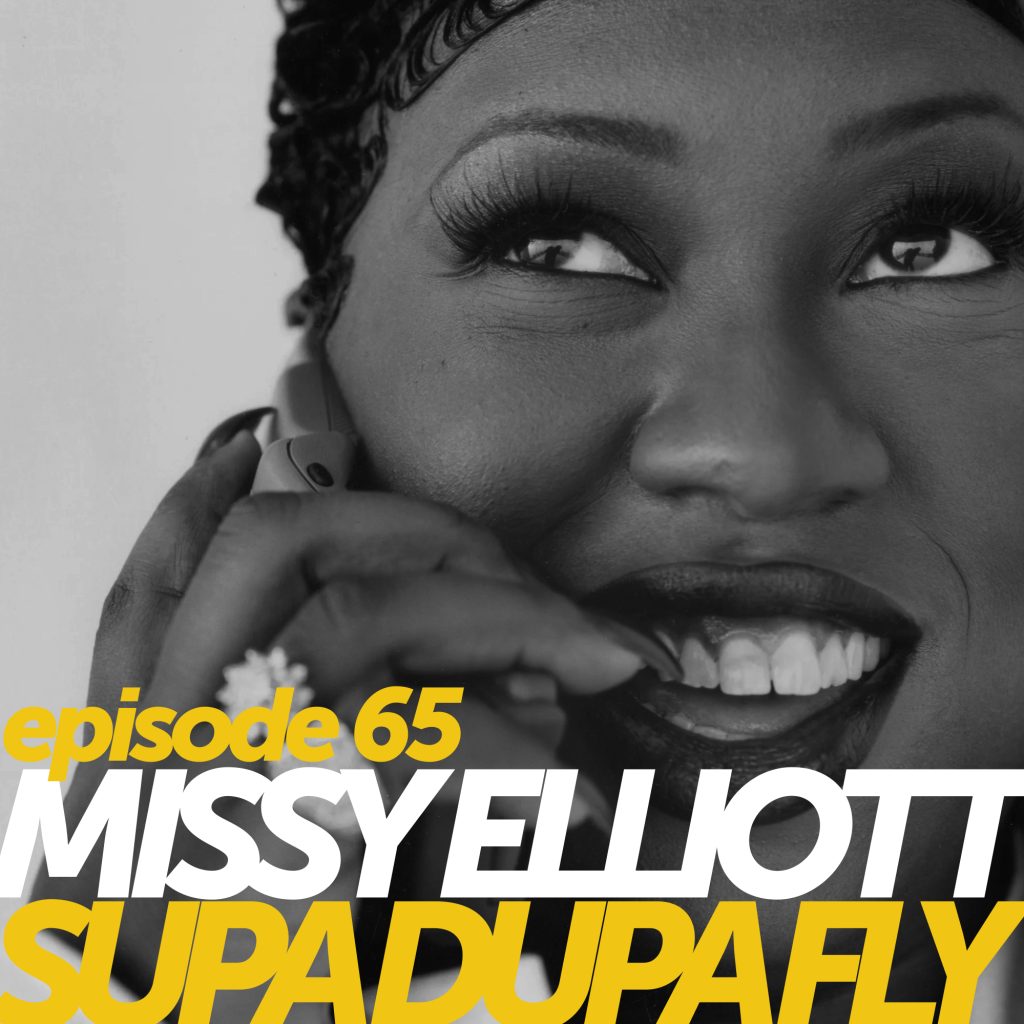
Episode 65: Missy Elliott’s “Supa Dupa Fly”
In the words of one of her groundbreaking forebears, “You feel free? You want to try some wild s**t? Thank Missy.” Since the very first frame of “The Rain” entered our eyeballs, Missy has made the avant-garde accessible, pointing us to a future full of more funk and more fun simply by standing fully in the splendor of her space-age self. Come (supa dupa) fly with us back to the moment where Missy’s magic began.
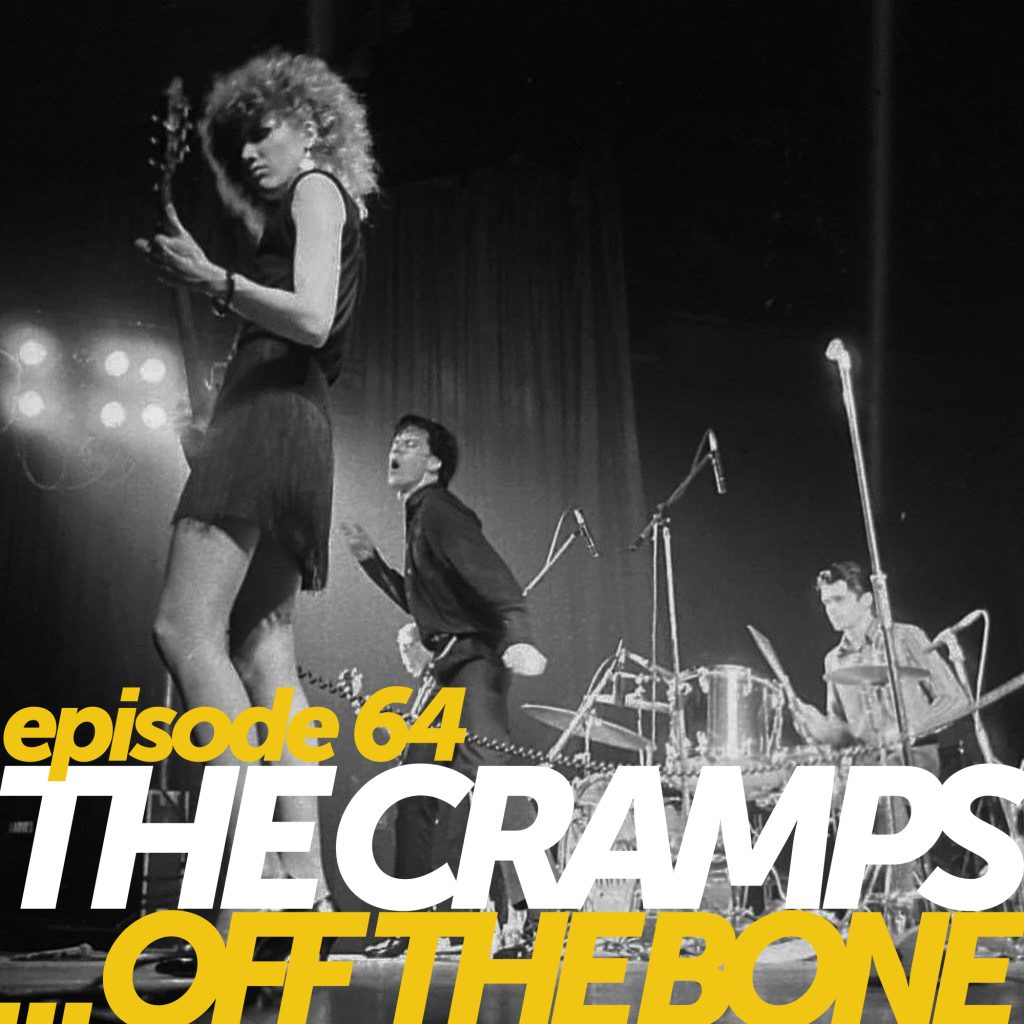
Episode 64: The Cramps’s “…Off the Bone”
God is a woman and she plays the guitar loud … y’all come catch some Holy Ghost in your hips. Hear our hallelujah for the love story of the queen of rock ‘n roll and the mad daddy holy rollin’ on a river—upstream all the way—and boot scootin’ through a fun and freaky heaven and earth of their own design. The Cramps were Dionysian, devilish, dangerous, and damn good, and they remind us that life can be, too. If you can’t dig this, you can’t dig nothin’.
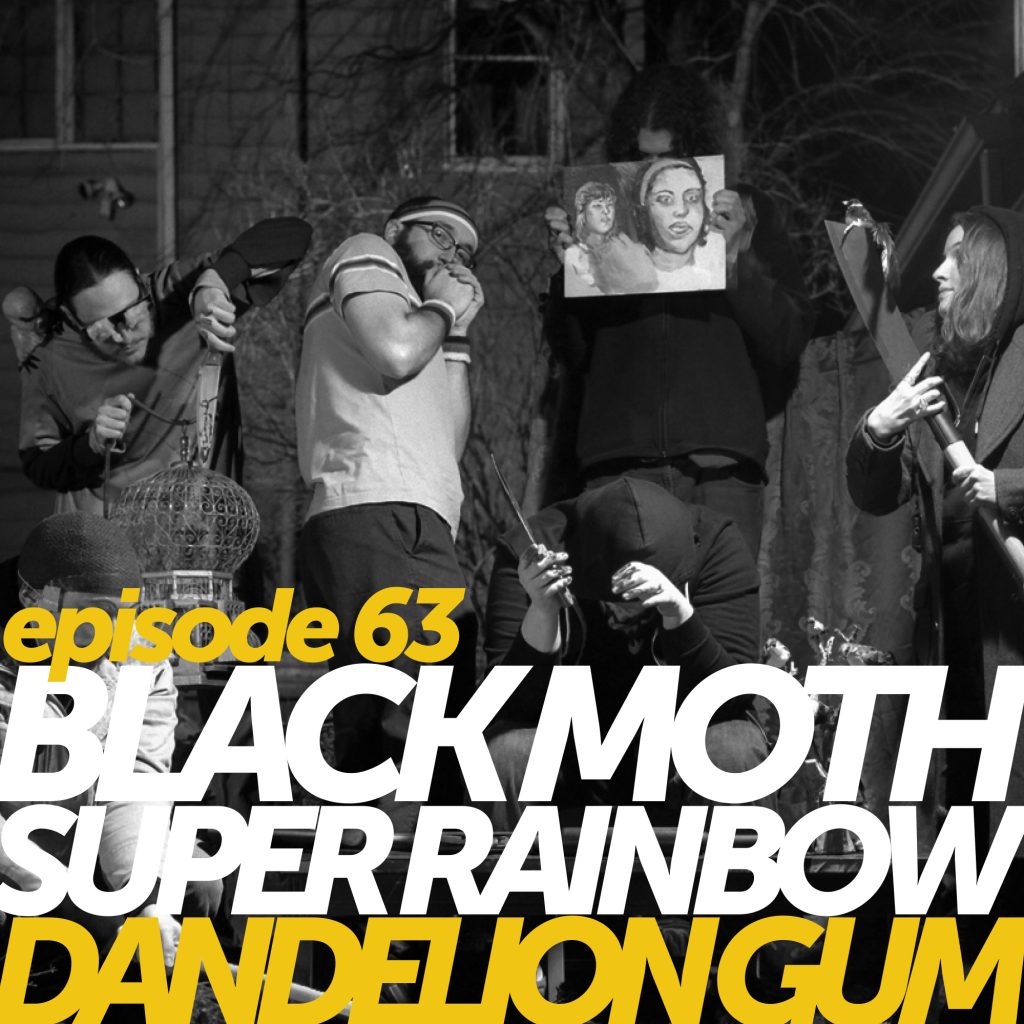
Episode 63: Black Moth Super Rainbow’s “Dandelion Gum”
Life’s a bit heavy to chew on these days, so we reached into the pocket of our mid-2000s jeans and found an old piece of Dandelion Gum to chew on instead. As soon as its neon syrup hits your tongue, you’ll wonder why you hadn't let this "future pop for now people, today" melt you, melt you, melt you yet.
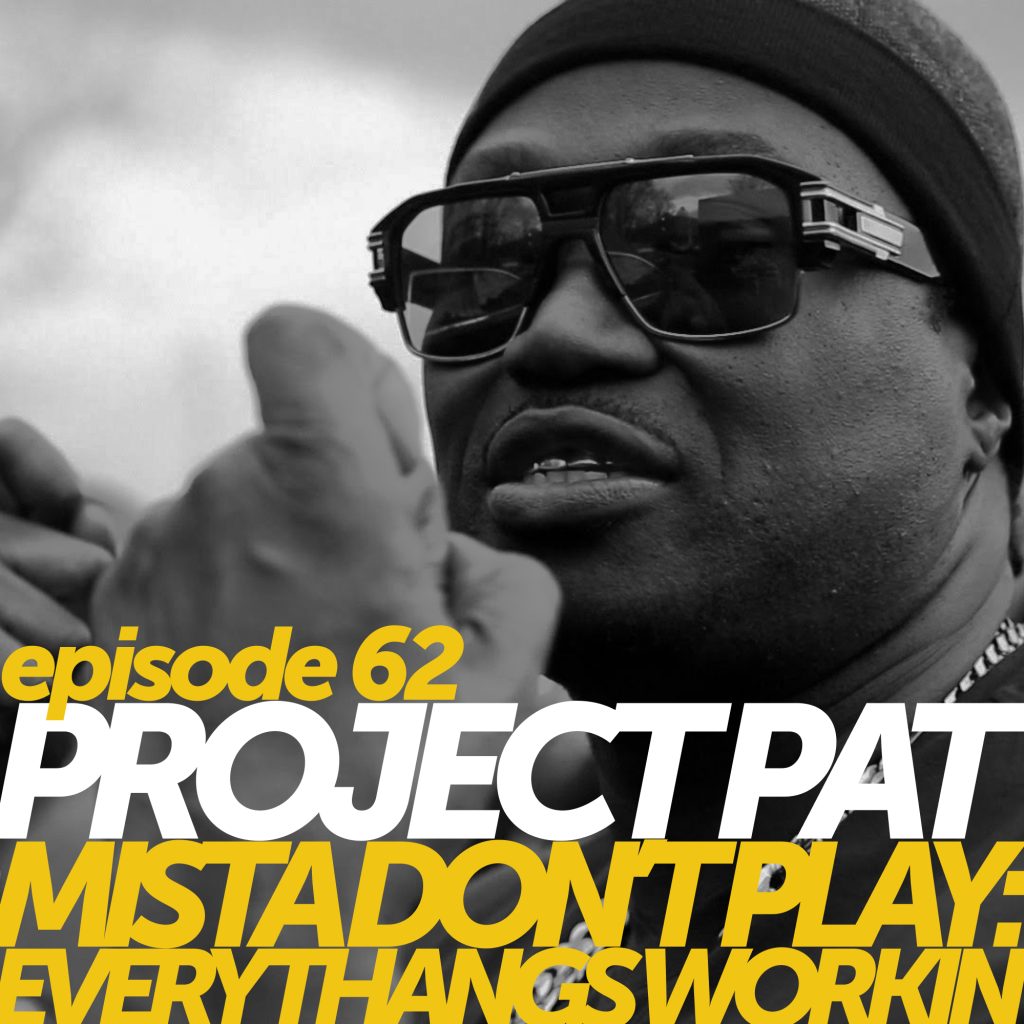
Episode 62: Project Pat’s “Mista Don’t Play: Everythangs Workin”
This life we're livin' is oh so beautiful. Take it from Patrick Houston, who has spread the gospel of the real for three decades, followed by a discipleship that has shaped 21st century culture in his image. For those still alive in 2025 by the grace of God, let us give flowers to the man from the North North.

Episode 61: Grace Jones’s “Nightclubbing”
Not a woman. Not a man. A revolution. Music’s long history is littered with larger-than-life characters whose mythology shapes reality for the masses — and few loom larger than the mighty Grace Jones. “Nightclubbing” without context is a tremendous body of songs worth anyone’s time, but after a deep dive into Grace’s time at Compass Point, you’ll agree that it’s a vital work.

Episode 60: Paramore’s “This Is Why”
The menace and melancholy of modern life have sentenced scores of young people to the gilded prison of nostalgia — but much to our surprise, a band of recovering Southern pop-punks have an antidote. For anyone willing to “sit still long enough to listen to yourself,” their new music’s sharp rhythmic angles and sharper lyrical reflections frame a doorway through which to free our big feelings and forge ahead.

Episode 59: Ennio Morricone’s “The Good, The Bad and The Ugly”
You know that five-note coyote howl. You may even know the classic film it helps power. But what do you know about the man behind those iconic moments? For our final exploration from our 2024 calendar, reflect with us on the genius of a maestro who could make magic with a mere fistful of notes, who poured forth from his soul a foundation upon which much of 20th century popular culture was built.

Episode 58: TLC’s “CrazySexyCool”
Vision. Bravery. Originality. The 30th anniversary of the ATL-exported opus — by the highest-selling girl group of all time — offered us a chance to reflect on all the ways our hometown heroes ran so some of the 21st century’s most iconic artists could fly.

Episode 57: Kendrick Lamar’s “good kid, m.A.A.d city”
Before the Super Bowl, the super beef, the Pulitzer, or PGLang, one good kid and king-to-be sojourned from South Central to the height of the American promise and rained down lightning that united one nation under a groove. You’ll feel the energy of this episode from two planets away — hop in the van real quick and let’s roll out.

TuneDig Episode 56: Cocteau Twins’s “Heaven or Las Vegas”
Dream of ethereal waves of sound swirling around you—and words you can’t make out saying more than you could imagine—as you float back upstream with us toward the warmth of Cocteau Twins’ decade-defining masterpiece, which still ripples across a vast pool of influences 25 years on.

TuneDig Episode 55: Jeff Buckley’s “Grace”
Once upon a time, “your favorite artist’s favorite artist” wasn’t a Midwest princess, but a “mystery white boy” beloved by Bob Dylan and Adele alike. Jeff Buckley’s signature Grace is on the shortlist of transcendent albums every living being should experience, because, as one industry vet put it: “it’s all in there, isn’t it? It’s just all in there.”

TuneDig Episode 54: Botch’s “We Are the Romans”
"We Are the Romans" is a visceral, vital document guaranteed to make you feel something from its first notes — and there’s never been a better time to stop and smell the roses from a group just now getting its long-overdue flowers.

TuneDig Episode 53: Ravi Shankar’s “Three Ragas”
Ravi Shankar lived one of the twentieth century’s most extraordinary lives, bearing witness to—and making—history all around the world. To many (especially in the West), he personified an extraordinarily complex style of music and the cultures from which it was borne, and he worked hard to make it look easy.

TuneDig Episode 52: Alain Goraguer’s “La Planète Sauvage”
Gather ’round, sommeliers of the strange and crate-digging boogie children, for something “Strange! Frightening! Fascinating!” awaits. The soundtrack to Cannes 1973’s Jury Prize-winning film is a dazzling, surreal, avant-garde hymn to cosmic knowledge and compassion and a secret handshake among real heads. If you’re after a trip to a new dimension, here’s your one small step for man.

TuneDig Episode 51: Marvin Gaye’s “I Want You”
Marvin Gaye’s well of soul power ran mighty deep, and deep into his career, he pulled up a bucket of ice-cold, silky smooth champagne called “I Want You.” Come for the lush instrumentation, vocal harmonies, and Leon Ware clinic; stay for the stories. For our return from hiatus, we observe a titan in his element, reflect on the pain that built him into one, and consider how to reconcile our feelings when complicated messengers deliver beauty to our door.
SEASON 6

TuneDig Episode 50: Funkadelic’s “Maggot Brain”
Before uniting one nation under a groove, the lysergic lords of chaos in Funkadelic harnessed wild lightning into an amulet called Maggot Brain, bestowing the bearer with raw, dark power stronger than any force known to man. Between reaching our 50th episode and coping with the “maggots in the mind” of today’s universe, it felt like the right time to free our minds. We hope y’all’s asses will follow.

TuneDig Episode 49: Alice Coltrane’s “Journey in Satchidananda”
The story of Alice Coltrane — an accomplished bebop pianist from Detroit who transcended into something far greater before walking away from public life altogether — is a glimpse into what it means to be truly free. Alice’s masterpiece "Journey in Satchidananda" is a cosmic dance that sparked creation from destruction. And in a time when we’re all desperately searching for a spark of meaning and hope, Journey abides abundantly.

TuneDig Episode 48: Heart’s “Little Queen”
Take a moment to appreciate Ann and Nancy Wilson, who kicked down the doors of rock ‘n’ roll’s boys’ club with their peerless guitar work, soaring soul vocals, and tight songcraft. 1977’s Little Queen — an oft-overlooked gem in the classic rock canon — offers a snapshot of those elements at their most urgent and pure, powered by the Wilsons’ simple motivation (as described by their producer): “It was a war.”

TuneDig Episode 47: Tangerine Dream’s “Phaedra”
When you think of “electronic music,” what comes to mind may not be a genre you deeply love — hip-hop, house, new wave, or even dub reggae — but all of it owes some debt, scientifically or otherwise, to Tangerine Dream. Dig in with us as we study a prime example of the band’s brand of effortful innovation, where they patiently and persistently labored at the cutting edge of electronic technology to open a portal to new worlds in our minds.

TuneDig Episode 46: Olivia Rodrigo’s “SOUR”
Did you catch one of 2021’s biggest albums, or like us, did you almost overlook it? If you have any expectations of pop music, "SOUR" will likely subvert them. Teenage dream this is not; it’s an exquisitely universal portrait of a weird time to be alive.

TuneDig Episode 45: Fela Kuti’s “Expensive Shit”
The story of Fela Kuti — one of the most famous people on an *entire continent* passionately struggling to liberate power to more people — is absolutely one worth deeply knowing, regardless of whether you find yourself drawn to Afrobeat or (cringe) “world music.” But once you know it, it’s almost impossible not to fall in love with Fela and Afrika 70 as their revolutionary grooves rewire your brain in magical and meaningful ways.

TuneDig Episode 44: Meshuggah’s “ObZen”
Meshuggah’s ObZen—an artifact of human creativity pushing the limits of what’s possible—will quite literally make you hear music differently. If you’re looking for a new musical adventure, and especially if you don’t think you like “heavy” or “weird” music, consider this your sign to push past your comfort zone.

TuneDig Episode 43: mewithoutYou’s “Catch For Us the Foxes”
A misunderstood wise man once said “Let him who seeks continue seeking until he finds.” In our most personal and vulnerable episode yet, we do some seeking through the lens of songs that fill us with the bravery and sincerity to love ourselves and others fully. Dig deep with us as we fish for words about our tiny place in the universe and dance with gratitude for our ability to do so.

TuneDig Episode 42: Erykah Badu’s “Mama’s Gun”
Y’all tryna raise your vibrations? Erykah Badu is here to help. Season 6 kicks off with a meditation on realness and what being on “your own wavelength” really means. (Spoiler: it ain’t a single frequency — it’s a whole spectrum.)
FRIDAY HEAVY
For lifelong headbangers and the musically curious alike, a new podcast from TuneDig is here to push your palette with aggressive, abrasive art. Each short, fast-paced episode offers (1) a new metal, punk, noise, or experimental release we recommend, (2) a related playlist we’ve curated, and (3) a heavy issue to consider and an organization doing something about it. Join us in the void.

Friday Heavy: End of Year Review 2022
It was a great year in heavy music. In this episode, we look back at all the new releases we featured and the curated playlists they spawned.
It was a NOT great year in many other ways. We leave you with a parting message of encouragement to connect your energy and angst to on-the-ground organizations doing the work in your community.


Friday Heavy: November 11, 2022
This week, we discuss:
- He Is Legend – Endless Hallway
- Curated playlist sussing out the depths of He Is Legend’s roots, weirdness, and attitude
- Protect Our Winters (POW)

Friday Heavy: October 28, 2022
This week, we discuss:
- Witch Fever – “Congregation”
- Curated playlist of eclectic, high energy that might get your inner goth stoked on (briefly) going out
- Housing Justice League

Friday Heavy: October 14, 2022
This week, we discuss:
- The Lord † Petra Haden – “Devotional”
- Friday Heavy playlist densely packed with thick, meditative vibrations across the spectrum of drone
- Multidisciplinary Association for Psychedelic Studies (MAPS)

Friday Heavy: September 30, 2022
This week, we discuss:
- Escuela Grind – “Memory Theater”
- Friday Heavy playlist dedicated to the absolutely fucking hostile energy that powerviolence can bring to radical inclusion
- Zealous

Friday Heavy: September 16, 2022
This week, we discuss:
- Holy Fawn – Dimensional Bleed
- Friday Heavy playlist showcasing the incalculably extensive and wildly diverse Shoegaze Cinematic Universe (aka post-rock)
- MTB Atlanta

Friday Heavy: September 2, 2022
This week, we discuss:
- The Callous Daoboys – “Celebrity Therapist”
- Friday Heavy playlist confronting the under-appreciation of Atlanta’s heavy and weird music scene
- Mississippi Rapid Response Coalition – Water Fund

Friday Heavy: August 19, 2022
This week, we discuss:
- Osees – “A Foul Form”
- Friday Heavy playlist fuzzed out on oddball punk that smells like cigarettes just thinking about it
- Women on the Rise GA

Friday Heavy: August 5, 2022
This week, we discuss:
- Chat Pile – “God’s Country”
- Friday Heavy playlist with, uh, a bunch of very pissed off songs directed at christofascist terrorism
- The Grocery Spot

Friday Heavy: July 22, 2022
This week, we discuss:
- WAKE – “Thought Form Descent”
- Friday Heavy playlist that anchors its sound in modern production of sludge, blackened death, and post-metal
- The Planetary Society

Friday Heavy: July 8, 2022
This week, we discuss:
1. Vomit Forth – “Seething Malevolence”
2. Friday Heavy playlist that’s unsettling in the best way, leaving you feeling a little off your axis
3. Trees Atlanta

Friday Heavy: June 24, 2022
This week, we discuss:
1. CANDY – “Heaven is Here”
2. Friday Heavy playlist packed with off-the-beaten-path punk and hardcore from bands that deserve space on your battle jacket
3. Round Rock Black Parents Association

Friday Heavy: June 10, 2022
This week, we discuss:
1. Sasquatch – “Fever Fantasy”
2. Friday Heavy playlist of heavy grooves for late desert nights and hazy generator parties
3. Feed Buffalo

Friday Heavy: May 27, 2022
This week, we discuss:
1. Decapitated – “Cancer Culture”
2. Friday Heavy playlist stacked with bands putting their unique and modern spin on (occasionally tech) death metal
3. PropelATL

Friday Heavy: May 13, 2022
This week, we discuss:
1. Primitive Man – “Insurmountable”
2. Friday Heavy playlist full of SLOW, enveloping, massive and crunchy tone and big feedback
3. National Network of Abortion Funds

Friday Heavy: April 29, 2022
This week, we discuss:
1. Heriot – “Profound Morality”
2. Friday Heavy playlist packed with mid-tempo, huge guitar tone, big atmosphere and lots of industrial grit and grind
3. Invisible People

Friday Heavy: April 15, 2022
This week, we discuss:
1. Greyhaven – “The Bright And Beautiful World”
2. Friday Heavy playlist for fans of more choatic + melodic combinations
3. Campaign for Working Families

Friday Heavy: April 1, 2022
This week, we discuss:
1. Meshuggah – “Immutable”
2. Friday Heavy playlist full of high quality Meshuggah aping that AIN’T “djent”
3. The Bail Project

Friday Heavy: March 18, 2022
This week, we discuss:
1. Soul Glo – “Diaspora Problems”
2. Friday Heavy playlist with 20+ songs in under 40 minutes, (almost) all under 2 minutes each
3. Equality Texas

Friday Heavy: March 4, 2022
This week, we discuss:
1. Vein.fm – “This World Is Going To Ruin You”
2. Friday Heavy playlist exploring more of Will Putney’s work
3. Books to Prisoners
SEASON 5

TuneDig Episode 41: Miles Davis’s “Bitches Brew”
Let’s be clear: "Bitches Brew" is a challenging record, even to some of the best musicians in the world — but all of them say it’s worth the investment. It’s the kind of trip that, even if we *could* draw a map, it wouldn’t take you there. Let go of the need for meaning and enjoy the ride with us. We can promise you’ll be pleasantly surprised where you end up.

TuneDig Episode 40: Fiona Apple’s “Tidal”
On the heels of one of 2020's most acclaimed albums — Fiona Apple’s Fetch the Bolt Cutters — we revisited Apple’s debut Tidal and wound up working to extract ourselves from the mostly male gazes that made its reception … much different. We arrive at a question much like writer Jenn Pelly had: “People would constantly prod Fiona on how an 18-year-old could write songs as mature as these ... Why did they not ask instead how she became a genius?”

TuneDig Episode 39: Death Grips’s “The Money Store”
The modern world is accelerating beyond our control, shaping our reality in ways we can’t yet perceive or understand. Enter Death Grips, an art project capturing the chaotic energy and illustrating the absurdity of our hubris in trying to harmonize the surreal and extremely real — never more perfectly than on 2012’s prescient "The Money Store".

TuneDig Episode 38: Augustus Pablo’s “King Tubbys Meets Rockers Uptown”
Reggae music is easy to take for granted, but its impact is underappreciated and massive — in the case of dub in particular, everyone from Radiohead to Johnny Rotten to Run-DMC owes it a debt. Augustus Pablo and King Tubby together created what’s regarded as “one of the finest examples of dub ever recorded.” Join us as we dive into the culture, history, and unique engineering experiments that made it possible.

TuneDig Episode 37: Rihanna’s “ANTI”
By every measure — sales, awards, chart-toppers, global name recognition — Rihanna is objectively as big as the Beatles ever were. In fact, ANTI is so big it’s still on the charts, a record five full years later. Take a closer look with us at “the record you make when you don’t need to sell records”, and get a taste of the true freedom that comes from focusing on your inner voice when faced with insurmountable expectations.

TuneDig Episode 36: Son House’s “Father of Folk Blues”
All American music traces back to the blues, and deep at the root sits Son House. That the recordings on "Father of Folk Blues" even exist is something of a gray area that cuts to the heart of the great American myth, but wherever you land after hearing these stories, you’ll find that what matters most is what the great Muddy Waters once said of House: “That man was the king.”

TuneDig Episode 35: Melvins’s “Stoner Witch”
The futility of describing the Melvins has stretched critics in the direction of absurd words like “Dadaist” for nearly 40 years now. They’ve belligerently flogged any attempt to pinpoint their essence simply by being themselves, but "Stoner Witch" remains a reliable mall directory for the Melvins’ vast and wild discography. Grab yourself some pretzel bites.

TuneDig Episode 34: Dolly Parton’s “Jolene”
We should talk about Dolly the way we talk about Prince. Her extraordinary kindness and unique kitsch both make her universally loved, but what gets left out of the conversation is the very thing that made her famous: the music. Join in as we focus attention on the sonics and songwriting of the low-key masterpiece "Jolene".

TuneDig Episode 33: The Allman Brothers Band’s “The Allman Brothers Band”
Six enlightened rogues out of Macon, Georgia birthed an entire genre simply by being their soul-powered selves. We have not come to testify, but we’re still hung up on the dream The Allman Brothers Band helped us see. By the end of this episode, you will be, too.
TUNEDIG RADIO


SEASON 4


SEASON 3


SEASON 2




SEASON 1


BONUS TRACK EPISODES

BONUS TRACK: How We Got Here
We got a bunch of interesting listener feedback in our off-season, and it encouraged us to shed some light on why we do things the way we do ‘em. Also, we reflect on our first writeup, which was ... interesting.
WHO WE ARE
We're Cliff (right) and Kyle (left). We’re two dudes born and raised in ATL with day jobs in tech and sustainability, respectively.
We met in middle school, and in one way or another, music’s been the thing that’s kept us close for the two decades since — whether it’s sharing and talking about new music (like this podcast, except in our texts or over beers), going to shows, or working with our favorite record stores to help them survive and thrive.
We started TuneDig as a little art project that connects us more deeply ourselves and to the world through the infinite gift of music. We hope you’ll join us for the conversations, let us know what you think, and share discoveries of your own.
More About TuneDig
TuneDig began as a little something called MusicGrid.me, which we created after realizing there was no place online to directly exchange music recommendations with your friends. Our aim was simple: to make rating albums simple, useful, and social. We got some love from places like Mashable, Wired, Evolver.fm, and Hypebot. We managed to foster conversation between music lovers, get thousands of reviews, and meet great people.
Along the way, we realized that record stores were an essential part of the music lovers’ community. After many a conversation about how we could helpfully connect them to the people who loved them, we began helping them leverage technology to create new revenue streams and embrace streaming services without giving up what’s unique to them: expertise and curation. (Long live the counter clerk who knows exactly which record will be the right introduction to jazz fusion!)
TuneDig is our vision to connect music lovers with the music they love, because no matter how much has changed in the way we discover and enjoy music, recommendations from people you trust and respect will always be the best way to find new music you’ll dig. With this podcast, we’re channeling the spirit of trusted curation pioneered by record stores, and bringing you something to take you deeper into music you can love.