
TuneDig is an in-depth and informed conversation between two lifelong friends about the power of music — one album at a time.
In each episode, we go down the rabbit hole to spend a while in the strange world we discover. We take an honest look at creativity in all its complexity—from writing and production to history and cultural impact.
We promise you’ll learn something new every time, no matter how much you already love the album we explore.
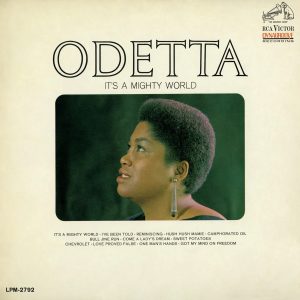
Episode 73
It's a Mighty World
Odetta
Odetta — a must-know titan of American music and culture — once noted that young people “learn about American history through battles.” But her dream of liberation was shaped much differently: “I learned about the United States through this music, through the songs that I sing.”
As we live through the kind of historical moment that makes most folks want to lie down and die, we can — like many heroes before us, from MLK to Maya Angelou — look to the legacy of 1964 and Odetta for strength to insist upon our lives.
Transcript
Cliff: Today we are talking about It’s a Mighty World by Odetta.
Kyle: Take a look at you, Cliff. You’re a mighty soul and you’re part of a mighty world. Even though that latter part doesn’t feel very true right now.
Cliff: No, but I needed the reminder of that first part for a thousand concentric reasons in the last days, weeks, months, whatever,
Kyle: You are a mighty soul. it’s fun to think about somebody extracting that clip. One white guy says to another white guy on the Queen of the Civil Rights episode. You’re a mighty soul. This podcast, TuneDig, is soul powered eight or so years running now. Thank God for Odetta Homes man.
Cliff: Yes. And. In actual seriousness, it will be a nice example too, of like, we keep telling you what music does. We keep telling you what it is, what it means, how it came to be, and how it’s always tied up in human history. And this one is just right on the money bullseye for what’s happening globally, locally, nationally, whatever.
Uh, you know, we are a few weeks out always from the podcast episode releasing when we record it. So we never know what fresh hell awaits us, and yet we’re always familiar with what is here now
Kyle: We just know that there will be some,
Cliff: yes, increasingly so.
Kyle: been down so long It looks like up to me.
Cliff: yes, I’ve been placing poly market bets on will things get better. And uh, I said no, and I’ve been winning a lot of money.
Kyle: I’m gonna short, I’m gonna short the bed on killing myself.
Cliff: I
Kyle: I’m gonna short myself on shorting myself.
Cliff: we’re gonna do this a lot in this episode. I think you’re joking, but yes, something here reconnected with a part of me that was like, it feels bad to be alive a lot of the time and like we are often able to step a little bit outside of that as privileged people and look at what someone else’s experience is and try our best right.
To empathize with what that’s actually like. Be good people, be allies, help people, all that but it’s always gonna come closer to home. No one is safe from the terrors of lived reality, and this to me has now become an important piece of music in my life. To look me right in the eyeballs and go, yeah, I’m fucking Odetta.
So do you want to give up today or no? and I feel that that aligns with her energy as I’ve learned about her. I am grateful for this music and what it’s done, but like, that was, that has been my clearest takeaway. I feel like I’ve been, truly kindly and lovingly reprimanded a little bit by music.
Kyle: I dig, I dig that. I felt like, first of all, this is the mo like I think you said with Sade a few months ago. This is the most, I’ve listened to one of the albums. This is like the heaviest I’ve gotten into it. I want to say it was Sade. this for sure is the most, I’ve listened to the album since Voodoo. I know we talk about that as a, as a game changer. Touchstone on this podcast a lot, but I can’t think of another instance where I was As hit upside the head by a record. And I just, I knew it was good. I knew her voice was great. I knew there would be stuff to talk about, but I did not expect to get walloped.
But like, once again, we pick these records a little bit in advance and they’re the exact right thing for whatever the moment is. And not even in a fortune cookie, fill in your own thing kind of way. It’s, it’s happened too many times now that it’s like, oh my God, it’s cosmic. so I, I don’t dare go look at my last FM stats for this, ’cause I know it’s just gonna dominate for a minute.
so that’s 0.1 is like, I think you’d be hard pressed to find something that is easier to listen to and get into. It just works viscerally. It is insanely repeatable. I have, I believe, left it on for the past three days straight, more or less. It’s insanely hypnotic. Two like you, I’ve been in this bad dream of okay, well how do we even protest now?
What’s the point of that? What does freedom mean in 2026? When I say I want to be free, I want all people to be free. What are, what are we talking about? What about that is the same as it’s always been? What about that is unique and different now and like what is it worth? What are you willing to do to get that freedom?
And my wife and I have been talking a lot about, the least you can do is bear witness, right? A lot of people are in the zone of interest because of the fatigue, because of the zone getting flooded. There’s a lot of people that are like, well, I’m just gonna get off social media. I’m just gonna focus on my family and my community and you know, everybody’s gotta grieve the world and do their thing differently.
I get that. But I kept thinking when I was listening to this so much this is gonna be some vintage TuneDig shit. This is gonna be us at the core of the thing that has made this podcast good and vital for me over the years. So much of this podcast has been political in us surviving the, moment of coexistence with shit that we just cannot understand and reckon with and abide.
And for a lot of reasons we have purposely, or subconsciously or something tried to get away from that a little so as not to be two one-note, pissed off, grumpy, old white guys. But I was. Glad that it rea awoke something in me because I’ve just been so low level pissed and feeling feckless about what do I do with this? How do I not get disappeared and never see my five-year-old daughter again for like going out and standing up for my neighbors, and because of Odetta’s clarity and intensity and steadiness, she was so steady in just her focus and the way she did things. Steady like a train, sharp like a razor. you’re right.
I agree with you a hundred percent cliff, that it’s like she did it. the damn least you can do is to do it too.
Cliff: And one thing that’s really cool to just say is straight away as a little layer on top of what we’re already mentioning here, like this, just straight up good music.
Kyle: yeah.
Cliff: that’s why it’s so easy to listen to.
Kyle: Yes.
Cliff: amazing. It’s three people, which, you know, we’ll talk about this more, right? But it’s, it’s Odetta doing vocals and playing some guitar.
Bruce Langhorne playing the other guitar, which rules throughout the whole album, like rules. And then Les Greenwich formerly known, or I guess otherwise known as Rafael Greenwich, uh, on the belt.
Kyle: the Red Ninja Turtle.
Cliff: But it’s these three people. and you know, we might get a little bit more into the stories of actually recording, but it’s basically a handful of people being extraordinarily good, going into a studio and cranking shit out from two to 4:00 AM
and then going to a nearby restaurant apparently to eat seafood often, which was an interesting tidbit to see mentioned so often.
But that must have meant that it happened a lot.
Kyle: Don’t. Okay, don’t gloss over. It’s like not just seafood, it was like a whole
Cliff: Oh, yeah. Go into it.
Kyle: was their regular
Cliff: It’s a whole ridiculous story.
Kyle: and then they would just pick at it with their chopsticks. And one of the two dudes, I can’t remember who would eat the eyeballs out Ceremonially. So freedom contains multitudes and they, that was one of the things that they were free to do.
And they did, I wanna say it was like a place in New York Times Square
too, right? ’cause they recorded at RCA studios in the A room, which is a small to medium part of the reason this record sounds so pristinely good.
Cliff: Ooh. Yeah.
Kyle: In the way that it is captured. So RCA studio was on East 24th Street. and they would walk over to Times Square and eat fish at five or six in the morning like an inappropriate meal almost At any time I’m going, I’m going to Waffle House and I’m gonna have the branzino.
Cliff: I am trying to imagine a Waffle House frenzy, you know, right now.
Kyle: I have to, and it’s stripping me
Cliff: Like, is it just like all on the flat top?
Kyle: You can only get it at the one in Panama City some, some guy brings it in illegally and stores it in the cooler so that it doesn’t spoil in the back of his truck. That’s a Waffle House brand. Zino, and it for sure makes you sick.
Cliff: Well, yeah, and that’s how you know you went. It’s worth it every time.
Kyle: I was also glad after a couple of instances of dodgy or incomplete source material to have some really, really good primary sources on this one. And I know we talked about a whole documentary for Rd Berman, but there’s so much Odetta, which really surprised me. There’s awesome performances that are very well captured,
one of which from this time period, and I know we’ll talk about, there’s great interviews that went right up into her old age.
and then there’s this book by Ian. Zach. That’s fucking great. It’s so good.
Cliff: Did you read some of it?
Kyle: I read pretty much all of it.
Cliff: Okay. Yeah, I got a good chunk of it too. It’s incredible and detailed and rich and very
Kyle: Some great interviews in that. I think even if you only skim it, what I would recommend is read the first part that contextualizes her upbringing, which like the Marvin Gaye book, paints a picture, I think fairly and accurately of her psychology. It talks about her like Genesis moments in the fifties.
And to understand Odetta, I think you have to understand like Born in the South, moved out to LA because of economic opportunity, wound up in San Francisco, with a play that she was part of. That’s when she was. Baptized by folk music, which she considered lowbrow because of her upbringing. and then wound up all over the country in the world.
There’s some great Africa stories in there and Nigeria specifically. So I had Fela on the brain a good bit when reading and thinking about that. And then the end of that book, the epilogue is, who will be the Odetta of now, which was a challenge from Harry Belafonte as he eulogized her at her funeral in 2009.
so, a couple of things very interesting artistically. One, and there are simple nuances that you will pick up on in putting on this record, like her vocals, for instance, that are very well explained by the context that you get from this book. And two. It’s crazy that more people don’t know and talk about odetta constantly as one of the most important figures in American cultural history.
I hope that this is one more little artifact that like pushes one more person in that direction to believe that. I would love to read a handful of the accolades for her,
Cliff: Yeah, there’s no shortage. This is about to go from zero to a hundred immediately.
Kyle: they’re, they’re completely insane. And when you stack ’em up in a line, it’s hard to think of an American who has more accolades from bigger and more important figures. I say that to say before I read some of these.
Odettas story is America’s story. And you can learn one, every rabbit hole you need about America is in Odettas life, in a way that should motivate you to learn or relearn or expand your learning about things from America. But some of the things also highlight the relatedness of all the struggles.
And I think some of the people and things that I wanna spotlight as we go to like, you know, where to go from here, relate that, you know, no one’s free until everyone’s free. So having said that, let’s start with, speaking of Freedom, Martin Luther King Jr. The, the Reverend Dr. Martin Luther King Jr.
Who we just celebrated his birthday. Celebrated in loose air quotes for America. 2026 MLK Called her the Queen of American Folk music. Joan Baez of said folk music fame. Called her a goddess. Janice Joplin said The first person I imitated when I started singing. Bob Dylan, who I know will go into this one in more depth, traded his electric guitar for an acoustic when he heard her music, he called her the first thing that turned me on to folk singing.
They had an interesting relationship. George Wine who started the Newport Folk Festival said, if I had to pick one person responsible for the establishment of the Newport Folk Festival in 1959, it would be Odetta Harry Belafonte, one of the most famous people alive at one point in America, called her a key influence and then went on to say she’s a Nubian queen.
She’s the mother of history of all of Africa. Her beauty reigns as supreme. Sasha Fre Jones said, maybe the Beatles on Ed Sullivan was a big deal. I wasn’t there. But the clip of Odetta singing Waterboy on Belafonte’s special can still stop time. Even a compressed YouTube video. And here’s the one that gets me.
Maya Angelou said, if only one could be sure that every 50 years a voice and a soul like Odettas would come along, the centuries would pass so quickly and painlessly, we would hardly recognize time. Damn son.
Cliff: So there’s green flag number one that we always tell people about when other very smart, very talented people talk so singularly about a person. Shut up and pay attention until you understand what they’re talking about.
Kyle: you read something like that and you feel almost mad and offended, like, why don’t I know everything about why is there not an EDA day? Why is she not on the dollar bill? You know, part of you can do the, why has nobody told me about this, thing that like TikTok people do and somebody inevitably is always people have been talking about this.
You just are an idiot and you haven’t looked yet. So I know there’s a little bit of that, but I felt a little bit validated reading that great Sasha Fer Jones, new Yorker long form piece on her and him being like. I study music and write about music actively as a career. And I’ve had very little exposure.
I owned no Odetta vinyl and on and on, and I dedicated a whole paragraph to that feeling of like, why is she not enormous? Why do we not talk about her in the first breath? So you, listener are now enlisted in that let’s make Odetta even more famous. Let’s make her a hundred year famous. And, let’s all learn.
Let’s all teach the lessons. The, I probably banned book lessons to be learned from Odettas life in the, the events of which she was apart.
Cliff: Yeah, it feels like we should know more about a person who was known by a lot of people as the voice of the civil Rights movement,
Kyle: Yeah.
Cliff: you know?
Kyle: Yeah. But I think it. It speaks directly to the phenomenon that motivated her to have a career. She talked about her wounds growing up, moments where she had had self-doubt or someone had tried to inflict self-hatred because of her skin or her build or, the one that really got me from the biography was when she was first taught about slavery and it was characterized as the slaves being happy with their lot in life.
and her just being like, well, that’s straight up not true. and she said something to the effect of, I’m not a real folk singer. I’m a musical historian. I’m a city kid who’s admired an area and gotten into it. so she was a person was carrying on a cannon. That’s an important thing to know about this record specifically, is she got her first songwriting credit on this record with the title track, but the rest is essentially traditionals or traditional ish.
Cliff: Yeah.
Kyle: So she’s carrying on a body of material. Like you could almost think about this like a cultural Wikipedia, in the selection and the arrangement of these songs that she’s performing.
Cliff: Yeah, and in expansion of what the Blues did with music and how it. Told repeated simple stories and then variated on that. Right? And then, and then live blues performances were the way that then those songs perpetuated and evolved. This is, a solid bit on the other side of that, as we move up, as people can get you know, can see other people perform, can start recording more freely and all that stuff.
And so she is expanding into not just blues, like there are plenty of traditional blues songs that she does. But now there are, to your point, there are spirituals, there are work songs, there are jazz inspired in, in jazz standards and classics that she does like, and in fact sort of unironically. I like, I love the titling of most of her albums because they’re just like, Odetta, Odetta sings. Odetta sings Dylan Odetta and the Blues My favorite Odetta
Kyle: and other things. Yeah, Odetta sings it, wings and things.
Cliff: But like all of these are good and they’re interconnected. Like all these albums are sort of interconnected in a style that matches what you’re pointing out. That’s what’s interesting. And to the sense like inversely true about Odetta versus a lot of music that we like to talk about, where it’s like, look, look at how they evolved.
Look at the things that they did. You know, look at Tangerine Dream and the crazy shit that they did to make the noises that made an album that people listen to. This is more like, what if you’re one of the best in the world and humble and instead of having a drive to, create some sort of progressive art project, you’re just like, I’m just gonna do songs that I love.
Standards oh. Also in children’s songs like you, you mentioned, part of her path in, in sort of, growing up and becoming, who she was along the way, part of what endeared her to folk music, ironically sounds sort of like being endeared towards theater Kids. Like she sort of got in there with people who were just using music to create some joy for different ages and audiences and all that.
And I think that that’s cool too, because, let’s see if I can thread a cool needle here. I think one of the reasons she was powerful, including all the things you pointed out already, is like the, she had a real calmness about her in the way that she delivered. music vocals, everything. The performance is like for real.
You listening to this episode right now, like go on YouTube and watch at least one live Odetta. Anything. There’s a TV concert from 1964 that’s complete on there. It’s like a half hour and it’s,
Kyle: From Belgium.
Cliff: Yeah. Filmed 5th of December, 1964 for Belgian tv, it’s incredible. But it, it will, I think, help you kind of viscerally feel like this is a person who can go from literally children’s songs to songs about civil rights.
And you don’t see a change, like the energy and the tone remains steady. And so, I guess the needle I’m interested in threading here is like someone who knows how to truly work with children. On a regular basis seems to often have like an intuition about there are serious heavy things that always need to be talked about, and everyone in every room is always a little child for the most part.
And like in order for us to get to where we need to teach and talk and whatever, you gotta ramp ’em up. punk and all of this other stuff like is abrasive to you on purpose. It excludes you in a sense. If you can’t handle this, stay outside the wall inside of this wall. We go really hard about whatever it is.
But like if you’re not good with it, stay over there. ’cause like it’s not gonna work. It’s too kinetic and frenetic in all of that for you. But the way that she presents every song and The musicality and the intent and the feeling behind it is at once. Like I, you know, I said earlier, I felt like I was being reprimanded, and I also feel loved.
Kyle: TOdettally
Cliff: I feel cared for by this human being that I’ve never spoken to
Kyle: called in,
not out. Oh, well said. Yeah. Yeah, man.
I, you know, I tOdettally agree with the sentiment that she’s. A steady and calming presence. And I love squaring that with knowing how much of it was rooted in anger.
Cliff: Mm-hmm.
Yeah. We’re starting to see why we understand this, huh?
Kyle: right. That’s my secret cap. I’m always angry. somebody in the book pointed out she was head and sh when she first started doing folk songs, you know, at the, like in the rounds in the, the little bohemian parties where they would all peacock and try to do their best version of, of the standards. Somebody talked about how she brought emotion into it better than anyone else because everybody else was trying to perform it and she was like really bone deep feeling it. And there’s a passage that. Brought clarity to that. That said, that’s because for Odetta folk music was no abstraction. It was the story of her people and a potent antidote to society’s wholly fabricated version of her history.
Its insistence that there was no respectable place for her in her own country. The music also became an outlet for. Odettas, deep dyed anger, which she shared with the whole generation of young blacks who felt stymied at every turn. And in the words of the writer and social critic, James Baldwin were taught to really despise themselves from the moment their eyes opened to the world.
When Odetta sang chain gang songs like Take This Hammer, or Another Man Done Gone, or Spirituals Like I’ve Been BU and Scorn, she harnessed her rage to produce music that was already beginning to move people in a powerful way. Not that they understood the source of her power, which she later explained in an interview.
She said, we were living at a time when I couldn’t say, I hate me and I hate you, and I hate, but I’m frustrated. I’ve been told that I’m worth nothing. I’ve been told that I’m dumb. Hollywood has told me that school has told me that white population has told me that society has told me that as I sang those songs, nobody knew where the prisoner began and Odetta stopped and vice versa, so I could get my rocks off being furious.
Furious. She said, you listen to these songs, you put these record, you put this record on, and it’s gripping and captivating in a way that you don’t understand because it feels very calm and steady and soothing. But that’s where that intensity comes from, is the intangible anger that she, righteous anger that she brings to it. To have that kind of power and to hold it at the gates and leave your energy at just the right level as it projects out of you is masterful. and I say that as somebody who has struggled to gate my angry energy my entire life.
Cliff: Yeah, maybe, maybe this will be a good intro into the what sort of surprised you type thing, but I really found myself thinking deeply about what you just said. By the time we get late in the album down to one man’s hands and like, again, and many of these songs were not necessarily lyrically written by her.
We’ll talk specifically about the ones that were, so, a lot of these are. We’re saying traditional, but there’s a lot of stuff in that category where like what the music that’s being played and sung and performed here is organic in a way that we don’t really experience music as much anymore.
and by the time I get down to, to one man’s hands, and she’s really calmly, but, with conviction, singing one man’s hands can’t tear a prison down, two man’s hands can’t tear a prison down. But if two and two and 50 make a million, we’ll see that day come round. And like, man, we talk a lot about like, moments that hit us, like a train on albums and like, that was my one.
I was already pretty open-minded about all of this. I knew that this was gonna be a relatively easy assignment. Compared to a lot of other records that we do, just ’cause it’s so good and so direct. Man, I had to like pause and stop and be quiet for a minute and like, just remember I am a white boy living in 2026.
Yes. But I am also a student of art, music history and I love people and I wanna see things, I wanna understand what she’s talking about and I wanna understand why she said it in 1964. Why was the song recorded? Why was it said this way? it reconnected me again with, not just music in the sense of it being magical and creative and expressive and all that stuff but back down, we talk about this a lot in like Sun House and in other episodes, but like, never fucking forget that there’s a serious thing being done under it.
Kyle: Mm-hmm.
Cliff: doesn’t matter if it’s. Acoustic guitar on top of it with a lovely sing songy, beautiful voice, right? With somebody standing on stage and looking at you in the eyes and all that stuff literally, that is neither here nor there relative to what’s being done in that moment with music.
and this one, if you let, it will just gut punch you over and over again. As you think about, if you let yourself, like what is being said? Why, where did this come from? What is the history of this song like, there are so many little ways to connect back into true objective reality, uh, in a way that that doesn’t always come around when we’re thinking about music.
And that makes this really special,
Kyle: One man’s hand was Pete Seeger wrote that Woody Guthrie, who?
It was popularized or published by,
Cliff: Oh, yeah. Pete Seeger, you are right. Okay. Yes. All right. That’s where the lyrics came from.
Kyle: yeah, yeah. One of, one of the Okayest White boys of the 20th century. one of my favorite, I knew the first time that I listened to that, it was like, oh, this is a Cliff Seal ass song right here. This is advice Cliff would remind me of. Collective action. Um. Vintage TIG Friday Heavy Baby. But one of my favorite one man’s hand anecdotes was learning that Odetta learned a Japanese translation of the song to perform during her tour of Japan in 1965 where she used it to win over local crowds.
And that was one of those instances of, oh, the struggle’s the same everywhere, even if it’s a different thing. Like, I was just so impressed by that, that it meant an American traditional folk song, traditional folk song meant that much and was that applicable. And she was uniquely positioned because of her education, her worldliness, her her window on the world she was raised and sort of trained up as a European classical style operatic singer.
And you hear that when she sings here, the like low register thing is a new thing, but when she does the. Closer to Soprano contralto. The first time that she got on somebody’s radar, if I recall correctly, was her hitting, high C over sea or whatever, hitting a real high note and somebody being like, whoa, whoa, whoa.
Hold on. You can do that. And then essentially putting her in training because of that. But for a long time she looked down her nose at folk stuff in LA and I think you can extrapolate conclusions about internalized belief of self and whatever about that. It’s very, it’s very interesting, that she started out there and then landed on every man music and that was the thing that helped her connect to so many people.
But then she used her interesting layers for things like the Japan thing, just so compelling. What else surprised you or you immediately made note of outside of that particular song?
Cliff: Yeah, let’s do this.
A few of my observations were admittedly lighthearted, and that is a bit intentional as a, a foil to the general vibe of all of my other observations about this music, which is not negative, but serious, heavy, whatever. But there are a few takeaways that I, it really also helped me have a, a lightness about this music because.
One thing I have to remind myself of is you don’t always have to only think about the serious parts, bud. It can just be fun music if you’d like.
Kyle: If there’s a guy in Gotham City who has a thing or two to remind you about that.
Cliff: first thing, first thing that is lighthearted, but I did, it was literally my first thought and I remember having this first thought last time I ever listened to this record, which would’ve been last year. There you go. So it’s a modern world or it’s a mighty world, excuse me. Is the title track. It’s also the first song that Odetta has songwriting credits for in her discography up until this point.
So she’s written this song, but the, there are a few kind of licks and turns. Then the pacing of how she says it’s a mighty world is really similar to the theme song from a Different World, which is, I, I think we’ll have a few like Tune Dig Deep Cuts here. I think we’ve mentioned this before, by, by my estimation by far the greatest TV show theme song that has ever existed.
And that’s ’cause Aretha Franklin sang it. but like it was, the first season was sung by somebody who was normal and good.
Kyle: Right.
Cliff: Then Aretha Franklin rerecorded it and it turned into one of the, like, I mean, the opening lick of that thing is in my brain all the time. but again, just in a lighthearted way, this immediately starts connecting me to like, alright, if this reminds me of Aretha within the first 10 seconds.
I’m in a good place. I’m already thinking about what other stuff I wanna listen to and absorb. And so the way that the vibe of that title track hit me was great. And I think it’s funny that it made me think of it that way. But I started using that as a little lighthearted foil again to all these songs, to find other connective tissue. Another example of that would be then, on the next track, I’ve been told, first of all, this reminds me a lot of John the Revelator by Sun House, And if you’re listening to this episode and you haven’t heard that song, you’re gonna need to just like go listen to it now. ’cause there’s no, there’s no real way to like verbalize exactly what’s happening there. Un, unless you’ve been exposed to that sort of thing before. But this sort of I’m gonna tell you a sort of Bible story thing. But I’m gonna do it with simple words. A again coming into play here is that like you can cut across from children to adults type thing. And like, here it is happening again, right? Like it’s a story that’s coming out of scripture and all that, which has a lot of history. Not just from Christianity in general, but like, I would always encourage people to remember that there is a, coupled but discreet lineage of black Christianity that is.
Significantly and wholly different than I think what, uh, a lot of us bring to mind these days when it comes to white folks. So, with that said, the lineage of then, like a blues or a folk song telling a simple story that everyone listening can understand. But once again, the adults, you know, we’re watching adventure Time.
Like we get the jokes that are coming in for us above the heads you know, of the kids who are watching the kids show. And like, so there are these sort of layers to it. And again, it’s never overly serious, but it’s welcoming, it’s storytelling, it’s simple, it’s memorable, it’s hooky. and it, it reminds me of sort of the power of reflecting.
Like I don’t give a shit whether it’s from the Bible or not. You wanna tell a story about. Buddha like Muhammad, I don’t like, I don’t care. None of that part matters. It’s the, the idea of retelling and retelling and retelling stories that have been passed down that mean things to us. But then by the time it gets packaged back again inside of songs from Odetta and especially I’ve been told it, it connects with me on a deeper level.
that is, that is powerful, simple music to me. but also then, so I’ve already identified one piece of blues that it reminded me of in Sun House and all the Delta Blues and all that stuff. But at the same time, welcome to the, um. I guess n neural network of my brain, right? Anything that ever reminds me of Led Zeppelin lights a thing up and inside of, I’ve been told, right?
She says, I don’t know, but I’ve been told, and then my mind goes to Black dog. And because he says, I don’t know, but I’ve been told. But then he also says, Robert Plant says big leg woman ain’t got no soul. and just that little mental hop for me, right? I’m in one song, I’m in a simple, straightforward folk song, and already I’ve been reminded of a Delta Bluesman who sings songs without rhythm melody, almost entirely, uh, who became famous from doing things like that.
Then separately, I’m reminded through the lineage of Blues of Led Zeppelin, who themselves famously said or, or talked about like. The blues are a thing that pre-existed us. Everybody in Led Zeppelin was relatively speaking, seemingly a piece of shit, or at least some of them were. But like in terms of the artistry of saying the blues existed, we take it, we respect it, and yes, we repeat it.
to have that level of connection then to what would eventually, you know, become black dog, was just like an interesting like whole little universe for me, right? All inside of this little song. I have so many things that I’ve learned about the blues. I can disambiguate the tights of blues that I’m thinking of.
I can appreciate the approaches to them where Odetta is straightforward and serious. Sun House was a fucking alcoholic who’s doing his best all the way on the other end, right? Is is Robert Plant and Jimmy Page and everybody else who’s like, it’s not serious.
Kyle: Right.
Cliff: Yet it’s touching on these same things.
And just like, to me that was, that was another sort of I wanna pause for a second moment as I listened through and just like embrace how much this sort of lit me up in a way that almost didn’t expect that it put me on the way that like, getting excited about a sample will send you down a thousand rabbit holes.
and like, I, I can keep talking about some other moments in the songs, but to be honest, like those first two especially, kind of came at me real hard. Uh, and then I I’m able to enjoy the middle and so many of the good things that are there. And then back towards the end, it, it reminds me that I am a serious person.
Did that make sense? Do you feel like what I was trying to point out sort of about the blues, connected with you somewhat. Okay.
Kyle: A hundred percent. I was sitting and thinking while you were talking that, I, I could say three or four different things about what jumped out at me immediately about the sonic elements of, lyrics or the instrumentation or whatever. And by all means, we should talk more about that.
but that idea that I talked about at the beginning of like, everything you need to know about America is in this record. I love what you just said because it’s all about units of mimetic information. You need to know a lot. You don’t need to know anything to appreciate this sonically, but.
Because it’s fun to learn and because it helps you know and appreciate yourself and the world around you better to know more things. There is such an unbelievable wealth of source material to trace back here and then to trace forward little things like, I don’t know, but I’ve been told being a, a great example of, think of the 150 places where you’ve heard, you know, like military bootcamp trope in movies, and just sprawl out across all these things that didn’t necessarily seem connected, but subconsciously are.
And you weave a web of the human experience and by making those connections, the more times things pop up, the more in tune you can feel about your observations about what’s going on. So like, I, I think that’s bang on man. And I think that is. One of my favorite parts of this podcast as a devotional practice certainly is referencing back to things that we’ve thought about and talked about and these ideas and themes that we’re building on the, the Tao of TuneDig.
I’ve been joking offline with you about like one day maybe I’ll make it a talk. I think that’s what it’s about, man. That’s, I certainly can’t think of a better way to feel more connected and less alone in the universe than to just point out the connections between the stars and make them become constellations.
You know what I mean? It’s like how you find your way in the universe, and I’m, I’m very grateful to Odetta as a historian for doing a lot of that. And there’s. Her arrangements are really cool as well. Like John Brown’s body is on here. so you, you can talk about John Brown’s body and how that morphed into the battle home of the Republic, but to your point about kids’ material, it turned into the silly, like kids’ song and dance.
But camp Rated Oil is a version of a song that people sing for kids in preschool still to this day, where you, you, you hear her cutting out the words, but in like a serious, almost mournful way. But people do that and they cut out the words and that’s when they’re doing the hand motions or whatever.
They’re holding their nose for the bad smell of bad smell or taste or whatever of camper rated oil. and that if you listen to it, you’re like, is. Is my audio cutting out? Why is she stopping on random words? And there’s so much stuff like that. And hush hush Mamie was, I think the first one that made me sit up in my chair from a, an instrumentation perspective, like they are getting down, they are very interwoven.
And I think you gotta put respect on Odettas name as a guitar player. There is a move, like a double fingered move called the Odetta strum that she was sort of taught and then made her own thing. She called her guitar playing self-defense. I don’t know that she ever got like fully confident in who she was as a guitarist, but she’s a fucking good guitarist dude.
And you, you know that because she’s playing with an established jazz musician, hardcore chops, good guitarist and bassist like one of these guys. I think the. Maybe the one of them played with Mingus. Maybe both of them played with Mingus. They have se one of ’em played with Bill Evans. They got serious pedigrees.
These guys, these are not fuck around hired hand guys. they’re real deal. And they knew she was great and they were with her for years in the studio and live as was the producer, Jack Soer. so hush, hush Mamie. You’re like, man, this is a jam. And then you go back and look up the origins of that and it’s a prison work song.
one of the first times it was captured was by Alan Lomax in Mississippi. And there’s, every one of those songs has a, a story or some history, or it sends you somewhere else, but most of the time it sends you across a sprawling amount of time that like. It’s crazy to think about the equivalent of now.
So this record came out in 64 and a lot of the first publications of these songs were 19, 29, 19, 19, 19 0 9 some 1800 something. So we’re talking 50, 60, 70 year spans where the equivalent would be like Doja Cat referencing Chuck Berry or something like that. Just like a huge sprawl of time, multi-generational sprawl of time, and it’s being reinterpreted and made fresh in kind of a sampling way in kind of a blues way.
It’s very completely its own third thing, even in the folk tradition, go listen to John Baez or Bob Dylan, or Carol King, or whatever. There’s nobody that’s doing it quite in the way with the power and the conviction and the clarity and the sincerity and the unique arrangement. And the simplicity, like it’s just so per, it’s not way fish and neoliberal and whatever, you know, it’s like there’s a lot of identity type stuff wrapped up in folk music that can make it kind of alienating or unappealing, toothless.
But like, the more times you listen to it, the more you’re like, man, there, there is not an equivalent to this artist or this record, which is a truly stunning thing to say about a person with a voice in an acoustic guitar. arguably the most done form of popular music in the past a hundred plus years in this country.
I would argue with anyone about that. I, I still think there’s nothing that sounds quite like it. I didn’t believe it at first. I talked myself into believing it because I just kept listening to it. I just felt so compelled to keep listening to it. The more I listened to it, the more I was like, where do I go from here?
And there’s only more Odetta. There’s nothing with quite the combination of factors that make Odetta, Odetta. So you had one man’s hand, you would say Probably that’s your favorite Cut on the record.
Cliff: Oh nah. It’s that last one, bud.
Kyle: Got my mind on freedom.
Cliff: Yeah, I think, I’ve been in a sense, almost dreading verbalizing this part of it. So here we go. Learning more about that song was deeply impactful to me. I had a general idea of it and reading a little bit more through the lineage of how this happened and how the song evolved. is really meaningful to me.
and I’m saying that as someone knowingly, well, outside of the Civil Rights movement, not only in terms of time, but like, who I am as a person, right? So like, the fact that it was impactful, it’s specific to me and it’s, it’s specific because this song is a protest song, a marching song, right?
woke up this morning and like the lyrics of it have evolved a little bit over time, in terms of the different versions that people use and the, the different ways that they’ve been recorded, like you just mentioned. But
the origin on the, these lyrics, my mindset on freedom. The word freedom replaced Jesus. This is a song about originally waking up and putting your mind on, and now I’m gonna use very specific words for anyone who cares about this, for waking up in the morning and putting your mind on Christ.
For a good portion of my personal life, the way that this song explains this to you by replacing the word Jesus with freedom, that was my full and complete understanding of what I thought original. Intended Christianity was or is arguably about. When I have read that book many times through how I was exposed as a kid and whatever else I have read a lot of Bible.
When the person or the phenomenon known as Jesus speaks, he is telling you how to get fucking free. He is telling you how to be free and he is telling you who’s not free. we make up a lot of stories about this dude, no matter how literal or real he is. We make up a lot of stories about him and like this dude always told people, go get rid of that thing.
It’s holding you back. You over there, you’re a giant piece of shit. You’ve got a lot of work to do. If you ever want to be a part of what I’m doing,
Kyle: Yeah. Cliff. Cliff, remind me, who was it? He said couldn’t enter the kingdom of heaven. Be it easier than a, a camel to pass through the eye of a needle than for that person to be free to enter heaven. I’m struggling to remember. Can you remind me?
Cliff: Yes. Let’s play a round of Odettas Bible game. Cliff says
Kyle: Oh, Dennis, I’m sorry. Now you just got me thinking of uncle, baby od Dada’s, Bible baby, baby Bible bunkers. All I need is an eight ball in a million dollars Here. All I’m asking for,
Cliff: Uncle, baby Billy sings, Odetta sings Dylan. Yeah.
Kyle: there will come a payday indeed.
Cliff: Kyle, you know me personally, so like, uh, you know, I could just
Kyle: I do.
Cliff: serious land for the rest of my life, uh, uh, from here. But like, I won’t. But that was, it was a really important thing to me and has made this song and album. More important to me than I expected it to be because when I hear those words I connect not to the literal struggle of being treated poorly because of my skin or culture or whatever, but to the larger, interconnected spiritual capital C Christ-like concept of freedom.
We are all trying to get free. We are all trying to get free together. Kyle already said if someone isn’t free, no one’s free. we are doing the thing that Odetta sang about 60 years ago, and she would’ve told you, we are doing the thing that we were already doing before now, right? Like this song is over here.
Now it’s here because we still need this song and because it still means things and we’re still not fucking free. And like, just putting that part over my brain and then remembering where I am today in this time and reality and everything. And just like I mean, I have just not been fucking okay. and I know other people have had a similar experience, like I’m just, I’m not Okay. A a lot of things are happening and they’re all happening too fast and things are getting worse, in a way that’s really hard to process.
And the reminder that. Again, I can feel like people who care about me, who have never met me, my, my versions of ancestors, whatever that is, are taking this moment to remind me you’re still not free. So what are you going to do? At the very least, you need to sing this song and wake up in the fucking morning and put your mind on freedom. Now.
I just, I wish people could see my face through this podcast. I just like that has maybe started to change my life a little bit,
Kyle: Damn
Cliff: because I don’t know what else to do other than okay. We are clearly back in a struggle, another recurring struggle. It’s time to wake up and figure out what to do, and I can say those things while also saying I have no idea what to do. I don’t have any marches to go to. They’ll shoot us I don’t know what to do anymore. But at the very least, I can wake up in the morning and put my mind on this thing that for now I can call freedom. And when I was younger, I called something else. And regardless of what that word needs to be for everyone else listening, like there’s something we gotta put our mind on right now and keep moving forward and hope that we can find ways to gather back together and like go from one man’s hands to two man’s hands to 50 and 50 in a million because there’s no other way to do it anymore.
And like having Odetta do that to me through a sweet acoustic song is as someone who loves like weird. Aesthetically strange, abrasive, antagonistic music. This has achieved the same thing, but through beauty and calmness.
Kyle: I’m so struck by you saying, I feel this got my mind on freedom, even though it’s not directly my struggle, or like, I haven’t, I’m not experiencing the injustices that she’s singing about. We know that all the evidence is, is to the contrary. You know, Fannie Lou Hamer would say, nobody’s free till, everyone’s free.
Dr. King called it the single garment of destiny. And I remember reading that she introduced the song at a concert in Birmingham in 65, like Height of the Movement. She said, help sing this song. Even if you’re not in favor of the civil rights movement, there must be something you want to be free of.
Cliff: Holy shit man. I did not know that she said that. Incredible. Exactly.
Kyle: And there were so many things, you know, you and I were texting about being gobsmacked by this record and the life of Odetta. and one of the things that was striking was like. Whether it was the communism scare, the Red Scare shit of the fifties, or the civil rights stuff of the sixties, or all the changes of the seventies and eighties that she lived through.
And then eventually being asked to sing at Obama’s inauguration and sort of the like end cat that that would’ve been on her life had she lived one more month. is just every sentence of her biography felt like it could have been about right now, like viscerally about right now. And we, you know, we talk about like, history doesn’t repeat itself, but it rhymes or whatever.
Like all those stupid cliches and shit. But they exist for a reason and she was so at the center of the action on this important stuff that. My encouragement. It sounds like your encouragement too, is for anybody feeling overwhelmed by the moment, put on your big boy pants, gender neutral, and get your shit together.
’cause like somebody else has been through a version of this and they, they kept their steely reserve.
Cliff: Just to use this moment again, to try to reach out to more people. If you have heard us or anyone talk about over and over again, like we, we are tied together, and if you thought, it’s not just white folks, but it’s probably a lot of them, this is a very good moment. In our world history to stop and just check in if you’re sure for yourself.
Cool man. But this is a really good moment to check in because we’re seeing in real time again we are connected. when someone else isn’t free, it’s a matter of time before they come for you. And you might have thought that that was like a clever ploy or like underprivileged people want to use this idea to gain more of the rights by telling you that this potential thing could happen in the future.
If you ever wrote that whole thing off as someone else saying or thinking something that wasn’t true, it’s a really good time to take a look. And the other thing that you can take a look at in that moment is, well, Kyle, you said something that’s already stuck with me earlier in the episode, so. At a minimum we can bear witness to what we see.
Yes. I want to add one small thing that I think everyone can do literally as a result of listening to this Odetta record. Okay, so then take what she just offered. Even if you don’t agree, you can find something. Okay, stop, think, look at everything that’s happening. Look at something you maybe think you don’t agree with, or maybe something you wouldn’t normally sort of, uh, with.
That seems like political silliness over there. The whole trope about like, liberal women with purple hair have been freaked out for years and all of a sudden now there’s a meme about like, oh shit, I think maybe they were right. Okay, yes. But if what you take away from this is weird, people might be right.
Sometimes you’re gonna miss it. What’s real is we are connected and every time you tried to write off another human being as saying they’re not a part of the fabric, you missed it. You misunderstood what was happening and now we’re back in a moment where we’re all in this fabric together and the only people who are outside of the fabric are billionaires this is a moment to go, okay, what do I see? What do I think? What have I been doing?
But then finally like in even the tiniest way possible, and yeah, I’m bringing a very personal moment into this, but no one will ever know you individually, what can you take responsibility for? What did you do one way or another? Whether that’s voting, whether that’s protesting, whether that’s sending your senator an email. I don’t, whatever. Just take stock of it for a second and try to remember. That you can only do what you can do, but you can do what you can do. And so you need to fucking do it. what can you change? What can be different in you? What can you allow to soften or harden you in a way that makes you a more loving and dynamic human being now is a really good time to do it.
Usually you have to sift through sort of social layers of yeah, but I don’t really feel like that’s happening to me. I don’t really feel a sense of oppression or violence or anything. Well, you f**king do now. you better get it now. the quote-unquote freest country in the world is shooting its citizens and threatening to violently take over other countries and the whole world order is turning upside down.
It is a very, very good moment to look and see, do I see myself in the people who are making these decisions or do I see myself in the people who are getting shot? And like even if you don’t change as a result of thinking of any of that, even if you’re truly just a miserable piece of s**t on the inside and you don’t care about any of that and you’re glad it’s happening, okay, man, at least take a second and think about it.
Make sure you’re who you think you are and who you want to be. And like, man, if that felt intense coming from me, I don’t know what to tell you. That’s what this record made me do. It put me in exactly this place while also making me unironically enjoy lighthearted folk music and I cannot get over it.
Kyle: As the great gentle giant, David Lynch said, fix your heart or die. I don’t want to gloss over though. In addition to the highly political nature of almost all of these songs and the choice to do traditional as a music historian and all of Odetta’s many direct quotes over the years saying it was all political, the way I wore my hair. One of the first popular figures to wear in Afro, everything about her life was political by choice, and she was vocal about that, and she’d never made any bones about it.
She was a straightforward. In the way that she presented herself as an artist, as the straightforward nature of these songs. And it’s not emotional. It’s not charge, it’s not, I mean, it, it is punk in an abstract sense, but it’s not deliberately trying to be. It just is. It’s just saying, I’m going to stand in the fullness of my humanity with both feet.
And you can either fix your heart or you can die. but there are tender moments. She had a wonderful tenderness, and her voice gave a lot of the humanity and vulnerability and fragility to empathizing with the every man’s condition on some of these songs. Like you and I were texting about songs on other records like Wayfair and Stranger on the other record that came out in 64, sings of many things, sings of wings and things.
her vocals were really interesting in that it, they reminded me of. I said that they were flute like for like the first full minute of that song. And then boom, she comes in full power. And there was a thing around, it made me feel, or it reminded me of what you said on the Mingus episode about you have to picture yourself being in the room and how overpowering it would’ve felt to be in close quarters with that instrument.
but she’s doing it with her body vibrations emanating from her body. And I, I think there are musical moments like that that help me from getting overworked or boiling over about the overtly political stuff and reminding the sort of regrounding, the little like totem to hold in my hand is that it doesn’t come from a hate for the other.
it is in there, it is a, an animating factor, but it comes from. love and regard for herself in the entire human, experiment. And it’s beautiful and mournful, like there’s another, she did, uh, another man done gone, which we referenced earlier. That’s one of the first recordings of that I think is way back in the fifties on ballots and blues.
But the vocal bends on that as she’s starting to find the lower register. Like I think going back and listening to that, and it’s also got to your point around Sun House, the acapella and clapping, going back and listening to this woman who is at the time of this release is 33 years old. She’s been a full-time performer for over a decade, plus the 15 or 20 years of experience before that.
so I think to appreciate. How like distilled to his essence, her feelings and her politics are by this point and her knowledge, her grasp on the traditionals and the sort of body of source material, is really extraordinary. And so I think going back to things like Another Man Done Gone will help you appreciate something like “Bull Jine Run” when she can swing really low in her register and then come up really big without overdoing it.
The point that I wanted to make in all that wind up is the other song I didn’t wanna lose in the fray of all the politics and the traditionals is love prove false. In the way that Les Fleurs by Minnie Riperton gets me every time. The fucking second I hear that Guitar Arpeggiating on Les Fleurs, pardon my bad French.
The three descending guitar notes and love proof false evoke the same big oceanic feeling for me every single time. if you need a silent montage song about heartbreak, somebody ruminating on their heartbreak, love, proof, false, the guitar stuff. So I went and did some homework on that. it is her version of a traditional, more widely known as the water is wide, which dates back to the Scottish ballad.
Oh, Wally, Wally. Hence the parenthetical name or, oh, Wally Wally. Jen Love be Bonnie first, published in 1724, literally older than the entire country, she’s rallying around, the songs of Scottish origin. And this version is related to Jamie Douglas, uh, a child ballad. The song was written in some form after the scandalous marriage breakup of James Douglas, the second marquee of Douglas from his wife Barbara Erskine.
A man named Lowery of Blackwood who may have courted Barbara unsuccessfully, began a rumor that she was adulterous, resulting in her rejection by her husband and her return to her family. In this version of the song, she Doesn’t Go Quietly. but the lyrics are so beautiful, and that’s always a focal point of debate on this podcast.
And the words don’t belong. To Odetta, but there’s a timelessness to the ache of them and the writing. It’s written in a, like, remember English class when you were like, wow, words can do this to me. And it doesn’t happen that much when you listen to music. Um, but when it does, it’s really good. The river is wide.
I can’t get or nor do I have, like wings to fly. Give me a boat that can carry two and both shall cross my love and eye. I’ll skip the old Wally Wally part. I leaned my back against an oak thinking it was a trusty tree, but first it bent and then it broke. And so did my love proof false to me. I put my hand in some soft bush thinking the sweetest flower to find.
I pricked my finger to the bone and left the sweetest flower behind. Oh, love is handsome. Love is kind gay as a jewel when first it’s new, but love grows old and waxes cold and fades away like morning dew. Damn, bro. I share that one just because it moved me as a person, again and again, like in dozens and dozens of listens to this record.
But because I think that feeling is the next door neighbor of the, got my mind on freedom feeling. I want to be free to not hate, but I also wanna be free to love and I want be free to not be abandoned by the love that I have so much of for my fellow man and the miracle of being alive and all that. that I’m grateful that there’s that and a children’s song about smelly oil adopted from John Brown’s body, all sort of on the same thing here.
Cliff: Another one of our usual little, bookmarks on an episode. I have a few areas I’d encourage people to pay attention to, although there is less musical. I don’t wanna say there’s less, there’s engineered complexity here, so there aren’t mingus level instruments to focus on and draw out and all that stuff.
But, I’d be curious if we could just kind of draw out a few interesting moments of interplay with the music. And I can either give you some, or if you’ve got some ready, let’s hear it.
Kyle: I think I’ve said most of the musical moments that jumped out at me. I would love for your take on this.
Cliff: So we’ve already sort of mentioned this. There’s not, we don’t usually have an album where it’s like the guitar fucks the entire time, but it sort of does here. So especially if you’re a guitarist like myself, there’s this sort of mythical guitar playing that I’ve always heard talked about this sort of like effortless, quiet, simple, like never more of a note than needed, right.
Exactly. The right amount of sustain, like, control all of that. And you can most often hear that type of playing, to me in like blues and jazz with a really good guitarist who sort of understands the waxing and waning of songs and like where to do things and where not to do things and where to leave it alone and where to leave silence and all that.
But not only do we have. Guitar work like that happening here, it’s especially impactful because it’s only three people. And when it clicks to you, especially as a musician, when it clicks to you like, oh, he’s carrying the whole record actually, like Odetta gets all the flowers we’ve already tried to give in a, in Infinity more. Okay. So that takes away nothing.
But there are three musicians on this record and they’re all really, really good. And like you can very literally just take a whole pass through the record and. In this case, I’m gonna listen to the accompanying guitar to Odetta this round through. I’m gonna listen to all this, upright sounding, jazz based stuff that’s happening because even on just a musical nerd level, arguably Odetta is doing folk, the second guitar is doing blues, and the bass is doing jazz almost the entire time,
Kyle: Very well said. Yeah.
Cliff: And, and especially to be able to do that without complicating the whole matter, right? Songs don’t sound full or overflowing because they’re doing any of that. They are using tasteful approaches from blues and jazz to fill in gaps to make a real shape of a song. And it blows me away.
Kyle: I was gonna say, don’t think of it as three people like driving in parallel lanes with three different types of cars. It’s more like a cocktail. It’s like three tasteful ingredients with very different flavor profiles. And if a good bartender makes you, you do a like, surprise me. It’s three notes that you get that are like, oh, I would never have known to order that.
But they really work because they’re really subtle and they’re infused together.
Cliff: Yes, actual fusion happening
Kyle: Actual fusion. Yeah.
Cliff: So I’d say, I’d say that that is one kind of generic thing to do and then especially inside of a couple of places that I pulled out you mentioned hush hush mammy. The guitar work and upright bass, like partnership in that song is standout. Just fun to listen to. And then Chevrolet, which is low key, one of my favorites too on this one.
Just by nature of it sort of reverting back to like. let’s just do it. Odetta staple, like a really simple, basic kind of blues song. And it’s great as is, but the, it’s hard to call anything here a guitar solo. ’cause he is in a sense doing that the entire time. But there’s something I’d sort of classify as a guitar solo on Chevrolet that is also worth your attention.
Like, it’s just, it’s well played, well executed clean music. And, I think at this point it’s safe to say we’re not overly audiophilic when we talk about listening to music. Like, yes, we wanna listen with good headphones and stuff, but like me and Kyle are not sitting on $10,000 Macintosh amps and shit sitting in, soundproof rooms, trying to listen to everything.
Kyle: You don’t love coffee if you can’t enjoy a cup of Waffle House coffee.
Cliff: 100%. Cafe Bustelo all day. Yes. but, this one, I got to use, I did, buy a, a tube preamp to listen to music intently in open ear headphones that require a little bit more power. And when you do all those things right, you end up not spending too much money and getting a really awesome listening experience.
And this record draws it out because one of the things that, like a good, headphones plus amp combo, plus DAC, all that stuff, like we’re converting all the stuff correctly. It’s coming through in a pristine quality and we’ve amplified the sound so that the floor of it is higher on albums like this, where it is literally we have recorded a room with a few people in it.
Like I know that that’s not literally how they produced it, but the sort of sound of this record is. A few people sitting in a room, and you can really draw out not only the space of that room when you’re listening really closely, but it’s hard to express it. Going back to that really clean and simple guitar and bass work, the fact that you can hear the silence.
Makes it even more impactful, like they are doing this through technique. This is not just, we played some stuff and then we sort of, produced it into a song. Like they could do this on the spot. And you can really the closer you listen in an active listening session, this one will start to draw out the nuances of really good audio and you’ll start to hear different things about the guitar in the bass.
And I did for sure, once I got it pumped up, preamp, and then turned it all the way up, you get more of the resonance, you hear more of what they’re actually doing with the instrument in a way that makes it sound even more real. and it’s, it is a rewarding experience this time around.
Kyle: Yeah, we talk a lot about, you know, stuff that’s buried in the mix, or here’s a layer that you didn’t notice, or whatever. It’s not that here, you just need. Attuned attention. It’s also crisp and clear. and the silence bit is not the loud air type of thing that you can hear, like it truly is silence, but you can hear just enough space.
It’s not like a live bootleg recording or, a field rec. Like when you listen to a field recording, you can hear the bigness of the room with the omnidirectional mic. And a lot of times you can also hear the pop and hiss with the leftover recordings that were transferred onto an acetate or something.
And you’re listening to a copy of a copy, like this is prime, pristine, raw material, and all the sixties recordings are really good and high quality. to the best of my knowledge, they were all recorded at the RCA studio. they all had the same producer, at least for the most part in Jack Sor. There’s something about this specific recording, though, like she recorded two records that came out.
Sings of many things. Came out in September, of 64, and this came out earlier in the year. This sounds better than that. They both sound really good, but this of, I went and listened to a bunch of her records. They all sound good, but for some reason, maybe it’s confirmation bias or something. This sounds the crispest to me.
I like, it was just something in the air that week and I don’t know, so hush hush, Mamie.
Cliff: Chevrolet,
Kyle: Chevrolet. Were there other moves or musical moments specifically?
Cliff: I’m gonna take a short detour back into Unseriousness. To answer your question, I only have one remaining
Kyle: Great.
Cliff: my favorite song on the record, which is otherwise very serious song. Unfortunately, it has a guitar break, has exactly like what Jimmy Buffett would do, and I cannot unhear
Kyle: You could have given me a hundred guesses for like, I’m gonna invoke a name on this episode.
that wouldn’t have been on my long list of 200. Well done. What song is it? point me to the moment that people need to know.
Cliff: There’s a guitar break on, got my mind on freedom. we will put it in the episode. And like you’ll hear it, you’ll hear it, it go
and you go, oh no. Oh no. Okay. But then it comes back and then you can forget about it all over again. But I’d be lying if I didn’t mention this thing that I definitely wrote down in my notes, which you know, I don’t know if you’ve ever gone from. Not you, Kyle, you royal you, I don’t know if you’ve ever gone from crying to laughing before.
It’s a really fun experience. Um, and that was one of my moments of oh, I’m, I’m really touched by this. Oh, no. Oh.
Kyle: Okay. You’ve just given me a thing that’s going to make me lie awake and stare at the ceiling. Thinking about a version of Margaritaville where the singer, the narrator, is a disenfranchised man searching for his right to vote, or his ability to participate as a citizen, like a 24 Margaritaville or just like Matt McConaughey’s Moon dog character appearing all these people in these nice Sunday suits.
And then Moon Dog on the Edmund Pettus Bridge in Selma.
Cliff: Uh, freedom. Freedom, freedom.
Kyle: Should I go to a protest wearing a hot dog costume?
Cliff: It is
great.
Kyle: what would an ICE agent do if I dressed like a hot dog and stood across the street and haggled them? I know what they do.
Cliff: Yeah, we’re not gonna answer that one. Um, they’ll put ketchup on that hot
Kyle: Yeah.
Cliff: so.
Kyle: Very good. Well done. Now, before they killed me, they would think very hard about eating me.
Cliff: Mm-hmm.
Kyle: It’s funny ’cause they’re fat. Wow. We did Jimmy Buffett and The Hangover in the Odetta episode. Congratulations to us.
Cliff: Smart you for listening to this podcast,
Kyle: Smart, dumb.
Cliff: teaching you all about culture.
Kyle: I remember somebody talking about, I, I want to say the ban Whores from Atlanta. Another weird tangent to invoke here, but calling them smart, dumb. You gotta work really hard to simplify a thing to its most primitive essence, so that it can connect best with the reptile brain. It’s easy to be dumb, dumb, there’s that four up box of like, buy smart people or buy dumb people for smart people or for dumb people. and in one of those boxes for like people that think they’re smart is the Big Bang theory. It’s like sort of that, that type of thing. You can appreciate Odetta also through that lens because it is very simple. It’s not the most technically complex record musical document that we’re going to cover or have covered on this podcast.
But the more I think about it, the more I’m like, it’s perfect. it’s maybe a perfect record. It is entering the Pantheon in my mind in real time of like maybe everyone alive should hear this. And there’s also the Rd Berman thing of is this even the Odetta record that you give people?
Cliff: Yep. Yep.
Kyle: Because there are so many, just in the sixties alone, just from 57 to 72, there’s a gazillion options. And from what I heard, there’s not a dud in the bunch. It’s not like
the stones,
Cliff: I had the same exercise.
Kyle: you get these weird lost in the wilderness periods and it’s not quite like AC/DC where it’s like they’re all pretty good, but it’s the same shit over and over.
I get it. it’s just the same consistently good inviting thing. And maybe it’s just ’cause it’s her. Maybe the draw is just her cosmic aura and her ability, her great voice and her great ability to play the guitar and bring it all together in the simplest form possible. It’s crazy to me.
There’s probably a handful of people out there like, what’s Harry Belafonte’s favorite Odetta record? Does he have one?
I, you know, I don’t know.
Cliff: This feels like a good moment to start swinging into. What else? I have more to add than usual in this segment this time. Okay.
Kyle: ’cause I kind of struggled with it. I landed on the Maryanne Faithful thing where it’s like, just listen to only Odetta for like a month straight and see what happens to your brain. I have some other ideas, cause I forced myself, but it’s a bit of an asymptote. Like everything’s gonna make you want to just go back to Odetta maybe I’ll get that out of the way.
‘ cause if you have stuff that you’re excited about, I’d love, I’d love to end on yours. the first and most obvious for me having seen her at Big Years is Rhiannon Giddens. I don’t think there’s anyone that is doing stuff that’s like as culturally, fully, culturally penetrative as Odetta, but Rhianna Gideons as a student of the banjo and other instruments and their.
Historical import and like knowing why we pick up the instruments that we do and play them the way that we do. Also, interestingly, r Gideons, having been an artist for a long time, debuted on Letterman years and years into her career. I have the date as 2016, but like, I don’t remember a Letterman being on the air quite that late.
But regardless, it was, it was deep into the 21st century. She did Waterboy, she did a Odetta song for her Letterman debut. somebody who came up somewhat tangentially that I think is an interesting foil. Somebody who makes beautiful music, but also was my understanding a deeply political person was Labi Siffre.
who, if you know. For nothing else. You know, the sample of I Got the Blues became, my name is by Eminem, but a tremendous artist who made great records and if you love music, lobby, CFRA stuff should be in your collection. I mentioned Fela. I think they’re an interesting yin and yang, for we talk about Fela a lot on this podcast, so I don’t need to go super deep on that.
I think Kendrick who will be the Odetta of today? I don’t know that we have one protest. Music is in such an interesting place. The nature of mediated existence is in such an interesting place. I don’t think the conditions are there for another, truly an Odetta. But when I think about something that’s too good and too meaningful to penetrate the collective consciousness that still manages to anyway, because it’s so.
Well done and undeniable. Kendrick evokes Odetta for me in that way. I saw multiple people mention clipping in terms of protest music. That’s tight.
I think David
Cliff: awesome poll.
Kyle: I think David Digs is amazing and that group is incredible. And their tiny desk was, maybe, probably the best tiny desk that’s maybe a little dense and proggy for the simplicity and the cut through and the like.
It’ll work on five-year-olds thing for Odetta does not apply to clipping. So there’s hard limits to that comparison. I do think from a voice and meaningful layers perspective, Mavis Staples comes to mind for me, a big fan of Mavis and of the staple singers and their role in and after the Civil rights movement.
And they’re being informed by gospel as well. I think maybe because she’s had such a moment. In the past five years, Tracy Chapman came to mind. Somebody who’s great. Joan Arm Arbitrating came to mind. She’s on our calendar. people talked about how in the seventies, Odetta finally started to loosen up on some of the operatic and more of a brata focused parts of her voice and sang a little more casually.
And they were like, that is the through line to Joan Armit trading. So if you like Odetta, that’s maybe a place to go. I think people should read Tony Morrison. I think Pete Seeger and Woody Guthrie, I, I hesitate to recommend any white boys at all in this. I don’t think this is an excuse to go listen to Bob Dylan of any Stripe.
Listen to ODing Dylan and,
Cliff: I love you, man,
Kyle: and then fucking leave. Leave it at that. I will be just tickled to death if you’re like, go listen to Bob Dylan after this. See, he is great.
Cliff: but you know that that’s not gonna.
Kyle: I know, I know. But it would be funny, it would be like a funny setup for the bit. if you do want an, an interesting zoo it up, wipe away or whatever the fuck the kids say, who’s like in the good fight.
In a good way. and is musically very interesting. My wife put me on to this guy, Nick’s shoulders, who’s all about practicing ya solidarity. And one of the things that I love about him, in addition to his music, is him pointing people back to black artists and people united in class struggles.
Throughout history. He’s, he’s very well read, very well educated, and I learn a lot from following his endeavors. there’s the Iranian artists who spent 11 months in jail, too much solei, who struggle has been pretty well spotlighted by a lot of other artists. But, while I, I don’t think you can go from Odetta to Kneecap or Bob villain or Amal in the sniffers or some of the getting into the punky, aggressive, abrasive territory.
and a lot of the folk is more docile or more abstract or whatever now that there’s not really an equivalent in the protesting stuff too much. So, like he, with what he’s doing, his struggle is very interesting. And the, the last one that I’ll say, and I’d love to get into yours, this is a for real reach, but something about like, who’s doing joy and educating me at the same time. I really mean this respectfully. This is not a disrespectful comparison in my intention. Zach Fox, tracing people back, like the fact that he’s Zach Fox, but he’s like tracing people back, pointing them back constantly to the history of Detroit techno and the black origins of house music and Atlanta and Miami Bass music and showing that all of those things have a political component and they were about existence and solidarity in times when people were marginalized.
And he does it in a fun as fuck way where you never feel like you’re getting preached to ’cause like it. Zach Fox and he is gonna make a joke about somebody’s body parts or something within five seconds or whatever, you know, he’s gonna do some like Jim Carrey gross physical comedy about it. he’s got like a dialed in Gen Zed version of the Eric Andre.
I’m gonna shock you and then I’m gonna teach you about the panopticon type of lowbrow, highbrow, smart, dumb. if you’re not in a place where you can get into what Zack Fox is doing, like maybe it’ll continue to evolve. Like I’ve, I’ve been saying for years, I can’t wait till we get Tyler, the Creator’s Jazz album.
’cause I, I know there’s an insane sophistication underlying the crass, the performance of Crassness. I think the same thing about Zach Fox and I’m really enjoying as a fellow person from Atlanta, him being animated and finding a, a purpose and something meaningful and not doing it in like an old head ass way as he and we age. All right. That’s it. That’s my list. Tell me yours. I’m very excited to hear yours.
Cliff: In on Zach Fox. Incredible.
Kyle: You, you throw enough pitches, you need a curve ball every now and again. You know what I mean? And, and I just, it, it’s either like, go all the way to a Zack Fox, find a not direct analog, or just stay on Odetta for a month straight and hypnotize yourself.
Cliff: Oh, tOdettally. Plus I think that’s a good pull anyway. ’cause if you start chasing Zack Fox, you’ll end up at Flying Lotus and Thundercat.
Kyle: Yeah.
Cliff: that’s
Kyle: Yeah. And as we learned, what episode were we talking about? Was it Kendrick? Where we talked about Thundercats, sort of like revolutionary South Central Origins
Cliff: Almost certainly.
Kyle: and,
obviously like Fly Low’s, direct connection to Alice Coltrane. so all of those things are related. Those are great polls too. It’s never a bad time to listen to Fly Low or any Brainfeeder stuff, or especially Thundercat
Cliff: A hundred.
Kyle: who just keeps fucking getting better.
Like how does, Thundercat was so good when he came out and he’s. He’s so much better now. I just don’t understand it. We’re lucky to be alive and bear witness.
Cliff: So we’re gonna go around the world. I have an all uh, I have a similarly chaotic set of things in this case. A as opposed to especially, you know, more the hip hop or classic rock records and software, just like here are 47 different artists of all types across the whole spectrum of what’s being done here.
To just go dive into what’s special to me here is the subject matter of the music. The songs themselves are so dense with history that it has an additional layer of discovery that not a lot of modern music has at all. and so in that sense, there are, to me, this is just a. I don’t know what a good word would be. This is sort of like a kaleidoscope type deal. You can look out at everything from here. So let me start with one of the weirdest also, because you just said something about swinging into the angular. So actually let’s play a fun game. If we lose at this game, then that’s fine.
It will not impact anything. Kyle, what record did this record make me think of?
Kyle: You said angular, so I’m hoping the answer is gang of four. But,
Cliff: I’m actually really glad that you said that. No, it’s not that. Although sort of, and I like that you brought that up ’cause you’re right, there is now a connective tissue. I had not thought about. the record I have been talking to you about nonstop for like months now
Kyle: oh my God. Agriculture. Oh, agriculture on the Odetta episode. And Zach Fox. And Jimmy Buffett.
Cliff: Yep. I’m
gonna go
Kyle: is, I haven’t called it, I haven’t called it during the game in a long time. This is my favorite episode we’ve ever done.
Cliff: it’s so good. And honestly, my, one of my highest hopes would be a member of this particular band happens to listen to this part of the episode. ’cause I think they would immediately
see what I’m talking
Kyle: I think there’s no other. Place where they deserve to be compared. I have ever since you made me read the lyrics to my garden, I have fucking cried
thinking about the ecstatic black metal of agriculture. I’m so glad they exist. And they’re their very niche and subcultural. and somebody reflecting on Odetta’s life mentioned that, they were upset that she never really got her due.
Peter Childs, who played guitar with her for a while said, I think an argument could be made that she never found her niche. So maybe it’s good that we’re talking about niche artists, but I’m so glad in their, at their small scale and hopefully growing scale, agriculture is having a moment because. There’s a, in a rainbow coalition way, there is an energy that they’re both pursuing that I think is the same, same wavelength, and certainly existing to, to uplift others. So, fuck man. Thank you so much for bringing them up. So great.
Cliff: yes. I’m glad to do it. And I’m, I’m gonna say just a little bit more about it to really convince anyone else. So the spiritual sound by Agriculture came out last year, far and away, my favorite record, and I had some of my favorite bands on Earth put out records last year. This album without, overly, trying to represent something that was made by somebody else, like a good part of what this whole record is in, in, presumably the, origins of that term, the spiritual sound, all the songs on this record, the spiritual sound, are aspects of how we engage with something spiritual and or God like lowercase g so to speak.
but what agriculture does is a few different things. Specifically, they use Buddhist teachings in a very similar way that Odetta uses Bible stories. they are passing through a historical thing like the song that Kyle just mentioned. So my garden, first track on this record. It is a piping in of what’s known as the fire sermon, uh, in Buddhism and or in the teachings of Buddhism.
And it, the song’s lyrics themselves are sometimes the teaching itself, and sometimes they’re reflections about the teaching, but it is, while the musical styles could not be more different, uh, in this case, the clear-eyed look into the camera where is God in you and how do you feel about that type of thing is so, it put into sharp relief how much of modern reality isn’t inherently spiritual anymore.
All of a sudden I like felt that connection because, without going too far into all this, like the lyrics in my garden when they’re, when they’re piping through the fire sermon. one of the verses is I believe there is no separation. Every moment is like arrows that meet in midair, but sometimes I feel like my head is on fire.
And it talks about then, like, that’s what the fire sermon is about. The, like it is teaching everything outside of you that wants to come out inside of you is going to burn. It’s going to burn with passion. And so like the chorus or the post chorus I guess of this song is now I know who’s in my garden and now I know what form it takes.
And like this concept of like, no, I, in my quietness, in my meditative, deepest calmest state, most connected with myself, I know what’s happening. I know who I am, I know where I am, I know what I want, I know where I want to go. And like we, you know, circling back to some things that we talked about earlier, like It’s freedom. The thing that’s in your garden is the thing that’s trying to take your freedom. If you can be aware of it and you can live with it in the sense that you understand it exists and you must live in response to it, to take care of yourself and to take care of other people or else you will fall by the wayside in a spiritual way.
those are really important things. And Odetta teaches me that here too. That’s what being a mighty soul is about. Not being afraid of things that should fill you with fear because you know who you are and where you are. So, an overly specific direct connection to another album. But man, the way that these two lined up for me, just in terms of timing and stuff, has become really impactful and is now giving me my own To be able to represent things that I feel and experience, especially in a spiritual sense from different artists who are then also themselves representing different aspects of major spirituality across the world. for me, that is deeply meaningful. That is an expression of myself that only comes through other people creating music and then handing it back to you and going, what do you think of this?
This is what was on the inside of me. You know? so whether it’s Odetta doing it in the fifties and sixties and being told that she’s really good, or whether it’s this group of folks from Los Angeles who are playing black metal in major keys, like there is still a through line here. And it is the thing that makes music worthwhile to me.
Everything else is, is a detail that’s interesting. But this thing that like I can connect to your heart and give it caffeine, I can make you Grinch at the end of the movie where your heart grows and grows. to be able to do that through music is incredible. And so that’s one specific record that did it for me, and that’s just one
Kyle: Damn
Cliff: I knew you’d appreciate that one being far less specific, but then more methodical.
Let me take you on another Cliff journey, and I’m sorry. this is cool. This is like one of the new Marvel movies where they don’t make a movie. They just replay all the scenes from the other movies. Um, so we’re, we’re gonna
Kyle: a family guy. Clip show.
Cliff: Yeah. Yeah. So basically,
uh, let’s go back to all the moments where Cliff started crying on podcasts and we’ll talk about them.
so let me make another
Kyle: remember when our recording software sent us, uh, 2025 wrapped? And it was all the times that we had laughed.
Cliff: Yes. Yes.
Kyle: It was funny for 20 seconds, and then it became deeply fucked up.
Cliff: As AI does in general. Yeah,
Kyle: Well, now the flock cameras in our lives are gonna be able to send us fun montages of all the places we go and the things we do. So that’s fun. We have
that to look for, to, yeah.
Cliff: Yeah, definitely. Don’t Google how to disable those or anything.
Kyle: Hey, what’s the, uh, apropos of nothing. What’s the price of copper right now? How much can you get for a pound of copper and how much copper is in a slot camera?
Cliff: I’ll have to ask Ricky. He’s waiting on the street outside in this pickup truck okay. Another moment in podcast history. So we did an episode on the band, me Without You. And this band was very impactful and is very impactful to me. One of the stories that I tell inside of that episode is being at a.
Being in a Christian music festival in a tent where a me without you was playing to a joyous crowd. And it was truly one of the most heartwarming experiences I’ve ever had. but the end of the show, the encore, Aaron Weiss, the lead singer, comes back out with an accordion and plays a song called Take This Hammer.
Odettas version.
Kyle: Dude.
Cliff: Yes. Okay. Odettas version of Take This Hammer is considered one of the greatest songs in existence. There’s a Time Magazine thing that was like the hundred greatest songs. And take this hammer from Odetta, is there, and take this. Hammer is. prison, a railroad work song, that has existed for a very, very long time.
and was, like the rest of them. A song that you sang while having to work, but that carries a cadence with it of the work itself because you’re singing it to get through it. And so Take This Hammer is one of those songs that became really well known, because Leadbelly recorded it in, I think 40 and 42 on a single.
And not only did Leadbelly, create the momentum that eventually Odetta would kind of rerecord this and further popularize it. But Leadbelly specifically in that version of the song, at the end of every line, there’s a ha. Take the sammer ha take it to the captain. Ha. So that’s when they’re actually hammering and like, just to like redraw a line where I’ve talked my way into in the last couple of minutes, what I’m saying is Odettas discography is full of songs that can oftentimes be singularly so important that the song itself is worth you doing the research.
Who’s recorded this? Who’s done versions of this? How did it change? How did the lyrics start? Who changed it? In? A lot of times you’re gonna find which this is true of got my mind on Freedom. that song was actually originally written by Reverend Robert Westby in Aurora, Illinois, who sang it in Hines County, Mississippi Jail after he was arrested during the Freedom Rides there’s all of this, all of this so often and, Odetta has, you know, such a rich, rich discography. But even just pulling out again, one, one of the songs in this case it’s take this hammer for me. but you know, you mentioned Deportee, and, and other, like other singularly important songs that have such a rich history that they give you an opportunity to go and learn more about them.
Not only musically, but like, why does this exist is a thing that you can do with a lot of these songs that you can’t do with music that’s been made in the last like 50 years. Like in the last 50 years we made music ’cause we fucking wanted to, and that’s cool. and I know that there are serious songs in, in all that, right?
But for the most part, like music became self perpetuating. But you start to go back far enough in these songs and you get to, this existed to help me survive and it that is a fundamentally different undercurrent of music than then I created a thing to feel or because I want to share it with you or whatever.
That’s still good and important. But all the way over here where music was used as a means of surviving spiritually and physically carries a weight forward into what we experience now. And if you let yourself, you can feel it.
Kyle: I agree. and I think America agrees not just because of all of the people that we cited at the, at the beginning of the episode, but the places she appeared, she was asked to appear, like she sang Oh, freedom at the March on Washington in 63, later that year, she was asked by JFK to sing at dinner with the president.
Civil rights special. Two years later, she sang for the protestors marching from Selma to Montgomery. those were some of the big canonical events that made her the voice of the Civil Rights movement, but also, book ending with the Obama inauguration singing that never happened. I learned that she was asked by David Letterman to sing, two days after nine 11 to be the first artist asked to perform on the show.
When they return to the air from nine 11, she’s backed by the Boys Choir of Harle and she sang this little light of mine. We Shall Overcome An Amazing Grace. so I just like again and again I think of the strength that it took to be her and that she just had it and did it, So there’s no fucking excuse for the rest of us.
and I keep thinking about what Harry Belafonte said, as much as the music is on my heart, I think about it ending on the note of Odetta was Odetta but you can be you too. You know? He said, who did she inspire? Who will be the Odetta of now who will have her courage to stand up in the face of so much and relentlessly impose, I love that phrase, to relentlessly impose art and goodness and conscience on the needs of her time, who will fill that space?
And I think after listening to this and really letting it get in my bones, like. Man, it’s gotta be us and I hope it will be
Cliff: To that end, I would love to close with two quotes.
Kyle: with a hymn. Turn your books to page 1 54.
Cliff: Yeah that’s something we didn’t talk about, but sometimes this album does remind me of in the Good Way I’m in Church.
Kyle: You can hear the pew creak when you stand up a little bit. Yeah, for sure.
Cliff: Yeah. So two quotes I think to end with, which really draw out Kyle, what you were just saying, but also I think, speaks to the dichotomy of sort of her existence and that insistence as you say. So first Odetta was, was being asked about her songs and specifically about, the, the liberation songs, right? The songs that are getting sung while walking, while protesting, while dreaming. and so she said, these were liberation songs for us and quote. You’re walking down life’s road, society’s foot on your throat every which way you turn.
You can’t get out from under that foot and you reach a fork in the road and you can either lie down and die or you can insist upon your life, right? Fix your heart or die. you can either lie down and die
or you can insist upon your life.
And the other quote that I think also represents the other compliment to that seriousness.
’cause I do take that a hundred percent seriously if she said, quote, if your neighbor looks at you like they don’t enjoy the key that you’re singing in, look right back. Bless them and keep on singing.
DAILY ALBUM CALENDAR
We’ve curated an entire year’s worth of albums to spin, one for every single day.
If you’ve listened to TuneDig, you already know these 366 picks span history, genres, and cultures. Each day presents an album that’s fundamentally different than the one that came before it, and the one that comes after.
LATEST EPISODES

Episode 80: Between the Buried and Me’s “Colors”
Music can be this?! Five North Carolina dudes took the full range of the human spirit and musical styles into the woodshed, and from the loom came a technicolor dreamcoat of power, precision, and progress that we’ve worn with pride through nearly 20 years of long, strange trip. Join us in looking back with gratitude for getting to be there during a special band’s watershed moment and looking ahead with renewed enthusiasm for the boundless possibilities still beyond the dark side of the moon.
Episode 79: FKA Twigs’s “LP1”
As the 2010s cleaved culture into fractals and alienated humans from their being, Tahliah Barnett beamed down from the cosmos, a biblically accurate angel contorting into shapes embodying pure emotion. Her singular, decade-defining debut offers prescient wisdom for our AI age: the path to the world begins back in our bodies. When (FKA) Twigs moves, you move.
Episode 78: The Chemical Brothers’s “Exit Planet Dust”
Time's funny, innit? As today's youth excavate the nineteen hundred and nineties for the ecstasy of seemingly simpler times, here lies a fossil record containing so much of the DNA of how it was done — layers upon limestone layers of cultural source code. Keep digging and you might just find a place to get off your biscuits. The Big Beat goes on.
Episode 77: Otoboke Beaver’s “Super Champon”
For our money, this is what running through the halls of your high school and screaming at the top of your lungs actually feels like. And why *shouldn’t* the unreal world be a 250-BPM confetti cannon of primal-screaming sweetness? Take 21 mere minutes to blast-beat your brain and body into a fireworks show and then let’s shopping after.
Episode 76: Chic’s “C’est Chic”
This episode’s meaning is neither deep nor hidden: the Nile is a river. To good times, that is. If the savoir faire, stellar musicianship, and seismic influence of Nile Rodgers and Bernard Edwards’ organization don't suit you, then to cite a very wise t-shirt: “disco doesn't suck; you just can't dance.”
Episode 75: Nas’s “Illmatic”
Illmatic’s impact on hip-hop is a foregone conclusion — one listen and it ain’t hard to tell why. But as we unpacked the lyrical density, the layered samples, and the hyperlocal lens of Nas taking us to the Bridge, we found they represent, represent something deeper in the American mythos and our cultural consciousness. In the land of the free and home of the brave, life may be a bitch, but the world is yours.
Episode 74: N.E.R.D’s “In Search Of…”
It may be true that No One Ever Really Dies, but at the turn of the millennium, a young, wild, and free new wave in culture most certainly came alive. Whether or not you were around and aware in the moment of the Neptunes’ cultural dominance—and the decidedly counter-cultural bomb N*E*R*D planted underground—it's worth the star trek to the 21st century sound and style’s Big Bang.
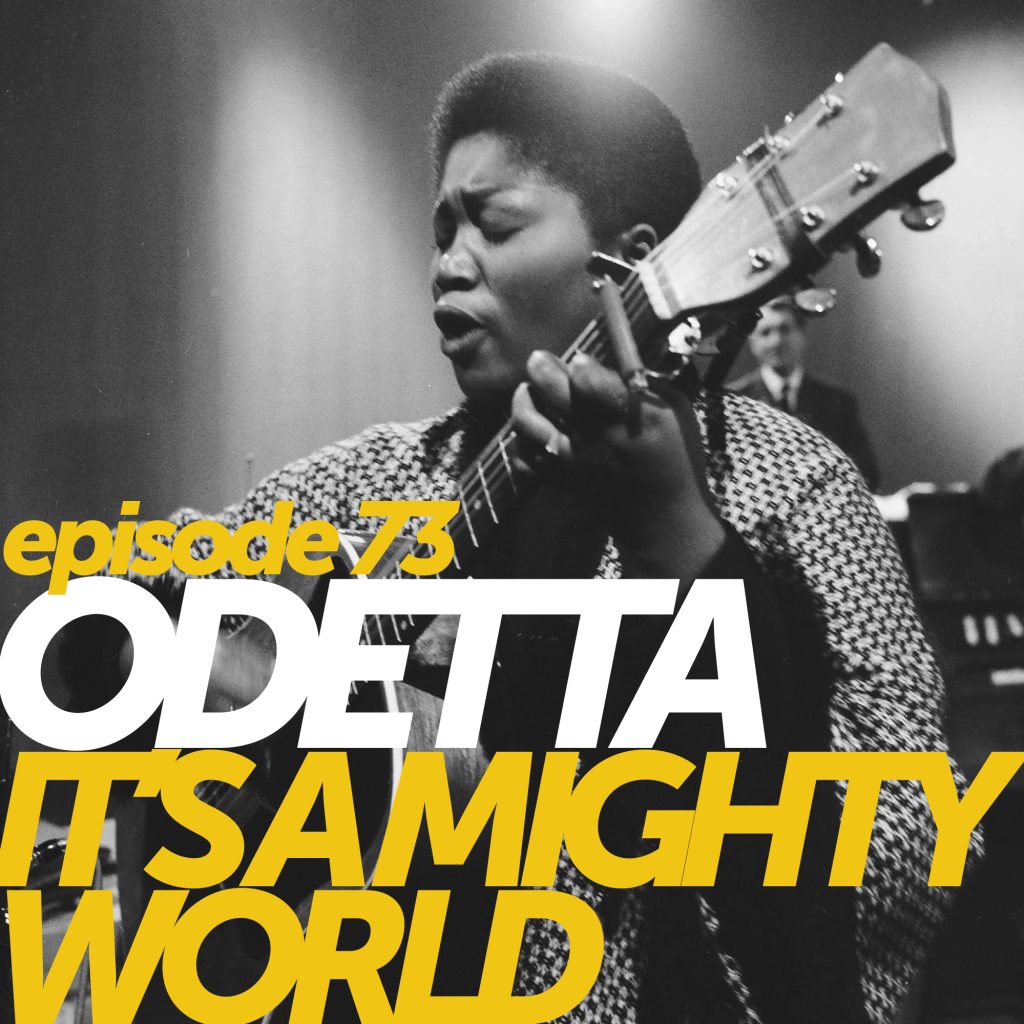
Episode 73: Odetta’s “It’s a Mighty World”
Odetta — a must-know titan of American music and culture — once noted that young people “learn about American history through battles.” But her dream of liberation was shaped much differently: “I learned about the United States through this music, through the songs that I sing.” As we live through the kind of historical moment that makes most folks want to lie down and die, we can — like many heroes before us, from MLK to Maya Angelou — look to the legacy of 1964 and Odetta for strength to insist upon our lives.
Episode 72: R.D. Burman’s “Shalimar”
Once upon a time in Bollywood, one magical man made enough music to fill a million moments—and made space for hundreds of other artists along the way. Of the 331 scores “Pancham” composed in his lifetime, 1978's “Shalimar” is a uniquely compelling introduction to his technical prowess, transcendent alchemy of cultures, and tremendously joyful love of a life full of song.
Episode 71: Marianne Faithfull’s “Broken English”
“That’s the thing about pretty faces… We don’t expect them to belong to the fighters— the junkies and monks and cockroaches who’ll survive every atomic bomb and suicide attempt and outlive us all.” - Lindsay Zoladz Broken English is searing, singular snapshot of surviving to spite the devils (who’ve gotten far too much sympathy in the story so far). You’ll love it forever with its good and bad weather. We may have lost Marianne Faithfull this year, but not before she outran the darkness. As we close out a dark year and look ahead for light, there’s a lesson to...

Episode 70: Sade’s “Love Deluxe”
Any denier that all art is political need look no further than the smoothed-out soul slipstream of Sade, a group defined by its economics. Rare output, minimal arrangements, reserved volume, and, of course, the premium implied by “Love Deluxe”—a title derived from the idea that true love is among a precious few luxuries that can’t be bought. Our world’s clearly longing for more longing, and we discovered a truly transcendent delicacy as we unboxed Sade’s brand of desire.
Episode 69: Charles Mingus’s “The Black Saint and the Sinner Lady”
When you think of true "artists" in music, who comes to mind? Charles Mingus embodied its romantic ideal, for better and for worse. His magnum opus "Black Saint" is more than even jazz's cosmic form can hold—it's the full-bodied essence of a master composer, peerlessly inventive bassist, and clairvoyant critic of the real America. In it, you’ll find what his collaborator Gunther Schuller called "the widest ranging musics you can find composed by one single human being."
Episode 68: Gang of Four’s “Entertainment!”
“Entertainment!” is described by Gang of Four’s Jon King as “a record about young people smiling and dancing in the face of disaster.” Uh oh, sound familiar? This Leeds-born slab of Brechtian boogie reminds us that to navigate a world where everything is (small-p) political, dancing and dialectics belong together. Free your ass and your mind will follow.

Episode 67: Brooks & Dunn’s “Brand New Man”
This is the tale of two lonesome cowboys who got down, turned around, and went to town catching lightning in a bottle on their first try together. Whether or not their decade-defining country anthems lit a flame in your eye in the 90s like they did ours, Ronnie and Kix offer a lens through which outlaws, in-laws, crooks, and straights alike can look for ways to learn to love again.
Episode 66: Oumou Sangaré’s “Moussolou”
The name "Oumou" derives from an Arabic word meaning "mother of." It is associated with dignity, wisdom, and maternal strength. Southern Mali’s Oumou Sangare has come to embody her namesake for millions around the world, and it all began when she was just 19 years old, channeling the magical music of hunters through her powerful and purposeful voice and creating a moment that captivated an entire country. Hers is a story everyone should know.
Episode 65: Missy Elliott’s “Supa Dupa Fly”
In the words of one of her groundbreaking forebears, “You feel free? You want to try some wild s**t? Thank Missy.” Since the very first frame of “The Rain” entered our eyeballs, Missy has made the avant-garde accessible, pointing us to a future full of more funk and more fun simply by standing fully in the splendor of her space-age self. Come (supa dupa) fly with us back to the moment where Missy’s magic began.
Episode 64: The Cramps’s “…Off the Bone”
God is a woman and she plays the guitar loud … y’all come catch some Holy Ghost in your hips. Hear our hallelujah for the love story of the queen of rock ‘n roll and the mad daddy holy rollin’ on a river—upstream all the way—and boot scootin’ through a fun and freaky heaven and earth of their own design. The Cramps were Dionysian, devilish, dangerous, and damn good, and they remind us that life can be, too. If you can’t dig this, you can’t dig nothin’.
Episode 63: Black Moth Super Rainbow’s “Dandelion Gum”
Life’s a bit heavy to chew on these days, so we reached into the pocket of our mid-2000s jeans and found an old piece of Dandelion Gum to chew on instead. As soon as its neon syrup hits your tongue, you’ll wonder why you hadn't let this "future pop for now people, today" melt you, melt you, melt you yet.
Episode 62: Project Pat’s “Mista Don’t Play: Everythangs Workin”
This life we're livin' is oh so beautiful. Take it from Patrick Houston, who has spread the gospel of the real for three decades, followed by a discipleship that has shaped 21st century culture in his image. For those still alive in 2025 by the grace of God, let us give flowers to the man from the North North.

Episode 61: Grace Jones’s “Nightclubbing”
Not a woman. Not a man. A revolution. Music’s long history is littered with larger-than-life characters whose mythology shapes reality for the masses — and few loom larger than the mighty Grace Jones. “Nightclubbing” without context is a tremendous body of songs worth anyone’s time, but after a deep dive into Grace’s time at Compass Point, you’ll agree that it’s a vital work.

Episode 60: Paramore’s “This Is Why”
The menace and melancholy of modern life have sentenced scores of young people to the gilded prison of nostalgia — but much to our surprise, a band of recovering Southern pop-punks have an antidote. For anyone willing to “sit still long enough to listen to yourself,” their new music’s sharp rhythmic angles and sharper lyrical reflections frame a doorway through which to free our big feelings and forge ahead.

Episode 59: Ennio Morricone’s “The Good, The Bad and The Ugly”
You know that five-note coyote howl. You may even know the classic film it helps power. But what do you know about the man behind those iconic moments? For our final exploration from our 2024 calendar, reflect with us on the genius of a maestro who could make magic with a mere fistful of notes, who poured forth from his soul a foundation upon which much of 20th century popular culture was built.

Episode 58: TLC’s “CrazySexyCool”
Vision. Bravery. Originality. The 30th anniversary of the ATL-exported opus — by the highest-selling girl group of all time — offered us a chance to reflect on all the ways our hometown heroes ran so some of the 21st century’s most iconic artists could fly.

Episode 57: Kendrick Lamar’s “good kid, m.A.A.d city”
Before the Super Bowl, the super beef, the Pulitzer, or PGLang, one good kid and king-to-be sojourned from South Central to the height of the American promise and rained down lightning that united one nation under a groove. You’ll feel the energy of this episode from two planets away — hop in the van real quick and let’s roll out.

TuneDig Episode 56: Cocteau Twins’s “Heaven or Las Vegas”
Dream of ethereal waves of sound swirling around you—and words you can’t make out saying more than you could imagine—as you float back upstream with us toward the warmth of Cocteau Twins’ decade-defining masterpiece, which still ripples across a vast pool of influences 25 years on.

TuneDig Episode 55: Jeff Buckley’s “Grace”
Once upon a time, “your favorite artist’s favorite artist” wasn’t a Midwest princess, but a “mystery white boy” beloved by Bob Dylan and Adele alike. Jeff Buckley’s signature Grace is on the shortlist of transcendent albums every living being should experience, because, as one industry vet put it: “it’s all in there, isn’t it? It’s just all in there.”

TuneDig Episode 54: Botch’s “We Are the Romans”
"We Are the Romans" is a visceral, vital document guaranteed to make you feel something from its first notes — and there’s never been a better time to stop and smell the roses from a group just now getting its long-overdue flowers.

TuneDig Episode 53: Ravi Shankar’s “Three Ragas”
Ravi Shankar lived one of the twentieth century’s most extraordinary lives, bearing witness to—and making—history all around the world. To many (especially in the West), he personified an extraordinarily complex style of music and the cultures from which it was borne, and he worked hard to make it look easy.

TuneDig Episode 52: Alain Goraguer’s “La Planète Sauvage”
Gather ’round, sommeliers of the strange and crate-digging boogie children, for something “Strange! Frightening! Fascinating!” awaits. The soundtrack to Cannes 1973’s Jury Prize-winning film is a dazzling, surreal, avant-garde hymn to cosmic knowledge and compassion and a secret handshake among real heads. If you’re after a trip to a new dimension, here’s your one small step for man.

TuneDig Episode 51: Marvin Gaye’s “I Want You”
Marvin Gaye’s well of soul power ran mighty deep, and deep into his career, he pulled up a bucket of ice-cold, silky smooth champagne called “I Want You.” Come for the lush instrumentation, vocal harmonies, and Leon Ware clinic; stay for the stories. For our return from hiatus, we observe a titan in his element, reflect on the pain that built him into one, and consider how to reconcile our feelings when complicated messengers deliver beauty to our door.
SEASON 6

TuneDig Episode 50: Funkadelic’s “Maggot Brain”
Before uniting one nation under a groove, the lysergic lords of chaos in Funkadelic harnessed wild lightning into an amulet called Maggot Brain, bestowing the bearer with raw, dark power stronger than any force known to man. Between reaching our 50th episode and coping with the “maggots in the mind” of today’s universe, it felt like the right time to free our minds. We hope y’all’s asses will follow.

TuneDig Episode 49: Alice Coltrane’s “Journey in Satchidananda”
The story of Alice Coltrane — an accomplished bebop pianist from Detroit who transcended into something far greater before walking away from public life altogether — is a glimpse into what it means to be truly free. Alice’s masterpiece "Journey in Satchidananda" is a cosmic dance that sparked creation from destruction. And in a time when we’re all desperately searching for a spark of meaning and hope, Journey abides abundantly.

TuneDig Episode 48: Heart’s “Little Queen”
Take a moment to appreciate Ann and Nancy Wilson, who kicked down the doors of rock ‘n’ roll’s boys’ club with their peerless guitar work, soaring soul vocals, and tight songcraft. 1977’s Little Queen — an oft-overlooked gem in the classic rock canon — offers a snapshot of those elements at their most urgent and pure, powered by the Wilsons’ simple motivation (as described by their producer): “It was a war.”

TuneDig Episode 47: Tangerine Dream’s “Phaedra”
When you think of “electronic music,” what comes to mind may not be a genre you deeply love — hip-hop, house, new wave, or even dub reggae — but all of it owes some debt, scientifically or otherwise, to Tangerine Dream. Dig in with us as we study a prime example of the band’s brand of effortful innovation, where they patiently and persistently labored at the cutting edge of electronic technology to open a portal to new worlds in our minds.

TuneDig Episode 46: Olivia Rodrigo’s “SOUR”
Did you catch one of 2021’s biggest albums, or like us, did you almost overlook it? If you have any expectations of pop music, "SOUR" will likely subvert them. Teenage dream this is not; it’s an exquisitely universal portrait of a weird time to be alive.

TuneDig Episode 45: Fela Kuti’s “Expensive Shit”
The story of Fela Kuti — one of the most famous people on an *entire continent* passionately struggling to liberate power to more people — is absolutely one worth deeply knowing, regardless of whether you find yourself drawn to Afrobeat or (cringe) “world music.” But once you know it, it’s almost impossible not to fall in love with Fela and Afrika 70 as their revolutionary grooves rewire your brain in magical and meaningful ways.

TuneDig Episode 44: Meshuggah’s “ObZen”
Meshuggah’s ObZen—an artifact of human creativity pushing the limits of what’s possible—will quite literally make you hear music differently. If you’re looking for a new musical adventure, and especially if you don’t think you like “heavy” or “weird” music, consider this your sign to push past your comfort zone.

TuneDig Episode 43: mewithoutYou’s “Catch For Us the Foxes”
A misunderstood wise man once said “Let him who seeks continue seeking until he finds.” In our most personal and vulnerable episode yet, we do some seeking through the lens of songs that fill us with the bravery and sincerity to love ourselves and others fully. Dig deep with us as we fish for words about our tiny place in the universe and dance with gratitude for our ability to do so.

TuneDig Episode 42: Erykah Badu’s “Mama’s Gun”
Y’all tryna raise your vibrations? Erykah Badu is here to help. Season 6 kicks off with a meditation on realness and what being on “your own wavelength” really means. (Spoiler: it ain’t a single frequency — it’s a whole spectrum.)
FRIDAY HEAVY
For lifelong headbangers and the musically curious alike, a new podcast from TuneDig is here to push your palette with aggressive, abrasive art. Each short, fast-paced episode offers (1) a new metal, punk, noise, or experimental release we recommend, (2) a related playlist we’ve curated, and (3) a heavy issue to consider and an organization doing something about it. Join us in the void.

Friday Heavy: End of Year Review 2022
It was a great year in heavy music. In this episode, we look back at all the new releases we featured and the curated playlists they spawned.
It was a NOT great year in many other ways. We leave you with a parting message of encouragement to connect your energy and angst to on-the-ground organizations doing the work in your community.


Friday Heavy: November 11, 2022
This week, we discuss:
- He Is Legend – Endless Hallway
- Curated playlist sussing out the depths of He Is Legend’s roots, weirdness, and attitude
- Protect Our Winters (POW)

Friday Heavy: October 28, 2022
This week, we discuss:
- Witch Fever – “Congregation”
- Curated playlist of eclectic, high energy that might get your inner goth stoked on (briefly) going out
- Housing Justice League

Friday Heavy: October 14, 2022
This week, we discuss:
- The Lord † Petra Haden – “Devotional”
- Friday Heavy playlist densely packed with thick, meditative vibrations across the spectrum of drone
- Multidisciplinary Association for Psychedelic Studies (MAPS)

Friday Heavy: September 30, 2022
This week, we discuss:
- Escuela Grind – “Memory Theater”
- Friday Heavy playlist dedicated to the absolutely fucking hostile energy that powerviolence can bring to radical inclusion
- Zealous

Friday Heavy: September 16, 2022
This week, we discuss:
- Holy Fawn – Dimensional Bleed
- Friday Heavy playlist showcasing the incalculably extensive and wildly diverse Shoegaze Cinematic Universe (aka post-rock)
- MTB Atlanta

Friday Heavy: September 2, 2022
This week, we discuss:
- The Callous Daoboys – “Celebrity Therapist”
- Friday Heavy playlist confronting the under-appreciation of Atlanta’s heavy and weird music scene
- Mississippi Rapid Response Coalition – Water Fund

Friday Heavy: August 19, 2022
This week, we discuss:
- Osees – “A Foul Form”
- Friday Heavy playlist fuzzed out on oddball punk that smells like cigarettes just thinking about it
- Women on the Rise GA

Friday Heavy: August 5, 2022
This week, we discuss:
- Chat Pile – “God’s Country”
- Friday Heavy playlist with, uh, a bunch of very pissed off songs directed at christofascist terrorism
- The Grocery Spot

Friday Heavy: July 22, 2022
This week, we discuss:
- WAKE – “Thought Form Descent”
- Friday Heavy playlist that anchors its sound in modern production of sludge, blackened death, and post-metal
- The Planetary Society

Friday Heavy: July 8, 2022
This week, we discuss:
1. Vomit Forth – “Seething Malevolence”
2. Friday Heavy playlist that’s unsettling in the best way, leaving you feeling a little off your axis
3. Trees Atlanta

Friday Heavy: June 24, 2022
This week, we discuss:
1. CANDY – “Heaven is Here”
2. Friday Heavy playlist packed with off-the-beaten-path punk and hardcore from bands that deserve space on your battle jacket
3. Round Rock Black Parents Association

Friday Heavy: June 10, 2022
This week, we discuss:
1. Sasquatch – “Fever Fantasy”
2. Friday Heavy playlist of heavy grooves for late desert nights and hazy generator parties
3. Feed Buffalo

Friday Heavy: May 27, 2022
This week, we discuss:
1. Decapitated – “Cancer Culture”
2. Friday Heavy playlist stacked with bands putting their unique and modern spin on (occasionally tech) death metal
3. PropelATL

Friday Heavy: May 13, 2022
This week, we discuss:
1. Primitive Man – “Insurmountable”
2. Friday Heavy playlist full of SLOW, enveloping, massive and crunchy tone and big feedback
3. National Network of Abortion Funds

Friday Heavy: April 29, 2022
This week, we discuss:
1. Heriot – “Profound Morality”
2. Friday Heavy playlist packed with mid-tempo, huge guitar tone, big atmosphere and lots of industrial grit and grind
3. Invisible People

Friday Heavy: April 15, 2022
This week, we discuss:
1. Greyhaven – “The Bright And Beautiful World”
2. Friday Heavy playlist for fans of more choatic + melodic combinations
3. Campaign for Working Families

Friday Heavy: April 1, 2022
This week, we discuss:
1. Meshuggah – “Immutable”
2. Friday Heavy playlist full of high quality Meshuggah aping that AIN’T “djent”
3. The Bail Project

Friday Heavy: March 18, 2022
This week, we discuss:
1. Soul Glo – “Diaspora Problems”
2. Friday Heavy playlist with 20+ songs in under 40 minutes, (almost) all under 2 minutes each
3. Equality Texas

Friday Heavy: March 4, 2022
This week, we discuss:
1. Vein.fm – “This World Is Going To Ruin You”
2. Friday Heavy playlist exploring more of Will Putney’s work
3. Books to Prisoners
SEASON 5

TuneDig Episode 41: Miles Davis’s “Bitches Brew”
Let’s be clear: "Bitches Brew" is a challenging record, even to some of the best musicians in the world — but all of them say it’s worth the investment. It’s the kind of trip that, even if we *could* draw a map, it wouldn’t take you there. Let go of the need for meaning and enjoy the ride with us. We can promise you’ll be pleasantly surprised where you end up.

TuneDig Episode 40: Fiona Apple’s “Tidal”
On the heels of one of 2020's most acclaimed albums — Fiona Apple’s Fetch the Bolt Cutters — we revisited Apple’s debut Tidal and wound up working to extract ourselves from the mostly male gazes that made its reception … much different. We arrive at a question much like writer Jenn Pelly had: “People would constantly prod Fiona on how an 18-year-old could write songs as mature as these ... Why did they not ask instead how she became a genius?”

TuneDig Episode 39: Death Grips’s “The Money Store”
The modern world is accelerating beyond our control, shaping our reality in ways we can’t yet perceive or understand. Enter Death Grips, an art project capturing the chaotic energy and illustrating the absurdity of our hubris in trying to harmonize the surreal and extremely real — never more perfectly than on 2012’s prescient "The Money Store".

TuneDig Episode 38: Augustus Pablo’s “King Tubbys Meets Rockers Uptown”
Reggae music is easy to take for granted, but its impact is underappreciated and massive — in the case of dub in particular, everyone from Radiohead to Johnny Rotten to Run-DMC owes it a debt. Augustus Pablo and King Tubby together created what’s regarded as “one of the finest examples of dub ever recorded.” Join us as we dive into the culture, history, and unique engineering experiments that made it possible.

TuneDig Episode 37: Rihanna’s “ANTI”
By every measure — sales, awards, chart-toppers, global name recognition — Rihanna is objectively as big as the Beatles ever were. In fact, ANTI is so big it’s still on the charts, a record five full years later. Take a closer look with us at “the record you make when you don’t need to sell records”, and get a taste of the true freedom that comes from focusing on your inner voice when faced with insurmountable expectations.

TuneDig Episode 36: Son House’s “Father of Folk Blues”
All American music traces back to the blues, and deep at the root sits Son House. That the recordings on "Father of Folk Blues" even exist is something of a gray area that cuts to the heart of the great American myth, but wherever you land after hearing these stories, you’ll find that what matters most is what the great Muddy Waters once said of House: “That man was the king.”

TuneDig Episode 35: Melvins’s “Stoner Witch”
The futility of describing the Melvins has stretched critics in the direction of absurd words like “Dadaist” for nearly 40 years now. They’ve belligerently flogged any attempt to pinpoint their essence simply by being themselves, but "Stoner Witch" remains a reliable mall directory for the Melvins’ vast and wild discography. Grab yourself some pretzel bites.

TuneDig Episode 34: Dolly Parton’s “Jolene”
We should talk about Dolly the way we talk about Prince. Her extraordinary kindness and unique kitsch both make her universally loved, but what gets left out of the conversation is the very thing that made her famous: the music. Join in as we focus attention on the sonics and songwriting of the low-key masterpiece "Jolene".

TuneDig Episode 33: The Allman Brothers Band’s “The Allman Brothers Band”
Six enlightened rogues out of Macon, Georgia birthed an entire genre simply by being their soul-powered selves. We have not come to testify, but we’re still hung up on the dream The Allman Brothers Band helped us see. By the end of this episode, you will be, too.
TUNEDIG RADIO


SEASON 4


SEASON 3


SEASON 2




SEASON 1


BONUS TRACK EPISODES

BONUS TRACK: How We Got Here
We got a bunch of interesting listener feedback in our off-season, and it encouraged us to shed some light on why we do things the way we do ‘em. Also, we reflect on our first writeup, which was ... interesting.
WHO WE ARE
We're Cliff (right) and Kyle (left). We’re two dudes born and raised in ATL with day jobs in tech and sustainability, respectively.
We met in middle school, and in one way or another, music’s been the thing that’s kept us close for the two decades since — whether it’s sharing and talking about new music (like this podcast, except in our texts or over beers), going to shows, or working with our favorite record stores to help them survive and thrive.
We started TuneDig as a little art project that connects us more deeply ourselves and to the world through the infinite gift of music. We hope you’ll join us for the conversations, let us know what you think, and share discoveries of your own.
More About TuneDig
TuneDig began as a little something called MusicGrid.me, which we created after realizing there was no place online to directly exchange music recommendations with your friends. Our aim was simple: to make rating albums simple, useful, and social. We got some love from places like Mashable, Wired, Evolver.fm, and Hypebot. We managed to foster conversation between music lovers, get thousands of reviews, and meet great people.
Along the way, we realized that record stores were an essential part of the music lovers’ community. After many a conversation about how we could helpfully connect them to the people who loved them, we began helping them leverage technology to create new revenue streams and embrace streaming services without giving up what’s unique to them: expertise and curation. (Long live the counter clerk who knows exactly which record will be the right introduction to jazz fusion!)
TuneDig is our vision to connect music lovers with the music they love, because no matter how much has changed in the way we discover and enjoy music, recommendations from people you trust and respect will always be the best way to find new music you’ll dig. With this podcast, we’re channeling the spirit of trusted curation pioneered by record stores, and bringing you something to take you deeper into music you can love.