
TuneDig is an in-depth and informed conversation between two lifelong friends about the power of music — one album at a time.
In each episode, we go down the rabbit hole to spend a while in the strange world we discover. We take an honest look at creativity in all its complexity—from writing and production to history and cultural impact.
We promise you’ll learn something new every time, no matter how much you already love the album we explore.
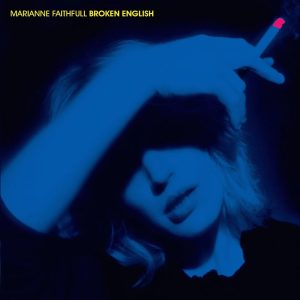
Episode 71
Broken English
Marianne Faithfull
“That’s the thing about pretty faces… We don’t expect them to belong to the fighters— the junkies and monks and cockroaches who’ll survive every atomic bomb and suicide attempt and outlive us all.” – Lindsay Zoladz
Broken English is searing, singular snapshot of surviving to spite the devils (who’ve gotten far too much sympathy in the story so far). You’ll love it forever with its good and bad weather.
We may have lost Marianne Faithfull this year, but not before she outran the darkness. As we close out a dark year and look ahead for light, there’s a lesson to be learned from her life.
Transcript
Cliff: Today we are talking about Maryanne Faithful’s Broken English.
Kyle: I don’t know how many times we’re going to get the opportunity to open an episode with, in the words of Salmon Rushy.
But there’s so much to say about Maryanne Faithful and what I have loved about preparing for this episode is that the more you dig, the more there is. And just like the more that I get to know about Maryanne Faithful, who I knew painfully little about other than. The worst things that I probably shouldn’t have known.
the more you learn, the better it gets. She’s supremely interesting. And I think anybody who likes music or art should be aware of her story. And I say that with full confidence of somebody who’s one of two people on this podcast who has strenuously said, fuck the story. Listen to the music.
Don’t worry about the stuff around it. Sure. The context can be interesting. But the music, the music, the music, to me, the story, it’s a rare instance of the story being every bit as interesting as the music maybe, and then some, and not because it’s salacious. I mean, it is not because it’s salacious, not because you’re like, oh God, oh.
This artist, this human being reminded me what we’re doing here. And I’m, I partly mean on this podcast, but I also mean like on this earth being alive and the journey. And so I’m very happy to be closing out the year with Marianne Faithful. I hope you will also take this journey with us after you press stop on this episode and I hope that you’ll go on your own journey alongside her, which is a good spirit guide.
So anyway, salmon rushy before his fata, I assume said. The most striking thing about Maryanne Faithful back in 1964 was that she looked so innocent there. She was at the epicenter of what Diana Reland named the Youth Quake, the first great explosion of sex and drugs and rock and roll, but with her big baby blue eyes and her angelic expression, she looked as if the darkness of the sixties couldn’t touch her.
First song as tears go by sung 50 years ago in an impossibly sweet voice, the voice of a slightly zoned out forester confirmed the image. We were all a little in love with her back then. The girl with the hit records, the girl whose Aristocrat, ancestor MAs so gave his name to Masochism, the girl in the leather jumpsuit on a movie motorcycle with Alan Delan, the girl on Jagger’s arm.
But the darkness came for her and the drugs almost got her. It was a long, hard fall from the brightest lights of the time of her youth all the way down to the homeless narcotic streets. The sixties had many casualties, and for a time the fallen golden girl looked like a candidate for that long list.
What happened instead was very remarkable. She returned for a second act, beating cancer and hepatitis along the way, and now she had a different voice, deeper, rougher, no longer the angel innocent. At the Voice of Harsh experience, she sang Jazz in the Blues and there was broken English in the Ballad of Lucy Jordan.
And she was back smiling her wounded smile and looking somehow oddly grand imbued with the grandeur of the survivor. And since then, much work, many honors in the hard earned status among performers far younger than herself of an icon. It’s a fine story, not exactly a fairytale, a story William Blake would’ve liked.
He knew something about the journey from innocence to experience to.
That felt right, in lieu of recounting all the gossip. Here it is. Message in a bottle. Let’s get into it.
Cliff: And while we do, let me go ahead and carve out a little space for anybody who has a little bit of an experience like me. When you start to go into it and you go, I don’t think that there’s anything here. Hold on. I don’t, hold on. I don’t feel like there’s anything here. What am I missing? This isn’t quite right for me.
It took me a lot of work. Part of what I will bring to this episode in general is just how I tried to maneuver around my experience with it and found a way to connect with it. Because as we say, every time, that is more or less the magic of this thing that we do and what we want to encourage other people to do.
But this one challenged me to be. A music critic. This one challenged me to like find a way to say what it is that I felt and experienced and thought about all of this and deal with some fairly gnarly and complicated feelings about everything you just presented. This is a very intimate portrait of a human being who’s had a very, both difficult time and the opposite of a difficult time kind of before that. And traditionally, it’s not someone I’m naturally human inclined to feel a lot of empathy for. there’s just a lot of complexity that came up as a result of the human being you’ve already started to introduce here. Just a, a truly kind of magnanimous person, outsized personality who had way more of a cultural impact than I sort of knew how to calibrate and calculate.
So I want to go ahead and make space for anyone who hits play and doesn’t quite know what we’re about to talk about. Cool, go with us. We found some stuff. and I as always was pretty overjoyed figuring out that we found some things that we’d end up talking about today.
Kyle: I love that. Thank you for sharing that. I do think there is, kind of what you’re talking about is empathy. To me, I couldn’t see myself in this work or this artist, and so I had to do the work to get a little closer to the path that they walked on. And I think we do so much of this that we take for granted, like sometimes that is still really hard and by the selection.
The curation, the natural curation that we do in selecting these albums for these episodes. I think we subconsciously filter a lot of that out and so it’s interesting to be this deep into it to find one that like takes some work. I would qualify a lot of this year. The selections that we’ve made and the conversations that we’ve had is, is really pretty effortless.
Like a lot of like, kind of frictionless growth because we’ve learned, we’ve learned the exercises, we’ve like, internalized the rhythms. so I’m really delighted to hear there was a challenge there. And we talked about before the episode like. I’m not coming at it from a high horse, obviously.
well, not obviously. It maybe sounds like I am. I’m not trying to come across like, good for you. I think one of the things we uncovered in the prep for this episode is the howling darkness, the shadow that is in Mary unfaithful is definitely also in me. And so there was a bit of an identification that happened almost immediately.
Where I like wasn’t alienated by the journey I, I was like really endeared to it almost immediately. And so it was really cool to have that conversation with you ahead of time and think like, oh, I have a bias coming into this as well. I have no more exposure to this record really than you do. And why did I have such a diametrically different experience?
’cause we haven’t had much of that in a while. So eager to. Get into the details of what and how.
Cliff: Yes, because not only am I trying to be the best version of myself that I can be on this earth, but I’m gonna try to inspire other people by showing up to this conversation and being able to talk in specifics about what I did and didn’t actually like, and why not just I don’t like it or it bothered me, which were the initial kind of feelings I had.
you want to go back one episode chronologically or just randomly pick one from Tune Dig? You’ll find me saying something along the lines of. I wasn’t sure about this one. And then I beat myself into submission by listening to it 40 times and then it clicked and I found something I really liked and then I got obsessed with that.
Cool, that usually works for me. That did not work here. It made me more rigid. The more I tried to go into it and tried to force myself to like it, the more I really cringed against it and started to feel a sensation of, I signed myself up to like this record and produce a little bit of content about what it is and I can’t make myself like it enough to do that yet.
so I checked in with myself but also through just like, I don’t know, this is also why we just tell people, like listen to music with your friends and talk to people about it. ’cause it makes you a little bit of a sharper tool. Cool, we’re gonna talk about it and I’m going to, instead of just
Kyle: Less of a tool and just sharper.
Cliff: that’s a tool, the band pun as well as an additional level. Yes,
Kyle: Go Phoebe and Naci yourself.
Cliff: I know the pieces fit, but
Kyle: Oh my God. She, we should do a, a listening to tool side quest, but it’s like therapy. We do immersive therapy listening to tool, and we call it Go Fibi and Naci Yourself tool therapy. For just tool time. Uh.
Cliff: uh, so, man, wow. We just did a really cool little pop culture circle there. That was fun. Yeah. I am really looking forward to then going through this and talking about them because coming all the way through my experience so that I wouldn’t feel like an idiot talking about it, has put me in a place where I no longer feel like an idiot talking about it.
Like, yeah, I still don’t love it, but we’re gonna talk about what it was that caught me off guard. And then I’m sure before long, we’ll probably uncover the little, we saw a little bit of something in the ground and started digging when we were talking to each other, and it was like, oh, I discovered something new about myself today, maybe, uh, which is not what I expected from this record.
Kyle: Oh, no more work to do. alright, well I want to jump pretty quickly into Cliff’s Cold Listen impressions, but I do think like 60 seconds of just recalling the case facts. This is an interesting record for a lot of reasons, but worth noting, it’s her seventh studio record. it comes sort of as she’s coming out of a long hiatus.
So, blah, blah, blah, Mick Jagger, whatever, dis discovered hard air quotes by Andrew Lou Oldham in 1964, Keith and. Mix Firth’s co-writing credit as far as tears go by, which is a big hit for her. She has a couple of huge records in the sixties. She bottoms out and disappears. The only version of that story that you should, dare read, go into is her autobiography and her own words.
Don’t, listen to anybody else’s bullshit on the matter because I found a lot of it quite terrible. She comes back and does a record called Dream in My Dreams. Yes. The song popularized by Waylon Jennings with the Grease Band who backed Joe Cocker at Woodstock before he went on to the Mad Dogs and Englishman lineup in the seventies.
that record is rereleased with some changes. As faithful, in 78. So she’s like just coming out of she’s disappeared. Disappeared. Truly does a country record, ostensibly that does nothing in the US but dreaming my dreams. Her version goes wild in Ireland. And then. Has a lightning rod moment with this record in 79, recorded May to July of 79, released in November of 79.
So like, if you’re trying to position this in the tune, dig chronology, think Gang of four. I kept thinking about gang of four with the sound of this record. this would be a little bit before Grace Jones’s nightclub in through Island and Chris Blackwell and, Barry Reynolds, especially, there are numerous connections there.
So 79 post-punk. I think the, global and cultural context is very important here as well. any other kind of contextual case facts, stuff that you feel like is important before you start talking about your cold listen?
Cliff: Hmm. One thing, especially to note there on the end, I got kind of curious. I can’t. really believe that I carried such an amount of sort of narrative skepticism into this record, but I ended up using it. And one of the ways that showed up was Mary Unfaithful said at this time, quote, punk made broken English possible.
And generally pride myself on sort of intuiting what people are talking about when it comes to something like that. I am no Sid vicious myself, but like I kind of understand what punk scenes are and I’m relatively a student of them. I had no fucking clue what she could possibly be referring to by that.
Kyle: It’s
amazing.
Cliff: even if I take the most generous outlook on everything that’s happened in her life, what is she talking about? How does that have to do with this record that sounds like Tom waits warming up in the bathroom sometimes to me. Like I, where, where does this come from musically? Like aesthetically, I don’t really get that, any of that stuff.
and that was a place where sort of intellectualizing the question and going into it a little bit further helped me to understand what that meant. So in the way that I would mean punk made something possible. No, that’s not actually what she meant at all. But in a number of ways, It made me realize what a moment in time this record was.
So I’m like really building out this one particular part. ’cause it helped contextualize it pretty seriously for me. One of the things that it did was punk began to provide a sort of like rails to put aggression on through which music like this could express frustration, anger, cynicism, like those sorts of overly aggressive emotions.
And secondly, gave other rails, so to speak, for women specifically to show this level of aggression, anger, rage, nerve, whatever. so musically, okay. I can sort of understand that, where that comes from. But secondly and hopefully I’ll give a couple of vignettes like this, but like pushing a little further into this beyond just yeah, it kind of sits there next to New Wave.
And I do know that New Wave has connection to post-punk. Like okay, I see it a adjacently, in the genre sense. But I think something that this reminded me of, and I hope my sincerity isn’t too much already, but Part of what she meant and that I could read about was something I do understand. And that is that counter culturism, counter culturalism. There we go. Punk scenes in the community that we talk about when we talk about it as a community.
So I wanna say two things. I don’t think that means, in the best sense or healthy sense, punk scenes gave me a place to go be a terrible addict. I don’t think that that’s what it means, but there is a nuance to it that I think is still true for punk scenes today and why they matter. And that’s that.
No, I don’t think a punk scene or a community that cares about you is going to encourage you to go further into your addiction, ruin your body, ruin your brain, whatever. That does not align with the people that I know who have been a part of those scenes for a long time, what they think or how they act.
But I do know that if you walk into a show and you are an addict, you are still accepted fully at that time for exactly who you are and probably with a lot less judgment than you would experience walking into any other room not going to support that behavior necessarily, or like the best parts about it don’t necessarily encourage that behavior.
But I did sort of see an angle I had never remembered before, and it yet again reminded me why I give a shit about music and local bands and touring bands and like little bands that become families and independent record labels. Like they care about each other. When somebody’s shit gets stolen, they take care of one another.
When somebody gets hit by a car, they raise money for them and if somebody’s in addiction, they’re gonna try to pull them out. that was just another sort of like, man, if I hadn’t gone back and thought about this, I would’ve missed that whole part. I, I would’ve just thought, honestly, my first easy pass when I saw that quote was, man, she really thought she was a part of something that I don’t really think she was involved in.
And then I saw it differently. And so I don’t know, I just talk. I wanted to share that bit, especially for the punk bit because every road here has like a dirt path that I have to take to get to the destination. I see. And this is one of those examples.
Kyle: Worth noting a couple of things for the pur for the benefit of the listeners. She was married to Ben Brierley of the vibrators. and you know, on and off did some stuff with him. She, I only very recently learned was at one point, going to play Sid Vicious mom in that. Bambi, whatever movie about the Sex Pistols.
so like I, you know, just by virtue of being of whatever the scene was in its incarnation in the seventies, or, I mean in the UK at a given time, there were so many things I read about Maryanne that felt like. I was reading about Robbie Shankar, like when we, in the Robbie Shankar episode, we talked about how his life was like, walk hard.
It was like insane story after Insane story. But it really was like, I just kept getting Forrest Gump vibes from it. The more that I learned. ’cause there was such tragedy underneath it. And I know like. I know the Boomer read on Forrest Gump is like, look how great America’s always been. and whether Zumeka intended it this way or not, Forrest Gump is dark.
And I won’t say all the reasons I think why in recording and transcript on a podcast, but I would love to have that conversation with you at a bar if we ever meet in person. but there is a lot. Of just like she was there when it happened and she was part of making it happen. I didn’t know how deep the lore with the stones went and how much stone stuff that is.
My favorite stone stuff is actually just her muse. there’d be no sympathy for the devil if she hadn’t handed me a book one time, I’m so tired of history being written by the victors, and the victors are just mediocre white men, even if they can dance and play a little guitar. Anyway, we’re not here to, I strenuously do not want the episode to be about that at all.
That’s in the background. there’s a lot of ink on it. I’m gonna do my best to continue avoiding bringing it up and staying focused on this. So thank you for sharing all that perspective. now you’re into it. Now you’re listening. Where’s your head at?
Cliff: Yep. Okay. So I’ll still bring some things forward from before I really felt centered enough to take it in in a full listen and feel a little bit better about what I was experiencing early on. it bothered me and it took a while to figure out why it bothered me. And my brain loves to come up with a million nuanced, textured reasons why I feel things, but eventually I could kind of come to understand what was bothering me on first.
Listen. So one, let’s start here. First of all, I in general struggle a little bit with the 1970s esque. I am a white person who wants to say a lot of lyrics and hip hop hasn’t been meaningfully invented yet. So I am going to strum this guitar like Bob Dylan and say a few things and like this, and I’m gonna say ’em a little like this.
And because it’s about war, you won’t make me rhyme. Like just, okay, man, like, I don’t need a pop song and I don’t need you to rhyme every time. But structure would be cool. Like poems have cadence to them. And like, I say all those things as like someone who deeply appreciates Bob Dylan. But like, so many things feel that way to me, and I already have trouble absorbing it.
So I knew I’d have that here. Secondly. This will start to scratch what I found under the surface a little bit, but it bothered me how on the very first track, which is the title track, which is itself kind of cool and I’m predisposed to like it ’cause it’s making fun of war. the lack of quantization of the multiple voices in this track where it sounds like people are doing gang vocals on my 15-year-old hardcore record makes me want to die.
And like, I couldn’t figure it out for a long time. And then one day it just like hit me dude, these are truly like, just artistic choices that great me based on how I would normally like or expect this music to go. and so even just the fact that starting there, there’s enough of a hook, like the song is sort of fine, but the lack of alignment rhythmically of those voices really makes me feel chaotic and unbalanced.
And. then I am forced again. Like these things weren’t hitting me the first time through. Right. But the feelings of it were, and then, a few weeks later I get to come back to the like, oh God, does this mean that perhaps she intended to create a song about what isn’t isn’t a Cold War? And that the lack of alignment between things actually probably means something that could have been meaningful at the particular time when it came out.
And like, did I just straight up judge a thing after priding myself on being a human being who never judges music that quickly? all of that dude just came from the voices not being aligned.
Kyle: That just feels like a tweet that you would send me a screenshot of, like me to self. Oh no. Is it really that deep again? me walking down a long road by myself with hands in pockets. Shit. I left my keys at home. Nope, I just realized it is that deep again.
Cliff: And antis, spoiler alert, I don’t go on to fully believe that everything here was intentional, but I did find a way to create enough space to give it room that it might be. And I had a hard time with that to start with. I think then, especially again on first, listen, so. I think those things carried through a bit.
There are some very interesting decisions here that do not make the music polished, and I didn’t think I was a person who liked polished music, but something about this, again, it just kind of grates me when I listened to some.
Kyle: Clifford, if you’d asked me that question pointedly at any time of the past 10 years, I suppose I would’ve given you What I did not know was going to be a very revealing answer. I.
Cliff: Which,
Kyle: how large can the font go on a word processor for me to type Yes and tape it up in a window across the street from you. Or like in the Taylor Swift video where they’re in neighboring houses, putting it on the white whiteboard and being like, are you fucking kidding me?
Cliff: uh, a person who specifically loves like weird black metal though, those were not like the words and concepts that I thought that I needed to use to describe myself, and I’ve learned something a little bit more new.
Kyle: Black metal’s like your gas station snack thing though. You know, it’s like
Cliff: You’re right. You’re right.
Kyle: it’s not, it’s not the other 99 things that you like and, and you go to it specifically for that. It’s not,
Cliff: You are right. I do go for little Booy Louisiana Heat when I go for wrap snacks, but I do not eat that for dinner. You’re right. I understand.
Kyle: Or breakfast or
Cliff: Yeah.
Kyle: Yeah.
Cliff: so I extending those a little further. Right. I think, I think what started to play out, especially on these songs were a little bit of back and forth conflicted feelings.
So for instance, like brain drain lyrically speaking and sort of vibe wise. Well that’s a cool song, man. Alright. This is okay. This is about addiction. Before I knew much about it, I thought probably an addict helped write this song and like, yeah, a bunch of addicts wrote it in a room while they were addicted.
So yeah, that makes sense. Like that’s why some of those lines hit so hard. but then I kind of go in and out of that, I sort of appreciate it. Okay. And then I get to the Ballad of Lucy Jordan, which again, talking about First listen, we’ll learn a lot more about that song. I didn’t know where the words came from to start with.
I just was loosely familiar with the song, like I am with some of them. And one, lemme go ahead and ruin you in advance. So lemme say the dumbest thing I’m probably gonna say on this podcast today. The ballot of Lucy Jordan has over and over again a hook that sounds exactly like centerfield by John Fogarty, and I cannot stop.
Kyle: I had the exact same thought. But then the next song on, what’s the hurry, the baseline comes in and brings to mind, wake me up before you go. Go. And so there were a couple like, is it major key? Like something something’s fucking with me. And. The Ball of Lucy Jordan. I thought it was like some rhyme of the ancient Mariner stuff, like an old English song or something before I realized it was a Shell Silverstein poem and I was like, alright, well it’s a very Tom Waity choice to do.
This, but like, oh, she’s doing Corpus Christi, Carol. Like, this is just for her and nobody else. And then I started listening to the lyrics and I was like, oh no, it’s just for her, but like, we need to hear it as well. But yeah, tonally the notes, and I know it was like Dr. Hook put together the arrangement based on the poem and she’s borrowing from it.
And it’s very interesting that like. That’s a very pretty straight ahead arrangement. You know, sense aside, compared to working Class Hero, which I would love to talk about a bit, is totally different than the original in my view.
Cliff: Yeah, not gonna catch me going, John Lennon’s. Whatever is better. But you’ll get that from me later in the podcast. It’ll be fun. it’s still though, right? Like speaking very specifically to cold listens before you know more about Marianne Faithful, it’s hard to process this. It helped me eventually to understand how much of a cultural.
Touchstone, she must have been to create meaning around this because it was totally devoid of it for me. I didn’t know who she was. And even now knowing that it’s a Shell Silverstein poem and all that stuff is really cool. But like, I didn’t know she had some sort of meaningful connection to what the poem would be about.
I just, the poem is interesting, like, yeah, okay. It’s, it’s about dreaming that when you get old, you’re going to have done a bunch of stuff and then one day you wake up, you’re old and you didn’t do any of that. And I know a lot of people feel that way, but I don’t personally cliff, I don’t, I’m pretty stoked about the way that things have turned out.
To be frank with you, I’m like 500% of everything I ever dreamed. So my version of riding through Paris in a convertible with the wind in my hair has been achieved. So I like this just like, kind of didn’t hit me at all. but hitting on two other things as well before we go deeper. So Working Class Hero.
Yes. It called to mind the John Lennon version, even though I’m not a huge fan of John Lennon solo material, sort of for the reasons I made fun of earlier, whereas oh, I don’t wanna be a Beatle anymore. I want to be smart so I don’t have to rhyme anything anymore. I just wanna say shit on top of a guitar.
Okay, man. Yeah, you earned it, I guess in theory, but, um, it’s not very interesting to me, but. That sort of brought it to mind and caused me to think and spin a little bit about working class hero. ’cause otherwise the lyrics are pretty cool. And once again, like we talked about on the Sade album, annoyingly prescient, just rudely accurate for now, as well as when it was written.
And then I’m going to give you your final cold listen, because this was the truly deepest, hilarious cold listen bit is at the end of the record because I think ironically, this is maybe the dirtiest record we’ve covered so far,
the way my blood pressure spiked when, when I, like, I can’t even bring myself to say it fully on this podcast. Like there are just like two lines and it would go on to create some consternation about whether this album would even exist in certain countries. But just like there are two lines in that.
Why’d you do it? Song that just Oh, oh. Alright
Kyle: I’ve watched you physically recoil at some of those words being said out loud and like, you’re not a shrinking violet.
Cliff: Oh,
Kyle: Did you know she almost put that song first on the record? Can you imagine?
Cliff: then we’d be asking, why’d you do it?
Kyle: it’s, it’s the most last song,
Cliff: Yeah.
Kyle: energy imaginable. That goes. You don’t put that in the middle of the record. ’cause then you’re like, where the fuck do we go from here? And
Cliff: Yep.
Kyle: you, you can put it first, but I sure wouldn’t.
Cliff: No,
Kyle: We don’t talk about sequencing a lot on this podcast. I’m a big fan. It, the study of it. And I know there are artists that really put a little lot of thought into flow.
I don’t know that there’s a ton of flow to this record. All the tracks feel pretty distinct up against each other, but I certainly wouldn’t want, why’d you do it? Which by the way, you may or may not be surprised for me to say that. It is one of my favorite songs. On any of the albums we’ve put out this year, and I had never heard it before, starting to listen for this episode and I’ve repeat won it a lot and not for the lyrical shock value, just ’cause like, I think it’s a great, like I love the guitar in it. I think it’s a cool song. I think it’s a very, it feels like a very me song.
Cliff: it’s the funniest thing to mention as the cold listen bit, because it’s the thing that turns around the easiest after. Just a little bit of context about it. I’m like, alright, I may not choose to print these lyrics and put them on a t-shirt or sing them in front of boomers, but I, okay. I get it. Okay, now I understand it.
I understand what this song is about now. And um, yeah, I’ve been in situations where people have been angry enough to speak this way one way or the other. Yeah, okay, I got you. Not to me to be super clear, but I get it, like, sometimes you gotta say the shit and, yeah. But that one was especially good ’cause you know, I’m sure we’ll talk about it some more, but getting a little bit more inside of the meaning of the lyrics and what it is about and how it is supposed to be presented and why it’s like, oh, okay, you’re desperately angry at someone.
And that’s exactly what you’d say if you had their eyeballs and you were like, you motherfucker. so, okay, now I can respect it. I will not be playing it by choice for the most part. The same way I don’t play swordfish, trombones or whatever for fun. But like it’s there and I respect it in a new way, which is very cool.
Kyle: You know, you bring up the rage. It does make a cold listen more interesting. Because the music can be cold and alienating in the literal sense and in the like, bian gang of Four Sense we previously discussed. so like what is the through line here? What am I supposed to be feeling? It’s hard to get your, I, I guess what I’m getting at, it is hard to get your claws in. What am I supposed to be feeling? Or like the scatterplot doesn’t have a line through it. Your first couple of listens of what’s going on for me emotionally?
And so starting with, okay, what is this person who’s curated this? Who’s, who’s put all this together? Clearly very intentionally what are they experiencing and how can I get through some of the coldness? and once you know, you can hear the rage. And I really think the coldest thing for me where I think you fell on one side of the coin and I fell on the other, maybe just as a Tom Waits and Mark Lanigan van is voice and.
I came in and was like, oh, that’s an interesting voice. Immediately not knowing either side of the extremes of Marianne Faithful’s voice. So I would say there may be a great temptation or maybe you don’t have the fortune of a total cold. Listen, because you’ve already heard, as tears go by.
You’re familiar with sixties Maryanne Faithful. If you haven’t heard that era yet, don’t. And if you haven’t seen her on Saturday Night Live in 1980, don’t listen to the record a whole mess of times and let that be your tuning fork for the Marianne Faithful. That should be where you start, before you go left or right.
Then after you listen to the record, then go listen to as tears go by. Her, for full first record or two for a sense of what all this journalism about her is really getting at what was lost or what was gained arguably. And then go to the Saturday Night Lab performance in 80 or Chevy Chase introduces her and her voice, like straight up don’t work.
She asked for cocaine and she got cocaine, which I learned is a dental anesthetic and it’s like such a good humor involving drugs for whatever reason is very funny to me, almost automatically. And so a who’s on first bit involving, I think it was more like, I don’t have cocaine. I’ll give you cocaine, but I don’t think they’re like in any way related.
Cliff: I didn’t know this and I can’t believe this.
Kyle: It is me, Marvin Berry. You said you want cocaine. Okay. but her voice like, not a, not a cocaine joke. Her voice like cracks out. She, it, it, it freezes
Cliff: my God.
Kyle: and it’s one of the like, legendary Build is one of the all time worst. But it’s not like she’s cool. She’s standing there cool and firm on the mic. She’s in a, a crew neck sweatshirt that says Faithful and it’s got her photo from the album cover on it.
Like that’s fucking badass. And she keeps doing it. She doesn’t do the Ashley Simpson thing where one thing goes wrong and she does a hoedown and skips nervously off stage. She hangs into like, she just, that’s tough, dude. That’s tough. and so there’s, I think, calibrating how you’re going to feel about the record or like how you feel immediately.
You can start with the voice. So it’s interesting, you, you started by talking about multiple voices, but I think just the character of her voice itself bring to the front of your consciousness. Do I like it? Do I not like it? Do I find it interesting? What would I change about it? Can I hang with it? what is it compared to things I do and don’t like in singers?
Because it is, it’s totally unique, right? It’s like a wine made from only grown in this high altitude region. Like a, a lot of factors had to happen in her life to get that specific timber of voice. And if you really wanna hone in for me, I do think Lucy Jordan is where you can really hone in on the, like max range of what’s happening with her voice in just the two line of, at the age of 37, like she hits it with a little bit of a Yelp and you can tell she’s pushing her voice out.
Then she pulls it all the way back for wind in her hair and it gets faint and cracks, like sucking the air back in. And I think the contrast, the spread of those two things, like exemplify what people are talking about with her voice. and so I would encourage anybody who’s like even mildly interested in her as an artist and expressionist to hone in on that emotion shining through. Pass the technical limitation of her voice and how, how nearly losing the instrument compared to the disaffection of her voice in the sixties when she had a good voice and higher up or register, but always sound sounded sort of disillusioned. Now there’s a pa like you can hear the rage come through and the passion come through and just the fullness.
What was that quote you sent me? the, I’m not dead yet. I, I gotta give these bastards one good one to let ’em know who I was. ’cause I’m not dead yet. it’s hard to hear unless you know the whole story. And then once you do, it’s all you hear.
Cliff: Yep. She said she was talking to, mojo in 2005, but she said the thing about broken English, it’s the sense this energy that quote, fucking hell, before I die, I’m gonna show you bastard two. I am, I can’t repeat it because I actually realized obviously I’m going to die, but not yet.
Kyle: so good. And once again, for me, there’s such good words on this record. I’d be curious for your thoughts on the words, not just the, cutting adult words. there’s really economical terms of phrase like. Which of song she says, remember, death is far away and life is sweet. Uh, and then on brain drain, she didn’t write this line, but uh, you go on and on, like a blood stain is an incredible line.
so few words, and then guilt a great autobiographical passage. Probably my favorite set of lyrics on the record. I never lied to my lover, but if I did, I would admit it. If I could get away with murder, I’d take my gun and I’d commit it. I never gave to the rich. I never stole from the poor. I’m like a curious child.
Give me more and more and more. I’ve been writing my whole damn life. Ain’t written nothing like that.
Cliff: I feel a respect for what that is trying to convey and to distance. From the reality that it’s trying to talk about. And that is one bit that will probably remain somewhat insurmountable for me, and we’ve talked a little bit about it. I think there’s part of it that’s me, the human being, the individual, there’s part of it.
That’s me, the person existing in 2025. But guilt is a great example. Lyrically I found myself going, I think I understand what you’re saying, but I don’t feel it. I don’t know how to feel what, what you’re describing, even in this song about guilt. And I think a working theory, at least for part of that, which we’ve ended up talking about some, but it’s just like, especially true for me is like I, the more I went into that and then learned more about her and then learned that the version of the story that was easy to tell myself overall, which was that she was a rich and extraordinarily privileged person who fell into hard drugs and then simply didn’t die when most people did.
Cool. that in and of itself is fine. okay, I actually knew people like that growing up too cool. but it doesn’t. facilitate additional empathy for me to understand where you’re coming from, if that’s sort of all that I know. And that wasn’t really good enough to help me start to understand any of this better because a part of what is here, and I think this got represented really well in I, I don’t know if this is ironic or onic at this point.
We have made a million jokes about pitchfork reviews and whether they’re good or not in a general sense specifically about albums, all kinds of shit. Sometimes they’re super stupid, sometimes they’re really incredible and hilarious. But one of the things about them is the reason they were a thing at all is because on the most part, the authors like took pride in trying to say clever things about it.
Okay. However, it is, I feel whether this is a stupid record or a great record or something in the middle, I don’t understand. I’m going to use the densest sort of creative language I can to get a lot of this stuff across. Cool. Okay. There was a line in the review for this record that helped me a lot and it was quote, this record documents a particular shade of darkness that not everyone lives to describe. And when I saw that sentence. I had kind of, we talk about our process here. I’d read a lot of stuff. I’d even read this review. I had listened to the record a bunch. I’d done a bunch of stuff, but eventually I came back to it and saw that line and it connected to me differently and stuck oh, what I’m partially experiencing is the uncomfortability and unwillingness to go into it there.
I don’t like that feeling. I don’t want to go there with you. I don’t understand this guilt, partially because I don’t want I don’t want to get it. and I think coming to grips a bit with that and realizing that when she talks about making a record, ’cause she thought she was gonna fucking die.
Oh, actually I’ve had my own versions of that in life. Sure. But like, I have never felt that, I have never felt that, not in that sense, at least. I have never gotten close to the brink. Look over it, sat on the edge of it. I know many people who I know, respect, admire, love, everything, who have had a whole spectrum of experiences right there on the edge.
For me, I have not, and until I was honest with myself about it, I felt like there was a secret part of this record that I simply couldn’t unlock. And now I understand more that I can, but I have to go to a place that I’m not used to being comfortable with together.
Kyle: Meanwhile, we discovered in texting, I sorta have to live there in order to remember how to be happy.
Cliff: Hello? Darkness. My old friend.
Kyle: Hello? Darkness, my old friend, truly bone in it, molded by it. I do want to shout out r Rare, rare shout out to the byliner of a Pitchfork article, Lindsay Zoladz, who’s now a cultural critic for the New York Times, just bar after bar. In that article, I am now personally invested. She’s got a book coming out that she’s working on called Fear of a Female Genius, which I guess is
Cliff: Fuck yeah.
Kyle: the title of an essay
Cliff: even know what it’s about, but good title. All
Kyle: Well, it’s the title of an essay she wrote about Joni Mitchell, which like,
Cliff: Yeah. Okay.
Kyle: that’s it. That’s an app title for that. love the concept totally on board with where she’s going there. And if the writing is half as good as this one little essay, I am going to pre-order the shit out of that thing. so shout out to Lindsay.
creativity. Be getting more, more creativity. A record about the simple audacity of staying alive. She called like I, I think she just like hit beat after beat of capturing the essence of what this, what this really is. Also, you mentioned her privilege. I do think a couple of beats worth hitting if you’re not familiar with what that privilege is.
She was the granddaughter of a Baroness with ancestral ties to the Habsburg dynasty. Her great-great uncle who I mentioned in Sal Rusty quote alluded to, wrote the, erotic whatever, Venus in furs and coined the term masochism. Her father was a major in British army intelligence.
She lived in a commune while her dad completed his doctorate at Liverpool University. she went to a covenant school. She had bouts of tuberculosis as a child, and then she was discovered, quote unquote, at age 18. so I think a lot of that gets compacted into like one story hit or two story hit, but just, draw whatever conclusions you will about.
The very not average childhood that she had and the, the lineage of unusual characters from which she draws. And so you’re already like kind of sitting on a pool of creative potency or at least unusual perspective that’s gonna lend itself to pretty unique modes of expression as a person.
And thank God she did something with it because most people with some of those things don’t.
Cliff: I think her,
I don’t wanna oversell it by being temporary, but her momentary role as muse feels like it bleeds into the other parts of her life. again, from the sort of idiots outside perspective, until you dive at least another level or two further you just, you really start at that. Oh, all the famous rock and roll guys liked her a lot, and like, something about that feels weird, and I’m not sure why, but Okay.
I don’t know much about it. And like, eh, she knew a lot of people and like, but the people that she were all like huge drug addicts, but they were also really popular and sort of changed all of music history too. So what was the involvement? And I, I’m just trying to call out. I think as we, you know, and especially in opposition to Sade, who we just talked about, who like, kind of was intentionally reclusive.
On the other hand, you’ve got this person who was like herself, in art piece, almost like she was doing art, she was artistic and then culturally she was her own sort of touchpoint. And then even, there are a few other places to maybe mention this, but like even her. Releasing this album at the time that she did in the late seventies.
Like her, the record label worked with her to create like short films that were shown in theaters as album release. Man, I just kept, release sort of gave myself like a, a sense of like vertigo or something, just snapping back and forth between what I felt like I was learning or seeing about her life versus every time I’d pull out detail, I was like, well, that’s a lot more interesting than I thought it was going be.
Like she cared a lot more about it than I thought that she would every time I looked into a particular thing.
Kyle: Yeah,
Cliff: and like, that’s totally an unfair assumption, but I’m trying to represent what I felt like was sort of the whole of the story about her and then going inside of it a little bit more, sort of betrays all of those summarization details on the top, like she was amused, but that’s not really the way you wanna look at her
Kyle: there’s definitely a theme of she could have taken the low road over and over and over and she almost never did. and that creatively is admirable. I do want to read a passage, a quick excerpt from the Pitchfork thing because you mentioned the Muse. And then I want to ask you a question about the short film.
So quick hop and skip. Lindsay in the Pitchfork article wrote to those closer to the stone circle. She was the muse, though by her account. Her relationship with Jagger was a pretty mutual exchange of ideas, old records and hallucinogens ever. The avid reader. A little while prior to the beggar’s banquet sessions, faithful handed Mick the master and Margarita and suggested that this Lucifer guy might make for a good character in a song.
She wrote the lyrics to Sister Morphine and cut a shuttering Lee melancholy version. That is an understatement that makes the stones take almost seem like a romp. This was maybe the first big public hint that she knew more about pain and suffering than a lot of people wanted to assume. When she slipped into the coma, that almost killed her.
The result of taking 152 alls in a hotel room in Australia. She had a vision, and this gets to your point about, people at the brink cliff. She had a vision that Brian Jones just six days in the ground then was beckoning her over a cliff. He lt and at the last minute she decided to say when she opened her eyes in a hospital room, six days later, Mick said, Marianne, we thought we’d lost you in that milky voice that was already starting to curdle.
The first thing she said to him was, wild horses couldn’t drag me away.
I shared that to say. Bring all of that into a cold. Listen. she has lived a life. She’s an extraordinarily cultured person. You’ve met, hopefully at least one, ideally a handful or or more of these types of people in your life if you’ve lived a good life. The, I think a measure of a good life is how many characters like this you’ve run across that just have absorbed so much of the weight of the human experience and are always giving you like little, sparkler, flints of it casually, you know, as they’re having a cigarette walking down the street or whatever.
They just know things about things and people in places. So everything she chooses to include or not include, including, Broken English, the track potentially being inspired by, the Red Army faction, the Bader Meinhof group. and you learn that Maryanne Faithful was interested in Brecht and Weimar Germany and would pursue stuff like that creatively later in her career.
there’s a lot there. And I think we’ve stumbled on that as a bit of a through line with episodes of this year that, artists, real artists condensing a lot into a little, they have 10,000 things to make one thing and not to be too Rick Rubin esque, but I do think that’s part of the beauty of the process and that’s the difference between.
A person who just makes something and an artist, a real luminary is they, they have to absorb a lot of the human experience and all the weight that comes with it in order to reflect it into something meaningful for the rest of us Normies. So having said all that, you were the one who shared the short film link with me originally.
I don’t wanna necessarily jump ahead to the legacy and influence bit we like to talk about, but it.
immediately called modern artists to mine for me. And so I’m curious, like what sort of touch points did it evoke for you? What did it make you think about when you watched it?
Cliff: If I’m being honest, one of the interesting things about it is it didn’t bring much of anything else to mind. It was as a visual experience I don’t wanna say conceptually, not an entirely new idea, although we should say directly, like this was prior to videos becoming a method of promoting albums to begin with.
So this, I’m not saying no one had ever thought about using music and video together. That’s not accurate or true, but a 12 minute short film that used three songs, broken English Witches song, and the Ballad of Lucy Jordan. But then on top of it, it’s not just. 1979 Tiny Desk concert of her doing it.
It’s like Sex Pistols, level, gray, Margaret Thatcher, Britain, Nazis, marching type stuff. Like it’s aesthetically wild as hell. It’s like, brings to mind brutalism almost. it brings to mind the types of like, they almost begin. Wow, I didn’t expect any of these. I did not know you were gonna ask me this question.
It actually brings to mind the way that visuals and abstract color gets overlaid him. The new Spider Verse movies especially the most recent one, like the most emotional scenes in that movie, almost have nothing in them except for like the two human beings. And then just bursts of moving color. And sort of similar to that, it has this aesthetic to it that feels sad, scary, It is a surprising counterpart to the tone of the music itself that’s being played. And again, for me once again was another moment where I went, I can tell that I’m not truly getting this yet. ’cause these two things don’t feel like they belong together. And yet what we learned was that she felt Mary Unfaithful specifically felt that this film totally captured the album and that she liked it more than anyone else at the time, and was like super into this idea.
It’s not something she got dragged through by the label. It was like something she was into as representative of this thing, which again, this album itself is representative of her reemerging from something very serious. So like, you know, that sort of stack of intention means something and was sort of cool to just be able to finally, thanks to I think a re-release in 2013, you can actually go back and watch these now.
Whereas you, you may not have been able to before, but not only seeing them now, but then once again specifically imagining this is a 12 minute short film in theaters designed to get you interested in this piece of music. I don’t have to like any of the details in that to love that concept and be super stoked about it and appreciate it.
So I, that just all of that sort of surprised me in a really cool way. but aesthetically, once again, I mean, for this record to be 45 years old, uh, we, uh, we keep having the, the sensation of this old Nazi aesthetic seems to work again today, and it keeps happening and it’s driving me nuts. But like, once again, that, that concept of Hey, everybody, just swinging in from over here to remind you all that capitalism is creating a bleak anti future for everyone.
And to be 50 years down the road further and be like, yep, uh, yep, it did. It did. It is not a cold war. It is just an old war. Yes, I understand where you were coming from and I’m annoyed that those words make sense.
Kyle: Damn. I thought I asked because there were three artists that came to mind that I wondered if they’d seen it.
Cliff: Ah.
Kyle: the first was Haley Williams. We talked about Paramore at the beginning of this year. Haley has just put out a solo record in very interesting fashion and is fashioning live and interactively before our eyes.
A new chapter of her career and trying to figure out who she wants to be as an artist now. And there’s so much in the, when I listen to broken English, I hear an artist who has done that searching somewhere else and has brought it to us. And I think it’s, a little more of a byproduct of our age, our era that Hailey could do a little more of that in public, public beta.
But there’s something about the vibe of it that was like, oh, ego death at a bachelorette party. That’s what’s happening right now. and then I thought about letterbox extraordinaire, Charlie XCX, who like, aesthetically, especially visually. I don’t know that Charlie and Maryanne share a lot, but their arcs kind of have some interesting similarities where it’s like, I, I have to push to do the more interesting thing.
I will show my shadow side constantly so that you don’t mistake me for something else. it is a fate worse than death to be limited by the machine. And I just, I see it as the kind of thing that Charlie would review and give five stars. And I’m not gonna do Charlie’s accent, but it would be like, you know, this is smashing.
I, everyone, everyone alive should see this thing. And then, especially when you said 12 minute short film in theaters as a promotion for a new album, I thought about turnstile and like. That moment came and went pretty quickly, not the album moment. They’re still very much experiencing the cultural swell of the never enough moment, which I cannot believe managed to be even bigger than never enough.
But Brendan Yates is a searcher. and I don’t know that there’s a lot that I would say I feel in common between he and Maryanne Faithful, other than they’re both clearly deep feelers. Brendan is very much a Pisces baby. but the idea of in order to experience this record, you should come to the theater first.
seeing that move be, reused. as Gen Z is just starting to bring the theater back after our generation of millennials yet again, yet another thing we killed, kids are going to the movies again. so yeah, it’s, it’s cool that she did that.
Cliff: Yep. And you’ve sort of pre prompted me. I’ll maybe cycle back as we try to give people more things to listen to, but.
There’s definitely a great lineage of the attempts in the seventies, especially to marry music and film. Tommy from the Who and uh, I can’t place the exact year, but like, you know, all the Pink Floyd stuff, tons of that stuff. You know, eventually, you know, in the eighties Michael Jackson would do this a lot.
And then, you know, all the way into, you know, more recent times, like, like the time that Spike Jones made a movie with Arcade Fire about whatever they were thinking
Kyle: Jesus.
Cliff: so all sorts of stuff that teases out this relationship between two things, but just coming all the way back and being very specific, like a short film only about the album, not just as a cheap promotional tool or as some sort of I’ve made an entire film about my like space opera deal.
Like neither of those two, just like two things in the middle. An art piece, something that makes you go Hmm, and tries to get you interested in, you know, this record that would’ve dropped back then by somebody who would’ve been experiencing their own version of a sort of underdog moment. A really unique time and I certainly would not have.
Immediately made the connection to Haley Williams in 2025. But that’s really apt. Yes. Energetically, it feels a lot like that. And the, cynicism and criticism of Britain feels very similar to the South, will not rise again till it’s paid for every sin, strange fruit, hard bargain, you know, oh, yep, okay, this is where I come from and I’m familiar with our sins.
I love that you brought her up because that’s been part of the magic of discovery for me on this record in general. I, why, why is it that I might be more willing to listen to Haley Williams talk about this level of topic or or this, this turn in her life? Why would I be more willing to listen to her than Maryanne Faithful?
And does that like I at least need to investigate? Does that have to do with some judgment of what I think about their earlier life or not? I don’t think I’m there anymore, but I do think it’s worth considering because we try to draw this nuance as often as we can here, but like, it’s. Totally fine not to listen to a bad person’s music ’cause they’re bad.
I’m fine with that. Fuck Chris Brown, all that stuff. Right? But at the same
Kyle: All day birds
Cliff: the same time, I can appreciate that everyone’s line is not only a little bit different ethically, but I can also acknowledge and appreciate that everyone’s experience is gonna make that line be a slightly different shape.
And they’re gonna be able to see and understand things differently than I am. And this one when I got down to the bottom of it and I, therapi to myself about what I was feeling about music, it’s just, oh, this makes me feel boring sometimes. Someone else had an incredible life and they came out of an incredible life to have another incredible life.
Like they straight up thought they were dying, made basically a swan song, then went on to live and still was awesome after that. And like, I would even, I’m even gonna stress this one bit further to give it the real kind of uncanny sense. I would eventually give from it because there is an interview with Marianne Faithful in closer to modern times where she’s talking about Amy Winehouse.
While Amy Winehouse is still alive. She says one, first of all, she’s describing Amy Winehouse and she’s saying in like a warning tone, you can tell that she feels like she’s immortal. She’s young, she’s rich, and she feels absolutely immortal. But then she said after that she said they judge her really harshly, but she’s gonna get through it all.
I know it. And Kyle’s making the face everyone else’s
Kyle: The emoji where it’s the oval and you can see both rows of teeth evenly.
Cliff: yeah, your mouth just sort of casually falls open. Oh, you just, uh something about that realness still to me, creates a real energy around everything Maryanne Faithful had done and would continue to do. Like she did not turn into some sort of like Earth mother who understood everything and have this, like now she’s a Buddhist who understands how to guide everyone in and no it’s me constantly trying to throw stories on top of her life and then having to go back and go, that’s not what happened for her.
And it’s more interesting if I listen to what she actually said and did. And if I engage with the, like just the Amy Winehouse thing specifically felt so. Intense that human being said, that thing. And I know that in that moment, that person carried all of her experiences with her and was trying in some cosmic sense to like bless another person through the hell that they were going through.
Like, it’s not like she was talking to Amy Winehouse, but she was talking about her and saying some pretty direct stuff and like, dude, when you say I know someone’s gonna get through it, you’re saying it so that they feel like they can get through it.
Kyle: Right.
Cliff: And for that to still come back to the way that that actually all played out, it has a discreet, just fucking sad aspect to it all, obviously.
But there’s this other sheen that, that moment gave this record to me, which is just like. Remember that you never know what the hell is about to happen. Like just in the same way she thought she was gonna die and didn’t, don’t you ever forget. You’re in the inverse of that position at every moment of your life.
Like it’s coming for you. Just ’cause it didn’t come for her in that moment and she made cool art, doesn’t mean it’s not coming for you. Eventually it’s coming for all of us. We’re gonna die just not today. And like, what does that mean for my art? And can I have the bravery to make a record that I’m actually invested in, even if I don’t feel like I’m the best version of myself to make it?
all of that just ended up challenging me and only came by digging around and trying to figure out why I wasn’t connecting with something.
Kyle: I do like that idea of the check should always be, what’s the realest thing that I can do right now? What’s the most honest thing that I could possibly do? Not the thing that I want myself to be, not the thing that other people are expecting from me as a commodity or an evolution or otherwise. Just let me ground my feet and just.
Look in the mirror with wide eyes and say, what, what is now? Who am I now? And she did that really pointedly. And I guess, I’ve really been enjoying you describing weaving in and out of, I get that. Nope, don’t get that. Oh s**t Don’t wanna get that. You know, like all the different shades of watching her watch herself.
Cliff: Yes, ‘
yes.
Kyle: cause there’s a lot of, I would contrast the sensation with a lot of artists with good intentions or otherwise try to run it through the universality filter first. And she wasn’t having fucking none of that on this. in the choices that she made with the songs or in, certainly not in the way that she delivered them.
I really like the idea that a lot of artists will say, this is the record I made for myself. A lot of critics will try to observe, well, they did this for themself and no one else. But I think a lot of what you are saying boils down to,
it’s not always hitting for me, but I can consistently respect that. I can tell she’s in harmony with herself on this thing. She’s doing that right.
Cliff: Yep. Man, what a, a meta delight this podcast is. I just get to like yeet whatever it is that I think that I think out into here, and my friend Kyle understands me and turns it back around and says, I see it. That’s what it is. And then I get to do that for you. What a delight everyone should have. Friends, they talk about music with.
Kyle: I mean, I just love that for years it’s such an innocuous opening with a stranger or a loaded conversation with a loved one to be like, do you still love music as much? Like people say that Cliff really loves music. What does that mean? Why? Why do you spend so much time and money around it?
by my best estimation, I wouldn’t be a functioning human being. On any level, able to cope with the insanity happening around me at all times. And I certainly wouldn’t have any sense of who I am, in ways, good and bad, and who I want to be, who I want to show up as. And thank God that I’ve had a consistent language and practice to devote myself to, to process all of that and to evolve as it evolves, and think about how it’s evolving as I evolve around it and vice versa and all, all that stuff.
the beauty really comes from the reps. And I love ending the year talking about an artist deep in the reps who walked away from the reps for a hot minute, came out on the other side. And then like it’s easy to be like, well, this was probably it. Or she did the swan song and then it was nothing after that.
But like there were years and years of really cool things, and even if you don’t like any of them nearly as much, she went on and continued doing them. And so there’s plenty of other stuff to study. Are there other details on the record for you that you would point people to? Just like things you found interesting, whether you liked them or not.
Cliff: Thank you for that out, whether I like them or not. Yes. A couple of things I think especially worth pointing out specifically on, on the song front. And I’m just gonna like PrepU a pin in sort of what you were talking about in terms of her very large body of work. We’re gonna come back to that because one thing is definitely true for me is like I found other records to like, which is rad, surprised even me.
Two things. I think. So, especially again, ballad of Lucy Jordan and working Class Hero. I think both of them have little interesting bits that if you connect with them, you can go further into. So I mentioned when we were discussing at the beginning yeah. At this point we know, so it’s a Shell Silverstein poem originally recorded by Dr.
Hook in the Medicine Show, which is just cool in general. But there are two pieces that keep falling into place as you know, more about Marianne Faithful specifically, but also the way that this poem was interacted with musically by both artists, Maryanne Faithful and Dr. Hook in the Medicine Show.
So they more or less faithfully used the poems, but did some small shifts and interpretations, to some of especially the the supposed meaning of the thing, which then kind of imbued it with some different energy. So, specifically Marianne Faithful said in an interview several decades after this record, she said that her interpretation of this poem was that Lucy climbs to the rooftop.
But gets taken away by quote, the man who reached and offered her his hand in an ambulance, quote, the long white car. And she believes that Lucy was taken to a psychiatric hospital and that the final lines quote at the age of 37, she knew she’d found forever as she rode through Paris with the warm wind in her hair, are actually her imagining herself in the hospital.
And it is just Capital F Fun that this song is basically the same ending as the Fight Club movie, which also interprets itself differently from the source material itself. And I just found all of that to be like funny and weird and delightful. and I also loved how, well, before we go a little further into the Lucy Jordan thing and how she identifies like one I just love in the same way that we talk about hip hop samples and interpolation and all that.
Like I love when people feel flexible to go and say, I love a lot of this, but I don’t hold it sacred. So I will change a little thing that I need to change or that I want to change to make it more impactful without having to kind of apologize to the source material. Like I can still honor it and make a shift that’s cool enough, uh, and a little bit ballsy from both those artists to do it with a poet.
But sure, but then further in she would later say, Lucy Jordan is me if my life had taken a different turn. It’s a song of identification with women who are trapped in that life and the true private horror of quote, the Good Life, which, okay, now, now I’m thinking about Frank Ocean in Channel Orange, right?
Like, okay, like now I’m starting to think about a lot of stuff. And it, again, that layer helped me contextualize, there is a topic of privilege here, but it may not be what I originally suspected. so just like, uh, a Frank Ocean song or, or other songs about the sense of sort of what happens when a rich kid cannot come back from whatever that sort of thing can do to your brain in a bad place.
that topic then sort of stretched across a lot of songs to me and got really interesting. So I think people bring out that song on this album, especially. As an exemplary one, I think it’s totally worth it. It’s a cool song. Probably one of my favorites, if not my favorite on this album if I were ranking them that way.
But again, just the little bits that you can get by learning a little bit more and everyone just like taking an old thing and tweaking and tweaking and tweaking until we end up with something that’s sort of entirely new, but also is more or less exactly the same as what the poem was originally created to say without its own music.
Just a overall, a cool process to behold.
Kyle: The other thing I like about Lucy Jordan is Steve Wynwood plays synth on it. And on the record, she mentions in her autobiography that the producer and maybe the label the producer, Miller Muy, who, she described as useless as a producer, as well as a flaming asshole. So she took his suggestion for an all-star backing band, like including Keith Richards and other people with a grain of salt.
But the one suggestion for a big name she did take was Steve Wynwood with some consternation. And she said that he like came in and he made stuff to two poppy, two flagrant, but finally got it into a place where it made it feel the right flavor of gothy. Steve Winwood, of course, was in Spencer Davis group in traffic.
He played on the Blind Faith record with Clapton and others. But something about the Arpeggiation felt like wonderful Christmas time to me a little bit. And I felt a little bit of you with this record in like the synth always worked great if I didn’t think too hard about it. And then there were moments where it was like.
just like one preset on the keyboard away from the right thing. and I realized that I think my beef with the song was like the synth and it’s only synth. Like it’s got the percussion, you know, or the whatever sort of floor beats. But it’s just voice and consent and so you’re like forced to think about it a little if you listen to the song enough times and she’s like, well, I wouldn’t have arranged it any other way for her voice and what she’s doing with it.
I wouldn’t have made it orchestral or had like big drums on it or a guitar solo or anything. Like, I, I sort of like ran through that checklist of. Would I have done this differently with Maryanne Faithful? Like, nope, just a cool synth line is interesting. A bit avant garde in 79. a bit Berlin, but then occasionally it does feel goofy to me, which where I landed was like, it makes the song a little more tragic if you like, catch yourself laughing at the synth or feeling like it’s a little silly.
it’s like laughing in a memorial museum, kind of. You’re like, oh, no, no, no, no. I didn’t mean it, I didn’t mean, sorry, sorry. And then you’re like, but wait, that’s the farce of it all. You know? And you just get caught in this trap of existentialism and it’s quite nice. It’s all like, I don’t know that, that’s by design, the cycle of emotions that you’re supposed to feel.
According to the Gospel of Mary and Faithful. But I think if you told her that, she’d probably be like, yeah.
right on. I get it.
Cliff: It reminds me a little bit of, I recently saw a video of Rick Beto talking about at the drive-in,
Kyle: Oh, Jesus Christ.
Cliff: he, was breaking down probably one arm scissor, but like, this is such a true thing. There are some elements of music, some artists, some things like you, you have zoomed in too far. Go back and like what he was talking about when he was breaking down the song, he’s like, oh, I started isolating these tracks.
first of all he is like, this is an awesome track, which is objectively true. That’s an awesome song. Uh, and at the Drive-in was a really fun band and Omar Rodriguez Lopez is like a deeply incredible artist, but his approach to guitar is very antagonistic and especially was back then.
So Rick Vito is like talking about what a cool song it is, and he’s like, but I’m, when I isolate the guitar lines, he goes, the, but
these
Kyle: Did he do an Oh, oh no. I hate this.
Cliff: Yeah, he, he said, what? These are literally out of tune, but when I put them together, it works and I don’t get it, basically. Which, he does that sort of vibe really well.
They’re just like, wow. It’s really neat that way. Yes, it is. But there are specific areas where you, you’ve zoomed in one level too far. Go back, go back now to another level where you can sort of enjoy it because you accidentally went like through the oz curtain, you went through the looking glass. Um, and you need to step back and I’m glad you said that about the synth.
Like I had a lot of moments like that on this and had to calibrate. I’m not listening to McCoy Tyner play the piano.
Kyle: Right.
Cliff: I am listening to, uh, backing track to something else entirely, and it just takes a lot of recontextualization and calibration.
Kyle: By the way, Rick Beto, so in the spirit of this podcast is like a, he would be a totally separate third character from the two of us. He does a thing that I find so interesting where he like. His deal, whatever it is, as a big studio nerd, as a highly technical music theorist and engineer, he’s very good at both of those things.
And he articulates them in a very relatable way. I admire him very deeply. So what I’m about to say, I say as a compliment, he draws out the intersection frequently of, I know a lot of stuff, but also this was an accident. Like I’m a good artist. But this was an accident. And at the drive-ins a really good example he does it a bit with Alison Chains and how they harmonize or they find, like Jerry Cantrell can find like fucked up fingerings or whatever of a big cord with a weird seventh or night.
and he did, he, there are a couple of examples where, He like watched an artist play it one way and he pointed out like an oh, isn’t it actually? And, but it’s not really, he did it with ed, what’s his face from Collective Soul playing the arpeggio from December. And Ed was like, yeah, I couldn’t remember how to play it.
And he just did it like this. And I don’t think that’s how I play it, but yep, he’s probably right. and then there’s one where he says something about I think Interstate love song with the Delio brother. Um, and he’s like, yeah, that’s actually ragtime just transposed into a different key or whatever.
And he’s like, what? so if you like tig and the just like, whoa, far out man. But with some really good explanations. If you listen to us at all, you are probably watching a fair amount of rig beato. I would, be willing to put money on that. But if not, you should check him out on YouTube. I do have a couple of other things that I would, I would hone in on. you know, musically, I pointed out before I realized any of the connections, how much it evoked Grace Jones Night clubbing for me. They are really different. The connection point is that they both have Barry Reynolds playing guitar on them, but. This one doesn’t have Sly and Robbie, so you don’t get the same effect on the low end.
but Barry Reynolds, I think, deserves some flowers because there’s some crazy, mark Rebo, I’ve talked about Mark Rebo on rain Dogs a lot over the years on this podcast and just the like, understated, fucked up guitar playing and how that really brings out the character of the centerpiece person on the record in the singer.
so listen to Barry Reynolds all, all over this, like the why’d you do it main riff and then the, you know, like throwing the guitar down the stairs, soloing when she right at the end of a. Harsh line she hits is like a really particularly effective move in it. But if, why’d you do it weren’t on this record, I would still really like it because of the song guilt and that weird jam they do on the back half where all the notes of all the instruments feel like they’re like getting pulled up into the clouds, like water vapor.
And in addition to Barry Reynolds, you have Jim Cuomo on Sacks. and I had to look him up. I didn’t know anything about him. He had played with like a psychedelic, sometimes sort of San Francisco Allman Brothers e nuggets, psychedelic Jefferson airplane type of thing. But then they would go on these weird jazz diversions.
So you have a very accomplished. Saxophone player on this record who’s like a little bit outta step with the rest of the cast of characters reminded me of Brooks and Dunn. I was just like, everybody came into that session with sort of insane backstories and then went on to have even deeper lore. and then even, even the cover image, Dennis Morris did the cover and he took iconic images of the Sex Pistols and of Bob Marley.
and I, I’m struck by the through line this year of the women we’ve talked about and the extra effort that they made to not have their image be defined by, they had a really prescient sense that men in their orbit and in the industry did not get them and what they were trying to do or did not care to try to get them.
So we talked about Sade. We didn’t go very much into the fact that Sade was an art student and had a very clear sense of what she did and did not want to be represented as, so that’s a whole rabbit hole. We talked about Umu, really knew and who she was from the jump poison ivy and saying, not getting who I am and who I’m pointing you to is tantamount to an act of racism.
And then especially Grace Jones as a good I think if you listen to these two records, night Clubbing and broken English together, that’s way more interesting than Maryanne Faithful Against the Rolling Stones, to me or even Maryanne Faithful and like the Velvet Underground or Joy Division or some of those other places that even like John Peele was trying to situate her against.
So I think Grace Jones is an a really interesting foil. the last two things that I quickly wanna say about, the experience of listening to this record. One is, it is an interesting record for infinite repeat. So 37 minute record and to your point, ending on why, why’d you do it? Almost like dumps you back out to the front of the log flume, ride into broken English.
And I don’t, I think broken English is my least favorite song on the record. And so I would say don’t let it turn you off from like, continuing to push into the record. And if you don’t feel incentivized to listen to the record four or five times in a row, just know Bob Dylan did it. There’s a chapter in the autobiography where she talks, the chapter is called Dylan Redux.
And she tells a story of, him telling her that he liked the record, but he wanted to talk to her about it. He had some questions about it. And so they went to his hotel or somewhere and played it over and over and over again until the experience got so disorienting that she had like a drug assisted freak out and had to, had to let another friend that was there that evening had to like, pull him out of the room for a bit to let her reset, because she like idolized him.
And, imagine talking about what you think is your magnum opus that you’ve ever made with. With a person like holding hands with him, looking him directly in the eye by the fireplace to artist and doing that, it would break my whole brain forever.
Cliff: No amount of psychedelics is too small to throw you for a loop in that moment.
Kyle: Yeah.
Yeah. Very Gonzo experience. and he asked her where she had been ’cause she dropped off the map for a while and she told him very honestly, like everything about her, like everything she did, she told him very honestly, and she wrote in her autobiography and far from dismaying him, I had ascended into that do yesian underworld of his mythology, where all the true saints reside, like TTI and Kerouac.
He’s obsessed with the holy underworld hustlers and hookers junkies and card sharks. so he started mythologizing her even further after that night. I thought that was really interesting. by contrast, the one other artist that we’ve invoked that I would love to just quickly say my piece about is John Lennon.
And, I think I heard you express some admiration for his version, maybe? Or did
Cliff: Aw, tempered. Sure.
I do like this song, the original song. I like it. I got a little bit of affection for the record. I came from,
Kyle: okay. just like sentimental because of your life experience, or you just like objectively like it.
Cliff: a, a little bit of neither I as someone who by default is just a little hard on the Beatles and especially Post Beatles. The Beatles, some of the songs on. That particular record, that working class hero comes from
Kyle: plastic. Oh, now.
Cliff: just, okay. I can understand where you’re going. I sort of get where these would end up song wise.
If you had the same level of like, commitment you did previously to the polish of pop music, I can allow John Lennon and everyone to exist however they need to in history, but it didn’t necessarily endear me to like what they were doing musically on the other side of everything. So I just have a complicated relationship to it.
So anytime I don’t hate something from this era, it’s cool. And some of that comes from that particular record.
Kyle: Got it. glad I asked. I fucking hate it. I hate the song so much. I don’t like the record, nor do I like John Lennon, the artist or human being. And I guess if for no other purpose than to help you and perhaps my wife, remember to convey that to my daughter if I never had the chance. Fuck John Lennon. Um, his version feels like he’s just doing, Uh.
lazy Dylan Cosplay. And there was an interesting interpretation of the song and I can’t remember who made it, that was essentially making the argument that like, he sounds like he’s whining from above. The class he’s talking about, he grew up middle to upper middle class and hers sounds like despair from having been below it, above it and then below it.
that same passage described him as a champagne socialist, which, you know, you mentioned the prescience of the song, the material of the song. I also think the posture of John Lennon, the person and activist, is well captured by the shirking neoliberal class that we have today. We’re in the midst of the government shutdown and you can imagine the farce that was bed peace, and that whole deal being a very 2025 social media thing.
Laying in bed with your partner for peace, while you were also a pretty well known woman beater. also this was the B side to imagine, which is perhaps the song I hate more than any other song in the history of recorded music. And I will never be swayed from that feeling in spite of all my efforts over the years. I hate it more as time goes by.
Cliff: I certainly won’t attempt to sway you, but I can’t believe I’m about to do this. I’m at least gonna give you a detail that may slightly change maybe how you would view his perspective writing the lyrics for working class heroes specifically. Okay.
Kyle: Okay.
I’m gonna be as open, I’m gonna keep my third eye as open as I possibly can, my man.
Cliff: it’s not going to change any of your conclusions, but there, okay. I’m gonna do it with Working Class Hero and then we’re gonna do it with, why’d you do it? There are two huge threads to pull on through this that are just interesting chronologically. Working Class Hero. Everything you just said, I’m totally fine with.
Okay. But I did understand a bit more deeply. John Lennon’s parents were also pieces of shit. A very common theme with pieces of shit people in the world is that their parents are also giant pieces of shit. His parents weren’t around him from the ages of like five to 15. A lot of his songs are, well, okay, like a lot of us are, we’re little fucking unhealed children.
Talking about the things that our parents did, a lot of working Class Hero is John Lennon talking about how his parents excuse their absence from his life in favor of saying a working class hero is something to be, which is an empty statement that means nothing when it’s your parent. And so again, we don’t have to change any of the upstream conclusions from any of this about John Lennon or anything.
However, I found it interesting that working class hero, the more I looked into it, I understood it. Referentially understanding more about him coming from the perspective of like, this is kind of like a sarcastic, it’s less of a challenge to rise up than it feels like it is because actually it’s more about him and his parents and his childhood than people think.
But then Maryanne Faithful taking this song. Turning it into something else, gave it a depth that it would not have had otherwise. and while this is inconsequential as well, like apparently this is something that, like John Lennon heard Maryanne Faithful’s cover right before he died. And like that, I don’t know anything about what John Lennon was feeling when he passed from this earth, but I am in my own sense, hopeful that maybe this person who wrote these unhealed childhood words had some sort of experience watching someone else try to extrapolate that into a much more adult take on the same topic.
And just there, like I said, that doesn’t change anything fundamentally, but I kept finding little, you, you zoomed in the right level and okay, this, the dirt is actually layers of rock that have been condensed over 10,000 years. Like, okay, that’s interesting. It’s something to know that there’s something under that dirt that I didn’t know was there to begin with.
Kyle: You just fucking Ted lassoed me about my hatred of John Lennon. You just made me do the fi five Why’s about, Well. why do you really hate him? What, or you just like kept smiling at me for long enough and then I started crying.
Cliff: We don’t need to do any of that, but I do think that gives us enough context then, because it helped me to understand why she said that she sung this in tribute to Mick Keith Bowie, Iggy and Linen, which what a combo of people.
Kyle: That made me more Matt. It made me more sympathetic to Maryanne and then getting Iggy Pop lumped in with John Lennon, who would have a totally different feeling about it than me. And so like there’s a real, who the fuck am I to separate them on behalf of my own projection of those two deeply and perfect human beings whose art has resonated with me in totally different ways.
God, is this the episode about our healing journeys?
Cliff: I have a secret, Kyle. Every episode is about our healing journey, in a less serious but more fun turn. And then we should just like throw people loose on everything else they might, could get interested in from here. But I’ll just say a little bit more too about why’d you do it, because we have touched on a lot of interesting parts about it to begin with.
But this really puts a fine line on the. in its most royal sense, the true lineage that she was a part of in this moment artistically, and specifically from just like the British Blues and everything that would come out of like the 60, seventies and eighties. Okay, so the song, why Do It, the one with the weird lyrics on it.
it’s the last song on the album we mentioned, uh, or I alluded to earlier, the directness of the lyrics themselves, uh, almost prevented this record from even being available in like Australia and other places. Like it created this whole kind of to do. But let’s trace that all the way back then.
Just like, other songs on this record. She did not write these words. These words were originally a part of a poem, if you wanna call it a poem by an English poet named Heath Heathcote Williams, who Maryanne Faithful was a friend of, so they knew each other to begin with. But two, that poem was originally written, get this for Tina Turner to record, which is just really delighting my brain.
Just just imagining Tina Turner saying all of these words is an incredible experience. But, so, okay. That’s trivia in and of itself, which feels pretty
Kyle: To look in the eye of her. Famously even tempered husband, Ike, who would’ve just really enjoyed that conversation,
Cliff: So that’s the gift that keeps on giving. man. so Words in a poem written for Tina Turner to record, but written by a poet who was a friend of Maryanne Faithfuls. Then Maryanne successfully convinced him that Tina Turner would never record this song, uh, and that it was perfect for her. And, uh, she would quote, die to sing these lyrics.
She was pumped about it. and, and there’s even a whole little extra story about like how much Maryanne laughed about the thought of Tina Turner recording this record, which then made me feel seen and connected. so we’re still rolling from here. Okay. So then she convinces this poet and she’s gonna record this one.
So they make this what, six, seven minute long track, it’s kinda reggae, almost or calls to mind some of that, which at that time would’ve been an interesting thing to do. But the guitar work. The tune overall is inspired by the Jimi Hendrix recording of the Bob Dylan song all along the Watchtower.
So Joe, who was obsessed with Hendrix at this time, literally started playing the riff from all along the watchtower, and they just wrote the song that way. so again, just like showing you this sandwich that’s been put together, there is words written for Tina Turner that Maryanne Faithful knew Tina Turner would never make, got permission to use those words to write a song, which they then jammed out by literally just playing all along the watchtower on top of it.
And then her collaborator, Barry Reynolds, just put a reggae shuffle on top of it to prevent it from coming, becoming too lead, L-E-A-D-E-N, which I can only imagine would just mean, a little too much like the actual fucking thing that we’re playing right now. So just like the fact that all of those things can coexist on the song that also says cock and snatch and just what is happening.
There’s so
Kyle: It’s the name of my favorite pub in London, by the
way.
Cliff: You got me with that one, bud. You win. Whew. It’s everything I can do to keep recording. So, if you’re open to it, let’s just now at this point swing widely into what’s next.
Kyle: I do want to, I would like to emphasize, the writer that you mentioned, Keith Coat Williams, someone that I was not really aware of prior to this, but have in a short time become a huge admirer of, I just wanna quickly read. He died in 2017 and Gray Gallery, said some remarks at his funeral. and then republished a portion of that tribute in the London Magazine, sort of a UK New Yorker.
I think, if you are. A fan of writing and I hope that if you are a person that listens to this podcast, you are also a bit of a reader. grace out of Heath Coat. Ours has been an age when what most people want from poetry is post romantic, everyday emotional experience. Personal experience originally, and memorably crafted Heath coat would have none of this.
He is a neoclassical poet, a public poet, an orator, an entertainer. You could command attention silence, even by reciting his poems through a megaphone in Hyde Park. So maybe you don’t give the song to Tina Turner, you just say it out loud in Hyde Park and see how long before you get arrested. He writes, in the tradition of Dryden and Swift and Pope, he’s been compared to Shelly.
This works politically and for his anarchic energy, but the writing is a lot less Misty, the wit closer to Byrons. He cunningly adapted the rhetoric of tabloid journalism and both deepened and undermined it. He took, quote, bad poetry like the Dogg girl, rhymes of William McGonigal, and he put them to high satirical purpose.
He’s famous as an anarchic countercultural writer. He’s also a learned one and a formidable technician. In the original Beyond the Fringe, the late Dudley Moore scored Colonel Bogey, you know, the tune as a Beethoven piano, sonata heath coat could write a serious poem in a rude style or a rude poem in a serious style.
But he was never a parodist. His unique and lovely voice commands all that he does, and I find that really lovely because I think Maryanne, especially from this moment on in her career, that sort of typifies who she was, her unique and lovely voice command at all that she did, and that applied not Not just to the music, but. Every time I ever saw her speak or read her writing, it’s like, wow, nobody talks like this. Nobody sings like this. And I just became more and more enamored with man there Sure. As shit was only one of her ever. And she’s, she’s so great. so I love the heath coat inspiration as a writer and an order.
Cliff: That’s a really great example of how much you can pull out of these threads once you start pulling. So that was great. I hadn’t had a chance to look into that. That’s awesome.
Kyle: What other threads can, can slash did you pull? where would you go from here?
Cliff: I’m gonna tell you now a bunch of stuff that surprised me and still does. Let’s start with one. Start with one. Uh uh. I normally don’t like to just go listen to this, artist’s other things. That feels very lazy. But today I will say you should listen to this artist’s other things. One reason why.
So I, the same human being who’s just spent 120 minutes low key complaining about this person and her approach to sort of lyrics and music and all this stuff. I am the same person who loves Rich Kid Blues, which was recorded in 71, but only released in the mid eighties, in which still ironically, she’s mostly covering Dylan songs.
Yeah, I fully get how weird all that is. And I still like it. I like it despite myself or how I might otherwise feel about it. But one of the reasons I want to draw that out is the intensity and rawness of her voice on this record does in fact stand in contrast to a lot of her other music. And you’re not gonna know what that sounds like unless you go back and listen to that.
’cause it doesn’t always sound like what she’s doing here. And that opened up a lot for me, for sure. Reminded me that she’s just straight up really good and I don’t have to love necessarily her ultimate artistic expression or at least what most people consider it to be. So that was one bit of it. But I wanna give another quick example of threads that surprised me.
She has done. I would label this as like shocking stuff that I had not ever remembered or put together. One of them being she’s on Reload by Metallica, she sings on the Memory Remains, which was the lead single from Reload. I did not remember that. I don’t know if that existed in my brain or not, but that’s super weird.
Not only ’cause it’s weird, but also because she like famously didn’t want to collaborate with people this way and did it with 1997. Metallica, I’m beside myself about this.
Kyle: I, oh, I don’t even know what to do with that information.
Cliff: I don’t either, but I’ll say it’s one maybe a highlight of a series of really unexpected collaborations re-recording, different things like that. So just again, just kind of touching on these, like we really just walked through her connection to John Lennon. We walked through how Why’d You Doit came together and all its relation to a whole bunch of different folks, but she has.
I mean, she’s collaborated heavily with Nick Cave,
with Warren Ellis, with PJ Harvey. She collaborated in a more kind of generic setting with Blur Beck, Billy Corgan, pulp. She covered Leonard Cohen’s work, including going home on the album. Give My Love to London, like just the sort of way that she has maneuvered through music history has truly shocked me.
it felt more like when we were discovering all the threads from Cocteau twins and, and other folks are just like, oh, you just show up everywhere, don’t you? okay, this actually ended up happening here too. So I think even more than usual, you know, I love sending people off in weird directions.
I, in this case, am kind of encouraging people to stay near home base. I think there’s just such a body of work to consume that’s truly interesting and. Just moving around sort of historically around the time or even just listening to people she would have been friends with around the same time, is gonna teach you stuff for all the reasons we’ve laid out here, because our impact was deep.
And like, that’s not the type of way that you can learn about most artists. You can’t just go to other famous artists and go, well, I know that they were inspired by you as a person during this really important time, but that’s what this is. And that is, that has been the most impactful part to me. Just like realizing I can go into almost any form of modern, especially British music that’s adjacent to all these different punk blues, rock art, pop, post-punk, new wave, every, just there she is on the edge of all of those things.
And, uh, that, that is going to stick with me long after this episode.
Kyle: Wow.
Cliff: Oh, I’ll add one more thing. Maybe while you’re thinking as well, I will add that there is a. Documentary coming out about Marianne Faithful in 2025 or in 2026. I think that’s been screened this year though in 2025. And it looks truly interesting. I don’t know if you’ve seen anything about this, but like Tilda Swinton is like in it, in plays a character interviewing Maryanne Faithful.
But Maryanne Faithful is actually being interviewed. And so like, it’s this whole weird kind of funny, quirky setup. but Unironically listening to this episode or otherwise engaging with that album is gonna make that whole documentary really interesting already from what I can tell. And that itself is also really cool.
Kyle: And you combine that with her most recent autobiographical excursion.
Cliff: Ah, yeah.
Kyle: Is just a bunch of pictures and archival scans with like her handwriting around them. Like, this is dah, dah, dah of my mom. Uh, and it’s just a very expressive, that’s also where Thesal Rushie, forward came from. So, at every turn, choosing to express herself in the most creative and honest way that she possibly can in that moment.
I hadn’t framed it, I hadn’t thought about it the way that you did, but I totally agree with your assessment that she’s a really strong core to start from, and just her list of collaborators kind of gets you to the way that I was gonna frame it. Just like, look for other people that have. Quo.
There’s an extra grit to the way people that talk about music in ways that you like, like those people, those names came up often. were like the character is as big as the music itself. Not in a distracting, tabloidy way, but there’s a mythos around them. So I think Nick Cave is a great analog. PJ Harvey, certainly a great analog.
Leonard Cohen, whose music she covered is a great analog. You mentioning the memory remains, it was like, well, who else weird and cool? Has Metallica collaborated with dreadfully enough? Made me think of Lou Reed and Lulu. But Lou Reed could be a place to go. Joan Baez. John Kale. Actually looking at the related artists on Apple music and stuff, I, I hate that by default.
It never works for me. but this is one instance where they almost don’t know what to do with it. So some of the right stuff gets surfaced. Buffy St. Marie is another one. Harry Nelson is a great one. Sinead O’Connor probably as good of next place to go as imaginable. Rest in peace to them both. cat Power, another really good one.
the Walker Brothers, I assume that means Scott Walker. Certainly Scott Walker would be somebody that I would recommend. There is a note of people I made for myself. It was an early observation. You can see it just says voice changes. and that is another interesting dimension. So Tom Waits, we invoked a lot on this episode. Bob Dylan is one Robert Plant. I have to keep our Led Zeppelin and Cliff, the Cliff led Zeppelin streak alive.
Robert Plant. Another great example recently saw an interview where he talked about how Alice and Krause taught him about Harmonic singing for 30 or 40 years in his career and said, Hey man, if you don’t hit the notes the same time every time, I can’t harmonize with you. and he was funny and actually uncharacteristically humble about that. Again, I wrote Scott Walker, who did very interesting things with his voice, collaborated with one of our favorite son. so very much in the, in the spirit of Maryanne Faithful, always finding interesting collaborators until the end. Keeping the creative spark alive. Joni Mitchell is one who I hope we will talk about in the future.
and then certainly my favorite Iggy Pop. There’s a lot about broken English that reminds me of post pop depression, the record with Josh Homme and, and some other cool guys. that icky was like, this is my last record. This is my swan song. It is about death. It’s about aging gracefully. It’s about saying things that don’t get said and rock and roll a lot, and everything about the way they handled that record, I felt like I could understand.
Broken English better because I spent so much time watching one of my punk rock heroes get older and think and talk about what it meant to feel like you were disappearing from the world. Um, if you listen to Paraguay specifically, the last song on post-op depression where he is like, fuck you, I’m vital.
And he like ends on a rant. he exits the world, so to speak, screaming at the top of his lungs, understanding why a song like Paraguay would get made and be the way that it is, really helped inform my experience of broken English. and then, uh, you know, I’ve never really thought about it that much, but Elton John gets cited as a famous voice change, as does Julie Andrews.
So those could all be. Interesting places to explore. We, we don’t talk a lot about Elton John, big Atlanta connection for that guy. but another very interesting and ever evolving artist who’s always just sort of been himself and I think probably has a lot of spiritual connections to Mary and Faithful as well. You know what her real last album was?
she was making music like right up until the very end of her life. And, Her last album was called, she Walks in Beauty and she recited the poetry of Keets, Shelly and Wordsworth, and it was released in 2021.
But I think she walks in beauty as such a wonderful way to think about Mary and Faithful and to think about what you could hope for any artist whose work draws something out for you and what you can and should be learning from music and from the art you love is like it should be teaching you how to walk in beauty.
Whatever those steps look like for you. And you said it. A version of this a little earlier on, she had an incredible life. she did it her way. And I didn’t realize it early on, but like, one of the things that really bothered me was so many people wrote about it and talked about it like it was a cautionary tale.
And like she overcame it. But getting past, choosing to see that binary of good and bad, light and dark, whatever, and just seeing it all as a force of nature. That was her and her consciousness. Like her, her life was like a vine. I mean, it was always growing. It was tangled, it was beautiful and it was inevitable, you know?
It went where it went. And she walked in beauty. She grew in beauty in that way. And
the main part of that same pitchfork article that really stuck with me, was she said, is an almost other worldly communion with the other side. It’s a record for the Brian Jones’ and the hardened and the Winehouses and the other voices that the wild horses dragged away before they could say anything dishonest about their pain aching and defiantly alive.
It still bleeds like it was cut yesterday.
DAILY ALBUM CALENDAR
We’ve curated an entire year’s worth of albums to spin, one for every single day.
If you’ve listened to TuneDig, you already know these 366 picks span history, genres, and cultures. Each day presents an album that’s fundamentally different than the one that came before it, and the one that comes after.
LATEST EPISODES
Episode 80: Between the Buried and Me’s “Colors”
Music can be this?! Five North Carolina dudes took the full range of the human spirit and musical styles into the woodshed, and from the loom came a technicolor dreamcoat of power, precision, and progress that we’ve worn with pride through nearly 20 years of long, strange trip. Join us in looking back with gratitude for getting to be there during a special band’s watershed moment and looking ahead with renewed enthusiasm for the boundless possibilities still beyond the dark side of the moon.

Episode 79: FKA Twigs’s “LP1”
As the 2010s cleaved culture into fractals and alienated humans from their being, Tahliah Barnett beamed down from the cosmos, a biblically accurate angel contorting into shapes embodying pure emotion. Her singular, decade-defining debut offers prescient wisdom for our AI age: the path to the world begins back in our bodies. When (FKA) Twigs moves, you move.
Episode 78: The Chemical Brothers’s “Exit Planet Dust”
Time's funny, innit? As today's youth excavate the nineteen hundred and nineties for the ecstasy of seemingly simpler times, here lies a fossil record containing so much of the DNA of how it was done — layers upon limestone layers of cultural source code. Keep digging and you might just find a place to get off your biscuits. The Big Beat goes on.
Episode 77: Otoboke Beaver’s “Super Champon”
For our money, this is what running through the halls of your high school and screaming at the top of your lungs actually feels like. And why *shouldn’t* the unreal world be a 250-BPM confetti cannon of primal-screaming sweetness? Take 21 mere minutes to blast-beat your brain and body into a fireworks show and then let’s shopping after.
Episode 76: Chic’s “C’est Chic”
This episode’s meaning is neither deep nor hidden: the Nile is a river. To good times, that is. If the savoir faire, stellar musicianship, and seismic influence of Nile Rodgers and Bernard Edwards’ organization don't suit you, then to cite a very wise t-shirt: “disco doesn't suck; you just can't dance.”
Episode 75: Nas’s “Illmatic”
Illmatic’s impact on hip-hop is a foregone conclusion — one listen and it ain’t hard to tell why. But as we unpacked the lyrical density, the layered samples, and the hyperlocal lens of Nas taking us to the Bridge, we found they represent, represent something deeper in the American mythos and our cultural consciousness. In the land of the free and home of the brave, life may be a bitch, but the world is yours.

Episode 74: N.E.R.D’s “In Search Of…”
It may be true that No One Ever Really Dies, but at the turn of the millennium, a young, wild, and free new wave in culture most certainly came alive. Whether or not you were around and aware in the moment of the Neptunes’ cultural dominance—and the decidedly counter-cultural bomb N*E*R*D planted underground—it's worth the star trek to the 21st century sound and style’s Big Bang.
Episode 73: Odetta’s “It’s a Mighty World”
Odetta — a must-know titan of American music and culture — once noted that young people “learn about American history through battles.” But her dream of liberation was shaped much differently: “I learned about the United States through this music, through the songs that I sing.” As we live through the kind of historical moment that makes most folks want to lie down and die, we can — like many heroes before us, from MLK to Maya Angelou — look to the legacy of 1964 and Odetta for strength to insist upon our lives.
Episode 72: R.D. Burman’s “Shalimar”
Once upon a time in Bollywood, one magical man made enough music to fill a million moments—and made space for hundreds of other artists along the way. Of the 331 scores “Pancham” composed in his lifetime, 1978's “Shalimar” is a uniquely compelling introduction to his technical prowess, transcendent alchemy of cultures, and tremendously joyful love of a life full of song.
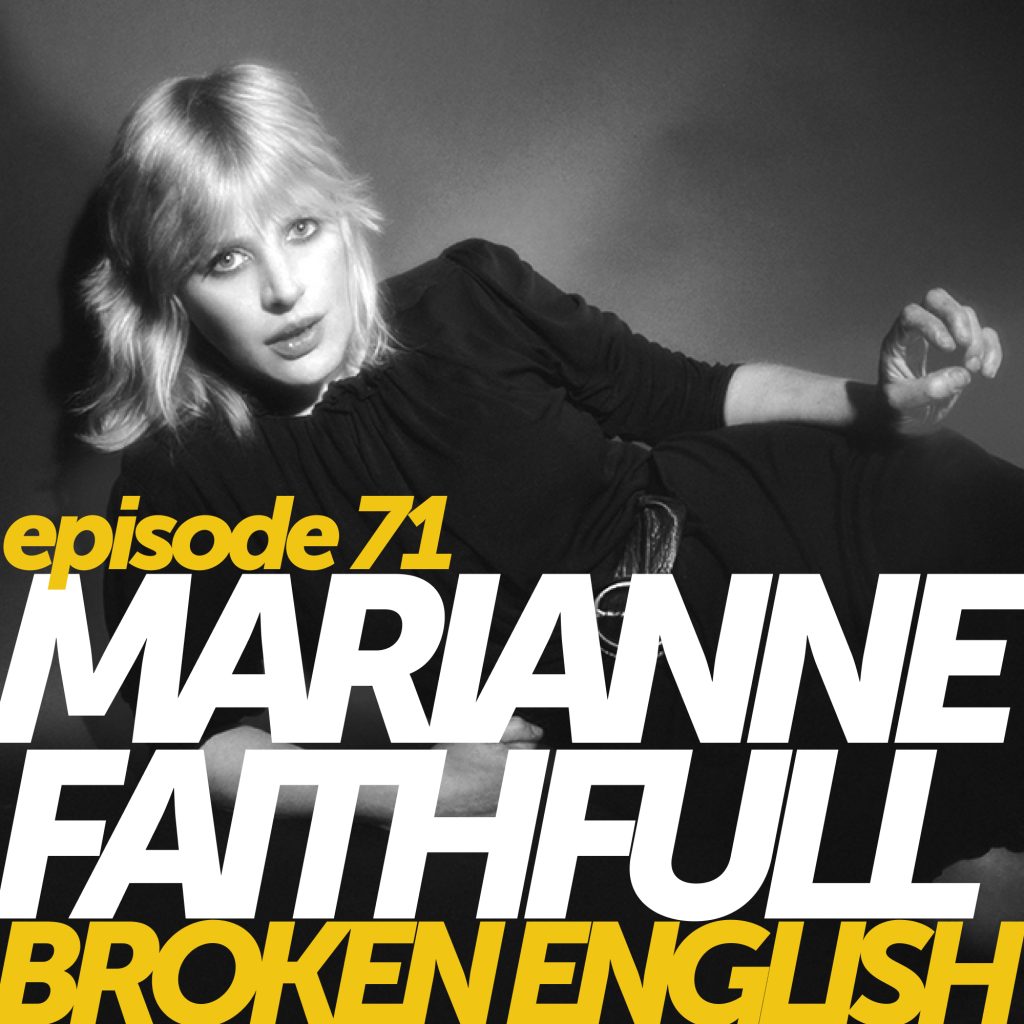
Episode 71: Marianne Faithfull’s “Broken English”
“That’s the thing about pretty faces… We don’t expect them to belong to the fighters— the junkies and monks and cockroaches who’ll survive every atomic bomb and suicide attempt and outlive us all.” - Lindsay Zoladz Broken English is searing, singular snapshot of surviving to spite the devils (who’ve gotten far too much sympathy in the story so far). You’ll love it forever with its good and bad weather. We may have lost Marianne Faithfull this year, but not before she outran the darkness. As we close out a dark year and look ahead for light, there’s a lesson to...

Episode 70: Sade’s “Love Deluxe”
Any denier that all art is political need look no further than the smoothed-out soul slipstream of Sade, a group defined by its economics. Rare output, minimal arrangements, reserved volume, and, of course, the premium implied by “Love Deluxe”—a title derived from the idea that true love is among a precious few luxuries that can’t be bought. Our world’s clearly longing for more longing, and we discovered a truly transcendent delicacy as we unboxed Sade’s brand of desire.
Episode 69: Charles Mingus’s “The Black Saint and the Sinner Lady”
When you think of true "artists" in music, who comes to mind? Charles Mingus embodied its romantic ideal, for better and for worse. His magnum opus "Black Saint" is more than even jazz's cosmic form can hold—it's the full-bodied essence of a master composer, peerlessly inventive bassist, and clairvoyant critic of the real America. In it, you’ll find what his collaborator Gunther Schuller called "the widest ranging musics you can find composed by one single human being."
Episode 68: Gang of Four’s “Entertainment!”
“Entertainment!” is described by Gang of Four’s Jon King as “a record about young people smiling and dancing in the face of disaster.” Uh oh, sound familiar? This Leeds-born slab of Brechtian boogie reminds us that to navigate a world where everything is (small-p) political, dancing and dialectics belong together. Free your ass and your mind will follow.

Episode 67: Brooks & Dunn’s “Brand New Man”
This is the tale of two lonesome cowboys who got down, turned around, and went to town catching lightning in a bottle on their first try together. Whether or not their decade-defining country anthems lit a flame in your eye in the 90s like they did ours, Ronnie and Kix offer a lens through which outlaws, in-laws, crooks, and straights alike can look for ways to learn to love again.
Episode 66: Oumou Sangaré’s “Moussolou”
The name "Oumou" derives from an Arabic word meaning "mother of." It is associated with dignity, wisdom, and maternal strength. Southern Mali’s Oumou Sangare has come to embody her namesake for millions around the world, and it all began when she was just 19 years old, channeling the magical music of hunters through her powerful and purposeful voice and creating a moment that captivated an entire country. Hers is a story everyone should know.
Episode 65: Missy Elliott’s “Supa Dupa Fly”
In the words of one of her groundbreaking forebears, “You feel free? You want to try some wild s**t? Thank Missy.” Since the very first frame of “The Rain” entered our eyeballs, Missy has made the avant-garde accessible, pointing us to a future full of more funk and more fun simply by standing fully in the splendor of her space-age self. Come (supa dupa) fly with us back to the moment where Missy’s magic began.
Episode 64: The Cramps’s “…Off the Bone”
God is a woman and she plays the guitar loud … y’all come catch some Holy Ghost in your hips. Hear our hallelujah for the love story of the queen of rock ‘n roll and the mad daddy holy rollin’ on a river—upstream all the way—and boot scootin’ through a fun and freaky heaven and earth of their own design. The Cramps were Dionysian, devilish, dangerous, and damn good, and they remind us that life can be, too. If you can’t dig this, you can’t dig nothin’.
Episode 63: Black Moth Super Rainbow’s “Dandelion Gum”
Life’s a bit heavy to chew on these days, so we reached into the pocket of our mid-2000s jeans and found an old piece of Dandelion Gum to chew on instead. As soon as its neon syrup hits your tongue, you’ll wonder why you hadn't let this "future pop for now people, today" melt you, melt you, melt you yet.
Episode 62: Project Pat’s “Mista Don’t Play: Everythangs Workin”
This life we're livin' is oh so beautiful. Take it from Patrick Houston, who has spread the gospel of the real for three decades, followed by a discipleship that has shaped 21st century culture in his image. For those still alive in 2025 by the grace of God, let us give flowers to the man from the North North.

Episode 61: Grace Jones’s “Nightclubbing”
Not a woman. Not a man. A revolution. Music’s long history is littered with larger-than-life characters whose mythology shapes reality for the masses — and few loom larger than the mighty Grace Jones. “Nightclubbing” without context is a tremendous body of songs worth anyone’s time, but after a deep dive into Grace’s time at Compass Point, you’ll agree that it’s a vital work.

Episode 60: Paramore’s “This Is Why”
The menace and melancholy of modern life have sentenced scores of young people to the gilded prison of nostalgia — but much to our surprise, a band of recovering Southern pop-punks have an antidote. For anyone willing to “sit still long enough to listen to yourself,” their new music’s sharp rhythmic angles and sharper lyrical reflections frame a doorway through which to free our big feelings and forge ahead.

Episode 59: Ennio Morricone’s “The Good, The Bad and The Ugly”
You know that five-note coyote howl. You may even know the classic film it helps power. But what do you know about the man behind those iconic moments? For our final exploration from our 2024 calendar, reflect with us on the genius of a maestro who could make magic with a mere fistful of notes, who poured forth from his soul a foundation upon which much of 20th century popular culture was built.

Episode 58: TLC’s “CrazySexyCool”
Vision. Bravery. Originality. The 30th anniversary of the ATL-exported opus — by the highest-selling girl group of all time — offered us a chance to reflect on all the ways our hometown heroes ran so some of the 21st century’s most iconic artists could fly.

Episode 57: Kendrick Lamar’s “good kid, m.A.A.d city”
Before the Super Bowl, the super beef, the Pulitzer, or PGLang, one good kid and king-to-be sojourned from South Central to the height of the American promise and rained down lightning that united one nation under a groove. You’ll feel the energy of this episode from two planets away — hop in the van real quick and let’s roll out.

TuneDig Episode 56: Cocteau Twins’s “Heaven or Las Vegas”
Dream of ethereal waves of sound swirling around you—and words you can’t make out saying more than you could imagine—as you float back upstream with us toward the warmth of Cocteau Twins’ decade-defining masterpiece, which still ripples across a vast pool of influences 25 years on.

TuneDig Episode 55: Jeff Buckley’s “Grace”
Once upon a time, “your favorite artist’s favorite artist” wasn’t a Midwest princess, but a “mystery white boy” beloved by Bob Dylan and Adele alike. Jeff Buckley’s signature Grace is on the shortlist of transcendent albums every living being should experience, because, as one industry vet put it: “it’s all in there, isn’t it? It’s just all in there.”

TuneDig Episode 54: Botch’s “We Are the Romans”
"We Are the Romans" is a visceral, vital document guaranteed to make you feel something from its first notes — and there’s never been a better time to stop and smell the roses from a group just now getting its long-overdue flowers.

TuneDig Episode 53: Ravi Shankar’s “Three Ragas”
Ravi Shankar lived one of the twentieth century’s most extraordinary lives, bearing witness to—and making—history all around the world. To many (especially in the West), he personified an extraordinarily complex style of music and the cultures from which it was borne, and he worked hard to make it look easy.

TuneDig Episode 52: Alain Goraguer’s “La Planète Sauvage”
Gather ’round, sommeliers of the strange and crate-digging boogie children, for something “Strange! Frightening! Fascinating!” awaits. The soundtrack to Cannes 1973’s Jury Prize-winning film is a dazzling, surreal, avant-garde hymn to cosmic knowledge and compassion and a secret handshake among real heads. If you’re after a trip to a new dimension, here’s your one small step for man.

TuneDig Episode 51: Marvin Gaye’s “I Want You”
Marvin Gaye’s well of soul power ran mighty deep, and deep into his career, he pulled up a bucket of ice-cold, silky smooth champagne called “I Want You.” Come for the lush instrumentation, vocal harmonies, and Leon Ware clinic; stay for the stories. For our return from hiatus, we observe a titan in his element, reflect on the pain that built him into one, and consider how to reconcile our feelings when complicated messengers deliver beauty to our door.
SEASON 6

TuneDig Episode 50: Funkadelic’s “Maggot Brain”
Before uniting one nation under a groove, the lysergic lords of chaos in Funkadelic harnessed wild lightning into an amulet called Maggot Brain, bestowing the bearer with raw, dark power stronger than any force known to man. Between reaching our 50th episode and coping with the “maggots in the mind” of today’s universe, it felt like the right time to free our minds. We hope y’all’s asses will follow.

TuneDig Episode 49: Alice Coltrane’s “Journey in Satchidananda”
The story of Alice Coltrane — an accomplished bebop pianist from Detroit who transcended into something far greater before walking away from public life altogether — is a glimpse into what it means to be truly free. Alice’s masterpiece "Journey in Satchidananda" is a cosmic dance that sparked creation from destruction. And in a time when we’re all desperately searching for a spark of meaning and hope, Journey abides abundantly.

TuneDig Episode 48: Heart’s “Little Queen”
Take a moment to appreciate Ann and Nancy Wilson, who kicked down the doors of rock ‘n’ roll’s boys’ club with their peerless guitar work, soaring soul vocals, and tight songcraft. 1977’s Little Queen — an oft-overlooked gem in the classic rock canon — offers a snapshot of those elements at their most urgent and pure, powered by the Wilsons’ simple motivation (as described by their producer): “It was a war.”

TuneDig Episode 47: Tangerine Dream’s “Phaedra”
When you think of “electronic music,” what comes to mind may not be a genre you deeply love — hip-hop, house, new wave, or even dub reggae — but all of it owes some debt, scientifically or otherwise, to Tangerine Dream. Dig in with us as we study a prime example of the band’s brand of effortful innovation, where they patiently and persistently labored at the cutting edge of electronic technology to open a portal to new worlds in our minds.

TuneDig Episode 46: Olivia Rodrigo’s “SOUR”
Did you catch one of 2021’s biggest albums, or like us, did you almost overlook it? If you have any expectations of pop music, "SOUR" will likely subvert them. Teenage dream this is not; it’s an exquisitely universal portrait of a weird time to be alive.

TuneDig Episode 45: Fela Kuti’s “Expensive Shit”
The story of Fela Kuti — one of the most famous people on an *entire continent* passionately struggling to liberate power to more people — is absolutely one worth deeply knowing, regardless of whether you find yourself drawn to Afrobeat or (cringe) “world music.” But once you know it, it’s almost impossible not to fall in love with Fela and Afrika 70 as their revolutionary grooves rewire your brain in magical and meaningful ways.

TuneDig Episode 44: Meshuggah’s “ObZen”
Meshuggah’s ObZen—an artifact of human creativity pushing the limits of what’s possible—will quite literally make you hear music differently. If you’re looking for a new musical adventure, and especially if you don’t think you like “heavy” or “weird” music, consider this your sign to push past your comfort zone.

TuneDig Episode 43: mewithoutYou’s “Catch For Us the Foxes”
A misunderstood wise man once said “Let him who seeks continue seeking until he finds.” In our most personal and vulnerable episode yet, we do some seeking through the lens of songs that fill us with the bravery and sincerity to love ourselves and others fully. Dig deep with us as we fish for words about our tiny place in the universe and dance with gratitude for our ability to do so.

TuneDig Episode 42: Erykah Badu’s “Mama’s Gun”
Y’all tryna raise your vibrations? Erykah Badu is here to help. Season 6 kicks off with a meditation on realness and what being on “your own wavelength” really means. (Spoiler: it ain’t a single frequency — it’s a whole spectrum.)
FRIDAY HEAVY
For lifelong headbangers and the musically curious alike, a new podcast from TuneDig is here to push your palette with aggressive, abrasive art. Each short, fast-paced episode offers (1) a new metal, punk, noise, or experimental release we recommend, (2) a related playlist we’ve curated, and (3) a heavy issue to consider and an organization doing something about it. Join us in the void.

Friday Heavy: End of Year Review 2022
It was a great year in heavy music. In this episode, we look back at all the new releases we featured and the curated playlists they spawned.
It was a NOT great year in many other ways. We leave you with a parting message of encouragement to connect your energy and angst to on-the-ground organizations doing the work in your community.


Friday Heavy: November 11, 2022
This week, we discuss:
- He Is Legend – Endless Hallway
- Curated playlist sussing out the depths of He Is Legend’s roots, weirdness, and attitude
- Protect Our Winters (POW)

Friday Heavy: October 28, 2022
This week, we discuss:
- Witch Fever – “Congregation”
- Curated playlist of eclectic, high energy that might get your inner goth stoked on (briefly) going out
- Housing Justice League

Friday Heavy: October 14, 2022
This week, we discuss:
- The Lord † Petra Haden – “Devotional”
- Friday Heavy playlist densely packed with thick, meditative vibrations across the spectrum of drone
- Multidisciplinary Association for Psychedelic Studies (MAPS)

Friday Heavy: September 30, 2022
This week, we discuss:
- Escuela Grind – “Memory Theater”
- Friday Heavy playlist dedicated to the absolutely fucking hostile energy that powerviolence can bring to radical inclusion
- Zealous

Friday Heavy: September 16, 2022
This week, we discuss:
- Holy Fawn – Dimensional Bleed
- Friday Heavy playlist showcasing the incalculably extensive and wildly diverse Shoegaze Cinematic Universe (aka post-rock)
- MTB Atlanta

Friday Heavy: September 2, 2022
This week, we discuss:
- The Callous Daoboys – “Celebrity Therapist”
- Friday Heavy playlist confronting the under-appreciation of Atlanta’s heavy and weird music scene
- Mississippi Rapid Response Coalition – Water Fund

Friday Heavy: August 19, 2022
This week, we discuss:
- Osees – “A Foul Form”
- Friday Heavy playlist fuzzed out on oddball punk that smells like cigarettes just thinking about it
- Women on the Rise GA

Friday Heavy: August 5, 2022
This week, we discuss:
- Chat Pile – “God’s Country”
- Friday Heavy playlist with, uh, a bunch of very pissed off songs directed at christofascist terrorism
- The Grocery Spot

Friday Heavy: July 22, 2022
This week, we discuss:
- WAKE – “Thought Form Descent”
- Friday Heavy playlist that anchors its sound in modern production of sludge, blackened death, and post-metal
- The Planetary Society

Friday Heavy: July 8, 2022
This week, we discuss:
1. Vomit Forth – “Seething Malevolence”
2. Friday Heavy playlist that’s unsettling in the best way, leaving you feeling a little off your axis
3. Trees Atlanta

Friday Heavy: June 24, 2022
This week, we discuss:
1. CANDY – “Heaven is Here”
2. Friday Heavy playlist packed with off-the-beaten-path punk and hardcore from bands that deserve space on your battle jacket
3. Round Rock Black Parents Association

Friday Heavy: June 10, 2022
This week, we discuss:
1. Sasquatch – “Fever Fantasy”
2. Friday Heavy playlist of heavy grooves for late desert nights and hazy generator parties
3. Feed Buffalo

Friday Heavy: May 27, 2022
This week, we discuss:
1. Decapitated – “Cancer Culture”
2. Friday Heavy playlist stacked with bands putting their unique and modern spin on (occasionally tech) death metal
3. PropelATL

Friday Heavy: May 13, 2022
This week, we discuss:
1. Primitive Man – “Insurmountable”
2. Friday Heavy playlist full of SLOW, enveloping, massive and crunchy tone and big feedback
3. National Network of Abortion Funds

Friday Heavy: April 29, 2022
This week, we discuss:
1. Heriot – “Profound Morality”
2. Friday Heavy playlist packed with mid-tempo, huge guitar tone, big atmosphere and lots of industrial grit and grind
3. Invisible People

Friday Heavy: April 15, 2022
This week, we discuss:
1. Greyhaven – “The Bright And Beautiful World”
2. Friday Heavy playlist for fans of more choatic + melodic combinations
3. Campaign for Working Families

Friday Heavy: April 1, 2022
This week, we discuss:
1. Meshuggah – “Immutable”
2. Friday Heavy playlist full of high quality Meshuggah aping that AIN’T “djent”
3. The Bail Project

Friday Heavy: March 18, 2022
This week, we discuss:
1. Soul Glo – “Diaspora Problems”
2. Friday Heavy playlist with 20+ songs in under 40 minutes, (almost) all under 2 minutes each
3. Equality Texas

Friday Heavy: March 4, 2022
This week, we discuss:
1. Vein.fm – “This World Is Going To Ruin You”
2. Friday Heavy playlist exploring more of Will Putney’s work
3. Books to Prisoners
SEASON 5

TuneDig Episode 41: Miles Davis’s “Bitches Brew”
Let’s be clear: "Bitches Brew" is a challenging record, even to some of the best musicians in the world — but all of them say it’s worth the investment. It’s the kind of trip that, even if we *could* draw a map, it wouldn’t take you there. Let go of the need for meaning and enjoy the ride with us. We can promise you’ll be pleasantly surprised where you end up.

TuneDig Episode 40: Fiona Apple’s “Tidal”
On the heels of one of 2020's most acclaimed albums — Fiona Apple’s Fetch the Bolt Cutters — we revisited Apple’s debut Tidal and wound up working to extract ourselves from the mostly male gazes that made its reception … much different. We arrive at a question much like writer Jenn Pelly had: “People would constantly prod Fiona on how an 18-year-old could write songs as mature as these ... Why did they not ask instead how she became a genius?”

TuneDig Episode 39: Death Grips’s “The Money Store”
The modern world is accelerating beyond our control, shaping our reality in ways we can’t yet perceive or understand. Enter Death Grips, an art project capturing the chaotic energy and illustrating the absurdity of our hubris in trying to harmonize the surreal and extremely real — never more perfectly than on 2012’s prescient "The Money Store".

TuneDig Episode 38: Augustus Pablo’s “King Tubbys Meets Rockers Uptown”
Reggae music is easy to take for granted, but its impact is underappreciated and massive — in the case of dub in particular, everyone from Radiohead to Johnny Rotten to Run-DMC owes it a debt. Augustus Pablo and King Tubby together created what’s regarded as “one of the finest examples of dub ever recorded.” Join us as we dive into the culture, history, and unique engineering experiments that made it possible.

TuneDig Episode 37: Rihanna’s “ANTI”
By every measure — sales, awards, chart-toppers, global name recognition — Rihanna is objectively as big as the Beatles ever were. In fact, ANTI is so big it’s still on the charts, a record five full years later. Take a closer look with us at “the record you make when you don’t need to sell records”, and get a taste of the true freedom that comes from focusing on your inner voice when faced with insurmountable expectations.

TuneDig Episode 36: Son House’s “Father of Folk Blues”
All American music traces back to the blues, and deep at the root sits Son House. That the recordings on "Father of Folk Blues" even exist is something of a gray area that cuts to the heart of the great American myth, but wherever you land after hearing these stories, you’ll find that what matters most is what the great Muddy Waters once said of House: “That man was the king.”

TuneDig Episode 35: Melvins’s “Stoner Witch”
The futility of describing the Melvins has stretched critics in the direction of absurd words like “Dadaist” for nearly 40 years now. They’ve belligerently flogged any attempt to pinpoint their essence simply by being themselves, but "Stoner Witch" remains a reliable mall directory for the Melvins’ vast and wild discography. Grab yourself some pretzel bites.

TuneDig Episode 34: Dolly Parton’s “Jolene”
We should talk about Dolly the way we talk about Prince. Her extraordinary kindness and unique kitsch both make her universally loved, but what gets left out of the conversation is the very thing that made her famous: the music. Join in as we focus attention on the sonics and songwriting of the low-key masterpiece "Jolene".

TuneDig Episode 33: The Allman Brothers Band’s “The Allman Brothers Band”
Six enlightened rogues out of Macon, Georgia birthed an entire genre simply by being their soul-powered selves. We have not come to testify, but we’re still hung up on the dream The Allman Brothers Band helped us see. By the end of this episode, you will be, too.
TUNEDIG RADIO


SEASON 4


SEASON 3


SEASON 2




SEASON 1


BONUS TRACK EPISODES

BONUS TRACK: How We Got Here
We got a bunch of interesting listener feedback in our off-season, and it encouraged us to shed some light on why we do things the way we do ‘em. Also, we reflect on our first writeup, which was ... interesting.
WHO WE ARE
We're Cliff (right) and Kyle (left). We’re two dudes born and raised in ATL with day jobs in tech and sustainability, respectively.
We met in middle school, and in one way or another, music’s been the thing that’s kept us close for the two decades since — whether it’s sharing and talking about new music (like this podcast, except in our texts or over beers), going to shows, or working with our favorite record stores to help them survive and thrive.
We started TuneDig as a little art project that connects us more deeply ourselves and to the world through the infinite gift of music. We hope you’ll join us for the conversations, let us know what you think, and share discoveries of your own.
More About TuneDig
TuneDig began as a little something called MusicGrid.me, which we created after realizing there was no place online to directly exchange music recommendations with your friends. Our aim was simple: to make rating albums simple, useful, and social. We got some love from places like Mashable, Wired, Evolver.fm, and Hypebot. We managed to foster conversation between music lovers, get thousands of reviews, and meet great people.
Along the way, we realized that record stores were an essential part of the music lovers’ community. After many a conversation about how we could helpfully connect them to the people who loved them, we began helping them leverage technology to create new revenue streams and embrace streaming services without giving up what’s unique to them: expertise and curation. (Long live the counter clerk who knows exactly which record will be the right introduction to jazz fusion!)
TuneDig is our vision to connect music lovers with the music they love, because no matter how much has changed in the way we discover and enjoy music, recommendations from people you trust and respect will always be the best way to find new music you’ll dig. With this podcast, we’re channeling the spirit of trusted curation pioneered by record stores, and bringing you something to take you deeper into music you can love.