
TuneDig is an in-depth and informed conversation between two lifelong friends about the power of music — one album at a time.
In each episode, we go down the rabbit hole to spend a while in the strange world we discover. We take an honest look at creativity in all its complexity—from writing and production to history and cultural impact.
We promise you’ll learn something new every time, no matter how much you already love the album we explore.
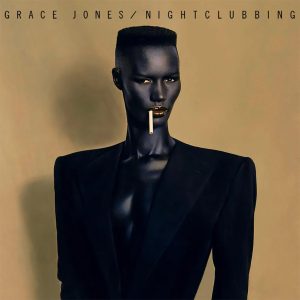
Episode 61
Nightclubbing
Grace Jones
Not a woman. Not a man. A revolution. Music’s long history is littered with larger-than-life characters whose mythology shapes reality for the masses — and few loom larger than the mighty Grace Jones. “Nightclubbing” without context is a tremendous body of songs worth anyone’s time, but after a deep dive into Grace’s time at Compass Point, you’ll agree that it’s a vital work.
Transcript
Kyle: Today we’re talking about Nightclubbing by Grace Jones.
Cliff: Every now and then in our episodes, we managed to hit an album that, uh, immediately confronts me with absolute panic. Uh, Oh, so we agreed ahead of time with full intention and knowledge and with all of our faculties to cover a record that is, culturally much more important than I am, knowledgeable or important about aspects of society that are important that I, while supporting them fully, am not personally a part of at all.
Kyle: Or we’ll, or we’ll ever touch very directly.
Cliff: right. you know, if you put 10, 000 people in a stadium who knew me personally and you said, Alright everyone, I want you to write down 100 people that come to mind when you think of Cliff and his musical taste. Not a single one of those pieces of paper are going to list Grace Jones. As much as I might want one to, at least, maybe one out of all of those many options.
and I just like, Never in my life have I been so aware of that going into a record and like started to get a little sweaty listening to it like, but I got to figure this one out and it’s got to click in, uh, or it’s not going to work out well for me and I’m going to feel real nervous and overcompensate about it.
but. Probably the story of us doing this podcast anyway. It’s like, oh shit, being disciplined about music actually teaches you how to listen to things that you’re otherwise terrified to listen to or understand. And like, I’m delighted to report that like, I feel very comfortable talking about the one million things that are cool about this record.
And that I, like, have relieved myself of the weight of responsibility. To try to say everything that needs to be said. And it’s like, no matter how many of these episodes that we do, I still have to come back to that on a ton of these records and just like, okay, deep breath. We’re going to have fun about this and it’s going to be fine. And I’ve, I’ve enjoyed getting to that point with this one.
Kyle: I love that so much. one, I think the headline is. is one of the coolest, like capital C coolest records and artists and human beings we’ve covered like cool as the headline. this is a way to like touch the, you know, the little lightning bolt things that they had in the nineties.
Like you touch it with your
Cliff: Like it’s sidetrack. Yeah, of course I do.
Kyle: This is like that, but the lightning in it is cool.
Cliff: Totally.
Kyle: but I also like you’ve touched on a little underappreciated part of the behind the scenes, which is also like a key part of being friends with me for a long time, where we see a record on paper and I think we think of like two or three contours around it.
When we’re picking what’s going to be the lineup of episodes for the year and we’re like, yep, you know, it’s not like these other things it’s from these decades. Like vaguely know a few things about Grace Jones or, you know, X, Y, Z artist and yeah, that, that feels good. That feels right. So you pick it and you set it away and then you go just like a public speaking, you go to be like.
Oh, what am I going to say about this? Oh God. Oh, actually. And you realize how big the gap is between yep. I want to talk about it and oh my God, I have to talk about it. And then the pain starts and then when you finish the episode and the healing starts and I’m not ashamed to admit that, uh, uh, I am on a bash at that.
I’m going to make this album and things that I’ve learned part of my personality moving forward, but like, I just know what I’m calling it now.
Cliff: Definitely one of the, at least for me, and we’ll talk through this in detail, I’m sure. But for me, probably now, uh, a standout example of the idea of trusting our ability to like music before we like it enough to, like, get something out of it and then wait around for it to click into place because you keep trying it in different contexts and, you know, there have been a handful, I’m sure, where it’s like, okay, well, I can walk away from this with.
Yeah. Appreciation, for sure. Uh, you know, I’ve maybe deepened my level of insight, understanding, whatever, you know. A few things catch me off guard in a positive way and it gets filed under, yeah, I know about that album. This one is like, against my own conscious will, I now like almost all of these songs, like, directly.
They’re Earworms across the board. I ended up liking songs. I did not expect I ended up like hearing and finding things in the album on the like fifth and sixth listen that I never would have expected like and we’ve talked about this probably as well with the king w record, but probably one of the most affected by medium or delivery albums I’ve listened to in a while.
If you listen to this record and you can’t hear the bass, you cannot hear the record. It will not make sense.
Kyle: for sure. This is not a like hold up to your hold your phone speaker up to your ear type record.
Cliff: Yep. And it reminded me of the years of panic that we all had of like, it’s really cool that we can download music now, but everyone’s playing it through their fucking ThinkPad speakers. And this is the end of everything, you know,
Kyle: So I’m cheating it a little but did you Cold cold listen didn’t get you right away. It sounds like you had to warm up to this record
Cliff: it’s a little bit of that and that. That, that honest feeling of I’m supposed to be understanding this pretty quickly and I feel like I’m not, and part of it, I, I, more, more delight I’ll get to pull out during this episode, but like, I went in as cold as I could while knowing enough, um, it’s, it’s hard not to know Grace Jones in general or have a, a visual pretty
Kyle: or the yeah the image of Grace Jones.
Cliff: Yeah yeah. But I decided as much as I could to try to go in devoid of extra research beyond that and just get into it and maybe underclocked it a little bit because I it didn’t even occur to me how many of these songs were covers and one thing that we’ll talk about for sure is like once I Understood what was being covered here and who she was covering including a ton of surprises uh it It really changed the way this album could hit me.
I mean, it clicked into place in a way that I’m not sure if it would have otherwise because now I had something to contrast the ideas to, uh, and whether that’s, you know, nightclubbing itself or, you know, the, the difference in Use Me and what happens when you take a Bill Withers song and do this with it.
Like, I didn’t know that was a Bill Withers song that I did. Even if I didn’t know that previously, it definitely didn’t connect the first however many times.
Kyle: It all sounds like Grace Jones, for sure. Yeah, it sounds so cohesive. that’s so interesting because I like it gripped me from the first listen, and I was surprised that I had never really listened to it before because you see it pop up on lists and like, obviously, the cover art is so iconic. It’s maybe like 80s bias or something for me or something like to Avant.
You know, the Warhol says, I don’t know what it, I don’t know what it was. So it was something sort of like unconscious bias, but I’d never really listened to it. And from go walking in the rain on a good set of speakers, just immediately like, Oh, okay. And just kept it on good speakers kind of the whole time.
And it makes sure house feel like an art party immediately. You know, just like the space, the physical space you’re in. Becomes cooler and you’re like I got to get people in here I got to get like chips and dips and drinks and some conversation going I gotta hang some stuff on the walls and Occupy this with I got to get outside of my body bill like cool thoughts and energies that are inside of my body Now, like I gotta make shit happen.
I’m alive in the world.
like, I’m 100 percent positive this is the most I have repeat alt a record.
It in the lead up just full days of nothing but this record and maybe it’s january and you know It’s kind of a dearth of new releases time Even though interestingly in 2025 a lot of people seem to be releasing january records.
I don’t I don’t know what the vibe is but maybe the ground was prepped for it in some way but like I have listened to this record for days straight and normally it’s you know 10, 15, 20 full attentive listens. I’ve listened to this record easily 50 times through
in the past month. And I probably won’t do like, I can say with confidence, I probably won’t listen to any other record that we cover this year that much in the lead up, maybe not after either.
I don’t know.
Cliff: Yep, this is gonna be another one of those where the, uh, Spotify rapt at the end of the year is like, Oh, I get you. I get you, baby. I know what you like. We’re gonna feed you Grace Jones all day long. Okay.
Kyle: I’m going to take your Grace Jones money and feed the military industrial complex with that
Cliff: think one interesting place to start, of many, which I’m going to keep verbally relieving myself of the duty to try to cover every possible important facet of this person and artist. Again, especially someone who means so much to very important kind of subcultures, uh, and especially people in this country who, once again, in fucking 2025, are up against some of the most exactly same shit that they were up against at the same time that this record was coming out, and I’m sure we’ll talk about some of that, but anyway, point being, I think one thing that Surprised me in a really positive way from a sort of factual or contextual standpoint is Grace Jones herself and how the kind of collections of first she had disco records with a particular producer and then we’ll talk about this in more detail but like nightclubbing was one of another series of three records that took a sharp You genre turn,
Kyle: Mm hmm
Cliff: and through through her production partners, musical partners, and specifically the literal location of Jamaica, there was an infusion of something significantly different in this record, which helps you, like, draw a lot of stuff back out of it when you see and understand that it’s there.
So point being, like, I found myself surprised, because if I, if you otherwise described to me someone who was effectively, not effectively, literally, a fashion model, who then became a musical artist, that does not Give you the best taste in your mouth most of the time, right? That’s not usually something that turns out super artistic or interesting.
and, uh, you know, I should have known that this was coming in particular, but like, don’t, you dare try to put Grace Jones in a box, it doesn’t really matter what period of her life you’re trying to do that in. Uh, that will be a failed effort no matter what,
so.
Kyle: She will kill you
Cliff: Yes, I’m terrified of her in the most respectful way humanly possible.
but to that end, like, I think the So I think it’s worth mentioning, As a brief lead up to connect the dots between what you were just saying there, uh, where Grace Jones comes from and then the eventual return back into this Compass Point era of albums and the genre that we got out of here. I think it’s helpful just to mention really briefly then in the lead up, uh, how her modeling career had progressed.
Because. Again, this is, this feels like a weird kind of like, needle to thread, like, we give a shit about music on this podcast, it doesn’t imply inherently that we don’t give a shit about other forms of art, but it does imply that we’re like, I don’t know, less thoroughly equipped to discuss it, I guess?
Kyle: Yeah.
Cliff: so,
Kyle: For anyone who’s ever seen me in public, they’d understand why I never would be the person to be on a fashion podcast.
Cliff: Yeah, that, you and I have that in common. No one’s ever accused us of being especially well dressed on purpose.
Kyle: Yeah. Toon digs never getting a GQ spread.
Cliff: No, we do the best we can with the simple dress that we have and we look good while we do it. Yes, sir. Uh, that said, okay, so I think seeing the progress then of the modeling career and then kind of how that resulted in Musical attempts is helpful because one thing that needs to be especially clear across the board that has been true Apparently the whole time She’s a fucking badass and everything that she chooses to do.
She does extraordinarily well and in Nontraditional and highly subversive ways
Kyle: Yeah. She’s sort of groundbreaking just by existing.
Cliff: Yep,
Kyle: Yeah.
Cliff: so She was a signed model in New York by the time she was 18, well on her way. and then at 22 was in Paris, you know, in 1970 at that time. And effectively just like spun up a highly successful modeling career, um, both in New York and then Paris there in the early seventies. Which then would lead to, I think this is kind of cool to see, like, to me the, the trajectory of how the music shaped is itself a really fascinating aspect of this album because of where it, where it exists chronologically in her musical journey.
Grace Jones released a series of singles throughout the mid seventies. So 75 and 76, um, and basically none of them really caught traction. And then she grabbed a record deal from Island records in 1977. Uh, and then would go on to start finding wider recognition through her debut album on Island portfolio.
And those three, the first three records there, so Portfolio, Fame, and Muse, uh, were, so Functionally, those are the disco records. That is how she became known, as quote, Queen of the gay discos. Like this, this is very straightforward and successful. There were three really specific albums. They were with legendary disco producer, Tom Moulton.
And I think it’s just worth pointing out because this helped me personally to click into nightclubbing as an album. Those first three records. So a lot of people love them. This is not a criticism of those records. I haven’t done the work to know one way or the other, but they were not like especially well received, critically speaking.
Kyle: Right.
Cliff: And I think there’s two aspects of that we’ll probably touch on. One of which is, well, okay, she was a fashion model who was, you know, trying to start up a music career. Disco worked. She worked with a legendary producer.
Kyle: And she was a fixture at Studio 54, so it was sort of like, I want to, you know, be able to play the records that are, that are at the place I’m at a lot. Like, I want to feed back into the culture that I’m a part of.
Cliff: Yep. And so, to kind of contextualize this shift in genre after the first three albums, like, again, on one hand, you know, becoming Queen of the Gay Discos and Studio 54 royalty, basically, and building all of that up in the 70s, only was she clearly well suited for it and people enjoyed it, but there are her.
Kind of two almost complementary ways of seeing the shifts away from disco because one of them in Honestly, this will probably be the tone we take with a lot of this music Well, it fucking rips and it’s good. So we’ll talk about that and how cool it is that there’s a great record That’s so heavily based in this wild combination of reggae and funk and new wave and whatever else like that’s cool but there is also a Historically uncanny moment in history that happened around this time, uh, where, white groups of entitled white people are wont to do throughout our history, create a backlash against a thing, uh, that non white people enjoy, uh, which, is, concentrated and labeled in the late 70s as disco, and that there was this whole, Quote unquote backlash against disco, and I think that.
Even as an adult who gives a shit about music history and, wants to actually understand, as much as you and I talk about it, how music and history intertwine, like, I think
I knew that there was like a response to Saturday night fever that had something to do with like people who like Rolling Stone and rock and roll a little too much at this time.
And like, you know, as somebody who really likes Led Zeppelin, I’m also hyper aware of the type of people who liked Led Zeppelin in the late seventies and all that stuff. Right. But I. I had definitely made a cartoon out of this backlash in my head and researching this album reminded slash taught me once again the bar is much lower, things were much stupider and worse and just through trying to understand what caused the cultural shift that then caused, you know, genres of music to shift from disco to funk.
I learn about things like Disco Demolition Night, and like, other historical moments of Intense, way overdone backlash to certain groups of people enjoying being around each other and liking certain types of music. And how like, you know, things like Disco Demolition Night, this is just one example of terrible, well like a million terrible ones, right?
But Disco Demolition Night was a promotion at a Major League Baseball game in 1979. Uh, where the, the promotion was that they were gonna literally blow up. A crate of disco records on the field, like, I, I’m trying to give myself a little bit of grace for cartoonizing it because that sounds stupid, like, that sounds ridiculous, but that’s what happened
Kyle: mean, it’s a shade away from like, bring a book to the Braves game and we’ll burn it. We’ll just have a, we’ll have a big ol book burning during the seventh inning stretch.
Cliff: well, and not only was that stupid symbolically in this one really particular moment, but also, you know, it immediately devolved into a riot just the most 1970 thing, 1979 thing to, to possibly happen,
Kyle: Is it just that decade?
Cliff: And, well, so,
we are gonna leave the focus of this episode on album night clubbing, but like, we can never drive down these roads, so to speak, and not at least point out the window a few times and be like, I need you to look at this. Okay? So, like, so, there’s plenty to look up about Disco Demolition Night in general, but the quotes from, I guess this is ironically, a Rolling Stone critic named Dave Marsh, the quotes from him are so, once again, historically uncanny. I think it’ll give you the sensation that I got when I started connecting these dots and gives you at least a little bit of extra weight that you put into every time you listen to this record.
so Dave Marsh, expressed, uh, in, in a year end 1979 feature where he spoke about Disco Demolition Night. He said, you know, White males, 18 to 34, are the most likely to see disco as the product of homosexuals, blacks, and latins and therefore they’re the most likely to respond to appeals to wipe out such threats to their security it goes almost without saying that such appeals are racist and sexist but broadcasting has never been an especially civil libertarian medium he also said quote your most paranoid fantasy about where the ethnic cleansing of the rock radio could ultimately lead is found disco demolition night
Kyle: Well, I’m so glad that doesn’t remind me about anything about the present day. Good to know we moved past all that.
Cliff: In the sweetest, least alarming way possible to everyone listening, It makes me wanna die. Like, it makes me wanna die. Oh my god, yeah. but, while Certainly you and I could spin off this whole conversation and mostly talk about this particular thing, It’s important here because it really helped me to listen again to something that I Because of Grace Jones being a fashion model, there was an amount of trivialness to the music that she was making in my head.
And I’m not saying it’s all self serious. It’s not like revolution speak or whatever. But getting, getting a real or a better idea and contextual understanding of like, not only why Musical genre shifted away from disco, but like what it must have felt like to like disco and like Grace Jones and then just like be a part of a backlash for fucking liking something and then having to watch those same artists, you know, take a shift into a new genre because basically your entire social scene and musical scene has become untenable to the larger white population.
yeah, we.
Kyle: to to a privileged class, like oppression. You know, it’s interesting. You use the word trivialize and thinking about. Modeling it’s easier to trivialize or other that because it’s just about you know, image and and whatever It’s maybe not easy for everyone but it’s always been easy for me like that’s my own
bias I copy that but grace jones represents something dangerous, you know, johnny cornfield can’t relate doesn’t know anyone who is like amused for Eve st laurent and helmet newton who Ooh.
Like I learned just recently Debbie Harry and Andy Warhol through Grace Jones’s baby shower, you know So it’s like running in this crazy social circle of people Producing this sort of avant garde Culture pushing all together and like of course they they all hang out, you know, so if you’re Steve from Nebraska, that’s a party that scares the shit out of you To walk through the threshold of and then you couple that with you walk in and the coolest person at that party is described as And I think this you know getting back to nightclubbing.
I think This was like, boom, if you’re going to describe it in a sentence, it’s this distinct look and fearless personality. That’s Grace Jones and that’s nightclubbing. And that same descriptor went further saying her image has been described as neo cubist, i. e. sharp angular lines and geometric shapes synonymous with her style.
So like, other than maybe blah or amoeba or whatever, you’re not describing a shape. Of a person like a person can’t be reduced minimum minimalistically to a shape being associated with that in your mind shapes and angles and stuff. That’s an avant garde way to think and talk about the perception. Your rods and cones fire to your brain about a person, right?
That’s not like regular people talk. So I can see where all that adds up to being dangerous and like pushing you over a line of your comfort in interacting with human beings regardless of race or gender or whatever that’s just that’s like an entirely different way of hanging out almost it’s very cool to me but probably once upon a time when i was just some shithead listening to butt rock i don’t remember much about what that young person was like but i’m gonna say there was there probably would have been some of those same fears to walk into that party
Cliff: Yeah, and to your point, I’m sure we’ll mention several times here, the strength of her visuals not only aren’t trivial in the way that we talked about them, but are specifically impactful in that, the way that she used video, and the way that she used live performance, were stark and
Kyle: Yeah, yeah.
Cliff: I, I, to this day, we’re, you know, nearly 45 years on from this, and I watched a live performance from around this time. And I, we’ve been to a few shows in our lifetime. I don’t think I’ve seen anything like that. Like, just the
I’ve seen some performances, I’ve seen people go real theatrical, I’ve seen cool light shows, I don’t think I’ve seen a coherent visual aesthetic that, like, captures your attention in the way that she inherently knew how to do. It wouldn’t have worked if she only looked the way that she looked and were simply generically iconic and lucky to look that cool. She like knew what to do with it.
And, you know, we we’ve talked about that so many times, like so many of the standout records of history are just people who were one tremendously blessed to tremendously disciplined in three tremendously gifted in knowing how to apply both of those things all at once.
And just, uh, yeah, you, you feel in the presence of greatness with. The especially the visuals and the confidence in approach, that. starts to come through in the music when you listen for it too.
Kyle: I agree with that.
Cliff: Great. Podcast over. I’d love then to talk specifically about the kind of three album phase that I’ve been setting up a little bit. So starting with Warm Leatherette in 1980, and then obviously Nightclubbing, which we’re talking about here, and then also Living My Life that followed this in 1982, uh, we, like, this is now the era post disco for Grace Jones,
Kyle: By the way, for the, for the listeners at home, that’s six records in six years,
including a huge, two trilogies with a huge pivot in them. So no big deal on that front either. Just like a total stylistic re invention, at least one uniformly regarded as classic album. Oh, by the way, all the other shit she was doing that wasn’t music
Cliff: and
Kyle: of we’re talking about on that merit alone. You know what I
Cliff: for sure, And yes, many of her songs on records were covers, but I, mentally speaking, I very quickly completed the loop of, Oh, she did a lot of covers, that’s probably how she was able to do a bunch of music really quickly, because it probably doesn’t take that much work to do it, and that thought lasted a half of a second, before I really, like, that was the, to me, the rubric.
Of this record was seeing not only Not just oh some of these songs are covers and I didn’t appreciate or maybe even recognize that they were covers but doing covers for a chunk of the record was a tactic that she was using which Continued into this new phase, but I think made it like this is really highlighting to me when I think about this phase of records and what it meant to start working with like compass point studios in Nassau to work with Sly and Robbie, not only.
Oh, okay. These records were with these people and they sound different, but these records are with these people. They sound different and they’re covering really specific things that aren’t in this genre. And like once I could dial into that and start listening to what they were doing especially Sly and Robbie in the music to channel and bring forward or iterate on the cover itself that like It shifted.
I can’t go back to the way that I heard this record before that clicked into place.
Kyle: think a good counterpoint for understanding sort of the the profound approach with covers here is country music. Like you think about so much 60s and 70s country music set aside blues But like I think about country specifically where they’re all picking up stuff that other people have written and just trying to do a good version of it But like very rarely in country and I feel confident in saying this is a very well versed deep Longtime fan of country music.
It’s the music of my people Very rarely, if ever, does it approach a signature sound. Like even Waylon Jennings is my favorite country artist, uh, Waylon and Willie, they can bring it into their style, but it still doesn’t amount to a singular sound that you’re like, yep, that’s book, you know, other than maybe their voice or something they’re, they’re putting on costumes and chameleoning a little, this is a sound that you could associate with Grace Jones and with this band.
Forever, you know, and, and even if it’s not about the associating part, the other, I guess, qualifier filter is, is it groundbreaking? And again, I would use the country thing of, no, it’s iterative. Like it’s cool. It’s a good, like I’ll pick up a lick or whatever from it, or I’ll do it a little heavier in this part, or, you know, take out the pedal seal on this one or whatever.
I’ll, I’ll pick and choose things and we’ll, we’ll iterate and we’ll get to incrementally new versions and that’ll be cool. Very rarely does taking on a bunch of covers, especially from disparate sources, like you’re saying, amount to such a singular document. So, a bit like sampling, it’s a feat to make it its own thing that I think should be recognized equally on the level of Dolly Parton being able to write Jolene and I Will Always Love You on the same day.
it’s like Herculean to do a thing like this. It is a feat of creative craft, and I think it should be respected as such.
Cliff: let’s talk specifically about two things. Let’s talk about Sly and Robbie and their contributions and then let’s start touching on those, those covers themselves. To really put a fine point on what you’re starting to bring up, I think one little preview of what we’re, we’ll talk about here. not only is then the music and the interpolation of the singles themselves or of the covers themselves interesting and good with a capital G, but the selection of song is so good that I bet if you asked a hundred people who knew Grace Jones and you asked them about that line feeling like a woman looking like a man, most of those people would think that’s a Grace Jones lyric,
Kyle: Yeah, like,
Cliff: it.
Kyle: you wrote that.
Cliff: it fits,
uh, and I, even that is just one really quick, easy glanceable example of like, nah, there was some artistry that was going on here and it clicked in a really cool way on this record.
Kyle: Yeah. And in that sense, maybe not, you know, specifically with the walking in the rain example, but a little bit more broadly, you gotta give get up, give it up for Chris Blackwell of Island Records and I’m not trying to insinuate this is a man behind the woman situation. You know, they’re like, there’s some other genius you should know.
Grace Jones said, has said he is my bet. One of my best friends as a person and one of my closest collaborators. so like John Paul Goad, who did the cover and was a visual collaborator with her and helped her bring out her own best. she had these people around her that she really trusted. In ways that reminded me of the Soulquarians there’s a lot for me around the power of collective and when we talk about Compass Point Studios, I was thinking about how they holed up in electric lady and were able to make so many records because they were just all living and breathing it all day and night, uh, and they had really good musical chemistry.
and I. enjoy drawing that parallel thinking about a group of people kicking ass individually and coming together and being in flow in a physical place. That’s the apex of creativity to me and the thing that you hope every person who wants to make things and express themselves can be part of.
you know, we love a lone wolf creative story. It’s the rugged American individualist in us, but there’s something about the power of collective that’s so much more powerful. So anyway, Chris Blackwell. Known as quote a byword for uncompromised artistry and era shaping acts, which includes the band free and Paul Rogers.
It includes Bob Marley to an extent and the whalers, uh, it includes the B 52s. So quite a spread just in those three. In addition to music, he was kind of a ventures man, hotels, real estate resorts, another record company, a rum brand. Uh, but he also had Island films, which released Jimmy Cliffs, the harder they come.
And another callback to the Paramore episode, Stop Making Sense. The iconic Talking Heads film was distributed by, Island Films and one other company. Chris Blackwell also described as the most interesting man in the world because he was the longtime owner of Goldeneye, the residence in Arakabessa, uh, previously the home of Ian Fleming, where he wrote most of the James Bond books.
So, we’re the studio. Is, it’s like an iconic destination. It is a Shangri La for Jamaica in a lot of ways. I guess I’ll also quickly say, you know, when asked about the coherence and the tightness of the record, if there was a master plan behind that, You know, someone said Chris Blackwell’s plant plan started with the black Uhuru album called since Amelia He’d listened to it and he heard it and was knocked out by the sound of it so he took it to the engineer at compass point Alex Sadkin and said listen to this album and take some of these sounds and Let this be the Grace Jones sound because this is that good and then from there Everything was set for the sound of grace.
So he called up Sly and Ravi, Mikey Chung on guitar, Sticky Thompson on percussion, all from Jamaica. He got Wally Bataru from France, Barry Reynolds, who’s the guitarist for Mary, and Faithful from England. And we said, what are we going to play? And Blackwell said, I don’t know, but he had the engineer in.
So they went and got a groove going again, like voodoo, just start like getting on a groove. or like, I want you reminded me of, I want you with Leon where as well. Uh, let’s just record what we do instead of wasting time going in and out of the studio. So the first song they did was warm leatherette, which was the cover of the normals, became the title track of the album before Nightclubbing.
As you mentioned, second one was private life. And they were just like, wow, but this is the part that I like. so you think there was more left on the cutting room floor? Maybe that you wish had been completed. And Sly said, if it was anything like that, I’m glad to be reminded of it. I really don’t have a clue, but wouldn’t be surprised if there was some, this was over 30 years ago after all.
And I don’t even know if Chris ever wrote down the list of songs he suggested we had to go at. He would come to the studio with a pile of home recorded cassettes. Play the purse of ’em and let us try a couple times. If we didn’t have it cooked by the third or fourth attempt, we would simply forget about it and he would play the next cassette in the pile.
It was as basic as that, so exactly like electric lady, where it was like, let’s get cooking on this prince thing, or this Fah thing, or this public enemy thing, or whatever. But it was way more diverse than that even. and so I love that it was just kind of a mixtape until we mutate it into our own thing, but it was opposite of Voodoo where they like did it until it got them into a translate state and then it morphed over hundreds and hundreds of plays and hours and whatever.
This is like, if we can’t turn it into our own thing in three or four takes, it’s not meant to be our own thing. So there’s like a stone coldness to everybody’s a bad motherfucker on this. You know what I mean?
Cliff: I’m doing that thing where I realized there’s. A lot that I want to talk about and I’m having the little meta mental conversation with myself about the time limits of podcasting. So, I want to do maybe two quick things. First before we go super in depth on the individual songs, talking a little bit about. First listens and fresh listens here and what stood out to us, because I think the what did you notice about it is a helpful component of some of the details we’ll talk about in the songs themselves. and I want to immediately mention one thing that, uh, you hinted at kind of right up at the top. There is something very physical about this music and about Grace Jones in general, but like, than Almost any record I can really think of there is a visceral physicality to so much of the rhythm here to the degree that it’s even, you know, I mean, we’ll talk about this too, but like, you know, in, in nightclub and like you can, you can feel yourself walking there’s so much there to it.
and so first of all, if you are, fresh on this record and especially if you’re fresh on Grace Jones in general I think you can expect a surprising crossover of kind of passive versus active listening because Kyle, you said putting it on in the house and it basically made you want to like do a social thing,
Kyle: Right.
Cliff: I may not have the experience of I have hit play and now I want to do a social, um, but But viscerally, I connect exactly with what you’re saying there.
Like, there were ways and times that I tried to play this record that didn’t click, and it, couldn’t make it work in scenarios where I didn’t have some sense of, like, movement, or couldn’t kind of use my body in whatever way I wanted to. And yes, you know, like, you mentioned putting it on repeat. I put it on repeat a bunch, and like, it can become kind of work in music.
But, it’s the dangerous kind of work in music that I have to file in the box where it’s like, Yeah, but if I listen to this, or say, Converge, I can go a little bit during the day, and then eventually I’ll just catch myself not doing the other thing and listening to the music only instead. but, I just want to kind of come right out with that part.
Like there is a different level of involvement with feeling and physical sensation. I think on this record that helped me to start connecting with it and hearing it in new ways pretty immediately.
Kyle: Yeah, passive here doesn’t mean sit and do spreadsheets. Passive is like, you know, you don’t have to be listening on headphones, but it’s going to pretty automatically touch whatever reflex in your body is the same thing that it’s like, you’re going to do a bit of the Christopher Walken and the fat boy slim video.
thing. It’s gonna, it’s gonna start marionetting you a little, even if you’re not a dancer. It just, it has a little bit of propulsiveness. and I don’t even really know what it is about it because it’s so mid range, even when you have the bass, maybe it is the bass and then the rest of your body doesn’t know what to do with the rest of the sonic range, so it just kind of does scarecrow dance shit or something.
but it makes you want to do something, for sure. so that, that’s the context. The context is that it affects the context. So, you have to enjoy it in some sort of elastic or appreciable context. So, like. Once the context is set, what stands out when your senses are heightened?
Cliff: So a few things that hit incredibly hard, uh, kinda smack you in the forehead a little bit. They do not do a pump fake genre wise on this record. the very first sounds of the very first song tell you pretty much exactly what you can expect if you are generally familiar with reggae music. Because they are going to lead you in with that and then they start layering back in the elements of Disco, of new wave, and then the main thing that stood out to me then as a means of like a trajectory from thinking about the genres of music is how steeped this is in funk.
Without inherently being a funk record, once I heard it, and like, I was glad to hear you mention the Soulquarians thing, too. I mean, on the calendar, the D’Angelo record was just up in January, so that’s a relatively fresh listen. And like, listening to these two records near each other, oh, you hear it. Like, you, you hear the, as you were describing it, right, the group cohesion, the, Oh, I’m just gonna do a little thing here once.
And it sounds good, and now it’s done. And, so, paying closer and closer attention then to those little moments reminded me of funk, and then also, I can’t believe I’m drawing this picture, uh, mentally, it also really reminded me of the Good, Bad, and the Ugly soundtrack. And the way that they would pull out the, like, noises meant something.
Kyle: Yes.
Cliff: And it blows you away when you start noticing how many distinct sounds are on this record. There has to be a hundred different sounds, uh, across all of these songs, and they will, like, take you by surprise.
Kyle: And you, you can, it’s one of those records that you could go see them play it live and 40 percent of all that shit is stripped out and it would not affect your experience at all. you know, whereas like when you go see. a rock band where they’ve played four guitar parts on the song and there’s only two guitarists You’re like no And that’s not to say it’s superfluous Or it doesn’t matter because like it does we’re touching on it.
We’re excited about it. I’m thinking about there’s a like boing noise in Libertango that’s like kind of silly but it takes some of the edge of the darkness off It sands the corners a little, but then what is the song? I want to say it’s feel up where there’s like grace and a guy are having an argument or a conversation or something.
It’s maybe that’s just the way she talks. But there’s like dogs barking in surround. Uh, it’s like a movie scene almost that they’ve inserted in the bridge and you’re like, what, this is so chaotic, but. that’s an instance where the Jamaica of it all really really informed it for me. There’s a scene in the documentary where she’s hanging out with her family, eating dinner at her mom’s house, and there’s a lot of cross talk and stuff.
It was like, oh, they’re just trying to capture some of that vibe, just some of the realness of her world. and I think that’s really important because so much of early Grace Jones was about, Artifice, modeling, fashion, pop art, whatever, and this is not in the traditional sense like a back to my roots, get real moment, whatever.
They are trying to construct something, but it is informed by the reality of who she is. And so I think the like warm, chaotic good of Jamaica, the noises I think are doing sort of like an ambient sounds of home thing. Almost for there and for studio 54 and all the places that like construct her emotional landscapes.
Cliff: Yeah, and I think, I think you put it nicely there, where the sounds Will sometimes take the edge of seriousness off, and I think that’s where it felt like a spiritual descendant of funk. In that same way that they would just be, like, if you got too hard and grooved too much in a funk song, they’d just be like, BOOTY!
And then you’d be like, oh yeah, that’s right, that’s what we were talking about, I
Kyle: Or, or if you listen to a live James Brown cut, you know, minute 13, when he yells away from the mic and he’s like, and they just, that’s how they know to cut away from whatever shit they’re doing. You know, it’s there, there’s a cool again, power of the collective, It’s impossible for people to connect just with their words and hanging out and whatever.
And that’s why relationships are so crazy. But that’s the magic of music that would just silly shit like that. You can cut on a dime in your connection with other human beings. and so you see a lot of like a sort of fireworky version of that happening here and all the songs. So you could do a listen through just for, it’s almost like the director’s commentary track, just like all the other stuff that’s not the base element.
Cliff: 100 percent sort of play in license plate bingo or whatever with the music instead. Just like, listen to all these crazy shits. You’re going to hear for the next, however many tracks.
Kyle: I just, it never would have occurred to me until you said that to connect it to good, bad, and ugly. And I would pay like a thousand dollars for an experience of sitting with a Neo Morricone listening to this record.
Cliff: I think it was the whip sound on pull up to the bumper. Something was just like, oh, oh, in both of these cases, people are in a room somewhere having fun. Just smacking shit with a stick and going, have that sound. Yep. Nope. Nope. That’s not it. Yep. That one’s it. That felt forceful.
Kyle: That’s a super straight up funk song. The baseline on that song is wild, Bootsy quality. Well, I don’t, I don’t, I don’t know.
Cliff: If the bass doesn’t surprise you on the first listen through, you’re listening on shitty headphones. so do something about that. but I think even what you’re mentioning there and pull it to the bumper, that’ll, that’ll provide us a nice little segue to, I think into talking more deeply about the songs because.
think you alluded to this earlier, but, a lot of the instrumentation under these songs were progressions of old ideas or things that are being retried and are retried or, or put to different use. And so pull up to the bumper was effectively an instrumental that sounds, I mean, pretty identical, uh, released in Jamaica called peanut butter previously.
And so like. just knowing that little bit of information, I think, again, on FreshListens, uh, listening to the variety of sounds is one really interesting way to go about it and be surprised by it. But the other bit is just like, having the light context a Jamaican instrumental rhythmic duo have come to this record and they are bringing their best ideas and putting them into really interesting covers of songs that are, for the most part, definitely not Jamaican or reggae music.
And so there’s a lot of intentionality taking place there. And I think. As well, we’ll talk some more about the bass in particular, but I think it’s just worth calling out. We’re sort of implying this through making sure that you hear it, but, grace Jones’s vocal delivery style, and how the accompanying instrumentation works on this record.
The bass is often giving you the melody. So if you can’t hear it, it just kind of sounds like a fella cootie song has gone on for 30 minutes too long. Which, that’s what feel up sounds like to me anyway, uh, and now I need to listen to all those together when I hear them, but, Like, I think those are a couple of ways to take it in fresh and try to get blown away by this in the way in the In one of the many ways that we did, and how we ended up really liking this record, uh, despite not necessarily having the intention to.
Kyle: pull up to the bumper is really instructive. And, you know, thinking about the instrumental existing before it, like I really want to show love to Sly and Robbie. But there are if you do the thought exercise of what would any of these elements in this song sound like in other people’s hands?
The synth, the guitar line, the bass, like we mentioned, and then shit like the would be pushed way more to the front. Or they would be sort of crystallized as a pop element or a novelty, a little bit of confectionary at the front of the mix. everything is pulled back probably like 10 or 20 percent from what it could be and pulled into kind of a cohesive whole.
And I think that is informed by the disco and punk. It sounds, it’s, it’s mixed like a post punk song. To me, and everything is in service of like a really tight sort of corded, feel, but if you try to isolate those elements, you’re like, a lot of that shit’s kind of silly, but it, it adds up into a mix that is decidedly not that, and there’s some like flying Robbie’s its own rabbit hole, like they invented or helped popularize whole beats and movements They made the rockers beat, which was sort of the, like, it’s harder. It was like grunge going away from hair metal. one drop was sort of the popular thing and they made the rocker style popular and then they introduced the rub a dub style, like sort of a slower, groovier mid tempo thing in the early eighties and they helped push toward computer assisted music and programming in the eighties.
I was hearing things like the slang tang rhythm. in some of the songs that I was listening to I was hearing clear predecessors to what I fell in love with as a kid that like loved sublime in the nineties and knew that they were pulling from way deeper wells of reggae than I had ever been exposed to.
so you can kind of just go down a slide and Robbie rabbit hole and find a lot about the reggae parts to appreciate and how they like sort of blew the form wide open. And this is a perfect document to see all the places they kind of took it.
Cliff: Yep, I think one thing we can also discuss through these individual songs is, uh, which you really helpfully highlighted already these melody lines, rhythms, production ideas in the hands of an idiot would have made for a really shitty set of 80 songs. Um, one thing that kind of made me laugh on early listens, was this.
how adjacent some of these songs were to the The biggest 80s tropes you can think of, and the most, just like, unbearably stupid 80s synth moves and how, especially on, like, songs like Art Groupie, like, the, I mean, it’s like an exact cross section of the types of things on paper that would annoy me about a song and yet, Two things are true.
One, it’s more interesting than any of that. Uh, and second, because this is 1981, none of this stuff would have been annoyingly redundant yet.
And so I, I kind of try to remember that and then how interesting that is. And we’ll, and as we’ll talk about here like, The idea of intentionally moving towards computer generated music and still as an underlying foundation of it falling back to earlier forms of rhythm and how well that works here, uh, and how well I can imagine that it wouldn’t have worked if they didn’t do something like that.
Not
Kyle: Groupie always makes me think it’s going to be Electric Avenue when it first comes on. So like there’s a good contrast of what it could be. No knock to Electric Avenue because I love that song.
Cliff: at all. There’s a lot of whiffs of other songs in here.
Kyle: Yeah,
Cliff: as well, I think, start then with Very first track walking in the rain because kind of like we’ve talked about When once you get some more detail and context around this thing and start applying to it when you’re listening I think your appreciation for it.
Yes as we’ve talked about can kind of like blossom and grow which is cool but like really specifically The knowledge that there are covers on this album, and then the ability to go listen to those covers first and then listen to these songs right after that is especially helpful exercise on this record, even, even more so than other covers that may be on albums we’ve talked about in the past, because everything that me and you just discussed around the rhythm will unveil itself almost immediately.
If you just like listen to walking in the rain from flashing the pan in 1978, and then come listen to this version of it. And you’re just like, Oh, the, the base is in charge. I understand now. And that’ll kind of become a rubric. I think for a lot of the other songs as well.
Kyle: Okay I, had you ever heard of Flash in the Pan? Because I hadn’t.
Cliff: No,
Kyle: So Australian new wave group I think it’s worth digging in on this record one because it’s like it’s mostly all covers. So it’s rabbit holes. And you know what that does to me But Flash in the Pan is a like sort of new wave spin offy project of this songwriting duo, big songwriting duo in Australia had some big hits, Vanda and Young.
The Young of Vanda and Young is the older brother of Malcolm and Angus Young from ACDC. So you’re like a couple of clicks from Big Rock, but it’s the songwriter older brother. But it’s an Australian hit, so immediately very cosmopolitan, geographically far away choice, like Vanda and Young wasn’t like globally, commercially huge, you know, big in the Western world.
So, shows immediately a bit of, uh, worldliness on Grace’s part to like pull something from down under.
Cliff: I’m sorry. I’m laughing at her pulling something from down under. I would think myself childish were it not for a song that would closely follow this one in the track listing. Oh yeah, so let’s just say it out loud. Yeah, then pull up to the bumper.
Kyle: It’s not about butt stuff, Cliff. It’s
Cliff: It isn’t! Okay. No, go ahead. The floor is yours. I
Kyle: She said in an interview at some point in the 21st century, like, It’s not strictly about that. I don’t know what else it could be about, but I don’t know. Maybe it was like I didn’t set out to make a butt stuff song.
Cliff: It’s not just the butt stuff. It’s butt plus. Yeah.
Kyle: what was the YouTube video song? what, what in the butt? Like this, this song ran, so that song could fly.
Cliff: oh, yeah, you’ve called out this isn’t video. So I, this is another one of those moments where I do wish anyone hearing this audio could, could see the
Kyle: Color draining from your
Cliff: Yeah. But, okay. We, we have a running semi accurate joke about my general discomfort as an adult, but growing comfort with, uh, sexuality and sensuality.
And, listening to this song, it’s like, okay, this is so direct that I feel a little bit conflicted about how much I like it. And become a little, like, and you become a little bit more aware of like, do I have headphone bleed going on around anybody else? Uh, and if someone recognized this, what would, what would that be like?
so, this song in particular, though, Is such a great example of the, dead eye stare sensuality that Grace Jones has, though. Like, it is both funny and not funny at the exact same time. It’s sincere and insincere. And not to really overstate it here, but there’s a lyric in there that just says, I’ve got room for everyone.
And like, ha ha, and also, what a pretty killer statement about her existence, her contribution to art. It’s, silly and serious at the same time, and I think, like, kind of breaking myself of, like, it having to be one or the other and learning to embrace this song and then what all that just meant, and letting myself just, like, enjoy this fucking record, cause maybe it is, a little bit more excitable than I’d normally be myself, and yet, well, I love it.
And I don’t have to, like, justify that to myself. I can just dig the actual song and move on. And, like, I don’t know, maybe no one else feels the need to, like, verbalize what I just did, but, like, between this and no one listening to this knows what record is coming after this, but between this and the next episode, there’s just a lot of me practicing vibes that I’m not inherently predisposed to entertain or to be representative of.
And, like, Man, just like learning to love music and let go, and just let things come to me, and not have to pre fit myself into whether I’m allowed to like it or not, is a real gift, and comes out by the second song on this record,
Kyle: it expands your personhood and, and everyone can find a place inside, I guess is what you’re saying.
Cliff: Not everyone, but
Kyle: I love that you found the earnest after school special message and pull up to the bumper like classic, classic cliff seal,
Cliff: you.
Kyle: but it also works on the level. I know I was telling you. Right before the episode started, I had stumbled across a story about her and Dolph Lundgren, with whom she was famously associated.
She made him famous. one of the cited reasons for their split being Dolph saying he was, quote, too physically exhausted from all of his and Grace’s orgies to be able to fully commit to his acting career. So Try, try and keep up with Grace Jones on any level. Try as you may, you will fail mortal man.
Cliff: Anytime I call in sick to work, that’s the message I send them. I just let them know that’s what’s going on for
me today.
Kyle: Indolf.
Cliff: You know, I
Kyle: All those nerds you work with already think you’re the, the king man. They already think you’re the coolest guy they’ve ever met.
Cliff: The ones who
Kyle: By the way, for the, the, the two people from your day job that might listen to this. He’s never said anything to that effect ever, and I think is deeply mortified inside that that’s even impliable from what I just said.
I’m picking up on that from stories he’s told me. He would never center himself like that. Ha ha
Cliff: Anyone who knows me, and then comes to this podcast, and then gets deep into an episode, you get what you fucking deserve. Okay? So hello, and welcome. yeah, I knew that we would have a good laugh at my awkward sincerity about this in general, but it’s also just like chronologically important in this album listing because I needed pull up to the bumper so that I could fully love Use Me, which might be now one of my favorite songs, like the cover.
Kyle: Mm.
Cliff: first of all, I misspoke earlier when I was talking about that Whip song, it’s on Use Me, which has, you know, maybe I should have known this to begin with, but like, it did not occur to me this was a Bill Withers song to start with, which, Bill Withers is One, awesome. Two, like, it’s his own cool little story, cause like, you know, Use Me would have been a 1972 song from him. You know, in 1971 he releases a debut album and retains his day job, cause he’s like, I don’t fucking trust this.
I’m gonna keep being a blue collar worker, even though he’s got, you know, Ain’t No Sunshine out there. And he’s like, becoming Bill Withers. So. To, to have all this all wrapped up, and it’s like, okay, this is a Bill Withers song, where Grace Jones is not only doing something interesting musically, but also doing something interesting, basically, lyrically, by being the person that she is, singing this same song, which is otherwise from a, it’s not the opposite or the inverse perspective from Bill Withers, but it has, again, because of the, Because of the vibe that has already been laid out on this record, it takes on this quality.
When you’re hearing Use Me, and you hear it in the rhythm that you do, and you hear whips in the background, and then, like, and then they’re just like, oh, here’s a funk interlude. Like, oh, cool. to me, everything we’ve done about this record, Is worth it for this song alone and what this has done to my brain Um because this is this has been a standout to me And one I really did not expect to love as much as I did But once I started comparing it once again Once I started comparing it to covers and trying to listen to what was different And then also letting myself embrace the tone of this record man.
Things started opening up for me
Kyle: Funk break you’re referring to is like the synth solo, essentially. They just groove it for a little bit. Great synth sound on that. What sticks in my head about Use Me, I do feel like I collect it pretty fast because Bill Withers is a staple in our family. both of my brothers, one of their favorite artists.
but when I think about the song, I think about the little stabs and the turnaround, the duh, duh, duh, duh.
Cliff: thank you. Yes. Oh my god Nintendo ass shit coming out of nowhere at you. I love it so
Kyle: It’s such, they do so many good, weird moves like that on the record that are just, you know, talk about a lot. One of my favorite guitarists, Adam Tanboos, where like, there’s so many just little moments the turnaround at the end of a long, like 12, 16 bar riff, that that’s the thing that I remember.
I’ll just be like driving 40 miles from my house and I’ll catch the end of something. And those kinds of things are just constantly fireworking in my brain. Cause I can’t, I’ve never heard anything like them. And there’s a lot of singular sound moments like that, but that little one in use me as one of my favorites. I liked it. And then I was like, It’s bill Withers. Nobody should have touched this. And then I did about two more lessons and was like, Nope, wait. That’s dope.
Cliff: It do be like that that is for real what it’s like
Kyle: Bill Withers, not being a white boy aside, but like one of the big takeaways for me, one of the first notes I made in my notes app was like, she’s killing these white boys on their own songs.
Cliff: Uh huh. So then tell me about the next one.
Kyle: The next one is the title
track.
Cliff: sir.
Kyle: so again, uh, your fault if you’ve gotten deep into a bunch of episodes, but it, certainly you’ve heard at this point the Stooges are like the punk band that changed my life. Iggy is a. Iggy and like Prince, Prince really more because of this podcast, but Iggy, since I was a teenager, like a hero of mine, just as a creative person and a punk and a one of one human in the world.
the solo records that he did with Bowie, the German records lust for life and the idiot, are like huge for me. And. Apparently you didn’t know this until like the prep for this episode, but my favorite song on either of those records is nightclubbing. And he’s talked about how he and Bowie were like drunkenly going for a hoagie Carmichael kind of thing, which is so interesting in that like going all the way back to the style of music that Grace Jones’s grandfather played and thinking about like weird big band influences that Like the DNA of them got back into this somehow.
but this was a Bowie thing that he worked with Iggy on in Berlin. And I didn’t catch it quite at first. And like, it’s the fucking title track. Like, of course I should have been like, Oh, any relation to the Iggy thing from a couple of years earlier than this? Cause of course there should have been.
but it doesn’t clock immediately because it’s so her thing. and I love it, man. it’s her version. Now I was thinking about Otis and Aretha. and I was telling you about an Iggy performance where they did it together and it was like, Oh, who’s. Who’s arrangement are they going to do?
And then within five seconds, it was like, of course they’re doing graces because she killed him on his song. Like thinking about Otis, like, Oh, that’s all along that girl now. so it was very personal for me. So I guess on the flip side, like what was, what was your takeaway? What was your impression of the title track?
Yeah. But
Cliff: Two main things. One, I mentioned this earlier, but this song feels like walking to me. And
Kyle: like in a jilted way.
Like Iggy Pop, like one of your legs is a lot longer than the
Cliff: Exactly. Which, uh, you can get a little beneficial head start if you just, like, look at Iggy Pop in general. If you haven’t really seen him, like, just sort of like the way his body exists and
moves in the earth. It
Kyle: Another, another angular, another person that can be described in shapes.
Cliff: Yes and maybe one of those people who you might wrongly think is always intoxicated, uh, and might have instead might look that way by being too sober, that said, like, Grace Jones version of it, How do you take the feeling of walking and add strut and like they did it with rhythm. I’m annoyed at how good it is that they just did that little thing and found a way to make it work and feel rhythmically like aligned with the idea of what was happening before.
But now mapping it to once again, a very visceral and physical person who has like a. A shape to them, like you’ve talked about. So, there’s a lot to love and appreciate about the music itself, but I also just enjoyed pushing back into the history that you were probably more aware of to begin with, and finding out things like, yeah, I sort of generically knew that Bowie and Iggy worked together on these, but I hadn’t really dug into them very much, and certainly wouldn’t have found little, kind of, nuggets like, in the original song the percussion was a drum machine which was an unusual thing for Bowie to do to begin with which they sort of used to create this feeling that we’re talking about of that sort of like mechanical hypnotic pace of thing uh and the the feeling of it the way it feels like it takes place at night and having a new appreciation for not only how that song was made then and sounded then, but also layering in everything we’ve talked about in this episode so far, like how they distinctly took away then that overly mechanical sensation of a drum machine and use their own form of rhythm to do an iteration of it.
It’s just like, To me, this is the coolest shit. Like, this is when Led Zeppelin covers a blues song. this is just awesome people doing awesome things and leaving you a hundred easter eggs for your ears to find if you give a shit about it. And if you don’t, fine. It’s cool and you’ll move on. So we’ve
Kyle: You know, thinking about the struts between the two, I, the thing that I really like about Bowie’s nightclubbing is the sound of the program drums. but it sounds like. Walking on your tip toes, it swings.
And the Grace Jones version drags so hard. So like you almost picture somebody in a bit of a like 1920 suit and a hat in the Bowie version. You picture maybe Bowie himself, but then you picture like somebody walking like the Grateful Dead Doda man. for the Grace Jones version, just like long. Wolf cartoon steps just like, Hey, how you doing?
You know, just inherently different postures, but both strutting and, unusual, charismatic ways is
Cliff: Keep walking into, I’ve seen that face before and what’s interesting about that one in particular,
Kyle: that that’s libertango.
Cliff: yeah, which, again, is, I don’t want to sound like I’m laying it on too thick, but they’re just several moments on this record on paper that sound real stupid and like this is one of them like okay so we are going to take that weird sort of tango adjacent accordion ish Even though that’s not exactly what it is, we’re going to sort of take that.
And that’s going to sit in the middle of this grace Jones record. That’s mostly reggae new wave, nothing about it seems like it’s going to click. And then it 100 percent does. I’m annoyed at how good the, underlying sounds of this, uh, original song from we talked about the right way to pronounce this earlier, so let’s split the difference and see, uh, but tango composer and bandonian player, Esther Piazzolla, who recorded this in 1974 in Milan but like.
Man, another great example of something that doesn’t seem like it’s gonna work, and then it does, and then the more you listen to it and try to understand how it works, uh, the more frustrated you become at how good it actually works.
Kyle: You’re totally right about the track placement. I remember a few episodes ago when we were talking about Corpus Christi Carol on
grace, where it’s like, why’d you throw that on the middle of the record? And the more you listen to it, you’re like, it doesn’t kill it for me at all, actually.
Cliff: And admittedly, I didn’t dive as far into the videos themselves because I was pretty enamored with the way that this sounded on its own. But, this is one of the ones with real good video to it.
Kyle: Yeah, there, it’s like weird performance art where she’s got the construction paper origami headdress on and then, I don’t want to spoil it, but it is like a nice little performance piece and you do have to watch all the way to the end of the video. Quite good. couple of other tidbits that I loved about this one.
Piazzolla, like this is essentially bordering on a standard, right? It’s and it’s like beloved at a country level and it’s an instrumental famously, and it is performed by like bands, classical groups, orchestras. It’s arranged for that. So when Grace Jones put words to it. It’s probably a little bit of a stretch to say, you know, imagine if the Star Spangled Banner were an instrumental and then somebody put words to it.
You know, if Bjork made a song where she put words to the National Anthem where they didn’t have them previously and didn’t just like really sit in the middle of a record, it would make some people upset. So Piazzolla apparently, as the legend goes, was quite angry, and thought that such an adaptation had quote, broken his music but then because it was so popular And more importantly, because he received a lot of royalties, he then changed his tune, found it wasn’t that bad and uh, that he could make a lot of money from it and became a supporter of it.
So that’s fun. to support something. Not bad. I make money. Good. Love it.
two musical aspects that I really love. One, I doubt it’s a bandonian or as the Migos fan in me wants to call it a bandoneon. Um, there’s an accordion run. about three and a half minutes that’s really dexterous and like everybody sort of under does it like you can’t tell quite how good everyone is as a player on this record because it’s all very gentlemanly but the accordion run is one really nice flourish so that’s my favorite musical bit of that song and then interestingly the bits in French Lyrically are worth translating.
The main one translating to what are you looking for, for death? Who do you think you are? Do you hate life too? Which is just like some cool goth shit. not written by Grace Jones written by Natalie Delon, who. was like an actress and just generally famous person, uh, widely known as a, or the muse to the Rolling Stones and the wife of Alan Dillon, one of the first mega famous international sex symbol actors.
so again, think of this as Grace Jones’s Studio 54 crowd, like all these people she brought into her orbit by being this. extraordinary magnetic force. It’s not like I brought in a bunch of invisible co writers or whatever on this project. I just have insanely cool people in my orbit and they contribute some weird baroque Edgar Allen Poe stuff in French that I’m just going to casually throw on as a lyric on top of a Italian Argentinian tango standard thing.
Just Chachi P. T. Can’t do shit like that. Can’t put those pieces together. You know what I mean? Beeeeeeet up!
Cliff: One more request to skip since we’re doing our rare kind of track by track bit. We mentioned feel up if if that song excites you i’m And with exactly that noise in your brain if this cootie go listen to fella cootie now
Kyle: or if you like the song, drop it like it’s hot. Go listen to Fuel Up.
Cliff: two very similar things, okay But uh, you know you were just mentioning as well the the writing done by someone else for this record then for the last two songs, these are both songs written by other people Uh, so demolition man, and i’ve done it again both written by someone else demolition man written by Sting.
Uh, because the song would
Kyle: The Wrestler?
Cliff: Hahaha Oh, you’ve done a thing where now I’m thinking so much about a Grace Jones WWE Code Orange record. Anyway.
Kyle: Or Grace Jones being a WWE superstar, which would kick an equal amount
Cliff: See? Exactly, see now I’m thinking about all this I would get into
Kyle: She’d go 160 and 0 like Goldberg or something.
Cliff: My mind is a flutter with visuals at
this point. So Demolition Man would go on to become an actual police song, a song by the band Police. And similarly, then, I’ve Done It Again, uh, was written by Marianne Faithfull. So, I, I think worth, worth rounding out the sort of, uh, we’ve talked a lot about shapes already, but the, the shape of the tracklisting here, we have a lot of covers.
We have some originals, and then of those originals, some of them are basically entirely written by other people. And so, this is on further reflection. Like, it, it As much, or maybe much more a performance record of Grace Jones interpolating so many things through herself instead of necessarily, like, Oh, Grace Jones rewrote covers of these songs and here’s what they sounded like.
Instead, much more a collaborative effort despite the iconoclasticness of Grace Jones herself, which I think is a really important takeaway from a thoughtful, researched listen to this album. It is not just Grace Jones. Copied and pasted inside of a few other contexts. This was truly a collaboration to let her sort of channel these things, uh, in her own way.
Kyle: So Use Me, you said, is your favorite track on the album? It’s Demolition Man for me. And in another nod to Otis Blue, it reminded me of Satisfaction, where it was like, it was the Stone song, but Otis got a hold of it and like one came out before the other. whoever is it actually was first, didn’t put it out first.
sting wrote demolition man for Grace Jones and then was like, shit, this bangs too hard. I actually would like to perform it myself. and they recorded it and put it on ghost in the machine, which came out, I think like four or five months before this, quickly gets eclipsed in my opinion by the nightclubbing version.
but the police’s version is. worth listening to for Stuart Copeland’s drumming, which is a propulsive and incredible thing.
Cliff: To that end, I’ve given a couple of examples from my side about intentional approaches to listening to this one. Just quickly, the, the two I’ve mentioned several times. One is just the bass. listening to the bass on purpose on every song will guide you somewhere interesting. And we’ve also talked about for me the Knowledge and then growing appreciation of what is being done here with covers provided me another way to listen to this where, I mean, not to be too obvious here, but literally listening back to back cover. Then Grace Jones, or, you know, original, then cover original, then cover original, then cover and really hearing what’s being drawn out on each song and then thinking a little bit more about how that contributes to the overall vibe and what connects across these songs, even though they’re so different.
So those are the things that sort of made a click for me for you, Kyle. What are. With, you know, with a different bed of knowledge and appreciation going into it, what are some other focuses, ways of isolating things or ways of thinking about this music that you’d recommend to folks?
Kyle: I mean, I think you nailed them. Absolutely bass. I go back to Demolition Man. There’s a low, and I don’t know if it’s actual bass with pedaling or synth bass. My money would be on the latter, but it hits a really low. Almost a Death Grips y thing, like, Rawr,
no no. Uh, and that’s another one of my favorite moves on the record.
Um, bass for sure. I love the covers comparison thing. I think I’m gonna go make the back to back playlists, like, right after we finish recording. but then production, which I consider really, like, post punk y. And I almost wonder, thinking back to Paramore, And how we talked about appreciating the, the post punk dead drum, really tight, no air in the mix type of approach they took on that record.
and like talking heads who also I think worked at compass point at some point. I think in a lot of ways, that sound comes back a bit to compass point and to records like this. And I’m thinking all the way back to Augustus Pablo, which was not compass point, but it was. you know, like iconically Jamaica and thinking about the appreciation that like John Lydon had in his Sex Pistols and Public Image limited days for, Augustus Pablo and stuff like that.
So just the sonics, to me this is as pristine a record as like you’re ever gonna hear. in terms of what you can do with dynamic range, uh, and just like making everything sound really crisp without sucking all the life out of it and pro tooling it to death. I put this up against a Fleetwood max rumors for good speaker check record any day of the week.
So go find the best possible place that you can listen to this record in full and appreciate the Sonics of what compass point and Alex. The engineer we’re doing on this, like they were really in his own musically, but, but sonically it’s a really killer record too.
Cliff: So I think. On top of being. Pleasantly surprised by how it, at least for me, it didn’t click, it didn’t click and then it definitely clicked and now this is really, really good. I feel and have felt then a ability to return to that initial anxiety in the sense of Grace Jones was really important.
Kyle: Yeah,
Cliff: important in the time, important today.
Uh, important to specific groups of people and people who identified in certain ways. And so, in, as always, a truly sincere attempt to honor that, I think, One thing, I mean, we always kind of talk about this, uh, at the, the, the back part of an episode anyway, but just dialing in on the impact of this person, this record, uh, and then generally, more generally.
Uh, their career, uh, and things that happened before and after. There is so much to discover and care about here but I bet between the two of us, we can at least hit on a number of important places to go. If one of two things has happened, either one, you already liked Grace Jones and have been listening to this in slight disbelief that we weren’t right there with you the whole time or, on the other hand, have come along a little bit more on my side of the journey and been like, Yeah, I knew I would be cool with that, but I didn’t know how cool with it I would be, and now I’m really surprised by it.
In any of those cases, thinking about what do I do now? Like this has caught my spiritual attention. Where do I go and what do I think about? And what can I start looking for next to unearth more of this and appreciate it? as much as any artists that we’ve covered, I think this will be just an important next section of where do we go from here to try to appreciate what’s been done.
Kyle: I agree. And whereas normally I’ll, you know, hog the section listing a thousand musical recommendations. I don’t really want to talk about musical stuff. because as somebody, I saw somebody point out on a Reddit thread, like, why don’t we talk about her music more? Cause it’s such a small overall percentage of the portfolio of her influence, you know, fashion, visuals, artists that I call that.
So I’d love to hear your, you know, where your mind went rabbit hole wise, but like mine, mine was all, I started getting preoccupied with all the ways she’s been influential that I’ve never noticed or appreciated. and like specifically, You can go to a, what seemed like an obvious place, like a Lady Gaga, you know, something like a Lady Gaga couldn’t have existed without a Grace Jones and I, it turns out Gaga feels the same way.
She said, there’s nobody I love more than Grace Jones. She’s like my personal Jesus. so that’s what’s up. but you know, the, the thing I find really compelling is the gender of it all? Cause she has an energy that is like, truly, I mean, just Being straight up non binary or or like fluid or whatever, you know, those words might be hot button or make Some people feel uncomfortable, but fuck you turn the podcast off.
John, paul goad One of the collaborators I mentioned earlier who who shot the photo that became this cover and and helped define The visual aesthetic that grace jones had for herself in her mind Helped kind of unlock the like actualized grace jones that we now know today He Told the Guardian, he said, I wanted to focus on Grace’s masculinity to use what other people thought and embarrassment and to turn it around to her advantage.
I wanted to create with her, of course, a new character. It went beyond just a haircut. It was an attitude. It was new and strong and ambiguous. You didn’t know if it was a man trying to be a girl or a girl trying to be a man. It was a revolution. and, Chris Blackwell also said when, like when he signed on to work with her like he said this directly to her.
I thought that you were very strong, but the music or disco records was getting weaker and it wasn’t who you were. I thought, well, part of the trip is that you are scary. When people thought about you as a performer and your photographs, the whole image they had of you, there’s a shock feeling. I thought, my God, you’re Jamaican, whether people are know it or not.
So let’s give you a rock steady, Jamaican bass and drum. Um, I didn’t want to lose what Tom Moulton had done, but I wanted to move into what was happening to music. now that punk and disco had become more sophisticated and knowing. So like, as the world was moving on, I find it really interesting that the people around her were like, no, no, no, no.
Stand in the fullness of your thing like you’re scary. Be scary. You make scary cool. and I like scary is feels like maybe a reductive word, but I think in Grace Jones, we see an embodiment of fear of change. there’s truly no one I’ve ever seen ever who looks like Grace Jones, let alone that carries that energy as well.
So, Like, the gender bit of it and moving beyond the binary is just a small part of Grace Jones embodies a thing that we’ve never seen before in her full humanity, and she has such a unique opportunity to do that, and whereas the other 99 people would shy away from that, Grace made it her whole fucking thing, has stood in it for 50 years of a career, and it’s super dope and like you could get into the squishy like wow We’re so lucky to have Grace Jones as a role model as a creative, you know Duh duh duh to all these people but like she didn’t do it for that she just did it because what else would she have done and there’s something that I love so much about that energy Like not a girl not a man a revolution
Cliff: Yeah, so now the next time you watch Black Panther and they make a Grace Jones reference at the very beginning of that movie, if you didn’t get it before, you will now.
You touched on that really eloquently, all of it. The gender bit definitely comes to mind for me. If for no other reason than. Art like this. I mean, I already carry this opinion around all the time of just like, Who the fuck cares what kind of gender someone else wants to be? What the fuck is the matter with you?
Who cares? Like, Just let me know how to say your name or whatever. Like, cool, dude. Or not, dude. Who can whatever. Uh, I just
Kyle: Dude, dude, gender neutral. Do you like cheeseburgers? Do you want to go get a cheeseburger with me? Okay, that’s all, that’s all that I care about. Can we, can we go sit and have a milkshake and talk?
Cliff: That always feels so ridiculous, but Grace Jones in particular, both from a visual perspective and then also channeling that through the music itself here, including some of the, you know, maybe lighthearted things we talked about earlier that are in the lyrics or the vibes here, like Just watching someone else exist in a state that doesn’t align to everyone else’s concepts of gender and then being, like you said, not only confident, but scary.
Like, no, no, no. I’m so here that you could never chase me away from this position that I’m in. I’m fuckin Grace Jones. And I think it’s also okay to mention, even though maybe it’s a little bit negative you know, you said, you know, she wasn’t doing it to be a role model. Like, yeah, clearly not. Uh, she really kind of enjoys calling out people who ape her in the, like, by name.
Just like, no, no, no, they didn’t do that, I did that, and then they copied me. So like,
Kyle: She slapped that guy on the press tour for not paying attention to her during the group interview. She doesn’t give a fuck, dude.
Cliff: I think if I got slapped by Grace Jones, I wouldn’t get up. I think that would just be the end. Like, wha Where, where could I go? That That That yeah, if anyone’s gonna reach in and rip the heart right out of your chest, uh, Grace Jones could probably be that person. Um, But, just seeing and experiencing this person’s existence and understanding that it’s not all just like, feel good, I want everybody else to feel good all the time type stuff.
It’s just strong, Scary intentionality and willingness to be an individual person, uh, in a way that’s inspiring, but then like I’m trying to kind of elucidate here, like just makes the whole gender conversation once again, feel. Truly and deeply ridiculous, offensively silly, that it exists in general, that anyone has anything to say about it.
Because 45 years ago, here is one extraordinarily stark example of someone who stands not in between two binaries, but just like, in a fucking field by herself, that she just calls gender.
Kyle: she’s Jean Claude Van Damme splitting the two trucks.
Cliff: And like, I, as a extraordinarily normal and boring, white, straight dude, I Enjoy the opportunity to, like, surf the wave of these vibes when I get a chance to participate in them, which listening to this record gives me a chance to do. so, that will continue to be a reflection point, I think, no matter how much and how I continue to love this record moving forward, but it’s right there.
Kyle: I appreciate you putting a finer point on what a waste of time the, the gender binary conversation is, I’m going to start, you know, we’ve started calling that Beatles conversations. I’m going to really like trademark that as a, it’s going to be like tune, big bingo, like, oh, another Beatles conversation, meaning anytime we spend talking about this would be better served spending time talking about literally anything else.
Cliff: huh.
Kyle: Gender is a Beatles conversation.
Cliff: yeah, that’s going on brand new sentence on reddit
Kyle: I got a song conversation. That’s so good Oh man, the octopus’s garden has a new meaning. I’ll need to look into now much less serious note though, another reflection of her lasting impact is just I mean, she was on Notorious K.
Cliff: I. M. in 2000, she’s been on a Gorillaz track, she’s been on Beyoncé’s Renaissance, uh, she was on Janelle Monáe’s, you know, spiritual awakening album, Age of Pleasure, on Ooh La La. Like, she is not Not just cemented as a person like that Lady Gaga thinks is their personal Jesus and not just cemented as, oh, someone who is very important to modeling, or music, or the 80s, or whatever, but someone who continues to be able to, at will, Contribute to active art, active current art, because other people want her and she has the ability to just step in and do that, kind of still blows me away, um, that someone at that age would still be this actively invited into new and modern music and would be so happily received, uh, and it’s certainly not like they’re inviting her on to put her in a corner or in a box on the song,
Kyle: Yeah. She’s still a challenger of modern culture, which is very cool.
Cliff: so to me
Kyle: I have no, I have no intention of being that at her age, uh, nor, nor the capability that she has, but all the power to her
Cliff: don’t worry I don’t think that anyone thinks that me and you are headed towards a Grace Jones like arc in our later years But yeah, I would say that those, those were sort of like the, the simultaneous deep and consequential appreciation for who she was as a person and what she did. And at the same time then the lighter hearted, I know that I impacted music and I don’t mind saying it and I don’t mind pointing out when people are copying me and I don’t mind still participating in it even though I critique it like those two different kind of simultaneous views on time have really helped me to come to a deeper appreciation of, of Grace Jones in general, but then just this record in particular, uh, and all the ways that it plays with the dynamics of time and history and concept, uh, and just mixes things up in a way that’s never a 50, 50 mixture of any two things.
Uh, it’s always some. Combination of things you really didn’t know how to calculate before you heard it.
Kyle: well said.
Cliff: So you mentioned not necessarily listening out a list of , semi adjacent artists to go chase down then just sort of as a result of vibing with this musically. But, What’s another path to chase, like a banner to wave, uh, if I want to go further into music, uh, and maybe music and visuals or music videos, if it needs to be that broad, but what’s, what’s sort of something that I can have in mind as a mantra that lets me chase a Grace Jones shaped thing into art a little bit further?
Kyle: Yeah, well put, because this is a rare instance where I’m a little stumped saying, here’s the next record you should go listen to, or here’s a playlist of artists. Like, of course you could go listen to Bowie, of course you could chase the originals of these covers, and then fractal out from the solo Iggy records, or, Marion Faithfull, who wrote I’ve Done It Again, or, you know, Gary, she covered Gary Newman on the Deluxe, like, Of course you could do that, but it doesn’t, it doesn’t chase the, it’s like a little too algorithmic.
So, the spirit of this thing is so singular that I, I like borderline wouldn’t know what to tell people. That wasn’t a disservice. It didn’t feel like a disservice or cheap to me. The feeling that did linger with me thinking about this exercise is her life. And this piece of art should be a motivator to seek out.
More cool. Like I said, capital C cool to start off this episode. You should be like, I want this more of this feeling in my veins. there was a, great article written by writer Isabella D’Souza that called her muse and idol of the avant garde. And I I don’t really see people talking about avant garde or invoking that term specifically.
In this day and age, but I think seeking out avant garde and by that, I mean, things that really push your palate and there are a few of them on this calendar. I’m thinking about like Diamante Gallus or we talk about Sun a lot on this and like Sun, Sun and Scott Walker’s record, for instance, avant garde palate pushing.
It’s a good time when people are all the way back in their holes in 2025. To like, be a pusher, be a person that moves. the world around you forward. If you give a shit at all about human creativity, uh, as a vehicle for human progress and flourishing, like you kind of have a responsibility to be a person that pushes things forward and not be like a nostalgia trapped fucker that re watches friends DVD box set every year until you blow up into oblivion and space dust.
So like, Grace Jones is a great vehicle for I’m going to move forward, not backwards or try to stay still, which is a cosmic fallacy. it also ties to that idea for me that we talked about with Buckley about touching grass. So much of this is about, you got to go do it in person. Grace’s world, as we’ve mentioned time and time again, was filled with personalities and you’ve got to go see those.
Weird fuckers in person. You got to go into the cities and you’ve got to go to underground places. Like start with one cool friend and then Jim Carrey. Yes, man. Your way into experiences, algorithm busting life experiences that you couldn’t have gotten otherwise, which at 40 years old, we’re only getting better at, I think, and not slowing down, you know, finding ourselves in a random dive in Oaxaca with our friends or any of those strange places in Scandinavia you find yourself on work trips. so like get out in person and get a little weird and uncomfortable because community comes from that. Just like a person you might not have talked to otherwise. And you can get previews of it digitally. Like I think I’ve talked about my analog journal.
You can watch boiler room sets, start with Charlie XCXs or Zach Foxes. If you need like a easy pop culture y person as an inroad. Uh, I also love NTS, Nuts to Soup, uh, one of the best like music discovery platforms for my money, a DJ set there, and just like chase after the inner worlds of those people.
And then there’s obvious stuff like go to art galleries, go to fashion shows, just go, do stuff, man. Just go fucking do stuff in the world and see things that are like so outside of your wheelhouse and I you know, if you were, if you and I were pushing 40 years old still only going to cross punk shows, it would, it would be depressing and it’s stuff like this.
That’s like, oh, this is where I want to be. I want to see Andre 3000 play and flute on the floor of a chapel. I want to see Grace Jones in front of a bunch of weird random vertical lights doing a monologue about her upbringing in Jamaica. I want to see you. I want to see a person in a coffeehouse plugging a million plugs into a thing, making weird sign wave noises that are too, too physically big and oppressive for the space.
it’s all stories, man. Like people like Grace Jones have a million more stories than they could ever tell. And anyone who’d ever want to listen. And if you want to have stories in your life, be a person that like people have interesting shit to say about when you die, then you can chase after the feeling that Grace Jones and Knight Clement gives you.
Cliff: Man, I love that. I want to say a little bit more about it because I love how you’ve called out this idea of like capital C cool and chasing that. Like that, that’s been a big takeaway for me from this, although I hadn’t, you know, kind of conceptualized it the way you verbalized it, which is awesome. But like capital C cool in the same way that we, Toondig, Say heavy with a capital H like there.
It is. It is a feeling about a thing. It is a sensation. It’s a way of seeing a thing. And, you know, we’ve, we talked about heavy a lot, um, including in like little spinoff podcasts and all kinds of stuff, but like heavy is not just fast or punk or abrasive or angular, like it’s, Challenging. Like, that’s more of what we mean by it.
Like, heavy music envelops you and challenges you to listen to something that might otherwise be abrasive, uh, on the surface. But if you can get through it or understand it differently, it hits you in a way that no other form of music can. And similarly, then, thinking about this as chasing cool, with a capital C, and going all the way back to my own personal anxieties about understanding this record.
Like, channel the energy and confidence from Grace Jones. Like, listen, we are not sending white boys into non white boy spaces without respects or appreciation. But like, you also don’t need to Pre exclude yourself from something that’s cool, just because you don’t know if it’s for you yet. Like, learning how to identify what is capital C cool, and then either being willing to appreciate it from the distance, or, in a case like this, you could have gone to the disco in the late 70s.
You don’t have to have some big ass opinion about it. The fact is, you were welcome in spaces where someone was doing a capital C cool thing. And like, to me, just one totally off the top of the head example is like, Sun Ra. If you don’t know why Sun Ra is cool, This is a good moment to try to figure out why the fuck Sun Ra is cool because Sun Ra is cool in a similar way that Grace Jones is cool.
They’re doing something and inviting you along with it and have tremendous amounts of confidence about their place in the universe, even though your universe doesn’t really have a place for them yet. And like, this record, I think is an invitation for more and more people to like, not to oversimplify it, but branch out, you know, sort of like you were mentioning Kyle, like, like being, being willing to see, appreciate, and potentially participate in communities that might not traditionally be something you’re a part of.
because you understand that what they’re doing is cool. And like, honestly, that’s the secret handshake that you need to get in the front door of anywhere that’s doing anything cool. Anyway, it’s just an acknowledgement that something cool is happening and you’re not going to be a huge dick about it. And like you want to understand more about it and go see it and appreciate it for what it is.
And I think, man, Grace Jones. Is maybe the singular way to get motivated in this regard. Um, especially if you’ve never allowed yourself to kind of be hit by her art in that way. Like this is something that can truly move you.
Kyle: Man, hell yeah.
Cliff: Why don’t we just end with this quote from her memoir? Cause it got pulled out and I think it’s, A nice little cap on what we were just saying here. but Grace Jones says, quote, If you’re a fan of doing the unexpected, and I am, then it is an advantage to be highly skilled at changing your mind. And if you do not want to limit yourself, then be prepared to change your mind often.
End quote.
DAILY ALBUM CALENDAR
We’ve curated an entire year’s worth of albums to spin, one for every single day.
If you’ve listened to TuneDig, you already know these 366 picks span history, genres, and cultures. Each day presents an album that’s fundamentally different than the one that came before it, and the one that comes after.
LATEST EPISODES
Episode 80: Between the Buried and Me’s “Colors”
Music can be this?! Five North Carolina dudes took the full range of the human spirit and musical styles into the woodshed, and from the loom came a technicolor dreamcoat of power, precision, and progress that we’ve worn with pride through nearly 20 years of long, strange trip. Join us in looking back with gratitude for getting to be there during a special band’s watershed moment and looking ahead with renewed enthusiasm for the boundless possibilities still beyond the dark side of the moon.
Episode 79: FKA Twigs’s “LP1”
As the 2010s cleaved culture into fractals and alienated humans from their being, Tahliah Barnett beamed down from the cosmos, a biblically accurate angel contorting into shapes embodying pure emotion. Her singular, decade-defining debut offers prescient wisdom for our AI age: the path to the world begins back in our bodies. When (FKA) Twigs moves, you move.
Episode 78: The Chemical Brothers’s “Exit Planet Dust”
Time's funny, innit? As today's youth excavate the nineteen hundred and nineties for the ecstasy of seemingly simpler times, here lies a fossil record containing so much of the DNA of how it was done — layers upon limestone layers of cultural source code. Keep digging and you might just find a place to get off your biscuits. The Big Beat goes on.
Episode 77: Otoboke Beaver’s “Super Champon”
For our money, this is what running through the halls of your high school and screaming at the top of your lungs actually feels like. And why *shouldn’t* the unreal world be a 250-BPM confetti cannon of primal-screaming sweetness? Take 21 mere minutes to blast-beat your brain and body into a fireworks show and then let’s shopping after.
Episode 76: Chic’s “C’est Chic”
This episode’s meaning is neither deep nor hidden: the Nile is a river. To good times, that is. If the savoir faire, stellar musicianship, and seismic influence of Nile Rodgers and Bernard Edwards’ organization don't suit you, then to cite a very wise t-shirt: “disco doesn't suck; you just can't dance.”
Episode 75: Nas’s “Illmatic”
Illmatic’s impact on hip-hop is a foregone conclusion — one listen and it ain’t hard to tell why. But as we unpacked the lyrical density, the layered samples, and the hyperlocal lens of Nas taking us to the Bridge, we found they represent, represent something deeper in the American mythos and our cultural consciousness. In the land of the free and home of the brave, life may be a bitch, but the world is yours.
Episode 74: N.E.R.D’s “In Search Of…”
It may be true that No One Ever Really Dies, but at the turn of the millennium, a young, wild, and free new wave in culture most certainly came alive. Whether or not you were around and aware in the moment of the Neptunes’ cultural dominance—and the decidedly counter-cultural bomb N*E*R*D planted underground—it's worth the star trek to the 21st century sound and style’s Big Bang.
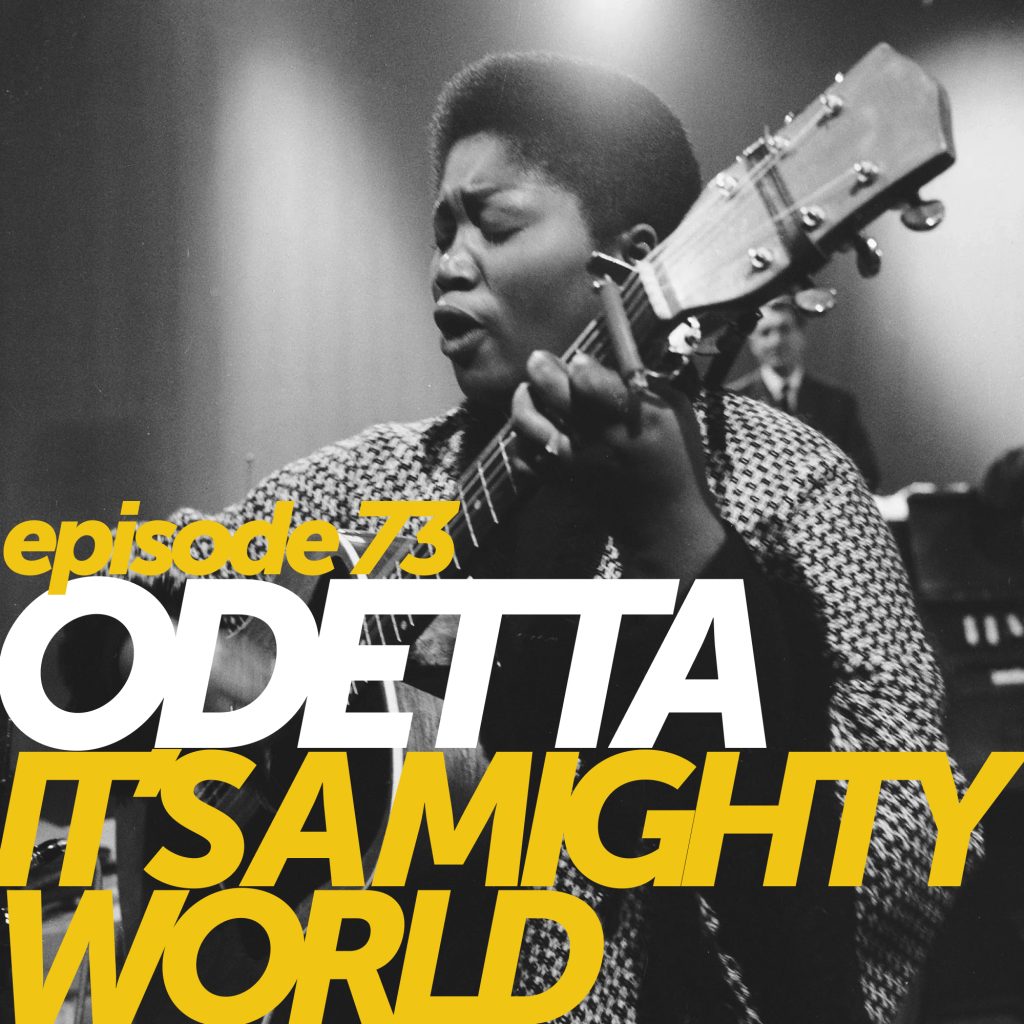
Episode 73: Odetta’s “It’s a Mighty World”
Odetta — a must-know titan of American music and culture — once noted that young people “learn about American history through battles.” But her dream of liberation was shaped much differently: “I learned about the United States through this music, through the songs that I sing.” As we live through the kind of historical moment that makes most folks want to lie down and die, we can — like many heroes before us, from MLK to Maya Angelou — look to the legacy of 1964 and Odetta for strength to insist upon our lives.
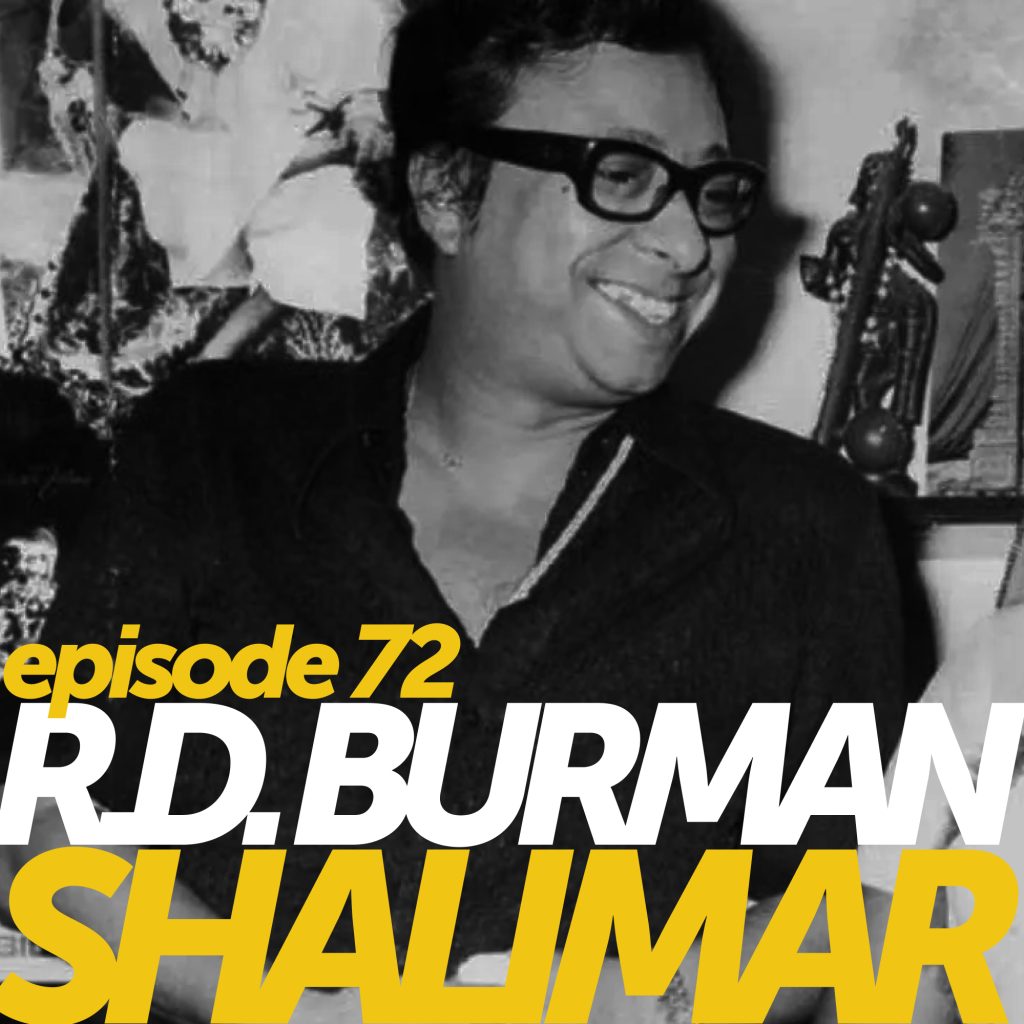
Episode 72: R.D. Burman’s “Shalimar”
Once upon a time in Bollywood, one magical man made enough music to fill a million moments—and made space for hundreds of other artists along the way. Of the 331 scores “Pancham” composed in his lifetime, 1978's “Shalimar” is a uniquely compelling introduction to his technical prowess, transcendent alchemy of cultures, and tremendously joyful love of a life full of song.
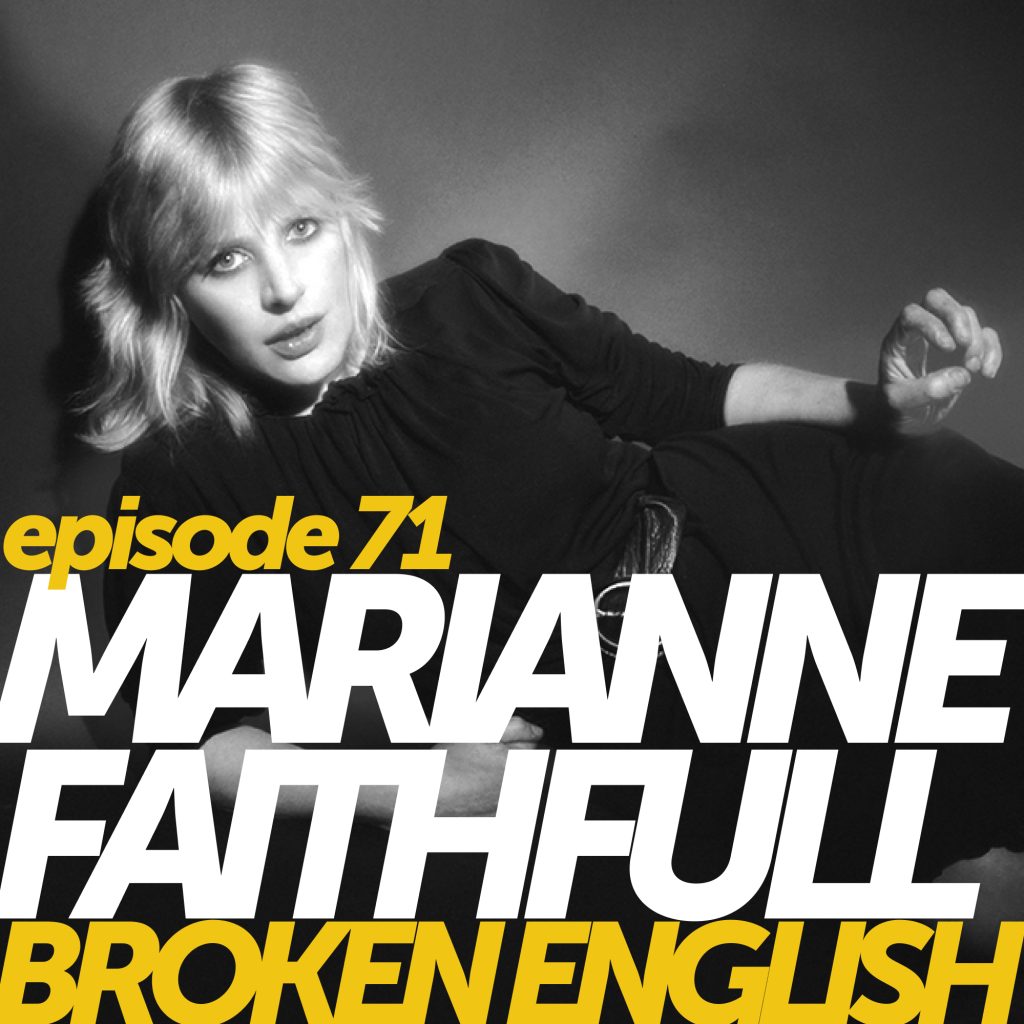
Episode 71: Marianne Faithfull’s “Broken English”
“That’s the thing about pretty faces… We don’t expect them to belong to the fighters— the junkies and monks and cockroaches who’ll survive every atomic bomb and suicide attempt and outlive us all.” - Lindsay Zoladz Broken English is searing, singular snapshot of surviving to spite the devils (who’ve gotten far too much sympathy in the story so far). You’ll love it forever with its good and bad weather. We may have lost Marianne Faithfull this year, but not before she outran the darkness. As we close out a dark year and look ahead for light, there’s a lesson to...
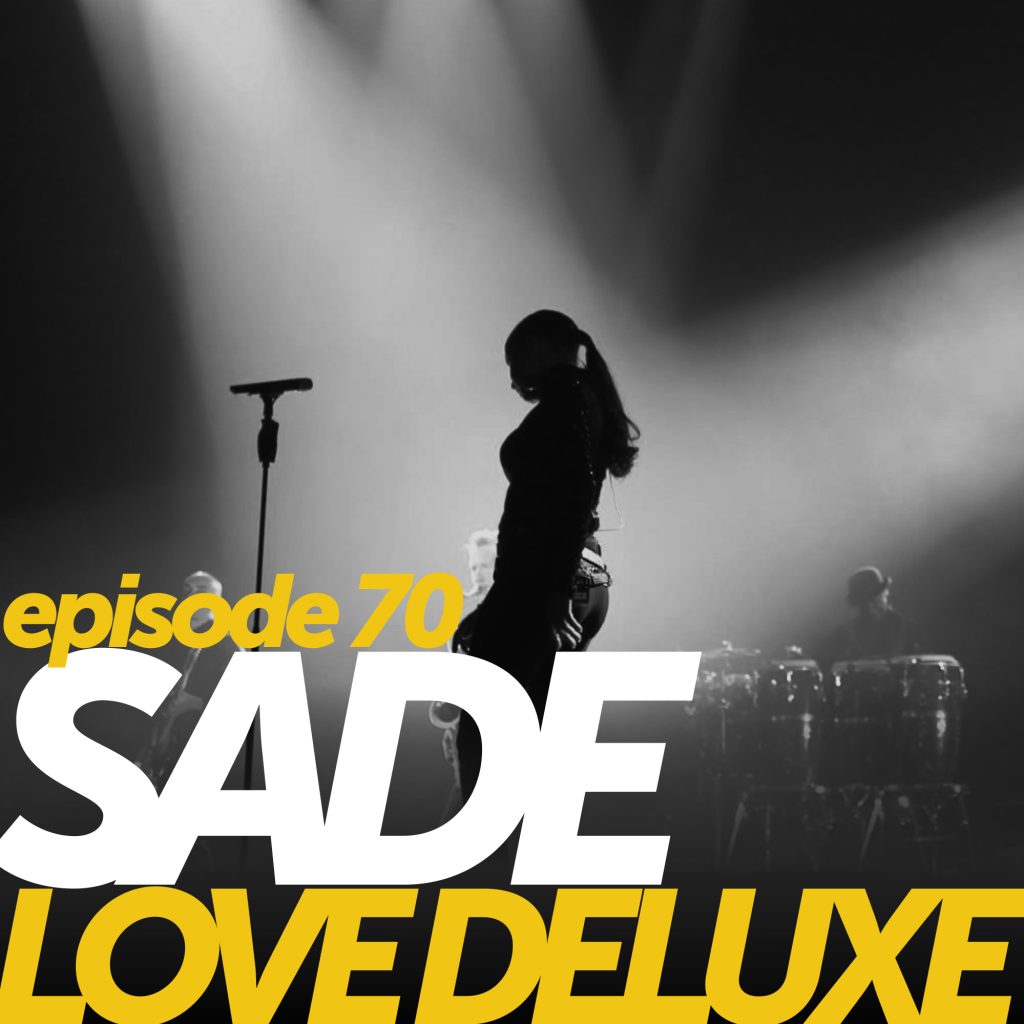
Episode 70: Sade’s “Love Deluxe”
Any denier that all art is political need look no further than the smoothed-out soul slipstream of Sade, a group defined by its economics. Rare output, minimal arrangements, reserved volume, and, of course, the premium implied by “Love Deluxe”—a title derived from the idea that true love is among a precious few luxuries that can’t be bought. Our world’s clearly longing for more longing, and we discovered a truly transcendent delicacy as we unboxed Sade’s brand of desire.
Episode 69: Charles Mingus’s “The Black Saint and the Sinner Lady”
When you think of true "artists" in music, who comes to mind? Charles Mingus embodied its romantic ideal, for better and for worse. His magnum opus "Black Saint" is more than even jazz's cosmic form can hold—it's the full-bodied essence of a master composer, peerlessly inventive bassist, and clairvoyant critic of the real America. In it, you’ll find what his collaborator Gunther Schuller called "the widest ranging musics you can find composed by one single human being."
Episode 68: Gang of Four’s “Entertainment!”
“Entertainment!” is described by Gang of Four’s Jon King as “a record about young people smiling and dancing in the face of disaster.” Uh oh, sound familiar? This Leeds-born slab of Brechtian boogie reminds us that to navigate a world where everything is (small-p) political, dancing and dialectics belong together. Free your ass and your mind will follow.

Episode 67: Brooks & Dunn’s “Brand New Man”
This is the tale of two lonesome cowboys who got down, turned around, and went to town catching lightning in a bottle on their first try together. Whether or not their decade-defining country anthems lit a flame in your eye in the 90s like they did ours, Ronnie and Kix offer a lens through which outlaws, in-laws, crooks, and straights alike can look for ways to learn to love again.
Episode 66: Oumou Sangaré’s “Moussolou”
The name "Oumou" derives from an Arabic word meaning "mother of." It is associated with dignity, wisdom, and maternal strength. Southern Mali’s Oumou Sangare has come to embody her namesake for millions around the world, and it all began when she was just 19 years old, channeling the magical music of hunters through her powerful and purposeful voice and creating a moment that captivated an entire country. Hers is a story everyone should know.
Episode 65: Missy Elliott’s “Supa Dupa Fly”
In the words of one of her groundbreaking forebears, “You feel free? You want to try some wild s**t? Thank Missy.” Since the very first frame of “The Rain” entered our eyeballs, Missy has made the avant-garde accessible, pointing us to a future full of more funk and more fun simply by standing fully in the splendor of her space-age self. Come (supa dupa) fly with us back to the moment where Missy’s magic began.
Episode 64: The Cramps’s “…Off the Bone”
God is a woman and she plays the guitar loud … y’all come catch some Holy Ghost in your hips. Hear our hallelujah for the love story of the queen of rock ‘n roll and the mad daddy holy rollin’ on a river—upstream all the way—and boot scootin’ through a fun and freaky heaven and earth of their own design. The Cramps were Dionysian, devilish, dangerous, and damn good, and they remind us that life can be, too. If you can’t dig this, you can’t dig nothin’.
Episode 63: Black Moth Super Rainbow’s “Dandelion Gum”
Life’s a bit heavy to chew on these days, so we reached into the pocket of our mid-2000s jeans and found an old piece of Dandelion Gum to chew on instead. As soon as its neon syrup hits your tongue, you’ll wonder why you hadn't let this "future pop for now people, today" melt you, melt you, melt you yet.
Episode 62: Project Pat’s “Mista Don’t Play: Everythangs Workin”
This life we're livin' is oh so beautiful. Take it from Patrick Houston, who has spread the gospel of the real for three decades, followed by a discipleship that has shaped 21st century culture in his image. For those still alive in 2025 by the grace of God, let us give flowers to the man from the North North.

Episode 61: Grace Jones’s “Nightclubbing”
Not a woman. Not a man. A revolution. Music’s long history is littered with larger-than-life characters whose mythology shapes reality for the masses — and few loom larger than the mighty Grace Jones. “Nightclubbing” without context is a tremendous body of songs worth anyone’s time, but after a deep dive into Grace’s time at Compass Point, you’ll agree that it’s a vital work.

Episode 60: Paramore’s “This Is Why”
The menace and melancholy of modern life have sentenced scores of young people to the gilded prison of nostalgia — but much to our surprise, a band of recovering Southern pop-punks have an antidote. For anyone willing to “sit still long enough to listen to yourself,” their new music’s sharp rhythmic angles and sharper lyrical reflections frame a doorway through which to free our big feelings and forge ahead.

Episode 59: Ennio Morricone’s “The Good, The Bad and The Ugly”
You know that five-note coyote howl. You may even know the classic film it helps power. But what do you know about the man behind those iconic moments? For our final exploration from our 2024 calendar, reflect with us on the genius of a maestro who could make magic with a mere fistful of notes, who poured forth from his soul a foundation upon which much of 20th century popular culture was built.

Episode 58: TLC’s “CrazySexyCool”
Vision. Bravery. Originality. The 30th anniversary of the ATL-exported opus — by the highest-selling girl group of all time — offered us a chance to reflect on all the ways our hometown heroes ran so some of the 21st century’s most iconic artists could fly.

Episode 57: Kendrick Lamar’s “good kid, m.A.A.d city”
Before the Super Bowl, the super beef, the Pulitzer, or PGLang, one good kid and king-to-be sojourned from South Central to the height of the American promise and rained down lightning that united one nation under a groove. You’ll feel the energy of this episode from two planets away — hop in the van real quick and let’s roll out.

TuneDig Episode 56: Cocteau Twins’s “Heaven or Las Vegas”
Dream of ethereal waves of sound swirling around you—and words you can’t make out saying more than you could imagine—as you float back upstream with us toward the warmth of Cocteau Twins’ decade-defining masterpiece, which still ripples across a vast pool of influences 25 years on.

TuneDig Episode 55: Jeff Buckley’s “Grace”
Once upon a time, “your favorite artist’s favorite artist” wasn’t a Midwest princess, but a “mystery white boy” beloved by Bob Dylan and Adele alike. Jeff Buckley’s signature Grace is on the shortlist of transcendent albums every living being should experience, because, as one industry vet put it: “it’s all in there, isn’t it? It’s just all in there.”

TuneDig Episode 54: Botch’s “We Are the Romans”
"We Are the Romans" is a visceral, vital document guaranteed to make you feel something from its first notes — and there’s never been a better time to stop and smell the roses from a group just now getting its long-overdue flowers.

TuneDig Episode 53: Ravi Shankar’s “Three Ragas”
Ravi Shankar lived one of the twentieth century’s most extraordinary lives, bearing witness to—and making—history all around the world. To many (especially in the West), he personified an extraordinarily complex style of music and the cultures from which it was borne, and he worked hard to make it look easy.

TuneDig Episode 52: Alain Goraguer’s “La Planète Sauvage”
Gather ’round, sommeliers of the strange and crate-digging boogie children, for something “Strange! Frightening! Fascinating!” awaits. The soundtrack to Cannes 1973’s Jury Prize-winning film is a dazzling, surreal, avant-garde hymn to cosmic knowledge and compassion and a secret handshake among real heads. If you’re after a trip to a new dimension, here’s your one small step for man.

TuneDig Episode 51: Marvin Gaye’s “I Want You”
Marvin Gaye’s well of soul power ran mighty deep, and deep into his career, he pulled up a bucket of ice-cold, silky smooth champagne called “I Want You.” Come for the lush instrumentation, vocal harmonies, and Leon Ware clinic; stay for the stories. For our return from hiatus, we observe a titan in his element, reflect on the pain that built him into one, and consider how to reconcile our feelings when complicated messengers deliver beauty to our door.
SEASON 6

TuneDig Episode 50: Funkadelic’s “Maggot Brain”
Before uniting one nation under a groove, the lysergic lords of chaos in Funkadelic harnessed wild lightning into an amulet called Maggot Brain, bestowing the bearer with raw, dark power stronger than any force known to man. Between reaching our 50th episode and coping with the “maggots in the mind” of today’s universe, it felt like the right time to free our minds. We hope y’all’s asses will follow.

TuneDig Episode 49: Alice Coltrane’s “Journey in Satchidananda”
The story of Alice Coltrane — an accomplished bebop pianist from Detroit who transcended into something far greater before walking away from public life altogether — is a glimpse into what it means to be truly free. Alice’s masterpiece "Journey in Satchidananda" is a cosmic dance that sparked creation from destruction. And in a time when we’re all desperately searching for a spark of meaning and hope, Journey abides abundantly.

TuneDig Episode 48: Heart’s “Little Queen”
Take a moment to appreciate Ann and Nancy Wilson, who kicked down the doors of rock ‘n’ roll’s boys’ club with their peerless guitar work, soaring soul vocals, and tight songcraft. 1977’s Little Queen — an oft-overlooked gem in the classic rock canon — offers a snapshot of those elements at their most urgent and pure, powered by the Wilsons’ simple motivation (as described by their producer): “It was a war.”

TuneDig Episode 47: Tangerine Dream’s “Phaedra”
When you think of “electronic music,” what comes to mind may not be a genre you deeply love — hip-hop, house, new wave, or even dub reggae — but all of it owes some debt, scientifically or otherwise, to Tangerine Dream. Dig in with us as we study a prime example of the band’s brand of effortful innovation, where they patiently and persistently labored at the cutting edge of electronic technology to open a portal to new worlds in our minds.

TuneDig Episode 46: Olivia Rodrigo’s “SOUR”
Did you catch one of 2021’s biggest albums, or like us, did you almost overlook it? If you have any expectations of pop music, "SOUR" will likely subvert them. Teenage dream this is not; it’s an exquisitely universal portrait of a weird time to be alive.

TuneDig Episode 45: Fela Kuti’s “Expensive Shit”
The story of Fela Kuti — one of the most famous people on an *entire continent* passionately struggling to liberate power to more people — is absolutely one worth deeply knowing, regardless of whether you find yourself drawn to Afrobeat or (cringe) “world music.” But once you know it, it’s almost impossible not to fall in love with Fela and Afrika 70 as their revolutionary grooves rewire your brain in magical and meaningful ways.

TuneDig Episode 44: Meshuggah’s “ObZen”
Meshuggah’s ObZen—an artifact of human creativity pushing the limits of what’s possible—will quite literally make you hear music differently. If you’re looking for a new musical adventure, and especially if you don’t think you like “heavy” or “weird” music, consider this your sign to push past your comfort zone.

TuneDig Episode 43: mewithoutYou’s “Catch For Us the Foxes”
A misunderstood wise man once said “Let him who seeks continue seeking until he finds.” In our most personal and vulnerable episode yet, we do some seeking through the lens of songs that fill us with the bravery and sincerity to love ourselves and others fully. Dig deep with us as we fish for words about our tiny place in the universe and dance with gratitude for our ability to do so.

TuneDig Episode 42: Erykah Badu’s “Mama’s Gun”
Y’all tryna raise your vibrations? Erykah Badu is here to help. Season 6 kicks off with a meditation on realness and what being on “your own wavelength” really means. (Spoiler: it ain’t a single frequency — it’s a whole spectrum.)
FRIDAY HEAVY
For lifelong headbangers and the musically curious alike, a new podcast from TuneDig is here to push your palette with aggressive, abrasive art. Each short, fast-paced episode offers (1) a new metal, punk, noise, or experimental release we recommend, (2) a related playlist we’ve curated, and (3) a heavy issue to consider and an organization doing something about it. Join us in the void.

Friday Heavy: End of Year Review 2022
It was a great year in heavy music. In this episode, we look back at all the new releases we featured and the curated playlists they spawned.
It was a NOT great year in many other ways. We leave you with a parting message of encouragement to connect your energy and angst to on-the-ground organizations doing the work in your community.


Friday Heavy: November 11, 2022
This week, we discuss:
- He Is Legend – Endless Hallway
- Curated playlist sussing out the depths of He Is Legend’s roots, weirdness, and attitude
- Protect Our Winters (POW)

Friday Heavy: October 28, 2022
This week, we discuss:
- Witch Fever – “Congregation”
- Curated playlist of eclectic, high energy that might get your inner goth stoked on (briefly) going out
- Housing Justice League

Friday Heavy: October 14, 2022
This week, we discuss:
- The Lord † Petra Haden – “Devotional”
- Friday Heavy playlist densely packed with thick, meditative vibrations across the spectrum of drone
- Multidisciplinary Association for Psychedelic Studies (MAPS)

Friday Heavy: September 30, 2022
This week, we discuss:
- Escuela Grind – “Memory Theater”
- Friday Heavy playlist dedicated to the absolutely fucking hostile energy that powerviolence can bring to radical inclusion
- Zealous

Friday Heavy: September 16, 2022
This week, we discuss:
- Holy Fawn – Dimensional Bleed
- Friday Heavy playlist showcasing the incalculably extensive and wildly diverse Shoegaze Cinematic Universe (aka post-rock)
- MTB Atlanta

Friday Heavy: September 2, 2022
This week, we discuss:
- The Callous Daoboys – “Celebrity Therapist”
- Friday Heavy playlist confronting the under-appreciation of Atlanta’s heavy and weird music scene
- Mississippi Rapid Response Coalition – Water Fund

Friday Heavy: August 19, 2022
This week, we discuss:
- Osees – “A Foul Form”
- Friday Heavy playlist fuzzed out on oddball punk that smells like cigarettes just thinking about it
- Women on the Rise GA

Friday Heavy: August 5, 2022
This week, we discuss:
- Chat Pile – “God’s Country”
- Friday Heavy playlist with, uh, a bunch of very pissed off songs directed at christofascist terrorism
- The Grocery Spot

Friday Heavy: July 22, 2022
This week, we discuss:
- WAKE – “Thought Form Descent”
- Friday Heavy playlist that anchors its sound in modern production of sludge, blackened death, and post-metal
- The Planetary Society

Friday Heavy: July 8, 2022
This week, we discuss:
1. Vomit Forth – “Seething Malevolence”
2. Friday Heavy playlist that’s unsettling in the best way, leaving you feeling a little off your axis
3. Trees Atlanta

Friday Heavy: June 24, 2022
This week, we discuss:
1. CANDY – “Heaven is Here”
2. Friday Heavy playlist packed with off-the-beaten-path punk and hardcore from bands that deserve space on your battle jacket
3. Round Rock Black Parents Association

Friday Heavy: June 10, 2022
This week, we discuss:
1. Sasquatch – “Fever Fantasy”
2. Friday Heavy playlist of heavy grooves for late desert nights and hazy generator parties
3. Feed Buffalo

Friday Heavy: May 27, 2022
This week, we discuss:
1. Decapitated – “Cancer Culture”
2. Friday Heavy playlist stacked with bands putting their unique and modern spin on (occasionally tech) death metal
3. PropelATL

Friday Heavy: May 13, 2022
This week, we discuss:
1. Primitive Man – “Insurmountable”
2. Friday Heavy playlist full of SLOW, enveloping, massive and crunchy tone and big feedback
3. National Network of Abortion Funds

Friday Heavy: April 29, 2022
This week, we discuss:
1. Heriot – “Profound Morality”
2. Friday Heavy playlist packed with mid-tempo, huge guitar tone, big atmosphere and lots of industrial grit and grind
3. Invisible People

Friday Heavy: April 15, 2022
This week, we discuss:
1. Greyhaven – “The Bright And Beautiful World”
2. Friday Heavy playlist for fans of more choatic + melodic combinations
3. Campaign for Working Families

Friday Heavy: April 1, 2022
This week, we discuss:
1. Meshuggah – “Immutable”
2. Friday Heavy playlist full of high quality Meshuggah aping that AIN’T “djent”
3. The Bail Project

Friday Heavy: March 18, 2022
This week, we discuss:
1. Soul Glo – “Diaspora Problems”
2. Friday Heavy playlist with 20+ songs in under 40 minutes, (almost) all under 2 minutes each
3. Equality Texas

Friday Heavy: March 4, 2022
This week, we discuss:
1. Vein.fm – “This World Is Going To Ruin You”
2. Friday Heavy playlist exploring more of Will Putney’s work
3. Books to Prisoners
SEASON 5

TuneDig Episode 41: Miles Davis’s “Bitches Brew”
Let’s be clear: "Bitches Brew" is a challenging record, even to some of the best musicians in the world — but all of them say it’s worth the investment. It’s the kind of trip that, even if we *could* draw a map, it wouldn’t take you there. Let go of the need for meaning and enjoy the ride with us. We can promise you’ll be pleasantly surprised where you end up.

TuneDig Episode 40: Fiona Apple’s “Tidal”
On the heels of one of 2020's most acclaimed albums — Fiona Apple’s Fetch the Bolt Cutters — we revisited Apple’s debut Tidal and wound up working to extract ourselves from the mostly male gazes that made its reception … much different. We arrive at a question much like writer Jenn Pelly had: “People would constantly prod Fiona on how an 18-year-old could write songs as mature as these ... Why did they not ask instead how she became a genius?”

TuneDig Episode 39: Death Grips’s “The Money Store”
The modern world is accelerating beyond our control, shaping our reality in ways we can’t yet perceive or understand. Enter Death Grips, an art project capturing the chaotic energy and illustrating the absurdity of our hubris in trying to harmonize the surreal and extremely real — never more perfectly than on 2012’s prescient "The Money Store".

TuneDig Episode 38: Augustus Pablo’s “King Tubbys Meets Rockers Uptown”
Reggae music is easy to take for granted, but its impact is underappreciated and massive — in the case of dub in particular, everyone from Radiohead to Johnny Rotten to Run-DMC owes it a debt. Augustus Pablo and King Tubby together created what’s regarded as “one of the finest examples of dub ever recorded.” Join us as we dive into the culture, history, and unique engineering experiments that made it possible.

TuneDig Episode 37: Rihanna’s “ANTI”
By every measure — sales, awards, chart-toppers, global name recognition — Rihanna is objectively as big as the Beatles ever were. In fact, ANTI is so big it’s still on the charts, a record five full years later. Take a closer look with us at “the record you make when you don’t need to sell records”, and get a taste of the true freedom that comes from focusing on your inner voice when faced with insurmountable expectations.

TuneDig Episode 36: Son House’s “Father of Folk Blues”
All American music traces back to the blues, and deep at the root sits Son House. That the recordings on "Father of Folk Blues" even exist is something of a gray area that cuts to the heart of the great American myth, but wherever you land after hearing these stories, you’ll find that what matters most is what the great Muddy Waters once said of House: “That man was the king.”

TuneDig Episode 35: Melvins’s “Stoner Witch”
The futility of describing the Melvins has stretched critics in the direction of absurd words like “Dadaist” for nearly 40 years now. They’ve belligerently flogged any attempt to pinpoint their essence simply by being themselves, but "Stoner Witch" remains a reliable mall directory for the Melvins’ vast and wild discography. Grab yourself some pretzel bites.

TuneDig Episode 34: Dolly Parton’s “Jolene”
We should talk about Dolly the way we talk about Prince. Her extraordinary kindness and unique kitsch both make her universally loved, but what gets left out of the conversation is the very thing that made her famous: the music. Join in as we focus attention on the sonics and songwriting of the low-key masterpiece "Jolene".

TuneDig Episode 33: The Allman Brothers Band’s “The Allman Brothers Band”
Six enlightened rogues out of Macon, Georgia birthed an entire genre simply by being their soul-powered selves. We have not come to testify, but we’re still hung up on the dream The Allman Brothers Band helped us see. By the end of this episode, you will be, too.
TUNEDIG RADIO


SEASON 4


SEASON 3


SEASON 2




SEASON 1


BONUS TRACK EPISODES

BONUS TRACK: How We Got Here
We got a bunch of interesting listener feedback in our off-season, and it encouraged us to shed some light on why we do things the way we do ‘em. Also, we reflect on our first writeup, which was ... interesting.
WHO WE ARE
We're Cliff (right) and Kyle (left). We’re two dudes born and raised in ATL with day jobs in tech and sustainability, respectively.
We met in middle school, and in one way or another, music’s been the thing that’s kept us close for the two decades since — whether it’s sharing and talking about new music (like this podcast, except in our texts or over beers), going to shows, or working with our favorite record stores to help them survive and thrive.
We started TuneDig as a little art project that connects us more deeply ourselves and to the world through the infinite gift of music. We hope you’ll join us for the conversations, let us know what you think, and share discoveries of your own.
More About TuneDig
TuneDig began as a little something called MusicGrid.me, which we created after realizing there was no place online to directly exchange music recommendations with your friends. Our aim was simple: to make rating albums simple, useful, and social. We got some love from places like Mashable, Wired, Evolver.fm, and Hypebot. We managed to foster conversation between music lovers, get thousands of reviews, and meet great people.
Along the way, we realized that record stores were an essential part of the music lovers’ community. After many a conversation about how we could helpfully connect them to the people who loved them, we began helping them leverage technology to create new revenue streams and embrace streaming services without giving up what’s unique to them: expertise and curation. (Long live the counter clerk who knows exactly which record will be the right introduction to jazz fusion!)
TuneDig is our vision to connect music lovers with the music they love, because no matter how much has changed in the way we discover and enjoy music, recommendations from people you trust and respect will always be the best way to find new music you’ll dig. With this podcast, we’re channeling the spirit of trusted curation pioneered by record stores, and bringing you something to take you deeper into music you can love.