
TuneDig is an in-depth and informed conversation between two lifelong friends about the power of music — one album at a time.
In each episode, we go down the rabbit hole to spend a while in the strange world we discover. We take an honest look at creativity in all its complexity—from writing and production to history and cultural impact.
We promise you’ll learn something new every time, no matter how much you already love the album we explore.
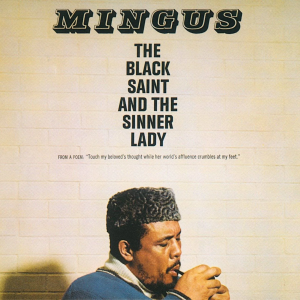
Episode 69
The Black Saint and the Sinner Lady
Charles Mingus
When you think of true “artists” in music, who comes to mind? Charles Mingus embodied its romantic ideal, for better and for worse. His magnum opus “Black Saint” is more than even jazz’s cosmic form can hold—it’s the full-bodied essence of a master composer, peerlessly inventive bassist, and clairvoyant critic of the real America. In it, you’ll find what his collaborator Gunther Schuller called “the widest ranging musics you can find composed by one single human being.”
Transcript
Kyle: Today we’re talking about The Black Saint and the Sinner Lady by Charles Mingus.
Cliff: So instead of building a huge on-ramp, how about we just come right out front and say, here’s why we’re talking about this record and why I’m gonna need you listener to trust us. Probably if you don’t already like this one. Because it’s a good one for good reasons. But it’s gonna probably test you in a few different ways almost immediately.
And it’s worth it. It’s worth it for some specific reasons.
Kyle: If you’re joining us from Brooks and Dunn, we’ll see you later.
Cliff: Yeah. Jeff Buckley’s, grace, this is not, and that is gonna be okay.
Kyle: Although I would connect them in that one, Jeff Buckley would’ve loved this record if he didn’t,
Cliff: Mm,
Kyle: if he didn’t know it, if it wasn’t in his well-established canon. I, I don’t know. but two, grace is one of the few records that we collectively said during recording it doesn’t matter what your flavor is, you have to hear this record.
And we, and we don’t say that about many of them. I hesitate to say that about this one, but I do feel like, for reasons that I think you’re gonna articulate this is probably in the same, can’t, it’s not like you’re, you’re definitely going to enjoy it. Like Grace is like, I can’t imagine anybody listening to that record and not loving it.
But it’s also essential. This is a bit of the inverse, where it’s like, you very well might hate it, but your duty as a person devoted to music is to seek out records like this. Like thi this is a seminal record in that it will make you a better listener and thinker. Almost guaranteed, right?
Something like that.
Cliff: Yes, and not abstractly. So for specific reasons, with specific intention in really specific ways, which I think is great. And on this one in particular, we come around to jazz albums every now and then. And we both, I think, have our own version of, not breathing for a few minutes when we realize we’re gonna have to now talk about this in public, because jazz has a real thick external shell that you feel like you gotta kind of know how to get into, or else you’re gonna really look stupid in public talking, thinking, liking jazz.
Kyle: It’s a party with a dress code and you’re like, fuck, I’m wearing a Hawaiian shirt today.
Cliff: yes. So here’s train stop number one on the train of, you can like jazz too. It’s not that complicated. Let’s use your dress code example. Everyone talks about the dress code on the outside to filter the types of people who are gonna walk through the door. But once you get in, you realize that most everybody’s naked anyway.
Like it’s a ruse to get you to get mildly serious or else to bring your like full emotional self to the thing. And this record in particular is a really good example of that because Charles Mingus specifically doesn’t want you to think of this as jazz and didn’t write it as jazz and didn’t write it as a band leader of a jazz band.
And has all of these reasons why not only is it not jazz, but he also doesn’t want you to think of it as not jazz either, because labeling it to begin with is limiting your ability to embrace what he is composing. And like that is, that’s the first of all, that’s my shit. It like 100% on level. That is, that level of relationship to music is deeply connected to me, uh, and how I experience art.
But. We usually don’t get a musical razor like razor in the philosophical sense like we do with this one. Where if you can allow yourself to start understanding some important parts of what’s happening simply by allowing yourself to listen and learn, you will actually start unlocking ways to understand music over the last 60 plus years that came after it.
not abstractly, not in the sense of like he inspired other people to play. No, no, no. Like specific things that happen on this record create specific things that we now understand about jazz. And that actually changed the way that people composed music to begin with in response to this.
Kyle: I’m excited to hear your take on some of those signposts because I very much took in this record as a lot of people talk about tonal and textural qualities of this record. So like, even if it hits you as just a wall of stuff for a while, that’s okay and good, but it’s fun to keep chipping away at because I think for the density of what’s happening, it’s great that there’s not too terribly much runtime, 39, 40 minutes I think.
it cycles back pretty quickly and the, the, abrasive to agreeable ratio is just about perfectly balanced. I think. it’s not full on, coltrane’s ohm, it’s, it’s not Albert Aler full. It’s, it’s not freak, freak out bad asset in public type experience. It’s very tuneful it. To your point about, changing the way people thought about composition and whatever.
There’s also an encyclopedic element that I think is very interesting. it’s like talking about art and artists where there’s a cliche. The, the cliche emerges for a reason, but then there’s actually specific things about it that are interesting. Yes, he brings a lot of influences or whatever to this record, but once you get past the trope of that idea, you find that he does it in a really elegant way, one, and that he doesn’t ever do anything straight ahead, not a bebop record or a swing record or whatever.
it reexamines a lot of the basic elements of a form, to critique what gives them their power. I thought of the most powerful sort of like baseline things that I heard or read about him anywhere in, in studying Mingus, the person, which I, I think this is actually one of the artist examples where it’s really good to do that.
I don’t, definitely don’t think that’s always the case. And you know, you and I have sort of danced on that tightrope over the course of these episodes. but one of the people in the Mingus Underdog documentary, which you can watch for free on Tubi, and I would recommend
Cliff: Hell yeah. Tuby to be coming in strong again.
Kyle: Hell yeah. Like it’s the, the second best thing to canopy the free through your local library streaming service.
All the best stuff is on Canopy or Tubi right now. All the mind expansion can be done there totally for free. but the guy and I, I can’t remember his name, but he was the guy doing the, doing the big band thing in homage to Mingus. So sort of like a Mingus scholar let’s say, said that with Mingus genres, quote, don’t show seam of their insertions, they’re sublimated through the raw self, quote unquote raw self of Mingus.
And I just really like that idea that a lot of people, multiple people use the word volcanic to describe Mingus the person. So you could easily get into the like buddy rich, big personality thing that, that’s its own rabbit hole. I think it is a little more compelling here than normal, even if it does get a little soapy in places.
So you have a big personality with like capital B, capital F, big feelings that he’s working through. He’s got an incredible life story that I think validate the big feelings many times over, but then they use words like volcanic and sublimate and there’s just such an art to this man’s life and the way that he used composition to express himself.
And draw out big ideas about the world that he was in. there’s something very compelling there. There’s a lot of raw material. So like, even if the abrasiveness of what you hear on a first listen turns you off for a minute, there’s a big personality and a tremendously American story.
what a weird moment for America. I guess what I’m getting at is like, maybe Mingus is one of the most honest
Cliff: Yeah,
Kyle: figureheads that you could study in a moment like 2025. And like I, we didn’t pick this record with any intention that it was gonna line up in some sort of political or timely way. But time and time again, that’s what happens cosmically with these episodes.
So like, I was not a student of Mingus at all and just knew he was like a capital eye, important jazz dude. And I wound up being very glad
because I’m feeling a lot of those volcanic feelings too.
Cliff: you said two really important words that I want to immediately use
Kyle: The word is sublimate.
Cliff: SUBL. So.
Kyle: Do you Hold on. Do, do you remember the Bill hater? No. Was it Bill Hater? Will Forte bit on SNL where he is like really bad on the spelling bee and it’s like the word is chicken, C-H-B-Q-S, B-Q-R-Q-Q and it goes on for a full 90 seconds that he does that like a brutally long 90 seconds. So perhaps also in the spirit of Mingus, you can build your muscle for Mingus with Will Forte’s spelling bees sketch on SNL. And I mean that as a compliment to both. the two words that came to mind, sorry for my digression.
Cliff: No, it’s okay. ’cause I’m gonna further digress quickly and then come back to the point. It
Kyle: Fuck yeah.
Cliff: think of the, it makes me think of the conversation ’cause I’m, I’m always gonna reach out to the constellation of other art and entertainment spheres that we might touch. I’m reminded of the quote in the Avengers movie where Thor says, never Dele.
And Dr says that word is made up and Thor says, all words are made up. And I think that that is a pretty good vibe actually, for this record in particular. So then the two words that you said, composition and genre. So first of all, I’ve given enough of a caveat at the beginning of this episode, if you are looking for a jazz education, you should not have come here. But we are gonna do a pretty good job because one thing I have been able to do in my life that music school helped me with and I now help other people with, and I’ll accept that Kyle says that I’ve helped him with this too.
You, you, you too can understand jazz like. you got it. it’s okay. some things are weird on purpose, other things aren’t. It’s a lot like metal or indie music or instrumental music. It has a big spectrum of approaches from people who are variously agitated by being constrained inside of the labels associated with this thing.
And Charles Mingus was one of those, and he brilliantly, in a literal sense, like exploded out from that on this record. So composition and genre. Composition one. Okay. Most jazz in general, we approach especially from this time period by understanding it as a band leading phenomenon. And I’m also gonna talk a lot on this and if you agree or disagree, I’d love to hear this too.
But like, especially the 50 sixties and seventies bebop and bebop adjacent jazz, like this record and a lot of music around it you have to envision yourself experiencing this record as a live phenomenon. It is not a live record, but it is spatial and the composition and arrangement of this music.
And the reason that there were six weeks of overdubs done after a single day of recording to make this. Is because there is a, a tactile spatial feeling to jazz because there was a specific way that you experienced it, especially, in like, especially in the context of D Bird who will talk a lot about, because Charles Mingus idolized them.
And on this record himself said, this is basically him encapsulating everything he’s learned from them in his whole life up until this moment.
Kyle: My living epitaph.
Cliff: my living epitaph from birth till the day that I first heard of Bird and Diz and again, these are, we’re only gonna give small vignettes of very important things to care about in jazz, but it I really hope we’re gonna illuminate like a bunch of corners that make people interested. So simply talking about Bird and Diz this way is exactly the way that Miles Davis talked about himself.
Like he did exactly the thing, the same thing that Charles Mingus did in the sense that Charlie Parker, uh, and Dizzy Gillespie were the figureheads of a movement. That created the jazz scene in New York. That was the way that everyone, including Charles Mingus, conceptualized what jazz was and what it could become like.
it was a tremendous cultural thing to chase these two people. And I think we’ll probably talk about this some more as well, but like, reason Bird and Diz were so influential is because they took technical proficiency well beyond the usual, palette that jazz was providing and pushed speed and technicality to such a point that, man, this is gonna sound elitist, but like this, I mean, every word, like they push complexity and speed to the point where if you didn’t know what they were doing, it started to sound ridiculous. And like that’s, I think that is a good little vignette for this record too. when jazz pushes its boundaries to its fringes, you are sometimes hearing something ridiculous. But a lot of times you’re hearing something that you think is ridiculous ’cause you’re not patient or smart enough to understand what’s actually happening.
And like. I’m not saying I do. I’m saying like, jazz requires you to sit as soon as you notice something that doesn’t connect and it asks you to sit and wait for the thing that’s gonna make it contextual and you like, it’s a fundamentally different way to listen to music, but it’s the only way to get into the headspace of especially Charles Mingus here, like he is.
I mean one, one quote, uh, that we collected that I think works well to explain it here, quote, most casual listeners will bristle at the more challenging segments because casual listeners usually prefer music that suits their expectations. And this album does nothing of the sort. It is designed to challenge the listener and in places it wants you to feel uncomfortable, and that I think is accurate and you need to be able to hold that statement at the same time that he says that he made this record for listening and dancing. Both of those things are true, and all of this was composed together to create that. And so if you have moments where you’re feeling uncomfortable, which Kyle, I think you already sort of started bringing this up and it needs to be a thing we keep touching on throughout this episode, but like, if you notice yourself sort of feeling anything.
That’s awesome. Someone composed that for you. this is far less to me a record of you interpret it and tack on your experience to the other side of it and those things combined. Are you experiencing the record? That can be true, but here, there is so much going on with so much specificity that for the most part you are attuned to what is being done on purpose and all of the human emotion that’s baked into this is done with intentionality and is so, so well executed that the more you listen to it, I think the more that you will notice yourself being attuned to it over and over.
Kyle: So a note on composition or an adjacent note on composition before you talk about genre, one thing that was really helpful for me to contextualize the importance of composition was you brought up burden as and the sort of model for creating records and playing live. There’s a lot of. 3, 4, 5, 6 people doing a thing.
setting a mode and improvising against that mode. That’s like a band, that’s like the rock and roll e version of the thing I would say. So quartet, quintet, sextet type situation, right? A group of people jamming. On the other hand, other end of the spectrum, you have big band, which is literally, it’s in the name where it is a dozen, 15, 18, 20 people level of an orchestra if you want.
And a lot of that starts to get into more classical, where it is highly scripted. Uh, you’re, in the 20th century you’re gershwin’s and folks like that. But this sits sort of right in the middle. It’s nine ish people up to 11 in some points maybe. Yeah. and so it has, you have some of the best of the looseness of the four or five, six person model.
but then, you know, some of the structural and composition elements, the movement type stuff. So trying to think about myself as a listener. In the forties, fifties, sixties, and the ways you would go experience this music. when you listen to this music really intently, really presently with your full senses, and you made the excellent suggestion in the lead up to listen to this as loud as humanly possible.
And I’d love for you to talk more about why, but that was when it, like fully, I could, feel it with all five senses. Like I could taste the record, I could hear where people were in space, which was a phenomenal credit to Bob Thiel and the production. But where listening to a lot of jazz records, maybe not a Love Supreme, but you know like certainly all the cool jazz stuff that got me into jazz feels like you go to a tight little intimate space and you just listen to people do their thing.
This felt more like going to a movie or going to the theater and seeing a visual thing happening. And this is more like a soundtrack accompaniment, like going to Broadway or seeing a ballet is not really my thing, so that’s not what it evoked for me. if that is your thing, great. Hopefully immediately the textures will bring out movement, dance oriented visuals for you.
But for me it felt a lot like going to see a great film. And it wasn’t until I turned it up really loud that I started like literally having visual hallucinations from this music. And it was like a revelation. I was driving the back roads in the country and playing this music really loud first thing in the morning and it was like, holy shit, I get it now.
Oh my God. And there was no context in which it worked on that level for me before that. But now it’s made every, every listen since then subsequently much easier. You know, like when you’re 18 and everybody’s like, bourbon’s in acquired taste and then you wake up and you’re almost 40 and you’re like, oh, I love it now.
But there was a time when I really didn’t getting into music like this, it just reminded me that getting into music like this or having a moment with albums like this is like a 10 year overnight success. I don’t wanna discount the appetite for dissonance that you and I have built up. And even with that, expecting it on some level, it still took a not what I was thinking I should do with jazz moment to break through to the other side with it.
Cliff: Yep. Didn’t expect me to suggest that you treat it like a Matt Pike record instead, and see what comes out the other side. So that, man, that’s great. I’m glad you brought that up. So I would definitely, first of all, suggest that to anyone and everyone, listen to this record in particular, I’m talking about as loud as you can possibly take it.
I am suggesting it is at the very edge of comfortability,
Kyle: Yeah, not, jazz. Loud, regular, loud. Yeah.
Cliff: you, so actually this is a, this is a great prompt for anybody. Uh, we are slowly learning that there are, in fact human beings on earth who are influenced by our conversations here. So I’m gonna try for another one. Now, if you’ve never been to an actual weird jazz show of any type, I, I mean almost any jazz, but I need you to go a little bit in the kind of weird direction.
Don’t pick, uh, band who got hired to play an event. That’s not what I mean. Okay. But, uh, and you can do the same thing with classical music actually, too. It’s a fundamentally different experience when you go and someone is intending to play that type of music for you. So similarly, if you go see jazz, and if you would’ve seen it back then.
For a record like this, or for Charles Mingus or Disen Bird, what it would’ve been ear, piercingly loud. And you would’ve been in a very small room where even in the best of acoustic situations, you have, like you mentioned, anywhere between five and now 12 people maybe on stage doing a variety of things.
Some of whom have very high-pitched instruments that can play very loud, that are not being amplified, which means they’re shooting directly into your face at kind of eye level. So like, I think that that opens up a sense of the space of what was being done because not only is this, like listening to it loud is gonna open up all the details and room sound of what was recorded and not overdubbed out, uh, which is gonna give you not only a, a sense of like where people are, but it’s also I think, gonna help.
Help you to discern and start to listen to why Rhythm is different on Charles Mingus records and specifically on this one, and I’ll talk a little bit more about that too, but like listening to it loud is gonna draw that out because it’s going to put us back in a headspace that people were in when this record was written, but that we don’t experience the same way anymore.
concerts are fundamentally different. We have gone all the way through Loudness wars and come on the other side of guitarists hardly play on-stage amps anymore type stuff. for better or worse. And I really mean that we’ve evolved the way that we experience concerts and the type of loudness that we experience is usually not the same type that is gonna draw out what was being composed here on purpose.
like a modern equivalent of this would be if like Brian Eno made an Adobe Atmos record and was like, you have to listen to it this way or it won’t make sense. I think that’s the type of thing where we’re, you know, we’re in 2025 in the future in order to understand things better contextually, we have to figure out how to put ourselves physically in the environment that people were in for this.
and so I hope that that doesn’t sound overly like smoke blowy, but like I. Something about hearing jazz played by a quartet, a quintet, whatever that’s shoved onto a really small stage and it’s at such a loud volume, and then you can feel the physicality of it and you can feel how they’re talking to each other and you can see it in the interplay and everything like it.
It starts to change the way you listen to the music, and I think that that is a really important aspect of like unfurling, what’s being done here.
Kyle: I totally agree. I would say. If you want to try to get close to experiencing the live context, I’ll make another plug for Big Ears. There’s always a thing happening at 1130 at night that like we saw Collin Stetson playing crazy saxophone shit in a totally pitch black room that felt a bit like Mingus.
We saw, water damage, do like a loud, long motoric thing late at night. my understanding is long play festival in Brooklyn does some of that. I think there’s a handful of seek out a fringe fest near you. I wanna say Denver probably has a couple that I’ve seen. I don’t know that they’re quite in this realm, but like, it’s the kind of thing, especially if you’re looking to level up, as a music person traveling, they’re certainly on the coast.
There’s probably a few in the middle of the country. Austin, Denver, is Montrose still going? Montrose is probably another good place to try to try to do the thing. It’s way eclectic, but I bet you could see some good stuff like this as well. But yeah, I like seeking out a fringe fest near you. Find your freakiest head that you know.
The person who listens to weird and off-putting stuff and they, they will know a cool outta the way spot to get blasted at eye level by un-muted horns.
Cliff: you said something a minute ago. I also wanted to use as a bit of an on-ramp to things here, which was sort of setting up the way that, uh, I think traditionally jazz. Bands or groups are creating a motif, playing a particular thing, doing something as a backdrop for a particular member of the band to improvise over whatever, pretty common approach to jazz.
Definitely a built in part of how we understand jazz, even if we’re not doing it consciously. Like if you listen to it enough, you’re gonna start to discern that pattern either way. So that had become and was a very important template that then informed the way that musicians instruments sounded, where they fit inside of a jazz composition, all of that.
And so we have a, a kind of like a swirl of things happening at this particular time in history where Charles Mingus starts intentionally, basically fucking with that idea. actually I don’t want to do that. and. He had, we’ll talk about the liner notes. Some he made very clear his visceral distaste for effectively, hey, US music critics like, but specifically like the, the people who he viewed as basically making money, doing nothing of value simply by putting words on music and not spending enough time actually understanding what they meant.
Therefore, creating a commodification of the entire music listening experience that was diminishing the experiences that people could actually have with something that was good and composed properly. And like he was reaching like a fever pitch of frustration with this specifically. so, even down to the fact that on this record in particular, he chose to say, this is not jazz.
And if you make me pick words for it, I’ll say it’s ethnic folk dance music. Which okay, actually, just putting different words on this record as a filter to try to see what makes sense and doesn’t is a pretty cool way to experience it. And those words will help draw out some aspects that you’ve probably not noticed.
but in that larger sense of like. Not wanting to just create a palette for each other to improvise on top of, this was one of the most intentionally composed jazz anythings ever up until this point, which is part of what makes it specifically not only unique, but why it’s so lauded in history. And it’s also not one of them, you know, we cover records sometimes where it’s like, people didn’t really give a shit about this, and then eventually they went, Hmm, that was pretty important. This one was clear from the jump.
Kyle: Mm-hmm.
Cliff: Everyone was pretty in on it, including Charles Mingus, who himself said about this one. I feel no need to explain any further the music herewith other than to say, throw out all other records of mine, except maybe one other one, which I’m gonna guess, uh, if history is right, is Mingus, uh, um,
which is a good record that you could and should go back to if you can, like anything here.
but he did something new and intentional and different. And so the composition not only isn’t a palate for improvisation, uh, but on the other hand went all the way to the other side of the possible pendulum. there were a few details that I think really draw out how this music was created to begin with.
First of all, we mentioned it was recorded in one day,
Kyle: January 20th, 1963.
Cliff: So one day of recording and then about a six week residency to compose the record from what had been recorded, which then began to bring in lots of overdubbing and other techniques like that, which it’s not like it was the first time it was done in jazz, but the, front loaded, we’re gonna record this whole thing, and then I’m gonna sort of compose the thing out of it.
Over time, was, drastic and intentional and noticeable, but also when it came to what they recorded on that day, the fact that it was intentionally composed like that is easily lost on you because almost always Charles Mingus was writing all, I mean, he even wrote like the classical guitar solos on the piano.
Like he knew everything he was doing, and yet he did not write notation. He would instead just sing or play on the bass, the thing that he had written to another musician who would go, yep, okay, who could then play it? Which I don’t know if you’ve ever played an instrument before, but that’s fucking crazy Oh, like we talk a lot about the echelon of musicians and the, like, studio musicians on some of these records. And that is, that is a level that is difficult to get to in life. But that they managed to do here.
Kyle: And interestingly, multiple sources emphasized how he wrote to the style and the strengths of those players. So he didn’t notate like a classical composition so that anyone technically competent could come in and do it. He created space for other voice to come in. Like he, he was pretty didactic, but with other people in mind.
And to me there’s a level of genius in that, of like seeing others and morphing a vision in your head to what you think they can do. But like singing it to them, there’s an intuition there and a one in one makes three thing that that starts to get at the level of, just beyond technical prowess that makes Charles Mingus really special.
Cliff: And to add one more dimension onto this that I also think is great, everything’s building everything we talked about is, is a Lego piece in a very cool, I don’t know. Star Wars set or some shit, I don’t know. But like all of this stuff is important. It’s interrelated and it like plays on itself. And the last thing, well one of, one of the things last thing in this little diatribe, I guess that I wanna point out that will give you, again, a really quick on-ramp to discerning what’s happening here and beginning to appreciate it.
So think of the jazz greats that you can think of off the top of your head. Doesn’t matter how experienced you are in it, just, pull some names. Right. Almost certainly those people played horns, maybe they played piano. Charles Mingus, although he was an excellent piano player, primarily was a bass player and he was playing the instrument of bass, which itself had the name of double bass because it so commonly was just used to repeat something else that someone else was doing, or to repeat something that someone else was playing at a lower octave, like it was called double base because it was just doubling the baseline.
It’s like when you’re in a high school band and you can’t find a bass, so you find somebody who like knows how to play quarter notes, and can stand up there until you can find a better bass player. That is sort of how this instrument was used for the most part. Charles Mingus himself was not only an expert of it, but once again was the same ornery person that we’ve talked about so far.
So he was not content to use it the same way that other people did. So one of the quickest and easiest ways I think to immediately start deconstructing this album in particular is by listening specifically to the double base. Because even on the very first track, he immediately changes the way that it’s used from a traditional sense of keeping an underlying rhythmic melody.
And he starts playing that thing. Like it’s sometimes he plays it like it’s a kick drum. Sometimes it’s like an 8 0 8, sometimes it’s an upright jazz bass. Sometimes it’s more like an electric bass. he is doing phenomenally different things all throughout the record. And then that informs the way that he will compose everyone else in relation to him.
Kyle: Yeah, I did make notes that sometimes it’s like a rhythm instrument. it’s not a melodic thing, which I thought was interesting. First of all, it’s crazy that the band leader is playing a normally pretty invisible instrument. He’s in a class apart for that. And so very well articulated point.
he plays counter to the melody a good bit. I know we’re gonna get into cold listen stuff in a second, but there’s so much tension. Like, one of the first things you notice is tension between parts of the ensemble with other parts of the ensemble. It’s very pronounced, and you’ll hear it in the very first track.
It’s the first thing that grabs you, I would think. but then the third thing is like, he can really play the shit, for all the moments that you don’t notice what’s happening with the bass because there’s so much other stuff going on. Most of the time when you do notice it, it’s like, oh, he cooking.
the first moment. Where it really stood out from a technical standpoint was track C. And that one’s probably my favorite. Like I, I think the, the medley, the fourth track will give you the best flavor of everything. And you need the, the stuff established in the first three tracks to really get the full flavor of the medley, which brings it all together in, in a filmic way.
But track CI love because it drops into the flamenco part, like at three and a half minutes or so, the drums speed up into like a full blown D beat thing, which is just like a rhythm pattern that I love. And I think I’m always attuned to look for everywhere in the world, and was surprised to see it on a Charles Mingus record.
so that is kind of sick. It’s either like, uh, D beat or like the live version of Backdoor Love Affair on ZZ Tops Fano, which is also a DB of sorts. So there’s a nice little holy trinity for you. but like right after that, around the four minute mark, when the rhythm gets up to a Gallup, he’s like, really picking and it’s crisp.
Every moment is crisp. And I didn’t, it was the loud, listen, that really got me so. It doesn’t have to be the first track, but like, there’s probably going to be one movement of this where the loud stuff, the detail work really grabs you. And for me it was track C and that base moment is like, wow. Damn, this guy can, he can do it all.
it’s all in his head. I talk about he is legend as much as you talk about Zeppelin, just like the, you know, the reference point that keeps on giving to your musical identity. And I remember reading on MySpace, I’m showing my age, when they were recording it Hates you. They were like, we left to go get chicken wings.
And we came back and Adam Tanbus had recorded like 40 layers of guitar for a song. And we don’t know how a whole world of sounds not only lives in one man’s head, but stack up all together. And I kept thinking about that, listening to Mingus, all this shit was in his head, including as Bob Teal mentioned in an interview, all the cuts.
So they had this recording and he heard all this other stuff on top of it that he then went and drew out with overdub. So appreciate it for the ensemble stuff but I, I think it’s really fitting that it came from a bassist by trade because base is really the glue of so much. Modern music, right? It starts from the low end and it builds its way up.
So like he’s so connected, he’s so attuned to the base layer of information with all this, and then he builds it all in his head. From there, again, I think he’s just really fascinating, psychologically as a person. and so thinking about the complexity of it all coming from his head is really interesting.
But it does start with the base.
Cliff: So maybe going straight to a cold listen technique and then we will hit another up ramp of oh, by the way, here are all the critical accolade reasons you should believe us. Uh, I think might be a cool little one two punch. ’cause actually I just, once again, challenging invisible people listening to this podcast in the future.
this is a very good record where if you, as a person, you want to be a good music listener and what we might otherwise call a critic or whatever, someone who like can put on music and find something to appreciate in every moment. This is a very, very, very good test of your skills. And what I mean by that as well is there’s no pass fail in the test.
The only way you can fail is by putting it on at quarter volume in the background and then doing something else that will not work for this one. It won’t sound bad, but it’s not gonna work for this one. You’re not like, you’re not gonna get that out of it. It’s not trying to do that for you. And I think. Again, in a moment we’ll talk some more specifically, not only about the accolades, but about the composition of the composition because there’s a reason it calls to mind dance and movement and all that. but before we do, I think once again, like trying as much as you can, especially if you are in the somewhat enviable position of listening to this in this moment and not knowing a ton about the record, just go blind and try as hard as you can to listen to it loud and just let it come at you and let things sort of arise because there’s so much coming and going that first of all, it’s not, it’s not too complicated for you to understand either.
It may be abrasive in places and it is complex compositionally. Yes. And it has like pretty wild time signatures and all that stuff is true, but it is an understandable, comprehensible record for the most part. and it’s definitely got sections that draw you back in, and then it’ll give you a sort of groove and give you a vibe and a feeling and all that.
So it’s just like we always encourage people to try to use the albums we’re talking about as a way to get better at loving music. But this one is sort of an, an unusual like, I don’t know. Walking around in your RPG and you find something that restores like all the HP for you and everyone in your group all at once, and it’s like a magical thing.
And then you can sort of do some alchemy and then it like heals everybody’s everything. this is sort of one of those, it’s like a magical mushroom that you can choose to take and it’ll just like objectively make you better at understanding this stuff. and we don’t have a lot of records like that in our history. Would you agree?
Kyle: Certainly not in the history of this podcast.
Cliff: Well, fair point. But I, I guess I’d also say to that like it’s, it is hard to just like walk up to jazz and be like, show me your important records. o okay, but like, what do you mean? Like from what perspective? Because we, you know, we’ve mentioned, I don’t know if we’ve said it directly, but sort of like a trinity of jazz records we’ve talked about now.
is this one and Bitches Brew and Love Supreme, Yeah,
those might fit on a list of important jazz records. You should be listening to all capital letters. But like, it’s also not gonna teach you everything about jazz.
it’s it’s only gonna teach you about those specific
Kyle: yeah. That Trent, I mean, one of the great things about jazz is so many of these records are worlds unto themselves and are the best evidence for your longstanding thesis on this podcast that we just need a lot fewer words set to music. the more jazz we cover, the more I tend to see things. Your, the more non jazz we cover, the more I tend to see things your way as we’re getting older on, frankly, uh, as we see words fail again and again.
but I mean to say that you’ve barely touched a grain of ice. On an iceberg on the tip of the iceberg with those three records is an understatement. and yet those things are entire icebergs unto themselves. So it’s a, it’s a bit of a cosmic fractal with jazz where it, it’ll zoom in and out with your consciousness.
And so now I’ve, now that I’ve spiraled into a bunch of headiness with that, I do think what you’re getting at with the magic mushroom thing, the, like Mario power up and what either kind of mushrooms, um, the real world kind or the Mario kind, is like, I remember the first time you told me to listen to Alaska by between the buried and me.
immediately I was like, I am smarter. I feel my, it felt like the limitless drug the first time Bradley Cooper took the limitless drug where it was just like, I feel more of my brain working now immediately. I will never be the same person again. and a good jazz record will do that every time.
And I think this is, this is one of ’em. So getting into the cold, listen, for me, the thing I alluded to is the tension, the drag of the tuba and of the base against the horns almost playing an entirely different thing, like certainly operating at a different speed. You’re like, hold on. But it’s so perfectly in sync that you can’t even get to the level of are they doing a bit, are they fucking with me?
it’s tight. And that’s one of the ways that it feels like a composition, like a movie score or something in the theater. it accompanies the scene because it’s all, it’s all in rhythm, but it has like a, like two cells pulling apart type of tension. They’re still very much part of the same organism, but you can see them starting to, starting to divide some, and it has a very organic quality in that way.
and it’s also the first, you know, the, wow, wow, wow. Is the first Musical idea that’s introduced to you, that is a voice or a character or a mode of expression or, or whatever. If you’re trying to envision the, the ballet or the story of this thing that then gets reintroduced in the medley later.
in an equal but opposite way from Brooks and Dunn where we lauded the thing opening with the chorus, you do get a musical idea right after the first bit of the drumbeat intro. That’s also different than a love Supreme. You know, like you, you drop into a love supreme with a dun, dun dun dun.
that’s a mode that they play off of the whole time. Whereas this is more of a like checkoffs gun thing where we’re gonna introduce the thing, we’re gonna mutate it a whole bunch. It’ll go away entirely. We’re gonna introduce two more things that are nothing like this, and then we will, we’ll bring it back in and sew it together with the other things in a way that you, you know, to use that quote from earlier.
You can’t see the seams.
What else would your cold, listen? you know, what was like one of your first Oh wow. Moments or a thing that you’re like, I want to, the first thing that made you take a note in your phone. Or,
Cliff: Yep. Oh man. First of all, thank you once again for making the connection between this record and between the Berry Deese, Alaska, so I didn’t have to do it. Thank you so much.
Kyle: I, I jumped you on Zeppelin. I just continuing the streak of Zeppelin mentions probably can make one here as well. And then, and then bt bam. And then I got one. When we get to, where do you go from here? Later. I got another one for you that you’re gonna be like, oh shit. Guaranteed.
Cliff: that section of this podcast is gonna be very good. I feel that in my bones. I’m excited for that. But yes, I’m glad that you mentioned that and just impressing on it like that is often a record that I use to explain to other people what you described, but I can never say it that way, which is, here is music that’s gonna make you feel smart if you’ll just hang in there for a minute, because you are, it is, like you described, like it’s putting puzzle pieces together.
If you just sit there and listen 45 seconds later, you’re gonna go, oh, I remember that. I feel smart for remembering that
Kyle: But I wanna, I really want to stress that it’s different than a record where you’re trying to feel smart, like getting into classical and putting on glasses and sitting at Starbucks or whatever. It’s like it works on a biological level where you’re just like, oh, Uhhuh. Like, it, it makes the cells in your brain do sparking.
It’s, it’s got divine spark in it, so you don’t have to try to get it. It’s just going to do something even if you hate it.
Cliff: Right? Yes. This is not an Igor record. This is smart because it is very smart. It’s not just abrasive as an exercise on its own. Then to this point of, uh, what’s the first thing that made me take a note? Well, I started taking notes immediately when I gave myself permission to take notes on this record because the very first thing I noticed to connect back to what we were talking about with the, the double base is how, so similar to a Love Supreme sort of like you mentioned, right?
You actually get a little base intro in a riff. It doesn’t get repeated a bunch, but you get the little base intro. But then what I noticed is what I thought was a tuba and now understand to be a contra base, trombone is doing these like blah blah, it’s doing this like wild like rhythmic type thing. That first of all, again, we’re gonna keep repeating this, like it comes out very directly if you were listening loud and on decent speakers, like you need to hear it so that you can hear the texture of some of these instruments.
But like immediately I noticed like, hey, look, the double bass is actually hinting at things that are coming later and not driving the rhythm of the music at all. Instead, they’re playing these atonal notes from ri, from melodic instruments to make the rhythm. Like you are immediately sort of caught off guard with the whole thing.
you do not know what role everyone is going to play as you go along, and you’ve only been introduced at that point to three instruments out of. You know, 11 potentially. So it immediately like got my brain thinking about things to notice, which is cool. And not everybody has to experience ’em that way.
But for me, like I was very excited to even try to give this another fresh listen. ‘Cause like I mentioned, I was in music school at some point I had to listen to this and pretend I knew that I understood what was going on inside of it as a 19-year-old or whatever. But like now as an adult who has a little bit more humility and is willing to be like, vulnerable with music, it was a really exciting experience, to be honest.
Kyle: Also, I just Googled Google image search contra base trombone, oh, it’s a trombone for giants. so that does, it can immediately peak your childlike curiosity to that point. ’cause you’re like, oh, what other type of freak shit are we about to get into on this?
Cliff: And then the other, speaking of what freak shit are we about to get into, here’s another thing I noticed, but I am worried that it’s an effectively like a listening spoiler for people. So if you want, you can skip this, but like there’s like Dilla stuff going on here, Different instruments start dragging the beat in different places and they will change the tempo and slow down and speed up.
And so instead of it just being one move inside of a consistent tempo, they’re actually playing with both of those things at all times. And it really creates like a dolly sense of like, time is moving in different directions and at different rates at the same time somehow type of deal. Which again, I think is part of what brings it back to it feeling so spatial.
‘Cause like you, you can actually start to discern sections that are moving together, in sync versus other areas. And like that doesn’t, what I just said doesn’t make sense musically. So you have to listen to it to like feel that out.
Kyle: yeah. I made notes about specific instances of tempo change, but I didn’t think about what a central feature of this work that is. and again, credit to the players On this record and Ming’s sense of. Control over the proceedings that like tempo and rhythm wise, it’s tight, it’s played tight, but it comes out loose Time is really stretchy on this record and primed by a couple of my favorite things to like that.
Like the horn work reminds me of the ending of two queens of the Stone Age records that end with horn freakouts like we’ve talked about, rated R, which ends with a super free jazz horn thing. but they also do a move on the medley that I like when hardcore metal bands do it. And that’s the speed up into oblivion, like speed up till it falls apart thing the opposite of the chariot.
there’s that trap them song that let let each and every fall, whatever, dah, dah, dah, that’s a rework of a very early trap them song and it goes faster and faster until it can’t sustain and it falls apart. but what’s very cool on this record and other than the D beat thing is probably my favorite thing that happens on this record.
They speed up and they get. Right up about to the tempo where you wonder if they’re gonna take it all the way or not. they take it 20% more than you’d think they would to make it exciting, but they don’t take it all the way, which would make it a little too freaky. Like they retain a like gentleman’s elegance on the whole proceeding, right?
There’s enough sophistication to like, let you know they’re in control at all times. But the speedups give way into like a very sultry nightclub big band thing, a big syrupy groove. that is a, like, other people can do it, can do this thing, but they, one, you know, they can’t write a blues groove quite this rad.
And two, they can’t put it in the context of all these other moves, just showing you what they’re made of. And that’s, that’s a very cool thing. They do it at least twice on the medley. and it’s really, really enjoyable. it’s like a big wave breaking and it’s got a very organic quality in that way.
Cliff: I love the visual comparisons. Keep ’em coming. I feel like it’s the only way to talk about anything here. It all needs some sort of tangible thing we can imbue with how we are feeling about the music stuff ’cause it’s so cool and so hard to describe.
Kyle: I will say like, I’m glad we waited until after Alain Goraguer and after Ennio Morricone to talk about this. I’m glad Mingus wasn’t our first composer that we tried to tackle. ’cause I don’t think I would’ve had as much of a sense of how to digest what was going on. but looking at it through the lens of, film folks, I think really helps.
And, I don’t get the impression that Mingus would’ve cared one way or another, you know, if that brought his stock up or down in people’s eyes. But it would’ve been very cool to see him compose film. Like certainly if he was gonna do ballet and he was around until 79, so like he very well could have.
but yeah, I just, I reiterate that that’s a helpful context if you’re into very visual things. This is very visual music and it almost doesn’t. Work as well without trying to visualize,
Cliff: Yes,
Kyle: as a writer by trade in my life, trying to ascribe a written narrative, like using the subtitles and trying to inform what are the words that you would say about what he’s trying to communicate.
If there were some speech about this or some short story or whatever, that didn’t work for me at all, and in fact frustrated me a bit. But then just having like visual montages coming in and out, kind of like a dream enabled by the high volume. Listen, like you really need to look for pictures instead of words, and it’s very impressionistic in that way.
So don’t try to get too locked into like, what is the metaphor here? What’s he saying? what’s this about? What’s he trying to do? You know, like it’s one of those like, stop trying to surf and just surf things. So thank you for calling attention to that. It really is like vi visuals are the way to go in terms of trying to unlock what you think is happening here.
Cliff: Yes, I’m glad you went ahead and, and brought that up. I think that’s an excellent sort of counterpoint to keep in mind for a cold. Listen we’ll talk more about this in a second, but just for instance so there are technically four tracks on this record that was a record labeled decision.
There are six movements on this album, with three of them being collected in that last track. But each of those movements have a very particular and like visceral subtitle to them. Like the first one is Stop look and listen Center, Jim Whitney. So that immediately hits you as like, there is something very specific going on here, but that is maybe the ruse
the, there, there is no accompanying novel to this album.
there’s not a
Kyle: the internet screenplay. Yeah.
Cliff: right? Yeah. And so what we get to accept instead is that is the level of specificity of the mental mood board of Charles Mingus and his 10 fellow people while they were doing this thing where he intended to reverse engineer the feelings that he wanted you to have when thinking about the thing he had in mind. As described by that subtitle, like, just go there and as much as you can, if you wanna read the subtitle, great. You can get a little bit of context, but like, if you go too far into thinking this is literally a story, a movie, something like that, you’ve, you’ve actually gone too far because like we will sort of talk about like, this has much more in common with, first of all, classical music and second of all ballet than it does most other forms of entertainment or art at all.
Both of those are things which have historically and traditionally used music to tell stories, but never specific stories, stories that you can discern only through movement and music. I’m hoping this doesn’t sound like we’re sort of like being a dead horse, but like I think that that is a mental context that we are never in anymore.
Our visuals drive everything that, so we’re, all the way down to just it’s 2025 right now, TikTok in general is just still the thing that is getting. A lot of people and including a lot of kids, and like, it’s just, it is your eyeballs on a visual thing and the audio is going along with it.
Yes. And we can use audio in creative ways, and it’s not all bad, but like your experience is so visually constrained and constricted and contextualized now, whereas in this situation, we are, needing to assume the position of non-specific visuals that we can in fact create with our own brains, just like Kyle is doing because that’s what Charles Mingus was doing and what this music is supposed to do for you.
But like, it’s just a thing that we don’t do anymore. It’s not even like meditation, which I would argue like a Love Supreme can be used for you. Just turn that shit on in a medium volume and sit down and be quiet and like listen to yourself breathe. That does pretty well. But that’s because that music was written as prayer and hymn it does that. That’s what Coltrane wanted to do. This thing is not doing that at all, and if you try to do it that way, it’s not gonna feel good.
Kyle: Yeah, love, everything you just said, it reminds me of two things. the love Supreme black Saint. Schism thinking of him as a yin and yang, which I think can be interesting to do. Reminds me of when we did T Dig radio in 2020 and we had the two playlists for reflection and direct action. I think you can think of these, is mapping to those two modes.
I love Supreme is for reflection and prayer and hymn and sort of circular or inward type of thought or feeling. Whereas Black Saint is movement. it’s action, it’s connection or collision course even with the outside world, you know, it is Group and solo dance, so to speak. and then the other thing came to mind when you were talking is it reminds me of the argument or warning or whatever from when we were growing up of like, always read the book, not the movie, like do the book before the movie, at least because the movie is going to imbue a certain set of visuals.
It’s gonna make the world feel a very specific and prescribed way to you. But if you read the book, the world can be kind of whatever you want it to be. And that feels like less of an ideological divide now. ‘ cause people have other frontiers of visuals to worry about. And as we know, literacy and readership are down quite considerably.
but growing up in the world of book it, this is actually like a pretty staunch ideological argument. and so I think if you’re, of age to have grown up in that world, this is like, we’re telling you, it’s not the movie where it’s going to prescribe visuals to you. It’s going to tell you what the world is.
This is a book where you imagine the world in your head a little and fill in details. And so then like something like, because the internet becomes an interesting example because that thing is sort of both. And that could go down a whole rabbit hole about how that’s the really obnoxious thing about Donald Glover, how he wants it to be very prescriptive and also open-ended when there’s gaps.
It’s this way. If you see it one way and it’s the other way, if you see it another way and like, don’t ask me any questions about it ’cause it’s all right. Mingus is like full blown open. but it’s good that way because it should be provoking conversation. It should be leading you to other sources that.
You know, has lead you to, in terms of like books and plays and, and whatever, like the openness of a level of expression that’s this sort of volcanic, to use that word again, should lead you to books and movies and whatever. Like you should have a mixed media playlist, so to speak, that comes out of this, not just more albums.
Cliff: Damn. That’s a real good prompt. That’s got me thinking. I’m gonna keep thinking so. Let’s, then, if you’re cool with it, let’s go back now and layer in here are objective ish reasons why this record is both important and very interesting. ’cause I, I pseudo intentionally saved some of this because I actually like the idea of trying to pique your interest in this before we just repeat over and over again to you.
That every other jazz musician in history has been like, this is one of the most important records that’s ever happened, from one of the most important people who have ever played jazz. considered in terms of using the word composition, probably considered the most important jazz composition that was created.
this is a fun connection. Speaking of, uh, we’re gonna, we’re gonna coast the wave of your mention of Donald Glover now, which was all very good. and we’re gonna connect this as well to something he will never get, which is five mics from source. this record got the equivalent of that from the Penguin Guide to Jazz, which is a crown token.
Like that is their version of like. Undeniable. Five out of five. This is the best we know that you’re gonna come for us when we say this, and we’re still saying it anyway. This is very, very important. And so it got that, the Crown Token, and they do a four out of four star rating. And it got that like it is among the most acclaimed jazz records period of the 20th century.
It is in, rolling Stone’s jazz record guide. It is in everything. And almost everyone is gonna start pointing you at this especially after you hit a few highlights, which we’ve already mentioned, which are things like Coltrane and Miles Davis, like you are right here, bud. It’s this, it’s his idols, Charlie Parker and Dizzy Gillespie, right?
It’s it’s a handful of other people, Thelonious Monk, like a real sort of a-list of all of jazz. Charles Mingus is sitting in this, and this was more or less the most important thing he ever did, even by his own testament. and therefore, anytime as an overall rule that we exercise in all genres, if important people in music are telling you that a thing is important, you should at least try to understand what they’re talking about because that will in fact make you smarter even if you don’t understand it to begin with.
And this is definitely one of those. And I think then connecting that with. which we already mentioned. Just again, contextualizing time-wise, like we mentioned, this was recorded in on January 20th, 1963. So especially if you’re thinking through sort of jazz history, you can contextualize that year.
but going then further into this, I think we have almost intentionally sandbagged Charles MGA’s intellect when it comes to his composition here, because you can’t just talk about everything at once. So we’re gonna go further now. So we mentioned that there were six movements in this record. So this is a ballet, it is written as a ballet is composed that way, and therefore you’re going to get, you know, and this will make varying amount of senses sense to you depending on your exposure to sort of classical music or even just high art, so to speak, in that sense.
but. classical music and ballet have a lot of crossover to begin with because they are effectively, again, wordlessly telling stories. Ballet is usually sitting on top of classical music as a way to shape the music so that dance can interpret what’s being done. Right. And like this is all fairly obvious, but we have to reverse engineer where this record came from because it’s not just, I’ve been playing jazz for 15 years and this is what we came up with.
This is Charles Mingus saying, I not only don’t want to do jazz and don’t want you to call me jazz at all, but I am like, just try to like envision and think of him saying it at this time when jazz is not only blossoming and in a sense, a rising tide for black America. It is at the same time becoming according to Charles Mingus, and I’m sure other people at that time, jazz, was then becoming, oh, this is the bucket that you put us in.
Kyle: Mm-hmm.
Cliff: is what you call what we do.
I don’t wanna do that. I’m not doing that. Don’t call it that. I hate the people who try to call it that. And I’m going to be clear with you that I’m writing a ballet for you to dance to and listen to you like. Everything here was done with a level of specificity and like eye into the camera intentionality that really like demands your attention when you listen.
And so that plays out here by not only now knowing that it’s ballet and understanding why it feels so physical. but like now you also understand what he means when he says he wrote this for you to dance to literally he wrote this for you to dance to. and then you can start to then apply that to how you listen to the record.
And you’ll not only hear that I think as you listen to the first three tracks, but then in that fourth track you should be able to discern the three individual movements within it. and if you listen for it, you will. And Kyle said, you’ll feel smarter when you listen. And that is one of the 100 ways that you’re gonna feel smarter when you listen, is now you’re gonna listen to that track.
And even if you sort of get it wrong the first time, you’ll learn how, like, how and why you got it wrong. And you’ll now know something about classical music that you didn’t know before. we talk about Rosetta Stones a lot because it’s a really good metaphor for good records, but like. Maybe more than almost anyone we’ve used before this one.
It just, if you just like set it on your head for a minute and take some deep breaths, you like become more of a jazz head just by trying to understand any aspect of this. Mm-hmm.
Kyle: So
the thing I love about the medley in terms of the mind expansion, I didn’t even realize at a conscious level until I looked at the subtitles that tracks one, two, and three, which are parts A, B, and C. And the medley is D, E, and F. To your point, the structures, the language of the subtitles mirror each other, A and D, B and E, C, and F.
and that helped me listen out for like the timestamps where it’s shifting into new movement, a new part of the medley, a new movement of the medley by evoking, by calling back in something from part A, B, or C. So. If you’re struggling to find it at a conscious level, there’s just something about those subtitles that like primes your attention for finding it’s counterpart, I guess in the medley.
Uh, you know, so Stop Look or A and d. But, mode F the last one, well, I guess C and FC is Soul Fusion Free Woman and o This Freedom Slave cries just a beautiful and evocative set of words that sort of sets you in a direction when you’re listening to C And we, we’ve talked about CA number of times already on this episode, but FFI love and I figured you probably love because it reads exactly like a chariot song, title of Love, pain and Passion Revolt.
Then farewell, my Beloved Till It’s Freedom Day. I have a, that’s right, this pistol is my ministry is could be a very Charles Mingus type of thing. I have a note in my phone that, I have one that’s lines I wish I’d written that’s more lyrics, but when there are little phrases that stand out to me.
I guess in an inherently visual way, which I, is probably one of the reasons that this record really landed with me. If there’s a phrase or a snippet or of collection of words that draws visuals to my mind, I have them in a note in my phone called paintings. So that when I am compelled to do something, make something visual, I draw from that list and just make what that sequence of words makes me feel.
and it’s like sometimes it’s a quote from a show or movie or a lyric. Sometimes it’s a thing like a term I learned on Wikipedia. Sometimes it’s a famous event that happened or some illusion to a famous event, but there’s like 200 of ’em in this note And of love, pain and Passion Revolt. Then Farewell, my Beloved Till Its Freedom Day is like absolutely a contender for that list.
I, I get such a wave of envy and admiration for anyone who can put together a sequence of words that has a whole rise and fall, tells a man’s whole life in less than a sentence. And that, that definitely does it. So in addition to being a great bass player and composer Fuck you, man. You’re good with words too, Quite famously, he was not in his life, so said his psychologist and his wife and many of his collaborators. He was so good with music because he was so bad with words. But damn. When he was, when he was good with words, when he was on, he was on. Man.
Cliff: He does manage to sound like a William Faulkner AI bot, uh, sometimes, which is rough.
Kyle: The sound and the fury would be a great title for, uh, retrospective on this man’s life for sure.
Cliff: yes. But I, I think maybe that gives us even another interesting lens to view Charles Mingus and especially, spoiler for the, the last part of the episode where we’re gonna tell you ammonia things to listen to you. You can just go listen to Charles Mingus and you’ll be good to go for a while.
There is a lot
Kyle: I don’t think, I don’t think I’ve ever run across an artist where so many people were like, actually, there’s nothing that you can listen to that’s like
Cliff: Yeah.
Kyle: Actually, if you want something that’s like more mingus, just listen to other Mingus, because I, many have tried all have failed.
Cliff: Yes, we will hold that truth. I do want to, I’m gonna call this perform an excerpt from the liner notes because you just need to hear what was going on in this homie’s brain. But
Kyle: are are you gonna read from his or Edmund Pollock’s
Cliff: his, I would like to read from his
Kyle: 3,300 words, by the way. Not a casual amount of writing. By not, you know, normally somebody gets somebody else to write about them for their thing. Not their psychotherapist, though. That’s kind of an unusual one. words in this thing.
It’s fucking long. Hashtag long read.
Cliff: yes, and it is alternately completely opaque and hilarious
Kyle: Yeah, yeah. Yeah.
Cliff: But it also, we do a lot of, we, we don’t really have to do it here on a super personal level, but you know, we do a lot of like. How can we draw out the uniqueness of this individual human being without judging them one way or the other?
And then temporarily suspending them in space and trying to use that as a way to appreciate their art without trying to say a thing about who they were before now, after, later, any of that. cause if we start trying to draw a too clear of a line in the sand, we will be moving that line every moment for the rest of our lives. so we acknowledge that and we kind of look at that head on in every episode, especially when people are getting far too close to that line,
Kyle: Yeah, we don’t, don’t draw landlines in the sand, man. Just be on the beach
Cliff: but there is a place where if you walk too far into the water, you’ll drown. So there’s like a soft line somewhere.
Kyle: somewhere. Deep out in the ocean is a crisp brown concert. You can go to be sure to load up your pockets with rocks on the way there
Cliff: idea. Yes. Thank you. Mm-hmm. Out there. You can swing your fist as hard as you want. So
Kyle: at the God who’s not real and doesn’t love you.
Cliff: name or will find you eventually. With all that fun stuff being said, like the reason I’m bringing it up here is I think just feeling him try to use the tools that he had to use language to describe something that was important to him, I think is itself pretty illuminating. And there are several selections I could choose from, but like one of them is pretty cool.
Specifically, here we go, quote back to the drum opening. 12, 8, 6, 8, 9, 8, 3, 4, whatever musical stenographers may care to title. What the composer heard in his head is part of a very old idea that someday all good music will return from its assorted labels, which inhibit it with fashion styles and certain celebrated rhythms of pounding exactness that lead this composer To believe that either the musician or the audience playing or liking such repeated debuts of so-called musical inventions must be nuts to need drums, bass, guitar, and piano to pound out the already two obvious time, night after night till actually if sanity can’t be sustained, one begins to like it without twisting or even dancing, popping fingers, or at least working out one’s frenzy in ye old brass bed, mama. So in there, there was a human being trying to point out to you that. Jazz is currently playing dumb to dumb people in treating you like you’re stupid and he doesn’t want to treat you that way. And he thinks it’s stupid that you’re being treated that way. Of course, his next sentence is, quote, “Time — perfect or syncopated time — is when a faucet dribbles from a leaky washer,” so you can take it with a grain of salt. Whatever you think this guy has to say to you about what you should be doing. But nevertheless, there’s intention here and it’s in a sense like real brilliance from somebody who doesn’t know how to use words to say the thing that he’s trying to do.
Kyle: I appreciated how Cormac McCarthy esque that passage sounded with your narration.
Cliff: Thank you.
Kyle: I know there were periods in that, but I sure didn’t hear ’em on
Cliff: No, no. I’m glad that you did it ’cause there weren’t
Kyle: again. There are just under 3000 more words just like that for you to enjoy in sequence
Cliff: Yes.
Kyle: and then a much shorter, but equally strange almost screed from his psychotherapist, the tee up for, which is, I don’t like critics, but if there’s one person who is qualified to be a critic of my music, it’s my shrink, which is like, That’s just so good. I do love that we get a bit of a zoom out from Edmund Pollock. That’s very of the time again, early 1963, but also of right now. He says to me, this particular composition contains Mr. Mingus’s personal and also a social message. He feels intensively. He tries to tell people he is in great pain and anguish because he loves, he cannot accept that he is alone, a solo dancer all by himself.
He wants to love and be loved. His music is a call for acceptance, respect, love, understanding, fellowship freedom, a plea to change the evil in man and to end hatred. The titles of this composition suggest the plight of the black man and a plea to the white man to be aware. He seems to state that the black man is not alone, but all mankind must unite and revolution against any society that restricts freedom and human rights.
So that’s a lot to imbue on an instrumental work, but I’ve said a couple of different ways. I hear a violence in this record, a militarism. I think of the, that record cover of Felonious Monks, where he’s got the Nazi flag hanging in the background in his little man cave. we’ve talked about Fela and how music must be for Revolution.
We’ve talked a lot, across the franchises of the Tune Dig Universe about political music. Like you and I are pretty political and outspoken people. I love that with this record, you don’t have to get any of that at all. It can just be a purely music education, mind expanding experience, but also so much of the best stuff, the most in my view, capital I important stuff that we’ve covered and learned from and been changed by over the course of this podcast.
It forces you to be a student of history and to look at the context out of which it was born and always in there, no matter when in human history it was, or what part of human history it’s talking about. There’s injustice, inequality, slavery, hatred, violence, whatever, and a call to turn away from it and to transcend it.
And then he packs all that in there. A crazy thing where he stretches out time,
Like whatever the opposite of water from a faucet is. it’s just a remarkable cosmic gift or psychosis or commitment or all the above But, like that one A and r guy said after he saw Jeff Buckley perform, it’s just all in there man, isn’t it? I love that that quality of Mingus music reveals itself.
The more and more as you go on there can be as much or as little to this as you choose, but you will be changed for it on some level. but it is a potent record. And I think so many people, to your point, have put it at the top of a list that it has so much potency and it never loses any of that power.
In fact, it gains power the more you work to understand it. so like time, like it does with time, it has an elastic quality to sort of the shape it takes on in your consciousness. Sorry, sorry if we’re talking too woo woo, you know, but like, the best music goes beyond the words. We have to express them. The ideas in it. And so if we’re struggling and we’re hitting the Asim tote, that’s just the power of Mingus and what’s at work here.
Cliff: No, I love that. And I, I think it gives us a perfect trajectory to hit kind of two things. One is, think at least two ways to approach listening to this record again, one of which will speak to what you were just, elucidating. And then after that, let’s just start going into all the ways you can apply that mode into listening to other things and learning other things.
’cause there’s a lot of really cool stuff to talk about. so then ways to listen to the record. So let’s, and don’t let me mist contextualize anything you were saying, but I think there’s so much in what you just said that it’s overwhelming and it’s hard for us to know. Like, especially giving all the confusing signals that we just walked through, like he’s.
He’s pretty good at communicating things musically, but not great verbally. And sort of the way he talks makes you sort of second guess how critically you wanna be listening to what he’s saying to begin with. But then on the other hand, it’s very smart and other people say it’s smart and there’s just, there’s a lot that’s happening.
So one, I think method to going back to this one, and especially if you’re having trouble locking in, we said this earlier, but just, if you thought we were kidding before, now is the time. Listen to it very loud and don’t do anything else. Listen to it very loud and don’t do anything else. Put it in headphones or on your car or on your Sonos or whatever.
But it must be loud and it must be right at the edge where if you live with somebody else, they’re going to come ask you why you were listening to it this loud. It is very important,
Kyle: They gonna be big mad.
Cliff: yes, but similarly to, uh, we could pick a lot of bands out of a hat right now, but like Converge is not a good band for you to think that you understand until you’ve listening, listened to them at a blistering volume at least once, because there is something there.
similarly, I think this is actually a pretty good brute force record. I don’t get it. I’m not sure I’m gonna get it. I’m gonna try though, and then just throw it at yourself loud and then you’ll eventually find a little avenue that you’ll connect to. I think that’s one perfectly good way to do it.
On the other hand, if you are bought in or if your brain engages or if you like jazz or whatever, and you want to engage with it more specifically, I think another very cool way to listen to it that touches on the way you were talking about time a second ago, is actually to instead very intentionally pay attention to time while you’re listening to it.
So, I’m gonna use a quote actually. So, Todd Jenkins wrote a book from 2006 called, I Know What, I Know the music of Charles Mingus, and he does a lot of really awesome description of what’s happening, in this music. But I want you to listen to what another human being wrote about a song and think about how many times you hear this level of specificity about what’s happening in music to the degree that you could write this or listen to it or anything.
So quote, he’s starting with track A. So like, let’s just start with the very beginning, the very first track. I’m gonna read you this sort of overview of the first track, which gives timestamps and like, this is a very cool way to experience this record. So quote, track A, begins with an almost martial drum pattern. Soon we hear low blats coming from Butterfield’s Contra base trombone, a recurring whole note alternation in the saxophones. And finally, Mariano’s. Poignant alto. A general sense of suspension gives way to a brisk walk. Waltz time at 49 seconds seconds just before Richardson’s anguished baritone sax solo, the band’s volume gradually increases, and at two minutes and 29 seconds, Danny Richmond suddenly drops the waltz pulse, a roll, a tumble, and then a quiet four, four feeling pervades.
As the melody returns, we come slowly back to the waltz, beginning at three minutes and 16 seconds. As the trumpets and saxes harmonize on the melody, Richardson takes a soprano sax solo at four minutes and 11 seconds. One of the very few times that the straight horn had been heard in Mingus music up until then, it’s a tremendous improvisation that sets the band ablaze.
It’s evident that Richardson was well aware of what John Coltrane had been doing with the soprano sax recently. The track ends rather suddenly with no exit theme.
I love music and I would have trouble taking even songs I love a lot and writing to that level of specificity
about like he, those words didn’t come necessarily from just the human being author Todd Jenkins, who wrote this thing. Just being good at listening to jazz and being critical like this is that plus an other worldly composition that is communicating these things directly into this human brain who’s noticing all those things one by one, and then can go back and tell you a story about it with timestamps one, I hope that that further deepens your appreciation for this record.
We’re trying to get you to like, or at least listen to and understand at some level, but it’s also I would encourage you to take this as a guide and like put it up beside Spotify or whatever on your screen or whatever while you’re listening to it, and literally read it and pay attention to the timestamps.
Go ahead and read to the next sentence where it mentions a timestamp. Pay attention to the, when that time comes, what’s happening before then. Why does he describe it that way? That is one of the things about jazz and classical music that I think counterintuitively creates a barrier to entry for people.
You can write about it. And so people start reading things and going, I don’t understand or think about music that way. There must be something I’m not getting. It’s not something you’re not getting. It’s that the further you go into this thing, the more it starts to permeate your other senses and you can start to do, like we were doing at the beginning of this podcast, like, I’m just gonna start drawing concepts to me and then trying to paint them in a way that helps you understand how I’m experiencing music through my ear bones.
I mean, every record is always gonna take me back to we’re on a floating rock and outer space and what is happening, but like this one really activates that part of me that’s like music is magic in a way that other things aren’t magic. And this is one of those records that, that needs to remind you of that.
And you, you, you should probably let yourself,
Kyle: I love that so much. So where else do you find magic like this? Even if it’s stuff that doesn’t sound like Mingus.
Cliff: There are so many places to go,
Kyle: Yeah.
Cliff: I’ll start with a few and I’ll try to represent as well some of the more kind of straightforward jazz directions, with the intention not to overwhelm people, not to dumb it down. There is no dumbing down of where we’re pointing you from here. It does not, you are not going back to kids bop from here, bud.
So no matter what we say, it’s gonna be fun. But jazz in particular, I think more maybe than any other genre of music, I think is a historically listenable, let me phrase that differently. ’cause even though that’s true, that’s not what I mean. You can hear the history of jazz through the records and through jazz artists, maybe more than any other genre in existence.
and so we mentioned at the beginning of this episode like dis bird. So that is a very, very good and important place to go if you have never gone there before or if this begins to interest you. Doing the sort of time travel back and forth across what inspired this and then what came after it is gonna be very good.
But I’m mostly gonna point you back ’cause I think back is really interesting and cool. so a few things. Berg specifically are very important. Like we talked about, they sort of pioneered their way into what would become free jazz, acid, jazz, avant-garde, jazz, all that stuff that came up as a result of technicality and complexity and speed.
So, I think there’s a few places you can start with that. First of all, Charlie Parker with Strings is an a particular album where, and we didn’t say this part directly, so now I’m gonna say it, uh, here as well. Like one characteristic aspect of the Black Saint and the Center Lady is the vocalization of trumpet.
Especially it sounds like a person talking a lot of the time, uh, to the degree it becomes uncanny in places and kind of even might bother you depending on how you listen to it. Charlie Parker with Strings is a specific recording that shows Charlie Parker attempting to be more lyrical with bebop than he usually is.
And secondly, it places him in an orchestral setting, which brings him automatically closer to the classical music that Charles Mingus was, was heavily inspired by. and so Charlie Parker with Strings will give you a lot of interesting context about Charlie Parker in particular, but then what sort of happens when you layer in these other bits, further than specifically for Disney Bird together?
Um, there’s a record called Summit Meeting at Birdland Live which is, Much adored record to begin with, but, there’s a song on there. The very first track is called Blue and Boogie. this is from, 1951 when it was recorded at Birdland. blue and Boogie is a pretty good, universally regarded example of D Bird together and the way that they could play off of each other.
And that particular recording, was again a really good example of it. and then if you wanna go even further into this, there was again, we’re really trying to draw all the, like, capital m most important jazz records of all time, as much as we can. There’s one called the Quintet Jazz at Massey Hall.
It’s widely regarded as maybe the best live jazz thing that’s ever happened and been recorded. but that was Charlie Parker, dizzy Gillespie and Charles Mingus, and Bud Powell and Max Roach. And so we, it’s some real Alister stuff and, there are a few other places where Disen Bird, played with, someone like, um, I’m trying, I can’t think of the exact record I’m thinking of now, but They, they have one where they played with Felonious Monk and they basically just like played all over him and you can’t really hear him. And that’s like a phenomenon that you have to keep up with in especially live jazz recordings. You kind of gotta go back and read and listen to what jazz heads kind of say about what, what gets drawn out where.
so anyway, trying to give some examples of really good instructive places you can learn more about Bird Diz. and then the, the other quick things I’d mention and then I want to hear everything Kyle Pepper’s in here. so other pretty simple but straightforward directions. One is just the Mingus direction.
I already mentioned Mingus, ah, AUM. A HUM, was one of his previous records. we think maybe we royally we think that when he had that quote earlier about like, you should throw out all my other records except for maybe one other one that may have been the one he was talking about. And is again regarded as one of his best efforts.
So, lots of Mingus. Another easy one that we mentioned was, miles Davis and Bitches Brew. Like We have a whole podcast episode. Helping you with that Bitches Brew is super cool, but also because Miles Davis was idolizing the same people at the same time and took a different approach to jazz. Once again, it gives you a like, comparison and contrast way to understand what’s being done musically.
And then lastly, from me. I will point you in truly weird directions if like us, there is a part of you that goes, I like it when I feel weird. There is also more jazz for you and you can push harder in this direction all the way into the places where it does crossover into being abrasive as the act. It is no longer trying to be a composition that’s just difficult.
It’s abrasive by default. and things in that direction would include, which I’m glad you mentioned earlier, om by John Coltrane is a very good one. Like you can get it and not get it at exactly the same time and that’s pretty much all you’re gonna take away from that
Kyle: That’s a hard record to finish,
Cliff: Y
Kyle: but worth but worth it to try.
Cliff: Yeah.
So that’s one.
And again, gives you an example of someone like, Coltrane and what they started to think about what jazz could become if they totally released any constraints on it, um, but other sort of classical.
Kyle: I’m sorry. Now I’m thinking about John Coltrane in the context of release your inhibitions and O is, om is him feeling the rain on his skin. No one else can do it for you. Only you can let it in. The rest is
still
Cliff: one else. Yeah, that’s, thanks.
Kyle: And now Natasha Bedingfield does a Love Supreme.
Cliff: that song has to play all the way out mentally, doesn’t
Kyle: It really does. It’s a, it is a perfect song.
Cliff: Woo. that was a fun distraction challenge. two other very classical capital D difficult jazz records for you if you are interested in this direction. Unit structures by Cecil Taylor. and, you could probably just pick a thing from Sun Ron General, but cosmic tones for musical or for mental therapy is another very good example of one that’s just like, oh, this is universally dense, and very difficult to sort of understand or otherwise enjoy.
But there is coolness and interesting stuff there to, but uh, is fundamentally weirder than what we are talking about and what we have talked about today. So more, more on that far end of stretching your ability to listen and understand things. but hopefully I’ve sort of drawn a big circle around all of this that’ll help you.
What do you
Kyle: Yeah, you had so much good stuff. I, definitely listed some of the, like, if you wanna push into freak land, Cecil Taylor. Albert Aler is another one on our tune day calendar. Definitely ohm, there’s some great Pharaoh Sanders, that toast the line between spiritual and really free, like Pharaoh Sanders preview is one of those that gets pulled up a good bit.
Ornette Coleman, you know, shape of jazz to come. He literally has an album called Free Jazz. tone Dialing is another great Ornette Coleman. So there’s all that stuff. There’s this one record that, a blog called The Hum Put me on too, by the Matay Umoja Ensemble on it’s called Lan and Land of the Blacks Live at the East in 1972.
And the first sentence of this guy’s review, this is like seven albums that were made possible by Black Saint and Center Lady. The first sentence of his review about this record is this album is a mean motherfucker. It’s an amazing document of the purifier of black nationalist free jazz. All right, bro, sign me up.
I will listen to that loud next as well. Let’s do it. so Leroy Jenkins on that record, Henry Thread Grill gets pulled up a lot in the Mingus conversation. The record Spirit of n Enough is the one people talk about, definitely a lot of Sun Ra. we saw Billy Cobham not terribly long ago, so he was top of mind as like a, a technically proficient band leader, big personality type of person.
So like Stratus is. Absolutely essential. a must, must do, must conquer, like it’s a banger of a record. and you’ll hear where the drum pattern for Hot for Teacher came from. If you’ll send to Stratus, I think there’s an anthropological dimension of Mingus that’s really great. I love thinking of Mingus as a quintessentially American ambassador in all of his problematic and volcanic ways.
I just love, that he’s such an honest American. so listening to Mingus makes me wanna listen to all the things that he’s threaded in, specifically 20th century classical. Your Gershwins, your Bernsteins, your Stravinsky’s. I haven’t had a good reason to pull up Dixieland music in a long time, but like getting to know Jelly Roll Morton or Fatz Waller, or Red Allen, or Bix Beck, any of those cats that can inform the infinitesimal touchpoints that go into the ability to be Mingus.
So I think doing some of the homework, the Ken Burns type homework around it, I mean, hell watch Kin Burns his jazz to learn to appreciate Mingus more, all however many hours of it. Thinking about the jazz strains around him and, you know, sorry, the, to disrespectfully start with the genre that he said he didn’t want to be associated with, but was like, he’s what makes Jazz so great because he’s so singular in it.
Starting from that point, I thought about how much hip hop is informed by jazz in a lot of ways, like is a jazz form of now. And we’ve talked about that intersection with Bad, bad, no good. And certainly with Kendrick. So I started with Kendrick because like if you love Kendrick, I think you can come to Love Mingus and vice versa.
and that’s not just because he has like an explicitly jazz record and butterfly. And then that made me think about Kamasi and Kamasi made me think about Brain Feeder. And Brain Feeder made me think about Fly Low and Fly Low made me think about El-P. The Contra base in the first track reminded me of the beat from Run the Jewels three, one of the sort of like mid tempo sadder songs.
And I can’t, maybe it is the song with Kamasi playing on it, the Danger Room song,
but LPs production is very dense and Mingus-y, and I thought about the like. From there, the black excellence traditions of Earl Sweatshirt who just put out an absolutely monster new record and is becoming the poet Laureate.
His dad was, the older he gets. I think about Mike all caps in my ke who will put you on everyone from Fela to Sister Nancy to whatever with his samples and his visual art and all that. So there’s cool hip hop that I think feels in the spirit of Mingus. And then I thought about like iconoclastic albums that are worlds unto themselves.
They get sonically kind of freaky. They’re a big, bold expression from their creators. the first one that sent me down that rabbit hole was Smile by the Beach Boys. that was invoked in a lot of writings because they were going for a similarly motif thing. I thought about Sign of the Times by Prince.
big and sprawling thing but an essential entry point for Prince. I thought about Fun House by the Stooges ‘ cause that’s a super freaked out record. And sort of an essential mind expansion document of my youth. I thought about the bad brains with Mingus. I thought about and then I thought about heavy stuff and, I wouldn’t be, I dunno that I wouldn’t be, but certainly not on the level or the depth that I am. Like heavy music and jazz wouldn’t be central to my identity like they are if it weren’t for our friendship. And a few things that came to mind were like quintessentially Cliff heavy records that are very Mingus-y to me.
One, which I alluded to earlier, is The Painter’s Palette by Ephel Duath.
Cliff: Fuck yeah.
Kyle: which I haven’t heard you talk about in a long time, but I know it was like a critical document for you and something that, something that you made me listen to probably 20 years ago at this point, where I was just like, what is happening?
Pleased to report I listened to it not too long ago and it still holds up, Italian, Italian group, right?
Cliff: I thought French maybe, but I’m Yeah.
Yeah. Somewhere, somewhere yonder. I thought about. Greg Anderson. it’s easy to, anything that’s like smart and mind expanding, I always go to Sun. and so we’ve probably mentioned them an obnoxious amount of times on this podcast, but it’s never a bad time to drone out with Sun. But I inversely thought of Engine Kid, his early freaked out project, but then the record just because of a thing that recently happened.
Kyle: The record that I thought of in more of a pronounced way than anything else I’ve just mentioned is Crack the Skye.
and you know, Brent Hines with whom we have a, a contentious relationship being at LANs who experienced him in person a great deal. I have a lot of feelings about Brent Hines, but one thing is undeniable is that he, like Mingus was a volcanic personality, with a lot to say and more talent than any human knows what to do with, and a completely singular way of thinking about and playing music at all times.
That’s just. And a replicable cellular level combination of factors that will never happen again in a million years. We said, only Mingus sounds like Mingus. Only Brent Hines sounds like Brent Hines. And thinking about the time stretching aspects of Black Saint, I think about crack the sky, which is about cosmic exploration of inner and outer space.
And there’s so much pain in that record and, so much hope in that record I don’t know, it’s an interesting time to listen to either one of them on their own, but I hope that we’re the first two people to ever sit those on a shelf next to each other and say, maybe go there next. there’s a lot of beautiful places that you can go. with this record I would say the throughline of all the things that I just shared is strains of Black Saint should lead you. It should be a palate pusher, you know, it should lead you to stranger Frontiers more challenging frontiers or. It should try to lead you to find what’s the pinnacle of human expression?
How poignant can someone get the essence of their truth or their view of the world? How perfectly can they distill it? How, how close to 180-proof can they get the meaning of life through the sounds that they make? Because that’s really what, Black Saint successfully achieves.
Cliff: Agreed. I think the best way to close out is once again with a quote from the incredibly well articulated Charles Mingus, as he talks again about this record, but I think sets this up really well and sort of pushes you forward in the direction I hope that we have set you on during this episode. So, as he has gone through the very long liner notes that we’ve already mentioned, he is basically doing the Common Liner note thing.
He’s speaking sort of directly to the people who helped him record this and saying funny things and making quips and talking about the music and all sorts of things. And it’s interesting and fine, but he rolls through everybody and then he says. Quote, last and least is me. I wrote the music for dancing and listening.
It is true music with much and many of my meanings. It is my living epitaph from birth till the day I first heard of Bird and Diz. Now it is me again. This music is only one little wave of styles and waves of little ideas that my mind has encompassed through living in a society that calls itself saying, as long as you’re not behind iron bars where there are at least one can’t be half crazy.
As in most of the ventures our leaders take upon themselves to do and think for us, even to the day, we should be blown up to preserve their idea of how life should be. Crazy. They’d never get out of the observation ward at Bellevue, but I did. So listen how… Play this record.
DAILY ALBUM CALENDAR
We’ve curated an entire year’s worth of albums to spin, one for every single day.
If you’ve listened to TuneDig, you already know these 366 picks span history, genres, and cultures. Each day presents an album that’s fundamentally different than the one that came before it, and the one that comes after.
LATEST EPISODES
Episode 80: Between the Buried and Me’s “Colors”
Music can be this?! Five North Carolina dudes took the full range of the human spirit and musical styles into the woodshed, and from the loom came a technicolor dreamcoat of power, precision, and progress that we’ve worn with pride through nearly 20 years of long, strange trip. Join us in looking back with gratitude for getting to be there during a special band’s watershed moment and looking ahead with renewed enthusiasm for the boundless possibilities still beyond the dark side of the moon.

Episode 79: FKA Twigs’s “LP1”
As the 2010s cleaved culture into fractals and alienated humans from their being, Tahliah Barnett beamed down from the cosmos, a biblically accurate angel contorting into shapes embodying pure emotion. Her singular, decade-defining debut offers prescient wisdom for our AI age: the path to the world begins back in our bodies. When (FKA) Twigs moves, you move.

Episode 78: The Chemical Brothers’s “Exit Planet Dust”
Time's funny, innit? As today's youth excavate the nineteen hundred and nineties for the ecstasy of seemingly simpler times, here lies a fossil record containing so much of the DNA of how it was done — layers upon limestone layers of cultural source code. Keep digging and you might just find a place to get off your biscuits. The Big Beat goes on.
Episode 77: Otoboke Beaver’s “Super Champon”
For our money, this is what running through the halls of your high school and screaming at the top of your lungs actually feels like. And why *shouldn’t* the unreal world be a 250-BPM confetti cannon of primal-screaming sweetness? Take 21 mere minutes to blast-beat your brain and body into a fireworks show and then let’s shopping after.
Episode 76: Chic’s “C’est Chic”
This episode’s meaning is neither deep nor hidden: the Nile is a river. To good times, that is. If the savoir faire, stellar musicianship, and seismic influence of Nile Rodgers and Bernard Edwards’ organization don't suit you, then to cite a very wise t-shirt: “disco doesn't suck; you just can't dance.”
Episode 75: Nas’s “Illmatic”
Illmatic’s impact on hip-hop is a foregone conclusion — one listen and it ain’t hard to tell why. But as we unpacked the lyrical density, the layered samples, and the hyperlocal lens of Nas taking us to the Bridge, we found they represent, represent something deeper in the American mythos and our cultural consciousness. In the land of the free and home of the brave, life may be a bitch, but the world is yours.
Episode 74: N.E.R.D’s “In Search Of…”
It may be true that No One Ever Really Dies, but at the turn of the millennium, a young, wild, and free new wave in culture most certainly came alive. Whether or not you were around and aware in the moment of the Neptunes’ cultural dominance—and the decidedly counter-cultural bomb N*E*R*D planted underground—it's worth the star trek to the 21st century sound and style’s Big Bang.
Episode 73: Odetta’s “It’s a Mighty World”
Odetta — a must-know titan of American music and culture — once noted that young people “learn about American history through battles.” But her dream of liberation was shaped much differently: “I learned about the United States through this music, through the songs that I sing.” As we live through the kind of historical moment that makes most folks want to lie down and die, we can — like many heroes before us, from MLK to Maya Angelou — look to the legacy of 1964 and Odetta for strength to insist upon our lives.
Episode 72: R.D. Burman’s “Shalimar”
Once upon a time in Bollywood, one magical man made enough music to fill a million moments—and made space for hundreds of other artists along the way. Of the 331 scores “Pancham” composed in his lifetime, 1978's “Shalimar” is a uniquely compelling introduction to his technical prowess, transcendent alchemy of cultures, and tremendously joyful love of a life full of song.
Episode 71: Marianne Faithfull’s “Broken English”
“That’s the thing about pretty faces… We don’t expect them to belong to the fighters— the junkies and monks and cockroaches who’ll survive every atomic bomb and suicide attempt and outlive us all.” - Lindsay Zoladz Broken English is searing, singular snapshot of surviving to spite the devils (who’ve gotten far too much sympathy in the story so far). You’ll love it forever with its good and bad weather. We may have lost Marianne Faithfull this year, but not before she outran the darkness. As we close out a dark year and look ahead for light, there’s a lesson to...

Episode 70: Sade’s “Love Deluxe”
Any denier that all art is political need look no further than the smoothed-out soul slipstream of Sade, a group defined by its economics. Rare output, minimal arrangements, reserved volume, and, of course, the premium implied by “Love Deluxe”—a title derived from the idea that true love is among a precious few luxuries that can’t be bought. Our world’s clearly longing for more longing, and we discovered a truly transcendent delicacy as we unboxed Sade’s brand of desire.
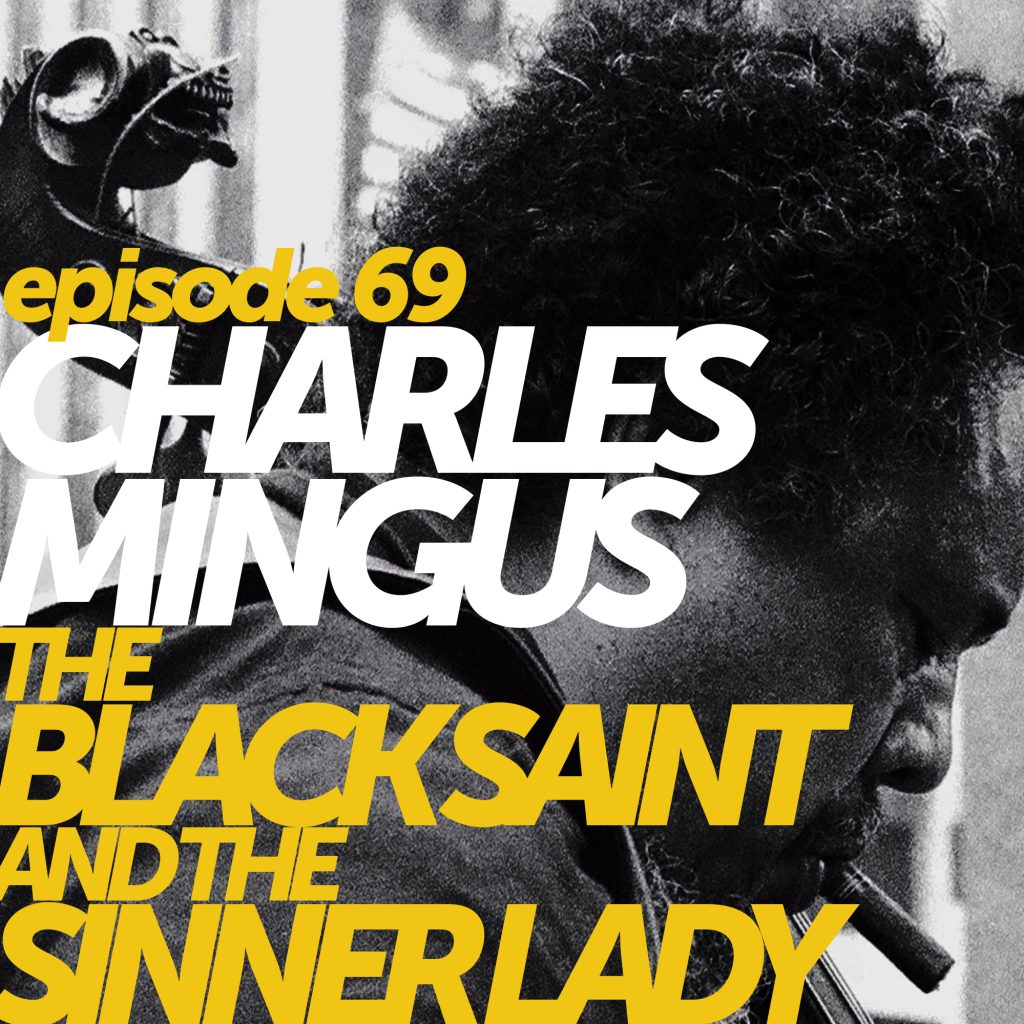
Episode 69: Charles Mingus’s “The Black Saint and the Sinner Lady”
When you think of true "artists" in music, who comes to mind? Charles Mingus embodied its romantic ideal, for better and for worse. His magnum opus "Black Saint" is more than even jazz's cosmic form can hold—it's the full-bodied essence of a master composer, peerlessly inventive bassist, and clairvoyant critic of the real America. In it, you’ll find what his collaborator Gunther Schuller called "the widest ranging musics you can find composed by one single human being."
Episode 68: Gang of Four’s “Entertainment!”
“Entertainment!” is described by Gang of Four’s Jon King as “a record about young people smiling and dancing in the face of disaster.” Uh oh, sound familiar? This Leeds-born slab of Brechtian boogie reminds us that to navigate a world where everything is (small-p) political, dancing and dialectics belong together. Free your ass and your mind will follow.

Episode 67: Brooks & Dunn’s “Brand New Man”
This is the tale of two lonesome cowboys who got down, turned around, and went to town catching lightning in a bottle on their first try together. Whether or not their decade-defining country anthems lit a flame in your eye in the 90s like they did ours, Ronnie and Kix offer a lens through which outlaws, in-laws, crooks, and straights alike can look for ways to learn to love again.
Episode 66: Oumou Sangaré’s “Moussolou”
The name "Oumou" derives from an Arabic word meaning "mother of." It is associated with dignity, wisdom, and maternal strength. Southern Mali’s Oumou Sangare has come to embody her namesake for millions around the world, and it all began when she was just 19 years old, channeling the magical music of hunters through her powerful and purposeful voice and creating a moment that captivated an entire country. Hers is a story everyone should know.
Episode 65: Missy Elliott’s “Supa Dupa Fly”
In the words of one of her groundbreaking forebears, “You feel free? You want to try some wild s**t? Thank Missy.” Since the very first frame of “The Rain” entered our eyeballs, Missy has made the avant-garde accessible, pointing us to a future full of more funk and more fun simply by standing fully in the splendor of her space-age self. Come (supa dupa) fly with us back to the moment where Missy’s magic began.
Episode 64: The Cramps’s “…Off the Bone”
God is a woman and she plays the guitar loud … y’all come catch some Holy Ghost in your hips. Hear our hallelujah for the love story of the queen of rock ‘n roll and the mad daddy holy rollin’ on a river—upstream all the way—and boot scootin’ through a fun and freaky heaven and earth of their own design. The Cramps were Dionysian, devilish, dangerous, and damn good, and they remind us that life can be, too. If you can’t dig this, you can’t dig nothin’.
Episode 63: Black Moth Super Rainbow’s “Dandelion Gum”
Life’s a bit heavy to chew on these days, so we reached into the pocket of our mid-2000s jeans and found an old piece of Dandelion Gum to chew on instead. As soon as its neon syrup hits your tongue, you’ll wonder why you hadn't let this "future pop for now people, today" melt you, melt you, melt you yet.
Episode 62: Project Pat’s “Mista Don’t Play: Everythangs Workin”
This life we're livin' is oh so beautiful. Take it from Patrick Houston, who has spread the gospel of the real for three decades, followed by a discipleship that has shaped 21st century culture in his image. For those still alive in 2025 by the grace of God, let us give flowers to the man from the North North.

Episode 61: Grace Jones’s “Nightclubbing”
Not a woman. Not a man. A revolution. Music’s long history is littered with larger-than-life characters whose mythology shapes reality for the masses — and few loom larger than the mighty Grace Jones. “Nightclubbing” without context is a tremendous body of songs worth anyone’s time, but after a deep dive into Grace’s time at Compass Point, you’ll agree that it’s a vital work.

Episode 60: Paramore’s “This Is Why”
The menace and melancholy of modern life have sentenced scores of young people to the gilded prison of nostalgia — but much to our surprise, a band of recovering Southern pop-punks have an antidote. For anyone willing to “sit still long enough to listen to yourself,” their new music’s sharp rhythmic angles and sharper lyrical reflections frame a doorway through which to free our big feelings and forge ahead.

Episode 59: Ennio Morricone’s “The Good, The Bad and The Ugly”
You know that five-note coyote howl. You may even know the classic film it helps power. But what do you know about the man behind those iconic moments? For our final exploration from our 2024 calendar, reflect with us on the genius of a maestro who could make magic with a mere fistful of notes, who poured forth from his soul a foundation upon which much of 20th century popular culture was built.

Episode 58: TLC’s “CrazySexyCool”
Vision. Bravery. Originality. The 30th anniversary of the ATL-exported opus — by the highest-selling girl group of all time — offered us a chance to reflect on all the ways our hometown heroes ran so some of the 21st century’s most iconic artists could fly.

Episode 57: Kendrick Lamar’s “good kid, m.A.A.d city”
Before the Super Bowl, the super beef, the Pulitzer, or PGLang, one good kid and king-to-be sojourned from South Central to the height of the American promise and rained down lightning that united one nation under a groove. You’ll feel the energy of this episode from two planets away — hop in the van real quick and let’s roll out.

TuneDig Episode 56: Cocteau Twins’s “Heaven or Las Vegas”
Dream of ethereal waves of sound swirling around you—and words you can’t make out saying more than you could imagine—as you float back upstream with us toward the warmth of Cocteau Twins’ decade-defining masterpiece, which still ripples across a vast pool of influences 25 years on.

TuneDig Episode 55: Jeff Buckley’s “Grace”
Once upon a time, “your favorite artist’s favorite artist” wasn’t a Midwest princess, but a “mystery white boy” beloved by Bob Dylan and Adele alike. Jeff Buckley’s signature Grace is on the shortlist of transcendent albums every living being should experience, because, as one industry vet put it: “it’s all in there, isn’t it? It’s just all in there.”

TuneDig Episode 54: Botch’s “We Are the Romans”
"We Are the Romans" is a visceral, vital document guaranteed to make you feel something from its first notes — and there’s never been a better time to stop and smell the roses from a group just now getting its long-overdue flowers.

TuneDig Episode 53: Ravi Shankar’s “Three Ragas”
Ravi Shankar lived one of the twentieth century’s most extraordinary lives, bearing witness to—and making—history all around the world. To many (especially in the West), he personified an extraordinarily complex style of music and the cultures from which it was borne, and he worked hard to make it look easy.

TuneDig Episode 52: Alain Goraguer’s “La Planète Sauvage”
Gather ’round, sommeliers of the strange and crate-digging boogie children, for something “Strange! Frightening! Fascinating!” awaits. The soundtrack to Cannes 1973’s Jury Prize-winning film is a dazzling, surreal, avant-garde hymn to cosmic knowledge and compassion and a secret handshake among real heads. If you’re after a trip to a new dimension, here’s your one small step for man.

TuneDig Episode 51: Marvin Gaye’s “I Want You”
Marvin Gaye’s well of soul power ran mighty deep, and deep into his career, he pulled up a bucket of ice-cold, silky smooth champagne called “I Want You.” Come for the lush instrumentation, vocal harmonies, and Leon Ware clinic; stay for the stories. For our return from hiatus, we observe a titan in his element, reflect on the pain that built him into one, and consider how to reconcile our feelings when complicated messengers deliver beauty to our door.
SEASON 6

TuneDig Episode 50: Funkadelic’s “Maggot Brain”
Before uniting one nation under a groove, the lysergic lords of chaos in Funkadelic harnessed wild lightning into an amulet called Maggot Brain, bestowing the bearer with raw, dark power stronger than any force known to man. Between reaching our 50th episode and coping with the “maggots in the mind” of today’s universe, it felt like the right time to free our minds. We hope y’all’s asses will follow.

TuneDig Episode 49: Alice Coltrane’s “Journey in Satchidananda”
The story of Alice Coltrane — an accomplished bebop pianist from Detroit who transcended into something far greater before walking away from public life altogether — is a glimpse into what it means to be truly free. Alice’s masterpiece "Journey in Satchidananda" is a cosmic dance that sparked creation from destruction. And in a time when we’re all desperately searching for a spark of meaning and hope, Journey abides abundantly.

TuneDig Episode 48: Heart’s “Little Queen”
Take a moment to appreciate Ann and Nancy Wilson, who kicked down the doors of rock ‘n’ roll’s boys’ club with their peerless guitar work, soaring soul vocals, and tight songcraft. 1977’s Little Queen — an oft-overlooked gem in the classic rock canon — offers a snapshot of those elements at their most urgent and pure, powered by the Wilsons’ simple motivation (as described by their producer): “It was a war.”

TuneDig Episode 47: Tangerine Dream’s “Phaedra”
When you think of “electronic music,” what comes to mind may not be a genre you deeply love — hip-hop, house, new wave, or even dub reggae — but all of it owes some debt, scientifically or otherwise, to Tangerine Dream. Dig in with us as we study a prime example of the band’s brand of effortful innovation, where they patiently and persistently labored at the cutting edge of electronic technology to open a portal to new worlds in our minds.

TuneDig Episode 46: Olivia Rodrigo’s “SOUR”
Did you catch one of 2021’s biggest albums, or like us, did you almost overlook it? If you have any expectations of pop music, "SOUR" will likely subvert them. Teenage dream this is not; it’s an exquisitely universal portrait of a weird time to be alive.

TuneDig Episode 45: Fela Kuti’s “Expensive Shit”
The story of Fela Kuti — one of the most famous people on an *entire continent* passionately struggling to liberate power to more people — is absolutely one worth deeply knowing, regardless of whether you find yourself drawn to Afrobeat or (cringe) “world music.” But once you know it, it’s almost impossible not to fall in love with Fela and Afrika 70 as their revolutionary grooves rewire your brain in magical and meaningful ways.

TuneDig Episode 44: Meshuggah’s “ObZen”
Meshuggah’s ObZen—an artifact of human creativity pushing the limits of what’s possible—will quite literally make you hear music differently. If you’re looking for a new musical adventure, and especially if you don’t think you like “heavy” or “weird” music, consider this your sign to push past your comfort zone.

TuneDig Episode 43: mewithoutYou’s “Catch For Us the Foxes”
A misunderstood wise man once said “Let him who seeks continue seeking until he finds.” In our most personal and vulnerable episode yet, we do some seeking through the lens of songs that fill us with the bravery and sincerity to love ourselves and others fully. Dig deep with us as we fish for words about our tiny place in the universe and dance with gratitude for our ability to do so.

TuneDig Episode 42: Erykah Badu’s “Mama’s Gun”
Y’all tryna raise your vibrations? Erykah Badu is here to help. Season 6 kicks off with a meditation on realness and what being on “your own wavelength” really means. (Spoiler: it ain’t a single frequency — it’s a whole spectrum.)
FRIDAY HEAVY
For lifelong headbangers and the musically curious alike, a new podcast from TuneDig is here to push your palette with aggressive, abrasive art. Each short, fast-paced episode offers (1) a new metal, punk, noise, or experimental release we recommend, (2) a related playlist we’ve curated, and (3) a heavy issue to consider and an organization doing something about it. Join us in the void.

Friday Heavy: End of Year Review 2022
It was a great year in heavy music. In this episode, we look back at all the new releases we featured and the curated playlists they spawned.
It was a NOT great year in many other ways. We leave you with a parting message of encouragement to connect your energy and angst to on-the-ground organizations doing the work in your community.


Friday Heavy: November 11, 2022
This week, we discuss:
- He Is Legend – Endless Hallway
- Curated playlist sussing out the depths of He Is Legend’s roots, weirdness, and attitude
- Protect Our Winters (POW)

Friday Heavy: October 28, 2022
This week, we discuss:
- Witch Fever – “Congregation”
- Curated playlist of eclectic, high energy that might get your inner goth stoked on (briefly) going out
- Housing Justice League

Friday Heavy: October 14, 2022
This week, we discuss:
- The Lord † Petra Haden – “Devotional”
- Friday Heavy playlist densely packed with thick, meditative vibrations across the spectrum of drone
- Multidisciplinary Association for Psychedelic Studies (MAPS)

Friday Heavy: September 30, 2022
This week, we discuss:
- Escuela Grind – “Memory Theater”
- Friday Heavy playlist dedicated to the absolutely fucking hostile energy that powerviolence can bring to radical inclusion
- Zealous

Friday Heavy: September 16, 2022
This week, we discuss:
- Holy Fawn – Dimensional Bleed
- Friday Heavy playlist showcasing the incalculably extensive and wildly diverse Shoegaze Cinematic Universe (aka post-rock)
- MTB Atlanta

Friday Heavy: September 2, 2022
This week, we discuss:
- The Callous Daoboys – “Celebrity Therapist”
- Friday Heavy playlist confronting the under-appreciation of Atlanta’s heavy and weird music scene
- Mississippi Rapid Response Coalition – Water Fund

Friday Heavy: August 19, 2022
This week, we discuss:
- Osees – “A Foul Form”
- Friday Heavy playlist fuzzed out on oddball punk that smells like cigarettes just thinking about it
- Women on the Rise GA

Friday Heavy: August 5, 2022
This week, we discuss:
- Chat Pile – “God’s Country”
- Friday Heavy playlist with, uh, a bunch of very pissed off songs directed at christofascist terrorism
- The Grocery Spot

Friday Heavy: July 22, 2022
This week, we discuss:
- WAKE – “Thought Form Descent”
- Friday Heavy playlist that anchors its sound in modern production of sludge, blackened death, and post-metal
- The Planetary Society

Friday Heavy: July 8, 2022
This week, we discuss:
1. Vomit Forth – “Seething Malevolence”
2. Friday Heavy playlist that’s unsettling in the best way, leaving you feeling a little off your axis
3. Trees Atlanta

Friday Heavy: June 24, 2022
This week, we discuss:
1. CANDY – “Heaven is Here”
2. Friday Heavy playlist packed with off-the-beaten-path punk and hardcore from bands that deserve space on your battle jacket
3. Round Rock Black Parents Association

Friday Heavy: June 10, 2022
This week, we discuss:
1. Sasquatch – “Fever Fantasy”
2. Friday Heavy playlist of heavy grooves for late desert nights and hazy generator parties
3. Feed Buffalo

Friday Heavy: May 27, 2022
This week, we discuss:
1. Decapitated – “Cancer Culture”
2. Friday Heavy playlist stacked with bands putting their unique and modern spin on (occasionally tech) death metal
3. PropelATL

Friday Heavy: May 13, 2022
This week, we discuss:
1. Primitive Man – “Insurmountable”
2. Friday Heavy playlist full of SLOW, enveloping, massive and crunchy tone and big feedback
3. National Network of Abortion Funds

Friday Heavy: April 29, 2022
This week, we discuss:
1. Heriot – “Profound Morality”
2. Friday Heavy playlist packed with mid-tempo, huge guitar tone, big atmosphere and lots of industrial grit and grind
3. Invisible People

Friday Heavy: April 15, 2022
This week, we discuss:
1. Greyhaven – “The Bright And Beautiful World”
2. Friday Heavy playlist for fans of more choatic + melodic combinations
3. Campaign for Working Families

Friday Heavy: April 1, 2022
This week, we discuss:
1. Meshuggah – “Immutable”
2. Friday Heavy playlist full of high quality Meshuggah aping that AIN’T “djent”
3. The Bail Project

Friday Heavy: March 18, 2022
This week, we discuss:
1. Soul Glo – “Diaspora Problems”
2. Friday Heavy playlist with 20+ songs in under 40 minutes, (almost) all under 2 minutes each
3. Equality Texas

Friday Heavy: March 4, 2022
This week, we discuss:
1. Vein.fm – “This World Is Going To Ruin You”
2. Friday Heavy playlist exploring more of Will Putney’s work
3. Books to Prisoners
SEASON 5

TuneDig Episode 41: Miles Davis’s “Bitches Brew”
Let’s be clear: "Bitches Brew" is a challenging record, even to some of the best musicians in the world — but all of them say it’s worth the investment. It’s the kind of trip that, even if we *could* draw a map, it wouldn’t take you there. Let go of the need for meaning and enjoy the ride with us. We can promise you’ll be pleasantly surprised where you end up.

TuneDig Episode 40: Fiona Apple’s “Tidal”
On the heels of one of 2020's most acclaimed albums — Fiona Apple’s Fetch the Bolt Cutters — we revisited Apple’s debut Tidal and wound up working to extract ourselves from the mostly male gazes that made its reception … much different. We arrive at a question much like writer Jenn Pelly had: “People would constantly prod Fiona on how an 18-year-old could write songs as mature as these ... Why did they not ask instead how she became a genius?”

TuneDig Episode 39: Death Grips’s “The Money Store”
The modern world is accelerating beyond our control, shaping our reality in ways we can’t yet perceive or understand. Enter Death Grips, an art project capturing the chaotic energy and illustrating the absurdity of our hubris in trying to harmonize the surreal and extremely real — never more perfectly than on 2012’s prescient "The Money Store".

TuneDig Episode 38: Augustus Pablo’s “King Tubbys Meets Rockers Uptown”
Reggae music is easy to take for granted, but its impact is underappreciated and massive — in the case of dub in particular, everyone from Radiohead to Johnny Rotten to Run-DMC owes it a debt. Augustus Pablo and King Tubby together created what’s regarded as “one of the finest examples of dub ever recorded.” Join us as we dive into the culture, history, and unique engineering experiments that made it possible.

TuneDig Episode 37: Rihanna’s “ANTI”
By every measure — sales, awards, chart-toppers, global name recognition — Rihanna is objectively as big as the Beatles ever were. In fact, ANTI is so big it’s still on the charts, a record five full years later. Take a closer look with us at “the record you make when you don’t need to sell records”, and get a taste of the true freedom that comes from focusing on your inner voice when faced with insurmountable expectations.

TuneDig Episode 36: Son House’s “Father of Folk Blues”
All American music traces back to the blues, and deep at the root sits Son House. That the recordings on "Father of Folk Blues" even exist is something of a gray area that cuts to the heart of the great American myth, but wherever you land after hearing these stories, you’ll find that what matters most is what the great Muddy Waters once said of House: “That man was the king.”

TuneDig Episode 35: Melvins’s “Stoner Witch”
The futility of describing the Melvins has stretched critics in the direction of absurd words like “Dadaist” for nearly 40 years now. They’ve belligerently flogged any attempt to pinpoint their essence simply by being themselves, but "Stoner Witch" remains a reliable mall directory for the Melvins’ vast and wild discography. Grab yourself some pretzel bites.

TuneDig Episode 34: Dolly Parton’s “Jolene”
We should talk about Dolly the way we talk about Prince. Her extraordinary kindness and unique kitsch both make her universally loved, but what gets left out of the conversation is the very thing that made her famous: the music. Join in as we focus attention on the sonics and songwriting of the low-key masterpiece "Jolene".

TuneDig Episode 33: The Allman Brothers Band’s “The Allman Brothers Band”
Six enlightened rogues out of Macon, Georgia birthed an entire genre simply by being their soul-powered selves. We have not come to testify, but we’re still hung up on the dream The Allman Brothers Band helped us see. By the end of this episode, you will be, too.
TUNEDIG RADIO


SEASON 4


SEASON 3


SEASON 2




SEASON 1


BONUS TRACK EPISODES

BONUS TRACK: How We Got Here
We got a bunch of interesting listener feedback in our off-season, and it encouraged us to shed some light on why we do things the way we do ‘em. Also, we reflect on our first writeup, which was ... interesting.
WHO WE ARE
We're Cliff (right) and Kyle (left). We’re two dudes born and raised in ATL with day jobs in tech and sustainability, respectively.
We met in middle school, and in one way or another, music’s been the thing that’s kept us close for the two decades since — whether it’s sharing and talking about new music (like this podcast, except in our texts or over beers), going to shows, or working with our favorite record stores to help them survive and thrive.
We started TuneDig as a little art project that connects us more deeply ourselves and to the world through the infinite gift of music. We hope you’ll join us for the conversations, let us know what you think, and share discoveries of your own.
More About TuneDig
TuneDig began as a little something called MusicGrid.me, which we created after realizing there was no place online to directly exchange music recommendations with your friends. Our aim was simple: to make rating albums simple, useful, and social. We got some love from places like Mashable, Wired, Evolver.fm, and Hypebot. We managed to foster conversation between music lovers, get thousands of reviews, and meet great people.
Along the way, we realized that record stores were an essential part of the music lovers’ community. After many a conversation about how we could helpfully connect them to the people who loved them, we began helping them leverage technology to create new revenue streams and embrace streaming services without giving up what’s unique to them: expertise and curation. (Long live the counter clerk who knows exactly which record will be the right introduction to jazz fusion!)
TuneDig is our vision to connect music lovers with the music they love, because no matter how much has changed in the way we discover and enjoy music, recommendations from people you trust and respect will always be the best way to find new music you’ll dig. With this podcast, we’re channeling the spirit of trusted curation pioneered by record stores, and bringing you something to take you deeper into music you can love.