
TuneDig is an in-depth and informed conversation between two lifelong friends about the power of music — one album at a time.
In each episode, we go down the rabbit hole to spend a while in the strange world we discover. We take an honest look at creativity in all its complexity—from writing and production to history and cultural impact.
We promise you’ll learn something new every time, no matter how much you already love the album we explore.
Episode 81
Black Sabbath
Black Sabbath
What is this which stands before us? A long shadow spreading its magic o’er scores of artists all bearing its seal, certainly. But if we go Back to the Beginning, we can still unearth lots to learn from the band forged from steel unto a wicked world on fire. Whatever your connection to Sabbath today (and certainly you have one), look beyond the lore with us before you know the way you’re going to feel.
Transcript
Cliff: Today we’re talking about Black Sabbath by Black Sabbath
Featuring the song Black Sabbath
Kyle: Keep honking. I’m listening to “Black Sabbath” by Black Sabbath off the album “Black Sabbath” in a black Saab
Here’s one of a thousand things that I love about Black Sabbath is I know a lot of times we have said early in the episode, I don’t know what we’re going to say about this. How could you possibly,” you know, yada, yada, et cetera, et cetera. it seems so obvious to the point of stupidity to have a conversation celebrating Black Sabbath on a music podcast that it– I mean, it’s e- it’s either just like gluttonous or useless or both.
but one of the things I love about Black Sabbath is, I thought it would be hard to find things, and it wasn’t. It just wasn’t. And I think one of the things that made it easy, very quickly, was so many of these conversations recently have been for us, for me making eye contact with you, Cliff, two friends on the journey of discovery, going wider and deeper together.
I never have anybody outside of that in mind for these conversations. But I have two very specific people, not, first name, last name human, but like two archetypes of person in my mind as we go through this, that like I am hopeful this will find them and be available for them cosmically when they need it.
One is For every young person, 13, 14, 15, 16, who hasn’t been afforded the older sibling moment of, like, putting the cassette in the tape deck, putting the needle down on the record, and scaring the s**t out of you with this thing, but also blowing your mind.
like for instance, Mark Lan- I saw a video of, on the 50th anniversary of this record, of musicians talking about it. Mark Lanegan said, “A kid played me ‘War Pigs’ from my school, and I made him play it for five hours straight.” there’s a lot out there about why Black Sabbath is great, and hopefully it’s all self-evident.
But, like, if you need a guide, if you need two people that know that you need a guide, we’re here for you. The second is on the far opposite end of that spectrum, is super-duper heads who have absorbed Black Sabbath as part of their vernacular a long time ago, and they’re like, ” I just like it,” or, “I’m whatever on it,” or, “I accept it as part of the ecosystem of music.
I’m glad for it,” I’ve moved on to more challenging forms,” Don’t bother me with Black Sabbath self-titled. I’m on to Ornette Coleman,” or whatever the hell, man. I want to plant your feet in the earth, pun fully intended, of this simple, beautiful, farm-to-table, f**king s**t-kicking good time This is a good ass record. Everybody knows it’s a good record. So if you’re a person who’s never appreciated it or a person who has appreciated it too much, I invite everyone to return to center and just be like, “Wow, tight.”
Cliff: Returning to center feels especially redemptive because of how comically hated this record was the moment it dropped, which I think is cool to go ahead and mention, not just because it’s funny when people are wrong. Like every- everyone’s
Kyle: Us most of all.
Cliff: Exactly,
Kyle: Yeah
Cliff: exactly. Yeah. Y- yes. I dream of a day, one day, when a future format of podcast is two people sitting around going, “Listen to these people and what they have to say about some of my favorite bands and music,” and just dig up our s**t.
Kyle: ChatGPT, pull me together a greatest hits of Cliff and Kyle saying stupid s**t. Actually, for anyone who’s listening and might be interested, we use a service to record that once pulled together a horrifying greatest hits of all the times we laughed in our recordings, and it was just an absurdly long super cut of us laughing.
Nothing else. That was it. That was the whole bit. It was a surrealist nightmare. I’m so glad it exists, existed once upon a time, and I don’t ever want anyone to see it ever in my life, which means Cliff is probably gonna show it at my funeral. He– Y- you would if you could get the you parts out of it, I bet.
If it was just me laughing over and over and you freeze framing it on yourself not laughing to make it look like it’s just me laughing at myself the whole time. Black Sabbath is such an inspiring band that in the first five minutes I’ve already brainstormed a bit for my own funeral
Cliff: The comparison is appropriate because I remember the sensation of watching a video of me laughing from two hours back into my brain and as if to say, “Do you really feel this happy?” Tha-
Kyle: It, it really did come across like an intrusive thought. It really did
Cliff: Just it was forced upon us. Uh, I can assure you I am not clicking the sparkle buttons that say, “Do you wanna discover a thing that I can make on the fly for you?” No, I don’t. I’ve had enough. But the serious straightforwardness with which people didn’t like this record is awesome to mention because trying to discern why that shifted over time is one of the interesting reasons to listen to this record even if you have every moment of it memorized.
This is like a cultural artifact that is capital I important, in a ironically and unironically religious sense. it’s deeply influential. And so to have one of our favorite stars of this show, Robert Christgau, say things like “This is bullshit necromancy. C minus.” and really hate it, and then Rolling Stone had a kind of famously hateful review, response, whatever, which like at this point, you know, get in line.
There have been plenty of them from this time period. But the band Cream is mentioned five times in like three sentences about Black Sabbath just to be able to say basically, “We already have Cream. This is like poor man’s Cream. And because I’m English, when I say poor man, I mean that as an insult, not as like a cool turn of phrase.”
and so like this is basically s**tty knockoff Cream from somebody who noticed Aleister Crowley once, with a guitar player who quote, “Dribbles wooden Claptonisms.” it’s brutal. But the reason I think it’s cool and, you know, for the bajillionth time, the reason I love this podcast and the exercise of it in general is like most of that stuff is accurate though. Like most of it is true. It doesn’t have to be wrong in order for this record to be awesome because it was focused in on an aspect of it that they weren’t looking at, that we’ve discovered in retrospect, and frankly, they discovered within three to four years after this record coming out anyway. it’s an especially fun you know, we– The last record we talked about was “Between the Buried and Me” and our overarching topic was like music can be like this.
Like this was, like an international music can be like this moment for people, and it was executed by kind of a bunch of dudes who really just wanted to play in a blues band but managed to have a momentary brilliant concept of if we tried to make it sound scary on purpose, what would that do?
And it just so happens that that combination of things was a nuclear bomb in music in all directions.
Kyle: Yeah, but it also had to be the right combination of people in the right time and physical geographic space. The more I think about it, the more you couldn’t replicate this in a lab if you had a billion tries. And fortunately or unfortunately, we have had a billion tries. I can’t think of a more imitated or emulated band in the world than Black Sabbath.
We collectively have seen or listened to the records of easily 2,000 of them. I mean, the end of this episode could be just, you and me going back and forth naming bands that sound exactly like Black Sabbath until one of us keels over and dies from malnutrition.
Cliff: That is the literal story of our lives. But yeah, keep going.
Kyle: truly, yeah, just like a gunfight at the O.K.
Corral naming stoner bands. but You have Anthony Frank Iommi, William Thomas Ward, John Michael Osbourne, and Terence Michael Butler, four, I mean this affectionately, working class s**theads from the suburb, like not even quite Birmingham, of, of Aston, the surrounding areas of the dystopian industrial hellhole that is Birmingham, UK.
Like, uh, me and you are a couple of rednecks, buddy. Like we’re no, we’re no strangers to a rough and tumble place. Uh, Bur- Birmingham is rough. It’s not a place as
a dad that I would wanna raise a kid, that’s for sure. At least not in this
time in history. Uh, and these guys were all born within a few months of each other. They all lived within a few blocks of each other. They all grew up to working class parents, tough kids. Sometimes, like in Ozzy’s case, they didn’t necessarily know where the next meal was coming from. And I know we’ve tried to hone in with episodes like Odetta on the importance of like, you need to know the history politically, socially of this specific moment.
But like 1968 to 1970, when this record came out, when this band gets going, let’s go back to ’67 even, to ’70. You have Vietnam, you have all of the civil rights stuff happening in the US. You have, the looming threat of nuclear war around post-World War II, post-Cold War. you have the austere economic conditions that are all around them, but then you have the cultural stuff of Beatles, Stones, the hippie movement.
also the Manson murders in the US get brought up as like a, end of the Age of Aquarius moment. So one thing that didn’t really occur to me until we started clicking in on this was like how affected by popular cultural youth movement this was. I’d always just thought of Sabbath as this thing that was like ripped out of the ether by these four dark weirdos.
But they were just young people doing what young people do. And I say all that to say like it, it made me look a lot more affectionately toward what you young people are doing now, and like Could some version of the next Black Sabbath, like not in popularity, not in cutting through the cultural consciousness, but in weirdness and newness, could it be forming right now?
Could it be out there? And it, it just keeps me excited about and bullish about young people on the fringes and how we need to look out for what they’re doing and how they’re expressing themselves. So like There’s a lot of conflicting mythology in the 50 years since they became one of the most influential bands in guitar music history. But it really is just like a force. it’s the archetypal four simple dudes picking up instruments and f**king going for it story that’s been beaten to death. But it’s also like t-time and space. Just The world built a perfect bomb with this moment
Cliff: Almost certainly something about what this band thought, intended, something in that nature. Almost certainly something is going to surprise everyone.
Kyle: I agree with
Cliff: there, there is some lore crossover that you’re probably mildly aware of. You know, some of it has just sort of built up implicitly over the years.
S- some of it is just Ozzy Osbourne having been a weird fucking person. it doesn’t necessarily reflect back on exactly what this band did or especially meant in this particular moment. And so even though some of these may be sort of well-known, I think it’s cool to set the general stage of how this got recorded, what the intention of it was.
and honestly, to tee myself up a little bit for something interesting, I think talking about why Tony Iommi is not an incredible guitar player is the best way to talk about why his guitar playing is important and why it matters.
Kyle: Yeah
Cliff: because this will still not be breathless praise of a thing for no reason.
This is not… If you are looking for, like, at least what I would think of as some of the most interestingly composed music of all time, just hop back one episode. we’re good. this is not that, and I say that as someone who I think reveres and appreciates this record more than ever. And I already thought it was gonna have to be an aspect of my personality when I was younger anyway
Kyle: Totally. So I think of it like this. I think that’s a very good point. I think of it like, I don’t find electricity like the harnessing of electricity to, to be more of a compelling invention now than, you know, the semiconductor or space flight or the sort of exponential lifts, but it’s it’s a foundational document to everything.
Nothing happens without electricity. There’s no “Between the Buried and Me,” unquestionably,
Cliff: Right
Kyle: without Black Sabbath, right? There’s virtually nothing that we like with a guitar without Black Sabbath. So have people gone on to do like objectively more challenging, you know, like heavy air quotes here, better things?
Yeah, sure. Probably. Were their peers doing more complex, challenging, cool, what, groundbreaking things? Arguably, yes. We just have to acknowledge, like this is the sweet spot, and I’m not talking down on Sabbath. Like I, I f**king love this s**t more than… Like it just hits me in the jejunum. I love Sabbath. this is reinforced for me. I could listen to only Sabbath for most of the rest of my life and be great. Be totally f- It could be on in bars or at breakfast or the beach, or sad times, happy times, times where I wanna be drinking, times where I wanna be exercising. It works for all of it. I think they’re rad as s**t, but I’m totally with you that it’s like I don’t think we need to heap Oh, wow, Berkeley School of whatever,” you know, this is fresh air on NPR” type praise on it.
Like I don’t think we need to intellectualize Black Sabbath.
Cliff: N- no. And if you do it too much, you’ll miss kind of the entire thing
Kyle: Yeah, yeah, yeah.
what’s that, what’s that thing you said? Lights on in Space Mountain? Don’t lights on in Space Mountain. Like, Black Sabbath is a Space Mountain ride. Don’t turn the lights on
Cliff: So, okay, I didn’t expect you to say that, but yes, so well said. For the most part, w- everything we’ll talk about from here and everything that flowed out of Sabbath, it’s not because they made metal, it’s ’cause they turned the lights off in a way where other people went, ” I see that. I know how to do that now over here.
I know how to replicate that exact feeling and vibe of like despair.” and this is where all the kind of funny bits of it come along, right? Like the whole premise of the like Black Sabbath played the infamous tritone, Diabolus in Musica in the very first song, in the very first riff.
that is objectively, Tony Iommi laundering in classical music. Like that’s not him being… He wasn’t like, ” I wanna scare the children with the guitar riff.” He said, “I wanna make a scary sound with my guitar.” They worked it out live using an interval that they noticed elsewhere, worked with it, and then went, “Yeah, that’s good enough for a whole riff.”
Kyle: By the way, yeah, by the way, I think the much more interesting story with that song is they just play the three notes over and over, and only small variances like trilling on the third note versus kind of bending on the third note and letting it sustain. Almost entirely it’s just the three notes over and over, which is insane, and it works so well.
It just moves and you don’t, you don’t even note it. I
Cliff: Because it, yeah, well, it’s exhausting.
Which is like, I think that’s another aspect
Kyle: It’s d- it’s truly doomy.
Cliff: yes, like the, the bleakness of the existence of a lot of these people around them and perhaps them themselves is like seeping through this music in real time. it is scary because it feels relentless and hopeless in a really cool way.
But now’s also a good time to just remind people as well, like this whole record does not feel relentless and hopeless, and therefore I appreciate more what they’re doing in these moments. Like I think we over-project some of the like Iron Man level riffs and stuff onto this band over time, and we forget that like half the time they’re a fucking boogie band.
Just-
Kyle: They’re the world’s heaviest blues band at this point. Yeah
Cliff: so then getting a little specific with it, but also to help people just like, this song, literally the first song off of this album from this band is a very, very good way to practice being good at listening to things.
And one of the reasons why is, okay, so part of what we already talked about, like laundering and classical music.
So, the, the famous riff in the song that as we just talked about, basically j- just gets repeated. So that’s inspired from Gustav Holst’s “Mars, the Bringer of War.” And what he’s doing is bringing that in, and the whole song relies on this really steady musical idea that again, like repeats and starts to exhaust and feel like it’s going on and on.
It’s really simple, but the way that there’s like two things that I want people to notice and like it starts to unlock s**t and it’s awesome. man, I love the fact that I woke up today and was like, “Cliff, I’ll have this. You have to talk about Black Sabbath with Kyle today.” Oh, no.
Kyle: Niin.
Cliff: Two things are cool and interesting about it that are more than just choosing that interval and cause the thing to be memorable itself. One is he’s Going in between with vibrato the actual interval and the normal one. he’s going in between what would normally be a full normal power chord and this interval, and instead of just like hitting it dead on, that last one goes back and forth over and over and over again every time.
Again, that sensation of like being exhausted, it comes not just from feeling that like weird dark interval, but actually from the like teasing of like this could sound differently and we chose it this way on purpose.
yeah
So and if you, I don’t know, are f**king new to this podcast and you think like Cliff’s gone off on a thing and invented a thing, okay, here’s some evidence for you.
Here are two other songs that feature this exact tritone, and I want you to think about whether they have the same aura of the band that we’re talking about here. Okay, two examples. One of them, ” YYZ” by Rush is the same thing as this over and over. Okay? So like, and if you can’t remember that off the top of your head, you go ahead and go listen to YYZ. Now you come back and tell me, I’m not saying Rush, I’m not saying anything negative about Rush, but like do you feel like that was sinister? Do you feel like that was dark and heavy?
I mean, it sounds a little bit like “Space Lasers.” I like that song. It’s cool, but it doesn’t have aura. It’s not terrifying to me just because it has the same interval in it that this song does. And then
Kyle: I mean, I think it’s specifically the
Vincent Price-y, like the password-y nature of these notes in this order over and over, like saying a secret code to open the door behind the library books type thing, right? ‘Cause like the interval itself, not inherently sinister
Cliff: Exactly
Kyle: But it’s the three notes in that order and then the, the repetition.
I mean, I think the first one gives you chills and then they stick at it at the same pace in the same order. The commitment is als- almost like getting followed, uh, at a slow pace by Jason Voorhees type thing, like an unrelenting
Cliff: Yeah. Yes.
Kyle: There was another example you were gonna bring up
Cliff: yeah, yeah. Uh, but I think that was great too. Like the, the relentless nature of how the riff gets done is the thing that makes it feel this way, not the interval itself. Um, the second example for sure is the “South Park” theme song by Primus. Yep. So again, if that, if that’s not popping up to you immediately, for, for 95% of everyone, they heard the right?
So like, okay. But if you haven’t, go spin it again, come back. Did that feel sinister to you? No. I think
Kyle: Even though there’s a lot more murder in “South Park” than there is in the Black Sabbath self-titled
Cliff: And similarly, is that because it’s in the middle of nowhere or not? We don’t know. But those songs help break apart what we mean and what people came to appreciate about Black Sabbath in reverse. And a thing that I think helps explain not just Tony Iommi, but actually pretty much everyone in this band.
It is a maybe the the whole is greater than the sum of its parts thing in music. Everyone here is good, and I don’t, I don’t really ever wanna be on record listing real live musicians and saying some of them are good or not good. That’s not really what we’re talking about. But like in comparison to musical proficiency and displaying that, right?
Like, Black Sabbath is, is not Mahavishnu Orchestra. Like, it’s a totally different approach. And so in that sense, being able to step into a song and then all the way into, like, the one riff, and then all the way into those three notes and go, “Why does it feel this way?” If you can, like, discern why things feel that way, especially just right here, you’ll get something that unlocks sort of the rest of this record
that I think is really helpful.
Otherwi- it’s enjoyable on its face, yes. But like, chasing the… there’s only really ever one specific little idea being done. It’s never really, this isn’t like a layers band. Maybe we’ll mention this more, but like, this is more or less a live recording. You know, the, the lore disagrees about whether it was done in one day or three days, but it was nevertheless a live recording, you know, ran all the way through.
And so, this sounds live, and a lot of what’s being brought out is being done in real time, perhaps inspired, perhaps rehearsed, whatever. But like being able to draw that out so much in a live recording and then create the response that it did deserves some appreciation even for the things that seem simple.
Kyle: Totally. so like I totally agree with you, simple elements like blues jam record, the liveness is so essential to this. There are like, let’s call them mistake moments that you can hear all over this, like sort of missed accents on the drums, or there’s a moment toward the end of “The Wizard” where if you’re listening really loud, you can hear a place where I think a bass note should go underneath everything, but there isn’t one.
There’s a lot of just sort of like pub rock moments all over that, but the playing is solid and consistent enough that it never feels anything less than like, “Oh man, these, these dudes can rip.” but I do think there’s an element of atmosphere that elevates it over– there’s some choices around atmosphere and imagery and stuff that really elevate it, and to hear the guys tell it, none of that was really their choice, but they like sure didn’t do anything about it.
You know, there’s a lot of that Johnny Cash hands in pockets, like, “Aw, aw, shucks,” you know, “We came to be the sinister band” type thing. “Oh man, all these, all these shyster marketing guys from the label, they done did all this stuff all way.” but I specifically mean on this track, the Foley effects, the– Like if this song had just opened with the tritone as soon as you drop the needle, sure the notes are scary or ominous or whatever, but the 30 seconds or whatever of buildup of the rain and thunder and lightning and the church bell make all the difference.
Because you’re like, “What’s about to happen?” I mean, there are few things more heartbeat accelerating than the slow fade or the, “I think something’s about to happen. Do I need to turn it up?” And then it blasts full volume and like kills your ears or, or whatever. That’s such a good move on records.
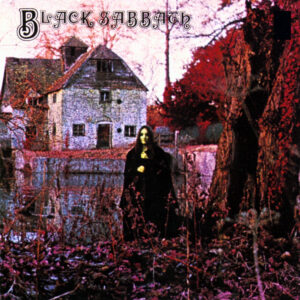
The like lean forward, draw in before you get on that full blast thing, and it’s done excellently here. And I, I think, whether they loved it, hate it, intended it, never thought about it at all, never crossed their minds, it reflects their fairly cinematic psyche. Like they’re a band named after a horror movie, that is what it is. That’s an inarguable fact. so I think atmosphere and visuals pervade. And then the other thing is the cover. name a record that is more judgeable by its cover. I can’t think of many. And it’s just a shot of a mill with a like 18, 19-year-old girl from around the way in s- in a cloak and some strange makeup, and it’s shot with dry ice and interesting effects.
and it both captures their environment in a really honest way, in a way that looking at it with 2026 eyes reminds me of Chat Pile and their shots around Oklahoma City. but also conveys the surrealism and like this is some different s**t type signal of the atmosphere that you get with things like the ambience when you drop the needle.
yeah, it’s real simple, but then there’s little things like that. The other thing is the strange, uh, the like boing boing harp or whatever in
Cliff: jaw harp, mouth
Kyle: yeah. Yeah, yeah, in “Sleeping Village”. that’s a weird choice. Like the, again, four very young pub rocker dudes, that’s a strange zigzag of a choice. and there’s so much about this that’s like, yeah, they recorded two songs on the first day, and then they recorded the rest in a marathon 12-hour day, Otis Blue style. It’s very clear there’s not too much thought put into any of this And it, it makes all of it so much better I’m not gonna accuse this of being accidentally the most genius thing that ever happened. it’s just that it is so f**king rock solid when so much of it was done in the manner of its time they recorded this record in l- let’s say 18 cumulative hours, and then six months later they were back in the studio and put out a second record that’s even stronger in the same calendar year.
that again, I think is like a function of the time and space and of the environment that they were in that I wanna say, like I feel the need to say is irreplicable, but I don’t know. I, I hope the message for the young people out there is like, it’s not, just do it.
Just don’t overthink s**t as the neon sign in Kenny Beats’ cave says. Just go.
Cliff: And we’ve mentioned this a handful of times before because this is a obviously a common thread in great records we’re talking about. But like, yeah, to that point also be encouraged man, if you got a conviction for an art thing, yeah I’m using really generic words ’cause that’s all it takes.
If you have conviction about an artistic thing, just do it. Even if it takes you years, even if you can only do it for a couple of minutes a day until you build up and eventually do it. Like I, to this day, I have released music into the world. It is some of the weirdest, arguably some of the worst things that have been recorded, and they are out there for everyone to hear.
And you know what? I’m proud. Like I feel really, really, really good about the fact that I did some things that I had conviction about and I, I got them close enough to where I could show people and go, “I had this weird idea and now it exists.” I think that’s a, clear takeaway for us from this that I love it because it’s so sort of uncomfortable.
to do the thing with conviction that is gonna look good in the rear view mirror, you might have to do some things that like… Like I fully agree with what you just said, Kyle, and I literally wrote in the notes specifically about like the intro sound effects. I literally wrote low-key brilliant decision to set this up.
And at the same time, I would argue 1970 rolls around, this album drops out, I put on this record and a storm sound effect comes on. I don’t know, man.
Kyle: For
Cliff: don’t know. I don’t know. uh, okay, a little bit of cheese it even feels like now, and yet I think it’s a great decision. It still works. It does a thing that outlasted the moment of uncomfortableness about that decision itself in the studio, however it played out and however it happened.
And like
I
Kyle: w- it was added after the fact. A- and again, apocryphally, there’s conflicting stuff from different sources, but it seems like a added in last minute, somewhat surreptitiously, you know, maybe not a band decision type of thing. I don’t know. Someone who has more clarity on that is welcome to write in and let us know.
Cliff: The, the band themselves can’t even and don’t even keep the story straight over the years. So
like I ‘
Kyle: cause they fried the living s**t out of their brains, bro. I don’t– There’s no official record to be had now because of what is left of the gray matter of these esteemed gentlemen. It gone
Cliff: Fair enough
Kyle: it’s dust in the wind as opposed to dust in their nostrils.
Cliff: Yeah, to your earlier point, you know, they, they although still do a lot of like both hands in the air like, “Oh, oh, was this evil? Oh, I didn’t know anything about that. Oh, I did… Okay.” N- oh, they sent out that album cover without even talking to us.” Like, that, oh, okay.
Kyle: No, the cross isn’t upside down. Just turn the sleeve around and then it’s a cross. You’re reading it wrong
Cliff: I’ll once again take pleasure in the opportunity to remind people that the inverted cross is a Christian symbol before it was used in ironic ways.
But
Kyle: keep honking. I’m listening to the Christian rock of Black Sabbath
Cliff: If this cross is upside down, flip my Jeep over
Kyle: Exactly. Jesus listens to Black Sabbath. You’re listening to 107.4 The Fish. It’s your dog, the J Man here with “The Wizard” from Black Sabbath. “The Wizard,” coincidentally also what I call my drug dealer. Here we go.
Cliff: Oh, Kyle, you sound like you’ve been on the radio
Kyle: Once or twice
Cliff: before. Bef- before we talk about my favorite Black Sabbath song of all time, I would just like to note though, that like anytime I ever want to minimize the like hilarious creativity of this band, I encounter moments like the end of this song. What in the fuck?
They just ended the song and then they come back and do two beats and out. Why?
Kyle: of of Black Sabbath, you
mean? Yeah. And then that jam, that one minute at the end after they do the tri-tone for four and a half or five minutes is a sick jam, and it’s just a throwaway. There’s so many things that are like little motifs, little jam motifs that they get on, you know? There’s stuff that they reuse, like little phrases and whatever.
there’s one that turns up on the jam of “Fairies Wear Boots” on “Paranoid.” There’s another one that turns up somewhere on “Paranoid” that was like, oh, so clearly it’s just like these are sort of signature sound move things that they’re doing. but yeah, the, the jam where Tony like really gets into the vibrato and it lasts a minute or so, and then just like dun-dun.
But that was another thing I noticed is all of these songs end in that very live band way, you know? Like bah, dun-dun-dun-dun-dun, like crash it and then close it. They all end with a hard– There’s no fade outs, there’s no studio tricks. All five of these jams end like a band that you saw at a pub. they blast it and they end it.
Cliff: I was thinking of a thousand funny things to say after they blasted and they ended it. So let’s talk about “The Wizard.”
Kyle: Sharon!
Cliff: just to continue the immediate thread that we’re on about all this and how, Black Sabbath is gonna surprise you with how un-evil they are for the most part, ironically or unironically. Like, it’s just an inversion of the types of things you would expect from a band that executed something like this.
Oh, and before we move on from it, just to make sure it’s funny enough, the song “Black Sabbath,” what is this that stands before me? The f**king lyric. It’s ’cause Geezer Butler was, like, in religious psychosis and had read a book about Satanism and had, like, a weird fever dream where he saw a a figure at the end of his bed.
that’s what this song is about. He was, a scared Catholic. It’s not, about Satan.
Kyle: Right
Cliff: and that’s extra funny also because there are songs that are about Satan. That’s not the one. Black Sabbath is just this, really funny, kid’s toy that got painted matte black on the outside.
It’s ju- it’s so funny to discover all the little insides of all this stuff. And then to that point, one of the reasons it’s my favorite song by them, like, “The Wizard” is, harmonica. Ozzy Osbourne plays the harmonica
Kyle: it’s so good
Cliff: but it’s also, I would argue, this is the best example of what Black Sabbath did differently than everyone else.
Every instrument is on 100 on this song. the riff is so killer. the grooves are so good. The songs pace so good. w- we can make lots of jokes. I, you know, I don’t care for Ozzy’s delivery most of the time. This song, he crushes it. It’s perfect. It’s perfect for his vocals. I love the way that everything comes together.
And then, to top it all off, right, this is supposed to be a super, Cream worshiping adjacent blues band. and yet this song ends with a drawn-out harmonica solo.
Kyle: Mm-hmm.
Cliff: it’s so good, and it’s so great that Ozzy did the harmonica itself. Yeah. And it’s just, it’s killer. It’s got a boogie to it.
It reminds me of other songs like, uh, “When the Levee Breaks” and other songs that brought forth a harmonica. And, like, on that one, you know, Robert Plant does the solo. And, like, sort of bring out the vocalist and find out, oh, like, oh, yeah, they probably know how to do stuff, too. Man, everything is inside of “The Wizard” for me.
I almost wanna stop myself from talking more about it and hear maybe what you have to say, ’cause I just adore it too much
Kyle: Well, once upon a time it was known as “Sign of the Sorcerer,” and, you know, allegedly it’s about Gandalf.
Cliff: Mm-hmm. Yes, another reason.
Kyle: also worth knowing that it’s just some nerd s**t, just some nerd blues, bro. I’ve, uh
Cliff: Can I– Hold on, can I do a quick aside? I’m sorry. I’ll help remind you where you were going, but, like, I was listening to another podcast the other day, not about music. Actually, it’s worth mentioning. So it’s called “My Brother, My Brother, and Me.” They’re great. I think their stuff is awesome, and they seem like great people.
Anyway, they were doing this whole bit about the new “Avengers” movie, and they’re sort of talking about it, and then there’s this moment where he stops and he’s like, “You know, this is a good time to remind everybody comic books are not cool.” they do dumb s**t all the time. So the fact that we’ve had years of pretty good action movies using comic books should not cause us to forget.
If you’re like, “Huh, what’s about to happen in this ‘Avengers’ movie seems complicated and conf-” Yeah. Yeah. ‘Cause comic books are not cool. So similarly I love this s**t being about “Lord of the Rings,” ’cause only in retrospect, very similarly, only have we applied that aura in retrospect. That was some dork s**t when it started.
Kyle: Totally.
Cliff: So the fact that they’re writing about it and loving it like Led Zeppelin did similarly is itself really awesome to me.
Kyle: Yeah, I’ve never found that endearing about either of those bands, just to be perfectly clear. But, you know, they, attracted enough women that, uh, that ceased to matter to me.
Cliff: Mm-hmm.
Kyle: I have never thought of this as one of my favorite songs, but I, I think it is. I mean, I’ve listened to it a lot. I think of later stuff as my favorite Sab songs.
but what has really made it visceral for me– This is a really visceral record, right? It’s just like a feel it. It’s got great low end. Like I’m, I’m a sucker for anything with great low end. and this is a song in particular where there’s gr- like the kick and the bass work really great together.
Bill is in full big swing mode. He, he does big band swing that really elevates the swing of blues boogie so much. and so it kind of exaggerates the bluesiness of it, whereas a lot of the other bands were like more skiffle-y or, there was like da-da, da-da, da-da, you know? one thing that The Wizard draws out is like these dudes swing absolutely hard as f**k.
I would say like only Bonzo rivals them in that way. Bonzo, by the way, came up in some of the same clubs, and there’s a great anecdote in Tony Iommi’s book about how he just kept getting kicked out of bands for being too loud in these settings. And on his kick drum case, he just kept writing the name of whatever band he was in with all the previous ones crossed out, and he had to keep writing the band names smaller and smaller ’cause he had pa- played with so many bands.
so just aggressively live and loud Wizard takes me to that moment, that sort of live in the room with a pint, getting vibrations blasted in your face type s**t. But it’s become very visceral for me in the past couple years because it was used in what I think is my favorite needle drop in TV or film history In the show “Barry” on HBO, uh, which is Bill Hader, Stephen Root, bunch of other folks.
Stephen Root plays a character, Fuches, who’s a mentor to Bill Hader’s titular character, Barry. Goes to prison. He’s a pretty square guy when he goes into prison. When he comes out, he’s now dubbed The Raven, and he’s covered in tattoos, he saunters out of the prison in a white tank top covered in tattoos, and the harmonica starts playing.
and there are long– This is a Hiro Murai show. There’s long silences in this show. It’s clear that it’s a big vibe switch, and there’s a long sequence of him getting picked up by his gang-affiliated jail homies in a convertible, pulling the top down. It’s a long shot behind them in the car, them going into a store or something, him eyeing a woman, picking up the woman.
it cuts from the eye contact to her being next to him in the backseat of the convertible, and The Wizard is playing the whole time. And I’m like, they made Stephen Root, who, no shade, I think is, like, one of the greatest living American actors, they made him look like the coolest motherf**ker of all time.
And to be clear, this is the stapler guy from ” Office Space.” This is the guy who got cucked in “Dodgeball.” This is, like, not a guy that they cast to be the cool guy in stuff, as great as he is. They make him look like motherf**king James Dean, and it’s because of The Wizard. God almighty, it’s such a swaggy song.
and it’s about Gandalf. making Grant Gandalf sound like Green Onions is some s**t, bro. That is a task. But it’s, to your point, it’s ’cause they’re all going for it. they are full-blown ripping on this thing.
Cliff: And like Gandalf, unafraid to speak slowly and methodically
Kyle: I thought you were gonna say to smoke on a peace pipe
Cliff: F**k yeah, dude. For sure
Kyle: At least one member of this band already had a cannabis arrest by the time that this band came along. So there is that
Cliff: If there’s one thing that would make the United Kingdom better, it would be access to marijuana starting in reverse from the ’60s on. Yeah. Yeah, and sunlight. It just, just
Well, look, I’m trying to supplement, pale unstoned, people. Yeah.
Kyle: Vitamin D and vitamin weed
Cliff: I c- I cannot rotate the Earth for you, but we can take vitamin D and smoke a joint together.
And to– And between those and our SAD lamps, we can maybe make do The next song starts then to amplify the live feeling because we’re no longer in individual songs really at this point. We are now in,
Kyle: Suite territory.
Cliff: Y- yeah, and sort of, A medley of their songs, which you can, when listening for it, start to pick apart, which is cool. But as we bring up this concept of like how to use Black Sabbath to listen to stuff better, I think this is a cool then opportunity to, all right, yeah, dial in and find the space between the songs. Usually it works pretty well. It also just keeps you dialed in a little bit. But then if you do that, you’ll start to notice the thing that Kyle, that you were mentioning earlier, which is that actually every now and then, very subtly, they do little motifs that spread out and recur and things like that.
And that is, to me, this like really activates the part of my brain that like wants to talk about things forever. But like, that is laundering in classical music and that itself, to me, in my personal opinion, for whatever it’s worth, had more downstream impact on creating metal than almost anything else about this record.
Like they are beginning to channel and give people permission to do several things at one time. Borrow from classical music, compose and do bluesy like interlude-y type things similar to how, you know, this, this isn’t like Can. This is a sorta different approach to driving music that moves between things.
But to your point, they do movements for a minute, 10 seconds, 20 seconds, then they move to something else. Sometimes they bring it back, sometimes they don’t. And like I think even just the fact that these songs were combined in this way on this particular release of the record, which is a little bit different in other places, is itself partly responsible for like the proliferation of the complex music that popped up downstream that we now call metal.
Kyle: Hmm. What would you say differentiates this kind of jamming or kind of spreading out than like The Dead, for instance?
Cliff: I’ll be fair enough to say my familiarity is not good enough to know for sure that all of my examples here about the Dead would be, like, falsifiable. So like, listen, I know they have f**king 15,000 songs, so I’m sure they have some songs that, like, meet the requirements or whatever. But to answer the question something that draws out here, I think, is the willingness to push into dynamics in between phases or across phases of a song.
So like, Black Sabbath goes f**king forte piano. Forte piano. In that sense, we, you know, we– I, I think honestly that’s where a, some of the Cream stuff comes from, because Cream would do a version of this because Eric Clapton’s a good guitar player, so he could, like, bring you in a little bit and then, you know, they pick back up with something interesting.
But Sabbath is like… I’m glad this album existed before loudness got normalized the way it did, because I think it’s easier to hear how weird and live and abnormal the dynamic differences are between their, like, loud and fast parts and then their slow and quiet parts and all that. And to me, that’s the, like, primary difference.
So like, less time spent in each idea, but then also, like, a willingness to… a couple of places that we’ll mention here, the last half of the record, like, there are places where the songs basically wind all the way down to a stop,
Kyle: Yeah. It stops and he just, he, he just like cranks up a new riff like a
Cliff: Yeah. He’s like, “What if I was like da-na-na instead?”
And then they just start playing. Yeah. so I think that feels different and more dynamic than the, like w- we’re just gonna kinda play stuff together and roll through things. these, in that sense, these songs do feel very rehearsed to me. The recording of them feels very live, but the structure of them feels very intentional.
There’s not a lot of just spaced out, going on for a long time type stuff. They have enough clear stops and starts to where you can tell they orchestrated most of it.
Kyle: Yeah. Yeah, yeah. even the jams, they kinda know where they’re going a little bit. Yeah. The oscillation, the up and down of the dynamics thing is a, is an interesting point. That makes a lot of sense.
Cliff: And I think, a- again, not to overemphasize the point, but like a quote from Tony Iommi so that we can relate this. He said, “I love classical music. That’s a big influence on me. When you play a classical record, I like the tension in that kind of music, and that’s what I wanted to introduce to what we were playing.
I like the drama and the dynamics in classical music, and that’s what I wanted to do with my riffs. I wanted to create tension and drama, and I wanted to create that same thing that you get when it’s like you’re watching a horror film or listening to a real heavy classical album. I wanted to do that with rock.”
And so, I gotta look this up so I get the, the name of this homie right. But, uh, I’ve gone back to a YouTube series that I’ve checked out several times in the past when I need to just get like totally reinvigorated about listening to music. it’s from Yale. Like there’s an entire course
Kyle: Ever heard of it?
Cliff: I’m friends with Yale.
You might know them.
Kyle: Is it the… Uh, my name’s on the list under Yale. Can you let me in?
Cliff: so it’s, uh, an entire course called Listening to Cra- uh, Music with Craig Wright, and it’s just…
Kyle: Right?
Cliff: Craig Wright, yes, that’s right. And like he’s a pretty classical, like, I mean, you’ll… If you’ve ever been anywhere near a music student or school, you’ll get his vibe 100% immediately, right? but he immediately, because it’s about listening, not composing or writing or playing, right?
It’s, it’s about learning to listen to music. So he is, in a sense, f**king tune digging these people, and it’s awesome. he immediately draws comparisons between pop music and classical music because of their dynamics. actually you can understand more about classical music than you think that you can because you’ve sort of projected onto it.
If you actually listen to it, check this out. it’s so loud when a composer wants it to be loud. Things are furious and angry, and then if they need to be slow and quiet, they will. They’ll just not play music at all for a explicit period of time in the music So being able to go
Kyle: talking about that with Mingus really brought that alive for me. Like, not really having a comp- compositional background or an orchestral background at all, thinking about the challenge and opportunity of just raw volume of participants sorting what they do. But then if a lot of those people are playing, duh, obviously you’re filling the space with more vibrations and it gets loud without much effort, and that’s like almost a thing to manage.
But there’s too much and you gotta figure out when to poke holes in that and let a little bit of space breathe. But, four people having the same opportunity to do that, is really interesting. There’s an article that the Birmingham Museums put out, Black Sabbath: Working Class Radicals,” which I think we should get into the, like, class consciousness aspect of all this.
I just want to read the first paragraph because I think it speaks to that bit that you’re saying. “In his classic work, ‘Revolution in the Head,’ Ian MacDonald called the Beatles’ songs a kind of evolved folk music. But how far had this new music evolved by the time Black Sabbath came on the scene? By the late 1960s, bands like Cream were showing the world just how much rock music had come on in the years since Muddy Waters had first electrified the blues, how much force and volume could be summoned by two or three musicians standing on stage with guitars, drums, and a big stack of Marshall amps.
They controlled powers that the great orchestral composers of the 19th century would have killed for, and using this power to the full, Jimi Hendrix, who died the day that Black Sabbath’s first album was released in the UK, 18th of September 1970,” very interesting, ” had conjured up sound effects never tried or heard before on that upside-down white Fender Stratocaster of his.
The Beatles and their ingenious producer were similarly stretching studio production way beyond all known limits, and these changes were highly relevant to how Black Sabbath came to be such a force. They would learn from them all.”
But I thought that bit, “They controlled powers that the great orchestral composers of the 19th century would have killed for,” was really interesting. That had, that had not occurred to me. It seems so simple and we take it so for granted now that we harness so much power in these tools, and that’s a very relatively new power that we have
Cliff: Yes. And again, not to draw too much on the comparison, but like the phenomenon of being majorly underappreciated in your time and then majorly appreciated only after you’ve e- well, luckily a lot of Black Sabbath, I don’t know how, but managed to stick around for a very long time. But like, o- only in, in response, in reflection, being appreciated for what you’ve done.
Like that’s a extremely classical music thing also. Like that’s like Bach’s story,
Kyle: Yeah
Cliff: and so all these things tie together. Again, it doesn’t make what’s happening here the most brilliant, complex music. but it is, I’ll steal it before Kyle says it in this episode, it is lightning in a bottle in like an exceptional moment.
Kyle: In all the times we’ve used that, I think this is the most appropriate time to use it. Just like the size of the strike and the, the resonance of the thunder afterward is just… it has few parallels truly in the world. I the only thing That I think touches this level of impact is like a Ravi Shankar maybe,
Cliff: Mm-hmm.
Kyle: maybe.
But in the Western world, again, there are few things other than literally the Beatles who also influenced this group who’ve had this kind of resonance. And, you know, even The Beatles are an interesting contrast because The Beatles’ influence is wide and across lots of things, but where The Beatles cast a net over all of pop music that has happened since them and the art of th- three to five-minute, put it on one side of a 45 song.
This is when four to six people decide to get in a room and play something heavy and loud, the shadow of this is on it for sure. and like
There aren’t many other bands that that’s the case for
Cliff: Nope. is not gonna be awesome because this is a f**king audio podcast, but like inside of this room, in my video screen right now
Kyle: I can count three things,
Cliff: I can count three things that– four things, including this amp, that like all of them come directly from
Kyle: Straight up would not exist
Cliff: Like that’s a 5150 amp that, yeah, that’s coming through Eddie Van Halen and like just chart that legacy.
Then there’s Sleep’s Dopesmoker, there’s a Sunn O poster, there’s a Converge like all of it. The whole, the whole
Kyle: Yeah
Cliff: thing, is stemming out of this. and even like whereas I’m usually a little worried that we’ll overstate the impact, that’s not a concern with this band, which is incredible.
Kyle: You straight up could not with this I don’t think
Cliff: and one example of that that even surprised me, ’cause like I didn’t even th- I wouldn’t have expected this combination of things in a sentence at all.
But Kurt Cobain talked about early Nirvana as, quote, “A cross between Black Sabbath and The Beatles.”
Kyle: Yeah, which I totally, I think that’s a better description than a lot of other things
for Nirvana
Cliff: that’s the, 50% of Nirvana I like. Yeah.
Kyle: Yeah. That’s bleach, right? That’s, that’s exactly what bleach is
Cliff: That’s, fair. So, you know, you mentioned also, making sure we touch on the class consciousness aspect, which is another, often surprising bit of it. I think we can do that pretty quickly just by walking to the next song to start with. Because one of the things that caught me off guard, like I, I maintain about me, like a thing that stays in Cliff’s brain’s RAM, so to speak, is like lore about this band.
It comes up often, right? Other people know about Black Sabbath. If I get stuck in a conversation and I need to talk my way out of it, I can Black Sabbath trivia my way out of things. It just works. It’s great. It’s a cool band to know about. I still to this day get surprised by the lyrics of this band, not ’cause they’re complex and not because they’re you know, blowing me away, but just because the, the pictures that we’ve painted of these people often betray, like we’ve talked about so far, where they actually came from, what they actually cared about, what their actual experiences in life were.
And so hopping onto “Wicked World,” not only is this song surprising musically to start with, if you put this in front of most normies, they won’t even know it’s Black Sabbath. so it’s already got this kind of interesting, joyful thing. The bass is doing this incredible thing in the verse, like some of my favorite bass playing is on this song for
Kyle: The like, doo, doo, doo, doo, doo, doo, doo,
Cliff: Yes!
Kyle: Yeah. Yeah, it’s good. Geezer like was a guitar player and hers- his first bass was just four heavy strings on a Fender guitar body.
Cliff: such cases,
Kyle: Yeah. Uh, and he was like, “I didn’t know how to do…” Melodic bass was the, the thing at the time, and I didn’t know how to do that, so I just followed Tony for most of it.
Cliff: Yes
Kyle: again, I think you’re kind of full of s**t in the way you’re talking about that. You know? There’s a bit of fake humility there because he’s doing some moves on this th- like all over this thing. His bass playing does continue to get way better.
Cliff: Yes, also.
Kyle: but like, it’s pretty sophisticated playing
Cliff: Yes, especially for live.
Yes.
Incredible.
so that’s already kind of fun stuff in the setup. But then, man, getting to the lyrics, ” The world today is such a wicked place. Fighting going on between the human race. People go to work just to earn their bread, while people just across the sea are counting their dead.”
I f**king full stopped. I’ve listened to this song 1,000 times, and there are plenty of jokes to be had about me not hearing what they’re saying in the lyrics half the time. But like, paying attention to it and then having this hit me and just again, music is the vehicle for doing a weird little spiritual time machine thing, where it’s just listen dude, the class struggle has existed, until the f**king war is fought the next time, it will continue to exist.
Like, there is a lineage of people who have been run over by industrialism. Everything from slavery all the way through the whole f**king story of the last like hundreds of years. it’s easy to just like, okay man, I just wanna listen to the Black Sabbath record. I just wanna listen to the fun, groovy metal thing that’s over here that I like and is a little bit of escapism.
I love and appreciate that these boneheads also will not allow you to do that either. on
Kyle: It’s sort of like that’s what the darkness is for. that’s your god at work, bitch!
Cliff: Exactly
Kyle: Point– guy pointing meme. The second verse of that song’s great too. “A politician’s job they say is very high, for he has to choose who’s gotta go and die. They can put a man on the moon quite easy, while people here on Earth are dying of old diseases.” Like, they did “Whitey on the Moon” in the second verse of this thing.
I gotta say, it’s Schrödinger’s cliff on this one because the lyrics are so dead simple and so not overthought or overcooked on this record that I could easily see you showing up being like, “It’s f**king dumb. on a first grade level.”
Cliff: mean, yeah.
Kyle: And I think both things can probably be true. it’s not a Toni Morrison novel or whatever.
Like, I don’t think anybody’s trying to give Ozzy the Pulitzer like they do Kendrick. But I wanna give Ozzy his flowers because part of his legacy sort of cemented by his reality show and his, you know, lovable older personality is like that he was a dolt. and that may be true, and it may have gotten worse with all the drug use over the years.
But two things. One Try and write lyrics this simple Try and do anything with words this dead simple and make them have any resonance, any clarity, whatever. And remember that they vibed their way through this. This is all like first-ish draft stuff. You can hear early versions of stuff on this in “Paranoid,” them working it out.
There’s that great live Paris set from 1970 where you can hear the verses of “War Pigs” sort of reordered and in progress. Kind of a jazzy approach to all that. there’s a great, like, classic albums or whatever mini documentary on “Paranoid” where you can hear early scratch vocals of “Planet Caravan.” I would implore anyone who cares about this band to get into some of that stuff and see some of their process, cause they have these canonical documents in these first few records, and there’s not a ton of, like, demo versions and whatever, ’cause they just, like, got in and ripped this stuff.
so while I think that, like, every boomer band has too much of the s**tty rough material out there and it’s all cash grab stuff, what relatively little you can find of the Sabbath stuff, I think you should. So I think the lyrics on this are great. I think they’re even better on “Paranoid.” “War Pigs,” you can’t do better than “War Pigs.”
W- “Wicked World” and “War Pigs,” if that was the whole legacy of this band, two of the great protest songs of all time. And another place that I would compare them to Chat Pile,
Cliff: Yeah
Kyle: working class brutality, like “Wicked World” by Black Sabbath and “Why” by Chat Pile are the same thing. Just pointing at it like a five-year-old, talking about it like a five-year-old,
Cliff: Yeah
Kyle: and plowing over an adult’s brain like only a five-year-old can You may, as an artist, think you’re better than the creativity of a five-year-old, but there’s no one on Earth more creative than a five-year-old.
Five-year-old, parentheses, complimentary
Cliff: but if Chad Pyle is a five-year-old agnostic, Black Sabbath was a five-year-old like full on Christian. That’s what
Kyle: Walking out, a walking out of church asking questions five-year-old, for
sure
Cliff: like even “War Pigs,” like the lore I keep at the front of my brain, you know? the band that everyone wants to call evil wrote the lines, “Day of judgment, God is calling.
On their knees, the war pigs crawling, begging mercies for their sins.” I’m getting preached at at this point. but to have those little simplicities be the point of the bleakness that’s being described is such a good part of the aura. I think that if I had to think too much, which not, Ozzy did not risk, and Geezer wrote a lot of these lyrics anyway. N- no one’s risking overtaxing my brain with vocabulary, and I get that.
But having them be about, “Hey man,” like speaking of the five-year-old version, you know, the, “Hey they’re taking our money and they’re killing people overseas.” listen, that may be simplistic, but if a five-year-old said that to me, I would be like, “What the f**k is up, dude? Welcome to the resistance.” Like, that’s it.
You pretty much got it. Uh, you will only learn more details about this as you go along
Kyle: My policy platforms are a po- as a politician are if I could not defend it to a child, then we don’t need to do it.
Straight up. and I always felt like some version of that, and now that I have to explain things to a very aware child all the time, I’m like: “Yeah, no, most of the things that grown-ups do is completely f**ked and you can’t trust us, and I’m so sorry.
I’ll always do my best for you. I’m the one that’s gonna try for you always, but I’m not always gonna get it right either.”
Cliff: Mm-hmm.
Kyle: the other thing with Oz is, I know you said earlier in the conversation you struggle with his voice sometimes.
Cliff: yeah
Kyle: I personally love it, but I think the thing that I believe we can agree on is he never overdoes it once.
Cliff: yeah. yeah.
Yes, never, overindulges in a melody. He never embellishes, but it’s never rigid, It’s not like weird quantized he never tries to be something that he’s not, and by never trying too hard, he, he lands in this sort of only he can occupy pocket. And again, that becomes more evident when you listen to more of their body of work and he pushes his voice in sort of different ways.
Kyle: But I think the thing that is remarkably consistent about Ozzy as a vocalist is he has a strong voice l- in like a utilitarian way, and he never tries to pretend it’s anything it isn’t.
Cliff: Nope.
Kyle: I’ve been listening to a bunch of Dolly Parton with Dolly having recently passed, and I’m not trying to compare them as vocalists
Cliff: Jesus Christ.
Kyle: at all, at all
Cliff: Worst people just… Yeah.
Kyle: Dolly had a much broader and stronger set of tools with her voice. But I also have never noticed a Dolly Parton moment where she like took a huge risk with her voice that didn’t make sense for her. She like knew it really well intuitively and just did stuff that felt right for her. And again, if you listen to a lot of artists with a huge body of work, inevitably there comes a point where they try some s**t that just does not work. Look at all of Ozzy’s vocal influences. Look at the Beatles, right? Who were the, the sole reason he started and said for his whole life, they are the reason he started singing. There’s weird Paul McCartney stuff. There’s weird, weird John Lennon stuff. There’s weird Mick Jagger stuff that doesn’t make sense, that if it were me, I never would’ve done it with my voice in a million years.
But I mean, I guess that’s why they did it and I didn’t. but I just think there’s something so interesting that like Ozzy had good intuition around his pocket and used it really well, I think.
Cliff: The thing that changed my mind most about that and caused me to respect Ozzy even though I still don’t love it is… And maybe other people had this moment, but the first time I ever watched the show “Big Mouth,” and the theme song is Charles Bradley doing a cover of “Changes.” Listen to me, that song is incredible.
listening to Charles Bradley sing it and then remembering what, cause I knew where that came from, and it was like this material has been elevated in a way that I would, I would’ve thought it was a joke to imagine it being like this. okay, so a Sabbath song off volume four, Charles Bradley is gonna use that to process the grief of his mother dying and use that to record one of the best modern soul tracks in existence
Kyle: by the way, the live, the, the live in studio, y- viral YouTube version of that, instant cry. Cannot not cry when that s**t comes on
Cliff: so even though I don’t really love the song “Changes” by Black Sabbath, I like, man, it was a,
Kyle: It’s a bit of a vibe harsher on volume four. It’s a great song, but it’s, it’s hard you know, the way that it’s bookended. Yeah.
Cliff: But knowing that this, for whatever reason he chooses to do it or not do it or put in the effort or not put in the effort or however he approaches it, knowing that this was at the core of that w- just one song, on a Black Sabbath record was just a killer strong reminder of who we’re talking about and that, like, I can…
I do not mind laughing at Ozzy Osbourne’s expense often. I think he would support this. I think he’s set up for things to be that way in many cases. so I don’t
mind
Kyle: loved– There’s, there’s ample evidence that he loved laughing at himself. And in “I Am Ozzy,” he’s making a lot of jokes at his own expense in his autobiography and in the unauthorized whatever that the crew wrote, How Black Our Sabbath” or whatever, they talked about how he liked to get laugh, like there was sort of a desperation for laughs cause of the way that he grew up.
so I think all of that’s fair.
Cliff: Yeah
Kyle: Uh, humor is an underrated, like there is a levity to all this, right? The hippiedom. Somebody I think it was in that like classic albums paranoid thing, somebody described them as hippies, and I went, “Nuh-uh.” And then I thought about it more, and then you see that video of them at Cal Jam in ’72 or ’73, and Ozzy’s in the white nudie suit with the tassels, and they have the huge rainbow behind them.
And I was like, “Oh f**k, they’re hippies.” and again, realizing that that was a product of their times. It was a prevailing youth culture thing versus like a deliberate choice. The lightness of that and then the levity of a lot of stuff that they did. Clearly once they got boxed in with this record, they made an effort over and over again after that to be like, ” F**k you, dude.
No.”
Cliff: So in this last track, this will give me a, a cool jumping off opportunity too. And then I, am literally and unironically looking forward to our segment of this discussion about what to listen to next. This has become the, the greatest moment of surprise in our friendship. We know each other too well at this point, but when we come to this moment, it is all bets are f**king off.
It’s awesome. But before we get there, so this last medley/song “A Bit of Finger,” “Sleeping Village,” and “Warning.” so once again, the, the satanic evil band is back at it with a Goo Goo Dolls ass intro, in this song that is a song that is written about losing your fingertips, uh, where a jaw harp is being played.
It all sounds ridiculous. This is a good time to mention the thing that I think people over-impress, but is good for you to know if you haven’t known this. in one of the universe’s greatest f**k yous of all time, Tony Iommi quit his job to be a full-time musician, and on his last day
Kyle: J- like he was, he quit to go on tour in Europe with a band that had secured an entire European tour. Yeah, I’m glad this didn’t come up early in the conversation. I’m also glad that we didn’t completely forget it. It is the most central piece of lore to all
Cliff: Yeah.
Kyle: Sabbath.
Cliff: Yeah, and I think it gets misapplied too, so I think it’s, it’s 100%. Yeah, don’t over-index on it, kids
no. This is when I appreciate being a guitar player so I can, like, talk about why this matters ’cause it’s really fun, and then we get to launch you in a direction that most people don’t expect. so this song is it’s called “A Bit of Finger.”
It is about Tony Iommi and his accident of losing two of his fingertips on his fretting hand, again, as a professional guitarist who had just quit his job to go on tour. Yes, he did make little thingies that sit on the top of his chopped off fingers that he then used to play the guitar. This is cool and interesting, yes.
Fine. Okay?
Kyle: I will say I had never had much interest in the details of any bit of this, of the accident or the thimble making. in Tony’s autobiography, there’s a short chapter on the accident and the aftermath. He describes the accident way more viscerally than I would’ve wanted him to. I can handle a bit of blood and guts, but, he goes there.
so don’t, don’t read the book over lunch. it’s a nice easy breezy read other than that though. But he made the first couple himself, so I gained a new appreciation for his, industrial upbringing, sense of DIY abilities as he experimented. It wasn’t just like a Duane Allman go out and get a Coricidin bottle and call it done.
He experimented with materials and like fashioned some pretty hardcore different DIY solutions until he landed on something that worked. so I gained a new appreciation for that and like how actually important it was for more than just like the right length finger. But he also talked about experimenting with the lightness of the strings.
The main thing that it didn’t really occur to me was the brutal pain that it put him in because when he cut off those fingertips, it was just bone at the end of his finger then, and he was just pressing on raw bone without a bit of a buffer. So that’s what he was experimenting with, a thing that would both have the right string action and not get too stuck or be too slidey on the outside end, and a thing that would not make him want to kill himself from the pain on the inside end.
And that also made it clear to me how bad this motherf**ker wanted to be in a band, You gotta really wanna play music for a signal from the universe, literally getting the most central part of your apparatus to make you able to do this Cut off very, very violently, extremely violently, and you’re in excruciating pain, and not only are you like, “Well, that’s not gonna stop me,” but you figure out how to get back in the game fast.
that’s All respect due to Tony on the whole thing. As we said a lot in our teens, that’s metal
Cliff: Exactly. F**k yeah. this it, like this is why you see Praise Iommi being a meme. Like that’s why. It’s not the playing necessarily, it’s that this dude is just “This is the most important thing that’s ever happened. I will do it. I will play guitar.” incredible stuff
Kyle: I want it so bad I will, hurt my bones for it
Cliff: Yeah, and like there’s a lot of crossover with the story of Jimi Hendrix too, of like being a left-handed guitarist, not being able to afford a left-handed guitar, and ending up playing a right-handed guitar flipped over, restrung, and like how that changed the way that Jimi Hendrix played guitar. similarly, there’s actually two interesting bits here, but this is the rocket that will take you in a really fun direction if you’ve never heard this before.
So yes, all this stuff just happened to Tony Iommi. He is, making makeshift thimbles out of melted plastic detergent bottle caps with glued leather on the tips. he is making this thing work. But the reason he claims that he was motivated to do it, was something specific because he went to the doctor and they were like, “Bro, you’re not gonna play guitar.”
Kyle: Yeah. They, they literally said find a different job
Cliff: Right. And then apparently the factory foreman plays Tony Iommi a record by Django Reinhardt, a Belgian gypsy jazz guitarist who played with only two functional fingers because he had an accident of a different type, that caused two of his fretting fingers to be totally unusable. So you can still see videos of this dude playing, and I highly recommend it even if you have a passing interest in guitar.
You will be able to recognize what he’s doing, and it’s wild. you’re used to seeing incredible guitarists with four fingers. Cut those in half and then watch somebody play gypsy jazz. It’s sick. It’s so cool. It’s inspiring, and it has that same energy of what we just talked about “I will play guitar.
Kyle: Yeah
Cliff: I will do this. It will be incredible.”
And so, that alone then inspired Tony Iommi not to go on and play exactly like Django Reinhardt, but to channel that energy and say, “I will find a way to do this. I will make it work.” and To have that level of energy is incredible. It did lead to some fun and interesting bits about guitar, but mostly it just led to imaginary lore, which is super fun.
Over time everyone started assuming, well, he’s probably gonna play then with lower tuned strings to lessen the tension on them because it’s not gonna hurt his fingers as much. Nah, that dude played in E standard. So like he just hurt himself until Master of Reality came around and he figured out he could use C-sharp, and he, like the rest of us now, basically use C-sharp all the time ’cause it’s awesome and feels good.
he also, Tony Iommi, but this feels made up, but he also played a flipped over re-strung guitar, because he couldn’t find, a, left-handed… I think it was, I think it was the SG that he had to do. but he actually played one opposite of what he needed, re-strung, flipped over, and played that, and ended up only with the right correct guitar because someone else was doing the mirror opposite of him with a guitar he wanted and they traded.
out of all the stories that they’ve come back and been like, “Yeah, no, that was, we were kidding. No, that’s not true,” this one they’re sticking with. So it’s just a, a fascinating little bit of every story we’ve had about a different important musician, guitar player, whatever, and a story of like grit and determination.
Tony Iommi’s just got a collection of them
Kyle: the big takeaway from Tony and the accident and whatever for me is the big lesson f- as a creative my entire life is actually limitations are the best thing for creativity. You know? Like, if you can do anything, if you can do everything, you won’t do anything. Limitations that you impose yourself are great, but limitations the world impose, be it lack of money, lack of time, some of the really common ones tend to be the things all the evidence would show us over the history of this podcast certainly, limitations make for urgent, highly expressive, really potent art
I love As somebody who doesn’t play guitar and has only messed around a little sporadically over the years, thinking about the things he said, like, ” I never used my pinky before and I had to learn to use my pinky because I, I just had so fewer options.” But it didn’t really occur to me with Sabbath until I read him saying it.
He was like, “There’s just some chords I’ll straight up never be able to play because of my fingers. Like some, some music chords are unavailable to me.” So that gives me a new appreciation anytime I listen to Sabbath, and specifically this record. If they tend to be in a sort of narrower range of the musical spectrum, or the whole thing, let’s say, has kind of a cohesive minor key whatever vibe, it’s because of the limitations of his fretting hand, and it makes it all the more potent that they accomplish what they do musically with how technically limited his, ability to express those notes is.
It just happened to turn out a little evil or whatever
Cliff: Story of my autobiography So then after that intro and the song, which was only 55 seconds or so, right? So that’s probably the first song, and then we’re moving into the next one. this is one of the greatest blues rock riffs ever in Sleeping Village. So s- this is some of the best stuff that’s ever, ever, ever been written in blues rock.
I love it. It’s so great. and then a little, a little bit of everything we’ve liked so far. A little bit of class consciousness lyrics, red sun rising in the sky, Sleeping Village, cockerels cry, soft breeze blowing in the trees, peace of mind, feel at ease. The world is ending and I’m staying calm.
I have a steady heartbeat. It’s chill. ‘Cause what am I gonna do about it? I love it. the vibe of doom of this band shaped me and Kyle so much in, like, little lines like that remind me. But then at three minutes and three seconds, they just do a sharp turn into a heavy we didn’t know to call it, like, a funeral doom riff back then, right?
But just, the slow march, heavy doom stuff, um, that would get replicated over and over again. It’s just sitting inside of this one, and I love it. It’s, mm. playing slow with conviction is so life-giving and incredible
Kyle: I feel like we were ahead of the curve on that party that’s now a meme, you know, when the riff comes back but slower. And we’ve, we’ve been 24 years on that, “No, no, cut it in half. No, no, no, cut it in half again until it dissolves into Justin Bieber slowed down 800%. You’re not going f**king slow enough yet.”
into dust, bitch. Slow it down. Not quite my tempo, meaning it’s not slow enough yet
Cliff: I was raised on the “Chariot and Job for a Cowboy,” baby. You’re gonna have to slow that riff down.
Kyle: That’s right. That’s right. And then they end on a cover
Cliff: yeah. Which among the many things we can laugh about, there are several laughy things in here. One of which being, first of all, this song, like you said, it’s a cover written by Aynsley Dunbar, recorded first by a project called Aynsley Dunbar Retaliation, which was named as such because Aynsley Dunbar had been kicked out of the Bluesbreakers by John Mayall.
as usual, there’s some f**king side drama going on in the blues community,
Kyle: Hold on. There’s so much more lore to Aynsley Dunbar. because I was like, “Why would they– Who’s this rando? Why did they cover this random… Retaliation is a cool name for a band, so, like, let me click in on this.” Liverpool Cat played in a couple of whatever bands in the ’60s. in ’66 or ‘7, auditioned for the Jimi Hendrix Experience, and the story goes that he lost to Miss- Mitch Mitchell on a coin toss.
He then winds up in John Mayall’s Bluesbreakers for about a year. He’s replaced by Mick Fleetwood, floats around for a minute, does a short stint in the Jeff Beck Group, and after a sort of sit-in with Jeff Beck, founds Aynsley Dunbar Retaliation, named to chide Mayall. then after I think four records with the Retaliation in quick succession, is the drummer for Zappa in a pretty crucial period from ’70 to ’74.
Then, among a couple of other projects, plays on David Bowie’s Pin Ups and on Diamond Dogs, then becomes the OG drummer of Journey in ‘ 74, then plays on two or three Jefferson Starship records, then plays on Whitesnake’s record as their drummer on the amazing self-titled record in ’85, I think. and then smattered along the way during and after that, plays with everyone from Mick Ronson to Nils Lofgren to Pat Travers to Eric Burdon to UFO to Michael Schenker and many, many more.
And then finally, is inducted into the Rock & Roll Hall of Fame in I wanna say 2017 as a member of Journey.
Cliff: What the hell?
Kyle: not just some f**king guy, to say the least.
Cliff: That’s insane
Kyle: That’s insane.
Insane he’s, like an eternal. Like we’re gonna see his picture in like 1721 and he’s like standing off to the
That’s right. Yeah, what we do in the shadows is play the drums, apparently. yeah, ’cause here I thought in all my white man’s hubris, how lucky is this Aynsley Dunbar guy that he gets remembered in history because Black Sabbath covered his little song? Oh, no. Oh, no. Let this be a reminder to everyone listening that if you’re minimizing somebody else’s story, you’re probably way off Everyone’s got main character potential
Cliff: Speaking of one of those main characters, Ozzy in classic form here, they’re doing a cover. He doesn’t bother to make sure the lyrics are right, so that’s where we get the phrase, “Born without you, baby,” instead of, “Warned about you, baby,” which has confounded everyone who’s read it since
Kyle: Exactly. Made me feel insane when I went back and listened to the original and I was like, “Oh, I’ve been mishearing the lyric all these years. Ozzy’s been singing ‘warned about you.'” And then went back and listened to Sab fully loud. I was like, “No, he’s way wrong.
Cliff: Yeah. wr- he’s also wrong.” Wow.
Kyle: Like, and it was always kind of one– It was always one of those, what does that mean?
Cliff: Right.
Kyle: What the f**k does that mean, Kobe Bryant? I was, “Oh, yeah, yeah, you were born without her. It would be weird if you weren’t.”
Cliff: Right. All the other lyrics up to this point have been like quick brown fox ass sentences, and then this one’s like, “Whoa, dude, what?”
Kyle: Lorem ipsum, ba, ba, baby
Cliff: Yeah.
Kyle: Quick Brown Fox, the new album from Me Without You
Cliff: Oh, man
Kyle: The other thing that I love I, I guess the two other things that I love about “Warning” are, one, we’ve been talking a lot about aura and how there’s a vibe that permeates, and they make little choices that distinguish them from their peers. Listening to the Aynsley Dunbar version of “Warning” versus this one, ” Warning” sounds more like a warning.
Especially when you butt it up against the image of a sleeping village and a red moon rising, it all comes together to form an ominous picture. I am the figure in black in the song, Black Sabbath here to issue the warning. You know? It all takes on a more literary cinematic turn than Aynsley Dunbar’s version that’s a little more like, “Hey, girl, I seen you in the bar” type boogie.
but the other thing that I love about “Warning” is so much of the runtime, almost 15 minutes, by the way, is just Tony Iommi f**king around completely by himself with nothing else happening. At least two full minutes of this track. which commercially is insane. Like there’s the jam st- It’s kinda why I was…
It’s kinda what I had in mind when I asked that jam question earlier, ’cause it’s just like this is the prime example to me of they weren’t thinking too hard about it. Like very cool move when you’re watching them over a pint. Makes total intuitive sense as a thing in the moment, as a live document. But on the record, like especially when you get to 10 or 11 minutes and he just does the little clean tone bogey lick, uh, you’re like, “Hey, man What are you doing? And I mean, that’s relevant
Cliff: Sun’s getting real low
Kyle: That’s Sun’s getting a little bit guy. That’s relevant here because Ozzy has said of the first record, we knocked out that 12-hour session and we were at the pub before closing time. So like that is a thing that matters in the cinematic universe of this band and this record.
You know? It’s like, “Hey every minute you spend, e-every turn around again on that riff is one less beer that we can have tonight, my guy. So let’s go. Let’s get, let’s boogie in a different way.” And then there’s like I don’t know, a lot, m- fully two more minutes or whatever, and then squeezed into the last little minute or whatever is one more run
Cliff: Yeah
Kyle: of the warning chorus, and then it’s like, “All right, bye.” It’s a crazy way to end the record
Cliff: Yep. that is part of why it feels so composed to me. you t- you did not decide this in the moment. That would never have worked
Kyle: Yeah, it, it would’ve if you were rushing and trying to figure it out, that you would’ve been like, “That feels too loose. That’s too open-ended.”
Cliff: Yep
Kyle: Yeah. There was a like, “Cool? Cool. I buy that.”
Cliff: It’s the name of the game here. It even reminds me, something I wanted to mention earlier, but I’ll just mention real quick before we talk about what else to listen to. the deep addictive, gravitational pull of the aura of this band is so indisputable. okay, I was raised on classic rock and I do appreciate that.
So I knew about Black Sabbath as a kid, which is a gift, and I appreciate that deeply. Thank you, Dad. That said, I was in sixth grade, Middle School, and I walked in one day and there was a band of eighth graders, three of them this was like the holiday time, dressed up in Santa suits, and they go directly into “Iron Man” and just start with, “Riding through the snow.
Can you hear him? Ho, ho, ho.” And I was like, “This is the coolest thing I’ve ever heard, ever.” They were absolutely throwing down in the middle of this gym, just like three dudes who like only after a couple of years could I go, “Oh my God.” Someone, three people had the real experience of, “Today, you’re going to go to school and lead the Disney Channel original movie about you getting to play a Black Sabbath song in front of everyone, and like go all
Kyle: D- dressed as Santa, did I clock that
part
correctly?
Cliff: Santa.”
Kyle: that’s insane.
Cliff: Like
Kyle: I would be constantly questioning if that ever actually happened or I hallucinated it
Cliff: It was about the same time I got my scoliosis screening, so I know that it happened. But yeah, like just outrageous. But like I still remember the feeling like of being in that gym and it sounding terrible. And one dude’s guitar just… That dude had brought a half stack from home. absolutely blasting everybody, but also just a reminder of just like these are the people’s riffs, man.
Like you can play most of this music. A lot of people learn these songs as like the first songs they start to learn on guitar. it’s awesome.
Kyle: That’s what I love. That’s another thing that I love about them, man, is like these riffs are easy to play. they’re easy enough to play, in fact, that like I recognize as a largely non-practicing guitar lover
that, that they are achievable riffs, you know, ’cause they’re missing the fifth. A lot of– There’s a fourth instead of a fifth or whatever, you know, it’s easy shapes and all
that. so there’s an inclusiveness, more small P politics accidentally rendered by Black Sabbath
Cliff: Yes, 100%.
Kyle: Before we move into where to go from here, one other thing I’d be remiss if I didn’t mention is, a hip hop connection that I only just now realized. so there’s that bit in “Wall of Sleep” before they go into NIB that’s just the drums.
Cliff: Mm-hmm.
Kyle: And now anytime there’s good drums by themselves, immediately I’m like, “Well, that’s a break.
That’s gotta be a break in something.” and they’re so crispy, it’s really good sounding drums, so you’re like, “Oh, this has gotta be, it’s gotta be somewhere.” And so you go to WhoSampled, and it’s been used 70 times, “Wall of Sleep” in different capacities. Everyone from A Tribe Called Quest to Three 6 to Jungle Brothers, Beck used it on “Odelay,” Too Short, Inspectah Deck, Akinyele.
but the one that stood out to me that I could not believe I’d never made the connection was on, Cliff, a song that you and I both love, “Hootie Hoo” by OutKast.
Cliff: What?
Kyle: That’s just bassline for the first minute.
And then it’s
That’s the “Wall of Sleep” drums in “Hootie Hoo.” A band, by the way, uh, in OutKast, by and large does not sample.
And when and when they do, it’s very economical or subtle or whatever. Like pretty famously relies mostly on organic instruments, but
Cliff: Oh my God
Kyle: pretty, pretty iconic sample that I can’t believe on both ends we have missed these years. another cool use, because you mentioned Zep, the other great ’70s huge drum sound, like physically huge drum kit sound band. there’s an Ice-T cut that samples Black Sabbath, the self-titled song, the tritone melody with the “When the Levee Breaks” drums.
Cliff: I’ve heard this.
Kyle: it’s a song called “Midnight” on “Colors,” which is a cool combination that like respectfully I think is a bit wasted on Ice-T.
I think the combination is not as potent as either of those two songs are on their own. but it is nonetheless very cool that it exists and all respect to Ice-T, the God and Body Count. So now that we have eaten a full plate of what Christgau called the worst of the counterculture on a plastic platter,
Cliff: C minus
Kyle: what else would you like to put on folks’ tray from the, uh, Piccadilly of riffs, the riffadilly? Give me some blue Jell-O, Cliff
Cliff: Oh, man.
Kyle: I just got out of church. I just got out of the Christian rock concert at our megachurch of Black Sabbath. what’s
Cliff: a fan of DC Talk. What should I listen to next?
Kyle: Behemoth
Cliff: One of the bands on this list to get to for sure, 100%.
Kyle: F**king
Cliff: Well,
Kyle: A. Would you like to watch a grown man eat a page from a Bible?
Cliff: Having spent an hour and a half-ish picking apart what aura means, means that now we can recognize fragments of it in other people, which is awesome. ‘Cause some people do dark s**t really cool. Some people do the music aspect really cool. Some people do it real slow. Some people took the Black Sabbath compositional formula and do really crazy stuff with it instead.
like I mean, this is more than almost any other bands we could possibly talk about. This band is a nexus point for, uh, so many other things. But you tipped off a direction to start with, and it’s just as easy to go from there. So trying to think for me, who are bands in the last 20 years especially, modern equivalents who have captured the general sort of like core of what’s happening for Black Sabbath and what’s happening on this album in particular.
a never again list of bands that will go together that came to my mind. you would have more to know and say about this, but I could not say Harvey Milk.
Kyle: Yeah
Cliff: So Harvey Milk, Sleep, Isis, Chat Pile, ’cause you mentioned them earlier, and Primitive Man. All of these are bands who go, “I know when to be slow.
I know when to be dynamic, and like my entire move, my whole move is slowing all the way down and bringing all the way down and breaking all the way down and getting quiet and then slamming you into another wall again.” And like To me, those are the types of bands that are channeling what Tony Iommi talks about when he talks about trying to channel the pulsing rhythm of some of the compositions that he’s tried to bring in.
And then even if this is a little overstated, Geezer Butler talked about how like because they lived in such an industrial place, they could audibly hear machinery all the time.
Kyle: Oh, like living near a data center?
Cliff: Uh-huh. Oh, I can’t wait for the new form of doom to come from that. But like the, the
Kyle: Yeah, instead of their fingers cut off, they, uh, they’re full of poison water in their bodies. Sick. They’ll have a third hand to play guitar with
Cliff: Why does my left hand have six fingers all of a sudden? Oh, f**k. Behold the Arctopus becomes playable by 1% more people every year. So, but nevertheless, like the– just like I said the raw insistence of loud, heavy, soft, quiet, loud, heavy, soft, quiet. Like those are bands that come to mind for me as like representing that core idea without necessarily bothering past that.
Melody, song craft. Like I like Chad Pahl songs too and stuff, but like compositional structure, none of that. N- like that’s not what’s happening for these bands
Kyle: Yeah, I actually don’t think there is a single example of the poppiness of Sabbath songs that translates well. I don’t think they have good recognizable descendant
in in that. Somebody that did both things so well. That’s why 55-plus years later, we’re still talking about these songs the same way.
Cliff: 100%. And I can mention in a minute some bands or forms of music that might, might approach the feeling that you could have gotten experiencing Black Sabbath at the time, in accepting all of its premise as something serious. but running through like a few other things that definitely came to mind that are all just…
Man I love sending people in directions. So towards the top of my mind for sure, because there’s like a recency bias here, some of the sludgy melodic stuff, uh, a lot of like New Orleans heavy sludge stuff too, like, and Crowbar and all that. But also like I’ve been seeing Acid Bath more and so has everybody else.
I don’t and am not as interested in being like, “Here’s a bunch of bands that do doom.” Like I– That’s fine. Like, and maybe there are some good examples here, but like I care a lot less about that and more about like Black Sabbath created a little prism that then like split into a million little pieces and like these represent little fragments, Yeah. what came out of that
Kyle: It’s hard to articulate, but you know it when you see it. The, the same way that Sabbath wasn’t trying to be metal, but they just wound up being heavy functionally.
Cliff: Yes
Kyle: You know the difference between a band that is spiritually and somewhat sonically inspired by Sabbath versus a band that’s trying to do Sabbath.
a band that’s just trying to do doom or be a stoner rock band or exist inside the container of a shape they recognize, they just wanna, like, be on the scene. however you wanna get to music, man, it’s not my place to say good or bad. I personally am less interested in anything in that latter category, the sort of also-ran
thing. And even Sabbath was guilty of that by the time they got to the late Ozzy era. They said themselves, there’s a pretty famous quote out there from Ozzy or Tony Iommi saying, like, “We set the trend and then we got caught up trying to chase the evolution of the trend that we set.” So, like, that’s only natural and real, right?
Like, there are a million people playing in the corners of pubs all over the world every Thursday, Friday, Saturday night. Great. We need that. I would rather you be doing that than, uh,
Cliff: the kids off the streets. Yeah, I get
Kyle: other things that I don’t wanna say that are gonna get me on a Palantir list. yeah. Y- you’re off the streets, you’re creating good vibrations for people, great.
But I, I do wanna differentiate that, like, everybody that you have mentioned so far is chasing some– their own version of that thing very distinctly.
Cliff: Totally. So let me yank it back more in a direction I tend to be interested in. when I think about the sludgy inspiration that came from being willing to play slow conviction-driven music, uh, but come back from melodic into we’re more committed to actual songcraft. Okay, now we’re more in Melvin’s territory, Neurosis territory, Boris, bands that are specifically bringing out, like we play the instruments like Black Sabbath did in particular ways we’re really good at it, all three of those bands sound pretty different from one another but channel
a different aspect. Yeah,
true. then a couple other categories that I think are helpful too. So then extending that just a little bit further, like okay, if I look down one kind of specific set of rabbit holes, just to show how interesting it gets. hidden gems that came up in my memory for things I haven’t thought about in a while or things that got tipped off because of a thing that Black Sabbath did in a song that made me think of something specific.
Two very different ends here, but hopefully these will touch different people. There was a band in the ’90s, I think they still exist and are active now, called Noothgrush.
And yeah, dude, so okay, so Noothgrush has, uh, if you’re gonna stream something online, they like recollected some of their old records.
There’s a record called, now called “Erode the Person Anthology” or something like that, but it’s songs from the late ’90s from them. But just like it’s, oh, I love the slowest Black Sabbath riffs that they play. what if I took that and then sorta just like flirted with being like a slam band almost?
Like j- it’s just one awesome little kaleidoscopic example of like a band who 25 years later took a piece of the recipe and said, “We’re gonna make something really specific and different over here with being slow on purpose and sludgy.” Awesome stuff. I enjoyed going back and listening to that record ’cause I haven’t touched it in a while.
an actual modern band that I, I’ve mentioned every now and then to folks, but who captures the, slow march vibe of a lot of this is Chained to the Bottom of the Ocean. Fucking love that band, I l- I love the sort of w- similar to Primitive Man, who I mentioned earlier, like a, a willingness to play with speed, uh, at, at pretty intense intervals.
then a couple of other quick bits I think. there’s a couple of bits I’ll skip here, but, uh, two then I th- I think will be especially helpful. I may tee Kyle up on a couple. So two more groups of bands, one of them being like, okay, actually in 2026, if I wanted to think about bands who are dark on purpose and you can feel dark when you see them or listen to them, what bands might that be?
Um, and I’m sure that’ll be a little different for everybody, but you mentioned Behemoth earlier. That’s a good one. They’re doing it on purpose. Their shtick, yes, but like the shtick has a texture to it. like the, the… Yes. There’s a, there’s a commitment there that gives it something you can latch onto
Kyle: the way that they say, you know, a song is only truly good if it works just with acoustic guitar. Behemoth stuff would still work at every level of
construction and
Cliff: yes.
Kyle: Yeah.
Cliff: You know, they’re probably the most serious, seriously branded band out of the list I’ll mention here, but they’re a good example of it. Behemoth’s awesome. But from here, like other bands who I’ve felt this with, Full of Hell.
Like
musically it’s a bit unrelated to some of what we’re talking about, but the concept of I intend to give you a little bit of a f**king fright, is captured well by especially when, when they’re doing, uh, really great sets
Kyle: of Hell is like if the tritone in Black Sabbath brought the Hat Man to you in your dreams
Cliff: That’s, yeah. We need to send this clip to them. That might end up on a literal T-shirt. That’s good stuff.
Similarly, yes, some bands we’ve enjoyed in the past, and I think you’re gonna agree with me on this, although I can’t always pinpoint exactly what caused this sensation, is the band that was called Gaza and then eventually became Cult Leader.
I think we maybe have, uh, with a wink attributed some of that to like them being from Salt Lake City and just like the darkness of probably what they encounter there and the topics of their music. But
like it’s, yeah. Like that Gaza record, the earlier ones, they’re, they’re terrifying.
Cliff: and so i-i-in other bands I would say that are kind of similar
Kyle: they maybe have our favorite song about Christianity
Cliff: Ye- mm, yeah. Yeah, if we do a TuneDig Radio Offend Everyone episode, that will be right up there
Kyle: I still– That’s still one of my favorite Friday Heavy playlists. I don’t remember what, the band was that we were covering that week, but the playlist was called “Attack and Dethrone God,” and it’s all songs about Christofascism
Cliff: I had forgotten about that. We are the scary person that you’re trying to be afraid of in Black Sabbath.
Kyle: Yeah.
Cliff: Um,
Kyle: My wife is always like, “Are you gonna wear that Mute Neighbor shirt with the burning Bible on the back out in public today?” Scale of 1 to 10, how close to wanting to get into a fight at Publix are you today?
Cliff: Yeah. We don’t call 911, we just wear shirts. Then another quick category. I’ll also, I’ll also mention just sort of offhand, like if you connected with the vibe of some of the bands I just mentioned, especially like Gaza and Cult Leader, Conjurer and Betrayal of Guilt are both bands that are doing that sort of vibe really well.
but on the other hand, if instead of like kind of brute force darkness like those other bands that I just mentioned, if instead like literally no, for real, I wanna go be sort of scared, f**king scared a little. Okay. Igor is a band for you. sometimes when they’re feeling it, Thou is a band for you.
Kyle: Who have amazing Sabbath covers, by the way. They do straight ahead Sabb covers that are fantastic
Cliff: They’re great, but I felt honestly uncomfortable when I have seen them before.
Um,
Kyle: The live, live they have a very like, “I hope they don’t have glass on stage because I might get killed with it” vibe
Cliff: Yes, very much so. now, a, a band that doesn’t take itself seriously in the same way, and gets mentioned on every podcast episode anyway, but you should experience because it is scary in its own way live is the band Sunn. I mean, they literally have merch about Tony Iommi, so, like, this is not a difficult connection to make.
but remembering that, experiencing
Kyle: they the ones, are they the ones with the shirt that just says “God” under a picture of him or that’s a separate thing?
Cliff: I think that’s something different.
Kyle: They have the p- they yeah. Yes, a lot of, yeah, yeah, yeah, By the way, super hippies, very peaceful guys, those dudes. Like, they maybe, the two, those two dudes maybe evoke the spirit of the band more directly.
They have run it, they’ve run it through a filter of Alice Coltrane,
and like if those dudes had found enlightenment instead of frying their brains, they would’ve maybe ended up in a more Sun-like place. So yeah, if you, if you run, no pun intended, Black Sabbath through pure sunlight, you get The Sun Project.
Cliff: Yeah, totally. Yes. In the last minute I’ll mention someone I have not gotten the chance to see. I don’t know if I would or not, but am sort of aware of them by being an online musical person, is the band Portal from Australia. They’re sort of famously extraordinarily creepy. They have r- I kinda dig the music.
it is the blackened-est, stuff imaginable. and they’ve got a whole sorta onstage vibe that’s happening. Uh, and it’s just… It is often cited as I saw this band and it freaked me the f**k out really bad.” so I enjoy bringing that out here even though, again, ironically that’s not what Black Sabbath ever intended.
But in retrospect and thinking through, you know, all the lore and aura that’s been created since then, they’re a band that is in line with the more terrifying aspects of what could flow out of this, for sure. And I could go on forever, but I won’t.
Kyle: That’s a great list.
That’s– it would make sense that we both had long lists because this is so dead center for the vast majority of what we listen to all the time. But you went in different angles than I thought you would. You like doubled down on the intensity bit, which is not a thing that I would’ve thought that was the thing that I would’ve done before you.
But yeah, you, you went heavier, which is great.
Cliff: Yeah, if you want to know all of my other stuff about blues-based bands, you can just go all the way back to the early Led Zeppelin episode when I didn’t know how to shut the f**k up and we talked a lot about it. So it’s great.
Kyle: that is actually the first place that I would wanna send people is back to electric blues. Like if you haven’t listened to Muddy Waters in a minute or John Lee Hooker, the early mid-’60s stuff, is such good anytime music. the feeling of this intuitively makes sense to me listening to this Black Sabbath record is directly connected to that.
that blues music feels like it, it has existed across all of time and space, and it’s just never wrong. It’s never anything more than what it is, and it’s never, ever wrong. So the blues stuff is always good. the first thing that I did want to reach for and then look back at the listing and was like, “Nope.”
I was like, “Well, get– spend some time with all the bands that got asked to play the Back to the Beginning concert,” which was, just over a year ago at the time of this release. don’t do that s**t.
Cliff: F**k.
Kyle: I I would carve out an exception. I, I like a lot of those bands. They’re, you know, obviously love Alice in Chains. The remnants of Alice in Chains are cool. I like Lamb of God, a great deal. once upon a time spent a lot of time with Slayer and Pantera and da, da, da, da, da. Probably less of a Metallica fan relative to other people that like Black Sabbath as much as we do
like Gojira a lot. The exception that I would make that I wouldn’t have made even six months ago is Mastodon. Thinking about a big, melodic, essentially hard rock band that has the sort of Sabbath/Cal Jam vibe. It’s big, it’s heavy, it’s good, but it’s songs. The new Mastodon record is like really doing that for me.
and, they’re our old neighbors. I think we have been fairly open about our levels of feeling in tune or not in tune with them over the years. but I think like with losing Brent and finding an, a way to go on and a new energy, There’s like a newness, a freshness or whatever in the whole, whole thing of Mastodon and obviously Ozzy and those guys love the Mastodon guys and they opened ” Back to the Beginning” and feel a soft spot in my heart for them always, whether or not I love whatever record they have out at the time.
So big ups to Mastodon. one source of concentric ripples around Sabbath that I do think is interesting that I think works as a next step, even if it’s super hit or miss for you it’s hit or miss in a fun way. This band has so many tribute albums out dedicated to them, more and varied than almost anyone I’ve ever seen.
there are the, uh, iconic volumes one and two of “Nativity in Black.” The first one, a guy who was a fan of the band came up with in like ’93 as Sabbath’s power was arguably waning before Ozzfest came along. You know, their star was sort of fading, so it was a bit of a marketing device to plug them back into the consciousness, and there’s everybody from White Zombie to Corrosion of Conformity to f**king Biohazard.
you may not like all or any of the bands or the covers on those records. It doesn’t really matter whether you like the covers. It really evidences that like only Sabbath can do Sabbath because all those bands are good and technically competent. But it is interesting places to go or if you already like some of those bands, it’s a reminder like, “Oh yeah, I do like those bands.
I haven’t listened to them in a while.” there’s other sicker tribute albums than those. Temporary Residence put out a cool, weird folky one called “Everything Comes and Goes” that I really like The, like, iconic one to me is Sacred Bones, I think in 2020 put out “What Is This That Stands Before Me?” It’s got Thou on it.
I think it’s got, like, Marissa Nadler. It’s, like, spooky or weirder. There’s a Mulchat Doma cover of “Heaven and Hell” that’s really sick. so that one’s cool ’cause it’s weird. Cult Nation put out a Cult Nation Sessions record. Cancer Bats did, I think still does a side project called Bat Sabbath, where they play Black Sabbath sets like the Bronx does Mariachi El Bronx.
there’s Swamp Sabbath that’s like swamp rock covers. There’s Brown Sabbath. That’s the band Brownout doing, like, funky, Budos Band-y 70s stuff. We saw– Did you go with us to see them live, Brown Sabbath?
Cliff: Nope
Kyle: I think Colin went with me. It was at Terminal West one time. It was sick. maybe Monik went. I don’t know.
But the one that I’d be remiss if we didn’t mention is In These Black Days, which we referenced on the Botch episode because it’s a Hydra Head invention. so Hydra Head bands covering Sabbath songs, which are weird and heavy and cool. So Bo- Botch and Isis and Coalesce and bands you wouldn’t expect to do pretty straight up covers like that, but they’re rad.
And there is a Hydra Head book, retrospective book coming out soon that I’m excited
about.
Cliff: awesome. We love you, Hydra Head.
Kyle: We love you. We love you very much, Hydra Head. We know you don’t have any money, to do anything other than put out records by,
Cliff: We had gave you
some, we promise.
Kyle: Gru. Yeah. Yeah, yeah. We would love some of it back in the form of sponsorship, but in the meantime, just keep putting out good s**t. so, you know, the hit and miss and the joy and whatever of tribute albums, I think it’s just fun that there’s such a volume of them. you mentioned a lot of the like spiritual successors. There’s like infinity covers of “Into the Void” and that alone is a place to go. Kyuss covered it, Soundgarden covered it, Exorder covered it, Monster Magnet, Orange Goblin, Thou, Vitamin String Quartet, Cavity, who’s another band sort of in the vein of Newth Grush.
Very, very, very intense sludge. I think the coolest directly Sabbath band of more our era is Goat Snake. I think they get it all the most right. I think if you dial up the scary occult bit of it 20%, you get Electric Wizard, unimpeachably cool band. You mentioned Eyehategod. I would specifically, like you might not like any of their other material, but they have a track called “Sabbath Jam” where they just mash up a bunch of riffs, Sabbath riffs, and they run through them back to back.
That’s very cool. Corrosion of Conformity when I was like, “Okay, nobody can really do the pop stuff or the sort of blues rock bit of it.” Corrosion of Conformity kind of gets the closest for me, but it’s not the same. But I love them. I think they’re amazing. I think Pepper Keenan is like one of the coolest living dudes.
I think of a lot of the bands that you mentioned, Gaza, Cult Leader, whatever, like cool, huge riffs, dark, spacious, in their pocket, in their element. My favorite of all of them is Generation of Vipers from East Tennessee. Like I– That is as sick as a b- I think everything that band has done is perfect.
They don’t play too many shows. They haven’t put out too many records, but they don’t miss, man. And it’s big time atmosphere. They don’t overplay notes. They don’t overdo vocals. it’s tasteful. It’s super heavy. It’s well produced. I love Generation of Vipers. I think they’re the greatest. but then the last sort of category for me is if you like some psychographic element of this record, there are three places that I would send you.
One is if you like just the jamming in this style and you are like, “I wish I had 90 minutes of that nonstop.” the band is Earthless. It’s a trio. So from this band that was originally called Earth, you can go to Earthless and
Cliff: game.
peak merch
Kyle: And, and, and just we have described this band as visceral Sabbath, I mean, a number of times in this conversation. Earthless is pure dopamine. It just keeps ripping and keeps ripping and keeps ripping, and they sound really good. Great dynamics, great players. They are what they are, and they’re great. Isaiah Mitchell, Mario Rubacalla, and I can’t remember the bassist’s name. they do what they do as well as anyone out there right now.
If you like the we’ve mentioned it a number of times, but if you like the political and elementary and distilled bits, please go listen to Chat Pile. also there is a film connection. They’re, they’re as film-oriented a band as you’re ever going to run across in the world right now. but then lastly, I was like, “There’s gotta be like a fun band.”
If you, try to really distill into a liquid the fun, sorta just four people who got together and they’re so completely on their own wavelength and it’s clicking right now thing, and it’s young, you know? It, it comes out of the youth movement of its time. What’s the equivalent of that?
It’s Die Spitz.
And they’re super-duper having a moment right now. I’m glad nobody in Sabbath ever tried to attempt handstands as a signature move during their live sets. That wouldn’t have mixed well with the drugs. But I am with the chorus of people who think Die Spitz is the coolest band on the f**king planet right now.
I think they can do no wrong, and I just wanna see them keep getting bigger and bigger.
Cliff: It’s gonna happen. I just saw them about two weeks ago, and then I saw Chat Pile this weekend. And when I tell you I’ve saved this comment for this podcast, can I tell you that the average height difference between those two shows was a full f**king foot? unreal. I was at Chat Pile. The Gothic has a cool second level area, kinda similar to Heaven at the Masquerade now.
Um, but they got seats all along, and I got myself a seat and watched Chat Pile from the side. And I looked over this crowd, I’m like, “There’s not a human being here under six feet tall. I’m like the smallest person here.” Every big ass human being loves Chat Pile. 20 big birds in the pit, terrifying.
Just huge people with limbs everywhere, and then at Die Spits I could stand anywhere and see the whole stage. It was awesome. Both those bands were great. them, to your point, had energies at the show of like, people are there and they’re just like turning to each other like, “So you seen this band?
This band is sick. You seen this? You been here before? This is awesome.”
Kyle: It feels new, it feels fresh, it feels so in touch with what it is. and that’s so hard to come by, you know? And, not to be like, “It’s the phones, it’s AI.” I, like that we try our best to keep that bullshit out of these conversations, but like in a world full of mediated images that you can decreasingly trust with each passing week, the real thing is even more important.
So just turning to the person next to you at church, so to speak, and being like, “Are you feeling the Holy Spirit from these people?” Like, “Yes, indeed I am, brother. Thank you for being here. Peace be unto you and also to you,” type s**t. I also wanna reiterate, your Primitive Man point is a great one. I would not have pointed people in that direction because it’s such a 190-proof distillation of the dark…
Like it’s dark and hateful on purpose, and it’s also Sabbath slowed to an absolute crawl. But man, nobody in the world is doing that better than them. They are so f**king good. When we saw them in Denver together, I was just like, one, I was so glad that I had not forgotten my good earplugs, ’cause that happens from time to time, and two, I was just like, man, this is three people at the absolute height of their powers right now.
I love music so much, ’cause it’s just like how else could you see people go absolute Super Saiyan like they do, it unlocks new power. And that’s what’s great about this record is like they struck gold. The Beverly Hillbillies struck gold. The Birmingham Hillbillies struck gold in their backyard, and they had not even, not even realized what the leak in their yard was yet.
they had not even started tapping into it. But, it’s fun to watch them sort of ax pick around in the yard real loudly.
Cliff: that this couldn’t be said for any album, but like, listen man, there’s no ending to this conversation. There’s– It doesn’t stop. There’s no, “And therefore, there it is everybody. There’s Black Sabbath for you.” It’s not that. Like they, they m- they made a thing that took on a life of its own, and among, all the things we’ve hopefully brought to you that are entertaining, interesting, compelling, whatever, a lot of what I sincerely like to use Black Sabbath to get back across to other people is like, we gave you a bunch of quotes today.
You go read quotes from them. You find out if we were wrong. But like they were just like, “Listen, we’re just people who tried to make a heavy thing and it worked.” That’s it. It’s the whole thing. And they talk about how they were hated for being misunderstood ’cause what they were doing was weird and unique.
They did it with conviction. we talk about this with other bands, but like this is the, pinnacle example of like do that weird thing that you have in your brain or your heart or whatever, even if you’re at work and you wanna… Me and Kyle are great at this. I don’t mind bragging about this.
Even at our like overly corporate jobs, dude, if we get a weird quirk and we can pull it off, we absolutely f**king do it. Like the– Just be creative however you can and suck the juice out of whatever life is giving you, and like to me, literally, Black Sabbath on Black Sabbath by Black Sabbath is like the example that I can always bring to mind of just like you’ll never regret doing that thing that you wanna do that doesn’t hurt anybody else or whatever.
But like that thing that you have a lot of conviction about, like you’re never gonna regret that. The worst case scenario for Black Sabbath would’ve been that they made this record and it didn’t blow up. Okay. they would’ve been fine. Everything would’ve been okay. And like there’s no big downside to the risk, but instead they took it and like with like half their damn fingers built a part of culture that never existed before and continues to flourish, 50, 60 years later, and people like me and Kyle and everybody else can see ourselves in the weirdness and the darkness of it all.
And like it feels actually comforting and like that’s a whole thing that we didn’t know how to sit inside of until people started taking risks like this. And like that’s why it’s worth talking about this and that’s why it’s worth listening to this record as much as you can, as loud as you can, as often as you can, ’cause like it’s not teaching you a specific thing.
It’s like, teaching you how to be and it’s showing you how to feel and how to exist. and the more that you accept it’s coming from an unconventional and unexpected place and unexpected people, like the more it hits you.
Kyle: Amen. To quote a great Branca Studio T-shirt, “You can only trust yourself and the first six Black Sabbath records.”
DAILY ALBUM CALENDAR
We’ve curated an entire year’s worth of albums to spin, one for every single day.
If you’ve listened to TuneDig, you already know these 366 picks span history, genres, and cultures. Each day presents an album that’s fundamentally different than the one that came before it, and the one that comes after.
LATEST EPISODES
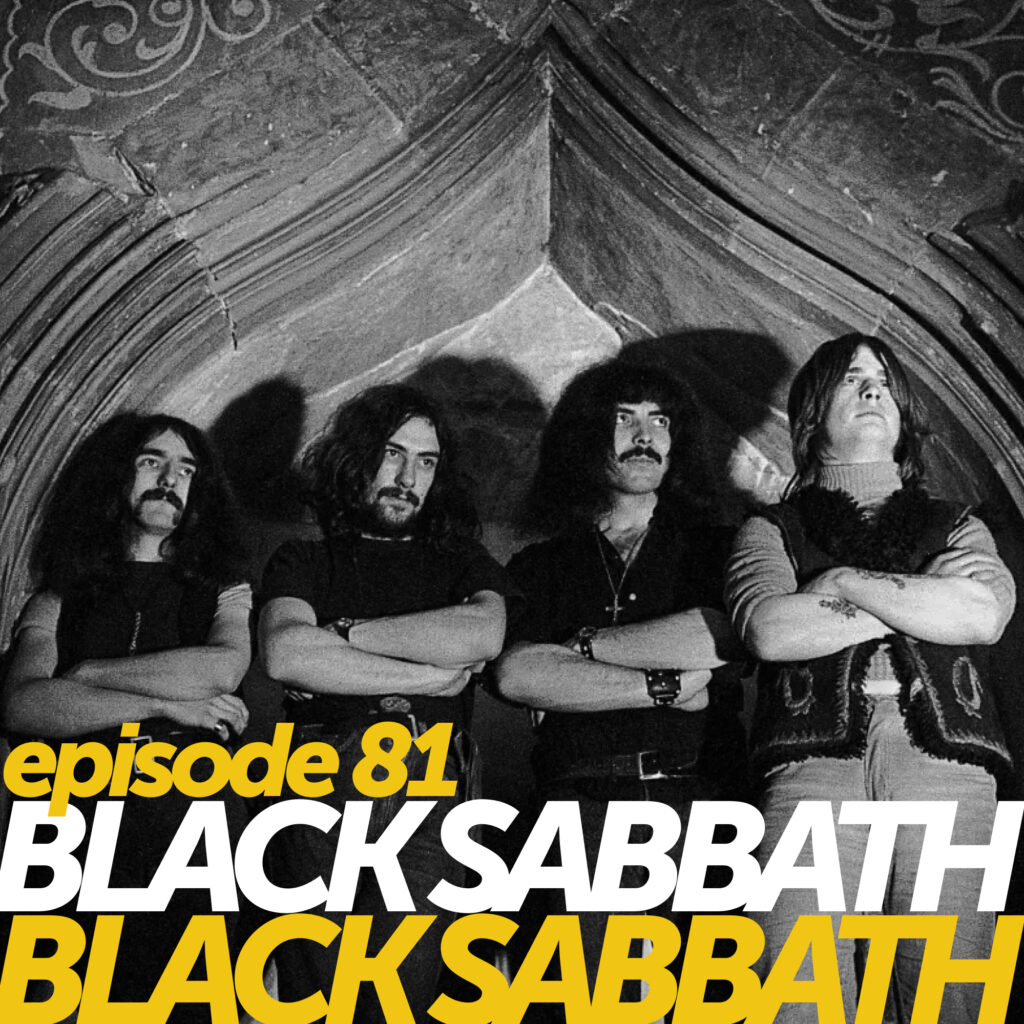
Episode 81: Black Sabbath’s “Black Sabbath”
What is this which stands before us? A long shadow spreading its magic o’er scores of artists all bearing its seal, certainly. But if we go Back to the Beginning, we can still unearth lots to learn from the band forged from steel unto a wicked world on fire. Whatever your connection to Sabbath today (and certainly you have one), look beyond the lore with us before you know the way you’re going to feel.
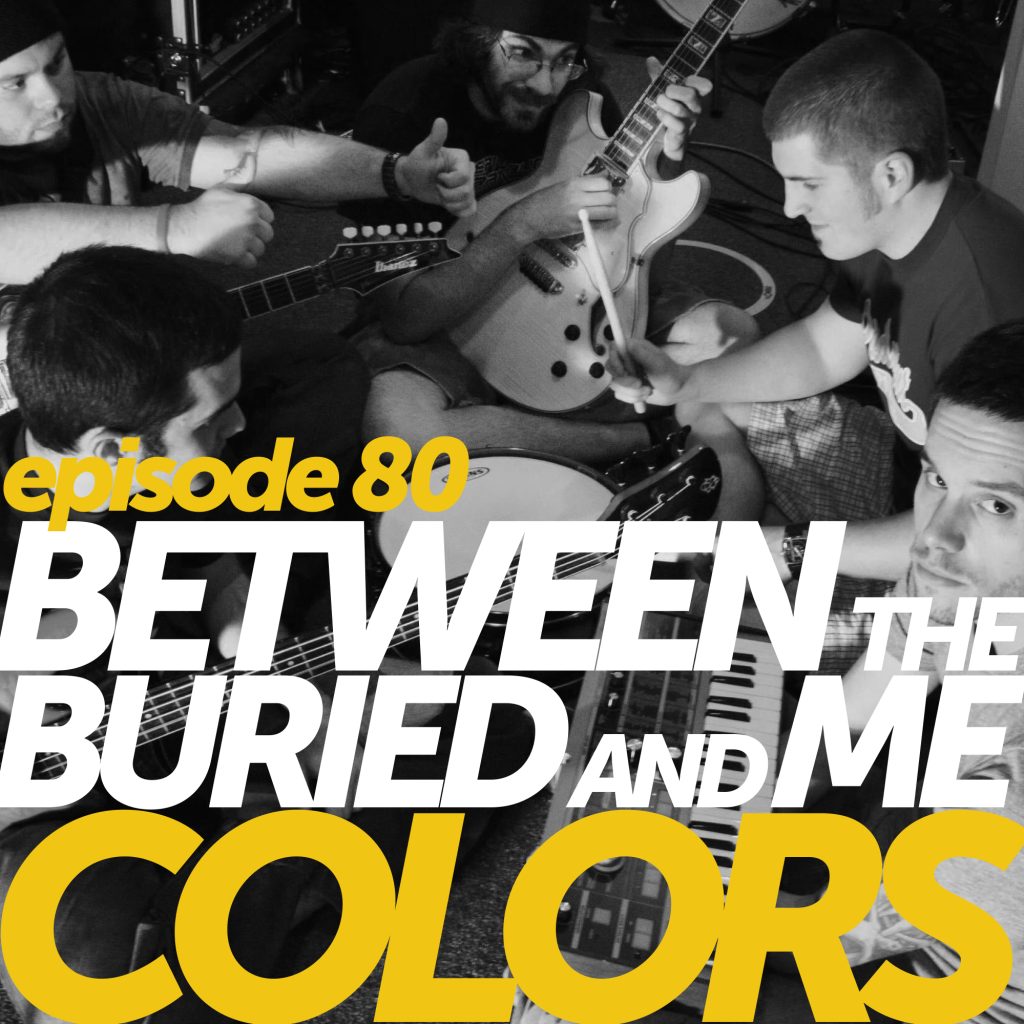
Episode 80: Between the Buried and Me’s “Colors”
Music can be this?! Five North Carolina dudes took the full range of the human spirit and musical styles into the woodshed, and from the loom came a technicolor dreamcoat of power, precision, and progress that we’ve worn with pride through nearly 20 years of long, strange trip. Join us in looking back with gratitude for getting to be there during a special band’s watershed moment and looking ahead with renewed enthusiasm for the boundless possibilities still beyond the dark side of the moon.

Episode 79: FKA Twigs’s “LP1”
As the 2010s cleaved culture into fractals and alienated humans from their being, Tahliah Barnett beamed down from the cosmos, a biblically accurate angel contorting into shapes embodying pure emotion. Her singular, decade-defining debut offers prescient wisdom for our AI age: the path to the world begins back in our bodies. When (FKA) Twigs moves, you move.
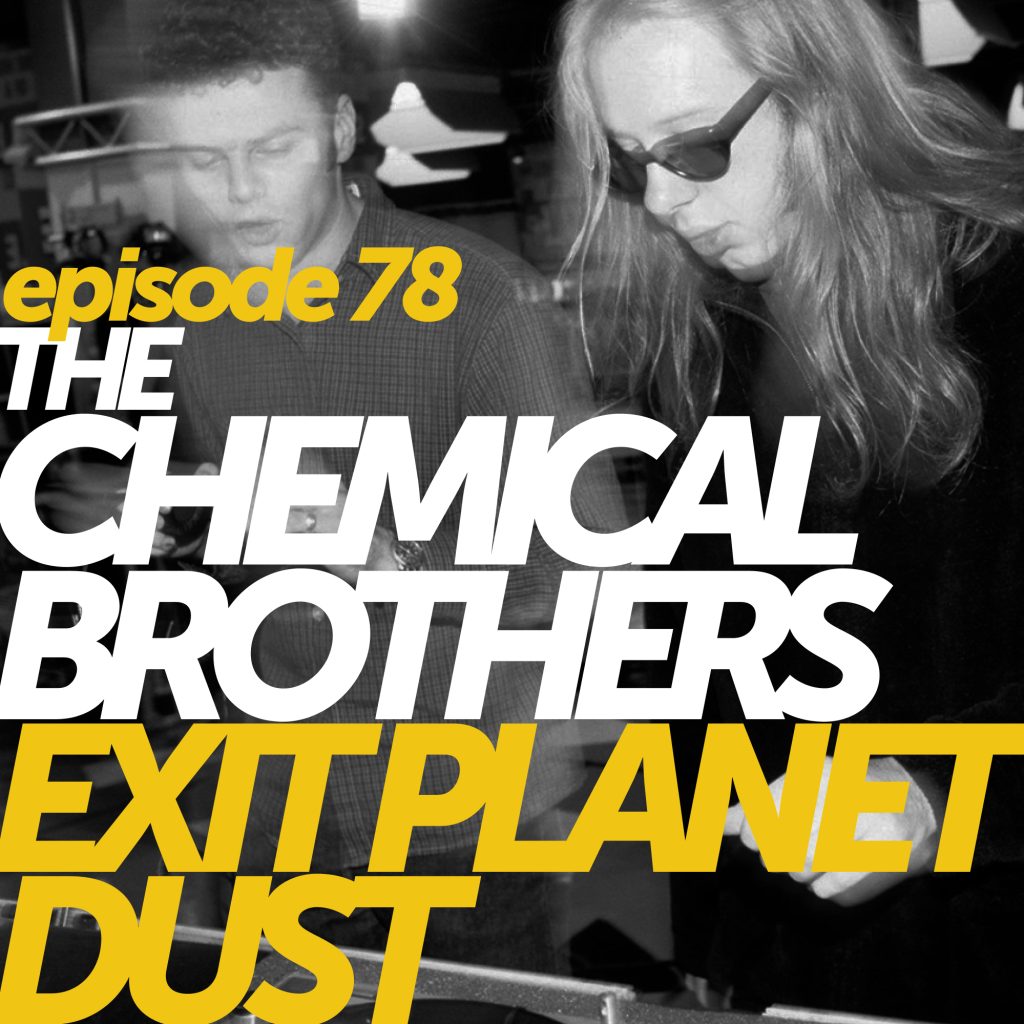
Episode 78: The Chemical Brothers’s “Exit Planet Dust”
Time's funny, innit? As today's youth excavate the nineteen hundred and nineties for the ecstasy of seemingly simpler times, here lies a fossil record containing so much of the DNA of how it was done — layers upon limestone layers of cultural source code. Keep digging and you might just find a place to get off your biscuits. The Big Beat goes on.
Episode 77: Otoboke Beaver’s “Super Champon”
For our money, this is what running through the halls of your high school and screaming at the top of your lungs actually feels like. And why *shouldn’t* the unreal world be a 250-BPM confetti cannon of primal-screaming sweetness? Take 21 mere minutes to blast-beat your brain and body into a fireworks show and then let’s shopping after.
Episode 76: Chic’s “C’est Chic”
This episode’s meaning is neither deep nor hidden: the Nile is a river. To good times, that is. If the savoir faire, stellar musicianship, and seismic influence of Nile Rodgers and Bernard Edwards’ organization don't suit you, then to cite a very wise t-shirt: “disco doesn't suck; you just can't dance.”
Episode 75: Nas’s “Illmatic”
Illmatic’s impact on hip-hop is a foregone conclusion — one listen and it ain’t hard to tell why. But as we unpacked the lyrical density, the layered samples, and the hyperlocal lens of Nas taking us to the Bridge, we found they represent, represent something deeper in the American mythos and our cultural consciousness. In the land of the free and home of the brave, life may be a bitch, but the world is yours.
Episode 74: N.E.R.D’s “In Search Of…”
It may be true that No One Ever Really Dies, but at the turn of the millennium, a young, wild, and free new wave in culture most certainly came alive. Whether or not you were around and aware in the moment of the Neptunes’ cultural dominance—and the decidedly counter-cultural bomb N*E*R*D planted underground—it's worth the star trek to the 21st century sound and style’s Big Bang.
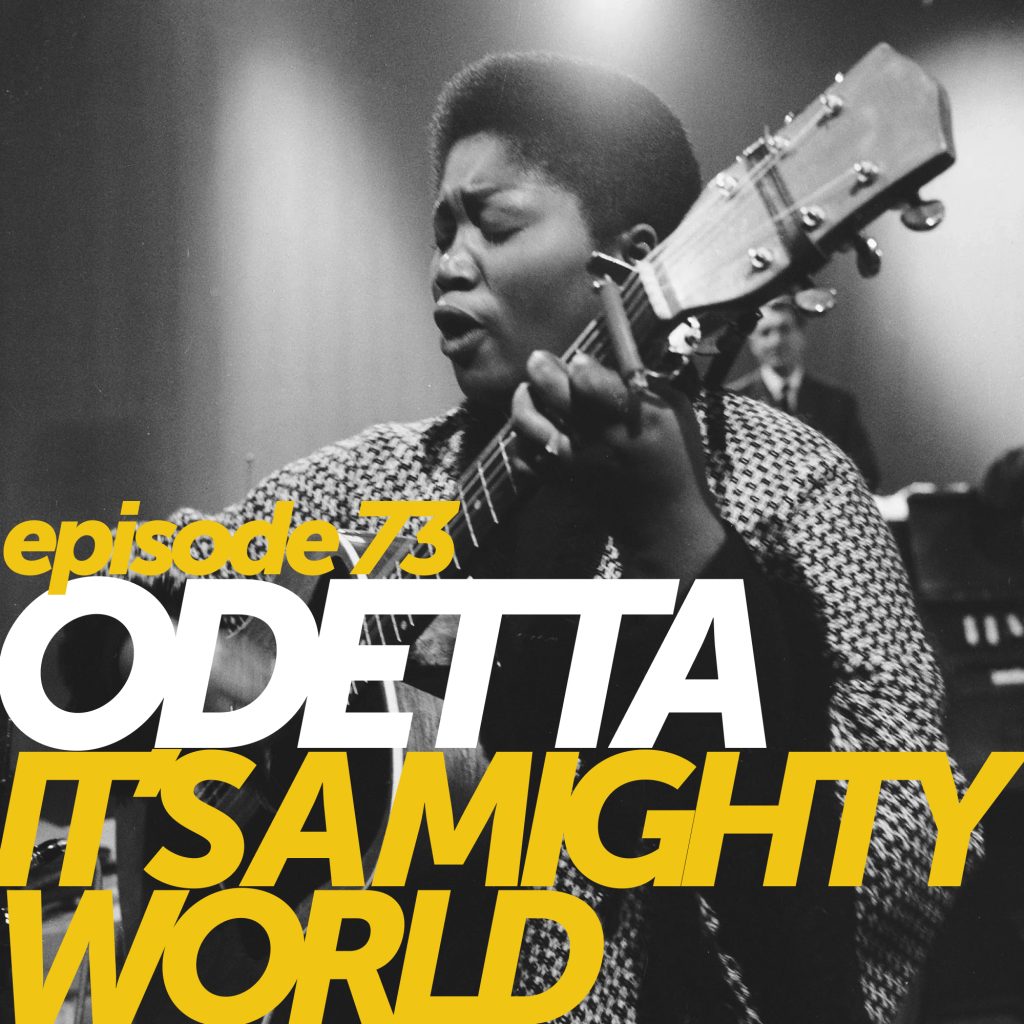
Episode 73: Odetta’s “It’s a Mighty World”
Odetta — a must-know titan of American music and culture — once noted that young people “learn about American history through battles.” But her dream of liberation was shaped much differently: “I learned about the United States through this music, through the songs that I sing.” As we live through the kind of historical moment that makes most folks want to lie down and die, we can — like many heroes before us, from MLK to Maya Angelou — look to the legacy of 1964 and Odetta for strength to insist upon our lives.
Episode 72: R.D. Burman’s “Shalimar”
Once upon a time in Bollywood, one magical man made enough music to fill a million moments—and made space for hundreds of other artists along the way. Of the 331 scores “Pancham” composed in his lifetime, 1978's “Shalimar” is a uniquely compelling introduction to his technical prowess, transcendent alchemy of cultures, and tremendously joyful love of a life full of song.
Episode 71: Marianne Faithfull’s “Broken English”
“That’s the thing about pretty faces… We don’t expect them to belong to the fighters— the junkies and monks and cockroaches who’ll survive every atomic bomb and suicide attempt and outlive us all.” - Lindsay Zoladz Broken English is searing, singular snapshot of surviving to spite the devils (who’ve gotten far too much sympathy in the story so far). You’ll love it forever with its good and bad weather. We may have lost Marianne Faithfull this year, but not before she outran the darkness. As we close out a dark year and look ahead for light, there’s a lesson to...
Episode 70: Sade’s “Love Deluxe”
Any denier that all art is political need look no further than the smoothed-out soul slipstream of Sade, a group defined by its economics. Rare output, minimal arrangements, reserved volume, and, of course, the premium implied by “Love Deluxe”—a title derived from the idea that true love is among a precious few luxuries that can’t be bought. Our world’s clearly longing for more longing, and we discovered a truly transcendent delicacy as we unboxed Sade’s brand of desire.
Episode 69: Charles Mingus’s “The Black Saint and the Sinner Lady”
When you think of true "artists" in music, who comes to mind? Charles Mingus embodied its romantic ideal, for better and for worse. His magnum opus "Black Saint" is more than even jazz's cosmic form can hold—it's the full-bodied essence of a master composer, peerlessly inventive bassist, and clairvoyant critic of the real America. In it, you’ll find what his collaborator Gunther Schuller called "the widest ranging musics you can find composed by one single human being."
Episode 68: Gang of Four’s “Entertainment!”
“Entertainment!” is described by Gang of Four’s Jon King as “a record about young people smiling and dancing in the face of disaster.” Uh oh, sound familiar? This Leeds-born slab of Brechtian boogie reminds us that to navigate a world where everything is (small-p) political, dancing and dialectics belong together. Free your ass and your mind will follow.

Episode 67: Brooks & Dunn’s “Brand New Man”
This is the tale of two lonesome cowboys who got down, turned around, and went to town catching lightning in a bottle on their first try together. Whether or not their decade-defining country anthems lit a flame in your eye in the 90s like they did ours, Ronnie and Kix offer a lens through which outlaws, in-laws, crooks, and straights alike can look for ways to learn to love again.
Episode 66: Oumou Sangaré’s “Moussolou”
The name "Oumou" derives from an Arabic word meaning "mother of." It is associated with dignity, wisdom, and maternal strength. Southern Mali’s Oumou Sangare has come to embody her namesake for millions around the world, and it all began when she was just 19 years old, channeling the magical music of hunters through her powerful and purposeful voice and creating a moment that captivated an entire country. Hers is a story everyone should know.
Episode 65: Missy Elliott’s “Supa Dupa Fly”
In the words of one of her groundbreaking forebears, “You feel free? You want to try some wild s**t? Thank Missy.” Since the very first frame of “The Rain” entered our eyeballs, Missy has made the avant-garde accessible, pointing us to a future full of more funk and more fun simply by standing fully in the splendor of her space-age self. Come (supa dupa) fly with us back to the moment where Missy’s magic began.
Episode 64: The Cramps’s “…Off the Bone”
God is a woman and she plays the guitar loud … y’all come catch some Holy Ghost in your hips. Hear our hallelujah for the love story of the queen of rock ‘n roll and the mad daddy holy rollin’ on a river—upstream all the way—and boot scootin’ through a fun and freaky heaven and earth of their own design. The Cramps were Dionysian, devilish, dangerous, and damn good, and they remind us that life can be, too. If you can’t dig this, you can’t dig nothin’.
Episode 63: Black Moth Super Rainbow’s “Dandelion Gum”
Life’s a bit heavy to chew on these days, so we reached into the pocket of our mid-2000s jeans and found an old piece of Dandelion Gum to chew on instead. As soon as its neon syrup hits your tongue, you’ll wonder why you hadn't let this "future pop for now people, today" melt you, melt you, melt you yet.
Episode 62: Project Pat’s “Mista Don’t Play: Everythangs Workin”
This life we're livin' is oh so beautiful. Take it from Patrick Houston, who has spread the gospel of the real for three decades, followed by a discipleship that has shaped 21st century culture in his image. For those still alive in 2025 by the grace of God, let us give flowers to the man from the North North.

Episode 61: Grace Jones’s “Nightclubbing”
Not a woman. Not a man. A revolution. Music’s long history is littered with larger-than-life characters whose mythology shapes reality for the masses — and few loom larger than the mighty Grace Jones. “Nightclubbing” without context is a tremendous body of songs worth anyone’s time, but after a deep dive into Grace’s time at Compass Point, you’ll agree that it’s a vital work.

Episode 60: Paramore’s “This Is Why”
The menace and melancholy of modern life have sentenced scores of young people to the gilded prison of nostalgia — but much to our surprise, a band of recovering Southern pop-punks have an antidote. For anyone willing to “sit still long enough to listen to yourself,” their new music’s sharp rhythmic angles and sharper lyrical reflections frame a doorway through which to free our big feelings and forge ahead.

Episode 59: Ennio Morricone’s “The Good, The Bad and The Ugly”
You know that five-note coyote howl. You may even know the classic film it helps power. But what do you know about the man behind those iconic moments? For our final exploration from our 2024 calendar, reflect with us on the genius of a maestro who could make magic with a mere fistful of notes, who poured forth from his soul a foundation upon which much of 20th century popular culture was built.

Episode 58: TLC’s “CrazySexyCool”
Vision. Bravery. Originality. The 30th anniversary of the ATL-exported opus — by the highest-selling girl group of all time — offered us a chance to reflect on all the ways our hometown heroes ran so some of the 21st century’s most iconic artists could fly.

Episode 57: Kendrick Lamar’s “good kid, m.A.A.d city”
Before the Super Bowl, the super beef, the Pulitzer, or PGLang, one good kid and king-to-be sojourned from South Central to the height of the American promise and rained down lightning that united one nation under a groove. You’ll feel the energy of this episode from two planets away — hop in the van real quick and let’s roll out.

TuneDig Episode 56: Cocteau Twins’s “Heaven or Las Vegas”
Dream of ethereal waves of sound swirling around you—and words you can’t make out saying more than you could imagine—as you float back upstream with us toward the warmth of Cocteau Twins’ decade-defining masterpiece, which still ripples across a vast pool of influences 25 years on.

TuneDig Episode 55: Jeff Buckley’s “Grace”
Once upon a time, “your favorite artist’s favorite artist” wasn’t a Midwest princess, but a “mystery white boy” beloved by Bob Dylan and Adele alike. Jeff Buckley’s signature Grace is on the shortlist of transcendent albums every living being should experience, because, as one industry vet put it: “it’s all in there, isn’t it? It’s just all in there.”

TuneDig Episode 54: Botch’s “We Are the Romans”
"We Are the Romans" is a visceral, vital document guaranteed to make you feel something from its first notes — and there’s never been a better time to stop and smell the roses from a group just now getting its long-overdue flowers.

TuneDig Episode 53: Ravi Shankar’s “Three Ragas”
Ravi Shankar lived one of the twentieth century’s most extraordinary lives, bearing witness to—and making—history all around the world. To many (especially in the West), he personified an extraordinarily complex style of music and the cultures from which it was borne, and he worked hard to make it look easy.

TuneDig Episode 52: Alain Goraguer’s “La Planète Sauvage”
Gather ’round, sommeliers of the strange and crate-digging boogie children, for something “Strange! Frightening! Fascinating!” awaits. The soundtrack to Cannes 1973’s Jury Prize-winning film is a dazzling, surreal, avant-garde hymn to cosmic knowledge and compassion and a secret handshake among real heads. If you’re after a trip to a new dimension, here’s your one small step for man.

TuneDig Episode 51: Marvin Gaye’s “I Want You”
Marvin Gaye’s well of soul power ran mighty deep, and deep into his career, he pulled up a bucket of ice-cold, silky smooth champagne called “I Want You.” Come for the lush instrumentation, vocal harmonies, and Leon Ware clinic; stay for the stories. For our return from hiatus, we observe a titan in his element, reflect on the pain that built him into one, and consider how to reconcile our feelings when complicated messengers deliver beauty to our door.
SEASON 6

TuneDig Episode 50: Funkadelic’s “Maggot Brain”
Before uniting one nation under a groove, the lysergic lords of chaos in Funkadelic harnessed wild lightning into an amulet called Maggot Brain, bestowing the bearer with raw, dark power stronger than any force known to man. Between reaching our 50th episode and coping with the “maggots in the mind” of today’s universe, it felt like the right time to free our minds. We hope y’all’s asses will follow.

TuneDig Episode 49: Alice Coltrane’s “Journey in Satchidananda”
The story of Alice Coltrane — an accomplished bebop pianist from Detroit who transcended into something far greater before walking away from public life altogether — is a glimpse into what it means to be truly free. Alice’s masterpiece "Journey in Satchidananda" is a cosmic dance that sparked creation from destruction. And in a time when we’re all desperately searching for a spark of meaning and hope, Journey abides abundantly.

TuneDig Episode 48: Heart’s “Little Queen”
Take a moment to appreciate Ann and Nancy Wilson, who kicked down the doors of rock ‘n’ roll’s boys’ club with their peerless guitar work, soaring soul vocals, and tight songcraft. 1977’s Little Queen — an oft-overlooked gem in the classic rock canon — offers a snapshot of those elements at their most urgent and pure, powered by the Wilsons’ simple motivation (as described by their producer): “It was a war.”

TuneDig Episode 47: Tangerine Dream’s “Phaedra”
When you think of “electronic music,” what comes to mind may not be a genre you deeply love — hip-hop, house, new wave, or even dub reggae — but all of it owes some debt, scientifically or otherwise, to Tangerine Dream. Dig in with us as we study a prime example of the band’s brand of effortful innovation, where they patiently and persistently labored at the cutting edge of electronic technology to open a portal to new worlds in our minds.

TuneDig Episode 46: Olivia Rodrigo’s “SOUR”
Did you catch one of 2021’s biggest albums, or like us, did you almost overlook it? If you have any expectations of pop music, "SOUR" will likely subvert them. Teenage dream this is not; it’s an exquisitely universal portrait of a weird time to be alive.

TuneDig Episode 45: Fela Kuti’s “Expensive Shit”
The story of Fela Kuti — one of the most famous people on an *entire continent* passionately struggling to liberate power to more people — is absolutely one worth deeply knowing, regardless of whether you find yourself drawn to Afrobeat or (cringe) “world music.” But once you know it, it’s almost impossible not to fall in love with Fela and Afrika 70 as their revolutionary grooves rewire your brain in magical and meaningful ways.

TuneDig Episode 44: Meshuggah’s “ObZen”
Meshuggah’s ObZen—an artifact of human creativity pushing the limits of what’s possible—will quite literally make you hear music differently. If you’re looking for a new musical adventure, and especially if you don’t think you like “heavy” or “weird” music, consider this your sign to push past your comfort zone.

TuneDig Episode 43: mewithoutYou’s “Catch For Us the Foxes”
A misunderstood wise man once said “Let him who seeks continue seeking until he finds.” In our most personal and vulnerable episode yet, we do some seeking through the lens of songs that fill us with the bravery and sincerity to love ourselves and others fully. Dig deep with us as we fish for words about our tiny place in the universe and dance with gratitude for our ability to do so.

TuneDig Episode 42: Erykah Badu’s “Mama’s Gun”
Y’all tryna raise your vibrations? Erykah Badu is here to help. Season 6 kicks off with a meditation on realness and what being on “your own wavelength” really means. (Spoiler: it ain’t a single frequency — it’s a whole spectrum.)
FRIDAY HEAVY
For lifelong headbangers and the musically curious alike, a new podcast from TuneDig is here to push your palette with aggressive, abrasive art. Each short, fast-paced episode offers (1) a new metal, punk, noise, or experimental release we recommend, (2) a related playlist we’ve curated, and (3) a heavy issue to consider and an organization doing something about it. Join us in the void.

Friday Heavy: End of Year Review 2022
It was a great year in heavy music. In this episode, we look back at all the new releases we featured and the curated playlists they spawned.
It was a NOT great year in many other ways. We leave you with a parting message of encouragement to connect your energy and angst to on-the-ground organizations doing the work in your community.


Friday Heavy: November 11, 2022
This week, we discuss:
- He Is Legend – Endless Hallway
- Curated playlist sussing out the depths of He Is Legend’s roots, weirdness, and attitude
- Protect Our Winters (POW)

Friday Heavy: October 28, 2022
This week, we discuss:
- Witch Fever – “Congregation”
- Curated playlist of eclectic, high energy that might get your inner goth stoked on (briefly) going out
- Housing Justice League

Friday Heavy: October 14, 2022
This week, we discuss:
- The Lord † Petra Haden – “Devotional”
- Friday Heavy playlist densely packed with thick, meditative vibrations across the spectrum of drone
- Multidisciplinary Association for Psychedelic Studies (MAPS)

Friday Heavy: September 30, 2022
This week, we discuss:
- Escuela Grind – “Memory Theater”
- Friday Heavy playlist dedicated to the absolutely fucking hostile energy that powerviolence can bring to radical inclusion
- Zealous

Friday Heavy: September 16, 2022
This week, we discuss:
- Holy Fawn – Dimensional Bleed
- Friday Heavy playlist showcasing the incalculably extensive and wildly diverse Shoegaze Cinematic Universe (aka post-rock)
- MTB Atlanta

Friday Heavy: September 2, 2022
This week, we discuss:
- The Callous Daoboys – “Celebrity Therapist”
- Friday Heavy playlist confronting the under-appreciation of Atlanta’s heavy and weird music scene
- Mississippi Rapid Response Coalition – Water Fund

Friday Heavy: August 19, 2022
This week, we discuss:
- Osees – “A Foul Form”
- Friday Heavy playlist fuzzed out on oddball punk that smells like cigarettes just thinking about it
- Women on the Rise GA

Friday Heavy: August 5, 2022
This week, we discuss:
- Chat Pile – “God’s Country”
- Friday Heavy playlist with, uh, a bunch of very pissed off songs directed at christofascist terrorism
- The Grocery Spot

Friday Heavy: July 22, 2022
This week, we discuss:
- WAKE – “Thought Form Descent”
- Friday Heavy playlist that anchors its sound in modern production of sludge, blackened death, and post-metal
- The Planetary Society

Friday Heavy: July 8, 2022
This week, we discuss:
1. Vomit Forth – “Seething Malevolence”
2. Friday Heavy playlist that’s unsettling in the best way, leaving you feeling a little off your axis
3. Trees Atlanta

Friday Heavy: June 24, 2022
This week, we discuss:
1. CANDY – “Heaven is Here”
2. Friday Heavy playlist packed with off-the-beaten-path punk and hardcore from bands that deserve space on your battle jacket
3. Round Rock Black Parents Association

Friday Heavy: June 10, 2022
This week, we discuss:
1. Sasquatch – “Fever Fantasy”
2. Friday Heavy playlist of heavy grooves for late desert nights and hazy generator parties
3. Feed Buffalo

Friday Heavy: May 27, 2022
This week, we discuss:
1. Decapitated – “Cancer Culture”
2. Friday Heavy playlist stacked with bands putting their unique and modern spin on (occasionally tech) death metal
3. PropelATL

Friday Heavy: May 13, 2022
This week, we discuss:
1. Primitive Man – “Insurmountable”
2. Friday Heavy playlist full of SLOW, enveloping, massive and crunchy tone and big feedback
3. National Network of Abortion Funds

Friday Heavy: April 29, 2022
This week, we discuss:
1. Heriot – “Profound Morality”
2. Friday Heavy playlist packed with mid-tempo, huge guitar tone, big atmosphere and lots of industrial grit and grind
3. Invisible People

Friday Heavy: April 15, 2022
This week, we discuss:
1. Greyhaven – “The Bright And Beautiful World”
2. Friday Heavy playlist for fans of more choatic + melodic combinations
3. Campaign for Working Families

Friday Heavy: April 1, 2022
This week, we discuss:
1. Meshuggah – “Immutable”
2. Friday Heavy playlist full of high quality Meshuggah aping that AIN’T “djent”
3. The Bail Project

Friday Heavy: March 18, 2022
This week, we discuss:
1. Soul Glo – “Diaspora Problems”
2. Friday Heavy playlist with 20+ songs in under 40 minutes, (almost) all under 2 minutes each
3. Equality Texas

Friday Heavy: March 4, 2022
This week, we discuss:
1. Vein.fm – “This World Is Going To Ruin You”
2. Friday Heavy playlist exploring more of Will Putney’s work
3. Books to Prisoners
SEASON 5

TuneDig Episode 41: Miles Davis’s “Bitches Brew”
Let’s be clear: "Bitches Brew" is a challenging record, even to some of the best musicians in the world — but all of them say it’s worth the investment. It’s the kind of trip that, even if we *could* draw a map, it wouldn’t take you there. Let go of the need for meaning and enjoy the ride with us. We can promise you’ll be pleasantly surprised where you end up.

TuneDig Episode 40: Fiona Apple’s “Tidal”
On the heels of one of 2020's most acclaimed albums — Fiona Apple’s Fetch the Bolt Cutters — we revisited Apple’s debut Tidal and wound up working to extract ourselves from the mostly male gazes that made its reception … much different. We arrive at a question much like writer Jenn Pelly had: “People would constantly prod Fiona on how an 18-year-old could write songs as mature as these ... Why did they not ask instead how she became a genius?”

TuneDig Episode 39: Death Grips’s “The Money Store”
The modern world is accelerating beyond our control, shaping our reality in ways we can’t yet perceive or understand. Enter Death Grips, an art project capturing the chaotic energy and illustrating the absurdity of our hubris in trying to harmonize the surreal and extremely real — never more perfectly than on 2012’s prescient "The Money Store".

TuneDig Episode 38: Augustus Pablo’s “King Tubbys Meets Rockers Uptown”
Reggae music is easy to take for granted, but its impact is underappreciated and massive — in the case of dub in particular, everyone from Radiohead to Johnny Rotten to Run-DMC owes it a debt. Augustus Pablo and King Tubby together created what’s regarded as “one of the finest examples of dub ever recorded.” Join us as we dive into the culture, history, and unique engineering experiments that made it possible.

TuneDig Episode 37: Rihanna’s “ANTI”
By every measure — sales, awards, chart-toppers, global name recognition — Rihanna is objectively as big as the Beatles ever were. In fact, ANTI is so big it’s still on the charts, a record five full years later. Take a closer look with us at “the record you make when you don’t need to sell records”, and get a taste of the true freedom that comes from focusing on your inner voice when faced with insurmountable expectations.

TuneDig Episode 36: Son House’s “Father of Folk Blues”
All American music traces back to the blues, and deep at the root sits Son House. That the recordings on "Father of Folk Blues" even exist is something of a gray area that cuts to the heart of the great American myth, but wherever you land after hearing these stories, you’ll find that what matters most is what the great Muddy Waters once said of House: “That man was the king.”

TuneDig Episode 35: Melvins’s “Stoner Witch”
The futility of describing the Melvins has stretched critics in the direction of absurd words like “Dadaist” for nearly 40 years now. They’ve belligerently flogged any attempt to pinpoint their essence simply by being themselves, but "Stoner Witch" remains a reliable mall directory for the Melvins’ vast and wild discography. Grab yourself some pretzel bites.

TuneDig Episode 34: Dolly Parton’s “Jolene”
We should talk about Dolly the way we talk about Prince. Her extraordinary kindness and unique kitsch both make her universally loved, but what gets left out of the conversation is the very thing that made her famous: the music. Join in as we focus attention on the sonics and songwriting of the low-key masterpiece "Jolene".

TuneDig Episode 33: The Allman Brothers Band’s “The Allman Brothers Band”
Six enlightened rogues out of Macon, Georgia birthed an entire genre simply by being their soul-powered selves. We have not come to testify, but we’re still hung up on the dream The Allman Brothers Band helped us see. By the end of this episode, you will be, too.
TUNEDIG RADIO


SEASON 4


SEASON 3


SEASON 2




SEASON 1


BONUS TRACK EPISODES

BONUS TRACK: How We Got Here
We got a bunch of interesting listener feedback in our off-season, and it encouraged us to shed some light on why we do things the way we do ‘em. Also, we reflect on our first writeup, which was ... interesting.
WHO WE ARE
We're Cliff (right) and Kyle (left). We’re two dudes born and raised in ATL with day jobs in tech and sustainability, respectively.
We met in middle school, and in one way or another, music’s been the thing that’s kept us close for the two decades since — whether it’s sharing and talking about new music (like this podcast, except in our texts or over beers), going to shows, or working with our favorite record stores to help them survive and thrive.
We started TuneDig as a little art project that connects us more deeply ourselves and to the world through the infinite gift of music. We hope you’ll join us for the conversations, let us know what you think, and share discoveries of your own.
More About TuneDig
TuneDig began as a little something called MusicGrid.me, which we created after realizing there was no place online to directly exchange music recommendations with your friends. Our aim was simple: to make rating albums simple, useful, and social. We got some love from places like Mashable, Wired, Evolver.fm, and Hypebot. We managed to foster conversation between music lovers, get thousands of reviews, and meet great people.
Along the way, we realized that record stores were an essential part of the music lovers’ community. After many a conversation about how we could helpfully connect them to the people who loved them, we began helping them leverage technology to create new revenue streams and embrace streaming services without giving up what’s unique to them: expertise and curation. (Long live the counter clerk who knows exactly which record will be the right introduction to jazz fusion!)
TuneDig is our vision to connect music lovers with the music they love, because no matter how much has changed in the way we discover and enjoy music, recommendations from people you trust and respect will always be the best way to find new music you’ll dig. With this podcast, we’re channeling the spirit of trusted curation pioneered by record stores, and bringing you something to take you deeper into music you can love.